Semiconductor

Search documents
全球观点_展望 12 月之后-Global Views_ Looking Beyond December
2025-11-24 01:46
Summary of Key Points from the Conference Call Industry Overview - The discussion primarily revolves around the U.S. economic outlook, Federal Reserve monetary policy, and global economic conditions, particularly focusing on labor market trends and inflation dynamics. Core Points and Arguments 1. **Federal Reserve Rate Cuts**: The September jobs report has likely set the stage for a 25 basis point cut at the upcoming FOMC meeting on December 9-10, as indicated by New York Fed President Williams, who noted increased downside risks to employment and reduced upside risks to inflation [2][6][14]. 2. **Economic Growth Forecast**: The baseline economic forecast anticipates a growth reacceleration to 2-2.5% in 2026, driven by reduced tariff impacts, tax cuts, and easier financial conditions. This is expected to stabilize the unemployment rate slightly above September's 4.44% [6][22]. 3. **Inflation Trends**: Core PCE inflation was reported at 2.8% in September, with underlying inflation estimated to be near 2%. The expectation is that actual core PCE inflation will decrease once tariff pass-through effects end in mid-2026 [9][11]. 4. **Labor Market Concerns**: Despite a stronger-than-expected nonfarm payroll growth of 119k, the underlying job growth trend is only 39k, with indicators suggesting renewed job losses. The unemployment rate for college graduates aged 25+ has risen to 2.8%, significantly higher than its 2022 low [14][17]. 5. **China's Economic Outlook**: China's GDP growth forecast has been upgraded to a small deceleration from 5% in 2025 to 4.7% in 2027, with a focus on export-led growth. This is expected to increase China's current account surplus to 1% of global GDP by 2029, impacting manufacturing output in trading partner countries [20][24]. 6. **Germany's Economic Growth**: An increase in German government spending is anticipated to accelerate GDP growth to 1-1.5% in the coming years, although this reflects a downgrade from previous forecasts due to external pressures from China [22][25]. 7. **AI Investment Dynamics**: Projections for cumulative AI capital expenditures remain below the potential incremental capital income generated by AI over the next 10-15 years, estimated at a present discounted value of $8 trillion. However, current equity market valuations appear stretched [29][32]. 8. **Long-term Asset Class Forecasts**: Expectations for 10-year Treasury yields are projected to trend up to 4.5% over the next decade, while commodity strategists foresee a decline in oil prices in 2026, followed by a rise to $80 per barrel by 2028 [33]. Other Important Insights - The labor market's deterioration, particularly among college-educated workers, could negatively impact consumer spending and prompt further rate cuts [17][18]. - The upcoming budget on November 26 in the UK is expected to feature disinflationary measures, which may influence monetary policy decisions by the Bank of England [26][27]. - The overall sentiment indicates cautious optimism regarding economic recovery, but significant risks remain, particularly in the labor market and inflation dynamics [14][22].
最高速率可达8000Mbps,国内存储巨头首次全面展示DDR5等高端产品线
Xuan Gu Bao· 2025-11-23 23:42
Group 1 - Changxin Storage showcased its latest DDR5 and LPDDR5X product lines at the 22nd China International Semiconductor Expo, with DDR5 products achieving speeds up to 8000Mbps and capacities of 24Gb [1] - The company plans to cover various market segments with seven types of modules, including UDIMM, SODIMM, and RDIMM, targeting high-end markets in servers, workstations, and personal computers [1] - According to Trendforce, Changxin Storage's production capacity is expected to reach 300,000 wafers per month by the end of 2025, marking a nearly 50% year-on-year increase [1] Group 2 - According to predictions, Changxin Storage's market share for DDR5 is expected to rise from 1% at the beginning of the year to 7% by year-end, while LPDDR5's share is projected to increase from 0.5% in Q1 2025 to 9% by year-end [1] - Zhaoyi Innovation has invested 2.3 billion in Changxin Technology, acquiring a 1.88% stake, and is making progress in custom storage solutions across various sectors, anticipating a scale-up period by 2026 [2] - Shangluo Electronics has been collaborating with leading domestic storage brands for over five years and has recently secured agency qualifications for Kioxia storage, serving clients in servers, mobile phones, and various consumer IoT fields [2]
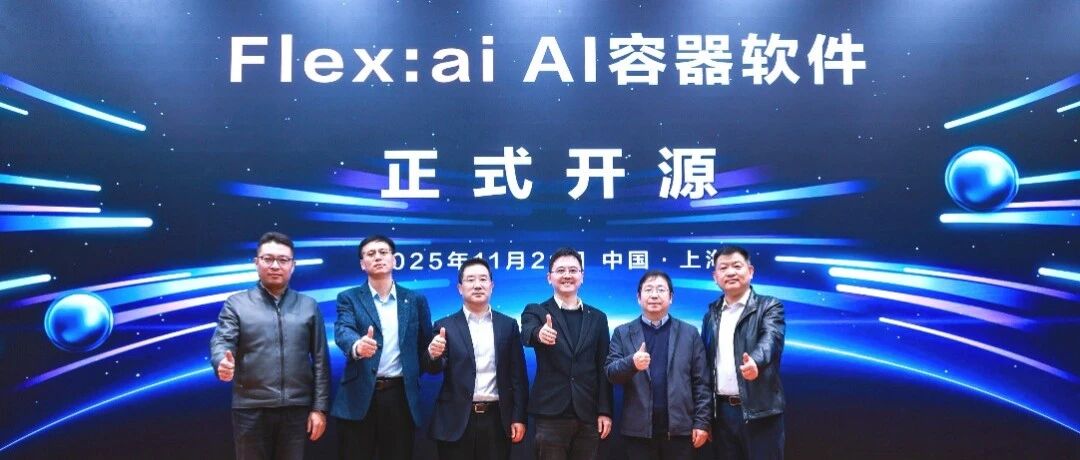
华为开源突破性技术Flex:ai,AI算力效率直升30%,GPU、NPU一起用
机器之心· 2025-11-22 04:12
Core Viewpoint - Huawei has launched the AI container technology Flex:ai to address the issue of computing resource waste in the AI industry, which is exacerbated by the rapid growth in AI workloads and low utilization rates of global computing resources [1][3][20]. Group 1: Flex:ai Technology Overview - Flex:ai integrates GPU and NPU resources into a unified system, allowing for dynamic allocation and scheduling of computing resources [1][3]. - The technology is built on the Kubernetes platform and aims to enhance the precision of AI workload matching with computing resources, significantly improving utilization rates [3][19]. Group 2: Key Technological Innovations - The XPU pooling framework developed in collaboration with Shanghai Jiao Tong University allows a single GPU or NPU to be divided into multiple virtual computing units, improving average utilization by 30% while keeping virtualization performance loss below 5% [9]. - The cross-node virtualization technology, developed with Xiamen University, aggregates idle computing resources from various nodes into a shared pool, enabling general servers to offload AI workloads to remote GPU/NPU resources [12]. - Context separation technology designed by Xiamen University reduces external fragmentation by 74% and increases high-priority job throughput by 67% [13]. Group 3: Intelligent Scheduling and Resource Management - The Hi Scheduler, developed with Xi'an Jiaotong University, optimally schedules heterogeneous computing resources across the cluster, ensuring efficient resource utilization even under fluctuating loads [17]. - The increasing demand for AI computing resources highlights the need for improved resource management efficiency, with Flex:ai positioned as a competitive solution against existing technologies like Run:ai [19]. Group 4: Open Source Initiative - Flex:ai will be fully open-sourced to the "Magic Engine Community," contributing to the ModelEngine open-source ecosystem alongside other tools [5]. - The open architecture of Flex:ai is expected to promote the standardization of domestic computing ecosystems and enhance collaboration among global innovators [19][20].

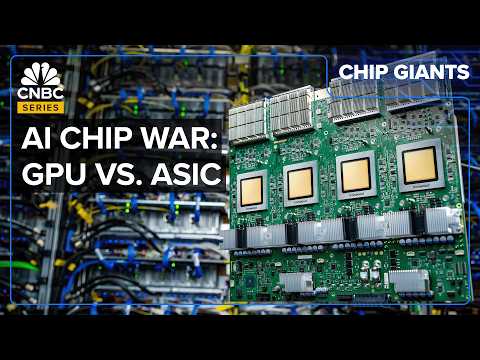
Comparing The Top AI Chips: Nvidia GPUs, Google TPUs, AWS Trainium
CNBC· 2025-11-21 17:00
AI Chip Market Overview - Nvidia's GPUs have become central to generative AI, driving its valuation, with 6 million Blackwell GPUs shipped in the past year [1] - The AI chip market includes GPUs, custom ASICs, FPGAs, and chips for edge AI, with ASICs growing faster than GPUs [2][3] - Nvidia briefly reached a $5 trillion valuation due to its GPU's dominance in AI [5] GPU Technology and Competition - GPUs excel at parallel processing, making them ideal for AI training and inference [5][7][9] - AMD's Instinct GPUs are gaining traction, utilizing an open-source software ecosystem, contrasting Nvidia's CUDA [12][13] - Nvidia is shipping 1,000 Blackwell server racks weekly, each priced around $3 million [11] - Nvidia's next-generation Rubin GPU is slated for full production next year [14] Custom ASICs and Cloud Providers - Custom ASICs are designed by major hyperscalers like Google, Amazon, Meta, and Microsoft for specific AI tasks [2] - Custom ASICs offer efficiency and cost reduction but lack the flexibility of GPUs, costing tens to hundreds of millions of dollars to develop [16][17][18] - Amazon's Trainium offers 30-40% better price performance compared to other hardware vendors in AWS [24] - Broadcom is a major beneficiary of the AI boom, helping build TPUs for Google and custom ASICs for Meta and OpenAI, potentially winning 70-80% of the ASIC market [27] Edge AI and Manufacturing - NPUs (Neural Processing Units) are integrated into devices like phones and laptops for on-device AI processing [31][32] - AMD acquired Xilinx for $49 billion, becoming the largest FPGA maker [37] - TSMC manufactures most AI chips for companies like Nvidia, Google, and Amazon, with new plants in Arizona [37][38]

Nvidia market rally couldn't save Bitcoin's price: BTC sinks to new low. What's up with this crypto crash?
Fastcompany· 2025-11-21 16:11
Cryptocurrency Market - Bitcoin (BTC) experienced a sell-off on November 20, dropping 3% to $86,410.50 after reaching above $93,000 earlier in the day, marking its lowest level since April [2][3] - The overall crypto market is declining, with XRP falling below $2 per token and Ethereum (ETH) shedding nearly 3% to trade at $2,832 [3] Stock Market and Nvidia - Nvidia reported third-quarter earnings that exceeded expectations, with revenue of $57.01 billion and adjusted earnings per share (EPS) of $1.30, both surpassing Wall Street estimates [4] - Despite the positive earnings report, Nvidia's stock fell more than 2% as investors expressed concerns about a potential AI bubble, with predictions of inflated valuations and earnings from experts like Michael Burry [4][5] Concerns Over Tech Companies - Michael Burry has raised concerns that tech companies, including Meta, Nvidia, and OpenAI, are overstating profits through aggressive accounting practices while simultaneously laying off employees [5]

2025先进封装与测试行业发展现状与未来
材料汇· 2025-11-21 14:04
Group 1 - The core viewpoint of the article emphasizes the transition of the integrated circuit industry from traditional transistor scaling to system-level integration and architecture innovation, particularly highlighting the importance of advanced packaging and testing in enhancing chip performance and optimizing system power consumption [2][4][9]. Group 2 - The integrated circuit manufacturing industry consists of three main segments: chip design, wafer manufacturing, and packaging testing, with packaging testing further divided into packaging and testing processes [4][6]. - Advanced packaging is a critical aspect of modern integrated circuit manufacturing, focusing on enhancing functionality density and system-level optimization, distinguishing itself from traditional packaging methods [9][11]. Group 3 - The global integrated circuit packaging and testing industry has shifted from its early development in Europe and the United States to emerging markets in Asia, with Taiwan, mainland China, and the United States forming a triad in the current market landscape [14][16]. - The market size of the global integrated circuit packaging and testing industry is projected to grow from $55.46 billion in 2019 to $101.47 billion in 2024, with a compound annual growth rate (CAGR) of 12.8% [16]. - The advanced packaging market is expected to grow at a CAGR of 10.6% from 2024 to 2029, significantly outpacing the traditional packaging market's 2.1% CAGR [17]. Group 4 - In mainland China, major players in the integrated circuit packaging and testing industry include Longsys Technology, Tongfu Microelectronics, and Huatian Technology, with a market size projected to grow from ¥234.98 billion in 2019 to ¥331.90 billion in 2024, reflecting a CAGR of 7.2% [20][22]. - The advanced packaging market in mainland China is expected to grow at a CAGR of 14.4% from 2024 to 2029, with its market share reaching 22.9% by 2029 [22]. Group 5 - The global advanced packaging industry includes participants from both wafer manufacturing and packaging backgrounds, with significant growth driven by the demand for high-performance computing applications such as artificial intelligence and data centers [24][25]. - The market for Flip Chip (FC) packaging is projected to grow from $18.75 billion in 2019 to $26.97 billion in 2024, with a CAGR of 7.5% [28]. - Chiplet integration packaging is identified as a key growth area, with its market size expected to increase from $2.49 billion in 2019 to $8.18 billion in 2024, reflecting a remarkable CAGR of 26.9% [29]. Group 6 - The advanced packaging technology is widely applied across various sectors, including consumer electronics, mobile communications, and high-performance computing, with significant growth driven by the demand for advanced packaging in smartphones and AI applications [34][42]. - The global computing power is expected to grow from 309.0 EFlops in 2019 to 2,207.0 EFlops in 2024, with a CAGR of 48.2% [36]. Group 7 - The article outlines several trends in the integrated circuit advanced packaging and testing industry, including the acceleration of domestic substitution, the rise of chiplet integration packaging, and the increasing importance of industry chain collaboration [48][50][51]. - The value of advanced packaging is expected to continue rising, driven by the shift towards high-performance applications in AI and data centers [52].



Dow Jones Futures Rise, Bitcoin Tries To Halt Slide After Nvidia-Led Market Sell-Off
Investors· 2025-11-21 13:15
Market Overview - The stock market experienced a modest rise at the open, driven by renewed hopes for a Federal Reserve rate cut [1] - Dow Jones futures, S&P 500 futures, and Nasdaq futures all showed positive movement [1] - Bitcoin saw a decline overnight but has recovered from its lowest levels [1] Company Performance - Nvidia (NVDA) faced a significant downside reversal after initially gaining post-earnings, impacting the broader AI sector [1] - Other leading stocks in the AI space also reported poor performance, contributing to market volatility [1] - The Dow Jones index rebounded following a previous sell-off, with notable recoveries in stocks like Nvidia, Palantir, and Tesla [2] Market Sentiment - The market sentiment remains cautious as investors react to the recent sell-off and the performance of key tech stocks [1][2] - The overall market is still grappling with the implications of the AI stock bubble, which has reportedly erased $2.4 trillion in value [4]
新股消息 | 聚芯微电子拟港股上市 中国证监会要求补充说明具体业务模式等
智通财经网· 2025-11-21 12:47
Core Viewpoint - The China Securities Regulatory Commission (CSRC) has requested additional information from Wuhan Juxin Microelectronics Co., Ltd. regarding its business model and compliance with regulations as part of its listing application on the Hong Kong Stock Exchange [1][2]. Group 1: Regulatory Requirements - The CSRC has outlined several specific areas where Juxin Microelectronics must provide supplementary information, including the company's technology export activities over the past three years and their compliance [2][3]. - The company is required to clarify its specific business model and the regulatory procedures related to overseas investments and foreign exchange management for its subsidiaries [3]. - Juxin Microelectronics must explain the rationale behind the pricing of new shareholders' investments in the last 12 months and assess whether there are any issues of interest transfer [3]. Group 2: Company Overview - Juxin Microelectronics is a leading provider of intelligent perception, machine vision, and imaging technology solutions, focusing on high-performance mixed-signal chips and optimized algorithms [4]. - The company's technology is centered around three core areas: intelligent perception, machine vision, and imaging technology, which serve high-growth sectors such as robotics, IoT, mobile smart devices, digital twins, and automotive electronics [4]. - By leveraging its advanced intelligent perception technology platform and innovative precision drive technology, Juxin Microelectronics aims to empower smart devices to overcome complex environmental challenges and lead the commercialization of perception and imaging technologies [4].
Is State Street SPDR S&P Semiconductor ETF (XSD) a Strong ETF Right Now?
ZACKS· 2025-11-21 12:21
Core Insights - The State Street SPDR S&P Semiconductor ETF (XSD) is a smart beta ETF launched on January 31, 2006, designed to provide broad exposure to the Technology ETFs category [1] - The fund has accumulated over $1.46 billion in assets, making it one of the larger ETFs in the Technology sector [5] - XSD seeks to match the performance of the S&P Semiconductor Select Industry Index, which represents the semiconductor sub-industry portion of the S&P Total Markets Index [6] Fund Management and Costs - Managed by State Street Investment Management, XSD has annual operating expenses of 0.35%, positioning it as one of the least expensive options in its category [7] - The fund offers a 12-month trailing dividend yield of 0.25% [7] Sector Exposure and Holdings - The ETF has a heavy allocation to the Information Technology sector, representing 100% of its portfolio [8] - Rigetti Computing Inc (RGTI) constitutes approximately 7.24% of total assets, with Intel Corp (INTC) and Advanced Micro Devices (AMD) also among the top holdings [9] - The top 10 holdings account for about 36.31% of XSD's total assets under management [9] Performance Metrics - As of November 21, 2025, the ETF has gained approximately 16.11% and was up about 24.97% year-to-date [11] - XSD has traded between $160.63 and $353.65 over the past 52 weeks, with a beta of 1.64 and a standard deviation of 36.55% for the trailing three-year period, indicating high risk [11] Alternatives in the Market - Other ETFs in the semiconductor space include iShares Semiconductor ETF (SOXX) and VanEck Semiconductor ETF (SMH), with assets of $14.83 billion and $33.66 billion respectively [13] - SOXX has an expense ratio of 0.34% while SMH charges 0.35%, providing investors with alternative options [13]

D-Wave Completes Redemption of Public Warrants
Businesswire· 2025-11-21 12:00
Core Viewpoint - D-Wave Quantum Inc. has completed the redemption of all outstanding public warrants, with the redemption date set for November 19, 2025, marking a significant step in the company's financial management and capital structure [1][4]. Summary by Sections Redemption of Warrants - D-Wave announced the completion of the redemption of all public warrants to purchase shares of common stock, with a redemption date of November 19, 2025 [1]. - Prior to the redemption announcement on October 20, 2025, 4,746,358 warrants were exercised, resulting in approximately 6.9 million shares of common stock being issued at an exercise price of $11.50 per warrant, generating cash proceeds of about $54.6 million for the company [2]. - As of the redemption date, 270,820 warrants remained unexercised, which were redeemed at a price of $0.01 per warrant, totaling an aggregate redemption price of $2,708.20 [3]. Trading and Delisting - Following the redemption, the warrants ceased trading on the New York Stock Exchange (NYSE) and will be delisted, effective November 18, 2025, while the common stock continues to trade under the symbol "QBTS" [4]. Company Overview - D-Wave Quantum Inc. is recognized as a leader in quantum computing systems, software, and services, being the first commercial supplier of quantum computers [6]. - The company focuses on delivering value through its quantum computing technology, which includes both annealing and gate-model quantum computers, and has a strong customer base with over 100 organizations utilizing its systems for various computational challenges [6].