军工制造

Search documents
港股午评:恒指涨1.42%、科指涨1.65%,科技股回暖,军工、汽车及生物医药股走高,芯片及航空股低迷
Sou Hu Cai Jing· 2025-11-24 04:28
Market Overview - The Hong Kong stock market showed strong performance with the Hang Seng Index rising by 1.42% to 25,578.88 points, the Hang Seng Tech Index increasing by 1.65% to 5,484.46 points, and the National Enterprises Index up by 1.22% to 9,028.24 points [1] - Major technology stocks experienced gains, with Alibaba up 4.13%, Tencent up 2.13%, JD.com up 1.45%, and NetEase up 5.67% [1] - The defense sector saw active trading, with China Shipbuilding Industry Corporation rising nearly 7% and AVIC Industry Company up over 3% [1] - Biopharmaceutical stocks also rose, with Hengrui Medicine up over 6% and 3SBio up over 5% [1] - Automotive stocks surged, led by GAC Group which increased by over 13% [1] - Semiconductor stocks declined, with Hua Hong Semiconductor down over 9% and SMIC down over 5% [1] - The "three barrels of oil" collectively fell, with CNOOC down over 2% and PetroChina down over 1% [1] - Airline stocks were weak due to the cancellation of all flights on 12 Japan-China routes [1] Company News - Huimai Technology reported Q3 revenue of $532 million, a year-on-year increase of 27.6%, with adjusted EBITDA reaching $47.05 million, up 37.3% [2] - Changjiang Garment announced a mid-term revenue of HKD 85.593 million, a 13.67% increase, but reported a loss of HKD 53.314 million, widening by 67.8% year-on-year [2] - Virginie expects a comprehensive profit increase of no less than 100% for the six months ending September 30, 2025 [3] - Maple Leaf Education anticipates a net profit of no less than RMB 300 million for the fiscal year ending August 31, 2025 [4] - Nanshu Holdings reported revenue of approximately HKD 2.8305 billion for the six months ending September 30, 2025, a 1.6% increase, with a net profit of HKD 336 million, up 12.7% [4] - Yongyi International expects a significant reduction in mid-term net loss to no more than HKD 110 million [5] - China Aluminum announced a total cash or asset capital increase of HKD 906 million for Yunnan Aluminum Foil [6] - Hisense Home Appliances subscribed to insurance financial products worth HKD 1.738 billion [7] Stock Buybacks - Tencent repurchased 1.042 million shares for HKD 636 million at prices between HKD 606.5 and HKD 614.5 [9] - Xiaomi repurchased 8 million shares for HKD 303 million at prices between HKD 37.64 and HKD 38.04 [10] - China Feihe repurchased 12.3 million shares for HKD 51.404 million at prices between HKD 4.14 and HKD 4.2 [11] - Techtronic Industries repurchased 500,000 shares for HKD 43.0814 million at prices between HKD 85.2 and HKD 87.25 [12] - COSCO Shipping Holdings repurchased 3 million shares for HKD 40.5895 million at prices between HKD 13.43 and HKD 13.63 [13] - Sinopec repurchased 825,000 shares for HKD 36.7777 million at prices between HKD 4.42 and HKD 4.56 [14]
从6000亿升级到1万亿美元!沙特对美投资承诺是“空头支票”?
第一财经· 2025-11-20 15:02
Core Viewpoint - The article discusses the recent visit of Saudi Crown Prince Mohammed bin Salman to the United States, highlighting the significant defense and economic agreements made between the two nations, particularly the sale of F-35 fighter jets and an increase in Saudi investment commitments to the U.S. from $600 billion to $1 trillion [3][10]. Defense Cooperation - The U.S. has approved a "major defense sales plan" to Saudi Arabia, which includes the future delivery of F-35 fighter jets, marking a significant step in U.S.-Saudi defense cooperation [3][4]. - The sale of F-35s could alter the military balance in the Middle East, as Saudi Arabia would become the first country in the region, aside from Israel, to acquire these advanced jets [7][8]. - The delivery of F-35s to Saudi Arabia may take at least four years, during which Israel could procure new advanced weapons to maintain its military advantage [8]. Economic Commitments - Mohammed bin Salman has pledged to increase Saudi investments in the U.S. to $1 trillion, a figure that is equivalent to Saudi Arabia's annual GDP [10]. - There are doubts regarding the feasibility of this investment commitment, as previous promises of $600 billion were found to be inflated, with actual commitments amounting to only $283 billion [10][11]. - The U.S. and Saudi Arabia signed a memorandum of understanding on artificial intelligence cooperation, indicating Saudi Arabia's interest in advanced technology, although there are concerns in the U.S. about sharing sensitive technology with Saudi Arabia [10]. Bilateral Relations - The visit aims to strengthen U.S.-Saudi relations through military and economic collaboration, reflecting mutual needs and intentions to enhance bilateral ties [11]. - The U.S. seeks to reassure and attract Saudi Arabia as a regional ally through these defense and investment agreements [4][11].


收评:创指高开低走收跌1.12% 海南板块全天强势
Xin Lang Cai Jing· 2025-11-20 07:11
Core Viewpoint - The three major stock indices opened high but closed lower, with the ChiNext index dropping over 1% [1] Market Performance - The Shanghai Composite Index closed at 3931.05 points, down 0.40% - The Shenzhen Component Index closed at 12980.82 points, down 0.76% - The ChiNext Index closed at 3042.34 points, down 1.12% [1] Sector Performance - The Hainan sector showed strong performance, with Hainan Haiyao hitting the daily limit - The computing power concept stocks were active, with Zhongfu Circuit reaching a 20% limit up - The lithium mining sector remained active, with stocks like Weiling Co., Shengxin Lithium Energy, and Rongjie Co. seeing price increases - The silicon energy sector weakened in the afternoon, with Guosheng Technology and Duofluo hitting the daily limit down - The military industry sector adjusted throughout the day, with Great Wall Military Industry experiencing significant declines - The consumer goods sector collectively weakened, with Nanjiao Food showing the largest drop [1] Overall Market Sentiment - The overall market sentiment was bearish, with over 3800 stocks declining [1]
美国批准对乌克兰“爱国者”系统维护军售
Xin Hua She· 2025-11-19 13:56
Core Viewpoint - The U.S. government has approved a $105 million sale of Patriot missile system maintenance and related equipment to Ukraine, aimed at enhancing its defense capabilities against current and future threats [1] Group 1: Military Sales - The U.S. State Department has authorized the sale of maintenance materials and services related to the Patriot missile system to the Ukrainian government [1] - The sale includes upgrades of the M901 launchers to M903, ground support equipment, and necessary spare parts, technical support, training, and logistics [1] - The primary contractors for this deal will be Raytheon Technologies and Lockheed Martin [1] Group 2: Strategic Implications - The implementation of this military sale is expected to improve Ukraine's ability to execute self-defense and regional security tasks [1] - The U.S. Defense Security Cooperation Agency has notified Congress regarding this military sale [1]


狂轰一夜!乌军掀翻俄能源饭碗,油价36美元暴跌,普京底牌碎了?
Sou Hu Cai Jing· 2025-11-19 12:12
Group 1 - The conflict between Russia and Ukraine has evolved, with Ukraine now effectively countering Russian advances and targeting critical vulnerabilities in Russia's economy, particularly its energy sector [1][3] - Ukraine's recent attacks on Russian energy infrastructure have significantly impacted Russia's fossil fuel export revenues, which fell to a daily average of $609 million in October, a 4% decrease from September [3][5] - The price of Russian Urals crude oil has plummeted to $36 per barrel, which is $23.51 below the international benchmark, making it unprofitable for Russia to sell [5][7] Group 2 - International support for Ukraine has been crucial, with grassroots fundraising efforts, such as a Czech crowdfunding campaign that raised $75,670 in 48 hours, demonstrating widespread public engagement [9][11] - Significant military aid has been provided by various countries, including a 10-year defense agreement with France for 100 Rafale fighter jets, enhancing Ukraine's air force capabilities [13][15] - The combination of international support and improved military resources has emboldened Ukrainian forces, allowing them to successfully target and destroy key Russian military assets [15] Group 3 - Russia faces increasing internal economic pressures, with corporate debt burdens reaching critical levels and interest expenses consuming 39% of pre-tax profits as of September [16][18] - Public discontent is rising in Russia due to proposed tax increases, leading to protests against high taxes and economic hardships [19][21] - Morale within the Russian military is declining, with soldiers questioning the war's purpose and some even opting to surrender rather than return to combat [21][23] Group 4 - The ongoing conflict highlights that success is determined not by sheer numbers but by economic resilience, public support, and the ability to secure international assistance [25]

做空动能衰减,锂电军工双线逆袭!
Jiang Nan Shi Bao· 2025-11-19 11:07
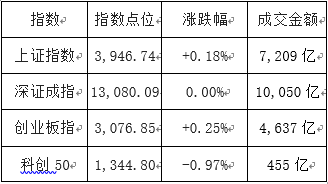
Market Overview - A-shares exhibited a weak recovery pattern characterized by "low opening, high rebound, afternoon pullback, and stabilization at the end" after three consecutive days of decline, indicating insufficient rebound momentum [1][3] - The Shanghai Composite Index closed slightly up by 0.18% at 3,946.74 points, while the Shenzhen Component Index remained flat at 13,080.09 points, and the ChiNext Index saw a minor rebound of 0.25% to 3,076.85 points [2] - Total trading volume dropped significantly to 1.73 trillion yuan, a decrease of 200.2 billion yuan from the previous day, marking a new low for the past month, suggesting that institutions are still cautiously observing the market [1][3] Technical Analysis - The Shanghai Composite Index maintained support at 3,930 points, forming a combination of "three consecutive declines followed by a small increase and extreme volume contraction," indicating that short-term selling pressure is nearing its end [3] - The ChiNext Index found support at the 60-day moving average, with blue-chip stocks providing a stabilizing effect on the index, although small and mid-cap stocks remain in the early stages of emotional recovery [3] Industry and Hotspot Capture - The banking and insurance sectors showed strong performance, with high-dividend assets acting as a stabilizing force; China Bank surged by 3.81%, reaching a historical high, while China Life and China Pacific Insurance also performed well [5] - Lithium resources regained strength, with lithium carbonate futures breaking through 100,000 yuan per ton, driven by increased downstream battery orders and strong pricing from Australian mines [6] - The military and aquaculture sectors experienced collective surges, driven by geopolitical tensions and China's strong protest against Japan's remarks regarding Taiwan, leading to a suspension of Japanese seafood imports [7] Forward Strategy - Key signals to watch include whether trading volume can return to above 1.9 trillion yuan, and if military and lithium sectors can expand as main lines to drive market momentum [8] - The medium to long-term strategy focuses on high-dividend blue-chip stocks and resource leaders, while the short-term strategy emphasizes participation in event-driven opportunities and avoiding purely emotional stocks [8][9]
港股收评:三大指数齐跌!黄金股逆势领涨,新能源车企、芯片股低迷
Ge Long Hui A P P· 2025-11-19 08:57
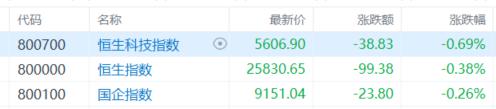
Market Overview - The Hong Kong stock market indices experienced declines, with the Hang Seng Tech Index falling by 0.69%, reaching a new low since early September. The Hang Seng Index and the Hang Seng China Enterprises Index decreased by 0.38% and 0.26%, respectively [1][2]. Technology Sector - Major technology stocks mostly declined, with Xiaomi dropping nearly 5%, Kuaishou down over 1%, and slight declines in JD.com, Meituan, Baidu, and Tencent. Alibaba saw an increase of over 1% [2][4][5]. New Energy Vehicle Sector - Stocks in the new energy vehicle sector fell, including Li Auto, NIO, Chery, Beijing Automotive, BYD, and Leap Motor [6]. Semiconductor Sector - Semiconductor stocks experienced declines, with companies like Shanghai Fudan, Jingmen Semiconductor, and Zhongxing Communications reporting losses [7][8]. Gold Sector - Gold stocks led the market gains, with China Gold International rising over 8%. Other gold-related stocks also saw increases, driven by expectations of significant gold purchases by global central banks [9][10]. Military Industry - Military stocks performed well, with China Shipbuilding Industry rising over 9%. Analysts expect the military industry to enter an upward cycle, supported by recent quarterly reports indicating a narrowing decline in performance [11][12]. Oil Sector - Oil stocks saw an uptick, with China Petroleum & Chemical Corporation increasing nearly 3%. This rise is attributed to recent increases in crude oil futures prices [13]. Lithium Battery Sector - Lithium battery stocks gained, with Tianqi Lithium rising nearly 3%. The market for lithium carbonate has shown significant recovery, with prices expected to rise further due to increasing demand [15][16]. Market Sentiment - The market sentiment remains cautious, with expectations of continued adjustments in the Hong Kong stock market due to weak macro liquidity and corporate earnings forecasts. Investors are advised to wait for clearer signals from U.S. monetary policy and mainland economic data before seeking rebound opportunities [21].



刚刚!日本突发,直线涨停!
中国基金报· 2025-11-19 07:54
中国基金报记者 泰勒 兄弟姐妹们啊,今天的市场,走势颇为震荡,一起看看发生了什么事。 【导读】A股震荡,水产股直线涨停 | 代码 | 名称 | | 涨幅% | 现价 | | --- | --- | --- | --- | --- | | 300589 江龙船艇 | | R | 20.03 | 19.18 | | 300123 | 亚光科技 | 1 R | 19.93 | 7.28 | | 300008 | 天海防务 | . R | 14.16 | 7.82 | | 601890 | 亚星锚链 | R | 10.02 | 10.65 | | 000547 | 航天发展 | R | 10.01 | 12.53 | | 600682 | 中船防务 | R | 10.00 | 28.93 | | 300600 | 国瑞科技 | | 8.71 | 17.10 | | 300810 | 中科海讯 | | 7.21 | 41.92 | | 688543 | 国科学 | ન્દ્ | 6.94 | 53.00 | | 301327 | 北方长龙 | R | 6.70 | 165.80 | | 300397 | 天和防务 | ...


南亚某国大喜,准备为全球供应镓金属,以此换取所有高科技武器?
Sou Hu Cai Jing· 2025-11-18 16:58
Core Insights - India is seizing the opportunity to develop its gallium resources in response to China's export restrictions, which have caused a global shortage and skyrocketing prices [2][4][6] - The Indian government aims to achieve self-sufficiency in critical minerals by 2025, reducing reliance on foreign sources and enhancing its strategic position [4][8][10] Industry Developments - The Indian mining sector is planning significant investments to enhance gallium extraction capabilities, with estimates suggesting that annual production could reach hundreds of tons, attracting foreign investment and technology [4][6] - The National Aluminium Company and Hindustan Zinc are exploring initial gallium extraction, with plans for dedicated facilities to increase production [6][8] Strategic Partnerships - India is engaging in international discussions to establish cooperation frameworks with Western countries, focusing on gallium's role in the semiconductor and defense industries [6][10][12] - The government is coordinating with defense sectors to integrate gallium into military applications, including advanced radar systems and missile guidance technologies [8][10][14] Economic Impact - The gallium trade is projected to generate substantial revenue, potentially reaching billions of dollars, while also supporting the growth of the semiconductor industry in India [6][10][12] - The government is implementing policies to simplify approvals and encourage private investment in gallium production, aiming to boost local manufacturing capabilities [10][16] Future Outlook - By November 2025, India plans to have gallium production facilities operational, with a focus on sustainable development and avoiding over-exploitation of resources [8][16] - The Indian government is exploring overseas mineral acquisitions to strengthen its position in the global value chain, while also prioritizing high-tech defense procurement [12][18]

1800亿欧元砸向乌克兰:欧盟的阳谋 俄罗斯的死局 世界秩序的裂痕
Sou Hu Cai Jing· 2025-11-18 12:09
Core Points - The European Union (EU) announced an additional €1.8 billion aid to Ukraine, bringing the total aid since February 2022 to nearly €180 billion, highlighting a complex strategic framework involving 27 member states [1][3] Group 1: Aid Structure - The €180 billion aid consists of €63 billion from EU institutions and €115 billion from individual member states, allowing for a unified EU voice while providing flexibility for member contributions [3][5] - Military aid statistics reveal that while direct military assistance from EU institutions totals €61 billion, individual member contributions, when converted to monetary value, amount to €632 billion, including strategic assets like tanks and aircraft technology [7][9] Group 2: Fund Allocation - The aid is primarily allocated to four areas: military support (€632 billion), fiscal support (€900 billion), humanitarian aid and infrastructure rebuilding (€250 billion), and political binding [11][16][19] - Military aid focuses on building a European-standard Ukrainian army, with commitments to deliver 2 million artillery shells by 2025 and training programs for 82,000 Ukrainian soldiers [11][14] Group 3: Internal and External Challenges - The EU faces internal divisions, with member states showing differing priorities in aid, leading to a decline in contributions from countries like Germany by 43% in mid-2025 [23][25] - Legal concerns arise regarding the use of frozen Russian assets for aid, with countries like Belgium expressing legal hesitations, complicating the EU's funding strategies [27][28] Group 4: Strategic Implications - The EU's aid to Ukraine is seen as a critical step towards strategic autonomy, aiming to reduce reliance on the US and establish an independent defense system [31] - However, the aid strategy has economic repercussions, including rising energy prices and complex political negotiations tied to Ukraine's potential EU membership [33]