
核聚变能源

Search documents
地球上造小型核反应堆“愚蠢至极”,马斯克:太阳才是“免费终极核反应堆”
华尔街见闻· 2025-12-16 04:49
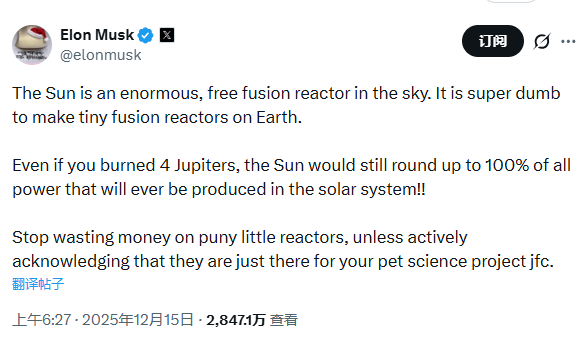
埃隆·马斯克公开斥责在地球上建造小型核聚变反应堆的努力是"愚蠢至极"的行为,并再次力挺太阳能,称太阳才是终极的"免费聚变反应堆"。 12月15日,马斯克在X平台的一篇帖子中,毫不掩饰他对地球核聚变项目的蔑视。他写道: "太阳是天空中一个巨大、免费的聚变反应堆。在地球上制造微型 聚变反应堆是愚蠢至极的。" 为了强调太阳无与伦比的能量优势,他用了一个极具冲击力的比喻: "就算你烧掉4个木星,太阳在太阳系所有能量产出中的占比四舍五入后仍然是100%!!" 马斯克甚至直接向参与清洁能源辩论的公司喊话,要求它们停止投资。他称: "别再为这些微不足道的小型反应堆浪费钱了,除非你主动承认它们只是你的宠 物科学项目。" 这番言论将地球上的核聚变研发直接定义为昂贵且不必要的"副业"。 人工智能被视为加速这一进程的关键变量。谷歌旗下的人工智能公司DeepMind已与联邦聚变系统公司宣布合作,旨在利用AI技术加速开发可并入电网的商业 化聚变能源解决方案。谷歌DeepMind的聚变团队在一篇博客文章中表示:"我们的AI专业知识与CFS的尖端硬件相结合,是推动聚变能源基础性发现的理想伙 伴关系。" 美国能源部长Chris Wright ...


地球上造小型核反应堆“愚蠢至极”,马斯克:太阳才是“免费终极核反应堆”
美股IPO· 2025-12-16 03:52
Core Viewpoint - Elon Musk criticizes the efforts to build small nuclear fusion reactors on Earth, calling them "extremely foolish" and emphasizes that the Sun is the ultimate "free fusion reactor" [3][6] Group 1: Musk's Perspective - Musk argues that investing in small fusion reactors is a waste of resources, urging companies to stop funding these "pet science projects" [3][6] - He uses a striking analogy to highlight the Sun's energy dominance, stating that even if four Jupiters were burned, the Sun would still account for nearly 100% of energy production in the solar system [3][4] Group 2: Silicon Valley's Investment Trend - In stark contrast to Musk's views, major tech companies like Nvidia and Google are heavily investing in nuclear fusion technology, aiming to leverage AI to accelerate its commercialization [6][7] - Commonwealth Fusion Systems recently announced an investment of $863 million, with Nvidia among the investors, indicating strong financial backing for fusion projects [7] - Google's AI subsidiary, DeepMind, is collaborating with Commonwealth Fusion Systems to utilize AI in developing grid-compatible fusion energy solutions [7] Group 3: Government Support and Future Plans - The U.S. government is actively supporting fusion technology, with the Department of Energy releasing a new "fusion roadmap" aimed at integrating fusion energy into the U.S. energy structure by the early 2030s [7] - The International Atomic Energy Agency (IAEA) notes that global fusion projects are entering a critical phase aimed at unlocking safe, abundant, and zero-carbon energy [7]

地球上造小型核反应堆“愚蠢至极”,马斯克:太阳才是“免费终极核反应堆”
Sou Hu Cai Jing· 2025-12-16 01:31
Core Viewpoint - Elon Musk criticizes efforts to build small nuclear fusion reactors on Earth, labeling them as "extremely foolish" and reiterating his support for solar energy as the ultimate "free fusion reactor" [1] Group 1: Musk's Perspective - Musk emphasizes the unparalleled energy advantage of the sun, stating that even if four Jupiters were burned, the sun would still account for nearly 100% of energy output in the solar system [1] - He urges companies involved in clean energy debates to stop wasting money on small fusion reactors, characterizing them as expensive and unnecessary "side projects" [1] Group 2: Contrasting Industry Trends - In stark contrast to Musk's views, major players in Silicon Valley, including Nvidia and Google, are heavily investing in nuclear fusion technology, aiming to leverage artificial intelligence to accelerate its commercialization [3][4] - Commonwealth Fusion Systems recently announced an investment of $863 million, with Nvidia being one of the investors, highlighting the financial commitment to fusion technology [4] - AI is seen as a critical variable in accelerating fusion development, with Google's DeepMind collaborating with Commonwealth Fusion Systems to integrate AI expertise with advanced hardware [4] Group 3: Government and Institutional Support - The International Atomic Energy Agency (IAEA) notes that global fusion projects aimed at unlocking safe, abundant, and zero-carbon energy have entered a critical phase [4] - The U.S. Department of Energy has released a new "fusion roadmap," outlining plans to incorporate fusion energy into the U.S. energy structure by the early 2030s, indicating strong governmental support for fusion technology [4]
可控核聚变突破在即,重构全球能源格局
3 6 Ke· 2025-12-15 02:50
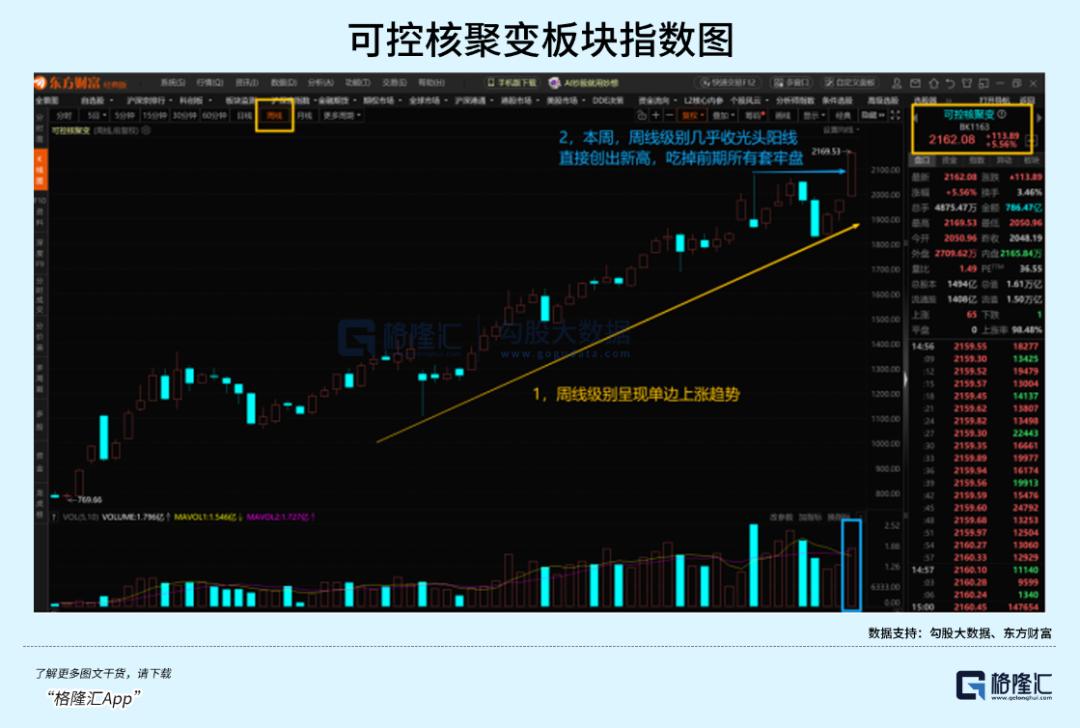
Group 1 - Controlled nuclear fusion is crucial for national energy security and technological independence, with its industrialization progressing from experimental validation to engineering demonstration stages [1] - The domestic production rate of key nuclear fusion equipment has exceeded 96%, with core components like tungsten-based divertors and high-temperature superconducting materials now being produced independently [1] - The nuclear fusion industry is entering a new phase characterized by competition among multiple technological routes and concentrated capital investment, driven by advancements in projects like the BEST device and the EAST device [1][3] Group 2 - The capital market has shown significant interest in the controlled nuclear fusion sector, with a continuous rise in stock prices since 2025, indicating the potential for a new market cycle [3] - The nuclear fusion industry is currently in the experimental phase, with a three-step development plan outlined: experimental pile, demonstration pile, and commercial pile, aiming for completion of the experimental pile by 2035 and commercial demonstration by 2050 [4] - Global investments in nuclear fusion research are increasing, with many countries advancing their demonstration pile plans and accelerating the commercialization process [7] Group 3 - The industry anticipates that nuclear fusion could achieve commercial power supply within the next decade, with 2031-2035 being a widely accepted timeframe for this milestone [8] - AI technology is playing a significant role in advancing nuclear fusion development by optimizing reaction conditions and predicting plasma behavior, thus accelerating commercialization [8][12] - Material innovation is critical for overcoming bottlenecks in the nuclear fusion industry, focusing on surface and structural innovations, optimizing superconducting materials, and material modification [13] Group 4 - Superconducting materials are essential for controlled nuclear fusion devices, directly impacting the efficiency of energy production and plasma confinement [14] - Leading companies in the nuclear fusion sector are making significant progress in developing core components, with a clear path toward industrialization in areas such as superconductors and divertor materials [15][17] - Key companies include: - Four Creation Electronics, the only domestic company to achieve localization of superconducting magnet power modules for fusion devices [18] - Parker New Materials, the only company capable of mass-producing core components for nuclear fusion [19] - Antai Technology, a global supplier of core materials for controlled nuclear fusion devices [20]


核聚变年底迎来密集招投标释放
2025-12-15 01:55
Summary of Key Points from the Conference Call on Controlled Nuclear Fusion Industry Overview - The controlled nuclear fusion industry is recognized as a future industry by the state, crucial for building a self-sufficient energy system and reducing dependence on oil and natural gas, thereby ensuring national energy security [1][5] - Global investment in controlled nuclear fusion is projected to increase over five times from 2021 to 2025, reaching a total financing of $9.766 billion [1][6] Core Insights and Arguments - The recent surge in bidding activities for controlled nuclear fusion projects indicates a significant shift towards commercialization, with November alone seeing bids totaling 3.9 billion yuan, surpassing the total for the first three quarters [1][9] - The Chinese government has prioritized controlled nuclear fusion in its 15th Five-Year Plan, highlighting its importance in energy strategy and technological advancement [3] - Major projects like CFETR and BEST are driving domestic development, with investments in BEST increasing to 15-20 billion yuan and CFEDR expected to exceed 100 billion yuan [1][10] Technological Advancements - China has achieved significant technological breakthroughs, including a world record of 35.1 Tesla for steady-state magnetic fields, with plans to complete the CFETR demonstration reactor by 2030 and commercial power generation by 2040-2045 [1][12] - The development of superconducting materials is advancing, with Shanghai's production capacity for second-generation high-temperature superconductors expected to reach 20,000 kilometers by 2026 [1][13] Investment Opportunities - Key companies to watch include: - **Manufacturers of critical equipment**: Hezhong Intelligent, which has shown strong performance in the BES project and is expected to participate in CFETR [14] - **Superconducting material suppliers**: Lianchuang Optoelectronics, which is focused on the magnet segment [14] - **New energy companies**: Guoguang Electric, which has advantages in long-pulse nuclear fusion [14] - **Magnet-related companies**: Xibu Superconductor, Yongding Co., and Jingda Co. are also significant players [14] Market Dynamics - The domestic market for controlled nuclear fusion is projected to activate nearly a trillion yuan in market space, with cities like Hefei and Shanghai leading the charge [1][7] - The bidding landscape is becoming increasingly competitive, with significant contracts awarded to institutions like the Hefei Institute of Plasma Physics [1][9] Future Outlook - The potential market for high-temperature superconducting materials in controlled nuclear fusion could reach 40 billion yuan, with companies like Yongding Co. expected to see substantial growth [18] - The overall investment in controlled nuclear fusion projects could reach 200 billion yuan, driven by new project bids and technological advancements [18] Conclusion - The controlled nuclear fusion sector is at a pivotal moment, transitioning from experimental phases to commercial viability, supported by government policy and significant investment opportunities. The focus on technological breakthroughs and strategic partnerships will be crucial for future growth in this industry [2][11]

可控核聚变突破在即,重构全球能源格局!
Ge Long Hui· 2025-12-14 08:17
Core Insights - Controlled nuclear fusion is crucial for national energy security and technological independence, with its industrialization progressing from experimental validation to engineering demonstration stages [1] - The domestic production rate of key nuclear fusion equipment has exceeded 96%, indicating significant advancements in self-sufficiency for core components [1] - The industry is entering a new phase characterized by multiple competitive technological routes and concentrated capital investment, particularly with the advancement of the BEST device's power generation demonstration work and the EAST device's long pulse operation records [1] Capital Market Trends - The controlled nuclear fusion sector has attracted significant capital market attention, with a continuous rise in stock prices since 2025, indicating the potential for a new market cycle [3] - Recent trading activity shows strong performance among stocks in this sector, with notable gains from companies like Hualing Cable and Xue Ren Group, and a doubling in stock price for Tianli Composite on the Beijing Stock Exchange [3] Development Stages of Nuclear Fusion - The development of nuclear fusion can be categorized into five stages: scientific theory, scientific feasibility, engineering feasibility, commercial feasibility, and commercial reactors, currently progressing towards engineering feasibility [4] - China's nuclear fusion engineering plan outlines a three-step development strategy: experimental reactors, demonstration reactors, and commercial reactors, with the experimental phase serving as the foundation for commercialization [4] Global R&D Investments - Countries and major enterprises are increasing their R&D investments in controlled nuclear fusion, with many demonstration reactor plans advancing steadily, and a consensus that commercial power generation could be achieved within the next decade [7] - AI technology is playing a significant role in accelerating the commercialization of nuclear fusion by optimizing reaction conditions and predicting plasma behavior [7] Material Innovations - Material innovation is critical for overcoming bottlenecks in the nuclear fusion industry, focusing on surface and structural innovations, optimization of superconducting materials, and material modification techniques [12] - Superconducting materials are essential for the operation of controlled nuclear fusion devices, with domestic companies making strides in the industrialization of high-temperature superconducting magnets [14] Opportunities in the Nuclear Fusion Supply Chain - Leading energy equipment companies have established a foothold in the nuclear fusion sector, with clear paths for industrialization and ongoing development in core components [15] - Companies like Hailu Heavy Industry and others are enhancing their core competitiveness through increased R&D investments and strategic collaborations [17] Key Companies in the Sector - Four Creation Electronics is the only domestic company to achieve the localization of superconducting magnet power supply modules for nuclear fusion devices, holding a significant market position [19] - Parker New Materials is the sole company capable of mass-producing core components for nuclear fusion, continuously strengthening its technological advantages [20] - Antai Technology is a global supplier of core materials for controlled nuclear fusion devices, providing a range of tungsten-related products for nuclear power technologies [21]


美媒:中国正全力攻关人类能源“终极方案”,美国政府在干嘛?
Sou Hu Cai Jing· 2025-12-13 23:41
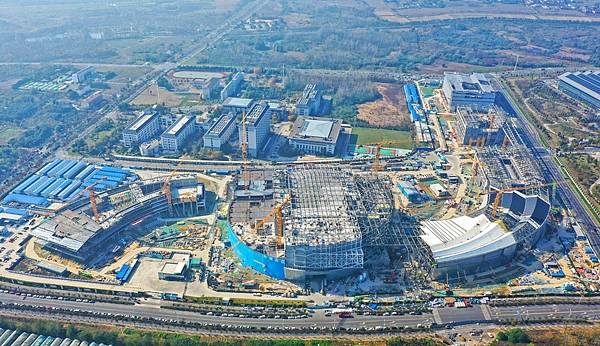
也因此,美媒《纽约时报》关注起了中美角力的新战场——核聚变。其发表于13日的报道指出,这项蕴 藏着无限清洁能源潜力的技术,其突破或将重塑两国乃至全球的能源格局。 美媒在报道中对比称,中美两国的核聚变研发路径截然不同:美国寄望于私营产业与市场创新驱动技术 突破,但其政府对该领域的支持力度屡遭诟病;而在地球另一端,中国已将核聚变列为国家优先发展事 项,正以惊人的速度调集资源推进研发、建设大型实验设施,目标明确地致力于在未来几年内实现关键 性技术突破。 报道指出,这场能源竞赛不仅关乎谁能率先掌握核聚变这项科学难题,更重要的是,获胜者将拥有重塑 全球能源格局和地缘政治联盟的能力,从而主导未来的清洁能源市场。 今年年初回国并入职北京大学的核物理学家刘畅,在接受美媒采访时透露了他的切身感受:此前在美国 普林斯顿等离子体物理实验室工作期间,他的团队因预算不足无法招募年轻科研人员。他直言,美国政 府支持力度欠缺,正是众多核聚变研究人员转投初创企业的重要原因之一。 与之形成鲜明对比的是,中方正投入大量资源攻克这项可能成为人类能源"终极解决方案"的技术。刘畅 强调,"中方能真正为重要的领域持续投入。" 【文/观察者网 阮佳琪】 ...
“中国正全力攻关人类能源‘终极方案’,美国呢?”
Guan Cha Zhe Wang· 2025-12-13 14:44
【文/观察者网 阮佳琪】 特朗普政府时期,美国将重心放在石油、天然气和煤炭的开采与海外销售上;而作为其主要经济竞争对 手的中国,早已跃居全球太阳能电池板、电池及电动汽车等清洁能源产品的最大供应国。 也因此,美媒《纽约时报》关注起了中美角力的新战场——核聚变。其发表于13日的报道指出,这项蕴 藏着无限清洁能源潜力的技术,其突破或将重塑两国乃至全球的能源格局。 美媒在报道中对比称,中美两国的核聚变研发路径截然不同:美国寄望于私营产业与市场创新驱动技术 突破,但其政府对该领域的支持力度屡遭诟病;而在地球另一端,中国已将核聚变列为国家优先发展事 项,正以惊人的速度调集资源推进研发、建设大型实验设施,目标明确地致力于在未来几年内实现关键 性技术突破。 报道指出,这场能源竞赛不仅关乎谁能率先掌握核聚变这项科学难题,更重要的是,获胜者将拥有重塑 全球能源格局和地缘政治联盟的能力,从而主导未来的清洁能源市场。 今年年初回国并入职北京大学的核物理学家刘畅,在接受美媒采访时透露了他的切身感受:此前在美国 普林斯顿等离子体物理实验室工作期间,他的团队因预算不足无法招募年轻科研人员。他直言,美国政 府支持力度欠缺,正是众多核聚变研究 ...
中方代表团出席2025年国际托卡马克物理活动协调委员会会议
Zheng Quan Shi Bao Wang· 2025-12-12 06:09
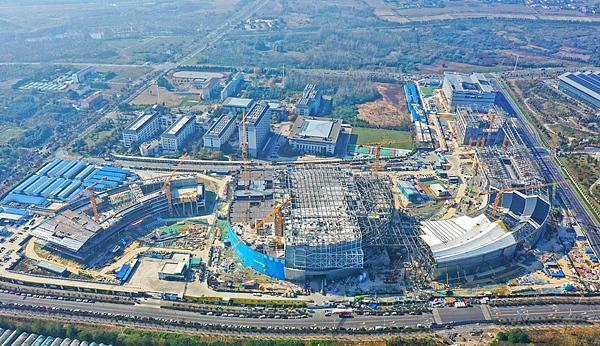
人民财讯12月12日电,中国国际核聚变能源计划执行中心今日官微消息,12月3-5日,国际托卡马克物 理活动(ITPA)协调委员会年度会议在国际热核聚变实验堆(ITER)组织总部召开。随着ITER计划进入装配 关键阶段,ITPA研究范围由物理研究拓展至物理和工程研究,ITPA下设专题组由七个增加至九个,新 增了关于托卡马克工程和运营相关的两个专题组。会议全面回顾了2025年ITPA开展理论研究、联合实 验、会议研讨等活动情况及取得的成果,并讨论提出下一年度拟开展的合作研究计划。会议决定, ITPA协调委员会下一届主席将由中方专家——中核集团首席科学家段旭如担任,任期自2026年至2028 年。 ...
可控核聚变概念爆发!5股涨停,2030年全球市场规模将达5000亿美元
Jin Rong Jie· 2025-12-12 03:41
Core Insights - The controllable nuclear fusion sector is experiencing significant market activity, with multiple stocks reaching their daily limit up, driven by the commercial potential of nuclear fusion technology [1] - The International Energy Agency predicts that the global nuclear fusion market could approach $500 billion by 2030, approximately 3.5 trillion yuan, highlighting the accelerating trend of nuclear fusion technology moving from laboratory to commercial application [1] Sector Analysis - **Superconducting Materials Sector**: The demand for high-performance superconducting materials is expected to rise as controllable nuclear fusion devices require strong magnetic fields, providing growth opportunities for related companies [2] - **Core Component Manufacturing Sector**: The precision manufacturing of core components like vacuum chambers and dewars is critical, and the initiation of various fusion projects will lead to increased orders for companies with advanced manufacturing capabilities [2] - **Power Equipment Sector**: Companies specializing in high-performance power supply systems for magnetic fields and heating will see demand growth as the industry develops, opening up market opportunities [2] Key Company Highlights - **Snowman Group**: Achieved two consecutive limit-up days, becoming one of the leading stocks in the sector, with business alignment and technical reserves that attract market attention [3] - **Hezhong Intelligent**: Involved in the development of vacuum chambers for fusion devices, benefiting from the sector's growth due to its strong background in high-end equipment manufacturing [3] - **Western Superconducting Technologies**: A leading domestic producer of superconducting materials, has developed engineering production technology for NbTi superconducting wire used in fusion projects, contributing to its stock performance [3] - **Aikesaibo**: Provides critical support services for magnetic and heating power supplies in fusion projects, with applications in several national projects, resulting in a stock increase of over 11% [3]