
Robotics

Search documents
专访郑永年:科技创新从0到1,需培育更多技术经纪人
2 1 Shi Ji Jing Ji Bao Dao· 2025-12-23 11:43
Core Viewpoint - The essence of current great power competition is technological competition, with China's technological innovation being a crucial driver as the country approaches the GDP levels of moderately developed nations [1][2]. Group 1: Technological Innovation in China - By 2025, China is expected to showcase remarkable achievements in technological innovation, including the launch of the DeepSeek R1 model and a rise in the global innovation index ranking [1]. - The "Shenzhen-Hong Kong-Guangzhou" innovation cluster has ranked first among global innovation clusters, highlighting China's growing influence in various future industries such as 6G, quantum computing, and biomedicine [1][3]. - The emphasis on technology and innovation in China's economic development is underscored by the frequent mentions of these terms in the 14th Five-Year Plan [1]. Group 2: Domestic and International Context - The shift towards high-quality economic growth in China necessitates technological innovation, as previous cost advantages are no longer sufficient for further economic expansion [3][4]. - China has transitioned from relying on imported technologies to achieving original innovations, establishing a robust industrial chain in various technology sectors [4][5]. - The concentration of global technological capacity is primarily in the U.S. and China, with other economies struggling to compete at scale due to high costs and resource requirements [5][6]. Group 3: Challenges and Opportunities - The rapid growth of technology sectors may lead to issues such as redundancy and market saturation, but competition will ultimately determine the successful players [8]. - The acceptance of new technologies in Chinese society provides fertile ground for innovation, emphasizing the importance of an effective market, proactive government, and a supportive social environment [9][10]. - The need for a balance between "open" and "closed" innovation strategies is highlighted, with a long-term view favoring open approaches for sustained progress [10]. Group 4: Role of Enterprises in Innovation - The increasing prominence of enterprises in technological innovation is evident, as they focus on practical and application-driven research, contrasting with the more theoretical approach of universities [12][13]. - The recognition of private sector scientists as academicians reflects a significant shift in China's perception of innovation, indicating a growing role for businesses in foundational research [12][13]. - The cultivation of "technology brokers" who understand both technology and market dynamics is essential for enhancing the conversion of research into practical applications [14]. Group 5: Future Directions and Policy Recommendations - There is a call for institutional reforms to align production relations with new productive forces, particularly in the innovative pharmaceutical sector [15]. - Support for high-tech startups and specialized small and medium enterprises is crucial, with a focus on creating a fair competitive environment and avoiding monopolistic practices by larger firms [16][17]. - The establishment of a collaborative ecosystem among cities like Guangzhou, Shenzhen, and Hong Kong is proposed to facilitate the internationalization of innovative outcomes [15][16].


人形机器人行业专题研究周报:银河通用完成3亿美元融资,智元组建机器人租赁平台-20251223
CHINA DRAGON SECURITIES· 2025-12-23 08:39
Investment Rating - The report maintains a "Recommended" rating for the humanoid robot industry [2][33]. Core Insights - The humanoid robot industry is experiencing significant financing activities and market expansion, with companies like Galaxy General completing a $300 million financing round, raising its valuation to $3 billion [6][28]. - The launch of the "Qingtian Rental" platform by Zhiyuan Robotics marks a significant development in the rental market for humanoid robots, aiming to cover over 200 cities by 2026 [24]. - The report highlights the successful production capacity of Zero Point Robotics, which has surpassed 100 units per month, indicating a strong foothold in the commercial application of humanoid robots [19][21]. Industry Dynamics - The humanoid robot index saw a decline of 2.11% from December 15 to December 19, 2025, while the Shanghai Composite Index showed a slight increase of 0.03% during the same period [6][13]. - The report notes that the industry is undergoing supply-side reforms, with leading companies benefiting from policy changes aimed at enhancing product quality and market competitiveness [3]. Company Developments - Galaxy General's recent financing round was led by China Mobile Chain Long Fund and included investments from various domestic and international institutions, indicating strong market confidence [28]. - Zhiyuan Robotics has launched an open rental platform that connects over 600 service providers, offering a range of rental services for humanoid robots [24]. - Itstone Intelligent Navigation has introduced the world's first autonomous embroidery robot, showcasing advancements in precision and control in flexible material handling [25]. Investment Recommendations - The report suggests focusing on companies such as Top Group, Sanhua Intelligent Control, Zhejiang Rongtai, and others, which are positioned well within the humanoid robot sector [33][34].



火山引擎、豆包或将牵手2026年央视春晚,AI成流量利器
Nan Fang Du Shi Bao· 2025-12-23 08:19
Group 1 - ByteDance's Volcano Engine will be the exclusive AI cloud partner for the 2026 CCTV Spring Festival Gala, with its smart assistant Doubao providing various interactive features [1] - The Spring Festival Gala has become a highly sought-after IP among internet giants, initiating a new round of competition for traffic [1] - Previous collaborations include WeChat's partnership in 2015, which resulted in 11 billion interactions on New Year's Eve, and Douyin's exclusive partnership in 2019, generating 24.7 billion video views [1] Group 2 - AI has emerged as a new collaboration element for internet companies with the Spring Festival Gala, with Alibaba Cloud being the exclusive AI cloud partner in 2025, utilizing AI technology for innovative stage designs [2] - In 2024, Baidu partnered with CCTV for the Spring Festival Gala, introducing features like AI fireworks and AI costume transformations [2] Group 3 - Robotics also played a significant role in the Spring Festival Gala, with the Yuzhu robot gaining popularity through its performance in the 2025 gala, showcasing advanced capabilities [3] - Yuzhu Technology is reportedly participating in the sponsorship bidding for the Spring Festival Gala [4]
欧普康视(300595.SZ):参股基金投资哈工艾斯德康开发的陪伴机器人,目前处于工程样机开发和验证阶段
Ge Long Hui· 2025-12-23 07:23
Group 1 - The company, Opcon Vision (300595.SZ), has invested in a fund that is developing an ophthalmic surgical robot, which is currently in the clinical trial phase [1] - The company has also invested in a fund that is developing a companion robot, which is in the prototype development and validation stage [1] - Both products have not yet been officially launched [1]


具身智能时代真的拉开序幕了
理想TOP2· 2025-12-23 07:22
维他动力成立于2024年12月9日,老大是余轶南,曾任地平线副总裁及软件平台产品线总裁,两位联创是赵哲伦与 宋巍,前者曾任理想智能驾驶产品总监,并在i8发布会前理想官方放了挺长时间李想与哲伦一起体验VLA的视频; 后者曾任地平线软件平台总架构师及智驾创始团队成员。 2025年12月8日TOP2线下体验了7小时左右,并与维他动力的多位研发/产品经理进行了交流。顺带一提理想团队此 前也问了维他动力团队是如何理解具身智能。 分享8个点: 1.汽车以外的其他具身智能C端产品已经可以面向创新者/早期采用者提供有用的产品了。 2025年11月26日李想在25Q3电话会议上花了 14min46s讲对具身智能怎么看,理想打算怎么做。完整版详见《 理想25Q3电话会议文字版 》 2025年12月23日维他动力发布的机器狗是具身智能时代真的拉开序幕的侧面印证。 世界具身智能中心一定会在中国,背后依托是中国物理世界供应链的即时响应/各个维度的成熟度/人才丰富度,数 字世界同样的即使响应/各个维度的成熟度/人才丰富度。这样的时势,必然会诞生多位具身智能杰出人物,中国人 一定会在其中占据超高比例。 只有中国才有机会在此时此刻发布一款9 ...

资金越跌越买,机器人ETF鹏华(159278)盘中净申购3100万份
Xin Lang Cai Jing· 2025-12-23 07:10
Group 1 - The robotics sector experienced fluctuations today, with funds strategically positioning themselves, as evidenced by the net subscription of 31 million units of the Penghua Robotics ETF (159278) [1] - The "Qing Tian Rent" robot leasing platform was officially launched at the National Robot Leasing Ecological Summit held in Shanghai on December 22, aiming to integrate the industry chain and create a nationwide open leasing network [1] - Guojin Securities highlighted that the supply chains of Tesla, Zhiyuan, and Huawei should be closely monitored in H2 2025, with Tesla's supply chain expected to resume operations after a brief pause, focusing on various components such as tactile sensors and high-power density motors [1] Group 2 - As of November 28, 2025, the Guozheng Robotics Industry Index (980022) reflects the price changes of listed companies related to the robotics industry, with the top ten weighted stocks accounting for 40.47% of the index [2] - The top ten weighted stocks in the Guozheng Robotics Industry Index include companies like Shuanghuan Transmission (002472) and Ecovacs (603486) [2] - The Penghua Robotics ETF (159278) closely tracks the Guozheng Robotics Industry Index, providing investors with exposure to the performance of the robotics sector [3]
具身智能走到分水岭:机器人大脑,应该卖“整机”还是“能力”?
机器人大讲堂· 2025-12-23 07:04
引言 过去一年,具身智能成为机器人产业最热的关键词之一。人形机器人、服务机器人、特种机器人密集发布,但 一个现实问题也越来越清晰地浮出水面: ▍ 从 " 卖机器人 " 到 " 卖大脑 " :产业逻辑正在发生变化 智能能力深度绑定硬件 算法围绕单一场景优化 产品更新依赖重新设计整套系统 机器人看起来更 " 聪明 " 了,但离真正的自主智能,仍然存在结构性差距。 近日, Robo Summit 机器人发展论坛(第二期)暨首届朝阳智能机器人生态大会在北京朝阳举办。千诀科 技创始人兼 CEO 高海川受邀发表主题演讲,并与银河通用创始人兼 CTO 王鹤、智平方副总裁邱巍等嘉宾共 同启动 " 朝阳区智能机器人生态伙伴建设计划 " ,围绕具身智能的技术演进与产业协同展开深入探讨。 在演讲中,千诀科技创始人兼 CEO 高海川分享了一个颇具产业争议的判断 —— 机器人智能的下一阶段竞争,不在"哪种形态跑得更像人",而在"机器人大脑是否真正独立、通用、可演 化"。 这一判断,正在重新划分机器人产业的技术路线。 长期以来,机器人产业的主流商业模式是 整机驱动 : 但随着应用场景快速扩张,这种模式的边界越来越明显: 每进入一个新行业 ...

IROS2025论文分享:基于大语言模型与行为树的人机交互学习实现自适应机器人操作
机器人大讲堂· 2025-12-23 07:04
Core Insights - The article discusses the integration of Large Language Models (LLMs) with Behavior Trees (BT) to enhance robotic task execution and adaptability in the presence of external disturbances [1][2][12]. Group 1: LLM and BT Integration - LLMs are utilized to interpret user commands into behavior trees that include task goal conditions [2]. - The combination of LLMs and BT allows for fewer calls to LLMs while managing external disturbances through an action database [2][12]. - A human-in-the-loop learning mechanism is proposed to refine the knowledge generated by LLMs, ensuring safety and adaptability in robotic operations [5][7]. Group 2: Human-in-the-Loop Learning Mechanism - The mechanism involves designing a context for LLMs that includes prompt engineering, manipulation primitives (MPs), and an action database [5]. - User interactions guide LLMs to correct and enhance the generated action knowledge, which is then added to the action database after user confirmation [7][12]. - The generated action knowledge consists of preconditions, postconditions, and a set of MPs, implemented in BT format [7]. Group 3: Task Evaluation and Performance - Eight tasks were designed to evaluate the proposed method, categorized into three difficulty levels: Easy, Medium, and Hard [9]. - The proposed method achieved a success rate of over 80% across the tasks, significantly outperforming baseline methods that lacked human interaction [12]. - The adaptability of the generated action knowledge was tested against external disturbances, achieving a success rate exceeding 70% [14]. Group 4: Generalization and Future Improvements - The generated action knowledge demonstrated good generalization capabilities, with success rates over 70% for certain tasks involving new objects [17]. - However, some tasks had success rates below 40% due to the inapplicability of MPs parameters to new objects, indicating a need for fine-tuning before application [17]. - Overall, the proposed human-in-the-loop learning mechanism enhances robotic learning performance, enabling robots to complete tasks and respond to external disturbances effectively [18].
对话智元姜青松:联合推出机器人租赁平台「擎天租」,明年会是个百亿级规模
IPO早知道· 2025-12-23 06:01
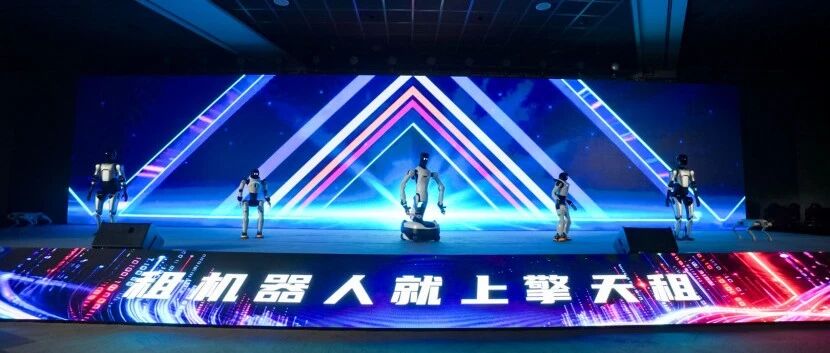
Core Viewpoint - The article discusses the launch of the robot rental platform "Qingtian Rent," which aims to create a new era in the robot rental industry by establishing a value co-creation and sharing mechanism, facilitating the accessibility of humanoid robots to the public [2][4]. Summary by Sections Platform Overview - "Qingtian Rent" integrates users, rental companies, content developers, and equipment manufacturers to enhance the overall value of the robot rental industry, defining a new era of RaaS (Robot as a Service) [4]. - The platform's core innovation is transforming high-threshold robot usage scenarios into a convenient rental model, similar to shared power banks, addressing industry pain points such as high operational costs and complex collaboration [4]. Strategic Goals - The "1234 Strategic Plan" aims to achieve partnerships with over 10 manufacturers, 200 premium service rental companies, 3,000 content creators, and 400,000 rental customers by 2026 [4]. - The ultimate belief is to leverage intelligent machines to create unlimited productivity, making efficient and flexible robot services permeate various industries [4]. Market Potential - The robot rental market has surpassed 1 billion yuan this year, with expectations to reach at least 10 billion yuan next year as manufacturers ramp up production and market demand increases [9][10]. - The anticipated growth is driven by the transition from novelty use to regular, scalable applications, similar to the evolution of ride-hailing services [10]. Usage Scenarios - The platform supports 13 major usage scenarios, including corporate events, exhibitions, retail promotions, and community security, indicating a broad potential for robot applications [11]. Open Platform Approach - "Qingtian Rent" is an open and inclusive platform, welcoming all robot manufacturers to join, regardless of their production capabilities, to match market demand with service providers [12]. Pricing Strategy - The platform aims to establish a competitive pricing system that satisfies both clients and rental service providers, ensuring it remains the most cost-effective robot rental platform nationwide [14].
宁波方正投资成立机器人公司
Xin Lang Cai Jing· 2025-12-23 03:35
企查查APP显示,近日,浙江创极星机器人有限公司成立,注册资本5000万元,经营范围包含:服务消 费机器人制造;服务消费机器人销售;工业机器人制造;智能机器人的研发等。企查查股权穿透显示, 该公司由宁波方正全资持股。 ...