先进制造业

Search documents
海南产经新观察:凭啥支撑经济持续增长?
Sou Hu Cai Jing· 2026-01-01 01:53
Core Viewpoint - The year 2025 is a milestone for Hainan, as it is expected to achieve full island closure and a stable economic growth, with GDP projected to exceed 800 billion yuan, marking a significant advancement in its economic development [1] Economic Performance - Hainan's economy is expected to show steady progress, with a GDP forecast to surpass 800 billion yuan, achieving three significant milestones in five years [1] - The advanced manufacturing sector is anticipated to drive industrial growth, with a double-digit increase in large-scale industries [1] - Retail sales of consumer goods are projected to grow at a rate that ranks among the top in the nation [1] Economic Structure and Growth Drivers - The economic structure is being optimized, with four leading industries accounting for nearly 70% of the total economic output [1] - Foreign investment has shown remarkable performance, with actual foreign capital utilization increasing by 51.5% in the first 11 months, and service import and export growth at 23.1% [1] - New growth drivers are emerging, with the annual output value of the South Breeding Industry expected to exceed 20 billion yuan, and the marine economy contributing 35.5% to GDP [1] Future Economic Policies - The government is expected to implement more proactive macroeconomic policies and moderately loose monetary policies, enhancing the external environment for Hainan's high-quality development [2] - The release of policy dividends from the Hainan Free Trade Port is anticipated to inject new momentum into economic growth [2] Strategic Focus Areas - Hainan will focus on five key areas to support sustained economic growth: 1. High-level opening-up to enhance international trade and investment [2] 2. Development of a modern industrial system with a focus on innovation and optimization of leading industries [2] 3. Strengthening technological and talent support through major research projects and talent attraction initiatives [3] 4. Deepening reforms to enhance internal dynamics and optimize the market environment [3] 5. Promoting coordinated regional development by integrating with major economic zones and initiatives [3]
推进完善产业工人技能形成与职业发展体系
Xin Lang Cai Jing· 2025-12-31 16:59
Group 1 - The Daxing District government and the district trade union held a joint meeting to discuss the 2025 key work report of the Daxing District Trade Union and related topics on industrial worker team construction reform [1][2] - In 2025, the Daxing District Trade Union aims to enhance political guidance for workers and will conduct 3,722 activities under the "Four Ones" series, engaging over 338,000 workers [1] - The district will continue to deepen the reform of the industrial worker team, focusing on emerging industries and advanced manufacturing, with the establishment of six district-level and one city-level craftsman academies, training over 10,000 workers [1][2] Group 2 - The Daxing District plans to implement a construction project for the industrial worker team, improve the coordination mechanism for reforms, and enhance the policy support system [2] - The district will optimize worker service supply, strengthen service networks, and establish grassroots service platforms to ensure effective service delivery to workers [2] - Emphasis will be placed on enhancing political awareness and integrating trade union work into the overall regional strategy, focusing on creating a skilled workforce that meets the needs of Daxing District's industrial development [2]
2025中国工业关键词:从新型工业化、AI+到万亿降本
Guan Cha Zhe Wang· 2025-12-31 09:48
首先,作为2025年工业领域核心任务,新型工业化被写入《政府工作报告》,其核心要义在于推动科创与产业创新深度融合,带动传统产业迭代更新与新型 产业发展壮大,为"十四五"圆满收官与"十五五"平稳开局夯实工业发展根基。 2025年作为"十四五"收官与"十五五"谋划的关键交汇点,中国工业产业在政策精准引领与创新驱动双轮驱动下,呈现出稳中有进、质效双升的良好发展态 势。 数据显示,全年规模以上工业增加值同比增长5.9%,1—11月规模以上高技术制造业、装备制造业增加值同比分别增长9.2%和9.3%;制造业转型升级步伐持 续加快,累计建成7000余家先进级、500余家卓越级智能工厂,为产业高质量发展筑牢根基。 本文将围绕年度核心关键词,结合行业实践与典型案例,复盘2025年中国工业产业发展脉络,展望未来发展方向。 一、新型工业化 2025年,新型工业化称得上中国工业产业发展的总纲领。 在政策指引下,各地纷纷聚焦实体经济,以先进制造业为骨干构建现代化产业体系。长三角地区推动电子信息、高端装备等产业集群化发展,通过跨区域协 同创新实现产业链上下游高效联动;珠三角地区则依托智能制造、绿色制造试点示范,推动传统制造业向高端化、 ...

江苏全年新增A股上市公司29家 数量位居全国第一
Zheng Quan Shi Bao Wang· 2025-12-31 08:57
Group 1 - On December 31, 2025, Xinguangyi Electronics Co., Ltd. officially listed on the Shenzhen Stock Exchange, marking Jiangsu's 29 new A-share listed companies in 2025, the highest in the country [1] - Xinguangyi, established in 2004, focuses on the R&D, production, and sales of high-performance special functional materials, achieving domestic substitution of key materials previously dominated by foreign companies [1] - The company issued 36.716 million shares at a price of 21.93 yuan per share, with a total fundraising of 805 million yuan, exceeding the target by approximately 170 million yuan [1] Group 2 - In 2025, Jiangsu's listing trend shows an average of 2-3 companies listed each month, with a total of 5 companies listed in December alone, primarily in the manufacturing sector [1] - Jiangsu has a solid industrial foundation, with over 57,000 high-tech enterprises and 22,000 provincial-level specialized and innovative small and medium-sized enterprises [2] - The province has implemented a strategic cooperation agreement with major exchanges to enhance direct financing for quality enterprises and promote high-quality development [2] Group 3 - Jiangsu is developing a comprehensive financial service system that aligns with technological innovation, focusing on nurturing "patient capital" and enhancing the synergy of equity, loans, bonds, insurance, and guarantees [3] - The province has a leading number of companies listed on the Sci-Tech Innovation Board (115 companies) and the Beijing Stock Exchange (56 companies) [3] - The Jiangsu Provincial Financial Office aims to improve the enterprise listing service system and promote more technology-driven companies to access multi-level capital markets [3]
淄博解锁“强富美优”新可能
Da Zhong Ri Bao· 2025-12-30 02:38
大力推进工业经济"头号工程"和服务业攻坚突破行动,积极助力企业稳生产、上项目、拓市场…… 12月26日,中共淄博市委十三届十次全体会议暨市委经济工作会议召开。会议审议通过了《中共淄博市 委关于制定淄博市国民经济和社会发展第十五个五年规划的建议》(以下简称《建议》),分析当前经 济形势,安排部署2026年经济工作。 《建议》立足"十五五"时期淄博发展的历史方位,明确了未来五年发展的指导思想、主要目标和重点任 务,全面绘就城市发展蓝图,为推动基本建成新时代社会主义现代化强市取得决定性进展、加快实 现"强富美优"城市愿景,提供了清晰明确的任务书与路线图。 坚实的过往,是前行的底气。"十四五"时期,淄博坚定不移推进绿色低碳高质量发展,经济社会发展取 得一系列成就,为新征程奠定坚实基础。经济实力实现跃升,现代化产业体系加快构建,科技创新能力 持续增强,改革开放取得新突破,城乡区域发展更加协调,绿色转型成效明显,城市品牌更加响亮,民 生品质持续提升,党的建设全面加强,"十四五"主要目标任务即将胜利完成,新征程上新时代社会主义 现代化强市建设实现良好开局。 现代化产业体系是城市高质量发展的核心支撑,《建议》提出"构筑北方地 ...
解读深圳“十五五”:资本锚定新质生产力,构建产业金融中心
Nan Fang Du Shi Bao· 2025-12-30 00:55
Core Viewpoint - Shenzhen has officially proposed the establishment of an "Industrial Financial Center" as an independent strategic goal in its 15th Five-Year Plan, marking a significant shift in its financial development logic and aiming to enhance the synergy between finance and industry [1][2][3]. Financial Center Development - The proposal signifies a fundamental change from traditional financial centers focused on capital allocation and liquidity to a model where financial success is measured by its ability to catalyze specific industrial clusters like advanced manufacturing and hard technology [2][3]. - Shenzhen aims to differentiate itself from other financial hubs like Shanghai and Beijing by creating a model that directly supports industry through finance, leveraging its strong industrial base [2][3]. Focus on Patient Capital - The plan emphasizes the cultivation of "patient capital" to address the inherent conflicts between the long-term nature of hard technology ventures and the short-term returns typically sought by traditional finance [4][5]. - Patient capital is defined as capital that is willing to endure longer investment horizons and support early-stage technology companies, thus becoming a partner in their development [4][5]. Systemic Innovations - The proposal outlines a comprehensive financing system that includes angel investment, venture capital, equity investment, and credit financing, aiming to reconstruct risk-sharing mechanisms [5][10]. - Innovations in the conversion of assets, particularly through intellectual property and data resources, are highlighted as critical to improving capital accessibility for technology firms [5][10]. Collaboration with Hong Kong - The plan emphasizes the importance of collaboration with Hong Kong's international financial center, aiming to create a synergistic effect that combines Shenzhen's industrial strengths with Hong Kong's capital market capabilities [9][10]. - Specific initiatives include enhancing cross-border financial services and developing a complete innovation financial chain that integrates financing, research, and market application [9][10]. Risk Management and Regulatory Framework - The proposal stresses the need for a robust risk prevention system tailored to the unique risks of industrial finance, including the establishment of a comprehensive debt monitoring system [10][11]. - Regulatory innovations, such as the "regulatory sandbox" for cross-border asset verification, are essential for addressing financing challenges faced by light-asset companies [10][11]. National Implications - Experts believe that Shenzhen's approach to building an industrial financial center could serve as a replicable model for other regions in China, promoting deeper integration of finance and industry [11][12]. - The strategic focus on patient capital, market-driven mechanisms, and intellectual property capitalization is seen as a pathway for enhancing the overall financial ecosystem in China [11][12].
全省工业和信息化工作会议召开
Xin Hua Ri Bao· 2025-12-29 22:26
Core Viewpoint - The meeting held in Nanjing on December 29 summarized the achievements of the "14th Five-Year Plan" and outlined key tasks for the "15th Five-Year Plan" in Jiangsu's industrial and information sectors, emphasizing the importance of new industrialization and high-quality development [1] Group 1: Achievements and Progress - Since the implementation of the "14th Five-Year Plan," Jiangsu's industrial and information system has effectively executed the "Eight Major Actions" for a strong manufacturing province, leading to a stable industrial economy [1] - From 2021 to 2024, the province's industrial added value has steadily increased, with growth rates of 12.8%, 5.1%, 7.6%, and 7.7%, respectively, surpassing the national averages by 3.2, 1.5, 3.0, and 1.9 percentage points [1] - By 2025, Jiangsu is expected to maintain its position as the largest manufacturing province in China, with the highest index for high-quality manufacturing development nationwide [1] Group 2: Future Plans and Goals - The year 2026 marks the beginning of the "15th Five-Year Plan," where the industrial and information system aims to prioritize new industrialization as a key task [1] - The focus will be on promoting technological and industrial innovation, integrating information technology with industrialization, and enhancing the synergy between industrial chains, innovation chains, talent chains, and financial chains [1] - The goal is to develop a modern industrial system centered around advanced manufacturing, ensuring a strong start for the "15th Five-Year Plan" and demonstrating the responsibility of the industrial and information system in Jiangsu's economic development [1]
长沙城发集团以改革之笔绘就城市发展新图景|长沙晚报深度观察
Chang Sha Wan Bao· 2025-12-28 23:40
Core Viewpoint - Changsha Urban Development Group is committed to enhancing urban life through a comprehensive business layout focused on urban development, construction, operation, and investment, achieving significant growth in revenue, net profit, and tax contributions in 2023 [3] Group 1: Urban Development and Economic Growth - The company has adopted a "one core, three poles" business strategy, focusing on urban development as its core while expanding into construction, operation, and investment [3] - In 2023, the company reported a positive trend with rapid growth in operating income, net profit, and tax payments, reflecting its strengthening comprehensive strength and brand recognition [3] Group 2: Cultural and Tourism Integration - The establishment of Changsha Urban Development Cultural Tourism Group marks a significant step in integrating cultural and tourism resources, enhancing the city's cultural soft power and tourism appeal [7][8] - The company has launched various cultural tourism initiatives, including light shows and new tourist attractions, contributing to Changsha's ranking among the top 10 popular travel destinations in China [7] Group 3: Strategic Partnerships and Innovations - A strategic cooperation agreement was signed with Hunan First Normal University to promote a three-in-one model of cultural tourism integration, focusing on red tourism and educational experiences [11] - The company has introduced innovative cultural performance products and immersive experiences, revitalizing Hunan's cultural heritage and enhancing its market presence [11] Group 4: Industrial Upgrading and Technological Innovation - The company is actively investing in advanced manufacturing and strategic emerging industries, establishing a 2 billion yuan investment fund to support innovation and industrial upgrades [19] - A partnership with Hunan University aims to foster a collaborative ecosystem for technological innovation and market development, enhancing the region's manufacturing capabilities [17] Group 5: Urban Infrastructure and Development Projects - The company is involved in significant urban infrastructure projects, such as the Changsha Olympic Sports Center, which aims to fill the gap in large sports venues in Hunan and drive regional development [23] - The Moon Island project has been revitalized as an ecological leisure sports destination, hosting various high-profile events and enhancing the city's attractiveness [24] Group 6: Commitment to Sustainable Development - The company has developed an intelligent sewage treatment system that significantly improves efficiency and reduces operational costs, contributing to ecological sustainability [20] - Changsha Urban Development Group is focused on creating a modern urban landscape that integrates people, industry, and city, promoting a more livable and intelligent urban environment [25]

江苏一体推进“两业深融”发展的“四新”战略选择
Xin Hua Ri Bao· 2025-12-28 21:59
制度型创新是释放发展潜能的根本性创新,更是推动"两业深融"提质增效的核心支撑。从"十五五"发展 规划建议来看,服务业"扩能提质"与制造业"提质升级"将形成共向发力态势,以制度型创新为先导构建 融合新格局,将成为江苏的必然战略选择。这种"先破后立"的创新逻辑,既需突破传统产业分类的制度 壁垒,更要建立适配融合发展的规则体系。 江苏可率先探索在《国民经济行业分类》中增设"数智服务型"和"数智制造业"专属代码,建立融合型企 业"双重身份"备案制度及认定机制,从统计口径上破解融合业态"归属模糊"的难题。在此基础上,需明 确新格局的核心要义是实现"两业深融"的高品质、高效能、高水平发展,围绕智能化、绿色化、融合化 导向,在战略性新兴产业领域率先制定引领性地方标准、指导性服务规范和示范性合同文本,为全 国"两业深融"提供可复制的制度样本。结合江苏"智改数转网联"的实践基础,制度创新更需衔接现有政 策体系,通过动态调整优化,让政策供给与融合发展需求精准匹配。 集成融合: □ 李苏北 从工业设计、数字内容到品牌文创,文化要素正深度嵌入制造价值链,推动"江苏制造"向"江苏创造"跃 升。近年来,江苏在"两业深融"领域积累了深厚实 ...
周洲会见广州工控集团党委书记、董事长景广军一行
Xin Lang Cai Jing· 2025-12-28 15:18
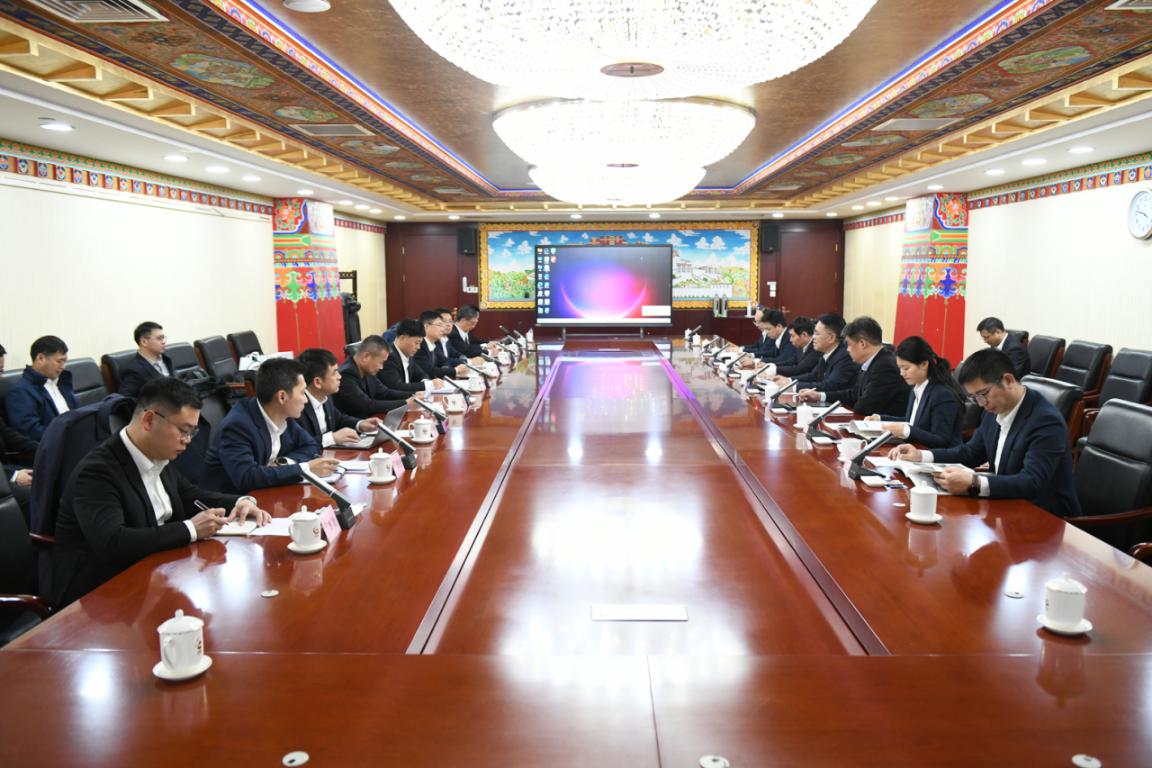
12月24日,集团公司党委书记、董事长周洲在北京总部会见广州工业投资控股集团有限公司党委书记、董事长景广军一行,双方就矿山装备智能化、绿色矿 山建设、装备研发制造与产业链供应链协同发展等议题进行深入交流,共同探讨合作前景与发展路径。 景广军对中国黄金集团的热情接待表示感谢,并介绍了广州工控集团的发展战略与核心业务。他表示,中国黄金集团是保障国家矿产资源安全的"压舱石", 产业链完整、科技创新特色鲜明。广州工控集团以打造世界一流的先进制造业战略投资平台为目标,正持续强化产业组织、原创技术策源与品牌国际化开拓 能力。双方产业契合度高、合作空间广阔,希望在矿业装备升级、战略性矿产资源开发、产业股权投资、国际市场拓展等领域建立紧密协同关系,创新合作 模式,实现资源共享与优势互补,共同打造央地合作与产融结合的新典范。 集团公司有关部室及企业负责人,广州工控集团有关业务部门负责人、山河智能装备股份有限公司有关人员参加此次交流。 周洲对景广军一行的到访表示欢迎,并简要介绍了中国黄金集团的历史沿革、产业布局及"十五五"规划总体情况。他表示,作为我国黄金行业唯一一家中央 企业,中国黄金集团坚持全产业链发展,在矿产资源开发、选冶 ...