Software

Search documents
AI恐慌引发软件股“大逃杀”,华尔街反应过度了?
Jin Shi Shu Ju· 2026-02-12 08:59
Core Viewpoint - The software sector on Wall Street has faced significant turmoil due to fears that artificial intelligence (AI) will disrupt the industry, culminating in a recent sell-off described as a "collapse" [1] Group 1: Market Reactions - Major software companies have seen substantial stock declines, with ServiceNow (NOW) down over 22%, Thomson Reuters (TRI) down over 26%, Intuit (INTU) down over 26%, Snowflake (SNOW) down 18%, and Salesforce (CRM) down over 20% since January 29 [1] - The market logic suggests that AI companies like Anthropic and OpenAI may either develop their own software to compete with existing products or enable businesses to easily create custom internal software, both scenarios posing risks to traditional software firms [1] Group 2: Analyst Perspectives - Analysts argue that the panic on Wall Street may be an overreaction, suggesting that AI may not replace all existing software companies but could enhance the services of many legacy firms [1][2] - Jason Ader from William Blair emphasizes the need to differentiate between software companies facing greater risks and those that are more secure, indicating that the current sell-off may not reflect the true value of individual companies [2] Group 3: Challenges for AI Companies - There are significant barriers preventing AI companies from overtaking existing software firms, including the reluctance of enterprises to allocate IT resources for developing custom software unless it offers a critical long-term advantage [3] - The initial development costs of custom software are only part of the equation, and despite the availability of open-source software, the third-party software market has continued to thrive [3] - Ader notes that using AI tools to create new applications may not be practical for companies that already have effective solutions in place [3] Group 4: Integration of AI - AI functionalities are likely to be integrated into existing software, enhancing their capabilities and customer value rather than completely replacing them [4] - Data governance issues also pose challenges, as companies may be hesitant to share proprietary data with AI models, preferring to work with established partners [5] - While some software companies may struggle to keep pace with the evolving AI landscape, those that adapt are likely to thrive [5]
友车科技股价异动涨近4%,业务转型与AI布局受关注
Jing Ji Guan Cha Wang· 2026-02-12 08:24
Core Viewpoint - The stock price of Che Technology (688479) experienced significant movement on February 12, 2026, closing at 24.82 yuan, up 3.94%, with a trading volume of 1.25 billion yuan and a turnover rate of 8.15% [1] Group 1: Stock Price Movement - The stock has seen a cumulative increase of 31.81% year-to-date, with an 11.00% rise over the last five trading days [1] - On February 12, there was a net inflow of 30.17 thousand yuan from major funds, with large orders amounting to 98.10 thousand yuan, indicating heightened trading activity [2] Group 2: Business and Technical Development - Despite a 24.42% year-on-year decline in revenue reported for Q3 2025, the company is actively expanding its customer base in the new energy sector (e.g., Li Auto, Avita) and in Southeast Asia and Europe, with overseas revenue increasing by nearly 70% [3] - The establishment of an AI Innovation Strategic Division and the launch of an enterprise-level AI platform have positioned the company as a potential player in the integrated vehicle-road-cloud sector [3] Group 3: Sector Performance - On February 12, the domestic software sector rose by 0.61%, with increased attention on technology-related themes [4] - The company had previously reached its daily limit on January 14 due to developments in AI technology, and there is ongoing market discussion regarding its long-term strategy in the intelligent transportation data service sector [4]

AI vs SaaS:先卖再问,市场“卖对了一半”?
Hua Er Jie Jian Wen· 2026-02-12 08:24
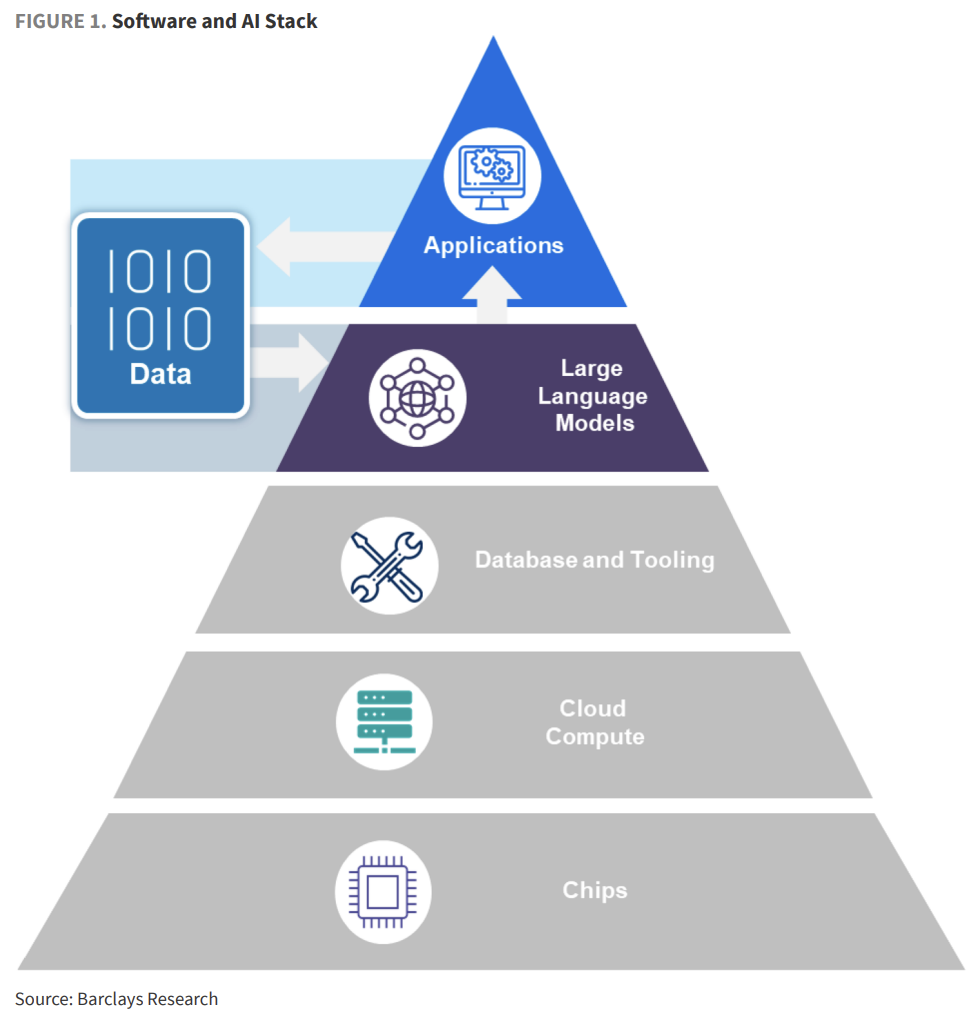
Core Insights - The recent release of Anthropic's products has triggered a significant sell-off in enterprise software stocks, revealing an overreaction in the market regarding AI threats [1][3] - Barclays highlights that while AI tools are encroaching on the application layer of SaaS companies, they do not threaten the foundational "system of record" infrastructure, which is crucial for companies like Salesforce and SAP [1][3] Group 1: Market Reaction and Misunderstandings - The release of Claude Cowork by Anthropic has been described as the tipping point for the decline in enterprise software stocks, with Salesforce and Workday seeing over a 40% drop in the past year [3] - Investors are confused about the capabilities of AI, mistakenly believing that new AI tools will completely replace traditional SaaS software, leading to a devaluation of established companies [3][12] - Barclays' report argues that the simplistic view of AI as a total replacement for software does not apply to most enterprise software companies [3] Group 2: AI Capabilities and Limitations - Generative AI excels in pattern recognition and initial draft generation but has fundamental limitations due to its probabilistic nature, making it less effective in scenarios requiring absolute accuracy [4][5] - Traditional software operates on deterministic rules, ensuring consistent outputs, while AI software functions probabilistically, lacking guaranteed consistency [5][6] Group 3: System of Record Companies - Barclays identifies three categories of enterprise software companies that have been mispriced during the sell-off, starting with system of record companies like Salesforce and SAP, which provide critical data requiring certainty [7][8] - SAP's position is particularly strong, as it manages essential business data and workflows that generative AI cannot handle effectively [7][8] - The report suggests that AI will not replace these systems but will instead increase their importance as AI creates more data touchpoints [8] Group 4: Misjudged Investment Opportunities - Besides system of record companies, Barclays points out two other categories that are misjudged: beneficiaries of AI agents and AI computing providers, which may see increased demand due to AI expansion [9] - There is a contradiction in the market logic; if AI is powerful enough to disrupt the software industry, the demand for computing power should rise, yet companies like Oracle and CoreWeave have also faced sell-offs [9] Group 5: Application Layer Challenges - The market's panic is not entirely unfounded, as SaaS companies have struggled with poor user interfaces, high prices, and security vulnerabilities, leading to customer dissatisfaction [10] - Companies like Klarna are moving away from traditional SaaS products in favor of smaller firms, utilizing AI tools to build their own applications, which highlights a genuine threat to the SaaS model [10] Group 6: Future Market Dynamics - The current market correction is seen as necessary, as SaaS companies have enjoyed inflated valuations by controlling both infrastructure and interface [11] - The emergence of AI technologies that can operate above system records may erode the pricing power of SaaS companies, indicating a shift in the profitability landscape [11] - As understanding of AI capabilities and SaaS business models deepens, the market may begin to re-evaluate companies incorrectly labeled as "AI victims," while those relying on poor application layers may face continued valuation pressure [12]

豆包视频生成模型Seedance 2.0发布 豆包、即梦接入
智通财经网· 2026-02-12 07:31
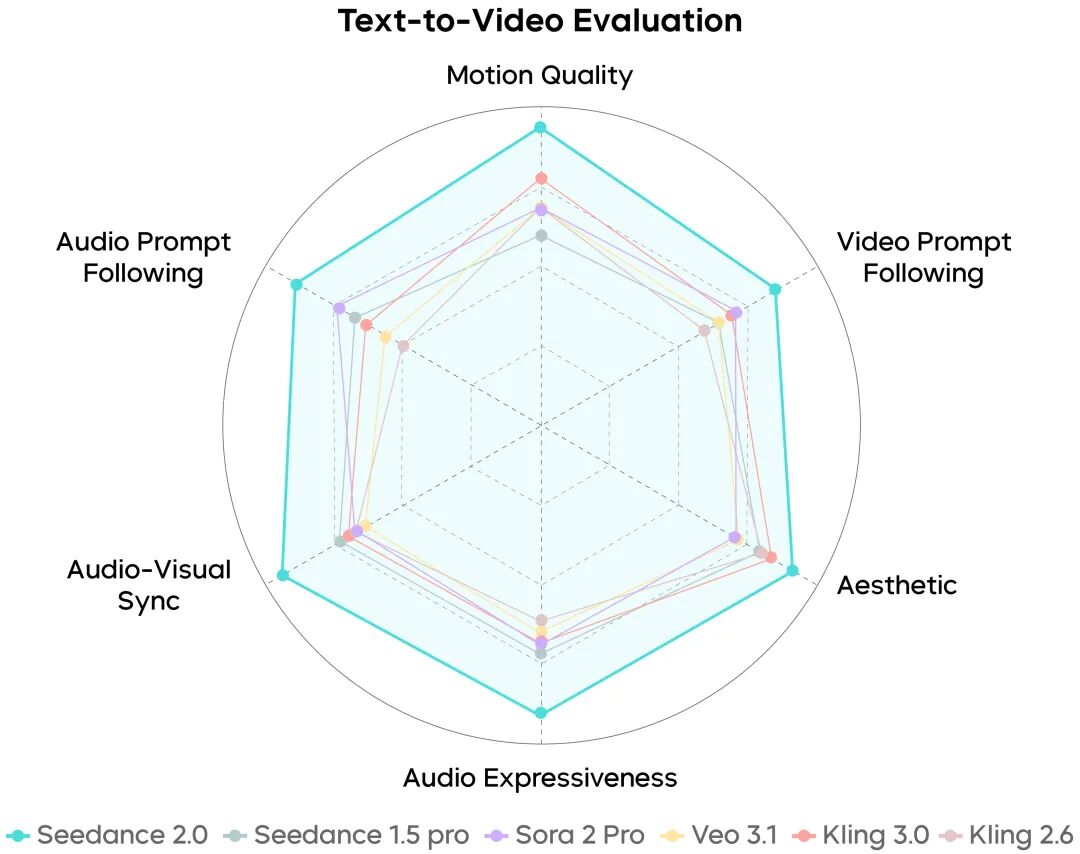
Core Insights - The official release of Seedance 2.0 on February 12 enhances video generation capabilities, addressing challenges related to physical laws and long-term consistency while providing unprecedented creative freedom for users [1][2] - The model currently restricts the use of real human images/videos as reference subjects, requiring verification or authorization for such use [1] Group 1: Video Generation Capabilities - Seedance 2.0 achieves state-of-the-art (SOTA) levels in generating complex interactions and movements, with high fidelity in modeling character actions that adhere to real-world physics [1][2] - The model supports multi-modal input, including text, images, audio, and video, significantly increasing creative flexibility by allowing reference to various elements such as composition, actions, and effects [1][2] Group 2: Control and Editing Features - The model enhances instruction adherence and controllability, accurately reproducing complex scripts while maintaining stable subject consistency [2] - New features include video editing and extension capabilities, enabling users to direct their projects like filmmakers [2] Group 3: Audio and Production Adaptability - Seedance 2.0 integrates dual-channel stereo technology for high-fidelity, immersive sound generation, supporting multi-track audio outputs that align precisely with visual content [2] - The model is adaptable for various production scenarios, including commercial ads, film effects, game animations, and commentary videos, with an API service expected to launch in mid-February [2] Group 4: Performance Evaluation - Comprehensive assessments indicate that Seedance 2.0 performs at an industry-leading level across multi-modal scenarios, although there are areas for improvement in detail stability, multi-character matching, subject consistency, text accuracy, and complex editing effects [6]
鸥玛软件(301185.SZ):已将多项自研的AI技术应用于考试测评的关键环节
Ge Long Hui A P P· 2026-02-12 07:29
Core Viewpoint - The company, Ouma Software (301185.SZ), is focusing on the integration and large-scale application of AI technology in the examination and assessment business, which is expected to enhance its core competitiveness and future growth potential [1] Group 1: AI Technology Applications - The company has successfully applied multiple self-developed AI technologies in key stages of the examination process, including intelligent proposition technology for qualification, civil service, and public institution exams, improving the scientific and standardized nature of proposition [1] - Intelligent examination monitoring technology is utilized in the organization of educational and qualification exams, ensuring fairness and justice during the examination process [1] - Intelligent grading and recognition technologies are continuously expanding their application in various exams, including national education, professional qualification, civil service, and public institution exams, establishing a solid foundation for deeper and broader applications of AI in the examination and assessment field [1]
鸥玛软件(301185.SZ):将积极探索与包括商业航天在内的各前沿领域开展技术交流与业务合作的可能性
Ge Long Hui· 2026-02-12 07:26
Core Viewpoint - Ouma Software (301185.SZ) is focused on the examination and assessment sector, providing comprehensive information technology solutions and services to government departments, industry associations, and enterprises [1] Group 1: Company Overview - The company has accumulated years of technical expertise and industry experience in artificial intelligence, big data, blockchain, and cloud computing [1] - Ouma Software has successfully applied its technological achievements across the entire examination and assessment process, gaining rich project implementation experience [1] Group 2: Business Expansion - The company's technical reserves align well with the core needs of professional assessment in the commercial aerospace sector, satellite data quality control, and operational auditing [1] - Ouma Software plans to actively explore technical exchanges and business collaborations in cutting-edge fields, including commercial aerospace, to convert its technological accumulation into solutions for national strategic emerging industries when the timing is right [1]
彩讯股份:已完成RichMail等核心办公产品的鸿蒙原生适配
Ge Long Hui· 2026-02-12 07:25
Core Viewpoint - The integration of AI technology with office scenarios presents a significant opportunity for the industry, aligning with the company's strategic focus on intelligent agent technology, which has been in development for three years [1] Group 1: Company Strategy and Development - The company has established the Rich AIBox integrated platform, which is entering a critical phase of large-scale implementation, aligning with industry trends of "agent collaboration, safety and control, and human-machine collaboration" as reported by Anthropic [1] - The company's methodology outlined in the "Enterprise Service AI White Paper" emphasizes that "the value of enterprise AI = safety compliance × (scenarios + data + models + services)" [1] - The company is committed to "continuous investment and pragmatic implementation" in the field of intelligent office solutions, with a projected 20.13% year-on-year increase in R&D investment for 2024 [1] Group 2: Technological Focus and Product Development - The core focus is on optimizing the "Rich AI full-stack service system," which has developed a technical path of "mainstream large model integration + self-developed AI module deepening" [1] - Key capabilities built on the Rich AIBox platform include low-code control for intelligent agents, multi-agent collaboration, structured supervision, data feedback loops, and a safety compliance foundation [1] - The company has completed the HarmonyOS native adaptation of core office products like RichMail, providing technical support for products with hundreds of millions of users, such as those for China Mobile [1] Group 3: Future Plans and Market Approach - The company plans to continue following the white paper's approach of "entering from high-frequency essential scenarios" to expand multi-terminal scenarios and industry-specific solutions [1] - The goal is to integrate intelligent agent technology into core scenarios such as collaborative office and knowledge management [1] - The company will maintain compliance in operations, focusing on technological R&D and product innovation, with the Rich AIBox platform at the core to continuously convert intelligent agent capabilities into perceivable business value for clients [1]

世盟股份(001220.SZ):公司及子公司拥有计算机软件著作权
Ge Long Hui· 2026-02-12 07:06
格隆汇2月12日丨世盟股份(001220.SZ)公布,公司及子公司拥有计算机软件著作权。 ...
阿波罗资管:软件行业步入“暴烈技术周期”,估值逻辑正面临历史性重置
智通财经网· 2026-02-12 06:49
在接受采访时,齐托解释称,随着估值经历重大重置,市场正开始激进地筛选赢家和输家。 齐托表示,该行业依然至关重要,但投资格局已发生了根本性的转变。"面对当前正在发生的一切,我 们必须保持极度的谦逊,"他说,"对于我们是否真的了解一年或两年后的世界会是什么样子,我们必须 进行极其深思熟虑的考量。" 尽管他预计软件的使用量会增长,但投资者愿意支付的价格正在被大幅重新校准。 智通财经APP获悉,阿波罗资产管理公司联席总裁约翰·齐托警告称,受人工智能颠覆性力量的驱动, 软件行业正步入一个"极其暴烈的技术周期"的早期阶段。 当前市场的不确定性已经体现在赛富时(CRM.US) 和 Workday (WDAY.US) 等巨头的股价中。 "市场给出的折现率已经计入了这种不确定性,"齐托观察到。他指出,由于新的融资开始将此前被忽视 的颠覆风险纳入考量,一些股票已经大幅下跌。 齐托提出了一个具有警示意义的历史对比:他指出,即使目前的软件营收看起来很健康,但颠覆往往需 要数年时间才能体现在销售数据中。他提到,当 iPhone 在 2007 年推出时,黑莓的销量实际上是在 2011 年才达到顶峰——这是当今软件公司应该引以为戒的预警。 ...
If Software Is Dead, Microsoft Stock Wins (NASDAQ:MSFT)
Seeking Alpha· 2026-02-12 06:33
Core Insights - The article discusses the expertise of James Foord, an economist with a decade of experience in analyzing global markets, and his leadership role in The Pragmatic Investor, which focuses on building diversified investment portfolios [1] Group 1: Company Overview - The Pragmatic Investor aims to preserve and increase wealth through robust portfolio strategies [1] - The investment group covers various sectors including global macro, international equities, commodities, technology, and cryptocurrencies [1] Group 2: Services Offered - The Pragmatic Investor provides features such as a dedicated portfolio, weekly market updates, actionable trades, technical analysis, and a chat room for investor engagement [1]