资产管理

Search documents
全国首单含数据知识产权的银发经济专题ABS成功发行
Zhong Zheng Wang· 2025-09-29 11:55
Core Viewpoint - The successful issuance of the "Caitong-Hangzhou Binjiang Intellectual Property Phase 2 Asset-Backed Special Plan (Technology Innovation)" marks a significant development in the asset-backed securities (ABS) market, being the first nationwide ABS product focused on data intellectual property in the silver economy sector [1][2]. Group 1: Project Details - The issuance scale of the project is 102.5 million yuan, and it includes 71 patents from 14 high-quality technology innovation enterprises located in the Hangzhou High-tech Zone (Binjiang) [1]. - The financing cost for the participating enterprises is only 1.195%, significantly reducing their financing expenses [1]. Group 2: Background and Strategic Importance - This project is part of a broader initiative by Caitong Asset Management to apply for multiple phases of the asset-backed special plan, with the first phase already listed on the Shenzhen Stock Exchange in January, which was the first to include game and animation copyrights [1]. - Caitong Asset Management has established a comprehensive product matrix covering ABS, Pre-ABS, private REITs, and public REITs, providing full-chain services from asset selection to financing design and subsequent operations [2]. Group 3: Market Impact and Future Prospects - The project aims to facilitate the conversion of data resources into financial capital, effectively serving technology innovation enterprises in the pharmaceutical, health, and medical product sectors [2]. - The success of this initiative has generated interest from more small and micro technology enterprises and financial institutions, with local governments encouraged to use this as a branding tool for future investment attraction [2].
全国首单!含数据知识产权的银发经济专题ABS发行
Zheng Quan Ri Bao Wang· 2025-09-29 10:11
Core Viewpoint - The successful issuance of the "Caitong-Hangzhou Binjiang Intellectual Property Phase 2 Asset-Backed Special Plan (Technology Innovation)" marks a significant milestone as the first ABS product in the silver economy sector that includes data intellectual property in China [1][2] Group 1: Project Details - The issuance scale of the project is 102.5 million yuan, and it is part of a series of plans where Caitong Asset Management aims to apply for five phases of asset-backed special plans in 2024 [1] - The underlying assets include 71 patents from 14 high-quality technology innovation enterprises located in the Hangzhou High-tech Zone (Binjiang) [1] - The financing cost for the enterprises is only 1.195%, significantly reducing their financing expenses [1] Group 2: Company Strategy and Market Position - Caitong Asset Management has established a comprehensive product matrix covering ABS, Pre-ABS, private REITs, and public REITs, providing full-chain services from asset selection to financing design and subsequent operations [1] - The company has issued 51 ABS products this year, totaling over 39 billion yuan, ranking 8th in the industry for both the number and scale of issued products [2] - Since its establishment, Caitong has cumulatively issued 224 ABS products, amounting to over 178 billion yuan [2] Group 3: Industry Impact and Future Outlook - The project effectively connects data resources to financial capital, serving technology innovation enterprises in the pharmaceutical, health, and medical product sectors, aligning with national strategies to address population aging [2] - The successful implementation of this project has generated interest from more small and micro technology enterprises and financial institutions, indicating a positive response to Caitong's efforts in serving Zhejiang businesses and the technology finance sector [2]
养老金融周报(2025.09.22-2025.09.26):德国将向6岁以上儿童发放“养老储备金”-20250929
Ping An Securities· 2025-09-29 08:46
Group 1 - Germany proposes a pension crisis solution by providing a monthly payment of 10 euros to children aged 6-18 starting from January 1, 2026, aimed at fostering early savings and investment habits for retirement [6][7][9] - The initiative is expected to cost approximately 15 trillion euros annually for public finances, as it aims to address the increasing social expenditure due to an aging population and economic stagnation [6][7] - Currently, only 17% of German households own stocks, compared to 40% in the UK and over 60% in the US, highlighting a need for increased financial literacy among the younger population [7] Group 2 - In the US, the Pension Risk Transfer (PRT) market has seen a decline, with sales dropping to nearly 11.5 billion dollars in Q2 2025, a 56% year-on-year decrease [2][8] - The PRT market is expected to recover in the latter half of 2025, but the total sales for the year may still fall below the average of 2024 [2][8] - The number of companies involved in PRT transactions has doubled over the past decade, indicating a growing interest in transferring pension liabilities to insurance companies [10] Group 3 - Norway's sovereign wealth fund announced a 1.5 billion dollar investment in Brookfield's Global Transition Fund II, focusing on renewable energy infrastructure and low-carbon technology projects [11] - The investment aligns with Norway's strategy to participate in sustainable energy project development and support the transition to a net-zero economy [11] Group 4 - The Canadian pension funds are actively investing in energy transition, with La Caisse acquiring Edify Energy for approximately 1 billion Canadian dollars to expand its renewable energy portfolio [26] - The Canada Pension Plan Investment Board (CPP) is leading a consortium to acquire a 13% stake in Sempra Infrastructure for about 3 billion dollars, emphasizing the importance of natural gas in the global energy transition [27][28]
首单外资消费REITs华夏凯德商业REIT在上交所成功上市
Jin Rong Jie· 2025-09-29 08:46
Core Insights - The successful listing of Huaxia CapitaLand Commercial REIT on the Shanghai Stock Exchange marks a significant milestone in the internationalization and diversification of China's public REITs market, coinciding with the 35th anniversary of diplomatic relations between China and Singapore [1][2] Group 1: Fund Overview - Huaxia CapitaLand Commercial REIT is the first foreign-funded consumer REIT initiated by CapitaLand Investment, a leading global real estate asset management company [1] - The fund's underlying assets include CapitaLand Plaza Yunshang and CapitaLand Plaza Yuhua Pavilion, which are characterized by high asset quality and an efficient operational team, ensuring stable operations and continuous performance growth [1] Group 2: Fundraising Success - During the fundraising phase, Huaxia CapitaLand Commercial REIT garnered significant attention, with a target fundraising scale of 2.2872 billion yuan and total subscription funds exceeding 309.17 billion yuan, resulting in effective subscription multiples of 535.2 times for public investors and 252.6 times for offline investors [2] Group 3: Leadership Statements - CapitaLand Investment's CEO emphasized the integration of international REITs management experience with the Chinese market, providing domestic investors with a new channel for quality asset allocation in a low-interest-rate environment [2] - Citic Securities' Executive Director highlighted the collaboration with CapitaLand as a milestone in their long-term partnership and a significant practice in the opening of China's capital market and deepening financial cooperation between China and Singapore [2] Group 4: Future Outlook - With the collaborative efforts of regulatory bodies, original rights holders, operational management, fund managers, and investors, Huaxia CapitaLand Commercial REIT is expected to become a benchmark product with stable returns and growth potential, aiming to create sustainable and competitive returns for investors [2]

认购超3000亿元,首单外资消费REITs——华夏凯德商业REIT上市
Jing Ji Guan Cha Bao· 2025-09-29 07:00
Group 1 - The first foreign-funded consumer REIT, Huaxia CapitaLand Commercial REIT, was launched on the Shanghai Stock Exchange with a fundraising target of 2.2872 billion yuan and received over 309.17 billion yuan in subscriptions, achieving a subscription multiple of 535.2 times for public investors and 252.6 times for institutional investors [1] - The fund is managed by CapitaLand, the largest REIT manager in the Asia-Pacific region, with underlying assets including CapitaLand Yunshang and CapitaLand Yuhua Pavilion [1] - CapitaLand's CEO emphasized the integration of international REIT management experience with the Chinese market, providing domestic investors with a new channel for quality asset allocation in a low-interest-rate environment [1][2] Group 2 - The issuance of public REITs is seen as beneficial for CapitaLand to revitalize existing assets and optimize capital structure, supporting new project investments and creating a positive cycle of fundraising, investment, management, and exit [2] - The Chinese public REIT market is expanding, with increasing market size and product diversity, particularly in the consumer REIT sector, which presents significant growth potential [1]
瑞士百达资管雷德玮:AI驱动量化投资进入2.0时代
Zhong Guo Zheng Quan Bao· 2025-09-29 00:41
Core Viewpoint - The rise of AI-driven quantitative strategies is transforming investment approaches, allowing for the identification of complex relationships in data that traditional methods cannot capture [1][4]. Group 1: AI Quantitative Strategies - AI quantitative models can analyze hundreds of high-frequency signals, uncovering non-linear relationships in data, which enhances predictive accuracy compared to traditional models that rely on a limited number of factors [1][7]. - The AI quantitative strategy developed by Swiss Bank Asset Management focuses on around 400 high-frequency signals, contrasting with the typical 20 signals used in traditional quantitative strategies [7]. - The AI model's ability to learn complex relationships allows it to improve the prediction of stock price movements based on analyst ratings and other signals [6][8]. Group 2: Market Expansion and Interest - Global capital interest in the Chinese market is on the rise, with plans to include A-shares in AI quantitative strategies as they expand into emerging markets [4][5]. - The firm is currently exploring the potential of AI-driven strategies for domestic investors in China, contingent on obtaining additional QDLP quotas [5][6]. Group 3: Investment Strategy and Risk Management - The investment horizon for Swiss Bank Asset Management's AI strategies is approximately 20 days, differing from many competitors that focus on ultra-short holding periods [8]. - To mitigate overfitting risks, the firm employs methods such as using economically sound signals, integrating numerous simple models, and utilizing extensive historical data for training [8]. Group 4: Role of Fund Managers - The role of fund managers is evolving with the integration of AI, shifting from model building to training AI models and validating their outputs while still conducting factor research [8].


债券交易员:涨势命系非农就业数据 政府停摆恐致公布难产
Sou Hu Cai Jing· 2025-09-28 22:53
格隆汇9月29日|未来几日债券投资者面临的关键问题是:美国月度就业报告会否动摇他们对美联储最 早于10月再次降息的预期。由于美联储官员对货币政策发表分歧观点,加之部分经济数据强于预期,交 易员上周已削减对进一步宽松的押注。但金融市场还面临一个重大变数:若联邦政府10月1日起停摆, 包括本周五就业报告在内的关键数据发布可能延迟。马尔伯勒投资管理公司投资组合经理James Athey 表示:"就业数据是推动当前涨势的关键引擎——这套'经济疲软-美联储鸽派'叙事链条的核心就在于就 业报告。即便数据如期发布,要想获得足够疲弱、从而压低收益率的报告,显然也需要跨越相当高的门 槛。"他同时透露目前低配美债仓位。 来源:格隆汇APP ...
瑞士百达资管雷德玮: AI驱动量化投资进入2.0时代
Zhong Guo Zheng Quan Bao· 2025-09-28 22:23
Core Insights - AI-driven quantitative investment strategies are evolving, moving from traditional models that rely on a limited number of factors to more advanced models that can identify hundreds of high-frequency signals and non-linear relationships in data [1][5]. Group 1: Company Overview - Swiss Bank Asset Management, part of the Swiss Bank Group with a 220-year history, has an asset management scale of 711 billion Swiss Francs as of June 30, 2025 [2]. - The quantitative investment team led by David Wright manages $25 billion, with plans to expand AI quantitative strategies into emerging markets, including A-shares in China [2][3]. Group 2: Market Interest and Strategy - Global capital interest in China is recovering, with plans to include A-shares in AI quantitative strategies as the team develops a version for emerging markets [2][3]. - The current AI quantitative strategy products are primarily focused on developed markets, tracking the MSCI World Index, but there is a push to include A-shares in the future [2][3]. Group 3: AI Model Adaptability - AI models can adapt to the Chinese market, with backtesting showing that identified signal relationships are transferable to emerging markets, including China [3]. - The potential for excess returns in emerging markets is higher than in developed markets, although trading costs are also higher [3]. Group 4: AI Application in Stock Ratings - AI models can enhance the predictive power of stock ratings by incorporating various signals, such as the timing of earnings reports, to improve decision-making [4][5]. - Traditional quantitative methods typically use around 20 company-level signals, while Swiss Bank's AI strategy utilizes approximately 400 high-frequency signals [5]. Group 5: Differentiation in AI Strategies - Swiss Bank's AI quantitative strategy focuses on a holding period of about 20 days, contrasting with many competitors that prefer shorter holding periods [5][6]. - The strategy emphasizes factor neutrality, maintaining balanced exposure across various investment styles without overexposing to any single factor [5][6]. Group 6: Mitigating Overfitting Risks - The company employs several methods to mitigate overfitting risks in AI models, including using economically sound signals, integrating numerous simple models, and applying cross-validation techniques [6]. - The role of fund managers is evolving, shifting from model building to training AI models and conducting factor research, while still maintaining oversight of model outputs and portfolio construction [6][7].
AI驱动量化投资进入2.0时代
Zhong Guo Zheng Quan Bao· 2025-09-28 20:46
Core Insights - The article discusses the advancements in AI-driven quantitative investment strategies led by David Wright at Swiss Bank Asset Management, highlighting the transition to a 2.0 era of quantitative investing through enhanced computational power and open-source tools [1][2]. Group 1: AI Quantitative Strategies - AI quantitative models can identify hundreds of high-frequency signals and uncover non-linear relationships in data, surpassing traditional quantitative methods that rely on a limited number of factors [1][5]. - The AI quantitative strategy team at Swiss Bank Asset Management manages $25 billion, with plans to expand into emerging markets, including A-shares in China [2][3]. - The interest of global capital in the Chinese market is on the rise, with potential AI quantitative strategies targeting A-shares expected to launch next year [2][3]. Group 2: Market Adaptation and Performance - AI models have shown that the signal relationships identified can be generalized across countries, indicating that these models can be adapted to the Chinese market [3][4]. - Emerging markets may offer higher potential excess returns compared to developed markets, although trading costs are also higher, leading to similar overall excess returns relative to benchmarks [3][4]. - The integration of fundamental signals alongside emotional and price signals in emerging markets has been found to enhance model performance [3][4]. Group 3: Differentiation and Risk Management - Swiss Bank Asset Management's AI quantitative strategy focuses on a holding period of approximately 20 days, contrasting with many competitors that prefer shorter holding periods [5][6]. - The firm emphasizes the use of traditional data for model training, covering longer historical periods, and maintaining factor neutrality across various investment styles [5][6]. - To mitigate overfitting risks, the company employs economically sound signals, integrates numerous simple models for training, and utilizes a cross-validation method with 15 years of data [6]. Group 4: Evolving Role of Fund Managers - The role of fund managers is evolving with the rise of AI in quantitative investing, shifting from model building to training AI models and validating outputs [6]. - Fund managers will continue to conduct factor research and oversee investment portfolio construction, maintaining the same number of personnel despite changes in responsibilities [6].
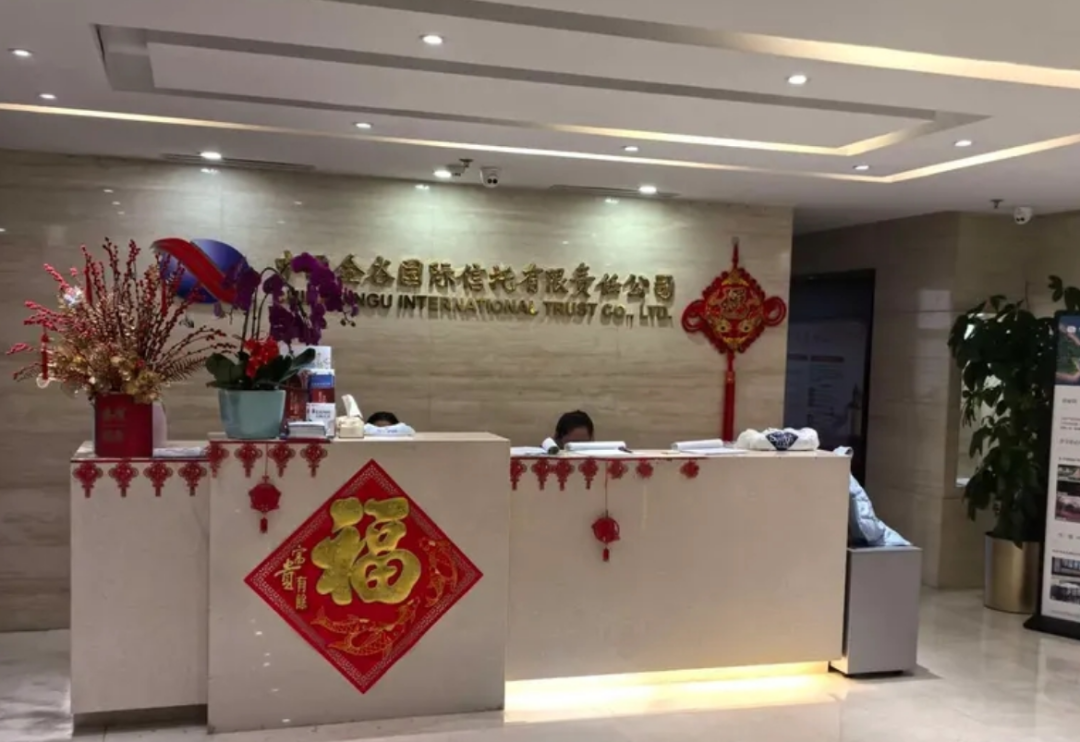
金谷信托董事长调任信达证券,上半年总利润行业前十!
Xin Lang Cai Jing· 2025-09-28 15:45
Core Viewpoint - The recent leadership change at Xinda Securities, with Lin Zhizhong appointed as chairman, reflects the company's strategic integration and resource optimization following the transfer of equity to Central Huijin [2][5]. Group 1: Leadership Change - Lin Zhizhong, aged 56, has extensive experience in the financial sector, having held various significant positions within the China Xinda system, including roles at China Construction Bank and Xinda Asset Management [6]. - Lin's rapid transition from chairman of Jin Gu Trust to chairman of Xinda Securities within six months highlights his capability and the company's confidence in his leadership [6]. - His career is closely tied to the development of China Xinda, covering multiple financial sectors such as banking, asset management, and trust, making him a suitable candidate for leading Xinda Securities [6]. Group 2: Jin Gu Trust Performance - Under Lin's leadership, Jin Gu Trust reported a revenue of 1.411 billion yuan and a profit of 742 million yuan in 2024 [7]. - In the first half of 2025, Jin Gu Trust continued its strong performance with a profit of 602 million yuan, ranking in the top 10 among 52 trust companies [8]. - As of June 30, 2024, Jin Gu Trust managed assets totaling 322.9 billion yuan, reflecting a 74% increase from the beginning of the year [9]. Group 3: Strategic Development Initiatives - Jin Gu Trust has focused on five key areas for transformation: technology finance, green finance, inclusive finance, pension finance, and digital finance, achieving significant results in these domains [11]. - The company successfully issued the first carbon-neutral bond in the waste incineration sector in the Beijing-Tianjin-Hebei region as part of its green finance initiatives [12]. - Jin Gu Trust has also innovated in inclusive finance by winning a bid for a rural revitalization project in Fujian, showcasing its unique advantages in trust services [12]. Group 4: Unique Competitive Advantages - Jin Gu Trust has developed a differentiated competitive advantage by aligning closely with the group's core business of managing non-performing assets [14]. - In 2024, the company successfully established a bankruptcy restructuring trust service with a scale of 13 billion yuan, further solidifying its market position [14]. - The company has actively assisted small and medium-sized banks in resolving non-performing asset risks, setting up a 5.5 billion yuan property rights trust [15].