
Home Appliances

Search documents
2026年上海家电国补首单落地苏宁易购
Zhong Guo Jin Rong Xin Xi Wang· 2026-01-07 14:41
新华财经上海1月7日电(记者 高少华)2026年上海家电消费补贴第一轮中签顾客的首张补贴订单7日在 苏宁易购浦东第一店产生。顾客林先生选购了一台卡萨帝高端冰箱,成为2026年上海市家电"以旧换 新"国补政策的首位受益者。在交付现场,海尔智家上海营销部长刘杨为顾客送上首单贺礼,标志着上 海新一轮绿色智能家电推广与消费升级行动全面展开。 据悉,本轮家电以旧换新补贴政策覆盖冰箱、洗衣机、空调、电视等多类家电产品,重点鼓励能效等级 高、智能化程度强的绿色家电消费。 上海苏宁易购方面表示,将全力配合国家政策,持续加大企业补贴投入,全面升级"以旧换新"服务体 系。消费者通过苏宁易购参与家电换新,在享受"国补"的同时,还可获得从专业上门拆旧、安全处理到 便捷送新装新的一站式服务,降低换新门槛,让安全、节能、智能的新型家电更快进入千家万户。 目前,苏宁易购线上平台与线下门店已经同步开通补贴通道,用户可通过数字化工具便捷申请,即时享 受购机优惠。 上海苏宁易购门店运营中心总经理闵旗表示:"我们将通过'政府+品牌+渠道'三方联动宣传与全程服务 护航,让更多用户轻松实现家电焕新,助力上海绿色家居生活与低碳城市建设。" 编辑:林郑宏 ...

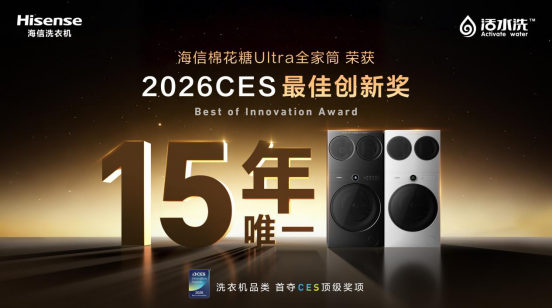
海信全家筒洗衣机亮相CES 2026,斩获CES最佳创新奖
Zhong Guo Jin Rong Xin Xi Wang· 2026-01-07 11:20
Core Insights - Hisense washing machine won the "Best of Innovation Award" at CES 2026, marking a significant achievement as the only washing machine product to receive this award in 15 years [1] - The evolution of Hisense washing machines from the "Silver Award" to the "Gold Award" reflects a deepening innovation logic focused on deep cleaning technology and AI interaction, setting a new standard for family health care [1] Product Features - The Hisense Cotton Candy Ultra family cylinder features a modular design that allows for a "one machine replaces four" washing experience, enhancing washing efficiency and drying performance [3] - It includes a 13kg main washing area and a Zeus heat pump drying system that operates at a low temperature of 42°C, ensuring fabric care while efficiently handling large laundry loads [3] - The product's modular design allows users to customize installation based on space and needs, enabling combinations of five, seven, or more cylinders [3] Industry Position - Hisense washing machines have shown remarkable growth in the global market, with sales in over 140 countries and regions [6] - The company achieved a market share of over 11% in the UK, ranking first in the industry, and over 30% in countries like Croatia and Serbia, securing a top-three position [6] - Hisense was recognized as the fastest-growing company among the top 10 global home laundry equipment manufacturers from 2021 to 2025 by Euromonitor International [6] Technological Innovation - The focus on heat pump drying technology and segmented washing is central to Hisense's innovation strategy, aiming for a unified approach to cleaning, fabric care, energy efficiency, and space optimization [6] - The award-winning product demonstrates Hisense's capability to innovate not only in traditional home appliances but also in smart and systematic technology, aligning with top consumer electronics innovations [8] - Hisense aims to redefine high-end laundry experiences through continuous product innovation and technological accumulation, emphasizing user-centric design [8]


连云港海州:151家门店迎家电数码“焕新”高峰
Yang Zi Wan Bao Wang· 2026-01-07 11:00
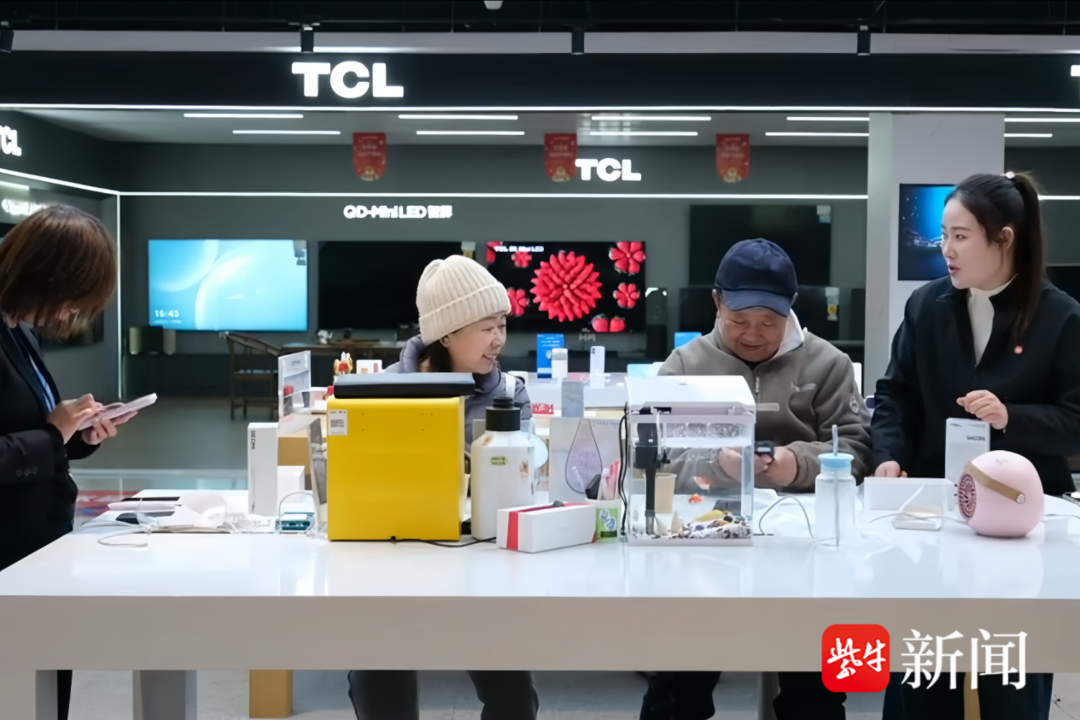
Core Insights - The launch of the "old-for-new" subsidy program in Lianyungang City has significantly boosted consumer spending in the Haizhou district, with a total subsidy fund usage of 530,000 yuan during the New Year holiday, leading to 4.4 million yuan in effective consumption [1][3] Group 1: Subsidy Program Impact - The "old-for-new" subsidy program officially started on January 1, 2026, with 151 participating stores in Haizhou, becoming a key area for policy implementation [1] - The program has led to a 300% increase in inquiries and transactions related to the "old-for-new" initiative compared to regular weekends [5] Group 2: Consumer Behavior - Consumers are taking advantage of multiple discounts, including government subsidies, store promotions, and manufacturer discounts, resulting in significant savings on new appliances [3][5] - High-demand products include large appliances like televisions, refrigerators, and washing machines, with notable sales increases for specific brands such as Hisense air conditioners (up 102%) and Huawei smartphones (up 45%) [5] Group 3: Program Details - The subsidy program will run until December 31, 2026, covering six categories of home appliances and four categories of digital products, with a 15% subsidy on eligible items [5] - Consumers can receive a subsidy of up to 1,500 yuan for home appliances and 500 yuan for digital products, with a limit of one subsidy per product category per consumer [5] Group 4: Economic and Environmental Benefits - The program is designed to stimulate consumer spending while promoting the adoption of green and smart products, benefiting both residents and the local economy [5]

洗衣也能很高级:打造现代智慧厨房新标配
Xin Lang Cai Jing· 2026-01-07 10:52
Core Viewpoint - The article highlights the emergence of high-efficiency, quiet, and smart washing and drying machines in the mid-to-high-end market (priced above 6000 yuan), catering to environmentally conscious families seeking quality living [1][5]. Product Summaries - **Panasonic XQG100-VA198**: Priced at 11086 yuan, it features a 10 kg washing and 8 kg drying capacity, a high cleaning ratio of 1.11, and operates at a noise level below 62 dB. It incorporates smart dispensing and centrifugal water washing technology for efficient resource use [1][5]. - **Gree XQG100-DWD1401Fa1**: Available for 6249 yuan, it includes a DD direct drive motor for stable operation and longevity. The AI smart dispensing adjusts detergent based on load, promoting water conservation [2][6]. - **LG WD-QH451B7H**: Priced at 7699 yuan, it offers various user-friendly features, including a 14-minute quick wash and a steam mode for baby clothes. It consumes only 0.89 kWh per hour, making it energy-efficient [2][6]. - **Samsung WD10N64GR2X/SC**: At 7299 yuan, it boasts a 10 kg washing and 8 kg drying capacity, with a cleaning ratio of 1.03 and a low noise level of 56 dB. It provides a wide temperature range for washing [4][7]. - **Casarte C1 HDU85G3**: Although discontinued, it remains valuable at 7999 yuan, featuring a heat pump drying technology suitable for delicate fabrics and a self-cleaning system [4][7]. Market Overview - All five washing machines are positioned in the market above 6000 yuan, showcasing features like first-class energy efficiency, large capacity, low noise, and refined washing capabilities. They cater to diverse consumer needs, from performance and smart control to energy conservation and health care [5][6].
直击CES|爬楼梯扫地机、具身智能割草机……清洁电器智能大升级
Di Yi Cai Jing· 2026-01-07 09:05
Core Insights - The cleaning appliance industry is actively exploring embodied intelligence, but the realization of true commercial value remains a challenge, with the actual commercialization process dependent on the effectiveness of solving real-world problems [1][7] Group 1: Technological Advancements - Smart cleaning robots showcased at CES 2026 have advanced capabilities, including stair-climbing and robotic arms for tasks like picking up objects [2][3] - The integration of AI algorithms with robotic structures allows for enhanced mobility and cleaning efficiency, enabling robots to navigate complex environments autonomously [2][3] - Companies like Roborock and Dreame have introduced robots that can perform multi-level cleaning, addressing the needs of markets with multi-story homes [2][3] Group 2: Market Trends - The retail sales of Chinese robotic vacuum brands increased by over 50% year-on-year in the first three quarters of 2025, indicating a growing market for innovative cleaning solutions [3] - The introduction of new features and functionalities in cleaning robots is expected to drive market growth and expand applications into areas like health monitoring and elderly assistance [2][3] Group 3: Product Diversification - Companies are extending their product lines beyond indoor cleaning to outdoor applications, including lawn mowing and pool cleaning robots, which utilize advanced technologies for autonomous operation [6][7] - The introduction of intelligent companion robots reflects a trend towards enhancing user experience through emotional interaction and multi-modal perception [7] Group 4: Competitive Landscape - The competition in the global robotic vacuum industry is anticipated to intensify, focusing on AI technology and home ecosystem integration as key differentiators [7] - Companies are adopting varied technological approaches, with some emphasizing new forms, others focusing on functionality improvements, and some on software or hardware enhancements [7]


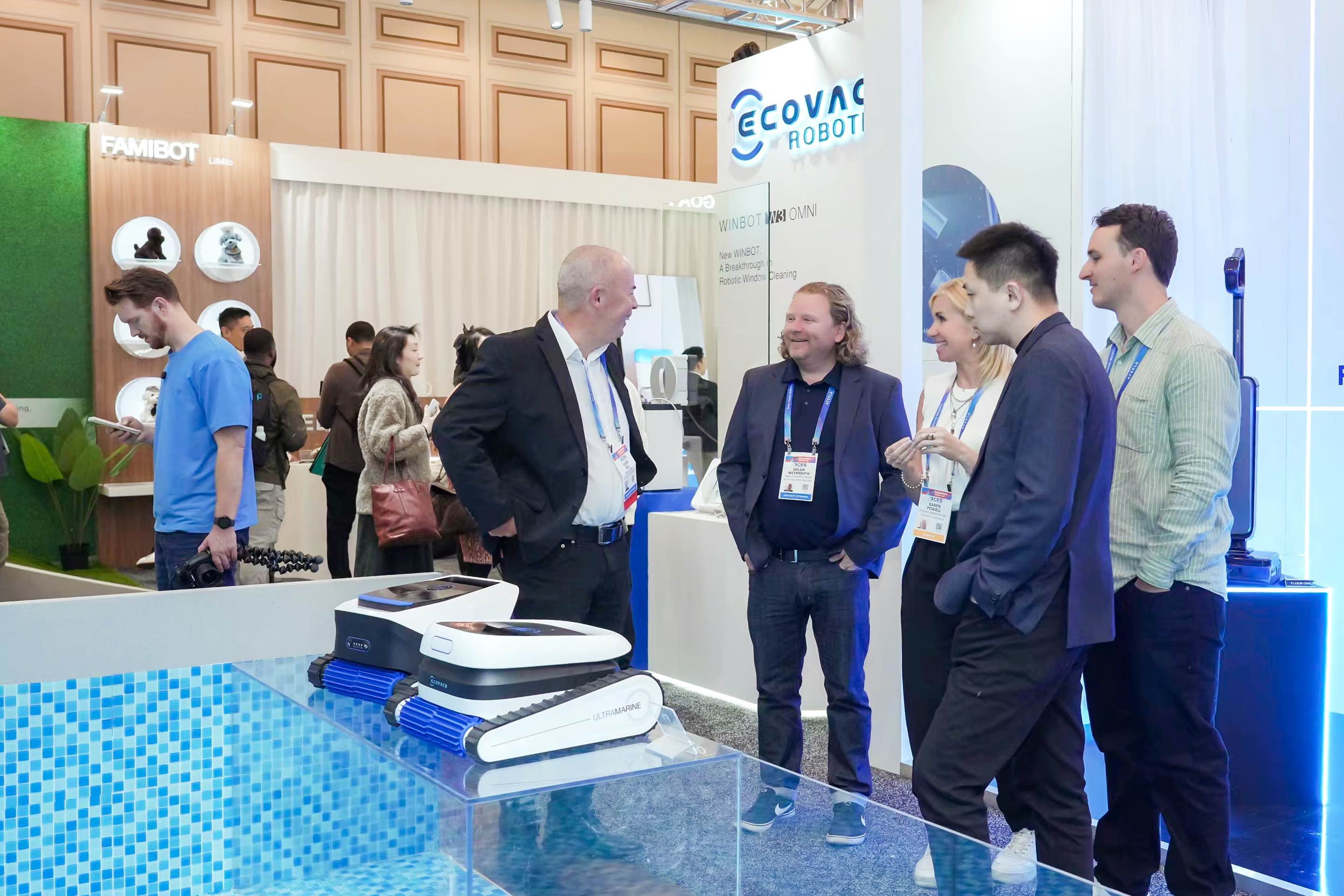
A.O.史密斯 BCR800-H6101 中央净水机
Xin Lang Cai Jing· 2026-01-07 01:51
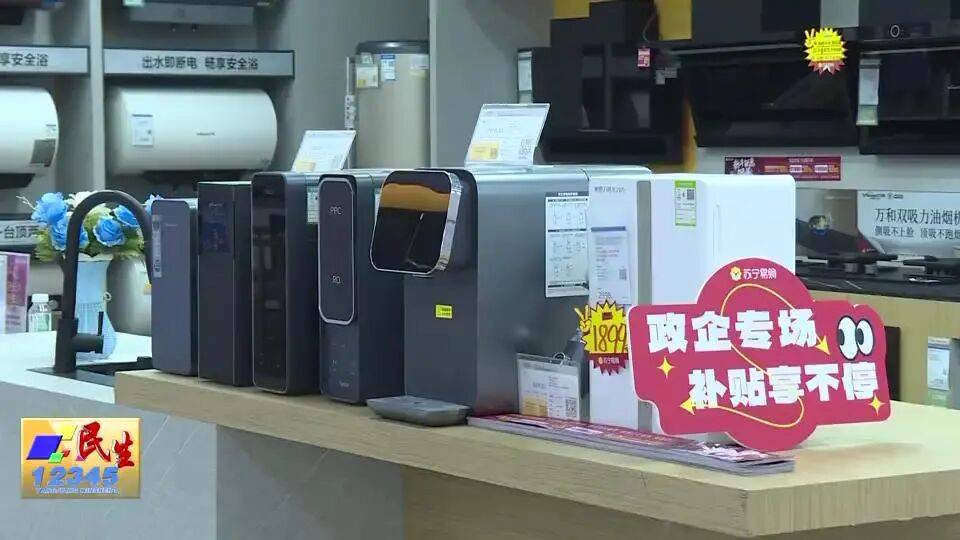
Group 1 - The A.O. Smith BCR800-H6101 is a commercial water purification machine designed to handle the water needs of over 200 people without pressure issues [1][6]. - This central water purification system features reverse osmosis technology and can be paired with various pipeline machines to address dispersed water extraction demands [1][6]. - Interested customers can inquire about promotional information and visit the location in Shanghai, specifically at 66 Gongtong Road, Minhang District [1][6].

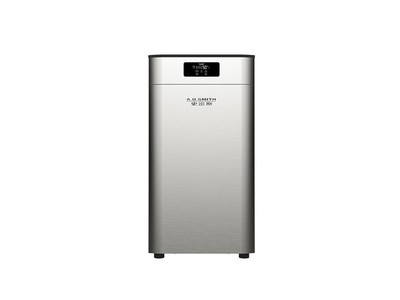
扫地机器人生产商RoboRock演示爬楼梯模型。
Xin Lang Cai Jing· 2026-01-06 17:13
Group 1 - The core point of the article is the demonstration of a stair-climbing model by RoboRock, a manufacturer of robotic vacuum cleaners [1] Group 2 - RoboRock is showcasing advancements in technology with its new model capable of climbing stairs, indicating a potential expansion in functionality for robotic vacuum cleaners [1]

“国补”新政落地,力度有点大!大家都在抢……
Sou Hu Cai Jing· 2026-01-06 16:33
Group 1 - The new round of appliance trade-in and subsidy activities started on January 1, with a total of 625 billion yuan in special long-term bonds allocated to local governments, leading to a surge in customer traffic in appliance stores during the New Year holiday [1] - The dual benefits of government subsidies and merchant discounts have significantly boosted consumer enthusiasm for upgrading to energy-efficient appliances, marking a strong start to the consumption market [1][3] - The 2026 national subsidy program has made energy-efficient appliances like televisions, refrigerators, washing machines, and air conditioners popular among consumers, especially younger demographics favoring smart home devices [3][10] Group 2 - During the New Year period, Suning.com in Yangjiang reported a 156% year-on-year growth due to the government's 2026 trade-in subsidy program, with significant sales increases in energy-efficient water heaters (188% growth) and large-screen televisions (62% growth) [5] - The new subsidy policy emphasizes green and smart upgrades, including smart glasses and smart home products, which are now eligible for subsidies [10] - As the Spring Festival approaches, the ongoing release of policy benefits is expected to create new opportunities for the appliance industry, facilitating both consumption and industrial upgrades [12]
河南:1-11月家电消费同比增长10.5%
Xin Hua Cai Jing· 2026-01-06 07:59
Group 1 - The core viewpoint of the article highlights the growth in consumption and exports in Henan Province, with significant increases in various sectors [1] Group 2 - In the automotive sector, consumption increased by 4.7% year-on-year [1] - The home appliance sector saw a consumption growth of 10.5% year-on-year [1] - The telecommunications equipment sector experienced a remarkable growth of 61.6% year-on-year [1] - Exports of electromechanical products grew by 22.9%, accounting for 66.1% of the province's total export value [1]
海尔智家股份有限公司 高级管理人员离任公告
Zhong Guo Zheng Quan Bao - Zhong Zheng Wang· 2026-01-05 16:52
Group 1 - The company announced the resignation of Vice President Li Pan, effective immediately upon submission of his resignation report to the board [1] - Li Pan held 688,586 shares of the company, representing 0.007% of the total share capital, and there are no unfulfilled commitments [1] - The company expressed gratitude for Li Pan's contributions over the years [2] Group 2 - Following Li Pan's departure, Vice President Song Yujun will take over responsibilities for overseas market operations [1] - Song Yujun has extensive experience in various roles within the company since joining in 1998, including positions in product, manufacturing, R&D, and marketing [3] - He has received multiple honors, including the 2023 China Light Industry Federation Science and Technology Progress Award and the 2023 Energy Conservation Association Innovation Award [3]
