
加密货币

Search documents
ETH冲高点遇比特币极大主义者泼冷水,XBIT以太坊交易所最新观察
Sou Hu Cai Jing· 2025-08-17 13:40
Core Viewpoint - Ethereum (ETH) has experienced a significant price surge, nearing historical highs, driven by capital inflows and trading activity, particularly on decentralized exchanges like XBIT [1][5]. Market Dynamics - The ETH/BTC ratio has rebounded strongly since April, reflecting a market trend where ETH's price increase has outpaced Bitcoin [1]. - XBIT decentralized exchange reported an 80% increase in daily ETH trading volume compared to the previous month, indicating heightened user interest [1]. Investor Sentiment - Critics, including Bitcoin maximalist Samson Mow, argue that the current ETH price rise is driven by short-term capital flows rather than long-term value recognition, with many ETH holders also possessing significant Bitcoin [3]. - Mow suggests that ETH is primarily a tool for acquiring more Bitcoin, as holders may sell ETH once prices reach their targets [3]. Institutional Involvement - Despite ongoing controversies surrounding Ethereum, institutional investment in ETH has surged, with significant net inflows into Ethereum spot ETFs, outpacing Bitcoin ETFs [5]. - Institutions have reportedly increased their buying volume to several times the net issuance of ETH during the same period, indicating strong institutional interest [5]. Market Structure - The XBIT platform has gained popularity due to its user-friendly model, which allows users to maintain control over their assets without KYC requirements [5]. - However, on-chain data reveals a concerning trend: the number of unique Ethereum addresses has only increased by 3.1% over the past two months, suggesting that the price rise is primarily driven by capital rather than increased user demand [5]. Profit-Taking Behavior - Recent data shows that 98% of ETH supply is currently profitable, with large holders (whales) cashing out significantly, realizing profits of up to $1.4 billion in a single day [7]. - The number of large withdrawals (over 1,000 ETH) has increased by 62%, indicating a trend of short-term investors taking profits [7]. Staking Market Trends - As of August 15, over 785,000 ETH (valued at approximately $3.6 billion) have exited the staking queue, marking a historical record as some stakers choose to realize gains after a price rebound of over 160% [7]. - Conversely, new funds are entering the staking market, with approximately 341,000 ETH waiting to be staked, driven by regulatory support and institutional demand [7]. Conclusion - The Ethereum market is characterized by a complex interplay of institutional liquidity supporting short-term price increases, while on-chain activity and profit-taking behaviors raise questions about long-term confidence [7].

Coinbase 报告:山寨季即将全面到来?
Sou Hu Cai Jing· 2025-08-16 23:54
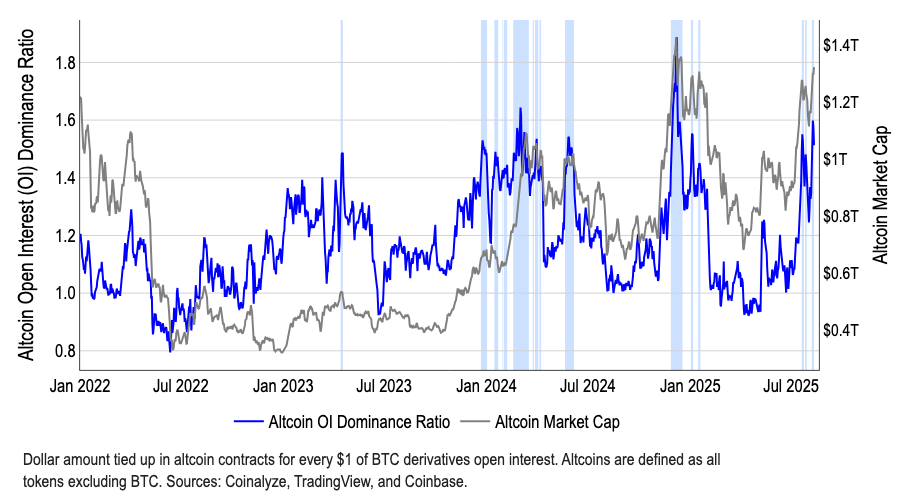
Core Insights - The outlook for Q3 2025 remains optimistic, with a potential shift towards a full altcoin season as September approaches, defined by at least 75% of the top 50 altcoins outperforming Bitcoin over the last 90 days [1] - The belief that the Federal Reserve's interest rate cuts in September will lead to a peak in the cryptocurrency market is not supported; instead, there is significant idle retail capital in money market funds (over $7 trillion) that could flow into the market due to the Fed's easing policies [1][4] Altcoin Focus - Ethereum (ETH) is highlighted as a key focus, with a divergence between the overall low performance of the altcoin season index and a 50% increase in total altcoin market capitalization since early July, reflecting growing institutional interest in ETH [2][9] - Tokens like LDO have significantly benefited from recent ETH price increases, with LDO rising 58% this month, attributed to its unique position in liquid staking and favorable regulatory comments from the SEC [2][14] Market Dynamics - The unprecedented cash reserves in money market funds, now exceeding $7.2 trillion, indicate missed opportunity costs due to increased uncertainty in traditional markets, high valuations, and ongoing economic growth concerns [6] - The liquidity-weighted Z-score for cryptocurrencies shows signs of recovery after six months of decline, suggesting that liquidity conditions are improving, partly due to a clearer regulatory environment for stablecoins [6][8] Institutional Holdings - Significant institutional interest in ETH is evidenced by companies like Bitmine Immersion Technologies and Sharplink Gaming, which have acquired substantial amounts of ETH, indicating a trend towards increased institutional accumulation [9][11] Conclusion - The overall sentiment for Q3 2025 is constructive, with early signs of a potential altcoin season as the total market capitalization of altcoins rises and the altcoin season index shows positive signals [15]

陆家嘴财经早餐2025年8月17日星期日
Wind万得· 2025-08-16 22:33
Group 1 - The U.S. and Russia are working towards agreements that could resolve the Ukraine conflict and improve bilateral relations, with significant business investment potential identified [3] - Ukraine's President emphasized the necessity of including Ukraine in discussions regarding critical issues, particularly territorial matters [3] Group 2 - The State-owned Assets Supervision and Administration Commission (SASAC) is implementing a comprehensive regulatory system aimed at enhancing oversight of state-owned enterprises, driven by concerns over systemic risks and operational autonomy [4] - The current consumption shortfall in China is viewed as a structural issue, necessitating investment-driven policies to stimulate consumption and support economic growth [4] Group 3 - The Shanghai Composite Index has seen a rise, leading to increased interest in stock account openings, with new accounts reaching 1.9636 million in July, a 70.54% year-on-year increase [5] - Insurance funds are progressing in long-term investment trials, with the establishment of several private fund management companies, increasing the total to seven [5] - There is a notable shift in listed companies' funding strategies, with a decrease in wealth management product subscriptions and an increase in equity investments [5] Group 4 - Several high-performing funds have announced purchase limits to manage growth and optimize long-term performance [6] - The recent rise in A-shares has prompted a shift in deposits towards the stock market, benefiting brokerage firms [6] - China Shenhua has proposed an asset acquisition from its controlling shareholder, which will enhance its resource reserves and optimize its business layout [6] Group 5 - The China Securities Regulatory Commission has approved West Securities as a major shareholder of Guorong Securities, marking a significant step towards establishing a comprehensive investment banking platform [7] - An insider trading case involving Zhengdan Co. has resulted in significant penalties, highlighting regulatory scrutiny in the market [7] Group 6 - China has developed a comprehensive carbon reduction policy framework, with numerous strategic industry clusters and green factories established [8] - The first gold medal in the World Humanoid Robot Competition was awarded to a robot demonstrating advanced precision and stability [8] - Bank-affiliated insurance companies reported a 12.38% increase in insurance revenue in the first half of the year, reflecting a shift in the banking insurance channel [8] Group 7 - The transaction volume of auctioned properties in key cities has decreased, but the total transaction value has dropped significantly, indicating a potential market adjustment [9] - Railway construction investment reached 433 billion yuan in the first seven months, marking a 5.6% year-on-year increase [9] - The number of devices using the HarmonyOS has surpassed ten million, indicating a critical phase in its commercialization [9] Group 8 - China's coal consumption ratio is projected to decrease from 56.8% in 2020 to 53.2% by 2024, while non-fossil energy consumption is expected to rise [10] - Chinese innovative drugs now account for 38% of the global market, with a significant number of new drugs launched recently [10] Group 9 - The U.S. Treasury has ceased its new regulatory program aimed at cryptocurrency oversight, reflecting a trend towards relaxed regulation in the sector [11] - Gemini, a cryptocurrency exchange, reported significant revenue and losses in the first half of the year as it prepares for a potential IPO [11] Group 10 - Minsheng Bank will terminate its public fund distribution partnerships in response to new regulatory guidelines, indicating a shift in banking practices [12] - OpenAI is reportedly preparing to sell shares worth approximately $60 billion, with negotiations ongoing [12] Group 11 - The U.S. has expanded tariffs on steel and aluminum imports, affecting hundreds of products, which will take effect soon [13] - Tech giants have urged the U.S. Treasury to maintain current renewable energy subsidies, which are crucial for ongoing projects [13] - China has shifted its soybean procurement focus to South America, indicating a strategic adjustment in sourcing [13] Group 12 - Michael Burry has reversed his position on Chinese stocks, moving from bearish to bullish by purchasing call options on major companies [14] Group 13 - China's holdings of U.S. Treasury bonds increased slightly, marking a notable trend in international capital flows [15] - The People's Bank of China emphasizes quality over quantity in credit policy, focusing on structural improvements in the financial system [15] Group 14 - China's summer grain wheat purchases have exceeded 80 million tons, with government support stabilizing prices [16] Group 15 - The Bank of England is expected to maintain a cautious stance on interest rate cuts, reflecting resilience in the UK economy [17]

美联储,重大宣布!
证券时报· 2025-08-16 13:19
Core Viewpoint - The Federal Reserve has officially closed the "Novel Activities Supervision Program," which was established to regulate banks' activities in the cryptocurrency and fintech sectors, integrating this oversight into standard banking regulations [1][3][4]. Summary by Sections Federal Reserve's Actions - On August 15, the Federal Reserve announced the closure of the "Novel Activities Supervision Program," which was aimed at enhancing the regulation of banks involved in cryptocurrency activities [3]. - The decision to close the program comes after the Federal Reserve deepened its understanding of the risks associated with cryptocurrency and fintech activities since the program's inception [3]. Background and Context - The program was established in response to the 2023 banking crisis, which saw the collapse of three banks closely tied to the cryptocurrency industry: Silicon Valley Bank, Silvergate Bank, and Signature Bank [3]. - The Federal Reserve recognized the need for closer scrutiny of innovative yet unverified technologies that could pose risks to the banking system [3]. Key Focus Areas of the Program - The program focused on areas such as cryptocurrency custody, loans collateralized by cryptocurrencies, assistance in digital asset trading, issuance of stablecoins and dollar tokens, and projects utilizing distributed ledger technology [4]. - While the latest requirements simplify compliance processes for banks engaging in cryptocurrency activities, core regulatory principles such as anti-money laundering and consumer protection remain unchanged [4]. Regulatory Environment Shift - The Federal Reserve's action aligns with a broader trend of U.S. regulatory agencies becoming more accommodating towards the cryptocurrency industry, following a political environment that has increasingly favored cryptocurrencies since the Trump administration [6]. - Other federal banking regulators, including the OCC and FDIC, have also relaxed regulations, allowing banks to decide independently whether to engage in cryptocurrency activities [6]. Monetary Policy Outlook - Chicago Fed President Austan Goolsbee expressed hesitance regarding interest rate cuts due to mixed inflation data and ongoing tariff uncertainties, despite high market expectations for a rate cut in September [8][10]. - Current market sentiment indicates a 92% probability of a 25 basis point rate cut in September, with varying expectations for future cuts [10][11].
突然!美联储,重大宣布!
Sou Hu Cai Jing· 2025-08-16 12:50
Group 1 - The Federal Reserve announced the closure of the "Novel Activities Supervision Program," which was established to enhance the regulation of banks' activities related to cryptocurrencies and fintech [1][2] - The decision to close the program is based on the Federal Reserve's increased understanding of the risks associated with cryptocurrency activities and the integration of this knowledge into standard regulatory processes [2][3] - The closure follows the collapse of three banks closely tied to the cryptocurrency industry, highlighting the need for closer scrutiny of innovative technologies that may pose risks to the banking system [2][3] Group 2 - The "Novel Activities Supervision Program" focused on areas such as crypto asset custody, loans collateralized by cryptocurrencies, digital asset trading assistance, and the issuance of stablecoins and dollar tokens [3] - The latest regulatory changes simplify compliance processes for banks engaging in cryptocurrency activities, while core regulatory principles such as anti-money laundering and consumer protection remain unchanged [3] - The Federal Reserve's actions align with a broader trend among U.S. regulatory agencies to embrace the cryptocurrency industry, moving towards a more favorable regulatory environment [4] Group 3 - Chicago Fed President Austan Goolsbee expressed uncertainty regarding interest rate cuts due to mixed inflation data and ongoing tariff uncertainties [6] - Recent inflation reports indicate a rise in the Producer Price Index (PPI) by 0.9% in July, driven primarily by service sector inflation, which has raised concerns about the inflation outlook [6][7] - Market expectations for a 25 basis point rate cut in September are high, with a 92% probability indicated by interest rate swap traders, although future rate cut probabilities show divergence [7]
美联储取消加密货币业务特别监管项目 美媒称美国对加密货币行业放松监管
Sou Hu Cai Jing· 2025-08-16 11:16
Core Viewpoint - The Federal Reserve has announced the cessation of its "new activity supervision program" established in 2023, which included enhanced regulation of the banking sector's cryptocurrency activities, reflecting a trend of loosening regulations on the cryptocurrency industry in the U.S. [1] Group 1 - The Federal Reserve's decision to stop the supervision program aligns with recent actions by U.S. regulatory agencies to ease restrictions on cryptocurrency operations [1] - In April, the Federal Reserve withdrew guidance requiring banks to obtain regulatory approval before engaging in new cryptocurrency activities, allowing banks to make independent decisions under existing risk management requirements [1] - Other federal banking regulatory agencies, including the Office of the Comptroller of the Currency and the Federal Deposit Insurance Corporation, have adopted similar measures to permit banks to manage their cryptocurrency business autonomously [1]
美联储取消加密货币业务特别监管项目,美媒称美国对加密货币行业放松监管
Sou Hu Cai Jing· 2025-08-16 10:35
Core Viewpoint - The Federal Reserve has announced the cessation of its "new activity supervision program" established in 2023, which included enhanced regulation of the banking sector's cryptocurrency activities, reflecting a trend of loosening regulatory oversight on the cryptocurrency industry in the U.S. [1] Group 1 - The Federal Reserve's decision to stop the new activity supervision program indicates a shift in regulatory approach towards the cryptocurrency sector [1] - In April, the Federal Reserve retracted guidelines requiring banks to obtain regulatory approval before engaging in new cryptocurrency activities, signaling a more permissive stance [1] - Other federal banking regulators, including the Office of the Comptroller of the Currency and the Federal Deposit Insurance Corporation, have adopted similar measures, allowing banks to independently decide on cryptocurrency business under existing risk management requirements [1]
超10万人爆仓!什么情况?
Zheng Quan Shi Bao· 2025-08-16 09:49
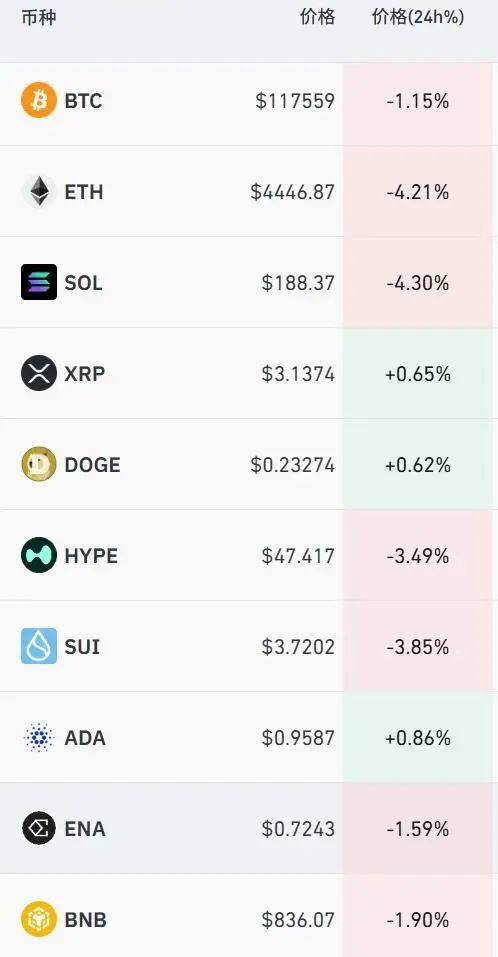
Group 1: Cryptocurrency Market Overview - Bitcoin has recently experienced a significant drop, falling below $117,600 after reaching over $120,000 earlier in the week [1] - As of the latest update, Bitcoin is down more than 1% and Ethereum has declined over 4% [1] - In the last 24 hours, over 108,000 traders have been liquidated in the cryptocurrency market [1] Group 2: Liquidation Data - In the last hour, liquidations amounted to $2.59 million, while in the last four hours, the total reached $12.51 million [2] - Long positions accounted for $1.39 million in the last hour and $28.02 million in the last 12 hours, while short positions were $1.20 million and $34.91 million respectively [2] - The total liquidation in the last 24 hours was approximately $38.1 million, with long positions at $31 million and short positions at $71.46 million [2] Group 3: Geopolitical Context - The focus of the market this week has been on the meeting between Russian and American leaders, which did not result in any agreements [2] - Russian President Putin stated that if Trump had been president, the current conflict would not have occurred, highlighting a previously established trust [2] - The meeting was characterized by a calm atmosphere, with no ultimatums or threats, and discussions on ending the Ukraine conflict were detailed by Putin [3] Group 4: Future Discussions - Ukrainian President Zelensky expressed support for a tripartite meeting involving Ukraine, the U.S., and Russia to discuss key issues at the leadership level [4]
加密货币OKB上涨221%,有望达到148美元历史最高价
Sou Hu Cai Jing· 2025-08-16 06:17
Core Insights - OKB cryptocurrency surged from a local low of $46 to a historical high of $148.9, marking a 221% increase, before retreating to a current price of $106, which is a 125% rise over the past week [1][3] Market Performance - The market capitalization of OKB increased from $2.8 billion to $8 billion, then fell back to $6.27 billion [3] - Trading volume skyrocketed by 17,150%, reaching $1.3 billion [3] Price Drivers - The recent price increase of OKB was primarily driven by the announcement of a token burn and network upgrade by OKX [3] - On August 13, OKX confirmed a one-time token burn of 65.2 million OKB scheduled for August 15, 2025, which will limit the total supply to 21 million [3] - The network upgrade integrated the latest Polygon CDK technology, increasing transaction throughput to 5,000 TPS and reducing gas fees to near zero [3] On-Chain Activity - Following the announcements, the number of active addresses for OKB surged to 1,810, reaching an annual high [4] - The positive divergence in daily active addresses (DAA) indicates growing natural demand for the asset [4] Investor Behavior - As expected, the price surge led to increased profit-taking among investors, with net inflows reaching a historical high of $41 million on August 13, before dropping to -$1.1 million [5] - The supply of OKB on exchanges increased, leading to a near-zero stock-to-flow ratio, indicating more tokens available for immediate sale [5][6] Future Outlook - Analysts suggest that the recent demand could sustain the upward trend of OKB, potentially reclaiming the $148 mark [7] - However, if buying momentum weakens, profit-takers may dominate the market, leading to a potential drop to around $74 for support [7]

吴说周精选:美国 PPI 超预期、以太坊现货 ETF 本周净流入 29 亿、Terra 创始人承认欺诈与新闻 Top10
Xin Lang Cai Jing· 2025-08-16 00:40
Economic Indicators - The US Producer Price Index (PPI) for July increased by 3.3% year-on-year, significantly exceeding the market expectation of 2.5% and marking the highest level since February [1] - The month-on-month PPI recorded a rise of 0.9%, the largest increase since June 2022 [1] - Initial jobless claims for the week ending August 9 were reported at 224,000, slightly below the expected 228,000 [1] Federal Reserve Actions - US Treasury Secretary Scott Bessent urged the Federal Reserve to consider a 50 basis point rate cut in the upcoming September meeting, citing weaker-than-expected employment growth and inflation data [2] Cryptocurrency Market Developments - Following the implementation of stablecoin regulations in Hong Kong, the average daily outflow of USDT decreased by 32.94% to $34.9 million from $52.04 million prior to the regulations [3] - Ethereum spot ETFs have seen a net inflow of $2.911 billion, continuing a streak of 14 weeks of net inflows, with total holdings valued at $29.22 billion [4] - BitMine announced a supplemental prospectus indicating a potential fundraising of up to $20 billion, with its ETH holdings valued at approximately $4.96 billion [5] - Coinbase completed the acquisition of crypto options trading platform Deribit, enhancing its product offerings in the crypto derivatives market [6] IPO and Financing Events - Digital asset trading platform Bullish raised $1.1 billion through its IPO, with an oversubscription of over 20 times, achieving a market valuation of $5.4 billion [8] - Various companies in the crypto space have secured significant funding, including Mesh, which received investments from PayPal Ventures and others, and ALT5 Sigma, which completed a $1.5 billion private placement [10]