
数字金融

Search documents
中企云链拟港股IPO 中国证监会要求补充说明业务经营是否涉及基础电信业务和增值电信业务等
Zhi Tong Cai Jing· 2025-08-08 11:45
Group 1 - The China Securities Regulatory Commission (CSRC) has requested additional information from Zhongqi Yunchain regarding its business operations and compliance with foreign investment policies [1][2] - Zhongqi Yunchain is in the process of listing on the Hong Kong Stock Exchange, with several financial institutions acting as joint sponsors [1] - The company is identified as a leading independent industrial digital finance platform in China, facilitating various stakeholders in the industrial financial supply chain [3] Group 2 - Zhongqi Yunchain's market share in the digital accounts receivable confirmation platform is reported to be 14.2% in terms of confirmed accounts receivable amount and 15.0% in total financing obtained as of 2024 [3] - The CSRC has specifically asked for clarification on whether Zhongqi Yunchain's business involves basic telecommunications and value-added telecommunications services, and whether it holds the necessary operating licenses [2] - The company is required to provide detailed explanations of its digital business processes, revenue sources, and any involvement in assistance goods services [2]
守好数字金融安全底线
Jin Rong Shi Bao· 2025-08-08 07:55
Group 1 - Digital security is crucial for national security, economic development, and social stability, with digitalization becoming a key feature for high-quality development across various industries, including finance [1] - The rapid advancement of technology in digital finance has led to increased risks, such as cyberattacks and data breaches, particularly with the integration of AI, which can facilitate more frequent and lower-barrier attacks on financial institutions [1] - There is a consensus in the industry that regulatory bodies must enhance planning and oversight, while technology companies and financial institutions need to collaborate to strengthen technical safeguards and establish a comprehensive protection system for data integrity, confidentiality, and availability [1] Group 2 - Data security governance is essential for the stable operation of financial institutions, the healthy development of financial markets, and the interests of consumers, with increasing emphasis on data governance and security issues in the digital finance sector [2] - Recent government policies, such as the "Network Data Security Management Regulations" and the "Data Security Management Measures for Banking and Insurance Institutions," outline the direction for data security protection and emphasize the establishment of a governance system aligned with business goals [2] - Despite the growing attention to data security governance and the continuous improvement of related policies, there are still significant challenges in the practical implementation within the financial sector [2] Group 3 - The central economic work conference emphasizes the need for coordinated efforts to combat illegal financial activities, particularly those exploiting technology for unlawful purposes [3] - Enhancing computing power security is identified as a critical step in ensuring digital financial security, with plans to strengthen data classification and protection, and to implement strict management of important data [3] - Financial institutions are encouraged to establish monitoring mechanisms, improve standardization and regulation, and invest in talent development to enhance their data security risk assessment and management capabilities [3]
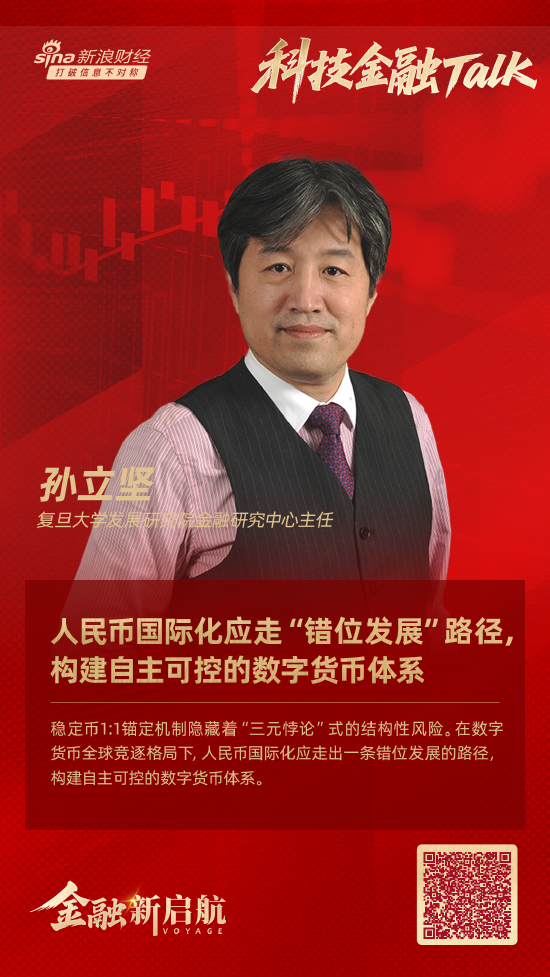
复旦发展研究院孙立坚:人民币国际化应走“错位发展”路径,构建自主可控的数字货币体系
Xin Lang Cai Jing· 2025-08-07 05:43
Core Insights - The rise of technology is profoundly reshaping the financial landscape, with the integration of technology and finance driving innovation and providing robust support for real economy exploration [1] - The dialogue in the "Tech Finance Talk" series aims to explore the real-world applications and future possibilities of tech finance, focusing on stablecoins, digital currency paths, and the risks behind decentralization [1] Stablecoins and Cross-Border Payments - Stablecoins serve as a bridge for existing fiat currencies to enter digital scenarios, but they cannot bypass existing currency management frameworks, such as capital account convertibility [5] - The decentralized nature of stablecoins may lead to arbitrage opportunities, enhancing the ease of currency exchange despite existing restrictions [5] - The promotion of stablecoins should ideally follow the opening of capital accounts to mitigate challenges to national monetary policies [5] RMB Internationalization - Hong Kong's status as an offshore dollar business center could be compromised if stablecoin-related activities are not permitted, potentially weakening its competitive edge as an international financial hub [6] - The exploration of stablecoin cross-border payment functions is significant for breaking the dollar-dominated international monetary system [6] Cautious Approach to RMB Stablecoin - The current market dominance of dollar-pegged stablecoins presents a significant network effect, making it a risky time to introduce a RMB stablecoin [7] - Competing directly with dollar stablecoins could hinder the expansion of RMB's network effect and expose it to external shocks [7] Digital Currency Path for RMB - China's push for digital currency aims to strengthen its monetary sovereignty and payment influence amid global digital currency transitions [8] - To establish the digital RMB as a globally accepted currency, a robust digital economy and financial system must be developed [9] Network Effects and Multi-CBDC Bridge - A "multi-CBDC bridge" mechanism is proposed to facilitate interconnectivity among various digital currencies, breaking the monopoly of a single currency and enhancing transaction efficiency [10] Dollar Stablecoins and Market Dynamics - The demand for dollar stablecoins is driven by their liquidity and efficiency, which supports the dollar's status despite growing concerns over U.S. credit [11][12] - The inherent vulnerabilities of stablecoins, particularly the "trilemma" of fixed exchange rates, free convertibility, and independent monetary policy, pose risks to their stability [14]

深度研究!稳定币和 RWA 的融合与 MyStonks 的实践启示
Cai Fu Zai Xian· 2025-08-06 09:05
Group 1: Core Insights - The integration of stablecoins and real-world assets (RWA) is becoming a key entry point for digital finance into the traditional economy, with stablecoins acting as a "value bridge" that addresses the volatility of crypto assets [1][2] - The evolution of stablecoin regulation is shifting from "risk prevention" to "infrastructure positioning," recognizing stablecoins as essential for RWA transactions while implementing rules to mitigate potential financial vulnerabilities [2][3] - The global regulatory landscape is moving towards a balance between "risk prevention" and "innovation inclusion," establishing a solid policy foundation for stablecoins to serve as indispensable "value anchors" and "settlement mediums" in RWA transactions [3][4] Group 2: Regulatory Developments - The U.S. has enacted the GENIUS Act, a comprehensive regulatory framework for stablecoins, acknowledging their quasi-currency attributes and the need for oversight to prevent systemic risks [2][4] - The EU's MiCA regulation and other international policies are reinforcing the legal basis for stablecoins, ensuring their role as a reliable value benchmark in RWA transactions [3][4] - Regulatory requirements for stablecoin issuers, such as licensing and auditing, aim to enhance trust and compliance, facilitating the integration of RWA into the digital finance ecosystem [4][10] Group 3: RWA Evolution - The tokenization of RWA is not merely about mapping real assets onto the blockchain but involves a systematic reconstruction of traditional asset rights, flow efficiency, and pricing mechanisms [5][6] - The diversification of asset types in RWA reflects market demand for "on-chain value carriers," necessitating stablecoins as universal pricing units to facilitate value comparison and flow [6][10] - The integration of RWA with decentralized finance (DeFi) is driving innovation in financial tools, with stablecoins providing a risk buffer that allows for the effective use of traditional assets in DeFi applications [7][9] Group 4: MyStonks Case Study - MyStonks has successfully captured the core pain points of integrating stablecoins and RWA, creating a closed-loop ecosystem that combines compliant U.S. stock tokens, USD stablecoins, and DeFi tools [8][10] - The platform's ability to lower barriers for global users in trading U.S. stocks through tokenization and stablecoin settlement has led to significant transaction volume growth [8][12] - Collaborations with various partners have enabled MyStonks to create a comprehensive ecosystem that enhances asset issuance, trading, value addition, and compliance, positioning it as a "value hub" in the digital finance landscape [9][13] Group 5: Future Trends - The combination of stablecoins and RWA is transforming the underlying logic of digital finance from a "technology-first" approach to a "value-first" perspective, promoting an open and interconnected financial ecosystem [11][12] - Compliance is seen as a prerequisite for integration rather than a barrier, with regulatory upgrades fostering long-term trust and potentially attracting traditional financial institutions [12] - Ecosystem collaboration is crucial for scaling the integration of stablecoins and RWA, as single platforms cannot achieve full-chain integration without partnerships across various roles [13]
德林控股(01709) - 自愿公告由本集团管理之基金认购PANGU SOFTWARE PTE LT...
2025-08-04 14:46
香港交易及結算所有限公司及香港聯合交易所有限公司對本公告的內容概不 負責,對其準確性或完整性亦不發表任何聲明,並明確表示,概不就因本公告 全部或任何部分內容而產生或因倚賴該等內容而引致的任何損失承擔任何責 任。 DL HOLDINGS GROUP LIMITED 德林控股集團有限公司 ( 於 開 曼 群 島 註 冊 成 立 的 有 限 公 司 ) (股份代號:1709) 自願公告 由本集團管理之基金 認購PANGU SOFTWARE PTE LTD的股份 本公告由德林控股集團有限公司(「本公司」,連同其附屬公司統稱為「本集 團」)自願刊發,旨在知會本公司股東及有意投資者有關本集團之最新業務發 展。 本公司董事(「董事」)會(「董事會」)欣然宣佈,於2025年8月4日(交易時段後), 本集團管理的開曼群島私募基金的獨立投資組合(「該基金」)與Pangu Software Pte Ltd(「Pangu」)訂立認購協議(「認購協議」),據此,該基金有條件同意以總 代價1.0百萬美元認購1,041股普通股(「認購事項」),並附有以總代價1.0百萬美 元進一步認購1,041股普通股的認購期權(「認購期權」,連同認購事項 ...
专访宋敏:稳定币能否重塑全球货币
经济观察报· 2025-08-01 12:27
Core Viewpoint - The introduction of real assets is crucial for the future development of stablecoins, as the stability of stablecoins fundamentally depends on the quality of the underlying assets [1][3]. Regulatory Framework - The Hong Kong Stablecoin Management Ordinance, effective from August 1, 2025, marks Hong Kong as the first Asian financial center to comprehensively regulate the stablecoin market [2][5]. - The ordinance requires all stablecoin transactions to occur through regulated exchanges, prohibiting direct peer-to-peer transfers between wallets, and mandates strict KYC (Know Your Customer) and KYT (Know Your Transaction) compliance [3][17]. - This regulatory approach, while enhancing compliance, may undermine the decentralized advantages of blockchain technology [3][17]. Market Dynamics - Major Chinese tech companies like JD.com and Ant Group are actively entering the Hong Kong stablecoin market, primarily to enhance cross-border payment efficiency and capitalize on the stablecoin's profit model [16][18]. - The dominance of USDT and USDC in the global market creates challenges for new entrants, as user acceptance is heavily influenced by existing network effects [16][19]. Asset Quality and Stability - The stability of stablecoins is directly linked to the quality of the underlying assets; assets with clear ownership and predictable cash flows, such as fiat currencies or gold, provide greater stability [11][19]. - The potential for tokenizing real-world assets (RWA) hinges on the clarity of ownership and the ability to generate reliable cash flows [11][12]. Global Financial Implications - Stablecoins are reshaping the international monetary system, allowing tech companies to create currency-like assets, which poses significant challenges to traditional financial frameworks [4][30]. - The reliance on the US dollar as the primary backing for most stablecoins is due to the large offshore dollar market, but this dominance may not be permanent [19][20]. Future Considerations - The relationship between stablecoins and central bank digital currencies (CBDCs) is complex, with potential models suggesting that CBDCs could serve as a foundation for stablecoins issued by tech companies [26][27]. - The balance between innovation and regulation remains a critical issue, as overly stringent regulations may stifle technological advancements in the stablecoin space [23][30].
专访宋敏:稳定币能否重塑全球货币
Jing Ji Guan Cha Wang· 2025-08-01 11:46
Core Viewpoint - Hong Kong's "Stablecoin Management Ordinance" marks a significant regulatory step, making it the first Asian financial center to comprehensively regulate the stablecoin market, amidst growing interest from major tech companies like JD.com and Ant Group in enhancing cross-border payment efficiency [2][3][4] Group 1: Regulatory Framework - The new ordinance requires all stablecoin transactions to occur through regulated exchanges, prohibiting direct peer-to-peer transfers between wallets, and mandates strict KYC (Know Your Customer) and KYT (Know Your Transaction) compliance [3][15] - This regulatory approach aims to enhance compliance and transparency but may compromise the decentralized nature of blockchain technology [3][15] - The ordinance is seen as a cautious yet necessary step to prevent risks associated with unregulated stablecoins, such as USDT, and serves as a potential model for mainland China's future stablecoin regulations [3][20][23] Group 2: Market Dynamics - Major tech companies are entering the Hong Kong stablecoin market primarily to improve cross-border payment efficiency and capitalize on the profit potential from stablecoin issuance [14][15] - The success of a stablecoin depends on its ability to create network effects, as user trust in its widespread adoption is crucial [15][16] - The existing dominance of USDT as a "chain-based dollar" poses challenges for new entrants, particularly in terms of user acceptance and market competition [15][16] Group 3: Asset Quality and Stability - The stability of a stablecoin is fundamentally linked to the quality of its underlying assets, with a focus on ensuring that these assets have clear ownership and predictable returns [3][10] - The introduction of real-world assets (RWA) into the stablecoin ecosystem is seen as essential for enhancing financial robustness, provided these assets are of high quality [3][10][18] - The potential for stablecoins backed by other scarce assets, such as gold or carbon credits, is increasing, reflecting a shift in market dynamics and trust in the dollar [18][19] Group 4: Global Financial Implications - Stablecoins are reshaping the international monetary system by enabling tech companies to create currency-like assets, challenging traditional banking structures [4][28] - The emergence of stablecoins as a new form of banking raises questions about regulatory frameworks and the need to redefine risk boundaries in algorithm-driven financial ecosystems [5][28][29] - The regulatory landscape varies globally, with Europe and the U.S. adopting different approaches to stablecoin regulation, which may influence the competitive dynamics of the market [16][21][22]

德林控股(01709) - 自愿性公告认购ASSETO HOLDINGS LIMITED股权
2025-07-31 23:49
香港交易及結算所有限公司及香港聯合交易所有限公司對本公告的內容概不 負責,對其準確性或完整性亦不發表任何聲明,並明確表示,概不就因本公告 全部或任何部分內容而產生或因倚賴該等內容而引致的任何損失承擔任何責 任。 1 認購事項須待認購協議項下條件獲達成後,方告完成。 於本公告日期,概無認 購協議項下條件已獲達成。 有關ASSETO的資料 Asseto是一家專注於真實世界資產(「RWA」)代幣化的金融科技公司,目前在 亞洲代幣化市場中處於領先地位,其致力於透過機構級代幣化技術及傳統金 融(「 TradFi 」)與去中心化金融(「 DeFi 」)的深度融合,打造新一代鏈上資產 平台。Asseto以現金管理類RWA為切入點,持續拓展至更廣泛的產品線,包括 基金、債券、股票、私募信貸、房地產及各類另類資產等,以實現收入來源的 多樣化與規模化。作為HashKey集團的戰略合作夥伴,Asseto已建立強大的戰 略行業合作網絡,包括兩家準備遞交香港穩定幣牌照申請的企業。Asseto擁有 一支頂尖、經驗豐富且多元化的團隊,核心成員來自全球領先的傳統金融機 構及Web3項目,兼具TradFi與DeFi的專長。隨著穩定幣應用趨勢的 ...
东南亚互联网巨头Sea(SE.US)三驾马车齐发力 瑞银高举看涨大旗
智通财经网· 2025-07-31 08:48
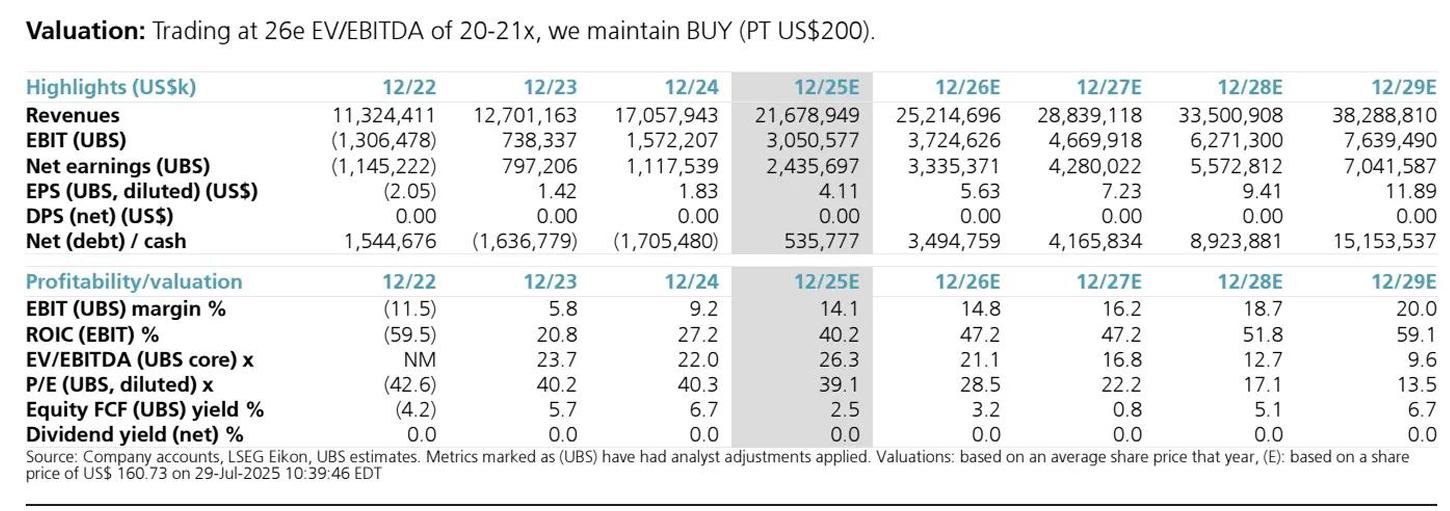
Core Viewpoint - UBS maintains a "buy" rating for Sea Ltd, reaffirming a target price of $200, indicating a potential upside of approximately 24% over the next 12 months, driven by confidence in the improvement of Sea's core business and a more rational competitive environment in the e-commerce sector [1][2]. E-commerce Business - The competitive landscape in Southeast Asia's e-commerce market is becoming more rational, particularly for Shopee, allowing Sea to maintain growth without sacrificing profit margins [1][6]. - UBS highlights that Shopee's pricing strategy has effectively limited the risk of a new price war, enabling the company to grow at or above the market average while improving profitability [6]. Financial Services - SeaMoney, the digital financial service segment, is projected to grow significantly, with revenues expected to rise from $1.22 billion in 2022 to $3.45 billion in 2025, potentially achieving profitability around 2025 [9]. - Cost control and operational leverage are key factors in the expected profitability of SeaMoney, alongside its synergy with Shopee's ecosystem [9]. Gaming Business - The digital entertainment segment, Garena, is expected to recover slightly after a decline, with revenues projected to rise from $1.81 billion in 2023 to $2.55 billion in 2025, supported by existing game management and new market expansions [10]. - Despite challenges, Garena is anticipated to provide stable cash flow and support overall profitability for Sea [10]. Financial Projections - UBS forecasts Sea's total revenue to grow from $12.70 billion in 2023 to $21.68 billion in 2025, driven primarily by e-commerce and financial services [3][5]. - The company is expected to achieve significant EBIT growth, with projections of $3.05 billion in 2025, and EPS anticipated to increase from $1.83 in 2024 to $4.11 in 2025 [3][5]. Valuation Comparison - Sea's current valuation metrics, such as EV/EBITDA and P/E ratios, are considered attractive compared to peers in the high-growth internet sector, suggesting potential for valuation expansion [4].

万亿资产上链革命:稳定币×RWA×DeFi重构B端融资新生态
Sou Hu Cai Jing· 2025-07-31 04:48
Core Insights - The global regulatory framework for crypto assets is rapidly evolving, with significant developments such as the EU's MiCA regulation, the US GENIUS Act, and Hong Kong's Ensemble project sandbox, indicating a strategic competition for digital financial sovereignty [1] - The "stablecoin + RWA + DeFi" model is disrupting traditional financial infrastructure, serving as a key driver for attracting trillions of dollars in assets on-chain [1] - The total value locked (TVL) in the RWA sector has reached a new high of $12.863 billion, but this remains small compared to the global $800 trillion in real assets, highlighting a bottleneck due to the lack of stablecoins [1] Group 1 - The revolution in finance directly addresses three major pain points for SMEs: difficulty in accessing global funds, challenges in pricing non-standard assets, and high costs of cross-border settlements [1] - Stablecoins provide a core value scale and medium of circulation for the RWA system, enabling the tokenization of private credit and government bonds, which currently dominate 92% of the RWA market [1] - The asset tokenization revolution is at a critical point, with BlackRock's BUIDL government bond fund enabling 24/7 income-generating asset trading, and Longxin Group tokenizing charging pile revenue rights to open new financing channels for asset-light operators [1][2] Group 2 - The efficiency revolution driven by "stablecoin-RWA-DeFi" is systematically addressing the liquidity challenges of non-standard assets for SMEs, high costs of cross-border settlements, and high technical compliance barriers [2] - Traditional finance's low collateral rates for assets like charging pile revenue rights are being disrupted by compliant tokenization, which offers a 33% premium rate [2] - Cross-border payments are transitioning from 3-5 days for settlement with friction costs exceeding 4% to instant T+0 clearing with only 0.5% costs through smart contracts [2][3]