
桥梁建设

Search documents
中国加速织就交通“经纬网” “人享其行、货畅其流”美好愿景正变为现实
Yang Shi Wang· 2025-10-21 02:08
Core Insights - The development goal of China's transportation industry is to achieve "people enjoy their travel, goods flow smoothly" during the 14th Five-Year Plan period [1] - China has accelerated the construction of a comprehensive transportation network, boasting the world's largest high-speed rail, expressway, and postal delivery networks [1] High-Speed Rail Development - In the past five years, China has added 10,000 kilometers of high-speed rail, with the Fuxing train covering 31 provinces and over 400 new stations added along 160,000 kilometers of railway [4] - By the end of this year, China's total high-speed rail mileage is expected to exceed 50,000 kilometers, expanding coverage further [4] - The CR450 high-speed train, part of the 14th Five-Year Plan's major projects, has achieved a record speed of 453 kilometers per hour for a single train and 896 kilometers per hour for relative meeting speeds [5] - The CR450 train accelerates from 0 to 350 kilometers per hour in just 4 minutes and 40 seconds, a 100-second improvement over the current Fuxing train [7] - The CR450 is lighter by 50 tons due to the use of advanced materials like carbon fiber and magnesium alloy, and it features enhanced noise reduction technologies, achieving an interior noise level of 68 decibels at 400 kilometers per hour [9] Expressway Network Expansion - During the 14th Five-Year Plan, China's expressway network has also been significantly expanded, with 33 national expressway main lines now largely connected, totaling 191,000 kilometers [9] - The improved expressway network has transformed previously difficult terrains into accessible routes, enhancing connectivity [9] Infrastructure Impact - The completion of the Huajiang Grand Canyon Bridge has drastically reduced travel time across the canyon from 2 hours to approximately 2 minutes, benefiting local communities and tourism [11] - The introduction of new economic activities around the bridge has allowed local residents to capitalize on the infrastructure, enhancing their livelihoods [13] - The Shenzhen-Zhongshan Link, a key project in the Guangdong-Hong Kong-Macao Greater Bay Area, has facilitated over 40 million vehicle trips since its opening, significantly impacting local economies [16] - The link has normalized cross-city commuting, with over 3.7 million passengers using the intercity bus service between Shenzhen, Zhongshan, and Guangzhou [18]


透过桥梁看中国(微观)
Ren Min Ri Bao· 2025-10-20 22:06
Core Viewpoint - The recent construction of bridges in China highlights the country's innovative capabilities and serves as a reflection of its economic and social development, facilitating connectivity and market integration across regions [1][2][3]. Group 1: Economic Impact - The completion of major bridges has significantly reduced travel times and improved logistics, such as the 常泰长江大桥, which cut travel time from 80 minutes to 20 minutes, enhancing economic integration between regions [2]. - The 港珠澳大桥 has become a vital artery for the Greater Bay Area, with cumulative import and export values exceeding 1 trillion yuan, showcasing the bridge's role in boosting economic activity [2]. - The construction of bridges is transforming remote areas, enabling them to participate in national development and share in modernization efforts, as seen with the completion of the 乔马桥 in Yunnan [3]. Group 2: Technological Innovation - China's bridge construction achievements, such as the 深中大桥 and 矮寨大桥, demonstrate significant technological advancements and the establishment of a comprehensive industry standard system [1]. - The ongoing development of bridges reflects a commitment to overcoming technical challenges and enhancing self-sufficiency in the construction industry, aligning with national strategic needs [1]. Group 3: Social Development - The construction of bridges is pivotal in addressing regional disparities in development, allowing previously isolated communities to access education and economic opportunities, as illustrated by the impact of the 乔马桥 on local residents [3]. - The narrative of bridge construction embodies the value of inclusivity in China's development strategy, ensuring that no region is left behind in the pursuit of modernization [3].
小乡村变身“网红打卡地” 超级工程成为当地文旅新名片
Yang Shi Wang· 2025-10-20 11:04
Core Viewpoint - The completion of the Huajiang Grand Canyon Bridge has significantly improved transportation and created new economic opportunities for local communities in Guizhou Province, China [1][5]. Group 1: Bridge Specifications and Impact - The Huajiang Grand Canyon Bridge is recognized as the world's longest and highest bridge, with a total length of 2,890 meters and a main span of 1,420 meters, standing 625 meters above the ground [3]. - The bridge has reduced travel time between the two sides of the canyon from 2 hours to approximately 2 minutes, greatly benefiting local residents [5]. Group 2: Economic Opportunities - Local villagers have capitalized on the bridge's status by upgrading their businesses, such as transforming local dining establishments into attractive guesthouses, leading to increased customer bookings [5]. - New economic activities have emerged, including aerial tours and skydiving experiences, showcasing the stunning views of the canyon and the bridge, further promoting tourism in the region [7].
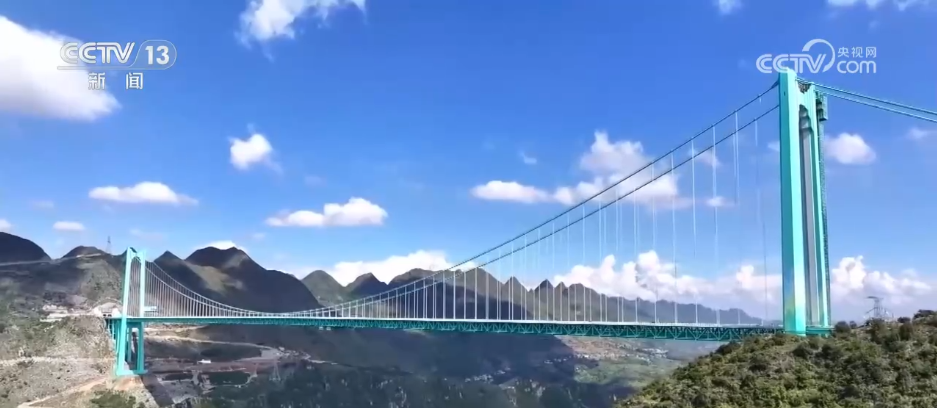
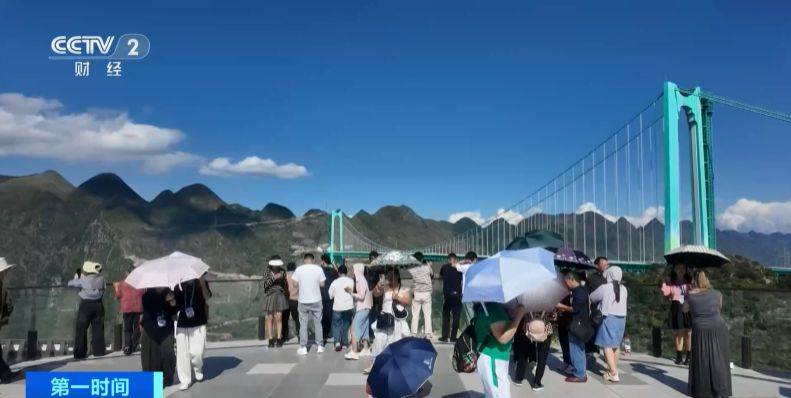
在“超级工程”上开启新体验!解锁花江峡谷大桥“桥旅融合”立体玩法
Sou Hu Cai Jing· 2025-10-20 08:17
Core Points - The Guizhou Huajiang Gorge Bridge, the world's highest bridge, was completed and opened to traffic on September 28, 2023, enhancing the "bridge-tourism integration" experience for visitors [1] - The bridge features a unique marriage registration point set up by the civil affairs bureau of the Bijie Prefecture, allowing couples to register their marriage against the backdrop of the canyon [3] - The bridge's span of 1,420 meters symbolizes "a lifetime of love," attracting couples to celebrate their unions [3] Group 1 - The bridge serves as a comprehensive hub integrating transportation, tourism, and consumption through the Yun Du service area [1] - The opening of the bridge has led to the launch of a manned airship sightseeing experience in Anshun City, allowing visitors to view the scenic area from above [5] - The bridge has significantly reduced travel time between Guanshan and Zhenfeng, contributing to rural revitalization in Xiaohuajiang Village, where local residents are actively renovating homes and businesses [7]
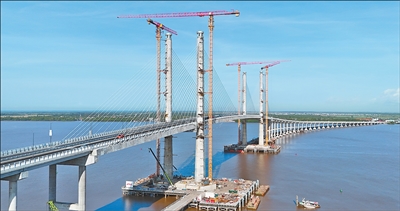
“圭亚那迈向现代化进程的里程碑”(共建“一带一路”·第一现场)
Ren Min Ri Bao· 2025-10-18 22:02
Core Points - The new Demerara River Bridge in Georgetown, Guyana, constructed by China Railway International Group, is seen as a vital infrastructure project that will significantly enhance transportation capacity and alleviate traffic pressure in the region [2][3] - The bridge, which spans 2,900 meters and features a dual four-lane design, is expected to reduce crossing time by 75% and accommodate vessels up to 50,000 tons, thereby improving both traffic efficiency and shipping conditions [3][4] Infrastructure Development - The bridge's construction began in January 2023 after a contract was signed in 2022, marking the start of a series of infrastructure transformations in Guyana [3] - The project has created over 2,000 jobs, with local engineers and technicians gaining valuable experience through hands-on involvement [5] Economic Impact - The bridge is anticipated to reshape Georgetown's traffic patterns and stimulate regional economic activity, as noted by the Minister of Public Works [3][5] - The construction of the bridge is part of a broader strategy to modernize transportation in Guyana, with additional projects like the Mackenzie-Wismar Bridge underway, which will further enhance connectivity and reduce travel times [6] Environmental Considerations - The project incorporated eco-friendly practices, such as minimizing disruption to local ecosystems and conducting regular environmental monitoring [5][6] - The design of the bridge avoided the most densely populated mangrove areas to protect local wildlife and habitats [5] Bilateral Cooperation - The bridge symbolizes the tangible outcomes of cooperation between China and Latin American countries, highlighting the benefits of the Belt and Road Initiative [5][6] - The Chinese ambassador to Guyana emphasized the strong partnership between the two nations, which has flourished over 53 years of diplomatic relations [6]
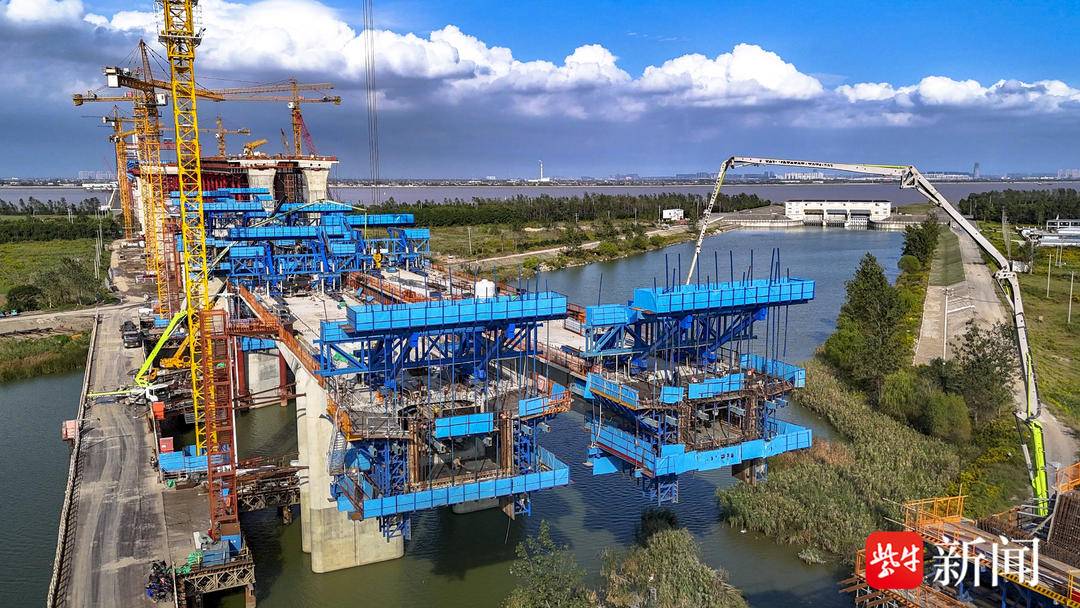
北沿江高铁崇启公铁长江大桥南引桥连续梁施工有新进展
Yang Zi Wan Bao Wang· 2025-10-18 07:01
Core Points - The construction of the South Approach Bridge of the Chongqi Railway and Highway Yangtze River Bridge has reached a significant milestone with the completion of the pouring of the 8th segment of the continuous beam on October 17 [1][3] - The bridge is a critical node in the high-speed rail network connecting Shanghai, Nanjing, and Hefei, spanning a total length of 4.09 kilometers and crossing the northern channel of the Yangtze River estuary [7] Construction Details - The South Approach Bridge is located in Qidong City, Jiangsu Province, featuring an upper layer for highways and a lower layer for high-speed and intercity rail lines, with a total length of 830.05 meters for both rail lines [3] - The continuous beam over the South Chao River consists of 11 segments, with the 8th segment recently completed, and the total length of the span is 256 meters, constructed using the cantilever method [3] - The entire construction of the intercity line's continuous beam is expected to be completed by December of this year [3] Strategic Importance - The completion of the Chongqi Railway and Highway Yangtze River Bridge will establish a new rapid transit corridor between the Shanghai metropolitan area, Nanjing metropolitan area, and Hefei metropolitan area [7] - This project is significant for optimizing the railway network layout along the Yangtze River and supporting the coordinated development of the Yangtze Economic Belt, contributing to the high-quality integration of the Yangtze River Delta [7]
缅建设部对新Dohtawadi大桥进行招标
Shang Wu Bu Wang Zhan· 2025-10-17 17:29
桥梁部(第一施工队和第四桥梁特别工作组)现邀请有意向的开发商就新桥梁 项目提交标书。该项目将由国家灾害管理委员会在2025-2026财政年度划拨专 项资金实施,计划通过采购的方式获得价值2亿缅币的建筑材料,并通过租赁 的方式获取设备及运输管理服务。 缅甸建设部招标接受和评估委员会于10月17日起,面向国内开发商就仰光-曼 德勒高速公路上里程碑358/1-3号新Dohtawadi大桥建设进行招标。 (原标题:缅建设部对新Dohtawadi大桥进行招标) ...
成都市天健路长跨线桥正式通车
Yang Shi Wang· 2025-10-14 11:22
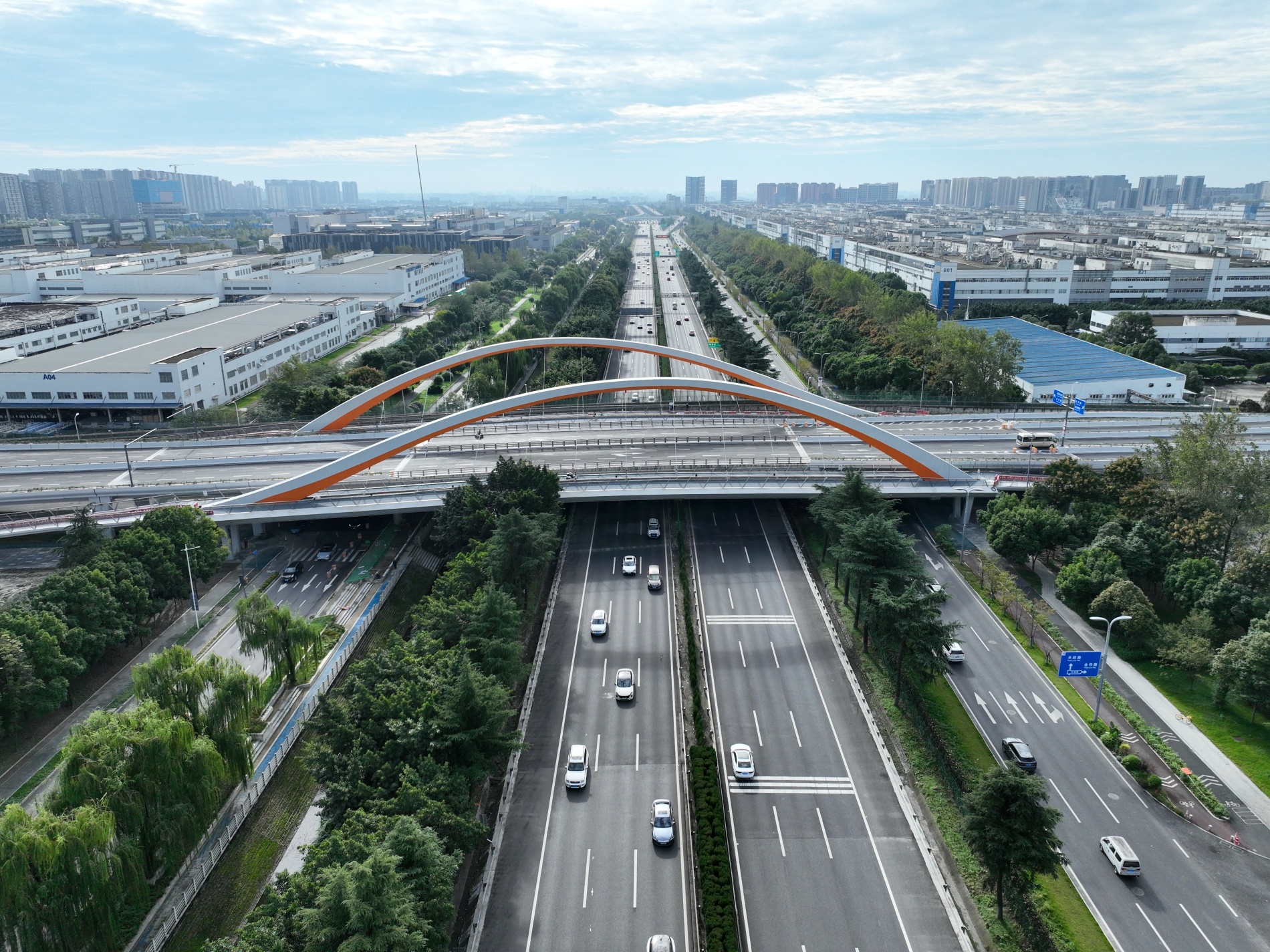
Core Viewpoint - The opening of the Tianjian Road Long-span Bridge in Chengdu marks a significant upgrade in the regional transportation system, facilitating the city's goal of becoming a "Park City Intelligent Manufacturing Development Demonstration Zone" [1] Group 1: Project Overview - The Tianjian Road Long-span Bridge has a total length of 2.56 kilometers, with the main bridge length being approximately 1.72 kilometers, designed with inspiration from the "Egrets Spreading Wings" concept [1] - The bridge is constructed to a standard of four lanes in both directions, with additional ramps and pedestrian bridges to enhance traffic efficiency and safety [1] Group 2: Traffic Impact - The bridge will implement a "crossing over straight traffic + ground-level intersection" diversion model, effectively separating incoming and outgoing traffic, which will alleviate previous congestion issues [1] - The new infrastructure will facilitate quick connections to the Chengdu-Dujiangyan Expressway and improve the regional road network, promoting the flow of talent, goods, and information [1] Group 3: Project Management - The project team focuses on the core objectives of "implementing the Park City concept and enhancing street quality," employing technical measures to ensure quality and safety [2] - The team has proactively planned and utilized specialized schemes and meticulous management to strengthen quality assurance amidst various challenges [2]
狮子洋通道主桥索塔建设高度突破200米
Xin Hua She· 2025-10-14 00:55
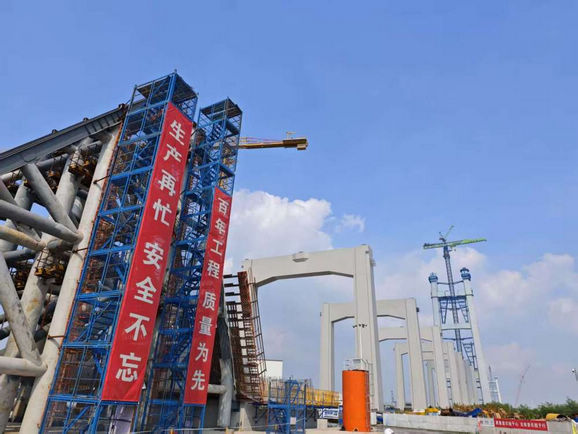
Core Points - The Lion's Mouth Channel project is a significant infrastructure initiative in the Guangdong-Hong Kong-Macao Greater Bay Area, aimed at enhancing regional connectivity and urban integration [2][7] - The main bridge, Lion's Mouth Bridge, features a main span of 2,180 meters and a tower height of 342 meters, which will set five world records upon completion [2][4] - The project is expected to be completed by 2026, with the main tower already surpassing 200 meters in height [1][2] Group 1 - The Lion's Mouth Channel is a "multi-layer composite functional channel" that connects Guangzhou Nansha to Dongguan Humen, facilitating both intercity and urban traffic integration [2][7] - The design team, led by a national engineering master, utilized extensive data analysis to finalize the dual-layer "8+8" lane highway design, allowing for a speed of 100 km/h [4][6] - The bridge's design incorporates a "steel shell-concrete" composite structure for the tower, a first in the world for large-span suspension bridges, enhancing structural performance while reducing weight [6] Group 2 - The Lion's Mouth Channel will significantly shorten travel time between Guangzhou Nansha and Dongguan, strengthening connections within the core urban areas of the Pearl River Delta [7] - The project is part of a broader strategy to promote interconnectivity and development in the Greater Bay Area, alongside existing bridges like the Humen Bridge and Nansha Bridge [7][8] - The main cable of the bridge is designed with a diameter of 1.5 meters, consisting of 374 strands, each made of 127 high-strength steel wires, ensuring it can handle heavy loads [6]
中交路建 S339 漳河大桥改造工程进入收尾阶段,预计本年打通“家门口好路”
Zhong Guo Neng Yuan Wang· 2025-10-13 11:35
Core Viewpoint - The project undertaken by China Communications Construction Company involves the renovation of the S339 road segment, enhancing regional transportation and supporting local economic development through improved connectivity [1] Group 1: Project Overview - The S339 renovation project is located in Wuhu City, Anhui Province, extending approximately 15.8 kilometers from the west side of the Zhanghe Bridge to the intersection with S457 [1] - The project adheres to secondary highway standards, with a design speed of 60 km/h and a standard road width of 12 meters, utilizing asphalt concrete pavement [1] Group 2: Economic Impact - Upon completion, the project will activate the regional traffic "microcirculation," linking villages along the route with the core area of the eastern section of Fanchang [1] - The renovation will provide efficient transportation channels for modern agricultural industrial parks and specialty agricultural product bases, facilitating the flow of industrial elements and becoming a key support for rural revitalization and economic development in Fanchang [1] Group 3: Project Timeline and Progress - The project officially commenced on April 18, 2023, with strong support from various government departments and efforts from the construction unit [1] - Currently, the project is in the final stages, focusing on the installation of safety engineering and debugging of lighting systems, aiming for full completion and opening within the year [1]