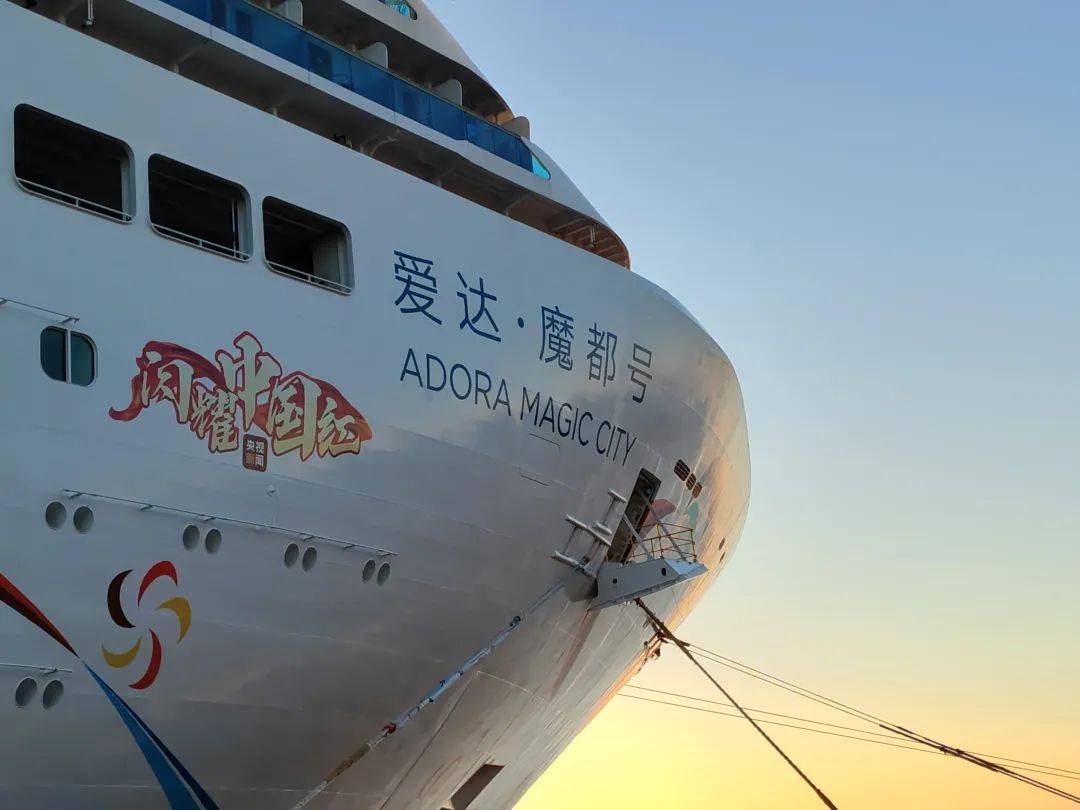
邮轮旅游

Search documents
精耕深蓝 加快建设海洋强国
Xin Hua She· 2025-08-14 01:44
Core Viewpoint - The focus is on accelerating the development of a modern marine economy in China, emphasizing innovation, collaboration, and sustainable practices to build a strong marine nation [1][2]. Group 1: Marine Economic Development - China's coastline spans over 18,000 kilometers, with a vast maritime area of approximately 3 million square kilometers, serving as a strategic resource for economic development [2]. - The marine economy has evolved from traditional fishing to a comprehensive system that includes shipbuilding, marine tourism, and deep-sea resource utilization, with a projected marine GDP exceeding 10 trillion yuan in 2024, more than double that of 2012 [2]. - China's shipping and container throughput account for about one-third of the global total, with a 50% share in the offshore engineering equipment market [2]. Group 2: Technological Advancements - Significant advancements in marine technology include the launch of China's first domestically produced aircraft carrier and the successful operation of the "Fighter" manned submersible, which set a record depth of 10,909 meters [6]. - The government is focusing on enhancing innovation in marine technology, with plans to develop key technologies and promote the transformation of traditional marine industries [7]. Group 3: Sustainable Practices and Resource Management - The development of marine resources must be optimized through scientific planning and management, with recommendations for tailored strategies for different bays and enhanced assessments of resource capacity [4]. - The "blue granary" initiative aims to increase the production of high-quality marine products, with projections of 8.25 million tons of marine product output in Shandong by 2024 [8]. Group 4: Global Cooperation and Governance - China is actively participating in international marine governance, exemplified by collaborative Antarctic research involving multiple countries and the establishment of the "Ocean Decade" China Committee [9][10]. - The growth of cruise tourism is notable, with a 40.1% increase in passenger numbers in the first half of the year, reflecting the rising popularity of maritime travel [9].
截至8月10日 今年已有超390艘次邮轮从上海口岸出入境
Zhong Guo Xin Wen Wang· 2025-08-13 17:30
Group 1 - The total number of cruise ships entering and exiting Shanghai from January 1 to August 10, 2025, exceeded 390, with a total of over 1.25 million passengers, representing an increase of approximately 52.7% and 51.1% compared to the same period in 2024 [1][2] - Compared to the same period in 2019, the number of inbound and outbound passengers increased by about 9.1% [1] - Major cruise ships currently operating from Shanghai include "Aida·Magic City," "Spectrum of the Seas," and "Mediterranean Glory," with routes covering ports in Jeju, South Korea, and Okinawa, Japan [1] Group 2 - As of now, 55 countries are eligible for the 240-hour visa-free transit policy, and 46 countries are eligible for China's unilateral visa-free policy [2] - The implementation of various policies, including visa exemptions for foreign tourist groups arriving by cruise, has created a comprehensive facilitation framework for inbound travel, attracting more international travelers to choose the "flight + cruise" combination [2] - On August 2, the "Spectrum of the Seas" cruise ship arrived with over 5,000 passengers, including more than 1,600 foreign travelers from over 50 countries, accounting for over 31% of the total [2]
精耕深蓝,加快建设海洋强国——“中国经济圆桌会”聚焦海洋经济高质量发展
Xin Hua She· 2025-08-13 05:11
Core Viewpoint - The article emphasizes the importance of high-quality development of the marine economy in China, highlighting the need for innovation, efficient collaboration, industrial upgrades, harmony between humans and the sea, and win-win cooperation [3][6][31]. Group 1: Marine Economy Development - China's marine production value is expected to exceed 10 trillion yuan in 2024, more than doubling since 2012 [6]. - The country holds approximately one-third of the global shipping volume and container throughput, with a 50% share in the marine engineering equipment market [6]. - China has maintained over 50% of the global market share in shipbuilding completion, new orders, and backlog orders in the first half of this year, with new orders at a high of 68.3% [6]. Group 2: Technological Innovation and Industry Upgrades - The article discusses the shift in marine economy from "fishing" to "strategic deep blue" development, with a complete marine industry system covering all 15 major marine industries [6]. - There is a focus on enhancing marine technology and innovation, with significant advancements in deep-sea exploration and marine scientific research capabilities [20][25]. - The government plans to implement major projects to cultivate new productive forces in the marine sector, including large-scale utilization of marine energy and the development of marine biomedicine [25][27]. Group 3: Integration and Collaboration - The article highlights the integration of marine industries with urban development, particularly in Shandong, where port construction and logistics systems are being optimized [11][13]. - It emphasizes the importance of international cooperation in marine governance, with China actively participating in global marine ecological protection and scientific research [31][34]. - The growth of cruise tourism is noted, with a significant increase in passenger numbers and cruise ship calls, reflecting the rising popularity of maritime travel [34][35].

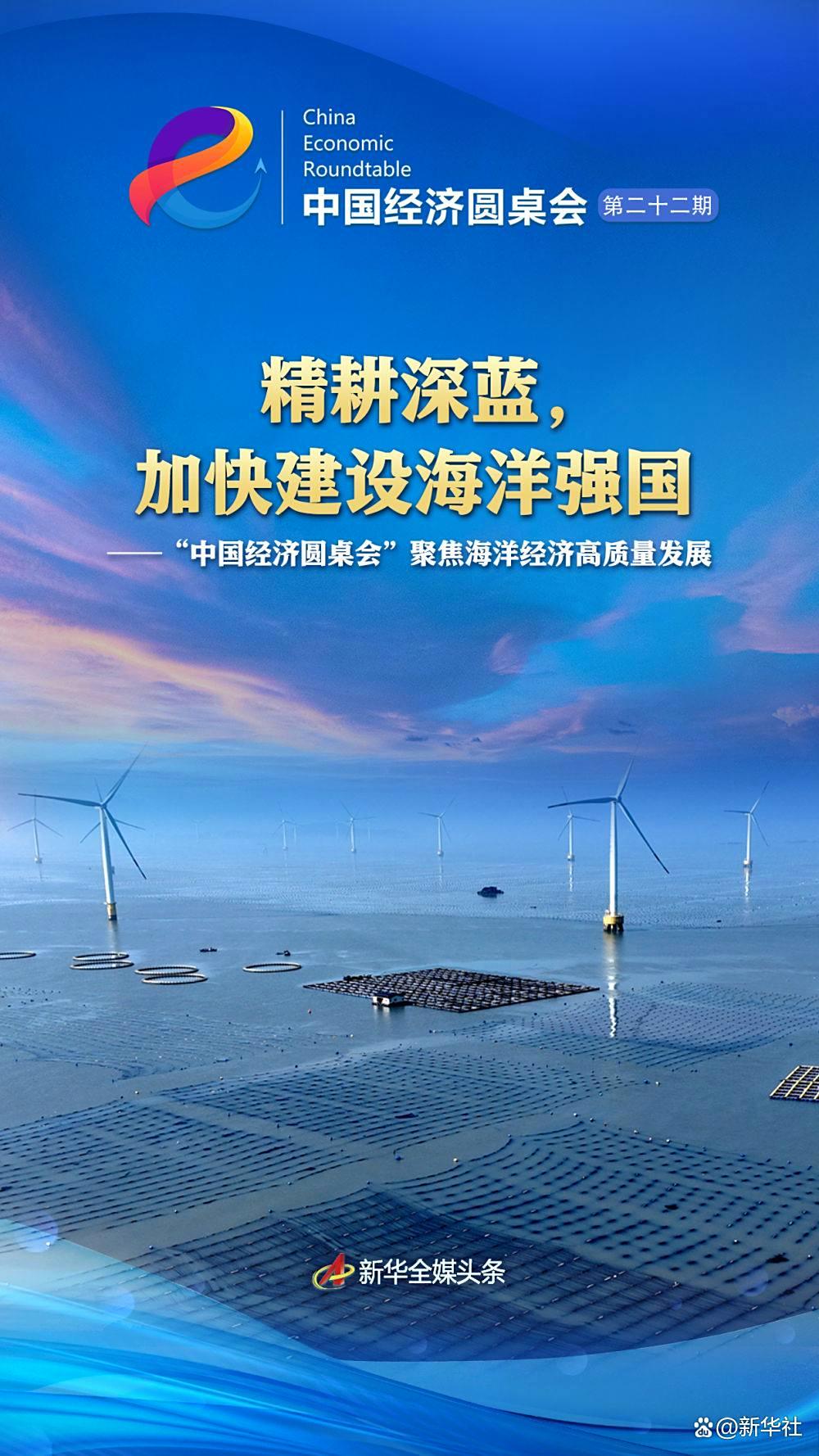
中国经济圆桌会·新华全媒头条|精耕深蓝,加快建设海洋强国——“中国经济圆桌会”聚焦海洋经济高质量发展
Xin Hua She· 2025-08-13 04:01
Core Viewpoint - The article emphasizes the importance of high-quality development of the marine economy in China, highlighting the need for innovation, efficient collaboration, industrial upgrades, and harmonious human-ocean relationships to build a strong marine nation [1][2]. Marine Economic Development - China's coastline spans over 18,000 kilometers, with a vast marine area of approximately 3 million square kilometers, serving as a strategic space and resource treasure for economic development [2]. - The marine economy has evolved from traditional fishing to a comprehensive approach that includes various sectors such as marine fisheries, shipbuilding, and deep-sea resource utilization [2]. - By 2024, China's marine production value is expected to exceed 10 trillion yuan, more than doubling since 2012, with significant shares in global shipping and marine equipment markets [2]. Integration of Marine Industries - The integration of marine industries is evident in the development of port infrastructure and the promotion of coastal industries, with projects like the construction of large-scale wind turbine blades in Shandong [3]. - Shandong aims to enhance its port services and develop high-end shipping services, transitioning from a "port cluster" to an "urban cluster" [3]. Marine Technology and Innovation - China has made significant advancements in marine technology, including the launch of its first domestically produced aircraft carrier and deep-sea exploration vehicles [5]. - The government is focusing on overcoming technological shortcomings and promoting the transformation of traditional marine industries while fostering emerging sectors like offshore wind energy and marine biotechnology [6]. Sustainable Marine Development - The article discusses the importance of sustainable marine development and global cooperation, with China actively participating in international marine governance and ecological protection efforts [8][9]. - Initiatives such as the establishment of the "Ocean Decade" China Committee and various training programs for developing countries highlight China's commitment to global marine collaboration [9]. Future Directions - The article outlines plans for the future, including the promotion of new marine production capabilities and the development of a modern marine industry system [7][10]. - Emphasis is placed on the need for tailored strategies for different marine areas and the integration of marine cities, industries, and ports to achieve high-quality marine economic development [4].
公主邮轮将于2027年部署史上最大规模日本航季
Cai Jing Wang· 2025-08-12 04:08
公主邮轮总裁格斯安托查表示,2027年日本航季是公司在日本市场的重大突破,将依托在日本市场的经 验与情感,为宾客打造深度体验,感受日本特色。 (公主邮轮) 8月12日,公主邮轮宣布将于2027年首次部署史上规模最大的日本航季。届时,钻石公主号与蓝宝石公 主号两艘日本建造的姐妹邮轮将以东京为母港联合执航,运营时间为2027年3月至12月,含78个航次、 50条独特航线,行程为7天至28天,将于2025年8月20日开放预订。 此外,公主邮轮旗下奥谷的海漾日本料理餐厅将于今秋进驻钻石公主号与蓝宝石公主号。 ...
迪士尼最大邮轮12月从新加坡启航 进军东南亚市场
Jing Ji Guan Cha Wang· 2025-08-11 07:35
经济观察网迪士尼首席执行官鲍勃.艾格(Bob Iger)在第三财季财报电话会上宣布,公司最大邮轮"Disney Adventure"号将于今年12月15日从新加坡启航,正式进军东南亚市场。他形容这艘邮轮是迪士尼知识产 权的"海上大使",有助于将迪士尼品牌的魅力带入对其高度亲和的地区。"Disney Adventure"号可容纳 约2,500名船员和6,700名乘客,航程以三至四晚的海上旅行为主,乘客将沉浸于皮克斯、漫威及迪士尼 故事世界。船上还将设有多项娱乐设施,包括"全球海上最长的过山车"。 ...

爱达邮轮将携国家京剧院打造首个京剧主题航次
Cai Jing Wang· 2025-08-07 04:04
Core Viewpoint - Adora Cruises announced the launch of its first domestic large cruise ship, Adora Magic City, featuring a themed autumn-winter cruise season in 2025, in collaboration with the National Peking Opera [1]. Group 1: Themed Cruise Season - The autumn-winter themed cruise season will take place from September 27 to October 12 and November 15 to November 27, covering six cruises [1]. - The cruises will primarily be 5 days and 4 nights, visiting popular tourist destinations such as Jeju, Fukuoka, and Nagasaki [1]. - An 8-day, 7-night special cruise for the National Day and Mid-Autumn Festival will also be included, visiting destinations like Kagoshima, Kobe, Osaka, and Kochi [1]. Group 2: Cultural Collaboration - The National Peking Opera will perform classic pieces such as "Farewell My Concubine" and "Drunken Beauty" during the cruise [1]. - In addition to performances, the cruise will feature Peking Opera-themed cultural lectures [1].
苹果准备开发ChatGPT竞品,伯克希尔净利润暴跌59% | 财经日日评
吴晓波频道· 2025-08-05 00:30
Group 1: US Tariff Impact - The average effective tariff rate on imported goods in the US has reached 18.3%, the highest since 1934, leading to an estimated increase of $2,400 in average household spending by 2025 [2] - The tariff policy is projected to reduce the US GDP growth rate by 0.5% annually in 2025 and 2026, and increase the unemployment rate by 0.3% by the end of 2025 and 0.7% by the end of 2026 [2] - The recent executive order signed by Trump established "reciprocal tariffs" ranging from 10% to 41%, with most tariffs taking effect on August 7 [2] Group 2: Small Loan Institutions - The number of small loan companies in China has decreased by 3,977 over the past decade, a decline of 44.4%, with total loan balances dropping by 223.3 billion yuan, a decrease of 23.3% [4] - The reduction in small loan companies is attributed to regulatory changes and a shift towards more stringent compliance, leading to a significant number of institutions being eliminated [5] - The industry has faced challenges due to high default rates and predatory lending practices, which have damaged its reputation [4][5] Group 3: Apple AI Development - Apple has formed a new team named "Answers, Knowledge, and Information" to develop a ChatGPT-like application, indicating a shift towards in-house AI development [6] - The company previously relied on partnerships with OpenAI for AI functionalities, but competition in the AI space has prompted a reevaluation of its strategy [6][7] - Internal management issues and talent retention challenges may complicate Apple's efforts to build a competitive AI search team [7] Group 4: Berkshire Hathaway Financial Performance - Berkshire Hathaway reported a 59% drop in net profit for Q2 2025, with net income at $12.37 billion compared to $30.35 billion in the same period last year [12] - The company cited international trade tensions and tariffs as significant threats to its diversified business model, impacting revenues across various sectors [12][13] - The insurance segment faced increased claims costs, and the long-term underperformance of Kraft Heinz led to a $3.8 billion impairment loss, further straining profitability [12][13] Group 5: Royal Caribbean Financial Results - Royal Caribbean Group reported a net profit of $1.2 billion for Q2 2025, driven by higher ticket prices and increased onboard spending [14] - The company served 2.3 million guests in Q2, a 10% increase year-over-year, with a passenger capacity utilization rate of 110% [14] - The cruise industry is projected to continue growing, with an expected increase in global cruise passengers to 37.7 million in 2025 [14][15] Group 6: Stock Market Overview - The Chinese stock market experienced a slight rebound, with the Shanghai Composite Index rising by 0.66% on August 4, supported by strong performance in the military and robotics sectors [16] - Market sentiment improved despite a mixed performance across sectors, with a total trading volume of 1.5 trillion yuan [16][17] - The market is showing signs of recovery, with expectations for continued upward movement as trading volumes remain robust [17]



游客艘次双增 我国邮轮旅游热度高涨
Xin Hua She· 2025-08-01 16:24
Core Insights - The marine tourism market in China is experiencing explosive growth, driven by favorable policies, optimized supply, and increased travel willingness [1] - In the first half of the year, the national marine tourism industry achieved a value-added of 771.8 billion yuan, representing a year-on-year growth of 8.0% [1] - The number of passengers and cruise ship calls at national cruise ports increased by 40.1% and 33.7% year-on-year, respectively [1] - During the "May Day" holiday, over 400 travelers processed the "240-hour transit visa exemption" at Tianjin International Cruise Home Port, setting a new single-day record since resuming operations [1] - With the arrival of the summer vacation season, cruise tourism and marine tourism are expected to continue their rapid growth [1] - The MSC Glory, recently awarded "Asia's Best Cruise," will return to Shanghai, launching 13 summer voyages to popular visa-free destinations in Japan and South Korea, potentially attracting nearly 3,000 foreign guests [1]
中国母港邮轮航线为何悄悄变长?
Hu Xiu· 2025-08-01 01:41
Core Insights - The cruise industry in China is experiencing a shift towards longer cruise itineraries, moving away from the traditional short trips that dominated the market [21][22][34] - The emergence of longer cruise routes is a response to market demands and changing consumer preferences, indicating a maturation of the cruise market in China [22][52] Industry Trends - The trend of longer cruise itineraries is becoming more prevalent, with companies like Aida and Viking introducing 15-day and 14-day cruises, respectively [19][20][44] - The increase in longer cruises is seen as a reaction to the oversaturation and price competition in the short cruise segment, which has led to unsustainable pricing strategies [32][34] Consumer Behavior - There is a noticeable shift in consumer preferences, with more experienced travelers seeking deeper and longer travel experiences rather than quick getaways [55][66] - The willingness to pay higher prices for longer cruises reflects a change in the target demographic, which now includes more affluent and experienced travelers [61][64] Market Dynamics - The cruise market is evolving, with longer itineraries allowing companies to enhance profitability through increased onboard spending on dining, shopping, and entertainment [46][47] - The introduction of longer cruises is not only a strategy to attract new customers but also a way to retain and cater to existing customers who desire more comprehensive travel experiences [52][41] Future Outlook - The long cruise trend is seen as a potential mainstay in the Chinese cruise market, representing a new phase of growth and development for the industry [73] - The success of longer cruises will depend on the ability of cruise companies to innovate and provide high-quality experiences that meet the expectations of a more discerning customer base [70][72]