脑机接口

Search documents
加速构建脑机接口“热带雨林式”创新生态
Zheng Quan Ri Bao· 2025-08-08 16:21
Core Viewpoint - The recent implementation of the "Implementation Opinions on Promoting the Innovation and Development of the Brain-Computer Interface Industry" by seven departments, including the Ministry of Industry and Information Technology, aims to establish a robust ecosystem for the brain-computer interface industry in China by 2027, focusing on breakthroughs in key technologies and the establishment of advanced technical, industrial, and standard systems [1] Group 1: Industry Development - The brain-computer interface industry is currently in its early development stage in China, necessitating the emergence of leading enterprises with strong technical integration capabilities and substantial financial resources to support the industry's backbone [1] - The "Implementation Opinions" emphasize the need to cultivate leading enterprises in the brain-computer interface field and support the formation of industrial innovation consortia to undertake major national scientific and technological projects [1] Group 2: Innovation and Entrepreneurship - A number of enterprises and institutions with core technologies are emerging, such as the semi-invasive "Beijing Brain No. 1" and invasive "Beijing Brain No. 2" intelligent brain-computer systems developed by the Beijing Brain Science and Brain-like Research Institute in collaboration with Beijing Chip Intelligence Technology Co., Ltd., both of which have reached world-leading levels [2] - The "Implementation Opinions" highlight the importance of nurturing innovative small and medium-sized enterprises, high-tech enterprises, and specialized "little giant" enterprises to enhance the diversity and resilience of the industry ecosystem [2] Group 3: Policy and Capital Support - The prosperity of the industry ecosystem relies on favorable "climatic conditions," with numerous policies introduced at both national and local levels to support the development of the brain-computer interface industry [3] - The National Medical Products Administration has proposed policies to facilitate the review and approval of medical devices based on brain-computer interface technology, paving the way for clinical applications once the technology matures [3] - Capital interest in the brain-computer interface industry is increasing, exemplified by Shanghai Ladder Medical Technology Co., Ltd. completing a significant B-round financing of 350 million yuan, marking the highest single financing record in the domestic sector [3]
政策加码上市公司积极布局 脑机接口产业加速向前
Zheng Quan Ri Bao· 2025-08-08 16:15
Group 1 - The Ministry of Industry and Information Technology, along with six other departments, issued a document to promote the innovation and development of the brain-computer interface (BCI) industry, aiming for breakthroughs in key technologies by 2027 [1] - The BCI technology is expected to achieve international advanced levels in electrode, chip, and complete product performance, with applications expanding in industrial manufacturing, healthcare, and consumer life [1] - The global market for BCI medical applications is projected to reach $40 billion by 2030 and $145 billion by 2040 according to McKinsey [1] Group 2 - Local governments are actively supporting the BCI industry with various policies, such as Beijing's action plan targeting commercialization in healthcare, wellness, industrial, and educational fields by 2030 [2] - Companies like Xilinmen and Sanbo Brain Science are entering the BCI field, with Xilinmen launching a smart mattress that integrates brain monitoring technology [2] - Other listed companies are also making strides in material research and AI healthcare, contributing to the BCI industry's supply chain [3] Group 3 - Experts indicate that non-invasive BCI commercialization is progressing rapidly in education and entertainment, while invasive technologies excel in precise control and neuro-rehabilitation [3] - The BCI industry in China benefits from policy support, technological foundation, market space, and application demand, but faces challenges such as technical bottlenecks and ethical concerns [3] - Recommendations include accelerating collaboration on software, hardware, algorithms, and ethics, as well as improving data privacy protection and encouraging leading companies to build public pilot platforms [3]



创新高!这一概念股连续涨停
Di Yi Cai Jing Zi Xun· 2025-08-08 15:04
Core Viewpoint - The brain-computer interface (BCI) sector is experiencing significant growth in the A-share market, with the BCI index reaching a historical high, indicating a promising future for the industry [2][3]. Industry Overview - The BCI technology is seen as a new frontier, with applications in medical fields such as disease warning, diagnosis, treatment, and functional enhancement, as well as in non-medical sectors like consumer and industrial applications [5][6]. - The global market for BCI medical applications is projected to reach $40 billion by 2030 and $145 billion by 2040, highlighting the substantial growth potential in this sector [5]. Company Developments - Several companies, including Sainuo Medical, Guangdian Co., and Shangrong Medical, have seen their stock prices surge, with multiple stocks hitting the daily limit up [3]. - Companies like Lide Man and Botuo Bio have reported significant gains, with Lide Man increasing over 11% and Botuo Bio rising by 10% [3]. - Sanbo Brain Science has completed an interventional BCI trial, showcasing China's innovation capabilities in this field and marking a significant step in treating movement disorders [3]. Strategic Initiatives - Chengyitong has established a dual-track strategy focusing on both invasive and non-invasive BCI technologies, aiming to integrate existing rehabilitation devices with BCI [4]. - Yanshan Technology's subsidiary has developed a brain-computer interface system that has demonstrated excellent performance in clinical trials, indicating advancements in the technology [5]. Policy Support - The Chinese government has been actively promoting the BCI industry through various policies, with multiple regions releasing action plans to accelerate development [6]. - The Ministry of Industry and Information Technology has outlined goals for the BCI sector over the next five years, aiming for breakthroughs in key technologies and the establishment of a robust industrial ecosystem by 2030 [6][7]. Market Challenges and Opportunities - The BCI industry faces challenges in making technology affordable for the general public, with current rehabilitation robots costing around 1 million yuan, which is still considered expensive [7][8]. - The integration of BCI technologies into medical insurance reimbursement lists is seen as a critical step for commercial viability and wider adoption [8].



创新高!这一概念股连续涨停
第一财经· 2025-08-08 14:33
Core Viewpoint - The brain-computer interface (BCI) industry is expected to experience significant growth, with 2023 being a pivotal year for its development and application across various sectors [2][8]. Group 1: Market Performance - The BCI concept stocks have seen a strong rally, with several companies like Sainuo Medical, Guangdian Co., and Shangrong Medical hitting their daily price limits [4]. - Notable stock performances include Lide Man and Botuo Bio, which rose over 11%, and Meilan De, which increased by 10% [4]. Group 2: Technological Advancements - BCI technology connects the brain with external devices for information exchange, showing promise in medical fields such as disease diagnosis and treatment [6]. - Significant advancements have been made in BCI technology, particularly in biomedical applications, neuro-rehabilitation, and intelligent robotics [6]. Group 3: Industry Outlook - According to McKinsey, the global market for BCI medical applications is projected to reach $40 billion by 2030 and $145 billion by 2040 [7]. - The Chinese BCI industry, although starting late, is rapidly developing, with multiple policies introduced since 2025 to support its growth [9][10]. Group 4: Policy Support - Recent government initiatives aim to accelerate the commercialization of BCI technology, with specific action plans released by cities like Beijing and Shanghai [9][10]. - The Ministry of Industry and Information Technology and other departments have set ambitious goals for the BCI industry over the next five years, focusing on technological breakthroughs and establishing a robust industrial ecosystem [10]. Group 5: Application Areas - The BCI industry has two primary application areas: serious medical applications, such as rehabilitation for stroke and spinal injury patients, and consumer applications addressing issues like sleep disorders [11]. - A significant challenge for the industry is to reduce costs, making BCI technologies more accessible to the general public [11][12].



每日投行/机构观点梳理(2025-08-08)
Jin Shi Shu Ju· 2025-08-08 12:38
Group 1: Federal Reserve and Interest Rates - Morgan Stanley has revised its forecast for the Federal Reserve's interest rate cuts from one to three cuts, starting in September 2025, with each cut being 25 basis points, lowering the policy rate to 3.5% [1] - Concerns about the independence of the Federal Reserve are increasing, which is driving demand for gold as a safe haven [2] Group 2: Global Market Outlook - JPMorgan believes that global stock markets remain an attractive option, raising its year-end and 12-month targets for the S&P 500 index, supported by strong earnings and improved valuations [5] - The expected year-end target for the S&P 500 index is between 6,350 and 6,450 points, with a 12-month target of 6,650 to 6,750 points [5] Group 3: Trade and Currency Impact - MUFG indicates that trade uncertainties, particularly due to tariffs imposed by the Trump administration, are likely to negatively impact the US dollar [4] - The market is currently more focused on the economic data impacts of tariffs rather than the tariffs themselves [6] Group 4: Sector-Specific Investment Opportunities - CICC continues to favor investment opportunities in the outdoor sports and gold jewelry sectors, driven by lifestyle changes and brand innovation [5] - The solid-state battery industry is entering a critical phase of industrialization, presenting investment opportunities in related equipment sectors [5] - The Hong Kong real estate market is believed to be entering a new upward cycle, benefiting all real estate companies operating in the region [8] Group 5: Emerging Technologies and Market Trends - The brain-computer interface and surgical robot sectors are accelerating in application and market expansion, driven by advancements in AI and healthcare needs [7] - The rare earth industry is expected to see improved performance in the third and fourth quarters, supported by growing demand from various sectors [9]
政策点燃脑机接口赛道 喜临门AI睡眠提前就位
Zhong Guo Chan Ye Jing Ji Xin Xi Wang· 2025-08-08 12:02
Group 1 - The Ministry of Industry and Information Technology and other departments have included brain-computer interfaces (BCI) as a key focus for future industries, outlining a dual strategy for both implantable and non-implantable device development [1] - The domestic market for non-invasive BCIs is rapidly expanding in medical rehabilitation and emotional management, with significant potential in the sleep health sector [1][2] - The collaboration between Xilinmen and Qiangnao Technology has led to the creation of the world's first AI mattress incorporating brainwave technology, aiming to enhance sleep quality [1][2] Group 2 - The "Baobao·BrainCo" mattress utilizes multi-modal data sensing to capture brainwaves and physiological signals, establishing a dynamic intervention mechanism for sleep management [2] - Xilinmen has invested 1.1 billion yuan in R&D over the past decade, resulting in 2,441 patents and the establishment of nine global production bases, demonstrating a commitment to leveraging technology for sleep improvement [2] - The introduction of the Ministry of Industry and Information Technology's guidelines is expected to energize the entire BCI industry chain, leading to a technological revolution in sleep health [2] Group 3 - The market demand for brain-computer applications is projected to grow, with estimates suggesting that the Chinese BCI market will exceed 6 billion yuan by 2028 [3] - Companies like Xilinmen, which combine manufacturing expertise with innovative BCI technologies, are positioned to convert technological advantages into widespread benefits for consumers seeking quality sleep [3]
政策技术双轮驱动,脑机接口迎“爆发元年”,概念股连续涨停
Di Yi Cai Jing Zi Xun· 2025-08-08 12:00
"心之所想,便能所行",近段时间,脑机接口火爆A股,继昨日尾盘拉升之后,8月8日,A股市场脑机 接口概念股再度集体走强,脑机接口指数创出历史新高。 "今年将会是脑机接口产业的元年,接下来会有很多的场景和应用。"力之智能科技(广州)有限公司首 席科学家、华南理工大学吴贤铭智能工程学院教授谢龙汉对记者说。 应用前景广阔,概念股应声大涨 从个股来看,赛诺医疗(688108.SH)、光电股份(600184.SH)、尚荣医疗(002551.SZ)、际华集团 (601718.SH)等多只个股收盘涨停;创新医疗(002173.SZ)早盘一度涨停,午后回落;赛诺医疗、际 华集团、尚荣医疗等已连续两个交易日涨停。 利德曼(300289.SZ)、博拓生物(688767.SH)涨超11%,麦澜德(688273.SH)涨10%,美好医疗 (301363.SZ)涨超7%、乐普医疗(300003.SZ)涨7%。另外,三博脑科(301293.SZ)、岩山科技 (002195.SZ)、狄耐克(300884.SZ)、倍益康(870199.BJ)等跟涨。 脑机接口是连接大脑与外部设备实现信息交互的新型技术,广泛应用于疾病预警、诊断、治疗和功能增 ...
华夏时评:超前布局“新质产业链”刻不容缓
Sou Hu Cai Jing· 2025-08-08 11:24
Group 1 - The core viewpoint emphasizes the importance of proactive layout in future industries, particularly in technology-driven sectors like brain-computer interfaces (BCIs) [2][3] - The Chinese government aims to establish a robust BCI industry by 2027, focusing on breakthroughs in key technologies and the creation of a reliable industrial system by 2030 [3] - Successful examples of proactive layout include the new energy vehicle, photovoltaic, and lithium battery industries, which serve as models for the BCI sector [2][3] Group 2 - The BCI industry has a long supply chain, requiring innovation in hardware and software components, including brain signal sensors and brain-machine chips [3][4] - The application of BCI technology is expected to expand across various sectors, including industrial manufacturing, healthcare, and consumer products, indicating a vast market potential [5] - The growth of the BCI industry is anticipated to be supported by leading companies and emerging unicorns, fostering a comprehensive industrial cluster [6]

A股五张图:脑阔怕是有点痛喔
Xuan Gu Bao· 2025-08-08 10:34
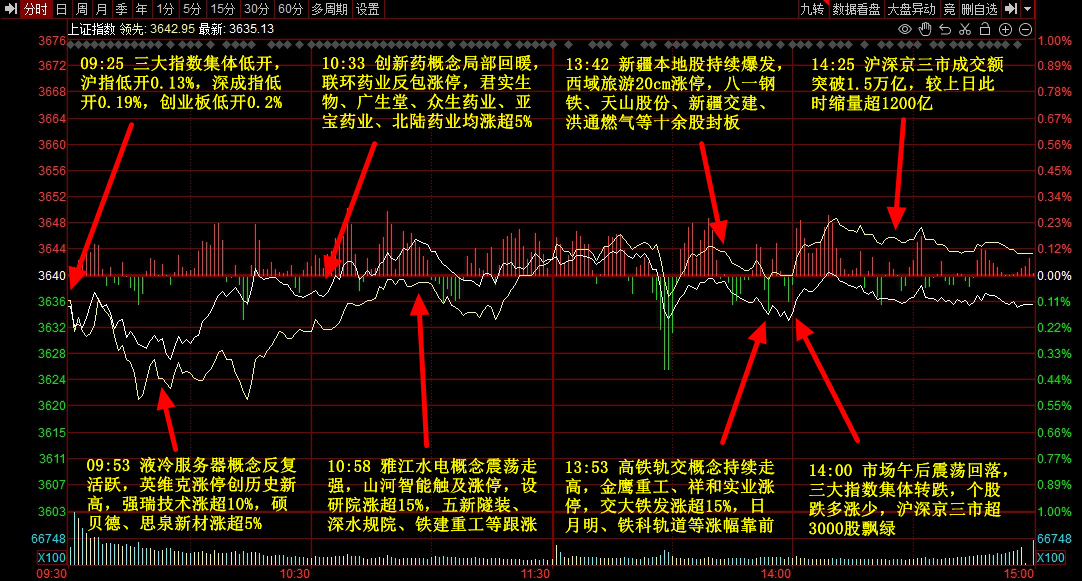
Market Overview - The market indices experienced a slight decline today, with a shift in hot topics and a decrease in market sentiment [3] - The brain-computer interface sector saw a strong opening but later faced a significant pullback, while the digital currency concept had localized fluctuations with several stocks hitting their daily limits [3][11] - The Xinjiang local stocks surged in the afternoon, with multiple companies reaching their daily limits, driven by news of the establishment of a new railway company [20][21] Brain-Computer Interface - A significant announcement was made by the Ministry of Industry and Information Technology and six other departments regarding the promotion of the brain-computer interface industry, aiming for breakthroughs in key technologies by 2027 [6] - Following this news, the brain-computer interface sector experienced a surge, with stocks like Innovation Medical and Jihua Group hitting their daily limits, although the momentum did not sustain throughout the day [7] Topic Rotation - The robot sector saw a decline after the recent human-robot conference, indicating a shift in market sentiment [9] - The digital currency concept rebounded initially but quickly lost momentum due to a lack of leading stocks to bolster confidence [12] - The hydropower sector, particularly the Yajiang Hydropower Station concept, saw a resurgence, with several stocks achieving significant gains [14] Xinjiang Stocks - Xinjiang local stocks showed strength in the morning and exploded in the afternoon, with several stocks hitting their daily limits [19] - The establishment of the Xinjiang-Tibet Railway Company, with a registered capital of 95 billion RMB, acted as a catalyst for the surge in local stocks [20][21] Huasheng Technology - Huasheng Technology experienced a sudden influx of capital, leading to a sharp rise in stock price, reminiscent of previous market behaviors seen with other stocks [24] - The stock has a history of volatility, having previously experienced a nine consecutive limit-up streak [26]
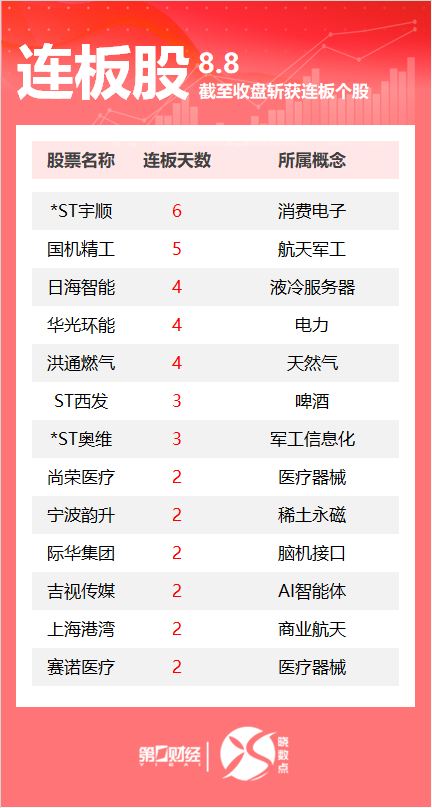
连板股追踪丨A股今日共74只个股涨停 国机精工5连板
Di Yi Cai Jing· 2025-08-08 09:20
Core Viewpoint - The A-share market experienced significant activity on August 8, with a total of 74 stocks hitting the daily limit up, indicating strong investor interest and market momentum [1]. Group 1: Stock Performance - Guojijinggong, a company in the aerospace and military industry, achieved a five-day consecutive limit up [1]. - Huaguang Huaneng, a power sector company, recorded a four-day consecutive limit up [1]. - Other notable stocks include *ST Yushun with six consecutive limit ups in the consumer electronics sector, and Rihai Intelligent with four consecutive limit ups in the liquid cooling server segment [1]. Group 2: Sector Highlights - The aerospace and military sector is highlighted by Guojijinggong's performance, reflecting strong investor confidence in this industry [1]. - The power sector, represented by Huaguang Huaneng, also shows robust activity, indicating potential growth opportunities [1]. - The consumer electronics and liquid cooling server sectors are gaining traction, as evidenced by the performance of *ST Yushun and Rihai Intelligent, respectively [1].