
高等教育

Search documents
预算1.14亿元!武汉纺织大学近期大批仪器采购意向
仪器信息网· 2025-05-12 08:59
Core Viewpoint - Wuhan Textile University has announced procurement intentions for 24 items of laboratory equipment with a total budget of 114 million yuan, expected to be purchased between April and June 2025 [1][2]. Procurement Summary - The procurement includes various advanced instruments such as ultrafast pulse lasers, vector network analyzers, and plasma-enhanced chemical vapor deposition systems, among others [2][4]. - The total budget for the procurement is 114 million yuan, with specific allocations for different equipment types [2][4]. Equipment Details - The procurement list includes: - Non-woven fabric machine for textile education: 3.6 million yuan [4] - Fiber material analysis equipment: 2.75 million yuan [4] - Five-axis composite machining center: 6.15 million yuan [4] - Small animal imaging system: 1.5 million yuan [4] - High-speed centrifuge: 510,000 yuan [4] - Stepper photolithography machine: 5.5 million yuan [4] - Lipidomics analysis system: 2.6 million yuan [4] - Deep ultraviolet spectrometer: 8.8 million yuan [5] - Multifunctional thermal processing furnace: 1.35 million yuan [5] - High-shear multifunctional melt spinning machine: 1.25 million yuan [5] - Online solid-phase extraction system: 2.5 million yuan [5] Research and Development Background - Wuhan Textile University is recognized for its strong research capabilities, with multiple key laboratories and a history of significant research projects in textile and material sciences [7][8]. - The university has received numerous awards for its research achievements, indicating a robust academic and practical impact in the textile industry [8]. Collaboration and Innovation - The university emphasizes collaboration with local governments and industries, aiming to extend its research applications to various sectors, including military, healthcare, and environmental protection [8][9].


兰州工商学院举办AI赋能审计教育研讨会
Zhong Guo Qing Nian Bao· 2025-05-12 05:25
原标题:兰州工商学院举办AI赋能审计会计教育研讨会 5月8日,"中国政府审计研究中心走进国内高校行动计划(兰州站)暨CCGAR双周论坛第231期学术研 讨会"在兰州工商学院举行,会议以"AI赋能审计会计教育与人才培养创新"为主题,吸引全国近70所高 校、数十家企业的百余名专家学者线上线下参会,共同探讨人工智能与审计会计教育深度融合路径。 据介绍,兰州工商学院已累计培养1.1万余名财会人才,近年来深度聚焦数智化转型并已举办多场审计 教育改革研讨会。"此次会议不仅为学校审计会计学科注入AI赋能新动能,更搭建起全国高校与企业在 智能时代的教育合作桥梁,将助力构建产教融合新格局,推动审计会计领域创新发展。"兰州工商学院 相关负责人表示。 北京工商大学谢志华教授在"数智技术与教育本质的回归"报告中提出,会计教育需回归真实场景,未来 将向业财信息、财务与管理会计报告"双一体化"变革,推动理论体系重构。北京国家会计学院秦荣生教 授聚焦"智能化时代审计教学的变革",分析生成式人工智能趋势,为审计教学创新提供方向。上海财经 大学朱凯教授通过数据揭示注册会计师人才供需矛盾,建议高校优化培养结构。 延伸阅读: 麻城:召开"科学规范 ...
浙大今年本科招生有哪些新变化?
Hang Zhou Ri Bao· 2025-05-12 02:31
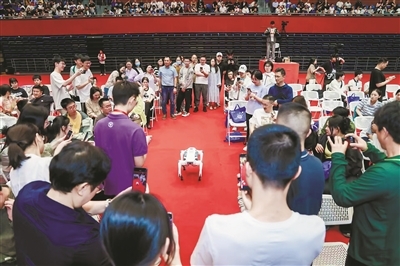
Group 1 - The event was a large-scale campus open day held by Zhejiang University, aimed at showcasing the university's academic charm, innovative vitality, and inclusive campus culture to prospective students and their families [3][4] - The open day featured engaging activities, including a performance by robotic dogs, which delighted attendees and created a lively atmosphere [3] - The university's undergraduate dean emphasized the importance of choosing a good university for personal development and the potential for students to encounter unforeseen opportunities at Zhejiang University [4] Group 2 - In 2025, Zhejiang University plans to increase enrollment in artificial intelligence programs and introduce new interdisciplinary programs, including Turing Class, Robotics Engineering, Digital Law Excellence Class, and others [4] - The university aims to strengthen its foundational, emerging, and interdisciplinary disciplines while fostering top talent through specialized programs [4] - Parents showed keen interest in the university's offerings, with many taking notes and photos during the presentations, indicating a strong desire for their children to become part of the Zhejiang University community [4]
海南医科大学投入1000万元支持本科生科研创新
Hai Nan Ri Bao· 2025-05-12 01:57
Core Viewpoint - Hainan Medical University has launched a 2025 undergraduate research innovation training program with a total investment of 20 million yuan to support student research projects and enhance faculty research capabilities [2][3] Group 1: Program Highlights - The program allows voluntary application without specific eligibility criteria, targeting undergraduate students in their second year and above who are interested in research [2] - A dual selection mechanism for mentors and students is established, with each project team consisting of one mentor and three to five students [2] - The program emphasizes process-oriented management rather than solely focusing on publications, implementing a tracking system that includes a "research journal" and monthly reports [2][3] Group 2: Funding and Support - Each selected team will receive 100,000 yuan in research funding, with approximately 100 teams funded annually for a project duration of two years [2] - Mid-term assessments will determine continued funding, and outstanding projects may receive recommendations for national competitions and priority funding in subsequent years [2] Group 3: Faculty and Training Requirements - Mentors must hold a doctoral degree or a senior title, with a preference for those leading provincial or higher-level projects [3] - Students will complete a comprehensive research training program under mentor guidance, from project initiation to completion [3] - The university will establish a recognition system for outstanding teams and mentors, fostering a strong culture of innovation [3]
构筑聚才强磁场 引来更多千里马
Zheng Zhou Ri Bao· 2025-05-12 00:58
Core Insights - Zhengzhou is actively implementing the "Zhengju Talent Plan" to attract, nurture, and retain talent, resulting in significant employment growth and skill development in the region [1][4]. Group 1: Talent Attraction and Employment - In the first quarter, Zhengzhou saw an addition of 32,900 urban jobs, with 5,331 unemployed individuals finding re-employment and 1,713 employment for those facing difficulties [1]. - The city has created 70,800 effective job positions for university graduates through the implementation of the "1131" special service measures [1]. - A total of 53 talent recruitment events were held in the first quarter, resulting in 56,479 employment intentions and the introduction of 29,801 key talents, with an investment of 8.603 billion [2]. Group 2: Integration of Talent and Industry - Zhengzhou is focusing on integrating talent development with industrial upgrades, having introduced 19 supporting policies for talent recruitment and training [3]. - The city has successfully attracted 25 top talents and appointed 10 academicians as special advisors, targeting the recruitment of 621 leading talents [3]. - The strategy emphasizes the development of 20 key industrial chains, leading to the establishment of over 5,800 high-tech enterprises and more than 13,000 technology-based companies [3]. Group 3: Policy Support and Living Conditions - Zhengzhou has launched the third batch of talent apartments, providing 2,052 housing units for high-level talents, with a rapid online approval process [5]. - The "Zhengju Talent Plan" has been enhanced to offer broader support and more substantial incentives for talent acquisition [5]. - The city is committed to creating a favorable living environment for talents, ensuring that they not only come to Zhengzhou but also integrate and stay [4][5].
中国最缺大学的省,疯狂建大专
虎嗅APP· 2025-05-11 09:36
Core Insights - The article discusses the educational landscape in Henan province, highlighting its struggle with higher education resources despite having the highest number of universities in China [3][8]. - The focus is on the disproportionate number of vocational colleges compared to universities, indicating a reliance on lower-tier educational institutions to meet the demands of a large population [9][14]. Group 1: Higher Education Statistics - Henan has 174 higher education institutions, surpassing Jiangsu's 172, making it the province with the most universities in China [8]. - Approximately 65.52% of these institutions are vocational colleges, a significant increase from under 60% in 2015 [14]. - In 2023, Henan established 11 new vocational colleges, accounting for about 20% of the national total for that year [14]. Group 2: Challenges in Higher Education - The province has only 60 regular undergraduate institutions, resulting in a low average of 6.13 universities per 10 million people, placing it near the bottom nationally [18]. - The lack of prestigious universities is evident, with only two "Double First Class" institutions, which further exacerbates the educational challenges faced by the province [19]. - The historical context reveals that many quality institutions were relocated to other regions, contributing to the current educational deficiencies [21][22]. Group 3: Economic and Employment Factors - Despite a strong industrial base with a total output exceeding 5.3 trillion yuan, Henan struggles to retain its vocational graduates, with only a 71.57% employment rate within the province [37][38]. - The average monthly salary for vocational graduates in Henan is approximately 3,900 yuan, lower than neighboring provinces like Hubei and Hunan, which exceed 4,200 yuan [39]. - The slow pace of industrial upgrading in Henan limits the availability of high-value job opportunities for graduates, as traditional industries dominate the local economy [40]. Group 4: Future Prospects - Henan aims to increase its gross enrollment rate in higher education to 60% by 2025, indicating a focus on improving educational access [31]. - The province's strategy includes expanding vocational education as a pragmatic approach to address the immediate educational needs of its population [32].
“数”说高校专业调整,“未来风口”专业是哪些?
Yang Shi Xin Wen· 2025-05-11 04:01
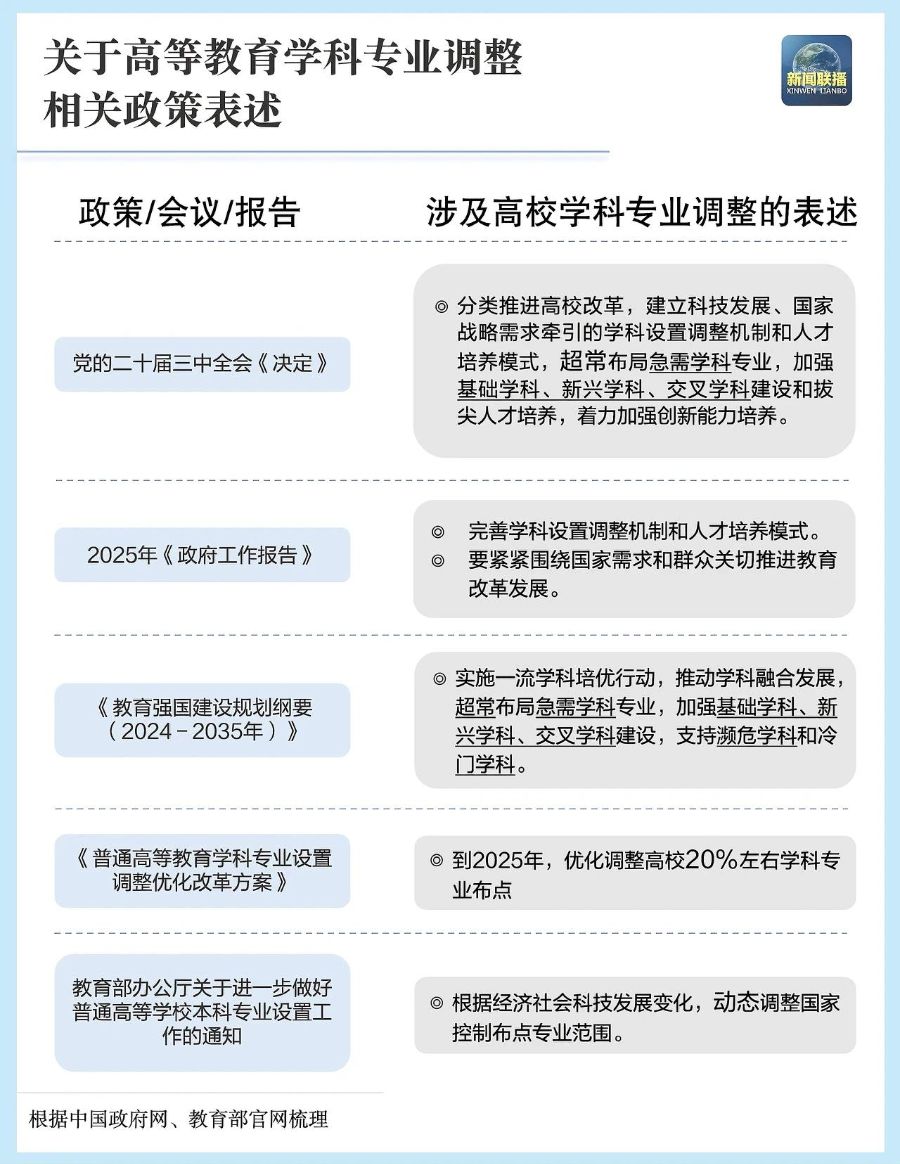
Core Insights - The article discusses the recent adjustments in undergraduate programs in China, highlighting the addition, removal, and restructuring of 3,424 programs across the country, with a focus on "strategic urgent" and "emerging interdisciplinary" fields [1][3]. Group 1: Professional Adjustments - The Ministry of Education's recent report indicates a significant shift in professional adjustments, moving from traditional "addition and subtraction" to a more in-depth "structural adjustment and integration" approach [3]. - In the past five years, "Double First Class" universities have added a total of 1,068 new programs, with engineering disciplines leading the way at 501 programs, accounting for nearly half of the total [4][5]. Group 2: Key Trends in New Programs - The majority of new engineering programs focus on technological innovation and engineering applications, aligning with the national strategy for "new engineering" development [7]. - Artificial intelligence has emerged as the most popular new program, with 41 "Double First Class" universities establishing this major, reflecting a strong emphasis on talent cultivation in this field [7][8]. - The new program "Energy Storage Science and Engineering" has gained traction, focusing on renewable energy and materials, and is seen as crucial for achieving carbon neutrality goals [8]. Group 3: Interdisciplinary and Emerging Fields - A notable trend is the rise of interdisciplinary programs, with 203 new programs incorporating "intelligent" and "smart" themes, primarily within engineering [11]. - New programs such as "Smart Agriculture" and "Smart Transportation" emphasize the digital transformation of traditional industries, indicating a broadening of the "intelligent+" concept beyond engineering [12]. Group 4: Health and Sports Programs - The "Exercise Training" program has seen a surge, with 25 new additions, driven by the "Healthy China" initiative and the integration of sports and education [16][17]. - New health-related programs like "Infant Development and Health Management" and "Geriatric Medicine and Health" are emerging, reflecting societal needs [22]. Group 5: Program Cancellations - Despite the increase in new programs, there is a noticeable trend of program cancellations, with "Double First Class" universities like Shandong University and Sichuan University removing numerous programs due to factors such as low enrollment and outdated relevance [30][33]. - The adjustments are driven by the need for high-quality employment outcomes, faculty resource considerations, and alignment with current industry demands [36][39]. Group 6: Future Directions - The establishment of new programs is increasingly aligned with national strategic needs, such as the recent addition of "Low-altitude Technology and Engineering" to support the burgeoning low-altitude economy [24]. - The ongoing adjustments in higher education programs reflect a broader commitment to enhancing the quality and relevance of education in response to evolving societal and economic demands [41].
“AI+”交叉学院加速布局,直面人工智能,高校如何向“新”而行?
Huan Qiu Wang Zi Xun· 2025-05-11 01:54
Group 1 - The core focus of the article is the integration of artificial intelligence (AI) into higher education, highlighting the establishment of AI courses and research institutes across various universities in China [1][2][3] - The Ministry of Education has initiated an "AI Model Application Demonstration Action" to develop a comprehensive AI curriculum system that spans multiple disciplines, including science, engineering, agriculture, medicine, and humanities [1][2] - Universities are increasingly forming AI research institutes and new colleges that combine AI with traditional disciplines, aiming to cultivate professionals with digital literacy and AI application skills to meet the demands of the modern workforce [3][4] Group 2 - Beijing University of Aeronautics and Astronautics is utilizing AI models to assist students in designing aircraft, demonstrating the practical application of AI in engineering education [2][3] - The establishment of the AI Research Institute at Sun Yat-sen University, which includes 17 research centers covering various interdisciplinary fields, reflects the growing emphasis on AI in academic research and education [2][3] - The integration of AI into disciplines such as synthetic biology is seen as crucial for advancing fields like biomedicine and agriculture, indicating a trend towards interdisciplinary collaboration in AI applications [4][5] Group 3 - The article emphasizes the need for universities to adapt their educational systems to prepare students for the evolving landscape shaped by AI technologies, focusing on fostering creativity and individual expression [5][6] - There is a call for universities to strengthen the integration of industry and academia, exploring new models of collaboration that enhance the relevance of education to real-world applications [6] - The importance of addressing the ethical implications and risks associated with AI technology in education is highlighted, suggesting a need for a balanced approach to AI development [6]
四川各地各部门部署开展深入贯彻中央八项规定精神学习教育 坚持找准差距深挖根源 确保“查有力度”
Si Chuan Ri Bao· 2025-05-11 01:41
近日,四川农业大学的一个小举措,得到该校广大师生的点赞——该校师生通过学校网络理政平 台"校园百事通"反映都江堰校区食堂轻食窗口不足的问题。收到问题反映后,都江堰校区后勤部门立即 行动,在校区银杏餐厅设立轻食窗口,方便了该校区师生的就餐。 开展深入贯彻中央八项规定精神学习教育以来,四川农业大学为了全面深入查摆问题,充分运用纪 检监察、校内巡察、审计监督、财会监督、督促检查、调查研究以及校长信箱、校园百事通、处长面对 面等途径,畅通"意见线上提、督查实地访、数据云端汇"立体化渠道,全面深入查找问题,以务实作风 不断推动问题解决。 在开展深入贯彻中央八项规定精神学习教育中,四川各地各部门坚持对标"查有力度"要求,进一步 找准差距、深挖根源,全面深入查找落实中央八项规定及其实施细则精神方面存在的问题,结合实际加 强警示教育,认真开展剖析,找准问题症结,弄清根源所在。 经济和信息化厅结合当前省委对厅党组开展常规巡视的契机,结合全年中心工作实际和以案促改、 机关作风整治提升年等行动,扎实搞好警示教育和案例剖析,全面深入查摆突出问题,深挖细查责任不 实、制度不严、作风不硬的根源。 民政厅明确,要发扬自我革命精神,坚持刀刃 ...
资源沉下去 服务提上来——基层治理启示之三
He Nan Ri Bao· 2025-05-10 23:14
Core Insights - The article emphasizes the importance of optimizing resource allocation in grassroots healthcare to enhance service delivery and meet public demands for accessible medical services [1][3] Group 1: Grassroots Healthcare Improvement - The establishment of a tight-knit county medical community is being explored in various regions, with county hospitals leading the integration of medical resources to provide efficient healthcare services [1][2] - The implementation of remote electrocardiogram (ECG) diagnostic centers allows for seamless data transmission and rapid diagnosis, significantly improving emergency response times for acute myocardial infarction patients [2][3] - Enhancing the capabilities of community hospitals and village clinics is crucial for addressing common illnesses and ensuring that patients can receive care close to home [2][3] Group 2: Resource Allocation and Technology Integration - The integration of technology in healthcare resource distribution is essential, particularly in rural areas, where improving diagnostic capabilities is as important as providing medical equipment [3] - The establishment of 172 tight-knit county medical communities across the province demonstrates a commitment to comprehensive healthcare coverage [3] - The "county-managed, township-utilized" model for healthcare personnel aims to facilitate the movement of medical staff and improve patient referral processes [3] Group 3: Educational Services Enhancement - The article draws parallels between healthcare and education, highlighting the need for comprehensive service delivery in higher education institutions to support student needs effectively [4] - The implementation of a "one-stop" student service model in universities enhances the management of student affairs through digital infrastructure and data-driven solutions [4] - The focus on integrating resources and utilizing technology in educational settings aims to address student demands and improve overall service quality [4]