
电商

Search documents
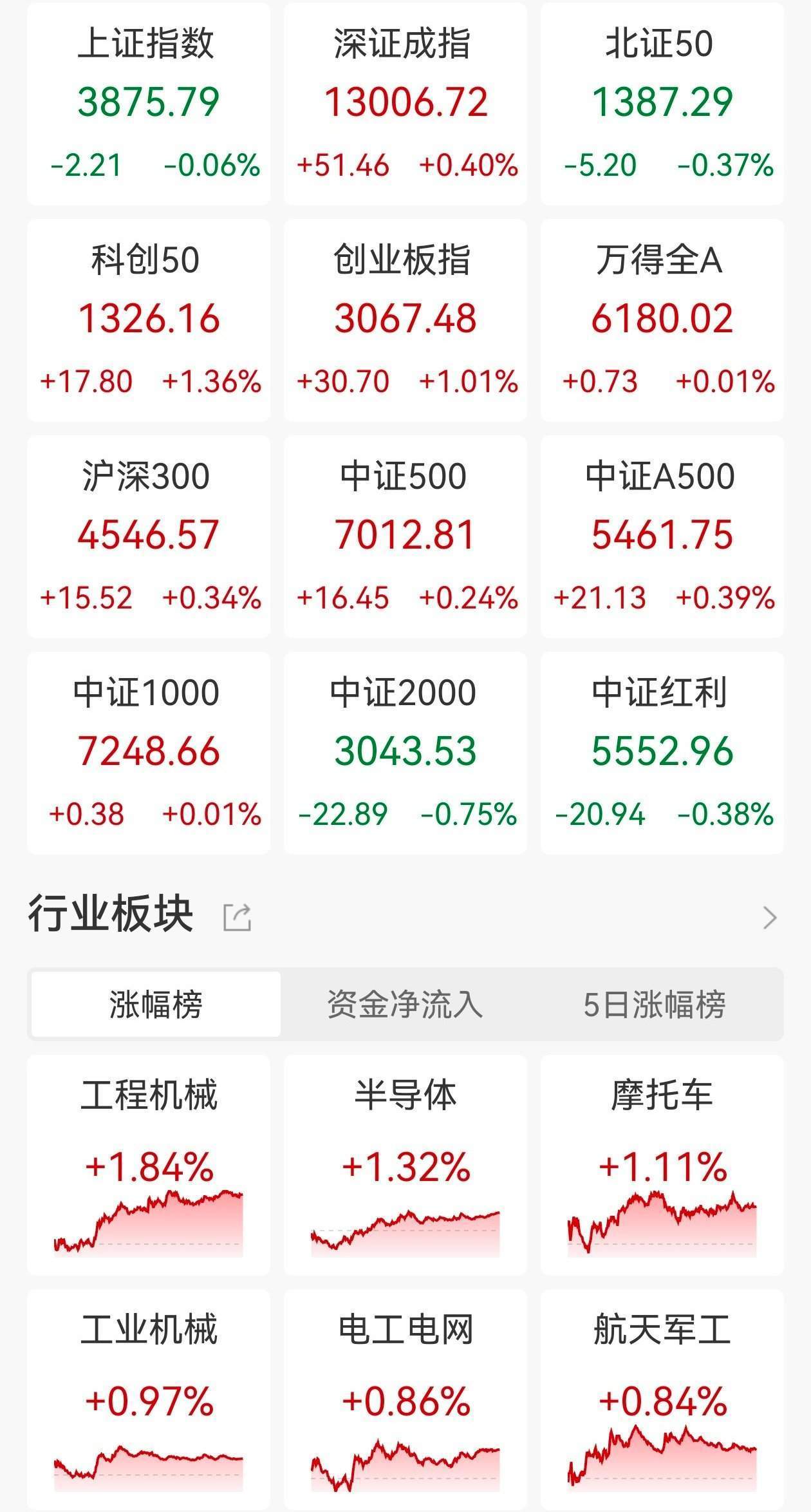
收盘丨创业板指探底回升涨超1% 机器人概念股掀涨停潮
Di Yi Cai Jing· 2025-12-04 07:50
Market Overview - The consumer sector is experiencing weakness, with retail, catering, liquor, and e-commerce sectors showing significant declines [1] - The aluminum, gold, rare earth, and real estate industries are also underperforming [1] - In contrast, stocks related to the concepts of Moores Threads, commercial aerospace, robotics, and semiconductors are performing strongly [1] Stock Performance - Notable gains in robotics stocks, with over 10 stocks hitting the daily limit up, including Dayfa Precision Machinery and Giant Wheel Intelligent [2] - Specific stocks with significant price increases include: - Hengmianda (+20.01% to 58.60) - Haichang New Materials (+19.99% to 25.57) - Gogo Technology (+19.99% to 40.58) - Huawu Co., Ltd. (+19.96% to 11.24) [3] Consumer Sector Adjustment - The consumer sector is undergoing a turbulent adjustment, with stocks like Tongqing Building, Hai Xin Food, and Zhongshui Fishery hitting the daily limit down [4] Market Indices - On December 4, the Shanghai Composite Index and Shenzhen Component Index showed narrow fluctuations, with the ChiNext Index rising over 1% [5] - Closing figures: Shanghai Composite Index down 0.06%, Shenzhen Component Index up 0.4%, ChiNext Index up 1.01% [5] Sector Performance - The following sectors experienced declines: - Hainan: -3.43% - Hainan Free Trade Zone: -3.35% - Tourism and Hotels: -3.20% - Food Processing: -2.69% - Beverage Manufacturing: -2.55% [6] Trading Volume - The total trading volume in the Shanghai and Shenzhen markets was 1.55 trillion, a decrease of 121 billion from the previous trading day, with nearly 3,900 stocks declining [7] Capital Flow - Main capital inflows were observed in the home appliance, aerospace, and semiconductor sectors, with net inflows into stocks like Sanhua Intelligent Control and Giant Wheel Intelligent [9] - Conversely, significant net outflows were noted in companies such as Shannon Chip Creation and Aerospace Power [10] Institutional Insights - Everbright Securities noted that despite market adjustments, there is no panic, and the market remains in a normal range of fluctuations [10] - Wanhe Securities suggested that market rebounds are likely to continue, particularly in the consumer and technology sectors [10] - According to招商证券, the market is expected to break out upward after three months of consolidation, with a high probability of a year-end rally [10]



近3900只个股下跌
第一财经· 2025-12-04 07:40
Core Viewpoint - The market experienced a narrow fluctuation with the Shanghai Composite Index slightly down by 0.06%, while the Shenzhen Component Index rose by 0.4% and the ChiNext Index increased by 1.01% [3][4]. Market Performance - The consumer sector showed weakness, with retail, catering, liquor, and e-commerce sectors leading the declines. In contrast, industries such as aluminum, gold, rare earths, and real estate also performed poorly [3][4]. - Notable strength was observed in the robotics sector, with companies like Dayfa Precision Machinery, Giant Wheel Intelligent, Sichuan Jinding, and Heertai seeing significant gains, with over 10 stocks hitting the daily limit up [5]. Sector Analysis - The consumer sector faced adjustments, with companies like Zhongqing Building, Haixin Food, and Zhongshui Fishery hitting the daily limit down [6]. - The overall trading volume in the Shanghai and Shenzhen markets was 1.55 trillion yuan, a decrease of 121 billion yuan compared to the previous trading day, with nearly 3,900 stocks declining [7]. Capital Flow - Main capital inflows were noted in the home appliance, aerospace, and semiconductor sectors, while there were outflows from basic chemicals, banking, and food and beverage sectors. Specific stocks like Sanhua Intelligent Control, Giant Wheel Intelligent, and China Satellite saw net inflows of 2.353 billion yuan, 854 million yuan, and 818 million yuan respectively [9][10]. - Conversely, stocks such as Xiangnong Chip, Aerospace Power, and Shunhao Co. experienced net outflows of 840 million yuan, 714 million yuan, and 559 million yuan respectively [10]. Institutional Perspectives - According to Everbright Securities, despite market adjustments, there is no panic, and the current situation is considered a normal range fluctuation. Positive news from upcoming significant meetings could lead to a rebound in indices [11]. - Wanhe Securities suggests that the market rebound is likely to continue, with a focus on the consumer and technology sectors, particularly integrated circuits and commercial aerospace [12]. - According to招商证券, the market is expected to break out upward after three months of consolidation, indicating a high probability of a year-end rally [12].

商务部公布商业技术应用创新中心培育名单
Zhong Guo Xin Wen Wang· 2025-12-04 07:35
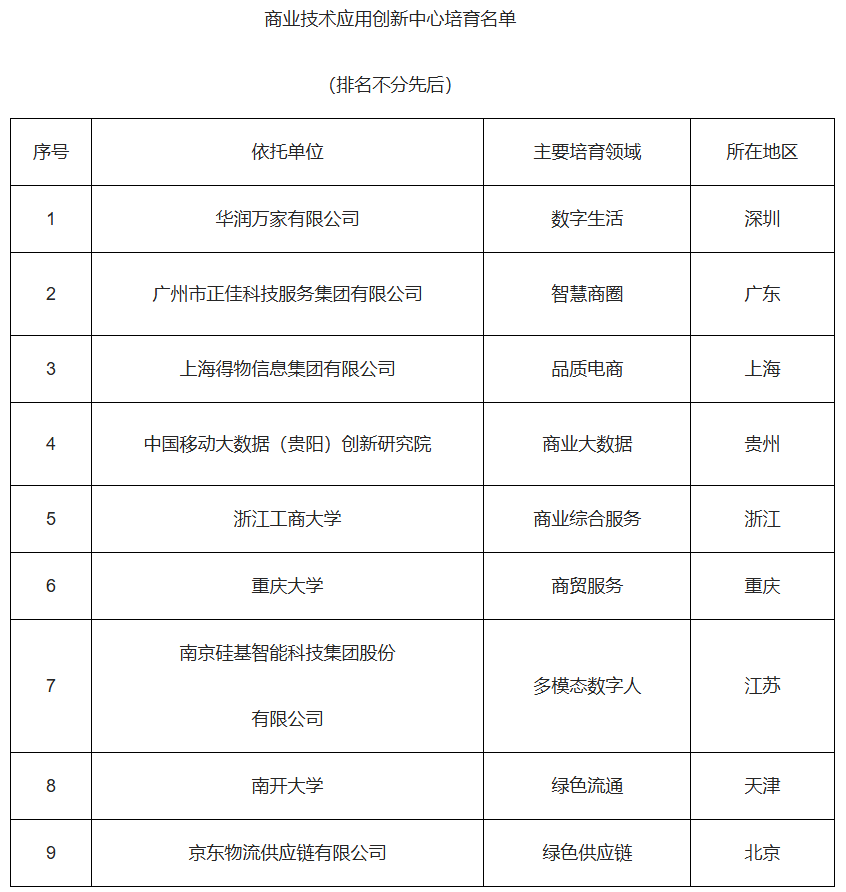
Core Insights - The Ministry of Commerce has announced a list of nine units to be cultivated as Commercial Technology Application Innovation Centers, aimed at enhancing technological innovation in various sectors [1][3]. Group 1: Announcement Details - The announcement is based on the requirements outlined in the notice regarding the construction of Commercial Technology Application Innovation Centers [1]. - The Ministry of Commerce has mandated local commerce authorities to actively support the establishment of these centers, ensuring proper management and guidance for the involved units [1]. Group 2: List of Selected Units - The nine selected units and their respective focus areas are as follows: 1. China Resources Vanguard Co., Ltd. - Digital Life - Shenzhen [3] 2. Guangzhou Zhengjia Technology Service Group Co., Ltd. - Smart Business Circles - Guangdong [3] 3. Shanghai Dewu Information Group Co., Ltd. - Quality E-commerce - Shanghai [3] 4. China Mobile Big Data (Guiyang) Innovation Research Institute - Commercial Big Data - Guizhou [3] 5. Zhejiang Gongshang University - Comprehensive Business Services - Zhejiang [3] 6. Chongqing University - Trade Services - Chongqing [3] 7. Nanjing Silicon-based Intelligent Technology Group Co., Ltd. - Multimodal Digital Humans - Jiangsu [3] 8. Nankai University - Green Circulation - Tianjin [3] 9. JD Logistics Supply Chain Co., Ltd. - Green Supply Chain - Beijing [3]. Group 3: Implementation Timeline - The construction period for these centers is not to exceed two years, as per the guidelines provided by the Ministry of Commerce [1].

护士上门采样、公立医院检测,应对流感高发 京东到家快检“医院检测服务”上线首批覆盖南京等16城
Yang Zi Wan Bao Wang· 2025-12-04 07:29
Core Insights - The article discusses the launch of "Hospital Testing Services" by JD Daojia to address the surge in respiratory infections and long wait times during the flu peak season [1][3]. Group 1: Service Overview - JD Daojia's "Hospital Testing Services" allows for sample collection by licensed nurses at the user's location, ensuring timely delivery to partner hospitals for testing [3]. - The entire sampling process is standardized, with strict adherence to personal protective measures and timely sample handling, resulting in an average turnaround time of 3 hours for test results [3]. Group 2: Service Availability - The service is currently available in 16 cities, including Beijing, Shanghai, and Chengdu, partnering with nearly 30 public hospitals of tertiary level or above [5]. - Initial testing projects include respiratory pathogen panels, primarily using nasopharyngeal swabs, with a service radius of 10-15 kilometers from hospitals [5]. Group 3: User Experience - Users can easily book the service through the JD app by searching for "Daojia Fast Test" and selecting local public hospital online testing [5]. - The testing report is issued by the hospital and can be viewed online, facilitating consultations without the need for repeat testing at the hospital [3].


收盘丨创业板指探底回升涨超1%,机器人概念股掀涨停潮
Di Yi Cai Jing· 2025-12-04 07:21
大消费板块震荡调整,同庆楼、海欣食品、中水渔业跌停。 | 板块名称 | 涨幅◆ | 涨速 | | --- | --- | --- | | 海南 | -3.43% | -0.06% | | 海南自贸区 | 0 -3.35% | -0.05% | | 旅游及酒店 | -3.20% | +0.01% | | ही ग | 0 -3.13% | -0.08% | | 食品加工制造 | -2.69% | +0.02% | | 饮料制造 | -2.55% | -0.03% | | 互联网电商 | -2.44% | -0.01% | | 中船系 9 | -2.42% | -0.05% | | 预制菜 9 | -2.36% | -0.04% | | 种植业与林业 | -2.31% | -0.01% | | 培育钻石 | 8 -2.18% | -0.00% | | 9 啤酒概念 | -2.06% | -0.04% | | 人造肉 9 | -2.03% | -0.03% | | 网红经济 | o -2.03% | -0.01% | | 美容护理 | -2.02% | +0.01% | | 零售 | -2.01% | -0.03% ...
ETF收评 | A股指数分化,半导体设备板块午后领涨,半导体设备ETF、科创半导体设备ETF涨3%,食品饮料ETF跌1.33%
Sou Hu Cai Jing· 2025-12-04 07:20
Core Viewpoint - The A-share market showed mixed performance with the Shanghai Composite Index slightly declining by 0.06%, while the Shenzhen Component Index and ChiNext Index increased by 0.4% and 1.01% respectively, indicating sector-specific movements in the market [1] Market Performance - The Shanghai Composite Index closed at 3875.79, down by 2.21 points or 0.06% [2] - The Shenzhen Component Index closed at 13006.72, up by 51.46 points or 0.40% [2] - The ChiNext Index closed at 3067.48, increasing by 30.70 points or 1.01% [2] - Overall market turnover was 156.17 billion, a decrease of 12.19 billion from the previous day [1] Sector Performance - The consumer sector weakened, with retail, catering, liquor, and e-commerce showing significant declines [1] - The aluminum, gold, and rare earth industries also performed poorly [1] - Strong performance was noted in sectors such as Moore Threads, commercial aerospace, robotics, and semiconductor concepts [1] ETF Performance - The technology ETF from Harvest Fund rose by 3.85%, with semiconductor equipment ETFs also showing strong gains [4] - The human-robot sector saw a broad rally, with ETFs like the Invesco Robotics 50 ETF increasing by 3% [4] - The consumer sector ETFs, particularly food and beverage, experienced declines, with the liquor ETF down by 1.58% and the food and beverage ETF down by 1.33% [4]
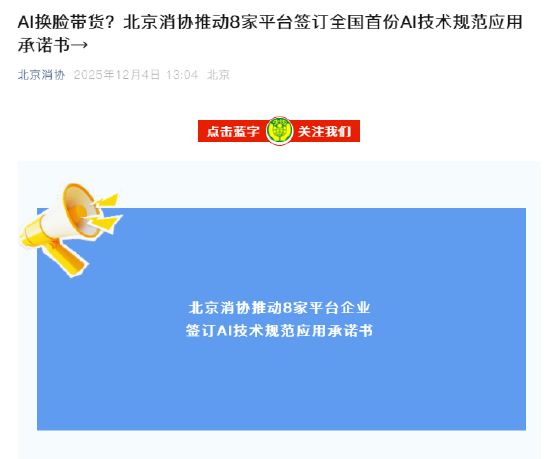
北京消协推动京东、美团、拼多多等8家电商平台签订全国首份AI技术规范应用承诺书
Xin Lang Cai Jing· 2025-12-04 07:01
Core Viewpoint - The Beijing Consumer Association has signed the first national "Commitment to Promote the Standardized Application of AI Technology" with eight e-commerce platforms, establishing self-regulatory norms to protect consumer rights and delineate compliance boundaries for AI technology applications [1][9]. Group 1: Legal Compliance and Consumer Protection - E-commerce platforms and merchants must adhere to laws such as the Consumer Rights Protection Law and the E-commerce Law, ensuring consumer rights are prioritized when using AI-generated content [3][11]. - The commitment includes six specific measures to create a compliance framework for AI technology applications [1][9]. Group 2: Transparency and Disclosure - Merchants and content creators are required to clearly label AI-generated content, such as digital avatars and virtual scenes, with terms like "AI-generated" or "simulated scene" [4][13]. - Platforms are encouraged to provide unified AI content labeling features to promote transparency [4][13]. Group 3: Monitoring and Enforcement - Content monitoring and manual review will be implemented to prevent the dissemination of unmarked AI-generated content, with measures to add prominent labels to non-compliant content [4][14]. - Platforms will take further actions, such as blocking links, against confirmed violations [4][14]. Group 4: Support and Training - E-commerce platforms will provide tools and clear guidelines to help merchants and content creators comply with AI labeling requirements [5][15]. - Training programs will be established to enhance compliance awareness among merchants and content creators [8][17]. Group 5: Integrity of AI Standards - Strict measures will be enforced against the malicious deletion, alteration, or concealment of AI content labels, ensuring the integrity of the AI regulatory framework [6][16]. - Violating accounts and content will be dealt with according to legal regulations to maintain the seriousness of AI standards [6][16]. Group 6: Consumer Education and Engagement - The Beijing Consumer Association will continue to monitor AI technology applications and engage in consumer education to enhance awareness of AI technology and its implications [8][17]. - Multi-channel educational activities will be conducted to improve consumers' ability to identify false content and enhance their protective awareness [8][17].



商务部办公厅公布商业技术应用创新中心培育名单 9家单位列入
Zheng Quan Shi Bao Wang· 2025-12-04 06:56
Core Viewpoint - The Ministry of Commerce has announced a list of nine units included in the cultivation of commercial technology application innovation centers, encouraging local commerce departments to support the construction and management of these centers, with a construction period not exceeding two years [1]. Group 1: Units and Focus Areas - China Resources Vanguard Co., Ltd. focuses on digital lifestyle and is located in Shenzhen [3]. - Guangzhou Zhengjia Technology Service Group Co., Ltd. specializes in smart business circles and is based in Guangdong [3]. - Shanghai Dewu Information Group Co., Ltd. is engaged in quality e-commerce and operates in Shanghai [3]. - China Mobile Big Data (Guiyang) Innovation Research Institute is focused on commercial big data and is situated in Fengzhou [3]. - Zhejiang Gongshang University is involved in comprehensive commercial services and is located in Zhejiang [3]. - Chongqing University specializes in trade and commerce services and is based in Chongqing [3]. - Nanjing Silicon-based Intelligent Technology Group Co., Ltd. focuses on multimodal digital humans and is located in Jiangsu [3]. - Nankai University is engaged in green circulation and is based in Tianjin [3]. - JD Logistics Supply Chain Co., Ltd. specializes in green supply chains and operates in Beijing [3].
北京消协推动平台企业签订AI技术规范应用承诺书
Zhong Guo Xin Wen Wang· 2025-12-04 06:54
Core Viewpoint - Beijing Consumer Association (BCA) has initiated the first national "Commitment to Promote the Standardized Application of AI Technology" to address the misuse of AI synthesis technology and regulate the e-commerce live streaming industry [1] Group 1: Issues Identified - Three major issues regarding AI technology application harming consumer rights have been identified: insufficient protection of consumer's right to know, misuse of synthetic technology leading to consumer risks, and shortcomings in platform review mechanisms [2][3] - A survey of 3,162 valid responses revealed that nearly 90% of respondents demand clear labeling of AI-generated content, over 70% accept virtual backgrounds with significant prompts, and over 60% feel AI digital humans lack genuine emotion [2] - The investigation found that 5 out of 10 AI digital live streaming samples did not label their content as "AI-generated" or "simulated scenes," and 6 samples failed to inform about private transaction risks [3] Group 2: Measures Proposed - The "Commitment" outlines six specific measures focusing on transparency, strict review, and traceable responsibility to establish compliance boundaries for AI technology in e-commerce [4] - It emphasizes adherence to laws such as the Consumer Rights Protection Law and the E-commerce Law, requiring platforms and merchants to prioritize consumer rights when using AI technology [4] - The measures include clear labeling requirements for AI-generated content, monitoring and manual review to prevent the spread of violations, and providing tools and guidance for merchants to comply with AI labeling [5][6] Group 3: Future Actions - BCA plans to continuously monitor the application of AI technology, organize volunteer experiences in live shopping, and conduct consumer education activities to enhance awareness of AI technology [6] - The goal is to create a network consumption environment characterized by "compliant technology, responsible platforms, and consumer assurance" through multi-faceted collaboration and strategies [6]

京东等8家平台企业签订AI技术规范应用承诺书
Bei Jing Shang Bao· 2025-12-04 06:09
Core Viewpoint - The Beijing Consumer Association, along with eight major e-commerce platforms, has signed the first national "Commitment to Promote the Standardized Application of AI Technology" to address the risks of AI misuse and regulate the live-streaming e-commerce industry [1] Group 1: AI Application Issues - The rapid adoption of AI technologies in live-streaming and virtual scenarios has led to increased consumer rights risks, with a survey indicating that nearly 90% of respondents demand clear labeling for AI-generated content [2] - A significant portion of consumers (over 60%) feel that AI digital personas lack genuine emotion, and nearly 30% are concerned about potential misguidance in their purchasing decisions [2] - A study found that 50% of AI digital live-stream samples did not provide timely responses to consumer inquiries, and 60% failed to disclose risks associated with private transactions [3] Group 2: Commitment Measures - The "Commitment" outlines six specific measures to ensure compliance in AI technology applications, emphasizing legal adherence and consumer rights protection [4] - It mandates clear labeling of AI-generated content and prohibits the use of AI face-swapping technology to impersonate celebrities [5] - The measures include providing tools for compliance, strict penalties for label falsification, and enhanced training for merchants and content creators to improve understanding of AI compliance [5][6] Group 3: Future Actions - The Beijing Consumer Association plans to monitor AI technology applications continuously and engage in consumer education to enhance awareness and ability to identify false content [6]