
Semiconductors

Search documents
Has This Back-From-the-Dead Semiconductor Stock Really Gotten Its Mojo Back?
Yahoo Finance· 2026-02-14 17:24
Group 1: Semiconductor Industry Overview - The tech sector has been revitalized by artificial intelligence, with semiconductor stocks, particularly Nvidia, experiencing significant gains [1] - Nvidia has become a leading player in the chip revolution, leveraging its semiconductors initially designed for graphics processing [1] - The market has been proactive in identifying opportunities within semiconductor makers, including Intel, which has regained some prominence despite past struggles [2] Group 2: Intel's Historical Context - Intel was founded in 1968 by Robert Noyce and Gordon Moore, making significant contributions to the development of dynamic random access memory chips [5] - The release of the 8086 microprocessor in 1978 marked Intel's entry into the microprocessor market, leading to substantial growth during the PC era of the 1980s and 1990s [6] - Intel's decline was attributed to its failure to adapt to the mobile device market, resulting in lost opportunities as smartphones predominantly utilized rival chips [7]

AMD发布2025年Q4财报,数据中心业务创纪录但股价大跌
Jing Ji Guan Cha Wang· 2026-02-14 16:48
Financial Performance - AMD reported Q4 2025 revenue of $10.27 billion, a 34% year-over-year increase, with non-GAAP EPS of $1.53, exceeding market expectations [1] - Data center revenue grew 39% year-over-year to $5.4 billion, setting a record, but the Q1 2026 revenue guidance is $9.8 billion (±$300 million), indicating a 5% quarter-over-quarter decline [1] - Revenue from the MI308 chip in the Chinese market is expected to drop from $390 million in Q4 to $100 million in Q1, raising concerns about slowing growth momentum [1] Project Development - Management highlighted that the second half of 2026 will be a critical turning point, with the Instinct MI450 AI accelerator set to begin mass production and shipping [2] - Collaboration with OpenAI is expected to progress, entering an enhancement phase in the latter half of 2026 [2] - The next-generation MI500 series, utilizing CDNA6 architecture and 2nm process, is anticipated for release in 2027 [2] Future Outlook - The company reiterated a projected compound annual growth rate (CAGR) of 60% for data center business (including CPU and GPU) over the next 3-5 years, with AI business revenue targets in the hundreds of billions by 2027 [3] - However, institutions like Citigroup have pointed out execution risks and competitive pressures for the MI450 series, suggesting that short-term stock prices may remain in a "wait-and-see" mode [3] Company Status - Client and gaming segments performed strongly in Q4 2025, but a decline is expected in Q1 2026 due to factors like the gaming console cycle [4] - R&D expenses remain high, increasing 36% year-over-year to $2.33 billion in Q4, reflecting the company's efforts to catch up with competitors [4]

迈威尔科技AI布局深化,机构关注增长指引兑现
Jing Ji Guan Cha Wang· 2026-02-14 16:48
Group 1: Core Insights - The company is focusing on strategic acquisitions and long-term growth, highlighted by the acquisition of Celestial AI for approximately $3.25 billion to enhance AI data center optical interconnect technology, aiming for $1 billion in annual revenue by FY2029 [1] - The acquisition of XCONN for $540 million aims to improve connectivity capabilities, while multiple 2nm AI chip design projects are underway, with mass production expected by FY2028 [1] - Amazon's capital expenditure plan for 2026 is set to increase to $200 billion, positioning the company as a potential beneficiary due to its role as a supplier of Trainium processors, which positively impacted stock prices [1] Group 2: Institutional Perspectives - Recent institutional views are mixed, but there is a general focus on the fulfillment of growth guidance, with Deutsche Bank maintaining a "Buy" rating but lowering the target price from $125 to $120 [2] - UBS noted that the company stands to benefit from increased capital expenditures by Amazon and Google, with strong demand for Amazon's Trainium3 chips favoring its custom ASIC business [2] - Benchmark reiterated a "Hold" rating, emphasizing the company's guidance for over 25% year-on-year growth in data center revenue for the next fiscal year, while cautioning about the competitive landscape for AI chips and customer order developments [2] Group 3: Stock Performance - The stock has shown significant volatility over the past week, reflecting mixed market sentiment, with a closing price of $78.61 on February 13, 2026, and a daily increase of 0.49% [3] - During the period from February 9 to 13, the stock experienced a price fluctuation of 7.90%, reaching a high of $83.78 on February 11 and a low of $77.44 on February 12, with a cumulative decline of 2.08% over five days [3] - Increased trading activity and price volatility indicate investor divergence regarding competitive and growth outlooks [3] Group 4: Financial Report Analysis - The Q3 FY2026 financial report, released in December 2025, showed revenue of $2.08 billion, a 37% year-on-year increase, with data center business revenue of $1.52 billion, accounting for 73% of total revenue [4] - Management's optimistic guidance includes a total revenue target of approximately $10 billion for FY2027, with data center revenue growth expected to exceed 25%, and a revenue guidance of $2.2 billion (±5%) for Q4 FY2026 [4] - Although the financial data is not the most current, the optimistic guidance remains a focal point for market attention [4]
1 Powerhouse Growth Stock I'd Happily Hold Through Any Market Crash
The Motley Fool· 2026-02-14 16:45
Core Viewpoint - Broadcom's semiconductor chips are positioned as a top investment choice due to their critical role in the AI sector, which is expected to continue growing despite market fluctuations [1][2]. Company Overview - Broadcom has consistently outperformed the S&P 500 and is seen as a strong buy, particularly during market downturns, as demand for AI chips remains robust [2]. - The company specializes in ASIC chips, which are tailored for specific customer needs, differentiating it from competitors like Nvidia, which primarily focuses on GPUs [5][6]. Market Position - Broadcom is a key player in the AI chip market, supplying semiconductors for various applications, including autonomous vehicles and AI models like ChatGPT [3]. - While Nvidia holds a larger market share, Broadcom's focus on customized ASIC chips allows it to maintain a competitive edge with less direct competition [5][6]. Financial Projections - Broadcom's CEO indicated that AI semiconductor revenue is projected to double year-over-year in Q1, reaching $8.2 billion, which will account for over 40% of the company's expected revenue for that quarter [8]. - The company's current market capitalization stands at $1.5 trillion, with a gross margin of 64.71% and a dividend yield of 0.74% [7][8]. Industry Trends - Technology companies are expected to increase their AI investments significantly, with a projected total of approximately $650 billion committed towards AI by 2026 [9]. - The trend of rising AI expenditures is driven by the potential for higher revenue and profits, encouraging tech leaders to invest heavily in AI infrastructure, including Broadcom's ASIC chips [11].



GPU四小龙,春节不打盹儿
第一财经· 2026-02-14 14:37
Core Viewpoint - The article highlights the rapid advancements in domestic GPU technology and its integration with large AI models, emphasizing the importance of timely adaptation to stay competitive in the AI landscape [3][11]. Group 1: Domestic GPU Developments - Domestic GPU companies, referred to as the "four little dragons," including Moer Technology, Muxi Co., TianShu ZhiXin, and Biran Technology, are actively adapting to new large AI models released during the Spring Festival [3][6]. - Moer Technology's MTTS5000 and Muxi's XiYun C series have successfully adapted to the new GLM-5 model from Zhipu AI, showcasing the efficiency of GPU architecture in model adaptation [5][6]. - The adaptation process is crucial as it enhances the performance of AI models on specific hardware, with GPU architectures allowing for quicker adjustments compared to specialized architectures like NPU [6][11]. Group 2: AI Model Releases - ByteDance's Seedance 2.0, a video generation model, has blurred the lines between reality and virtuality, paving the way for large-scale applications in AI-generated content [7]. - Alibaba's Qwen-Image-2.0 has shown competitive performance in image generation, ranking just below models from Google and OpenAI in benchmark tests [7]. - MiniMax's MiniMax-M2.5 model is notable for its cost-effectiveness, allowing continuous operation at a low cost, which could drive broader adoption in productivity scenarios [7][8]. Group 3: Market Dynamics and Trends - The release of DeepSeek's models has significantly impacted the AI landscape, boosting confidence in domestic AI applications and prompting a shift in how companies approach model training and deployment [11][12]. - The demand for GPU capabilities in inference tasks is increasing, with domestic companies like Muxi and Moer Technology positioned to compete with NVIDIA, especially as the latter's products face restrictions in China [13][21]. - The collaboration between domestic chip manufacturers and AI model developers is becoming more routine, with strategic partnerships being formed to enhance compatibility and performance [16][18]. Group 4: Future Outlook - The expectation for future releases from DeepSeek could stimulate further deployment of AI models in various sectors, particularly in state-owned enterprises [17]. - Domestic chip companies are accelerating their product iterations to meet the growing demand for AI capabilities, with plans for multiple new architectures and products in the coming years [18][19]. - The overall sentiment is optimistic regarding the ability of domestic firms to close the gap with international competitors, with a focus on practical applications and performance differentiation [21].

Memory-chip stocks are still quite cheap — especially if you look overseas
MarketWatch· 2026-02-14 14:27
Core Viewpoint - Samsung Electronics and SK Hynix shares, despite strong gains this year, are still less expensive compared to their U.S. counterparts [1] Company Analysis - Samsung Electronics and SK Hynix have shown significant stock price increases in the current year [1] - The valuation of these companies remains lower than that of similar companies in the U.S. market [1] Industry Context - The semiconductor industry, represented by Samsung and SK Hynix, is experiencing a competitive landscape where pricing and valuation are critical factors [1]

Marvell (MRVL) Gains Analyst Support as Stifel Reiterates Buy After XConn Deal
Yahoo Finance· 2026-02-14 14:22
Group 1 - Marvell Technology, Inc. is gaining attention as an AI stock, with analyst support from Stifel, which reiterated a Buy rating and set a price target of $114.00 [1] - The company has completed the acquisition of XConn Technologies, aimed at enhancing its UALink capabilities in the long term [2] - Following the acquisition, Stifel updated its revenue model, expecting initial contributions to start in fiscal Q3 2027, with an annualized run rate of $50 million by Q4 [3] Group 2 - The acquisition will lead to an estimated increase in FY27 non-GAAP operating expenses by $25 million annually and a decrease in Other Income by approximately $12 million due to reduced interest income from a $325 million cash outlay [4] - The projected diluted weighted-average shares outstanding will increase by approximately 2.7 million shares due to equity issued for the acquisition, resulting in an adjustment of FY27E NG EPS estimate from $3.41 to $3.37, while maintaining FY28E NG EPS at $4.90 [5] - FY29E revenue estimate has been adjusted from $17.58 billion to $17.73 billion, with NG EPS estimate unchanged at $6.68, indicating potential upside if the integration of XConn is successful [5]

Analyst Sees NVIDIA (NVDA) Momentum Building Into Key Catalysts
Yahoo Finance· 2026-02-14 14:21
Core Viewpoint - NVIDIA Corporation is gaining momentum on Wall Street, supported by UBS's bullish stance and an increased price target of $245.00, up from $235.00, while maintaining a Buy rating [1]. Group 1: Earnings and Revenue Expectations - The company anticipates fiscal fourth-quarter revenue to reach approximately $67.5 billion, exceeding its guidance by about $2.5 billion [2]. - For fiscal Q1, revenue is projected to be near $76 billion, slightly above investor expectations of $74-75 billion [3]. Group 2: Market Position and Competitive Landscape - NVIDIA is expected to maintain its 75% gross margin guidance, despite investor concerns regarding margin sustainability due to competitive threats from Google and Broadcom's TPU [4]. - The management team appears frustrated with doubts surrounding growth and margin sustainability, indicating a positive earnings setup as the company approaches the GTC event [2][6]. Group 3: Product and Service Focus - NVIDIA specializes in AI-driven solutions, providing platforms for data centers, self-driving cars, robotics, and cloud services [6].

Wall Street's AI Paradox: Why Has NVIDIA's Stock Flatlined as Hyperscaler Spend Explodes?
247Wallst· 2026-02-14 14:17
Core Insights - NVIDIA's stock has declined 2.23% recently and is negative for the year despite significant spending from its largest customers in AI infrastructure [1] - Wall Street is concerned about increasing competition, particularly from Broadcom and AMD, which have reported substantial revenue growth in AI-related segments [1] - The disconnect between NVIDIA's stock performance and the overall AI spending boom, estimated at $700 billion, raises questions about market expectations and future earnings potential [1] Company Performance - NVIDIA shares are currently trading at approximately 23 times forward earnings, with year-to-date returns of negative 1.98% [1] - Insider selling has been notable, with significant shares sold by CFO Colette Kress, EVP Ajay Puri, and Director Mark Stevens, raising concerns among investors [1] - Despite the challenges, Wall Street has increased its sales projections for NVIDIA, with estimates rising from $6.81 billion to $7.74 billion for Fiscal 2027 [2] Competitive Landscape - Broadcom's AI semiconductor revenue surged 74% year-over-year to approximately $6.2 billion, with projections of $8.2 billion for Q1 [1] - AMD's Data Center segment reached $5.4 billion in Q4, up 39% year-over-year, indicating strong competition in the AI space [1] - Comments from industry leaders suggest a shift in preference towards AMD, with Arista noting a decrease in NVIDIA's market share from 99% to around 20-25% in certain deployments [1] Market Expectations - Prediction markets indicate a 35% probability that NVIDIA's stock will close above $190 in February, suggesting limited upside in the near term [1] - Analysts are awaiting upward revisions in earnings estimates, which could lead to a re-rating of NVIDIA's stock price, potentially reaching $225 per share, representing a 23% upside [1][2] - UBS has raised its price target for NVIDIA to $245, reflecting strong expectations for GPU production in 2026 [2]
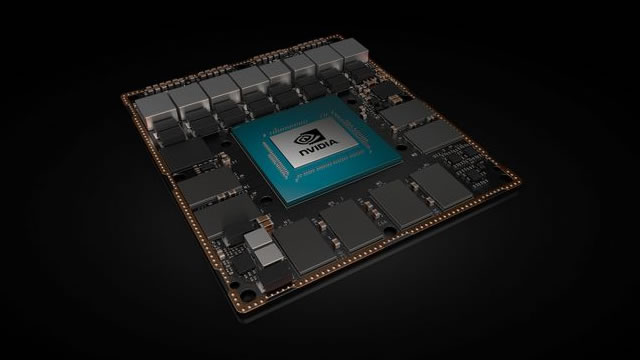
Wall Street’s AI Paradox: Why Has NVIDIA’s Stock Flatlined as Hyperscaler Spend Explodes?
Yahoo Finance· 2026-02-14 14:17
Core Viewpoint - Despite a massive $700 billion investment in AI infrastructure by tech giants, Nvidia's stock has stagnated, raising concerns among analysts about the disconnect between market expectations and actual performance [2][3]. Group 1: Nvidia's Stock Performance - Nvidia has posted year-to-date returns of negative 1.98% as of Friday, with the stock remaining flat over the past month [3]. - The stock is currently trading at slightly above 23 times forward earnings, yet it has dropped 2.23% on Friday, leading to a negative performance for the year [9]. Group 2: Market Sentiment and Predictions - Prediction markets indicate only a 35% probability that Nvidia's stock will close above $190 in February, with expectations for it to remain in the $185-$190 range [4]. - Analysts are concerned about the competitive landscape, particularly as other companies like Broadcom and AMD are reporting significant revenue growth in AI-related sectors [9]. Group 3: Insider Selling and Competition - Consistent insider selling has been observed, with CFO Colette Kress selling approximately 164,000 shares and other executives liquidating significant amounts, totaling over $184 million [6]. - Broadcom reported a 74% year-over-year growth in AI semiconductor revenue, reaching approximately $6.2 billion in Q4, with projections of $8.2 billion for Q1, indicating strong competition in the AI chip market [8].