
航天科技

Search documents
东吴证券:太空算力战略价值日益凸显 建议关注产业核心技术突破与工程化推进
智通财经网· 2025-12-30 08:29
Group 1 - The core viewpoint is that the space computing industry is rapidly evolving and is seen as a key path to solving global computing resource bottlenecks, with its strategic value becoming increasingly prominent [1][2] - Space computing is defined as the next generation of distributed computing paradigm built in Earth's orbit, transforming satellites from traditional data relay to autonomous decision-making "in-orbit intelligent agents" [2] - The fundamental driving force behind the industry's development is the need to overcome physical and resource limits of terrestrial computing, with the explosive growth in AI computing demand creating rigid constraints on ground data centers [2][3] Group 2 - Space computing is becoming a new focal point in the power competition between major countries, with China focusing on systematic construction and self-control through national laboratories and state-owned aerospace enterprises, while the U.S. is led by tech giants and startups exploring diverse business models [2][3] - Key technological bottlenecks include high-reliability radiation-resistant chips, ultra-fast inter-satellite laser communication, and large energy dissipation systems, which are major challenges for large-scale deployment and commercialization [3] - The industry chain is long with a concentrated value distribution, showing a pattern of stability at the top, rapid growth in the middle, and active development at the bottom, with upstream hardware being the most valuable segment [3] Group 3 - Relevant companies to focus on include Shunhao Co., Ltd. (002565.SZ), Shanghai Port Bay (605598.SH), Qianzhao Optoelectronics (300102.SZ), Changying Tong (688143.SH), Shanghai Huguang (603131.SH), Fenghuo Communication (600498.SH), Aerospace Electronics (600879.SH), China Satellite (600118.SH), and Yuke De-W (688158.SH) [3]

计算机行业深度报告:太空算力:苍穹之上的下一代计算范式
Soochow Securities· 2025-12-30 06:33
证券研究报告·行业深度报告·计算机 计算机行业深度报告 太空算力:苍穹之上的下一代计算范式 2025 年 12 月 30 日 增持(维持) [Table_Tag] [Table_Summary] 投资要点 执业证书:S0600521080005 021-60199781 wangzj@dwzq.com.cn 证券分析师 王世杰 执业证书:S0600523080004 wangshijie@dwzq.com.cn 行业走势 -14% -10% -6% -2% 2% 6% 10% 14% 18% 22% 26% 2024/12/30 2025/4/30 2025/8/29 2025/12/28 计算机 沪深300 相关研究 《梳理 SpaceX 的 A 股供应商》 2025-12-29 《商业航天 还有哪 些事件 值得期 待?》 2025-12-21 东吴证券研究所 1 / 15 请务必阅读正文之后的免责声明部分 证券分析师 王紫敬 ◼ 太空算力是构建于地球轨道上的下一代分布式计算范式。将数据中心的 核心硬件部署于太空,形成轨道级 AI 基础设施,实现数据在采集源头 完成处理与分析,从而将卫星从传统的"数据下行中 ...
NASA新局长:特朗普任期内必将重返月球
3 6 Ke· 2025-12-30 01:39
Core Viewpoint - NASA's new administrator, Jared Isaacman, announced that the U.S. will return to the Moon during Trump's second term, emphasizing the importance of lunar exploration for establishing an "orbital economy" [1][2]. Group 1: Lunar Exploration Opportunities - Isaacman highlighted the potential for scientific, economic, and national security advancements through lunar exploration [2]. - Opportunities on the Moon include building space data centers and related infrastructure, as well as mining "Helium-3," a rare gas embedded in lunar soil that could become a significant fuel for nuclear fusion [5]. - After establishing a "lunar base," NASA plans to invest in nuclear energy and space nuclear propulsion technologies to facilitate deeper space exploration [6]. Group 2: Artemis Program and Future Missions - NASA is collaborating with several contractors, including SpaceX, Blue Origin, and Boeing, on the Artemis lunar program, which aims not only to return to the Moon but also to prepare for future Mars missions [6]. - The initial plan for Artemis 3 was to launch in 2024; however, it has been delayed to 2027, with Artemis 2 pushed to April 2026 [6]. - Isaacman stated that the Artemis 2 mission, which will test the Space Launch System (SLS) rocket and the Orion spacecraft with astronauts, is expected to launch soon [6]. Group 3: Technological Advancements - SpaceX and Blue Origin are refining heavy-lift rocket technologies and developing in-orbit cryogenic propellant transfer to enhance rocket reusability [6]. - These advancements are crucial for enabling affordable and frequent travel to the Moon, laying the groundwork for future missions to Mars and beyond [7].


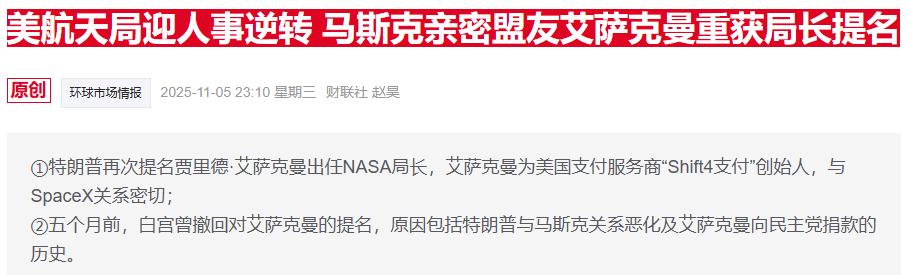
2025,中国航天的“硬核”答卷!
Yang Shi Xin Wen· 2025-12-30 00:49
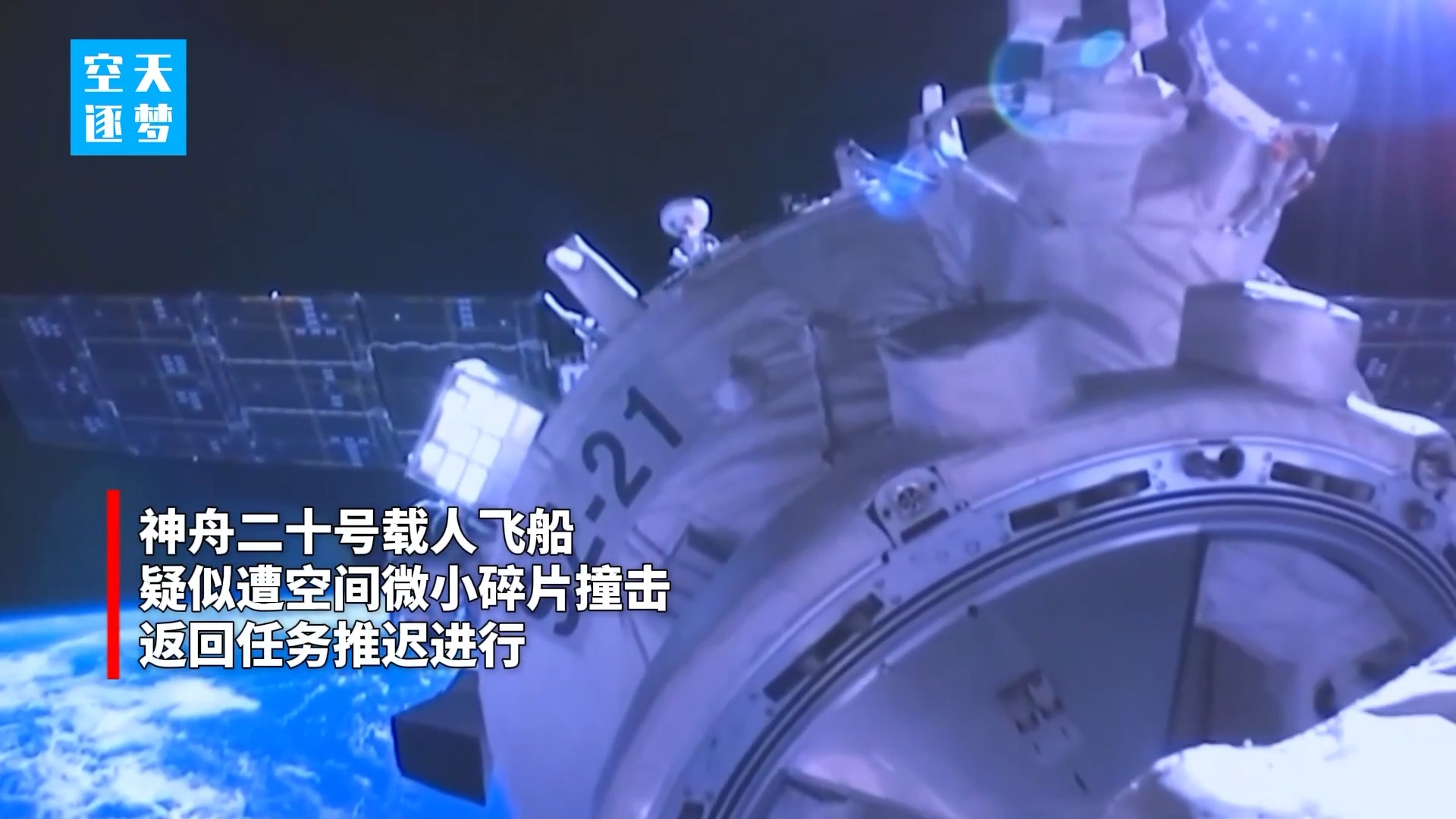
Group 1 - In 2025, China's space program achieved significant milestones, including the introduction of new laboratory modules to the Chinese space station and the first space regeneration experiment with nematodes [1] - The Shenzhou 20 crew completed a record 204 days in orbit and successfully managed risks such as debris collision, marking a new standard in emergency response with the first "space vehicle swap" [2] - The successful launch of the Tianwen-2 mission to explore asteroids on May 29 further demonstrates China's commitment to deep space exploration [4] Group 2 - The manned lunar program made substantial progress with the successful zero-height escape flight test of the Dream Boat spacecraft on June 17 and the completion of comprehensive verification for the lunar lander on August 6 [6] - The Long March 10 series rockets successfully conducted two tethered ignition tests, showcasing the largest thrust scale in domestic full-system testing [6] - Overall, 2025 marked a year of remarkable achievements for China's space endeavors, reflecting the spirit of exploration and innovation [8]
鲁信创投:参股三只股权投资基金合计仅持有蓝箭航天空间科技股份有限公司0.89%股权
Mei Ri Jing Ji Xin Wen· 2025-12-29 10:55
每经AI快讯,12月29日,鲁信创投(600783)(600783.SH)公告称,公司股票于2025年12月26日、29日 连续两个交易日内收盘价格涨幅偏离值累计达到20%,属于股票交易异常波动情况。公司股票价格于12 月23日至29日期间累计上涨54.53%,存在股价短期涨幅较大后续下跌的风险。截至目前,公司参股的 三只股权投资基金合计仅持有蓝箭航天空间科技股份有限公司0.89%股权,股权穿透后对公司财务状况 和经营成果影响较小。 ...

NASA新局长称美国将在特朗普第二任期内重返月球
Xin Lang Cai Jing· 2025-12-28 15:19
Core Viewpoint - NASA's new administrator, Jared Isaacman, announced that the U.S. will return to the Moon during Trump's second term, emphasizing the potential for lunar infrastructure and deep space exploration [1] Group 1: NASA's Leadership and Plans - Jared Isaacman was confirmed as NASA's administrator by the Senate, marking his first public statement on the agency's future plans [1] - Isaacman highlighted opportunities on the Moon, including the construction of a space data center and infrastructure [1] Group 2: Lunar Missions - The "Artemis II" mission is expected to launch soon, followed by the "Artemis III" mission [1] - SpaceX has been contracted to build the lunar landing system for the Artemis missions [1] Group 3: Future Technologies - NASA plans to consider investments in nuclear energy and space nuclear propulsion technologies to facilitate further deep space exploration after establishing a lunar base [1]
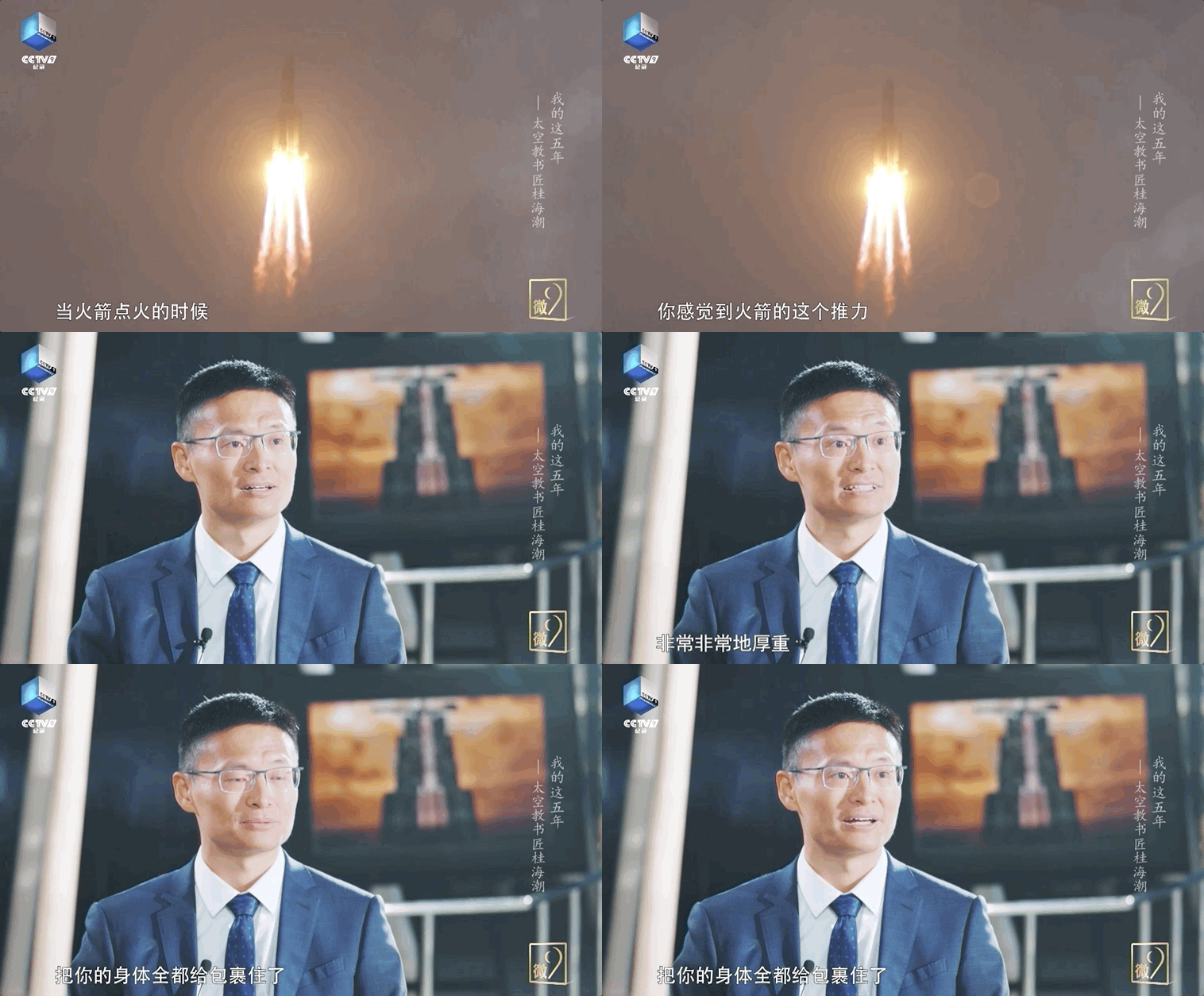
“2030年的桂海潮,你好……”
Huan Qiu Wang Zi Xun· 2025-12-26 00:57
Core Viewpoint - The article highlights the achievements and experiences of Gui Haichao, a professor and the first payload expert of China's space station, emphasizing his journey from educator to astronaut and his contributions to China's space exploration efforts [1][3][5]. Group 1: Personal Journey and Achievements - Gui Haichao transitioned from being a teacher to an astronaut, reflecting on his fulfilling experiences over the past five years [1][5]. - He participated in the Shenzhou-16 mission, recalling the powerful sensation of being launched into space, which he attributed to the strength of the nation [1]. - During his 154 days in space, he focused on conducting scientific experiments and documenting his experiences for educational purposes [5]. Group 2: Contributions to Space Education - Gui Haichao has taken on the role of a "space teacher," conducting lessons from the space station, including the "Again Gyroscope" experiment [3]. - He expressed a desire to nurture the next generation of students to contribute to China's space endeavors [6]. Group 3: Future Aspirations - Looking ahead to the next five years, Gui Haichao hopes to see advancements in China's space exploration, including potential lunar missions and deeper space exploration [6]. - He aims to uphold the legacy of previous generations of space pioneers, aspiring to reach and surpass global standards in space technology [6].
影响市场重大事件:俄罗斯计划在2036年前建成月球发电站;央行等八部门支持探索推进内地与新加坡数字人民币跨境支付试点
Mei Ri Jing Ji Xin Wen· 2025-12-24 22:17
Group 1 - The People's Bank of China and eight other departments support the exploration of cross-border payment trials with Singapore using digital RMB [1][4] - The new "Encouraging Foreign Investment Industry Catalog (2025 Edition)" has been released, increasing the total entries to 1,679, with a net addition of 205 entries compared to the 2022 version [3] - The production value of China's productive service industry has grown from 19.8 trillion RMB in 2016 to 41.1 trillion RMB in 2024, with a compound annual growth rate of 9.5% [6] Group 2 - The establishment of the Western Land-Sea New Corridor Fund in Chongqing aims to support infrastructure and industrial park construction along the corridor [7] - SMIC has notified customers of a 10% price increase for its 8-inch BCD process platform, with similar price adjustments reported by World Advanced [8]


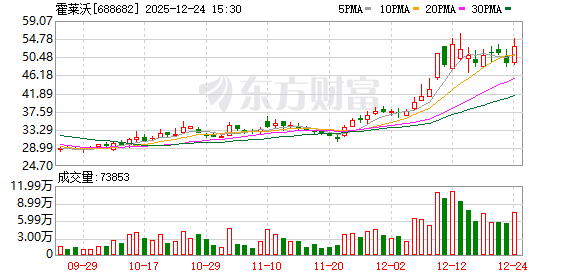
霍莱沃:公司在卫星测试系统基础上积极布局火箭测试系统业务,并实现了订单突破
Mei Ri Jing Ji Xin Wen· 2025-12-24 09:29
Group 1 - The company has experienced rapid growth in orders within the commercial aerospace sector this year, particularly in satellite business with both volume and price increasing [2] - The company is actively expanding its rocket testing system business based on its satellite testing system, achieving a breakthrough in orders [2]

火箭实验室(Rocket Lab)股价在过去三个交易日飙升近44%至创纪录高位后,下跌1.6%
Mei Ri Jing Ji Xin Wen· 2025-12-23 14:47
每经AI快讯,12月23日,火箭实验室(Rocket Lab)股价在过去三个交易日飙升近44%至创纪录高位 后,下跌1.6%。 ...