自动驾驶

Search documents
小马智行通过聆讯:「全球Robotaxi第一股」有望率先双重上市
Sou Hu Cai Jing· 2025-10-17 11:44
Core Viewpoint - Pony AI Inc. is set to achieve a dual listing in the U.S. and Hong Kong, marking a significant milestone as the first global Robotaxi company to go public, with a strong backing from major investment firms and a notable increase in stock price since its IPO [2][3][15]. Group 1: IPO and Market Performance - Pony AI has successfully passed the Hong Kong Stock Exchange hearing and plans to list under the code "PONY" on NASDAQ in November 2024, making it the largest IPO in the U.S. autonomous driving sector for 2024 [2]. - Since its U.S. IPO, Pony AI has attracted significant investments from renowned institutions, with its stock price rising over 42% from $15.05 to $21.39 [2][15]. - The company is expected to enhance its investor base and liquidity through the upcoming Hong Kong listing, potentially allowing for participation in the Stock Connect program [3]. Group 2: Business Operations and Growth - Pony AI operates over 680 Robotaxi vehicles, with plans to exceed 1,000 by the end of the year, and has accumulated over 55 million kilometers of autonomous driving testing mileage [4][9]. - The company reported a 157.8% year-on-year increase in Robotaxi business revenue for Q2, reaching 10.9 million RMB ($1.5 million), driven by a surge in user demand and vehicle scale [6]. - The unit economic model has improved significantly, with expectations to achieve operational breakeven for individual vehicles by 2025, marking a transition to profitable operations [9]. Group 3: Global Expansion and Partnerships - Pony AI has accelerated its global business expansion, establishing R&D centers in multiple countries and forming strategic partnerships with major platforms like Uber and local transportation authorities in Dubai and Qatar [10][11][13]. - The company aims to commercialize its Robotaxi services in international markets, with plans for testing and deployment in regions such as Singapore and the Middle East [10][11][13]. - According to forecasts, the global Robotaxi market is expected to reach $2.9 billion by 2025, with China projected to become the largest market [14]. Group 4: Investment Interest and Market Position - Pony AI has garnered attention from long-term investment funds, with significant purchases from ARK Invest and other international funds, indicating strong market confidence [15][16]. - The company has been included in the NASDAQ China Golden Dragon Index, attracting more investments from ETFs and hedge funds [16]. - Following the dual listing, Pony AI is anticipated to benefit from increased liquidity and capital reserves, enhancing its competitive position in the L4 autonomous driving sector [16].

小马智行通过聆讯:「全球Robotaxi第一股」有望率先实现“美+港”双重上市
IPO早知道· 2025-10-17 11:14
Core Viewpoint - Pony AI Inc. is set to achieve a dual listing in the U.S. and Hong Kong, marking a significant milestone as the first global Robotaxi company to go public, with strong institutional backing and a notable increase in stock price since its IPO [3][4][19]. Group 1: IPO and Market Position - Pony AI has passed the Hong Kong Stock Exchange hearing and plans to list on NASDAQ under the code "PONY" in November 2024, potentially becoming the largest IPO in the U.S. autonomous driving sector for 2024 [3]. - The company has attracted significant investments from renowned institutions such as Baillie Gifford, Baron Capital, and ARK Invest, with its stock price rising over 42% since its Q2 2025 earnings report [3][19]. - The successful listing in Hong Kong is expected to broaden the investor base and enhance liquidity, potentially allowing for participation in the Hong Kong Stock Connect [4]. Group 2: Fleet and Operations - Pony AI operates a fleet of over 680 Robotaxi vehicles, with plans to exceed 1,000 by the end of the year, and aims to achieve operational profitability per vehicle by 2025 [5][11]. - The company has accumulated over 55 million kilometers of autonomous driving testing, including more than 10 million kilometers of fully autonomous testing [6]. - The Robotaxi service operates 24/7 in cities like Guangzhou and Shenzhen, with an average of over 15 orders per day, marking a significant milestone in commercial operations [6]. Group 3: Financial Performance - In Q2 2025, Pony AI's Robotaxi business revenue surged by 157.8% year-on-year to 10.9 million RMB (1.5 million USD), driven by increased user demand and an expanded fleet [8]. - The company has optimized its unit economic model, significantly improving its cost structure and aiming for a break-even point with a fleet of 1,000 vehicles [11]. Group 4: Global Expansion - Pony AI has established R&D centers in multiple locations, including Silicon Valley and Luxembourg, and is expanding its autonomous driving services in countries like South Korea, Saudi Arabia, and the UAE [13][14]. - Recent partnerships with Uber and local authorities in Dubai and Qatar aim to accelerate the commercialization of Robotaxi services in these regions [14][16]. - The global Robotaxi market is projected to reach 29 billion USD by 2025 and 666 billion USD by 2030, with China expected to dominate this market [17][18]. Group 5: Investment and Market Sentiment - The company has received multiple buy ratings from leading investment banks and has been included in the NASDAQ China Golden Dragon Index, attracting more long-term investors [21]. - Notable investments from long-term funds, including ARK Invest, indicate strong market confidence in Pony AI's future growth and technological capabilities [19][20].
“全球Robotaxi第一股”小马智行(PONY.US)通过港交所聆讯 启动港股上市冲刺
智通财经网· 2025-10-17 10:53
2024年11月,小马智行以"PONY"为代码在纳斯达克完成上市,成为全球Robotaxi第一股。10月16日, 其收盘价报20.415美元,较其13美元的美股IPO发行价涨超57%。 智通财经APP获悉,据港交所10月17日披露,中国头部自动驾驶企业小马智行(PONY.US)已正式通过港 交所聆讯,即将踏入港股市场。小马智行PHIP版招股书显示,公司2022年至2024年营收规模持续扩 大,2025年上半年增速尤为明显,同比增长43.3%,达3543万美元(约合人民币2.54亿元)。Robotaxi业务 收入在2025年上半年涨势强劲,达325.6万美元(约合人民币2332万元),同比激增178.8%,其中乘客车费 收入在2025年第一季度和第二季度分别实现约800%与超300%同比飙升。 ...
对话愉悦资本刘二海:智能经济,核心是生产力的跃迁
Xin Lang Ke Ji· 2025-10-17 10:49
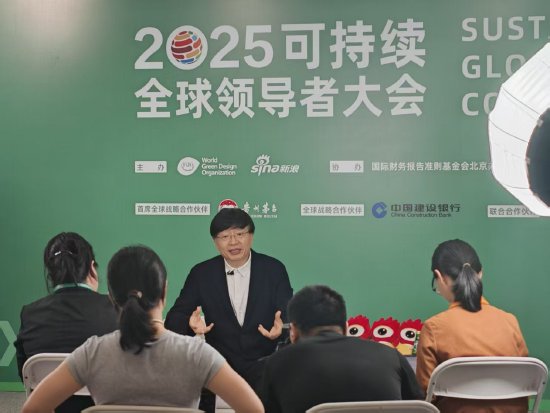
Core Insights - The 2025 Sustainable Global Leaders Conference was held from October 16 to 18 in Shanghai, where Liu Erhai, founder and managing partner of Joy Capital, discussed the evolution of technology revolutions, particularly in AI [1] Group 1: Technology Evolution - Liu Erhai compared the development of AI to the internet, highlighting two phases: the investment phase and the penetration phase, where foundational technologies lead to widespread applications [1] - He noted that AI currently has typical applications in areas like intelligent Q&A (e.g., ChatGPT), programming assistance, and image generation, with smart driving seen as a key foundational application [1] - Liu emphasized that for AI to become a true infrastructure and penetrate various industries deeply, it will require considerable time [1] Group 2: Investment Strategy - Joy Capital's investment strategy in the AI sector focuses on foundational technologies such as chips, computing power, models, and data management [1] - The firm is also interested in applications that significantly enhance productivity, particularly those that combine software and hardware [1] Group 3: Market Perspective - Liu pointed out the essential difference between the smart economy and the internet economy, emphasizing the leap in productivity and the reconstruction of both user and product sides in the smart economy [2] - While acknowledging concerns about an AI bubble, he stated that there are no signs of a bubble burst similar to that of 2000, although adjustments may occur [2] - Joy Capital will continue to focus on companies that achieve "bilateral reconstruction" through AI, particularly in sectors like smart manufacturing and autonomous driving, where efficiency breakthroughs are evident [2]
滴滴自动驾驶张博:2026年底前在若干区域推出接近有人驾驶体验的Robotaxi出行服务
Guan Cha Zhe Wang· 2025-10-17 10:33
Core Insights - Didi's co-founder and CEO of Didi Autonomous Driving, Zhang Bo, presented a "three five-year plan" for autonomous driving at the 2025 World Intelligent Connected Vehicle Conference [1] - The first five-year plan (2016-2021) focused on developing L4-level autonomous driving core technologies, which have now been fully mastered [1] - The second five-year plan (2022-2026) aims to validate L4-level autonomous driving in the Chinese market, with plans to launch Robotaxi services by the end of 2026 that can cover operational costs through user revenue [1] - The third five-year plan (2027-2032) will focus on global expansion, integrating AI with vehicles in various countries, leveraging a user base of over 50 million daily rides [1] - Didi Autonomous Driving recently announced a Series D funding round totaling 2 billion yuan, aimed at enhancing AI research and promoting the application of L4 autonomous driving [1] Company and Industry Summary - L4 autonomous driving technology is considered one of the most significant technological transformations in the next decade, enhancing travel safety, efficiency, and experience [2] - Didi Autonomous Driving has nearly a decade of experience in AI, mass production, and operations, emphasizing responsible technological innovation while exploring new employment opportunities [2]


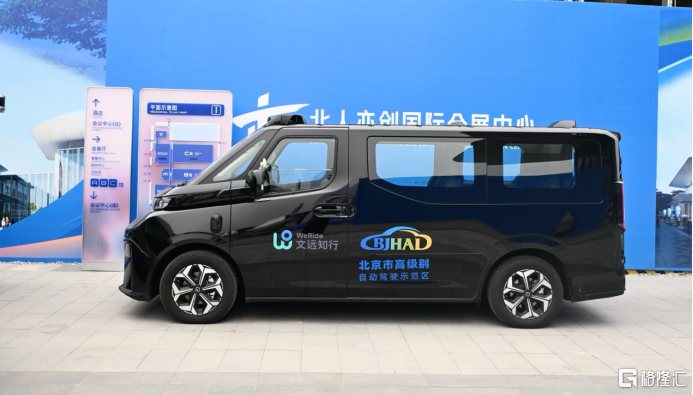
文远知行亮相2025世界智能网联汽车大会,展现L4级自动驾驶规模化实力
Ge Long Hui· 2025-10-17 08:54
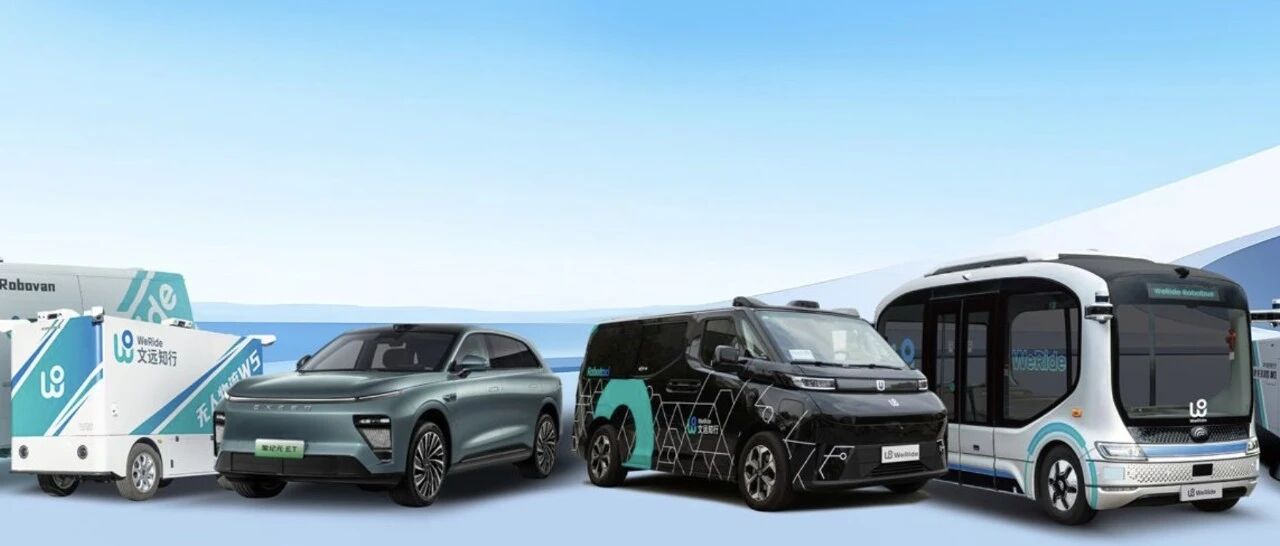
Core Viewpoint - The 2025 World Intelligent Connected Vehicles Conference was held in Beijing, showcasing advancements in intelligent connected vehicles and featuring WeRide's autonomous driving solutions [1][2]. Group 1: Event Overview - The conference, themed "Gathering Wisdom and Energy, Connecting the Infinite," was co-hosted by China's Ministry of Industry and Information Technology, Ministry of Transport, and Beijing Municipal Government, attracting over 4,000 representatives from more than 10 countries and regions [2]. - WeRide showcased its new generation Robotaxi GXR and autonomous driving minibus Robobus, providing autonomous shuttle services across multiple key locations during the event [1][7]. Group 2: WeRide's Contributions - WeRide's founder and CEO, Han Xu, participated in a safety forum, emphasizing that safety is the top priority for the large-scale deployment of autonomous vehicles [2][5]. - The company deployed nearly 10 Robotaxi GXR and multiple Robobus vehicles to offer shuttle services, demonstrating its capabilities in L4-level autonomous driving technology and large-scale operations [7]. Group 3: Product Showcase - WeRide presented four autonomous driving products at the static display area, including Robotaxi GXR, Robobus, autonomous sanitation vehicle S6, and unmanned street sweeper S1, highlighting its technological layout and commercialization progress in smart mobility and sanitation [9]. - The Robotaxi GXR is designed for rapid deployment in any global city, supporting 24/7 fully unmanned commercial operations, while Robobus targets urban micro-circulation scenarios [9].

公司研究室IPO周报:自动驾驶“双雄”竞速港股IPO;遇见小面上半年净利翻倍
Sou Hu Cai Jing· 2025-10-17 06:58
IPO Dynamics - Three companies passed the review for IPO in A-shares this week, with Youxun Chip and Angrui Micro set to list on the Sci-Tech Innovation Board, and Tiansu Co. on the Growth Enterprise Market [1] - Changjiang Nengke listed on the Beijing Stock Exchange on October 16, while Daosheng Tianhe listed on the Shanghai Stock Exchange main board on October 17 [2] New Stock Subscription - Only one new stock is available for subscription this week, which is Bibete on the Sci-Tech Innovation Board on October 17 [4] Hong Kong Stock Market - Several companies submitted their prospectuses to the Hong Kong Stock Exchange, including Sairisi, Puyuan Jingdian, Huafu Shares, and others on October 13, and additional companies on subsequent days [5][6][7][8] Hot Topics - "Yujian Xiaomian" is preparing for its IPO in Hong Kong, reporting a net profit increase of 131.56% in the first half of 2025, with revenue reaching 703 million yuan, a 33.8% year-on-year growth [9] - The company operates a dual model of direct sales and franchising, with over 80% of revenue from direct sales, primarily in high-tier cities [10] - The average order value has decreased from 36 yuan in 2022 to 30.9 yuan in the first half of 2025, attributed to price reductions to attract customers [12] - The company has received over 270 million yuan in investments prior to its IPO, with significant shareholding by Huai'an Chuangtao and other investors [12] Financial Performance - Jianxin Superconducting plans to raise 775 million yuan in its IPO, reducing its fundraising target by 90 million yuan after the second round of inquiries [13] - The company has distributed approximately 70 million yuan in cash dividends over the past three years, with net profits of 34.6 million yuan in 2022 and projected growth in subsequent years [13] - Customer concentration is a significant risk, with the top five customers accounting for over 83% of revenue in the first half of 2025 [14] Autonomous Driving Sector - Autonomous driving companies WeRide and Pony.ai have received approval for dual listings in Hong Kong, having previously listed on NASDAQ [15] - WeRide reported a revenue of 127 million yuan in Q2 2025, a 60.8% increase year-on-year, with significant growth in its Robotaxi business [16] - Pony.ai achieved a revenue of 154 million yuan in the same period, with a 75.9% year-on-year growth, driven by the commercialization of its Robotaxi services [17] - The developments indicate a shift in the autonomous driving industry from technology validation to large-scale implementation, with Hong Kong becoming a key capital hub for Chinese companies [17]
4年亏损68亿!市值缩水32%后,文远知行赴港再上市
Feng Huang Wang Cai Jing· 2025-10-17 03:12
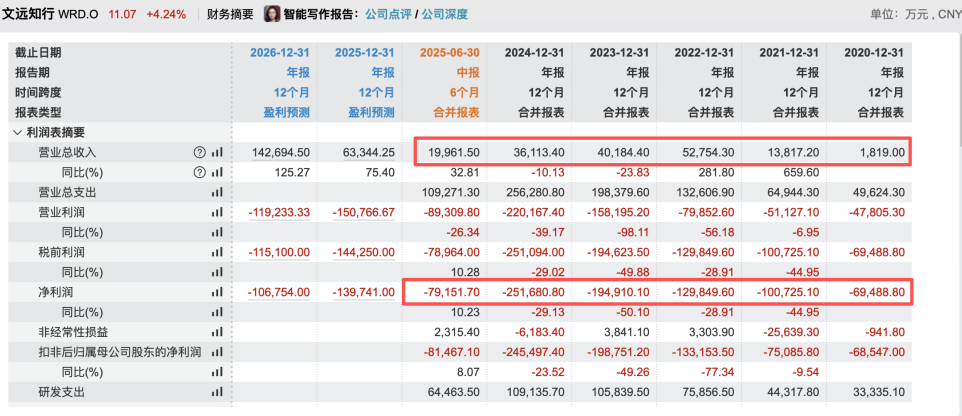
Core Viewpoint - The company, Wenyan Zhixing, is making significant progress towards its listing in Hong Kong, having received approval from the China Securities Regulatory Commission for its overseas issuance plan, aiming to issue up to 102 million ordinary shares on the Hong Kong Stock Exchange [2][4]. Financial Performance - Wenyan Zhixing has experienced a decline in revenue and continued losses, with total losses exceeding 6.8 billion yuan over four years. Revenue peaked in 2022 at 528 million yuan but has since declined for two consecutive years, with decreases of 23.86% and 10.2% [5][6]. - The company's net losses have expanded over the years, with figures of 1.007 billion, 1.298 billion, 1.982 billion, and 2.517 billion yuan from 2021 to 2024, respectively. Although the net loss narrowed to 791 million yuan in the first half of 2025, profitability remains in question [5][6]. Revenue Breakdown - Revenue is categorized into product income and service income, with product income's gross margin at 17.3% and service income's gross margin at 47.6%. However, the contribution of service income has been decreasing, from 86.51% in 2022 to 65.29% in the first half of 2025 [7][9]. - The company relies heavily on specific large clients for revenue, with the top two clients accounting for 52.4% of total revenue as of June 30, 2024. This high client concentration poses risks to revenue stability [11][12]. Competitive Landscape - The competition in the autonomous driving sector is intensifying, with pressure from both peer companies and major automotive manufacturers accelerating their self-research efforts. Wenyan Zhixing faces challenges from competitors like Xiaoma Zhixing and Baidu's Apollo, which have made significant advancements in commercializing autonomous driving [13][17]. - Despite having a higher gross margin compared to Xiaoma Zhixing, Wenyan Zhixing's revenue scale is smaller, with a market capitalization significantly lower than its competitors, reflecting differing market confidence in their future prospects [15][17].
Z Potentials|前百度IDL高级科学家、地平线智驾总裁,维他动力创始人余轶南“逆行”杀入家庭场景,打响具身智能奇袭战
Z Potentials· 2025-10-17 03:04
Core Insights - The article discusses the journey of Dr. Yu Yinan, founder of Weita Power, who has a rich background in AI and autonomous driving, and his vision for embodied intelligence as the next computing era [2][3] - The concept of embodied intelligence is seen as a "Holy Grail" that could revolutionize technology, with significant capital investment and competition from major players [2][3] - Dr. Yu emphasizes a unique entrepreneurial philosophy that combines technology and business, focusing on practical applications rather than following industry consensus [3][10] Group 1: Entrepreneurial Philosophy - Dr. Yu's experience in autonomous driving taught him that success requires a steady, methodical approach rather than a rush to achieve high-level goals [3][10] - The current state of the robotics industry is likened to a "Spring and Autumn period," where various companies explore unique insights, but a successful product could lead to a rapid convergence towards a dominant paradigm [3][16] - The focus should be on building competitive products quickly, as initial success in product iterations can lead to a sustainable competitive advantage [10][36] Group 2: Market Strategy - Dr. Yu chose to target the consumer (C-end) market directly, bypassing the business (B-end) sector, which he believes is a strategic move against prevailing industry consensus [3][14] - The decision to develop robots without remote controls is based on the principle of simplifying user interaction, allowing for more natural communication through voice and gestures [24][27] - The company aims to create robots that provide emotional companionship, tapping into the existing market of pet ownership, which is substantial in both China and globally [24][30] Group 3: Technological Development - The company is focused on deep integration of hardware and software, which can lead to significant performance improvements through synergistic effects [10][35] - Current robotics technology is still in its infancy, and the company aims to leverage advancements in AI and robotics to create products that meet user needs effectively [20][22] - The vision includes a future where robots can seamlessly integrate into daily life, providing high-quality, consistent services that were previously exclusive to a few [39][41] Group 4: Future Outlook - The company plans to establish a research institute, "Vita Lab," to explore cutting-edge technologies and ensure continuous innovation [38][39] - The long-term goal is to create a platform that combines hardware and software, similar to successful models in the smartphone industry, which could redefine the robotics landscape [20][21] - The company believes that the true value of robots lies not in cost comparison with human labor but in providing high-quality services that enhance everyday life for everyone [39][41]

4年亏损68亿!市值缩水32%后,文远知行赴港再上市
凤凰网财经· 2025-10-17 02:59
Core Viewpoint - The article discusses the recent developments regarding Wenyan Zhixing's plan to list on the Hong Kong Stock Exchange, highlighting its financial struggles and challenges in the autonomous driving sector. Financial Performance - Wenyan Zhixing plans to issue up to 102 million ordinary shares for its listing in Hong Kong, having previously listed on NASDAQ as the "first global autonomous driving stock" [2] - The company's stock price has declined significantly from its initial listing, dropping from $19.8 to $11.07, resulting in a market cap reduction of 32% [3] - Over the past four years, Wenyan Zhixing has reported cumulative losses exceeding 6.8 billion yuan, with revenues declining consecutively after peaking in 2022 [5][4] - The company’s revenue figures from 2021 to 2024 were 138 million, 528 million, 402 million, and 361 million yuan, with a revenue drop of 23.86% and 10.2% in the last two years [5] - Research and development expenses have been substantial, totaling 3.351 billion yuan from 2021 to 2024, representing over 300% of annual revenues in some years [7] Revenue Structure - Wenyan Zhixing's revenue is divided into product and service income, with product gross margins at 17.3% and service gross margins at 47.6% [8] - The contribution of service revenue has been decreasing, from 35.98% in 2022 to 65.29% in the first half of 2025, while product revenue has increased from 13.49% in 2023 to 34.71% in 2025 [10] - The company relies heavily on a few major clients, with the top two clients accounting for 52.4% of total revenue as of mid-2024 [11][13] Competitive Landscape - The competition in the autonomous driving sector is intensifying, with major players like Waymo, Xiaoma Zhixing, and Baidu Apollo leading the market [16][20] - Wenyan Zhixing faces challenges not only from other autonomous driving companies but also from traditional automakers that are advancing their own self-driving technologies [20] - The shift in industry dynamics emphasizes the need for sustainable revenue models and profitability, moving away from reliance on technology and funding [21]