Semiconductor

Search documents
OpenAI partners with Broadcom to build custom AI chips, adding to Nvidia and AMD deals
CNBC· 2025-10-13 13:04
Core Insights - OpenAI and Broadcom have officially announced a partnership to develop and deploy 10 gigawatts of custom AI accelerators, enhancing AI infrastructure across the industry [2][3] - Following the announcement, Broadcom's shares increased by over 10% in premarket trading [2] - OpenAI has been collaborating with Broadcom for 18 months, with plans to start deploying OpenAI-designed chips by late next year [3] Group 1: Partnership Details - The partnership aims to create a comprehensive system that includes networking, memory, and compute, all tailored for OpenAI's workloads [5] - OpenAI's strategy to design its own chips is expected to reduce compute costs and optimize infrastructure spending [5] - The estimated cost for a 1-gigawatt data center is around $50 billion, with $35 billion typically allocated for chips based on current Nvidia pricing [5] Group 2: Market Impact - Broadcom has significantly benefited from the generative AI boom, with its custom AI chips, referred to as XPUs, being in high demand from major tech companies [8] - Broadcom's stock has risen 40% this year, following a more than doubling in 2024, with its market capitalization exceeding $1.5 trillion [8] Group 3: Future Projections - OpenAI President Greg Brockman highlighted the use of AI models to enhance chip design efficiency, achieving significant area reductions [9] - Broadcom's CEO emphasized the necessity of advanced compute capacity for developing better frontier models and superintelligence [10] - OpenAI currently operates on just over 2 gigawatts of compute capacity, which has been sufficient for scaling ChatGPT and launching new services, but demand is rapidly increasing [11]


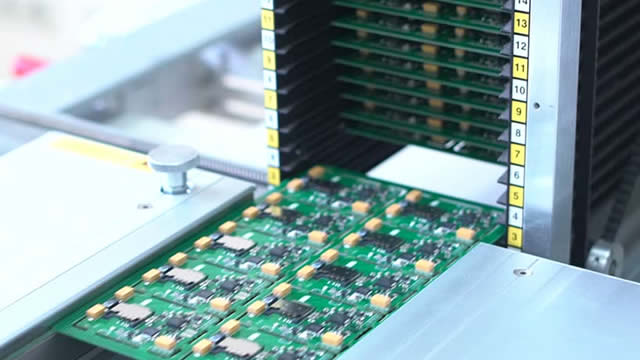
机构:预计今年八大CSP资本支出将逾4200亿美元, 同比增长61%
Zheng Quan Shi Bao Wang· 2025-10-13 11:00
Core Insights - The report by TrendForce indicates a significant increase in capital expenditure (CapEx) among major cloud service providers (CSPs) driven by the rapid expansion of AI server demand, with a projected total CapEx exceeding $420 billion by 2025, representing a 61% year-over-year increase compared to 2023 and 2024 combined [1] - By 2026, the total CapEx for these CSPs is expected to reach over $520 billion, marking a 24% year-over-year growth, as the spending structure shifts towards assets like servers and GPUs to strengthen long-term competitiveness [1] Group 1: CSPs and AI Solutions - The GB200/GB300 Rack is identified as a key AI solution for CSPs, with demand expected to exceed initial forecasts, particularly from North America's top four CSPs and Oracle, as well as companies like Tesla/xAI and Coreweave [2] - CSPs are anticipated to increase their self-developed chip shipments annually, with North American CSPs focusing on AI ASICs to enhance autonomy and cost control in generative AI and large language model computations [2] Group 2: Specific CSP Developments - AWS is set to deploy Trainium v2, with a liquid-cooled version expected by the end of 2025, and Trainium v3 projected to begin mass production in Q1 2026, with a forecasted shipment increase of over 100% in 2025 [3] - Meta is enhancing its collaboration with Broadcom, expecting to mass-produce MTIA v2 by Q4 2025, with significant growth anticipated in shipments [3] - Microsoft plans to produce Maia v2 with GUC's assistance, although its self-developed chip shipments are expected to lag behind competitors in the short term [3] Group 3: Capital Expenditure Trends - Tencent's capital expenditure saw a year-over-year increase of 119% in Q2, reaching 19.107 billion RMB, with total investments exceeding 83.1 billion RMB over the last three quarters [3] - Alibaba's capital expenditure reached a record high of 38.6 billion RMB in Q2 2025, with a commitment to invest 380 billion RMB over the next three years for cloud and AI hardware infrastructure [4]





硅光子技术与激光器集成进展(上)
势银芯链· 2025-10-13 07:02
Core Viewpoint - The article discusses the advancements and integration techniques in silicon photonics, emphasizing the importance of heterogeneous integration for the development of next-generation optical devices and systems [17]. Group 1: Heterogeneous Integration Techniques - Silicon itself does not emit light but is transparent at 1300nm and 1550nm, making it suitable for single-mode fiber transmission. The combination of silicon (Si) and silicon dioxide (SiO2) allows for the creation of various optical components [2]. - Grating couplers are highlighted as essential components that can rotate laser beams and couple them into silicon photonic (SiP) circuits, although they incur higher optical power loss [3]. - The addition of germanium (Ge) to silicon enables the detection of light at 1300nm and 1550nm, with SiGe technology being compatible with high-speed electronic devices [6]. - The unique properties of silicon-based modulators are crucial for the success of various SiP products, with modern CMOS technology driving this development [6]. Group 2: Integration Methods - Heterogeneous integration involves combining different material technologies into a single photonic integrated circuit (PIC), which can be achieved through processes like flip-chip bonding and micro-transfer printing [10][11]. - Flip-chip bonding requires precise alignment and can achieve high coupling efficiency, although it faces limitations in manufacturing throughput and cost reduction [11]. - Wafer bonding methods, including metal or oxide intermediate bonding and direct wafer bonding, are discussed, with direct bonding being more suitable for CMOS processes due to its lower temperature requirements [12]. Group 3: Upcoming Events and Industry Focus - TrendBank plans to host the 2025 Heterogeneous Integration Annual Conference from November 17-19, 2025, in Ningbo, focusing on advanced packaging technologies and fostering collaboration between industry and academia [17]. - The conference will cover topics such as multi-material heterogeneous integration, optoelectronic integration, and advanced packaging techniques, aiming to promote technological innovation and industry application [17].

关税冲击下关注自主可控,半导体设备ETF(159516)涨超2%,盘中流入超2.4亿份
Mei Ri Jing Ji Xin Wen· 2025-10-13 06:52
Core Insights - The semiconductor equipment ETF (159516) has seen significant inflows, with 246 million shares flowing in and a net inflow of 105 million shares, indicating strong investor interest in semiconductor equipment assets [1] - Long-term domestic policies are increasingly supportive of domestic substitution in the semiconductor sector, with a continued upward trend in storage prices and accelerated growth in domestic chip production and sales [1] - The semiconductor materials and equipment index (931743), which the ETF tracks, focuses on the upstream materials and equipment sectors of the semiconductor industry, reflecting the overall performance of key enterprises in this critical segment [1] Industry Trends - The electronic industry is characterized by technological upgrades and accelerated localization, suggesting a robust growth potential for the semiconductor supply chain driven by policy support [1] - The average export price of optical modules has seen a narrowing decline, while export volumes continue to grow positively, indicating a resilient market for these products [1] - The index covers high-tech barrier and growth-oriented segments, serving as an important reference for investors looking to capitalize on opportunities in the semiconductor industry [1]
研报 | 2026年CSP资本支出预计将高达5,200亿美元,GPU采购与ASIC研发成创新高核心驱动力
TrendForce集邦· 2025-10-13 04:08
Core Insights - The article highlights the rapid expansion of AI Server demand, leading major Cloud Service Providers (CSPs) to significantly increase their capital expenditures, projected to exceed $420 billion in 2025, representing a 61% year-over-year growth compared to the combined capital expenditures of 2023 and 2024 [2] - It is anticipated that the total capital expenditure of the eight major CSPs will reach over $520 billion in 2026, marking a 24% increase from 2025, as they shift their spending focus from revenue-generating equipment to assets like servers and GPUs to strengthen long-term competitiveness [2] CSP Capital Expenditure - The demand for the GB200/GB300 Rack AI solutions is expected to grow beyond expectations, with significant interest from major North American CSPs and companies like Tesla, Coreweave, and Nebius for cloud AI leasing services [5] - CSPs are expected to expand their deployment of the GB300 Rack solutions in 2026, transitioning to the NVIDIA Rubin VR200 Rack solutions in the latter half of the year [5] In-house Chip Development - North American CSPs are intensifying their AI ASIC development to enhance autonomy and cost control in generative AI and large language model computations [6] - Google is collaborating with Broadcom on the TPU v7p, expected to ramp up in 2026, while AWS is set to launch the liquid-cooled version of Trainium v2 by the end of 2025, with Trainium v3 expected to enter mass production in early 2026 [6][7] - Meta is enhancing its collaboration with Broadcom, anticipating the mass production of MTIA v2 in Q4 2025, while Microsoft plans to produce Maia v2 with GUC's assistance, although its timeline is lagging behind competitors [7]

Should You Forget Palantir and Buy 2 Artificial Intelligence (AI) Stocks Right Now?
The Motley Fool· 2025-10-13 04:00
Core Insights - Palantir Technologies has experienced a significant stock increase of 2,130% over the last three years, turning a $10,000 investment into $223,000 [1] - The stock's valuation is considered excessive, with a trailing P/E ratio of 623 and a forward P/E of 217, alongside a P/S ratio of 137 [2] - Despite the high valuation, Palantir is viewed positively by some investors who believe in its growth potential [3] Company Highlights - Advanced Micro Devices (AMD) has seen a stock increase of 90% this year, outperforming Nvidia's 43% gain [4] - AMD's recent partnership with OpenAI involves a deal for 6 gigawatts of GPUs, potentially leading to a 10% stake for OpenAI in AMD [5][6] - CoreWeave, a cloud computing company, rents Nvidia-supplied GPUs and has a significant revenue backlog of $30.1 billion, up 86% year-over-year [8][9] - CoreWeave's revenue for the second quarter reached $1.21 billion, a substantial increase from $395.3 million a year ago [9] - CoreWeave's stock has risen 250% this year, with a forward P/S ratio of 13, which is more favorable compared to Palantir's 104.4 [10] Investment Alternatives - AMD is recognized as a key player in the AI sector, validated by its partnership with OpenAI [6][12] - CoreWeave is expanding its infrastructure to meet the growing demand for AI applications, making it a compelling investment option [12]



IPO研究丨本周3家上会,科创板年内首家未盈利企业待审
Sou Hu Cai Jing· 2025-10-13 02:08
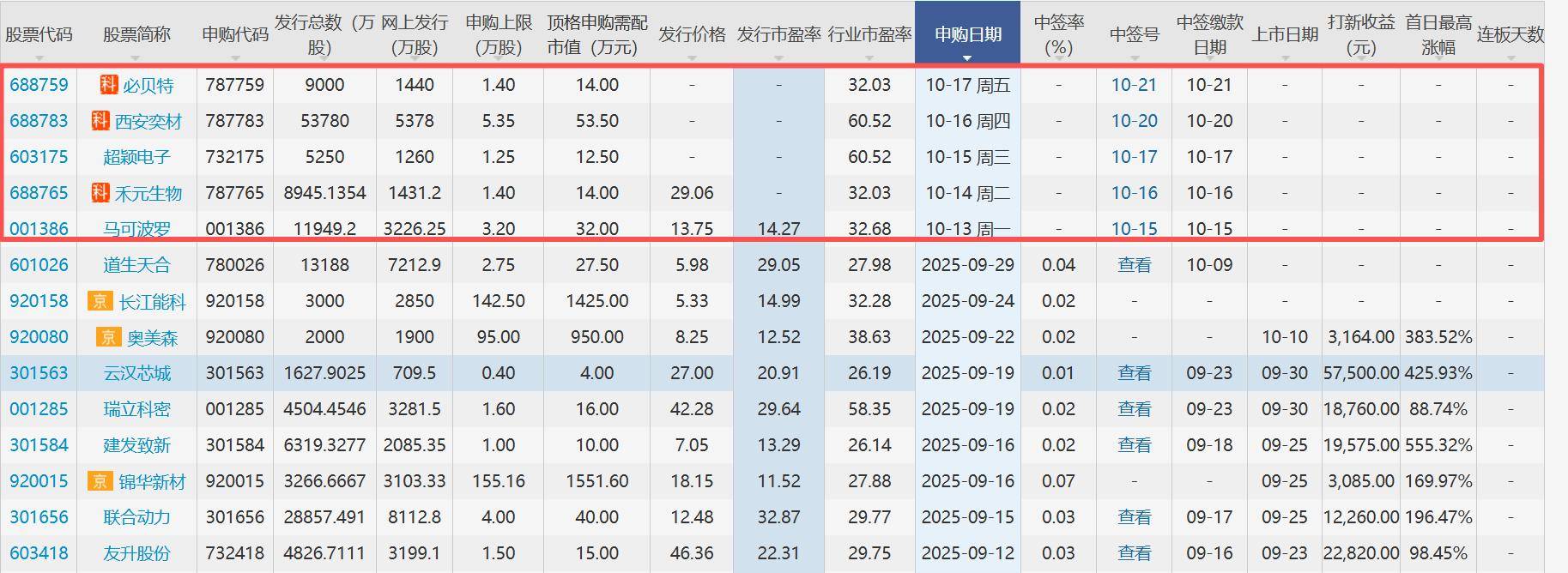
Summary of Key Points Core Viewpoint - This week, five new stocks will be available for subscription, following a significant performance of a new stock last week that surged 3.5 times on its debut [2][5]. Group 1: New Stock Subscriptions - A total of five new stocks will be available for subscription from October 13 to October 17, including one from the Shanghai main board (Chao Ying Electronics), one from the Shenzhen main board (Marco Polo), and three from the Sci-Tech Innovation Board (He Yuan Biological, Xi'an Yicai, and Bi Bei Te) [2][3]. - The subscription schedule is as follows: Marco Polo on Monday, He Yuan Biological on Tuesday, Chao Ying Electronics on Wednesday, Xi'an Yicai on Thursday, and Bi Bei Te on Friday [3]. Group 2: Upcoming IPOs - Three companies will be reviewed for IPO this week: Youxun Co., Angruiwei (Sci-Tech Innovation Board), and Tian Su Measurement (ChiNext) [6][7]. - Angruiwei, established in 2012, focuses on RF front-end chips and RF SoC chip design. It is notable for being the first unprofitable company to apply for an IPO on the Sci-Tech Innovation Board this year [6][7]. - The projected revenues for Angruiwei from 2022 to 2024 are 0.923 billion, 1.695 billion, and 2.101 billion yuan, respectively, with net losses of -0.290 billion, -0.450 billion, and -0.065 billion yuan, leading to a cumulative unrecouped loss of 1.239 billion yuan by the end of 2024 [6][7].
美国:特朗普总统威胁对中国加征额外 100% 关税,回应稀土出口管制-USA_ President Trump Threatens Additional 100% Tariff on China in Response to Rare Earth Export Controls
2025-10-13 01:24
Summary of Key Points from the Conference Call Industry Overview - The discussion centers around the **rare earth minerals industry** and the implications of recent trade policies between the **United States** and **China**. Core Points and Arguments 1. **China's Export Controls**: China has expanded its export control regime for rare earth minerals, requiring licenses for products containing more than **0.1%** in value of Chinese rare earths. This includes military-related end-uses and high-end semiconductor production, with new rules effective by **December 1** [5][6][7]. 2. **US Response**: In reaction to China's controls, President Trump announced plans for an additional **100% tariff** on Chinese goods starting **November 1** and indicated potential export controls on critical software [5][6][8]. 3. **Negotiation Dynamics**: The recent actions from both countries suggest a more complex negotiation landscape, with the potential for both concessions and escalated tariffs. The expectation is that both sides may seek to extend the current tariff pause beyond **November 10** [6][8]. 4. **Impact on Global Supply Chains**: The imposition of tariffs and export controls could severely affect global supply chains, particularly in high-tech production sectors, raising concerns about the broader implications for manufacturing in the US and globally [5][6][8]. 5. **Market Reactions**: The potential for increased tariffs and export restrictions raises the risk of a negative market outcome, particularly for countries like Japan and Korea, which may lose competitive advantages against Chinese exporters in the US market [8][9]. 6. **Future Signals**: Key indicators to watch include statements from the White House regarding policy views, updates on the likelihood of a Xi-Trump meeting, and any announcements from China regarding tariff increases [8][9]. Additional Important Content - The recent policy moves indicate a wider range of potential outcomes than previously anticipated, with both sides possibly aiming for a market-positive resolution that could involve lowering some tariffs in exchange for concessions from China [6][8]. - The discussion highlights the strategic importance of rare earth minerals in the context of US-China trade relations, emphasizing that the controls could affect a broader range of manufacturing than previous US export controls [7][8].
A Once-in-a-Decade Investment Opportunity: 1 Little-Known Vanguard Index Fund to Buy for the Artificial Intelligence (AI) Boom
Yahoo Finance· 2025-10-12 15:07
Core Insights - Index funds are a valuable tool for gaining exposure to stock market sectors without the need to select individual stocks, particularly in the promising field of artificial intelligence [1] - The Vanguard Information Technology ETF offers a cost-effective way to invest in AI-related companies, with a significantly lower expense ratio compared to other AI-focused ETFs [2][7] Vanguard Information Technology ETF Overview - The Vanguard Information Technology ETF is not exclusively an AI investment but tracks the information technology sector, which includes many leading AI companies [4] - The fund's portfolio is heavily weighted towards major AI players, with semiconductor manufacturers constituting 31% and software companies 36% of the fund [5] - The top 10 holdings represent 58% of the fund's assets, featuring prominent AI companies such as Nvidia, Microsoft, and Apple [5][6] Fund Performance and Fees - The Vanguard Information Technology ETF has a low expense ratio of 0.09%, making it an economical choice for investors looking to gain exposure to AI stocks [7][8] - The fund's performance is highly dependent on a few key companies, indicating a top-heavy structure [7]


Top Wall Street analysts are bullish on these 3 stocks for the long term
CNBC· 2025-10-12 11:35
Group 1: Snowflake Inc. (SNOW) - Snowflake is a cloud-native data platform focusing on product innovation and business transformation through data and AI [3][4] - Jefferies analyst Brent Thill maintains a buy rating on SNOW with a price target of $270, noting accelerating product innovation and customer traction [4][7] - Thill indicates that while Snowflake's AI offerings are gaining traction, significant adoption across organizations is still a few quarters away [5][6] Group 2: Advanced Micro Devices (AMD) - AMD has announced a partnership with OpenAI to deploy up to 6 gigawatts of AMD Instinct GPUs, starting with a 1-gigawatt rollout in late 2026 [9] - Jefferies analyst Blayne Curtis upgraded AMD to buy with a price target increase from $170 to $300, citing the partnership as a pivotal change in AMD's AI narrative [10][11] - Curtis raised his estimates for AMD following positive server checks, anticipating significant revenue potential from the OpenAI partnership [12][13] Group 3: Dell Technologies (DELL) - Dell Technologies has increased its long-term financial targets, driven by demand from the AI sector [14] - Mizuho analyst Vijay Rakesh reiterated a buy rating on DELL with a price target increase from $160 to $170, highlighting strong demand signals in enterprise AI [14][15] - Dell expects AI server revenue to reach $20 billion in fiscal 2026, reflecting over 100% growth from the previous year, with a projected CAGR of 20% to 25% through fiscal 2030 [16][17]