
脑机接口

Search documents
娃哈哈争产案第二被告曝光;农夫山泉回应红色尖叫二手炒至88元;小米汽车回应摄影图涉嫌抄袭特斯拉丨邦早报
创业邦· 2025-07-21 23:53
Group 1 - The article discusses the high resale prices of the "Red Scream" beverage, which has been marked up to 88 yuan, indicating a more than 9-fold premium over its original price [2] - The beverage is reported to be nearing its expiration date, with a production date before July 31, 2024, and a shelf life of 12 months [2] - The company, Nongfu Spring, has confirmed that the red packaging of "Scream" contains ginseng and has been discontinued, and they are monitoring the situation regarding the inflated prices on second-hand platforms [2] Group 2 - Nvidia CEO Jensen Huang highlighted the long-standing collaboration with Xiaomi and the ongoing projects in AI and autonomous driving software [9] - Huang also acknowledged Huawei's significant innovation and capabilities, stating that the Chinese AI market will progress regardless of Nvidia's presence [9] - He emphasized the competitive yet respectful relationship between Nvidia and Huawei, viewing them as competitors but also as admirable entities [9] Group 3 - JD.com has launched its first self-operated takeaway store named "Qixian Xiaochu," which operates on a "takeaway + self-pickup" model without dine-in options [13] - The company aims to introduce a new business model in the takeaway market that differs significantly from Meituan, focusing on food safety [13] - The sudden announcement of the cessation of operations by the home improvement brand Liangjiaju has raised concerns among consumers and suppliers [13] Group 4 - Tea brand Cha Bai Dao has officially entered the Singapore market, opening two stores in popular shopping malls, with long wait times reported [13] - The brand has also secured franchise rights in South Korea, indicating plans for rapid expansion in Southeast Asia [13] Group 5 - Uber has launched an official mini-program on WeChat, initially available in Hong Kong and Japan, with plans for expansion to other countries [17] - The program allows users to book rides directly through WeChat, enhancing accessibility and convenience [17] Group 6 - The Chinese internet user base has reached 1.123 billion, with an internet penetration rate of 79.7%, reflecting significant growth in digital infrastructure [26] - The report indicates that the development of new information infrastructure is supporting the growth of the digital economy [26]


马斯克旗下脑机公司Neuralink首次一天内完成两台手术
news flash· 2025-07-21 23:01
马斯克旗下脑机公司Neuralink首次一天内完成两台手术 金十数据7月22日讯,北京时间7月22日,马斯克旗下脑机接口公司Neuralink宣布,本周末成功完成了 P8和P9手术,这是首次在一天内实施两台手术。两位患者恢复状况良好且精神状态良好。"Neuralink最 终将改变数百万甚至数十亿人的生活。"马斯克表示:"想象一下,您的亲人能够再次行走,或者患有痴 呆症的父母能够再次认出他们的孩子。" ...
实现多个国际首次!美媒:脑机接口技术,“中国正迎头赶上”
Huan Qiu Shi Bao· 2025-07-21 22:40
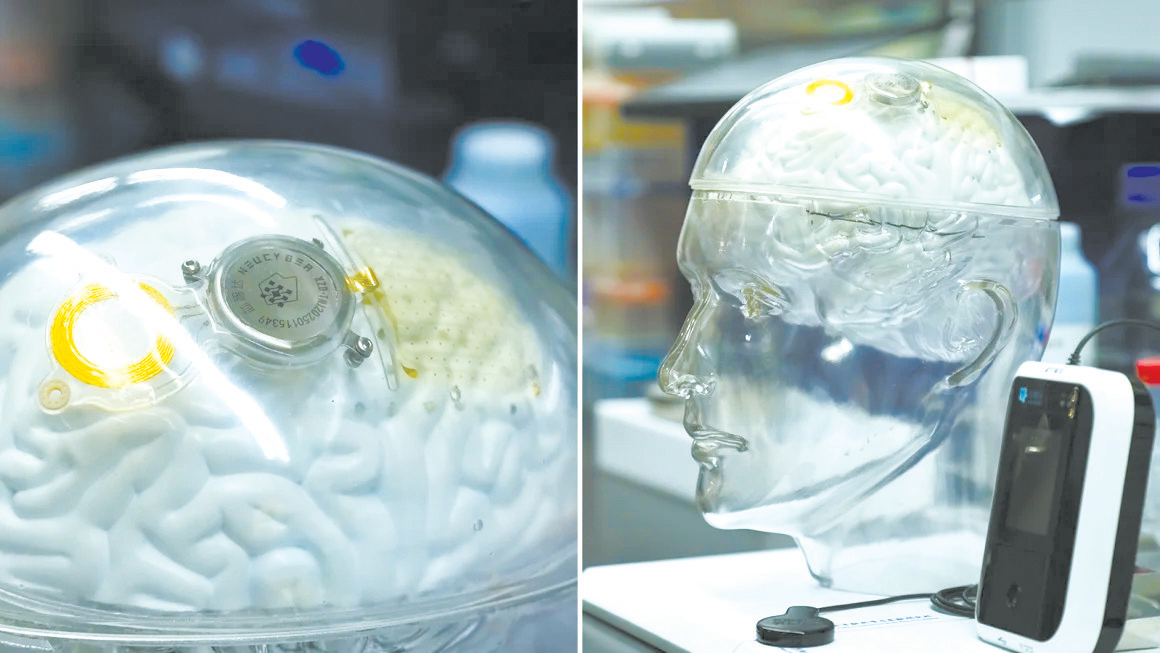
【环球时报特约记者 谢昭 环球时报记者 马俊】脑机接口技术被认为是当前最热门的前沿领域之一,美国富豪埃隆·马斯克创立的Neuralink公司已经成功实施 了多例相关手术。美国有线电视新闻网(CNN)20日注意到,中国当前在该领域正迎头赶上,"正在接近全球先进水平,在复杂性上与美国和英国相当"。 帮患者重建交流能力 所谓脑机接口技术,是指从大脑采集高质量的脑电信号,然后将其处理解码后输出,实现对其他设备的操作。CNN称,北京脑科学与类脑研究所研制的无 线脑机接口芯片已经在临床试验中植入5名患者的大脑中。《环球时报》记者此前在采访中了解到,按照脑电波接收方式的不同,脑机接口主要分为三条技 术路线:不用手术,只是将电极贴在头皮上采集脑电波的无创(非侵入式)模式;通过手术让电极贴着大脑皮层,但并没有插进脑组织的半侵入式;利用微 针或微丝将电极直接插入脑组织的侵入式。从理论上看,采集电极与大脑组织离得越近,收集的脑电波信号质量就越好,但手术风险性也越大。 北京脑科学与类脑研究所研制的名为"北脑一号"的芯片只有硬币大小,属于半侵入式。CNN引用美国乔治城大学神经科学教授马克西米利安·里森胡贝尔的 评论称,大多数美国公司采 ...
马斯克旗下脑机接口公司Neuralink:本周末我们成功完成了P8和P9手术,这是我们首次在一天内进行两台手术。
news flash· 2025-07-21 17:14
马斯克旗下脑机接口公司Neuralink:本周末我们成功完成了P8和P9手术,这是我们首次在一天内进行 两台手术。 ...
“起步晚美国20年,中国迅速赶上!”
Huan Qiu Wang· 2025-07-21 13:50
近日,美国有线电视新闻网(CNN)在一篇报道中详细介绍了中国"脑机接口"技术的进展,称中国的这 项技术虽然起步晚于美国20年,但已经迅速赶了上来,甚至已经有能力与美国富商埃隆·马斯克研发这 一技术的企业,一较高下了。 "北脑一号"如硬币一般 一直关注着中国脑机接口技术进展的里森胡贝尔则认为,中国的技术目前在精巧程度上已经与美国和英 国等科技发达的国家相当了。 大小 报道中,CNN先是讲述了今年3月被中国媒体披露的一场引人关注的脑机接口技术临床试验。一位不幸 患上"渐冻症",已经无法说话的67岁女子,通过中国自行研发的半侵入式脑机接口芯片'北脑一号',准 确地表达出了她想要吃饭的意思。 CNN还介绍了这场临床试验的一些背景,比如试验是由北京市政府和多所本地高校联合组建的北京脑 科学与类脑研究所(CIBR)主推的,CIBR的所长——同时也是该机构孵化出的中国脑机接口技术企业 NeuCyberNeuroTech的首席科学家罗敏敏,还在今年5月邀请CNN的记者参观了他所负责的科研机构, 并在其间谈及了中国与美国在脑机接口技术上不同的路线:美国的技术对大脑更具入侵性,而中国的技 术则是半入侵性的。 美国乔治城大学的神经 ...

百亿赛道上的脑机接口:技术突破后,商业化路径更被关注
2 1 Shi Ji Jing Ji Bao Dao· 2025-07-21 11:29
21世纪经济报道记者 董静怡 杭州报道 脑机接口正在进入高速增长期。根据Precedence Research预测,全球市场10年内仍有约100亿美元增量空 间。 今年以来,脑机接口领域取得多项突破。马斯克旗下的脑机接口公司Neuralink公布研究成果,受试者通 过脑机接口可以控制电脑、机械臂等;佳量医疗自主研发的闭环脊髓神经接口系统成功完成国内首例临 床植入,其中用到了多个脑机接口的关键技术;上海脑虎科技有限公司与复旦大学附属华山医院合作, 成功实现"脑控"智能设备和"意念对话"。 资本市场上也展现出繁荣景象。Neuralink宣布再融资6.5亿美元,估值达到90亿美元;阶梯医疗也宣布 完成国内介入式脑机接口最大规模一轮高达3.5亿元人民币的融资。 这样一个热闹的技术,离大规模落地和商业化还有多远? 当前,医疗场景仍是脑机接口不可绕行的"第一站"。脑机接口的"医疗属性"是天然标签——无论是用于 瘫痪患者运动功能重建,还是帮助失明者恢复视觉,医疗器械的监管框架既为技术划定了安全红线,也 为企业提供了明确的商业化路径。 这条路径并不轻松,一款三类植入式器械从研发到上市需耗时8至10年,堪称"十年磨一剑"。这种 ...
红宝书20250717
2025-07-19 14:02
Summary of Key Points from Conference Call Records Industry or Company Involved - **Semiconductor Packaging Industry**: Focus on TSMC's CoWoS technology and related companies - **RISC-V Architecture**: Development and adoption in high-performance computing - **Micro-Short Drama Industry**: Growth and government support in Shenzhen - **Brain-Computer Interface (BCI) Technology**: Medical applications and market potential - **AI in Healthcare**: Investment trends and technological advancements - **Tourism and Cruise Industry**: Summer tourism trends and company initiatives - **Robotics and AI**: Development in military and healthcare applications Core Insights and Arguments Semiconductor Packaging - TSMC is advancing its CoWoS technology, with expected Q3 sales between $31.8 billion and $33.1 billion, exceeding market estimates [2][3] - The global market for CoWoS technology is projected to exceed $10 billion by 2026, with China leading growth at 71% [2] RISC-V Architecture - The fifth RISC-V China Summit highlighted the acceleration of high-performance computing products [4] - Companies like Aojie Technology and Allwinner Technology are leading in RISC-V CPU subsystem development [5] Micro-Short Drama - Shenzhen's government has introduced measures to support the micro-short drama industry, with a market size expected to reach 68.6 billion yuan in 2025, growing at 36% [6][7] Brain-Computer Interface - The global BCI medical application market is projected to reach $40 billion by 2030, with significant growth in central nervous system disease treatments [8] - Companies like Yanshan Technology and Sanbo Brain Science are pioneering BCI applications [9] AI in Healthcare - The global AI healthcare investment landscape is heating up, with significant advancements in molecular modeling technology [11] - The company is collaborating with Tencent AI Lab to enhance drug discovery processes [11] Tourism and Cruise - The domestic summer tourism consumption is expected to reach 1.8 trillion yuan, with the company launching themed cruise lines [13] Robotics and AI - The military robotics sector is accelerating, with new developments in multifunctional robots for reconnaissance and inspection [16] - Companies are also focusing on healthcare robotics, with applications in rehabilitation and elderly care [15] Other Important but Potentially Overlooked Content - The CoWoS technology's capacity is directly linked to HBM production, indicating a critical supply chain relationship [2] - The RISC-V architecture's integration into data centers could disrupt traditional CPU markets [4] - The micro-short drama market's growth is driven by free content, highlighting a shift in consumer preferences [6] - The BCI technology's commercialization is supported by new pricing regulations in Hubei province [8] - The AI healthcare sector is seeing a convergence of technology and traditional pharmaceutical practices, enhancing drug development efficiency [11] - The cruise tourism initiative is part of a broader strategy to diversify offerings in response to changing consumer demands [13] - The military robotics market is expected to see increased government investment and interest, particularly in AI applications [16]
意念说话!脑机接口临床新突破引国际权威学术期刊关注
第一财经· 2025-07-18 13:06
Core Viewpoint - The article highlights a significant breakthrough in brain-computer interface (BCI) technology achieved by Shanghai YanSi Brain-like Artificial Intelligence Research Institute in collaboration with Huashan Hospital of Fudan University, enabling patients with speech impairments to communicate through thought [1][2]. Group 1: Technological Breakthroughs - The BCI technology allows real-time decoding of brain activity to display intended Chinese phrases, marking a major advancement in language decoding for patients with conditions like ALS and stroke [1]. - The research has been recognized in the prestigious journal "Nature," showcasing China's progress in invasive BCI technology, including real-time motion and language decoding capabilities [1]. Group 2: Technical Details - The decoding of Chinese brain signals is more complex than English due to the higher number of phonetic components, with over 400 compared to English's 50 [2]. - The YanSi Brain-like Institute utilizes a multi-region collaborative decoding technique and a large intracranial EEG dataset to achieve over 83% accuracy in recognizing Chinese consonants and over 84% in recognizing vowels, positioning it at the forefront of the industry [2]. Group 3: Future Applications - The BCI technology not only aims to restore communication abilities for speech-impaired patients but also has potential applications in controlling physical devices through thought, interacting with the metaverse, and generating artistic expressions from mental imagery [2]. Group 4: Implantation Techniques - The founder of Brain Tiger Technology emphasizes the challenge of balancing brain function utilization with minimizing damage during invasive BCI implantation, opting for flexible electrodes placed beneath the dura mater to enhance signal quality while reducing brain injury [3].
10年内,脑机产品的普及度“可能会超过手机”
财富FORTUNE· 2025-07-18 13:02
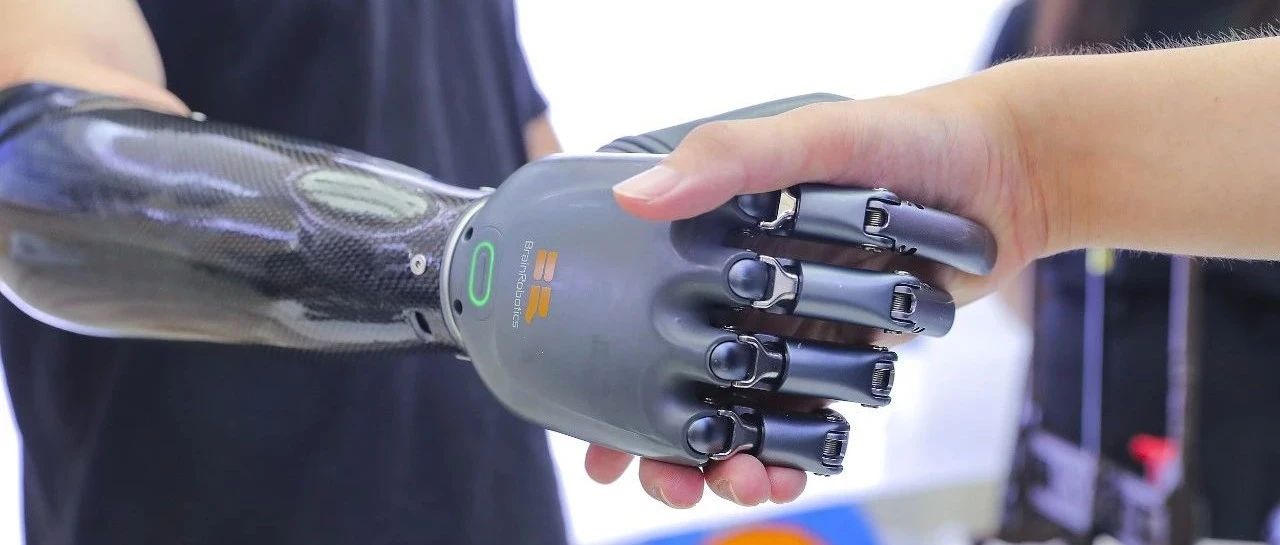
Core Viewpoint - The article discusses the potential of brain-machine interface (BMI) technology, emphasizing its transformative impact on individuals, particularly those with disabilities, and its future applications in society [2][4][30]. Group 1: Company Overview - Strong Brain Technology, co-founded by Han Bicheng, focuses on developing brain-machine interface products aimed at improving the lives of individuals with disabilities [6][11]. - The company aims to reduce the cost of its products to make them more accessible to disabled individuals in China, leveraging domestic supply chains and partnerships for subsidies [2][12]. Group 2: Target User Groups - The primary users of BMI technology include individuals with disabilities, Alzheimer's patients, children with autism or ADHD, and those suffering from anxiety and insomnia [3][11][22]. - The company has identified a significant market need, with over 25 million individuals with limb disabilities in China, many of whom struggle to afford advanced prosthetics [11][16]. Group 3: Technological Advancements - The company has developed several products that read and interpret neural signals, allowing users to control prosthetic limbs and potentially robots in the future [8][17]. - A breakthrough in tactile feedback technology for prosthetics is underway, which could significantly enhance the user experience for individuals with limb loss [17][18]. Group 4: Market Challenges and Solutions - Despite technological advancements, the affordability of products remains a challenge, with prices still high for many disabled individuals [11][12]. - The company has initiated a high-tech assistive project in Zhejiang, collaborating with local government and enterprises to provide subsidized prosthetics [12][16]. Group 5: Future Outlook - The company envisions a future where BMI products could outnumber smartphones, blurring the lines between able-bodied individuals and those with disabilities [4][29]. - The potential for direct brain-to-brain communication and enhanced human capabilities through BMI technology is discussed, although significant challenges remain in achieving these goals [3][27][30].
今年上半年规上工业增加值同比增长6.4%
Xin Jing Bao· 2025-07-18 10:53
Core Insights - The industrial added value of large-scale industries in China grew by 6.4% year-on-year in the first half of the year, demonstrating strong resilience following a good start in the first quarter [1] - The manufacturing added value accounted for 25.7% of GDP, remaining stable [1] - Key industries such as electrical machinery, automobiles, electronics, general equipment, chemicals, and non-ferrous metals showed rapid growth, contributing significantly to the overall industrial growth [1] Group 1: Industrial Performance - In the first quarter and second quarter, the industrial added value grew by 6.5% and 6.3% year-on-year, respectively, building on a high base from the previous year [1] - The contribution rates of equipment manufacturing and high-tech manufacturing increased, with their added values reaching 35.5% and 16.4% of large-scale industries, respectively [1] - Profits in industries such as electronics, electrical machinery, and general equipment grew by over 10% [1] Group 2: Regional Contributions - All 31 provinces reported growth in industrial added value, with provinces like Fujian, Anhui, Henan, and Hunan achieving over 8% growth [1] - Eight industrial provinces saw profit growth rates exceeding the national average, with Henan, Hunan, Hubei, and Jiangsu achieving double-digit growth [1] Group 3: Future Initiatives - The Ministry of Industry and Information Technology plans to implement a new round of growth stabilization work for ten key industries, including steel, non-ferrous metals, petrochemicals, and building materials [1] - Support will be provided to key industrial provinces to enhance their roles, including policy implementation, new growth point cultivation, and industrial transformation [1] - The ministry aims to accelerate the "Artificial Intelligence +" initiative, promoting the deployment of large models in key manufacturing sectors to enhance intelligence levels [1]