
先进制造业

Search documents
起步“十五五” 浙江加码赋能民营企业向“新”而行
Zhong Guo Xin Wen Wang· 2026-02-26 13:58
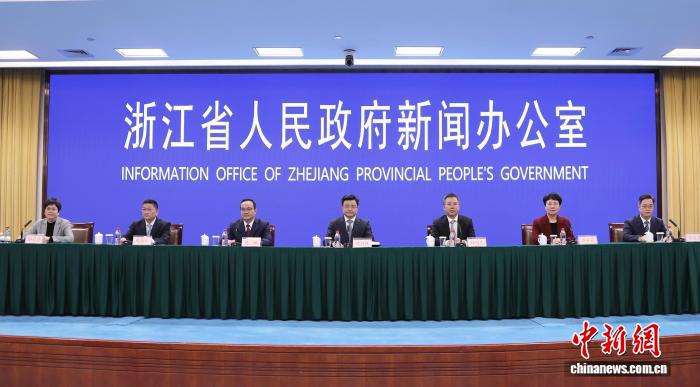
发布会现场。 主办方 供图 起步"十五五" 浙江加码赋能民营企业向"新"而行 中新网杭州2月26日电(蓝伊旎)26日,浙江省2026年经济政策新闻发布会在杭州召开,会上正式发布今 年的"8+4"经济政策。"十五五"开局之年,浙江将以"真金白银""真招实策"加码赋能,支持民营企业布 局新赛道、实现新飞跃。 "真招实策"助力民企布局新赛道 据介绍,聚焦企业发展赋能提质,浙江将着力推进"老树发新枝""新树扎深根",加快实现企业"微成 长、小升高、高壮大、大变强"。 全面落实先进制造业企业增值税加计抵减等政策,力争为经营主体减负2500亿元以上;支持企业主导建 设产业创新平台,对新认定的制造业创新中心、中试平台,省级最高可支持1000万元,升级为国家级的 可奖励3000万元......聚焦为企业创新减轻负担、增添动力,浙江将加码"真金白银"支持。 发布会上,人工智能仍是高频热词。这一赛道的发展成果,是浙江民营企业向"新"而行的生动缩影。 2025年,DeepSeek横空出世,通义千问建成全球最大开源AI生态,"杭州六小龙"等新锐力量崛起,浙江 省人工智能产业已"领先一步"。 "去年浙江省人工智能核心产业营收已突破71 ...

新春第一会:“十五五”启航,烟台从“体量之变”到“格局之变”
Qi Lu Wan Bao· 2026-02-26 13:39
2月26日,农历丙午年正月初十,烟台市委、市政府召开全市"凝心聚力抓落实、奋勇争先开新局"动员 大会。 这是烟台跻身GDP万亿俱乐部之后的第三个春天,"十五五"开局之年的战鼓在此刻擂响。在山东全 省"新春第一会"刚刚落幕两天之后,烟台的这场会议,既是对省委省政府"干事创业担当尽责"部署的承 接,更是一次基于自身发展阶段的深度谋划。 省委常委,省人大常委会副主任、党组副书记,市委书记江成的讲话中,有一组判断值得反复咀 嚼:"十四五"时期烟台发展的突出特征是"量的跃升","十五五"时期烟台发展将进入"质的蜕变"新阶 段。 从"量"到"质",一字之差,却道出了这座"北方第一地级市"面临的深层抉择。从"体量之变"到"格局之 变",烟台正在开启一场深刻的城市进阶。 这不是修辞,而是一份基于产业底色的战略规划。2025年,烟台地区生产总值增长6.1%、总量突破1.1 万亿元,主要经济指标放量增长。这份成绩单,是"量的跃升"的生动注脚,也为"质的蜕变"积累了底 气。 而这三个跃升,正是烟台从"体量之变"迈向"格局之变"的战略路径——它们共同指向一个目标:确 保"十五五"末基本建成绿色低碳高质量发展示范城市。 作为山东第三个 ...
再甩千亿“政策包”,浙江all in科技
2 1 Shi Ji Jing Ji Bao Dao· 2026-02-26 12:32
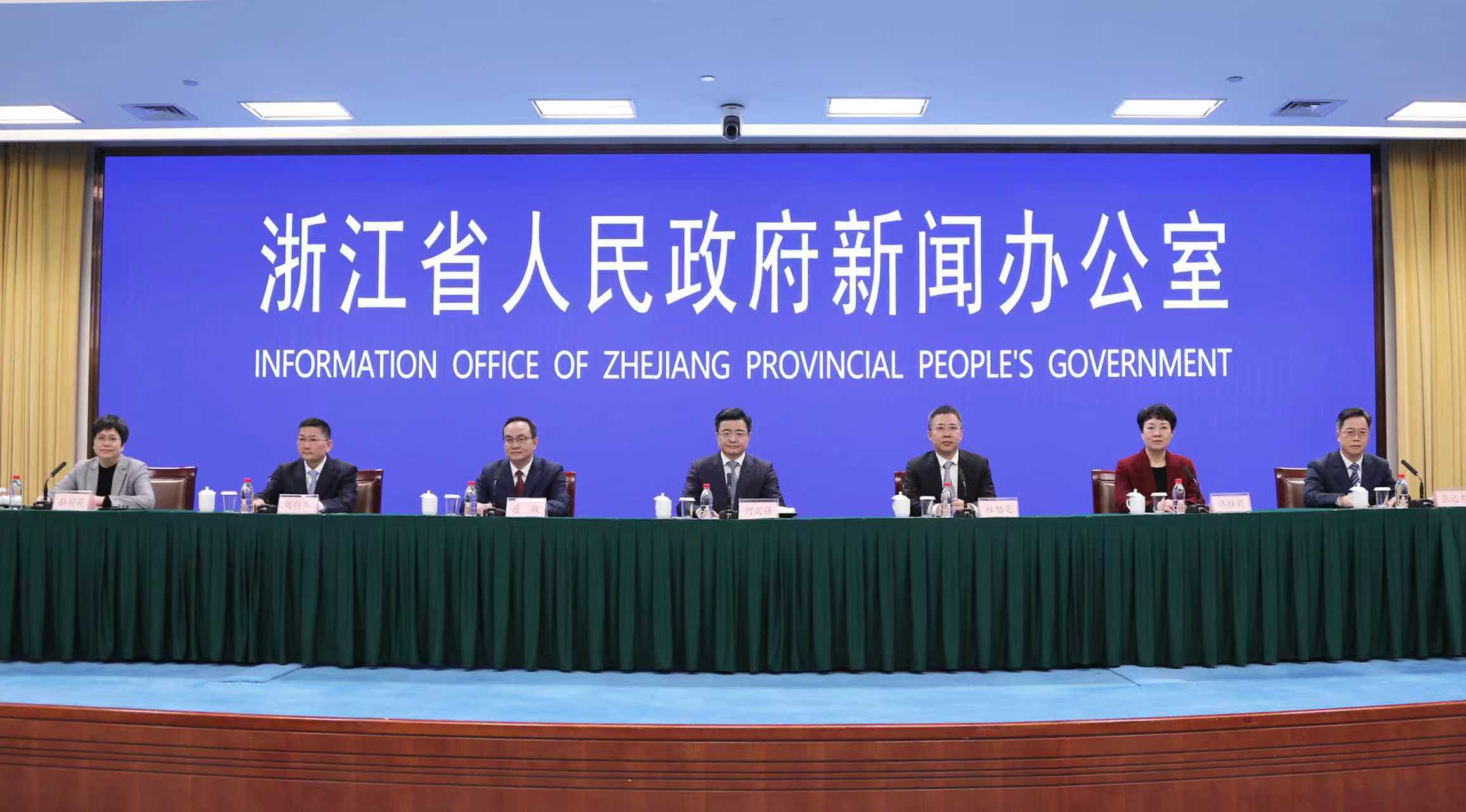
21世纪经济报道记者柳宁馨 杭州报道 浙江大学国家高端智库副研究员、区域经济规划所副所长薛天航告诉21世纪经济报道记者,浙江以企业为主体推进科技创新,充分体现了"有效市场"和"有 为政府"的良性互动。 产业升级 投资于人 各地都在竞逐科技创新,浙江为何更强调企业主体? 2月26日,浙江省新闻办举行全省2026年经济政策新闻发布会,介绍2026年"8+4"经济政策体系,也就是8个重点领域政策包和4张要素保障清单。这是浙江第 五年推出"8+4"经济政策包。 (浙江省2026年经济政策新闻发布会现场,图片由浙江省新闻办提供) 浙江省财政厅副厅长、新闻发言人张远东在回答21世纪经济报道记者提问时表示,今年浙江省级资金总规模达1053.8亿元,比去年增加11亿元,具体到每个 政策包,金额均有增加。 21世纪经济报道记者注意到,浙江在支持科技创新方面继续加码。2026年,浙江省财政预算安排超200亿元,重点投向高能级科创平台建设、关键核心技术 攻关、高层次人才引育等方面。 具体来看,深化教育科技人才一体改革发展政策包中,浙江将用好共建长三角国际科创中心重大机遇,深入实施"人工智能+"行动,继续支持概念验证中 心、中试平台 ...
宁波“新春第一会”聚焦创新生态和营商环境
Zhong Guo Jing Ji Wang· 2026-02-26 08:22
Core Viewpoint - The meeting in Ningbo emphasizes the importance of building a world-class innovation ecosystem and business environment to drive high-quality development and technological advancement in the region [1][2]. Group 1: Innovation Ecosystem - The Zhejiang Provincial Committee aims to create a top-tier innovation ecosystem characterized by optimal conditions for talent growth, enterprise development, collaborative efficiency, and effective policy services [2][3]. - By 2030, Ningbo plans to establish a highly competitive and attractive innovation ecosystem, maintaining a leading position in business environment satisfaction nationwide [3]. Group 2: Strategic Goals and Implementation - The focus is on problem-oriented, goal-oriented, and effect-oriented strategies to enhance innovation capabilities, support talent development, and ensure effective integration of various innovation elements [4]. - The city aims to leverage technological innovation to transform the manufacturing sector, enhance existing capabilities, and expand new opportunities, particularly through the use of artificial intelligence [4]. Group 3: Role of Enterprises and Talent - Local entrepreneurs and talent are recognized as crucial contributors to Ningbo's modernization efforts, with a call for them to integrate their development into the broader context of Chinese modernization [5]. - The city government is urged to set high standards and deepen efforts to stimulate the overall innovation ecosystem, ensuring a strong start to the 14th Five-Year Plan [5].
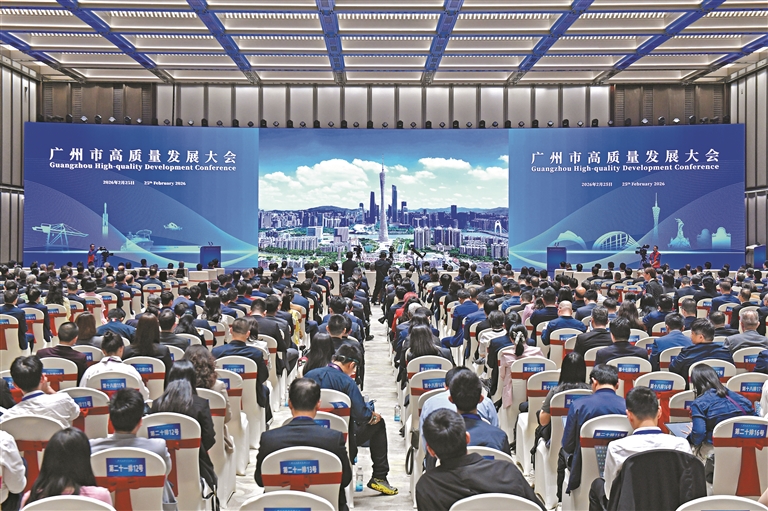
广州市召开高质量发展大会
Guang Zhou Ri Bao· 2026-02-26 01:48
Core Viewpoint - The Guangzhou government emphasizes the integration of manufacturing and service industries to achieve high-quality development, aiming to build a modern industrial system with international competitiveness during the 14th Five-Year Plan period [2][4][5]. Group 1: Government Initiatives - The Guangzhou government is committed to promoting the deep integration of advanced manufacturing and modern services, focusing on the dual development of traditional and emerging industries to support economic recovery and enhance quality, resilience, and vitality [2][4]. - The city aims to establish a modern industrial system that leverages trade to promote industry and vice versa, enhancing its role as a significant economic hub [4][5]. - The government plans to enhance the manufacturing sector's service capabilities and promote the development of intelligent, green, and service-oriented manufacturing [5][7]. Group 2: Strategic Goals - The strategic tasks for the next five years include fostering innovation, enhancing technological capabilities, and facilitating the transformation of scientific achievements into marketable products [5][6]. - By 2035, the goal is to achieve a new level of modernization in Guangzhou, with a focus on deepening reform, opening up, and stimulating the strong momentum of industry-service integration [4][6]. - The government aims to create a high-quality development landscape by optimizing industrial space, enhancing investment attraction, and improving the business environment [5][8]. Group 3: Collaboration and Talent Development - The government emphasizes the importance of integrating the innovation chain, funding chain, and talent chain to drive high-quality development [7]. - There is a focus on attracting and retaining talent to support the needs of the industry, ensuring that various sectors can thrive and innovate [7][8]. - The city plans to enhance cooperation with global enterprises and educational institutions to foster a collaborative environment for innovation and development [6][8].
广州天河:今年举办超50场演唱会、超40场赛事
Nan Fang Du Shi Bao· 2026-02-25 16:33
Group 1 - The Tianhe District aims to achieve a GDP growth target of over 5% by 2026, with fixed asset investment exceeding 93 billion yuan and a growth rate of over 10% [1] - The district plans to enhance modern service industries, targeting an added value of 530 billion yuan with a growth rate of 5.5%, and aims for artificial intelligence industry revenue to exceed 62 billion yuan with a growth rate of 12% [1] - Tianhe District will focus on attracting 300 new industrial projects and nurturing 1,600 "Four Up" enterprises [1] Group 2 - Key development areas include the Guangzhou International Financial City, Guangtang Science and Technology Innovation City, and the Guangdong Olympic Cultural and Sports Event Demonstration Zone [2] - The district plans to accelerate the construction of 1 million square meters of science and technology innovation space and open 15 application scenarios [2] - The district aims to enhance the Guangdong Olympic Cultural and Sports Event Demonstration Zone by hosting over 50 concerts and 40 sports events this year [2] Group 3 - The district will strengthen the modern service industry by increasing licensed financial institutions to over 310 and leveraging significant funds for the real economy [3] - There will be a focus on developing industrial internet, industrial software, and digital creativity to better integrate production services into the manufacturing sector [3] - The Tianhe Road-Zhujiang New Town area will see over 300 special consumption activities and the construction of advanced manufacturing projects [3]

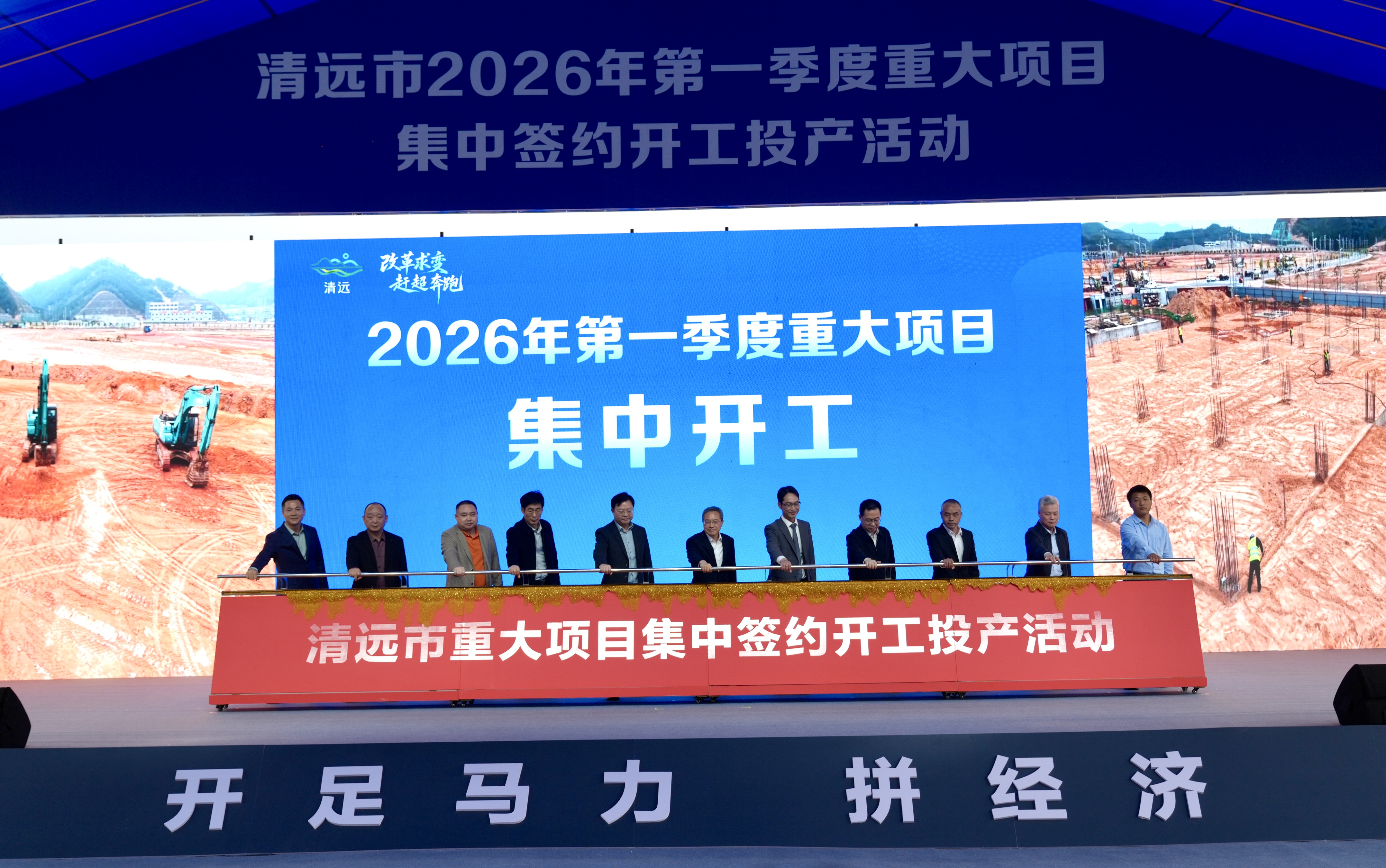
清远市2026年第一季度重大项目集中签约开工投产 总投资超200亿元
Zhong Guo Xin Wen Wang· 2026-02-25 12:01
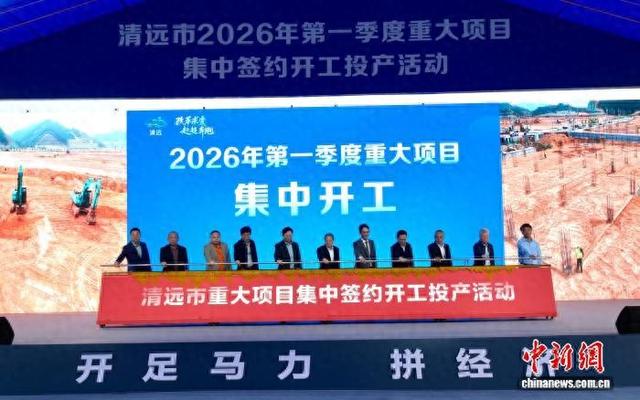
Group 1 - The core viewpoint of the article highlights the transformation of Qingyuan, attributed to the government's establishment of a service platform for enterprises and a favorable business environment [1][3] - A total of 68 major projects were signed, commenced, and put into production during the event, with a total investment of 201.4 billion yuan, covering various sectors including advanced manufacturing, modern services, modern agriculture, and ecological tourism [3] - The projects included 23 signed projects with a total investment of 103.7 billion yuan, 21 projects that commenced with an investment of 62 billion yuan, and 24 projects that were put into production with an investment of 35.7 billion yuan [3] Group 2 - Companies like Jinfa Technology have expressed confidence in continuing to develop in Qingyuan, citing the advantages of the local business environment and government support throughout the project lifecycle [3] - Guoneng Qingyuan Power Co., Ltd. has been recognized as a pilot for the Ministry of Industry and Information Technology's ten-thousand-ton factory initiative, contributing to clean energy projects and receiving high-tech enterprise certification [3]
总投资201.4亿元,清远市2026年第一季度68个重大项目集中签约开工投产
Nan Fang Nong Cun Bao· 2026-02-25 03:44
Core Insights - The article highlights the significant investment and development activities in Qingyuan, with a total of 68 major projects signed, started, or put into production, amounting to a total investment of 201.4 billion yuan, covering various sectors including advanced manufacturing, modern services, modern agriculture, and ecological tourism [1][5]. Group 1: Project Overview - In the first quarter of 2026, Qingyuan signed 23 major projects with a total investment of 103.7 billion yuan, started 21 projects with an investment of 62 billion yuan, and put 24 projects into production with an investment of 35.7 billion yuan [5]. - The projects include both industrial upgrade initiatives and infrastructure projects that benefit people's livelihoods, aligning with Qingyuan's goal of building a modern industrial system [5][6]. Group 2: Government Commitment - The Mayor of Qingyuan, Chen Jinluan, expressed gratitude to all parties supporting Qingyuan's development and emphasized the city's economic growth, which ranked 4th in GDP growth in the province [5][6]. - The government is committed to optimizing the business environment, aiming to create a "low-cost investment area" and a "high-quality business environment" to attract more resources and projects to Qingyuan [6][8]. Group 3: Business Perspectives - Representatives from companies like Guangdong Jinfa Technology Co., Ltd. and Newan Tianyu Organic Silicon Co., Ltd. shared their positive experiences of investing in Qingyuan, highlighting the supportive government services and favorable business environment [7]. - The companies noted that the government's proactive support has strengthened their confidence in expanding operations in Qingyuan, with ongoing projects focusing on intelligent and digital development [7]. Group 4: Future Outlook - The article concludes that with the successful implementation of quality projects, Qingyuan is poised to enhance its business environment, gaining the trust and choice of entrepreneurs, and aims to drive economic growth and high-quality development [8].
中山大学李江帆:广东两业协同恰逢其时,AI正重塑广东制造
2 1 Shi Ji Jing Ji Bao Dao· 2026-02-25 00:18
Core Viewpoint - The Guangdong "New Spring First Meeting" emphasizes the theme of "coordinated development of manufacturing and service industries," marking the start of high-quality economic development for the year [1] Group 1: Manufacturing and Service Industry Coordination - The coordinated development of manufacturing and service industries is essential for achieving industrial upgrading and embracing technological advancements [1] - The Guangdong government aims to enhance the production service industry by promoting specialization and high-end value chain extension [2] - The core challenge in developing the production service industry lies in enhancing capabilities in areas directly impacting production processes, such as R&D and technology transfer [2] Group 2: Key Areas for Improvement - The most urgent need for Guangdong's manufacturing sector is to strengthen technological R&D and technology transfer capabilities [3] - Emphasis should be placed on developing information technology as a common "adhesive" to integrate advanced manufacturing with modern services [3] - Strengthening supply chain and logistics services is crucial for cost reduction and efficiency in manufacturing [3] Group 3: Timing for Industry Coordination - The current period is critical for promoting the coordination of manufacturing and service industries, as many industrial sectors remain at the low end of the global division of labor [4] - Ignoring the role of the production service industry could hinder opportunities for manufacturing upgrades [4] - A broader perspective is needed to integrate production services with various industries, not just advanced manufacturing [5] Group 4: Role of AI in Manufacturing - AI large models are becoming a core engine for upgrading manufacturing processes, impacting everything from R&D to supply chain management [9] - These models represent a new "soft production factor" that can enhance both production services and life services, driving high-quality and diversified development [9] - The transformation driven by AI is not just technological but also involves a systemic reshaping of production modes, management styles, and industrial ecosystems [9]
国家发展改革委刘泉红:推进两业协同,四大方向破解结构性矛盾
2 1 Shi Ji Jing Ji Bao Dao· 2026-02-24 14:16
Core Viewpoint - The integration of advanced manufacturing and modern service industries is a crucial strategic direction for accelerating the construction of a modern industrial system and fostering new productive forces for high-quality development [1][2]. Group 1: Industry Integration - Modern service and advanced manufacturing industries are no longer isolated but are deeply intertwined, with services empowering manufacturing and manufacturing driving service upgrades [2]. - The essence of industrial integration combines the optimization of existing resources and technologies with new innovations, leading to the emergence of new industries, business models, and value chains [2][3]. - Internationally, promoting industrial integration and developing service-oriented manufacturing are key measures for enhancing the core competitiveness of industries, as evidenced by historical examples from the United States [2]. Group 2: Policy and Practice - China has placed significant emphasis on industrial integration, with policies such as the "Implementation Opinions on Promoting the Deep Integration of Advanced Manufacturing and Modern Service Industries" outlining a path that centers on manufacturing as the core driver supported by services [3]. - Various regions are actively pursuing integration, with Guangdong leveraging its Bay Area advantages, Zhejiang promoting "manufacturing + platform" transformations, and Yunnan accelerating industrial internet projects [3]. - Companies like Shanghai Electric and Shan Gu are transitioning towards comprehensive solution providers, while industrial parks are creating "manufacturing + service" complexes to enhance efficiency [3]. Group 3: Challenges - The integration process faces three structural contradictions: insufficient depth of collaboration, with many companies remaining at the "manufacturing + simple after-sales" stage; homogenization of service models, leading to a lack of precise alignment; and outdated standard systems that hinder cross-industry integration [3]. Group 4: Recommendations - Enhance the supply capacity of high-end services by developing productive services, promoting domestic industrial software, and supporting leading enterprises in resource integration [4]. - Strengthen the role of enterprises as innovation subjects by focusing on key technologies and fostering a public service platform for manufacturing companies [4]. - Improve the standards and rules system by addressing standard gaps in key industries and promoting a unified national market to lower integration costs [4][5]. - Optimize the institutional environment for integration by creating benchmark scenarios in key industries and simplifying processes to enhance efficiency [5].