协同办公

Search documents
创始人重掌钉钉4个月,开打产品战
2 1 Shi Ji Jing Ji Bao Dao· 2025-08-26 11:19
Group 1 - The core message of the article is the launch of DingTalk 8.0, which aims to modernize the platform and integrate AI capabilities to enhance user experience and efficiency [1][5][6] - The CEO, Chen Hang, also known as "Wuzhao," returned to DingTalk after a four-year absence and emphasized the need for a significant redesign to address outdated features and user feedback [2][4] - DingTalk 8.0 introduces over ten AI products, including DingTalk One, an AI search engine, and various AI tools aimed at improving workplace productivity [6][11] Group 2 - The development process involved analyzing 1,850 user needs and addressing 574 feedback issues, showcasing a commitment to user-centric improvements [4] - The new AI hardware, DingTalk A1, is designed as a portable AI assistant that combines multiple functionalities, including recording and translation, to streamline communication [7][8] - The upgraded AI spreadsheet is positioned as a platform for automating data management and analysis, reflecting a shift towards AI-driven solutions in workplace applications [9][10] Group 3 - DingTalk currently serves over 26 million enterprises, indicating its significant market presence and potential for growth in the AI era [11] - The competitive landscape in the collaborative office software market is intense, with key players like Feishu and WeChat Work vying for market share [12] - The ability to effectively embrace AI and differentiate its offerings will be crucial for DingTalk's future success [13]
钉钉AI战略卡位 协同办公进入“Agent驱动”时代
Sou Hu Cai Jing· 2025-08-26 03:07
Core Viewpoint - DingTalk has launched its 8.0 version, marking a complete shift towards AI-native solutions, coinciding with CEO Chen Hang's return to the company [1][3]. Company Summary - The new "DingTalk One" integrates work information across various platforms into a unified, intelligent priority flow, transitioning from "people finding tasks" to "tasks finding people" [3]. - The "AI Search" feature allows for multimodal data retrieval and comparison of over 50 large models, addressing enterprise knowledge management challenges [3]. - "AI Forms" has evolved from a tool to an application creation platform, introducing capabilities like field agents and automated workflows to lower the barrier for AI usage [3]. - The hardware release, DingTalk A1, sold out its first batch of 1,000 units, indicating strong market demand for integrated AI solutions in high-frequency office scenarios [3]. - Chen Hang describes the 8.0 version as "DingTalk AI's 1.0 version," emphasizing a fresh start to build a new DingTalk for the AI era [3][6]. Industry Summary - DingTalk is adopting a "platform + agent + hardware" strategy to strengthen its position in the collaborative office sector, aiming to create an AI infrastructure that connects enterprise data, business flows, and personnel [4]. - The AI layout is closely linked to practical applications, with companies like Liugang Group and Weiqiao Group successfully implementing DingTalk AI solutions for real-time cost analysis and IT operations [4]. - The competitive landscape in China's collaborative office sector is intensifying, with DingTalk leveraging Alibaba Cloud's capabilities in model adaptation and industry customization [5]. - Challenges include balancing general AI capabilities with specific vertical needs, ensuring user experience consistency in an open ecosystem, and competing against platforms like WeChat Work and Feishu [5]. - Chen Hang's leadership emphasizes a user-centric approach, fostering a culture of co-creation and rapid iteration to address these challenges [6]. - DingTalk's strategic positioning in the AI era involves reconstructing workflows, enhancing knowledge management, and promoting hardware-software integration, while facing long-term challenges in ecosystem openness and data security [6].

企业微信,能治好企业的「AI焦虑症」吗?
雷峰网· 2025-08-25 09:35
Core Viewpoint - The article emphasizes that while AI tools are gaining popularity, the fundamental aspects of collaborative office tools—such as connectivity, process integration, and ease of use—are being overlooked, which are crucial for enhancing productivity in the AI era [6][8]. Group 1: Importance of Connectivity - Many companies are focusing on AI features but neglect the essential connectivity that allows for effective data flow and integration, which is vital for AI models to function optimally [7][9]. - A strong connectivity framework enables real-time data sharing across departments and with external partners, enhancing the overall effectiveness of AI applications [8][9]. - The article highlights that WeChat Work (企业微信) exemplifies strong connectivity, having served over 14 million organizations and connected with over 750 million WeChat users, making it a significant hub for collaboration [11]. Group 2: Integration and Ease of Use - The integration of AI into existing office tools must minimize workflow disruptions and enhance usability, allowing employees to adopt new features without extensive retraining [18][24]. - High-frequency pain points in office work, such as information retrieval and task management, should be prioritized for AI solutions to improve productivity [20][23]. - The article discusses the introduction of features like intelligent search and intelligent summaries in WeChat Work, which streamline processes and reduce the time spent on non-core tasks [23][27]. Group 3: Global Optimization of Productivity - The article argues that improving internal productivity is only part of the equation; optimizing connections with external partners and customers is essential for achieving overall efficiency [29]. - A case study of a custom furniture brand illustrates how real-time data synchronization between sales and production can enhance responsiveness to customer needs, demonstrating the benefits of a flexible supply chain [30]. - The success of companies like BYD, which has leveraged WeChat Work for seamless integration of its operations, showcases the potential for socialized productivity in the AI era [31]. Group 4: Evolution of Corporate Production Lines - The evolution of corporate production lines has transitioned from manual processes to digital and now to AI-driven collaboration, necessitating tools that combine connectivity, AI, and usability [34][35]. - Platforms that integrate these elements can create a dynamic and self-sustaining production line, enabling companies to operate efficiently while fostering long-term growth [35].

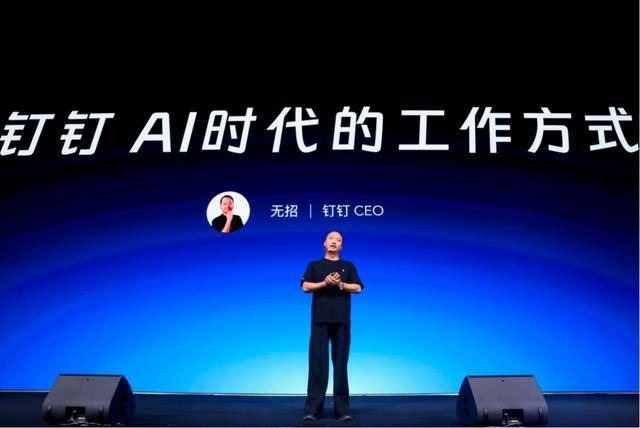
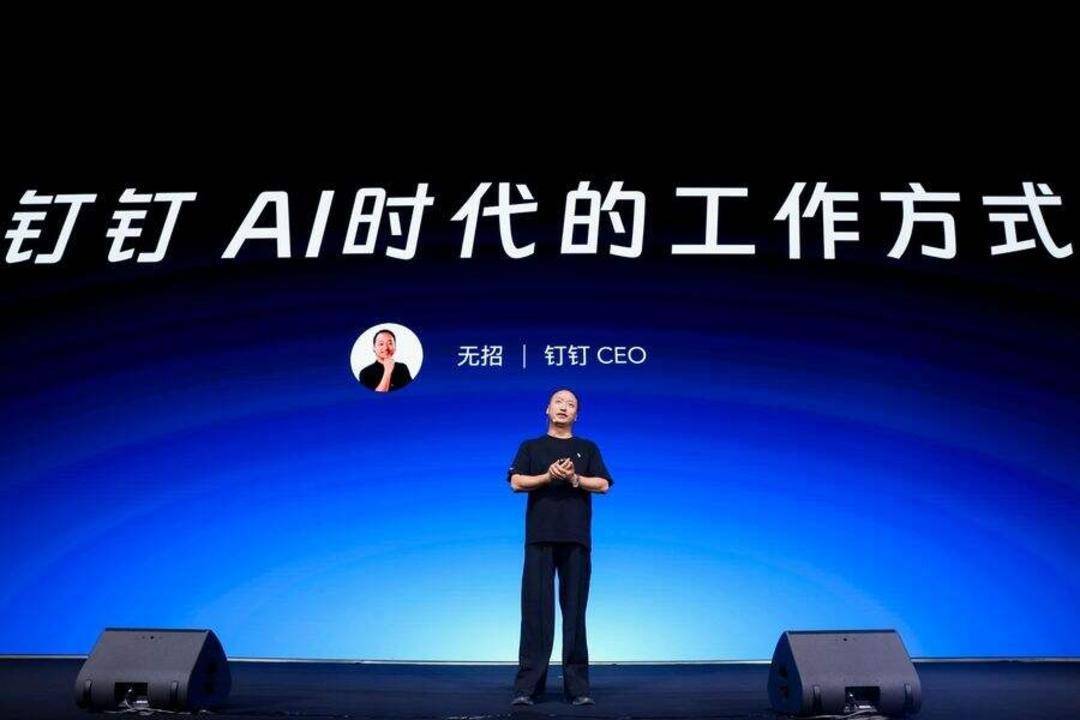
下一代办公应用长啥样?钉钉十周年无招亮相:迎接AI时代的工作方式
Yang Zi Wan Bao Wang· 2025-08-25 08:31
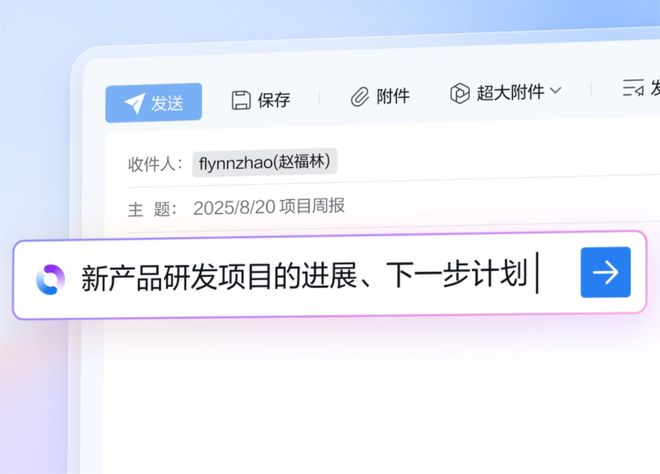
Core Insights - DingTalk has officially launched version 8.0, marking its transition to an AI-native platform, with a commitment to innovate for the AI era [1] - The new version introduces over 10 AI products, fundamentally transforming the traditional office product model [1] Group 1: DingTalk One - DingTalk One is the world's first agent-driven work information flow app, designed to streamline work-related information and tasks using AI [2] - It shifts the paradigm from "people finding tasks" to "tasks finding people," enhancing efficiency in information processing [2] - The app serves as a unified entry point for users to interact with AI through natural language, allowing for various tasks like meeting initiation and project updates [2] Group 2: AI Search Engine - The AI search engine "AI Seek" integrates AI search and knowledge Q&A, enabling employees to access scattered information efficiently [3] - It supports over 50 mainstream large models for flexible integration, allowing enterprises to choose the most suitable model for their needs [3] - The platform also accommodates local and private models to address data compliance concerns for specific industries [3] Group 3: AI Tables - DingTalk has upgraded its AI Tables to serve as an application creation platform, with over 300,000 enterprises currently utilizing it [4] - The AI Tables feature an assistant that allows users to generate tables and workflows through conversational input, lowering the usage barrier [4] - It includes over 100 field agents that automate various tasks, enhancing productivity across multiple modalities [4] Group 4: O-Table Architecture - The new O-Table architecture, developed in collaboration with Alibaba Cloud, offers a cost-effective solution for large-scale data storage and real-time computation [5] - It is designed to handle high-frequency changes and multi-table associations, providing superior performance compared to similar products [5] Group 5: AI Hardware - DingTalk has introduced the AI Minutes tool and the DingTalk A1 hardware, which work together to provide real-time transcription and intelligent summarization of meetings [6] - The DingTalk A1 is a compact device with advanced audio capabilities, offering 1,000 minutes of free transcription and 10GB of cloud storage [6] - It seamlessly integrates with DingTalk applications, enhancing user experience and productivity [6] Group 6: Future Direction - The CEO of DingTalk emphasized a return to innovation and user-centric development, aiming to create a collaboration product that meets the demands of the AI era [7]
迎接AI时代的工作方式 钉钉CEO无招:协同办公APP应走向AI原生
Sou Hu Cai Jing· 2025-08-25 06:14
Group 1 - The core viewpoint is that DingTalk aims to innovate and redefine its collaboration tools for the AI era, emphasizing a return to entrepreneurship and user-centric development [2] - DingTalk CEO Wu Zhao announced the launch of DingTalk 8.0 and 10 AI products, marking the transition from mobile internet to AI-native solutions [2] - The next generation of work applications should be driven by AI assistants, transforming how information is accessed and collaboration occurs, making work processes smoother and more efficient [2] Group 2 - As of now, DingTalk has over 26 million enterprise organizations on its platform, with more than 190,000 paid organizations, and 79% of A-share listed companies in China are using DingTalk [3] - The number of AI applications on the DingTalk platform has reached 1.41 million, indicating significant adoption of AI capabilities [3] - Wu Zhao highlighted that the interaction between humans and AI through natural language will replace traditional methods of information flow in enterprises, enabling better collection and dissemination of industry-related insights [3]
三年磨一剑,企业微信5.0如何用“全局最优解”破局AI办公?
Tai Mei Ti A P P· 2025-08-25 05:48
Core Insights - The core viewpoint of the article emphasizes the launch of WeChat Work 5.0, which focuses on integrating AI into practical office applications rather than showcasing flashy technology [2][3][15] Group 1: Version Update and User Growth - WeChat Work 5.0 is the first major update in over three years since the release of version 4.0, highlighting a user-centric approach to solving real problems [2][3] - The number of connected enterprises increased from 10 million to 14 million since the launch of version 4.0, while the number of WeChat users reached 750 million daily from 500 million [3][5] Group 2: AI Integration and Features - The update includes six major AI features: intelligent search, intelligent summary, intelligent robots, intelligent forms, intelligent service summary, and intelligent email writing [4] - WeChat Work 5.0 enhances interoperability with WeChat, allowing for automatic synchronization of customer data and service summaries, improving efficiency in customer management [5][6] Group 3: Social Collaboration and Efficiency - The platform aims to deepen relationships rather than just broaden reach, exemplified by a case study of a furniture brand that improved real-time data updates and communication through dedicated customer groups [7][12] - The integration of AI into daily tasks is designed to enhance efficiency without requiring users to change their existing workflows, focusing on solving practical issues [13][14] Group 4: One-Stop Office Experience - WeChat Work 5.0 promotes an integrated office experience, allowing users to perform all tasks on a single platform, which enhances data accessibility and operational efficiency [9][10] - The platform's design supports social collaboration, connecting consumers and partners, which is crucial for modern business operations [10][12] Group 5: Value Creation through AI - The article discusses the shift from tool-based collaboration to value-based collaboration, where the depth of intelligence and breadth of connections determine platform value [15] - AI is positioned as the "nerve center" of social collaboration, enabling precise communication with clients and agile cooperation within the supply chain [15]


2025年第29周:数码家电行业周度市场观察
艾瑞咨询· 2025-07-28 09:04
Group 1 - The "Hundred Glasses War" has begun, with major players like Xiaomi and Meta entering the smart glasses market, indicating a shift from niche products to mainstream consumer electronics by 2025 [2][16] - Human-shaped robots are expected to reach a market size of 5.3 billion yuan in China by 2025, driven by technological advancements and policy support, although challenges in commercialization remain [3][4][11] - AI is reshaping the strategies of BAT (Baidu, Alibaba, Tencent), with each company adopting different paths: Baidu focuses on foundational infrastructure, Tencent on ecosystem collaboration, and Alibaba on business automation [5] Group 2 - The collaborative office market is projected to reach 13.9 billion yuan by 2025, with major players like DingTalk, Feishu, and WeChat Work competing through differentiated strategies [6] - The AI research landscape shows that the US leads in foundational research with 35,117 papers, while China follows closely with 31,694 papers, indicating a competitive edge in application [7] - The home appliance industry is witnessing a transformation driven by health technology, with 83% of consumers willing to pay a premium for health features [17][18] Group 3 - Major Chinese home appliance companies like Haier, Midea, and Hisense are accelerating their investments in robotics to counteract slowing growth in traditional markets [18][19] - The AI agent concept is gaining traction, with significant investments and developments from companies like ByteDance and Alibaba, although challenges in stability and commercial viability persist [9] - The medical AI sector is experiencing uneven application levels across hospitals, influenced by factors such as hospital size and digital investment [10][37] Group 4 - The AI toy market is expected to grow to $18.1 billion by 2024, driven by technological maturity and changing consumer demands, but companies must navigate challenges like competition and rapid technological changes [12] - The exoskeleton market is projected to grow significantly, with prices dropping from millions to thousands, making it more accessible for various applications [15] - The integration of AI in retail and delivery services is being pursued by companies like Meituan, which is investing heavily in robotics to enhance operational efficiency [30][36] Group 5 - The home decoration market is undergoing significant changes with JD's acquisition of Life Home, indicating a trend towards digital transformation and supply chain integration [33] - The competition in the AI agent space is intensifying, with various companies exploring applications in content creation and enterprise services, while also facing potential market bubbles [9][21] - The development of AI health applications by Ant Group aims to connect various healthcare services, although it faces challenges in regulatory standards and market integration [37]

协同办公陷入「智能混战」,飞书试图以「成熟度等级」破局
雷峰网· 2025-07-16 00:40
Core Viewpoint - The article discusses the challenges and opportunities in the AI office product market, emphasizing the need for a clear standard to evaluate the maturity of AI applications, as exemplified by Feishu's "AI Application Maturity Model" [6][10]. Group 1: AI Market Dynamics - The AI wave has created a mix of excitement and anxiety among companies, leading to confusion in selecting intelligent office products [2][3]. - Many companies are overwhelmed by the variety of AI products available, resulting in hasty purchases that often do not meet expectations [3][4]. - The lack of clear standards has led to chaotic competition in the AI product market, making it difficult for users to discern quality [3][4]. Group 2: Feishu's AI Application Maturity Model - Feishu introduced the "AI Application Maturity Model," categorizing AI applications into four levels: M1 (concept validation), M2 (early trial), M3 (mature application), and M4 (fully mature) [6][7]. - This model aims to provide a reference standard for users to assess the intelligence level of products, addressing the confusion in the AI To B application market [7][10]. Group 3: Characteristics of "True Intelligent" Products - Feishu defines a "true intelligent" product as one that effectively combines standards, technology, and performance to enhance productivity [19]. - The "Knowledge Q&A" feature is rated at M3 maturity, indicating it is suitable for large-scale use, while the "AI Meeting" feature has reached M4 maturity, showcasing its comprehensive application [12][13]. - Performance improvements, such as increased data capacity and faster loading times, are crucial for the effectiveness of intelligent applications [15][16]. Group 4: Conclusion - The ultimate goal of intelligent products is to enhance efficiency, and the To B intelligent office industry must integrate standards, technology, and performance to alleviate selection anxiety for enterprises [19].

飞书试水“人机协同”
Tai Mei Ti A P P· 2025-07-14 04:09
Core Viewpoint - The competition between major players in the collaborative office sector, Feishu and DingTalk, is intensifying, with Feishu announcing significant AI updates that reflect its strategic direction in AI implementation for 2023 [2][12]. Group 1: Feishu's AI Updates - Feishu's flagship product, Multi-dimensional Table, has expanded its database capacity from 1 million rows last year to 10 million rows this year, enhancing its BI capabilities to rival professional BI software [5]. - The AI updates include features like Knowledge Q&A, AI meetings, and project management, with a focus on providing AI-driven answers without the need for a pre-established knowledge base [7]. - The introduction of a development suite, Feishu Miaoda, allows users to input development requests in natural language, enabling rapid prototype generation and system development through a multi-agent architecture [8]. Group 2: Development Suite Features - The development suite integrates various agents for different stages of system development, enhancing efficiency and accuracy, and supports automatic bug detection and resolution [10]. - The enterprise-level general agent, Aily, is designed to assist with document understanding, data analysis, and task planning, allowing for dynamic strategy adjustments and content generation [9]. - The platform emphasizes a human-machine collaborative environment, ensuring that AI executes tasks efficiently while developers focus on business logic and oversight [10]. Group 3: Industry Implications - Feishu's approach to AI and development could challenge the business models of third-party software service providers, blurring the boundaries of collaborative office software [12]. - The integration of AI agents into office software may lead to the automatic generation of systems that previously required extensive setup, raising discussions about the future of SaaS [11]. - Feishu is encouraged to redefine its role in the AI era, moving beyond direct competition with DingTalk to establish itself as a leader in innovative office solutions [12].

飞书发布AI成熟度模型,多款AI产品升级,力推企业级应用真落地
Sou Hu Cai Jing· 2025-07-11 08:34
Core Insights - Feishu has introduced the industry's first AI application maturity model to provide clear measurement standards for enterprise AI applications [1][3] - The model categorizes AI applications into four levels: M1 (Proof of Concept), M2 (Early Trial), M3 (Mature Application), and M4 (Fully Mature) [1] - Feishu emphasizes the practical effectiveness of AI applications in real scenarios, focusing on metrics such as accuracy, comprehension, and generation quality [1] Group 1: AI Product Developments - Feishu showcased several AI products, with Knowledge Q&A achieving M3 standard and AI Meetings reaching M4 standard, featuring voice recognition and personalized summary reports [3] - The multi-dimensional table product has been upgraded to support 10 million high-frequency access data rows, with core calculations optimized to millisecond response times [3] - The CEO of Feishu stated the commitment to providing practical and deployable AI products across various business functions [3] Group 2: Market Competition and Positioning - Feishu faces intense competition from DingTalk and WeChat Work but continues to innovate based on deep insights into enterprise needs [4] - The launch of Feishu Miaodai, an AI-native system building tool, aims to lower the barriers for businesses to achieve digital transformation [4] - Feishu has gained traction in sectors like new energy vehicles and domestic beauty brands, highlighting its appeal as a collaboration management platform [4] Group 3: Challenges and Strategic Focus - Despite significant achievements, Feishu encounters challenges in scaling AI solutions, particularly regarding data privacy and security [4] - The competitive landscape is tightening, with DingTalk launching its AI table product shortly before Feishu's announcement [4] - Feishu remains committed to its "true landing" philosophy, continuously developing AI products that meet actual enterprise needs [4]