
AI表格

Search documents
AI重塑生产力 超六成医药企业拥抱钉钉
Zhong Guo Jing Ying Bao· 2026-01-28 13:48
Core Insights - AI is not a replacement for humans but rather liberates them from repetitive tasks, allowing them to become "commanders" in the workplace [1] - Over 60% of pharmaceutical companies and more than half of public hospitals are currently using DingTalk to create a new AI operating system [1] Group 1: Transformation in Information Acquisition - The traditional reliance on manual records and subjective reporting is being disrupted by AI hardware like the DingTalk A1 recording card, which captures and analyzes pharmaceutical representatives' visits in real-time [1] - The A1 recording card automatically extracts key information and generates structured reports, enabling market intelligence to be synchronized to decision-makers in seconds [1] Group 2: Democratization of Data Processing - AI is facilitating a significant democratization trend in data processing, allowing business personnel to quickly build applications for price monitoring and talent screening without IT department reliance [1] - AI automates data collection, analysis, and alerts, enhancing business responsiveness and agility [1] Group 3: Restructuring of Workflows - AI is reshaping operational workflows, exemplified by drug safety monitoring, where multiple AI agents can automate the entire process from report collection to compliance verification [2] - Human roles are evolving from repetitive operators to "AI foremen," focusing on anomaly detection and process supervision [2] Group 4: Global Collaboration Enabled by AI - AI serves as a foundation for global collaboration in pharmaceutical companies, addressing challenges related to time zones, language, and compliance [2] - AI facilitates intelligent scheduling for cross-time zone meetings, real-time translation, and one-click language switching for system interfaces [2] Group 5: Adoption by Leading Pharmaceutical Companies - AI is accelerating the digital transformation in various pharmaceutical companies, with notable examples including Yunnan Baiyao, Innovent Biologics, Lepu Biopharma, and others [2] - Yunnan Baiyao has partnered with DingTalk to create a comprehensive digital infrastructure, integrating AI across various processes from traditional Chinese medicine sourcing to intelligent manufacturing and AI-assisted R&D [2]
【2025·向新而行 共绘新篇】数智化管理部:推动全员数智化能力建设 助力企业运营效能提升
Xin Lang Cai Jing· 2026-01-05 10:32
Core Insights - The company is focusing on high-quality development through digital transformation and the deep application of tools like DingTalk and AI, which are essential for enhancing operational efficiency and collaboration [2][9] - The digital transformation strategy is aligned with the company's "14th Five-Year Plan" and aims to optimize structure, innovate technology, and improve quality and efficiency [2][9] Group 1: Digital Empowerment Initiatives - Since May 2025, the company has conducted 23 specialized training sessions to empower employees across various departments and production units, ensuring comprehensive coverage in regions such as Zouping, Binzhou, and Weihai [4][11] - The training approach is targeted and practical, focusing on the core functionalities of DingTalk and AI tools, tailored to meet the specific needs of different job roles [5][12] Group 2: Training Methodology - The training employs a "targeted focus" method rather than a broad approach, ensuring that content is customized to align with the actual demands of various industries [5][12] - Key AI capabilities, such as AI spreadsheets and assistants, are emphasized through hands-on demonstrations and task exercises, facilitating a deeper understanding of tool applications [6][13] Group 3: Online Knowledge Platform - An online knowledge empowerment platform has been established, achieving a cumulative reading volume of 120,000, which enhances the reach and effectiveness of the training [6][14] - The company aims to create a closed-loop training model that combines practical offline training with ongoing online knowledge dissemination, thereby continuously improving employees' digital application capabilities [6][14] Group 4: Future Directions - Moving forward, the company plans to delve deeper into application scenarios across various sectors, exploring the integration potential of digital tools with production and management processes [6][14] - The goal is to summarize and promote successful practice cases, further enhancing the effectiveness of digital empowerment initiatives and supporting the implementation of the "Digital Weiqiao" strategy [6][14]


无招奋起金箍棒,打碎一个旧钉钉
乱翻书· 2025-12-26 03:53
Core Viewpoint - The article discusses the launch of DingTalk's AI version 1.1 "Mulan" and the introduction of the world's first AI-driven work intelligence operating system, Agent OS, emphasizing a transformative shift from traditional software to AI-centric operations [1][3][6]. Group 1: Product Launch and Concept - The launch event was characterized by a significant turnout, with attendees engaged for nearly three hours, indicating high interest in the new AI capabilities [1]. - The event featured a nostalgic reference to Jack Ma's past statements about the role of mobile internet in e-commerce, framing the current AI advancements as a necessary evolution for DingTalk [3]. - DingTalk's new AI features, including a powerful AI recording pen and a device for sound wave shielding, highlight the complex interplay between data acquisition and privacy in the AI era [3][6]. Group 2: AI Integration and Evolution - DingTalk aims to redefine work interaction logic globally, positioning AI as a core component that directly engages in tasks rather than merely enhancing existing tools [6][12]. - The transition from the mobile internet era to an AI-driven paradigm is likened to a biological evolution, where the old system dissolves to give rise to a new entity [9][11]. - The concept of Agent OS represents a radical departure from traditional application architecture, focusing on intent rather than user-driven interfaces [14][16]. Group 3: User Experience and Interaction - The new interface design aims to simplify work processes, likening it to the ease of scrolling through short videos, which may create discomfort for users accustomed to traditional control mechanisms [17][18]. - The introduction of the "Wukong" agent allows users to express their intentions, streamlining various operational tasks without needing to navigate multiple software interfaces [20][22]. - The shift towards an intent-based interaction model suggests that controlling intent parsing will become a key competitive advantage in software distribution [23]. Group 4: AI Product Features - Three key AI products were highlighted: AI Listening, AI Forms, and DingTalk A1, which focus on non-structured data processing, an area where AI excels [25][26]. - AI Forms are designed to bridge the gap between unstructured data and structured formats, making it easier for users to input information without needing extensive software knowledge [27][29]. - DingTalk A1 transforms personal recordings into organizational assets, addressing the challenge of capturing offline data for digital integration [31][34]. Group 5: Hardware and Data Context - The necessity of hardware in AI applications is emphasized, as it provides the context needed for AI to function effectively in real-world scenarios [35][37]. - Ensuring data sovereignty through enterprise-grade hardware addresses security concerns, which is critical for businesses [38]. - The integration of hardware with software is seen as a way to deepen competitive advantages in the B2B space [40]. Group 6: Business Model Transformation - The emergence of Agent OS signals a potential seismic shift in the SaaS industry, moving from user-based pricing to results-based payment models [41][42]. - The efficiency of AI in processing tasks can significantly reduce operational costs, as demonstrated by a case where AI replaced multiple human roles in order processing [43]. - This transition from selling tools to selling labor reflects a broader change in how businesses will engage with AI technologies [44]. Group 7: Competitive Landscape - The competitive focus in the AI industry is shifting from model capabilities to controlling user entry points and daily active users (DAU) [46]. - DingTalk's established position in the B2B market provides a strategic advantage, allowing it to define new work paradigms in the AI era [47][48].

阿里入口的B端战事
远川研究所· 2025-12-25 11:32
Core Insights - OpenAI aims to transform ChatGPT from a simple chatbot into a complex task-completing platform, enhancing user engagement and establishing itself as a key entry point in the AI era [3] - The competition for digital entry points is intensifying, with major players like Microsoft and Google integrating AI into their ecosystems, while Alibaba's DingTalk is also making significant strides in this space [4][7] Group 1: DingTalk's Evolution - DingTalk has transitioned from a mobile internet application to an AI-driven intelligent operating system, enabling AI to manage tasks autonomously [4][9] - The release of DingTalk 1.1 marks a significant upgrade, introducing AgentOS, which allows AI to operate other applications, fundamentally changing its role from a user-operated tool to an AI command center [9][10] - DingTalk ONE provides a new interaction interface where AI organizes and prioritizes work information, shifting the paradigm from "people finding tasks" to "tasks finding people" [9][10] Group 2: Competitive Landscape - The battle for B-end market entry is characterized by different strategies compared to C-end, with B-end focusing on ROI and efficiency, while C-end aims for user engagement and emotional connection [7][10] - DingTalk's upgrades are designed to deepen its integration within organizations, creating a strong lock-in effect that makes it difficult for companies to switch to competing platforms [10][12] Group 3: AI Integration and Future Vision - DingTalk's self-reconstruction involves three major changes: enhancing user interaction, restructuring its architecture to support AI operations, and expanding its ecosystem to include AI talent and resources [13][14] - The company is positioned as a key player in the transition to "super artificial intelligence" (ASI), with a focus on connecting AI to the physical world to enhance productivity and decision-making [17][22] - The ultimate goal is to create a closed-loop system where AI can learn from real-world data and influence physical actions, thereby redefining productivity in the AI era [22][23]


钉钉为AI打造“身体”
Zhi Tong Cai Jing· 2025-12-24 12:49
Core Viewpoint - DingTalk has launched a new AI-native product suite, featuring a unique software-hardware architecture called "Agent OS" and a dedicated hardware terminal named "DingTalk Real," marking a significant shift from collaboration tools to an intelligent operating system [1][3]. Group 1: Product Development - The release of "Agent OS" and "DingTalk Real" signifies DingTalk's transition towards an intelligent operating system, moving beyond traditional collaboration tools [3]. - The combination of software and hardware aims to enable AI to not only assist but also execute tasks in real-world scenarios, addressing the limitations of existing AI applications [5][6]. - DingTalk Real is designed for enterprise environments, integrating multi-modal sensors and local inference capabilities to function effectively in challenging conditions [6]. Group 2: Market Positioning - DingTalk's approach contrasts with many global AI companies that focus on developing advanced language models, as it seeks to implement AI in physical workspaces rather than just virtual environments [5][6]. - The product philosophy emphasizes solving real pain points in industries like manufacturing and logistics, where efficiency bottlenecks often occur on the front lines rather than in offices [7][8]. - DingTalk aims to redefine the value of enterprise AI hardware, focusing on practical applications that enhance productivity rather than merely offering novel technology [8]. Group 3: Strategic Implications - The development of a quantifiable business outcome-driven AI implementation strategy is seen as a necessary evolution in the era of large models, prioritizing effective acceleration of value realization [9]. - DingTalk's innovations provide a replicable model for Chinese enterprises and showcase the potential of AI-driven work operating systems globally [9]. - The ongoing transformation in work methods suggests a future where humans and AI evolve together, enhancing efficiency and safety in the workplace [9].

钉钉木兰版发布,阿里抓牢AI To B入口
Xin Lang Cai Jing· 2025-12-24 09:46
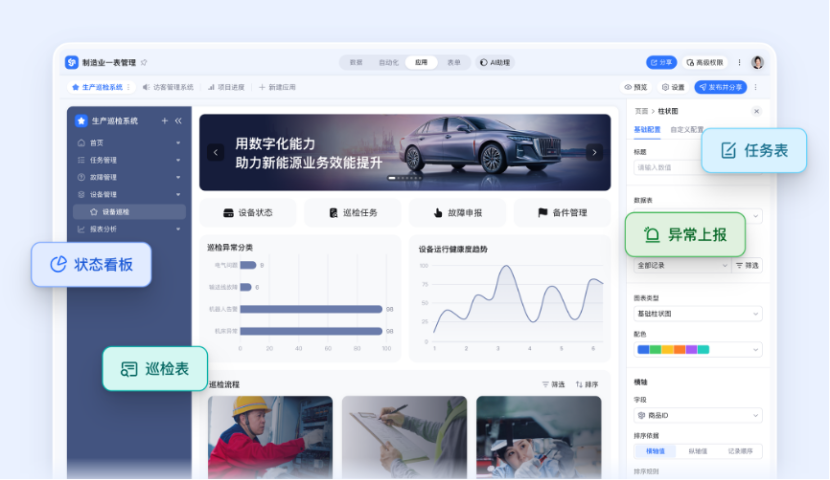
Core Insights - DingTalk has launched the AI DingTalk 1.1 version "Mulan" and the world's first AI-driven work intelligence operating system, Agent OS, marking a new era of "human-AI collaboration" [1][3] - The core of Agent OS is to run and collaborate with AI Agents, featuring a new interface (DingTalk ONE), dedicated AI hardware (DingTalk Real), AI search and Q&A (AI Search), a general task processing Agent (Wukong), and an enterprise AI platform (DEAP) [1][3] - DingTalk aims to build a comprehensive AI ecosystem in collaboration with partners, promoting the development of the enterprise-level AI ecosystem in China [4] Product Upgrades - The "AI Search" has been upgraded to an enterprise-level AI search engine that can "search, ask, and work," allowing secure access to data across various platforms [2][4] - The "AI Table" has evolved into a platform for creating AI applications, enabling businesses to transition from Excel to AI applications with zero coding and zero barriers [5] - The "AI Listening" feature has been enhanced with capabilities such as cross-file AI Q&A, image recognition, and real-time translation, making it suitable for international communication [5] AI Hardware Development - DingTalk's first AI hardware, DingTalk A1, has transitioned from a personal assistant to a team work assistant, integrating with two models for various business scenarios [3][6] - The design of DingTalk A1 allows it to magnetically attach to a smartphone, facilitating automatic summarization, annotation, and analysis of recorded content [6]
从协同工具到Agent OS:钉钉告别移动互联网时代
Feng Huang Wang· 2025-12-24 01:37
Core Perspective - The article discusses the transformation of DingTalk under the leadership of its founder, Chen Hang, emphasizing a radical shift towards an AI-driven operational framework, moving away from its previous success in the mobile internet era [1][2]. Strategic Reconstruction - DingTalk is transitioning to an "Agent OS" designed specifically for AI, marking a departure from its previous human-centered computing philosophy to a model that facilitates collaboration between humans and AI agents [3]. Product Innovation - The launch of three AI products—AI Forms, DingTalk A1, and AI Listening—serves as critical tools to disrupt outdated work paradigms, with AI Forms evolving into a central hub for enterprise data and workflows [5][7][8]. Cultural Shift - The company is undergoing a cultural revolution, encouraging a mindset of rapid iteration and disruption to overcome the inertia of established practices, with a focus on empowering frontline employees to solve real problems [9][10]. Challenges Ahead - The transition from tool empowerment to paradigm reshaping presents significant challenges, particularly in understanding complex industry-specific needs and achieving high accuracy in AI applications [11].
钉钉疯人院,跑出三个爆款
雷峰网· 2025-12-24 00:22
Core Viewpoint - The article discusses how DingTalk, under the leadership of Wu Zhao, is transitioning from the mobile internet era to an AI-native era through significant product innovations and a cultural shift towards extreme innovation and user-centric design [6][7][33]. Group 1: Product Innovations - DingTalk has launched three major products: DingTalk A1, AI Listening, and AI Tables, marking a significant upgrade from the previous version [6][8]. - DingTalk A1, an AI hardware product, quickly became a bestseller, addressing user pain points such as interface convenience and transcription limits by offering 1,300 minutes of free transcription monthly [10][14][15]. - AI Listening has undergone a complete overhaul, achieving a speech recognition accuracy of 97%-98% through substantial investment in AI model training and user feedback integration [22][23]. - AI Tables, rebranded from "Multi-dimensional Table," aims to redefine spreadsheet tools for the AI era, focusing on user accessibility and integration with existing databases [27][28][30]. Group 2: Cultural and Strategic Shifts - The return of Wu Zhao to DingTalk has reinvigorated a culture of extreme innovation, reminiscent of the company's early days, emphasizing a "Be Crazy" attitude towards product development [7][14]. - The strategic focus on understanding customer needs through extensive market research has led to more precise product definitions and enhancements [11][14]. - DingTalk's approach to AI integration is not merely superficial; it aims for a fundamental restructuring of its products to align with the demands of the AI era, ensuring that technology serves the user effectively [42][43]. Group 3: Market Positioning and Future Outlook - DingTalk's innovations are positioned to disrupt the traditional office software market, particularly by targeting the B-end users who prioritize functional tools like spreadsheets [26][28]. - The company is leveraging its existing user base and technological infrastructure to create a self-reinforcing ecosystem that enhances product capabilities over time [24][30]. - The long-term vision includes establishing DingTalk as a central hub in the AI-driven office landscape, potentially reshaping industry standards and practices [40][41].

时隔4个月,钉钉再放大招,Agent OS让AI从问答走向干活
Sou Hu Cai Jing· 2025-12-23 14:17
Core Viewpoint - The launch of AI DingTalk 1.1, featuring the Agent OS, signifies a major transformation from the mobile internet era to the AI era for DingTalk, with a focus on AI-driven collaboration in the workplace [2] Group 1: Product Launch and Features - The AI DingTalk 1.1 version, codenamed "Mulan," introduces over 20 AI products, including DingTalk ONE, DingTalk Real, AI Search Q&A, and the general task processing agent "Wukong," forming a complete system architecture for human-AI collaboration [4] - DingTalk ONE serves as a new interactive entry point for human-AI collaboration, utilizing large model capabilities to integrate various work information and automatically identify and push the most important tasks to users [4] - DingTalk Real is a dedicated AI hardware for enterprises, addressing the challenges of safely and reliably executing tasks in complex environments, thus supporting the large-scale deployment of high-value AI agents [6] Group 2: AI Capabilities and Applications - The upgraded AI Search Q&A functions as an enterprise-level AI search engine, capable of secure and precise searches of enterprise data, integrating mainstream large models for Q&A, and automating task management through the Wukong agent [6] - The AI platform (DEAP) provides AI capability support for enterprises, while the newly released commercial agents demonstrate AI's ability to transition from "Q&A" to "task execution," such as the manufacturing agents that convert order images into production schedules and predict faults [6][9] - The AI table has evolved into a platform for creating AI applications, allowing users to generate applications from uploaded tables or sketches without coding, marking a leap into the AI application era [7] Group 3: Hardware and Communication Enhancements - The first AI hardware, DingTalk A1, has upgraded from a personal assistant to a team assistant, capable of summarizing and analyzing recordings across various business scenarios, enhancing collaboration with ecosystem partners [9] - AI Listening has added capabilities for cross-file Q&A, image recognition, and note-taking, supporting 72 languages and including features for face-to-face translation and simultaneous interpretation, ideal for international communication [9] Group 4: Strategic Implications - The introduction of Agent OS and its associated product matrix represents a revolutionary step for DingTalk in empowering digital transformation for enterprises, highlighting Alibaba's commitment to securing a foothold in the AI-to-business market [9]
钉钉发布全球首个工作智能操作系统Agent OS 专为AI打造
Zheng Quan Ri Bao Wang· 2025-12-23 10:21
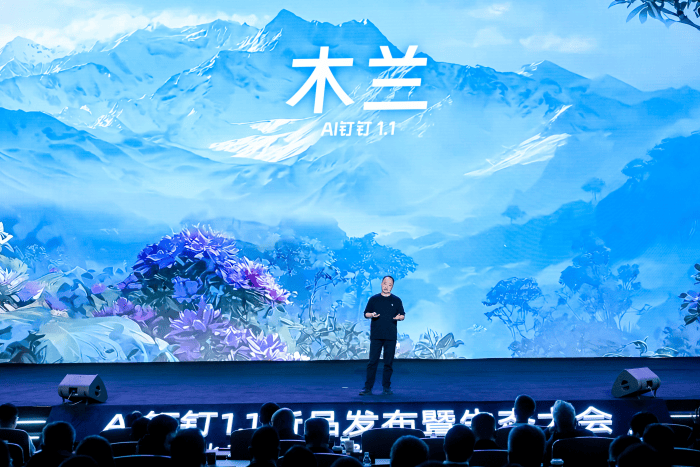
Core Viewpoint - DingTalk has launched the world's first AI-driven work operating system, Agent OS, marking a significant shift towards AI collaboration in the workplace [1][2] Group 1: Product Launch and Features - The new version, AI DingTalk 1.1, named "Mulan," introduces over 20 AI products, including DingTalk Real, which provides a physical environment for AI agents to operate securely in complex enterprise settings [2][3] - DingTalk ONE serves as a new interactive entry point for human-AI collaboration, utilizing large models to manage and prioritize work information across various platforms [2][3] - The upgraded AI search engine, "AI Search," now offers capabilities to search, ask questions, and perform tasks, enhancing efficiency in enterprise operations [3][4] Group 2: Industry Impact and Ecosystem - DingTalk aims to build an open AI ecosystem in collaboration with partners, focusing on industry models and AI hardware markets, promoting a comprehensive AI landscape for enterprises [3] - The AI table feature allows users to create applications easily, transitioning from traditional Excel to AI applications without coding, thus lowering barriers for businesses [4] - DingTalk's first AI hardware, DingTalk A1, has evolved to assist teams across various functions, integrating seamlessly into business processes for better data management and analysis [4]