家居卖场

Search documents
富森美押中宏明电子IPO成功过会 近五年投资收益达4.39亿元
Zheng Quan Shi Bao Wang· 2025-12-14 12:45
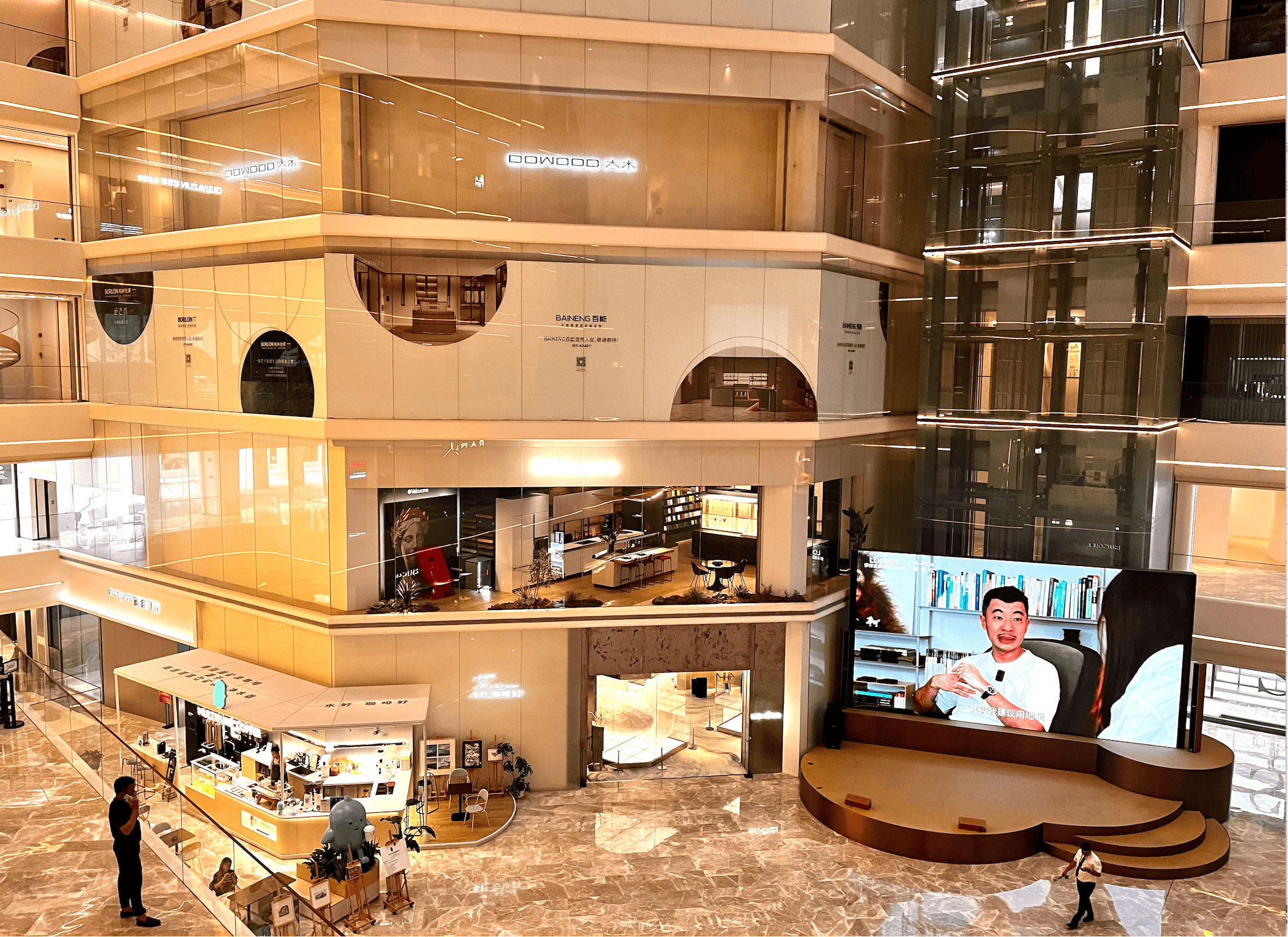
Core Viewpoint - Chengdu Hongming Electronics Co., Ltd. successfully passed the IPO review, highlighting the investment opportunities for Fusenmei in the capital market [1] Group 1: Investment Strategy - Fusenmei has been actively participating in the establishment of equity investment funds and direct investments, focusing on emerging industries such as new energy and artificial intelligence [2] - The investment in Hongming Electronics dates back to the end of 2019, when Fusenmei contributed 200 million yuan to the Chengdu Chuanjing Longchu No. 1 Equity Investment Fund, which has a total target subscription of 1.2 billion yuan [2] - Fusenmei has established multiple equity investment funds with various professional investment institutions, indirectly investing in high-quality companies in sectors like photovoltaic equipment and AI chips [2] Group 2: Company Performance - Hongming Electronics is a well-established manufacturer of electronic components, primarily engaged in the R&D, production, and sales of new electronic components, with applications in consumer electronics and new energy sectors [2] - Fusenmei's investment in Hongming Electronics represents a significant milestone, allowing the company to diversify from its traditional home furnishing business and tap into the high-value electronic manufacturing sector [4] Group 3: Financial Performance - From 2020 to 2024, Fusenmei's investment income totaled 43.9 million yuan, with annual returns showing a positive trend [6] - In the first three quarters of the current year, Fusenmei achieved an operating income of 924 million yuan and a net profit of 477 million yuan, indicating stable overall performance despite economic pressures [7] - Compared to competitors like Meikailong and Juran Home, which reported significant losses, Fusenmei stands out as a bright spot in the home furnishing industry [8]

美凯龙:股价异常波动 24年及25年前三季度营收均下滑
Ge Long Hui· 2025-12-10 10:20
Core Viewpoint - The company announced an abnormal stock price fluctuation with a cumulative increase of 20% over three consecutive trading days from December 8 to 10, 2025, while confirming normal business operations and no undisclosed significant information [1] Financial Performance - The company's revenue for 2024 is projected to be 7.82 billion yuan, representing a year-on-year decline of 32.08% [1] - The net profit for 2024 is expected to be -2.98 billion yuan [1] - For the first three quarters of 2025, the company reported revenue of 4.97 billion yuan, a year-on-year decrease of 18.62% [1] - The net profit for the first three quarters of 2025 is projected to be -3.14 billion yuan [1] Shareholder Actions - A major shareholder, Hangzhou Haoyue, has a plan to reduce its holdings, although the reduction has not yet commenced [1] Investor Advisory - The company has reminded investors to be cautious regarding trading and the risk of performance losses [1]
建设银行吉林省分行“金融+消费”激发市场活力
Zhong Guo Jin Rong Xin Xi Wang· 2025-12-04 08:13
Core Viewpoint - China Construction Bank's Jilin Branch is actively enhancing financial empowerment in response to national policies, focusing on stimulating consumer market vitality through collaborative efforts on both supply and demand sides [1] Group 1: Automotive Sector Initiatives - The Jilin Branch organized 17 unique test drive events for new energy vehicles in April, attracting numerous customers and providing information on vehicle performance and financing options [2] - The bank has partnered with major brands like Tesla, Li Auto, and BYD to offer installment financing for new energy vehicles, achieving a transaction volume of 530 million yuan by the end of October, representing a 36% year-on-year increase [3] Group 2: Home Renovation Support - The bank launched a "Home Renovation Consumption Season" to assist customers like Mr. Li in securing renovation loans, integrating government subsidies and preferential rates [4] - By the end of October, the bank's home renovation installment transactions reached 147 million yuan, benefiting from a three-dimensional support system of government subsidies, financial benefits, and merchant promotions [5] Group 3: Consumer Engagement and Promotions - The bank has implemented various promotional activities across major shopping districts in Jilin Province, offering discounts and benefits through credit card usage and third-party payments [6] - A strategy of "precise marketing + scene engagement + process optimization" has been adopted to enhance credit card payment convenience and user experience, targeting diverse consumer needs [7]

居然智家:推进数智化转型,构建全行业产业数智服务体系
2 1 Shi Ji Jing Ji Bao Dao· 2025-12-02 11:25
Core Viewpoint - The company is advancing its digital transformation by leveraging three main platforms: Dongwo, Juran Design Home, and Juran Smart Home, aiming to transition from a home furnishing operator to a comprehensive digital service provider for the entire industry [1] Group 1: Digital Transformation Initiatives - The Dongwo platform has over 1,200 stores and more than 150,000 merchants, with over 70% of merchants being outside the Juran system [1] - The Juran Design Home platform has registered users exceeding 19.4 million, with over 1.63 million users from overseas [1] - The company has launched an AI Design Home app for end consumers, which supports the generation of 20 different design style proposals [1] Group 2: Sales and Partnerships - The self-owned brand Juran Smart Home has partnered with over 300 brands, achieving annual sales exceeding 6 billion yuan [1] - The company is focused on building an industrial infrastructure that enables internal collaboration and external empowerment [1]

高管深陷留置危机!家居卖场龙头富森美这是咋了?
Xin Lang Cai Jing· 2025-12-02 09:08
Core Viewpoint - The article discusses the recent turmoil within the home furnishing retail sector in China, particularly focusing on the challenges faced by Fusenmei, a leading home furnishing market player, due to the detention of its executives and declining financial performance [3][4][18]. Group 1: Executive Detention Crisis - Three major home furnishing companies in China have seen their chairpersons detained this year, including Fusenmei's chairman Liu Bing, who was detained on July 24 [3][16]. - Following Liu Bing's detention, Fusenmei's company secretary Zhang Fengshu was also placed under investigation and detained, raising uncertainties about the company's future [17][18]. - The company has stated that it has made arrangements to ensure normal operations during this period, but the situation has led to concerns about internal governance [17][19]. Group 2: Financial Performance and Challenges - Fusenmei has shown a significant reliance on the Chengdu market, with 97.76% of its revenue coming from this region in 2024, which poses risks during market downturns [7][21]. - The company's financial performance has been declining, with a reported revenue of 1.43 billion yuan in 2024, down 6.18% year-on-year, and a net profit of 690 million yuan, down 14.39% [9][24]. - In the first three quarters of 2025, Fusenmei's revenue further declined by 14.35% to 924 million yuan, with a net profit decrease of 12.6% to 477 million yuan [9][24]. Group 3: Industry-Wide Challenges - The home furnishing retail sector is undergoing structural adjustments, with many companies facing similar challenges, including declining demand due to a downturn in the real estate market and changing consumer preferences [10][27]. - Major competitors like Red Star Macalline and Juran Zhijia are also experiencing significant losses, indicating a broader industry crisis [11][26]. - The industry is transitioning from a growth phase to a competitive phase, with many companies struggling with reduced orders and rising costs [27][28]. Group 4: Transformation Efforts - Fusenmei is attempting to shift from a traditional rental model to a service-oriented approach, aiming to create a "home consumption ecosystem" [28]. - However, the success of this transformation is uncertain, and the company's high dividend payouts, which exceeded its net profit in 2024, raise concerns about its financial sustainability during this critical transition period [9][28].

董秘跟在董事长之后也被留置,“分红大户”富森美的麻烦有点大
Guan Cha Zhe Wang· 2025-11-28 01:07
Core Viewpoint - The company, Fusenmei, is facing significant turmoil with both its chairman and board secretary under investigation and detained, raising concerns about its operational stability and future performance [1][2]. Company Overview - Fusenmei is a well-known home furnishing retail company in Southwest China, primarily based in Chengdu, Sichuan, and is characterized as a "small but beautiful" enterprise in the industry [1]. - The company has a history of generous dividend payouts, distributing over 2.4 billion yuan in dividends over the past three years, which is nearly equivalent to its net profit of 2.333 billion yuan during the same period [2]. Recent Developments - The board secretary, Zhang Fengshu, has been placed under investigation and detention, following the earlier detention of chairman Liu Bing, which has raised concerns about the company's governance [1][2]. - Despite the announcement that operations remain normal, the company's stock price has declined over 10% since Liu Bing's detention, resulting in a market value loss of approximately 935 million yuan [2]. Financial Performance - Fusenmei's financial performance has deteriorated, with a reported revenue of 629 million yuan in the first half of the year, a year-on-year decline of 11.55%, marking the worst mid-year performance since 2021 [3][5]. - The net profit attributable to shareholders was 318 million yuan, down 6.35% year-on-year, while cash flow from operating activities also fell by 7.16% [3]. - The company has experienced a significant drop in revenue from its decoration and renovation services, which fell by approximately 48.39% to 22.09 million yuan [3][4]. Industry Context - The home furnishing industry is currently facing challenges, with Fusenmei's performance impacted by a sluggish recovery in the real estate market, leading to overall pressure on the building materials and home furnishing sectors [3][5]. - Fusenmei is not alone in facing governance issues, as other home furnishing companies have also seen their leaders detained this year, raising broader concerns about the industry's stability [5].

董事长刘兵被留置后,富森美家居董秘也被留置
Jing Ji Guan Cha Wang· 2025-11-26 01:32
Core Viewpoint - The company Fu Sen Mei (002818.SZ) is facing significant management challenges as both its Vice General Manager and Board Secretary, Zhang Fengshu, and its Chairman, Liu Bing, are under investigation by local authorities, which may impact its operations and investor confidence [1][2][3]. Company Overview - Fu Sen Mei primarily operates in the home furnishing market, focusing on self-operated stores in Sichuan Province, with over 1.25 million square meters of self-operated store space and more than 3,500 merchants as of the end of 2024 [1]. - The company has multiple locations in Chengdu, including three home furnishing stores and a large building materials market with an area of 360,000 square meters [1]. Management Changes - Zhang Fengshu, aged 57, has been with Fu Sen Mei since 2009, serving as Vice General Manager and Board Secretary. His annual salary for 2024 was reported at 1.12 million yuan [2]. - Liu Bing, the Chairman, was also placed under investigation four months prior to Zhang, raising questions about potential connections between their cases [2]. Shareholding Structure - Liu Bing is the controlling shareholder of Fu Sen Mei, holding 43.7% of the shares, while his associates Liu Yunhua and Liu Yi hold 27.70% and 8.71%, respectively, giving them a combined control of 80.11% [3]. Financial Performance - Fu Sen Mei has experienced a decline in performance, with 2024 revenues of 1.429 billion yuan, down 6.18% year-on-year, and a net profit of 690 million yuan, down 14.39% [3]. - For the first three quarters of 2025, the company reported revenues of 924 million yuan, a decrease of 14.35%, and a net profit of 477 million yuan, down 12.60% [3]. Project Investment - The "Home Paradise" project has been a significant investment for Fu Sen Mei, with total expenditures reaching 1.756 billion yuan, including 289 million yuan in 2024, but it has reported a loss of 36.67 million yuan for the reporting period [4]. - The project has been cited as a contributing factor to the company's declining performance amid a challenging market environment [3][4]. Market Reaction - Following the announcement of the investigations, Fu Sen Mei's stock price rose by 0.71% to 11.29 yuan per share, although it has seen a decline of approximately 10% from around 12.6 yuan prior to Liu Bing's investigation [4].
浙江宁波:“首店经济”瞄准智慧新场景
Cai Jing Wang· 2025-11-21 07:07
Core Insights - The FotileStyle Ningbo showroom officially opened on November 18, showcasing a new model of smart consumption in line with Zhejiang's "first store economy" strategy and national policies promoting new scene applications [1][3] - The showroom emphasizes "smart scenes, cabinet-electrical integration, and emotional aesthetics," moving away from traditional home retail models to create a "first store sample" that reflects contemporary consumer needs [1][2] Group 1 - The showroom spans over 700 square meters and features innovative solutions such as the "Mushitag" series and the award-winning "Namunani" series, enhancing the concept of "smart single products" into "full-domain smart scenes" [1][2] - The integration of smart systems allows for multifunctional spaces, such as transforming a decorative storage cabinet into a home theater, thereby improving space utilization and enhancing the user experience [2] - The design philosophy focuses on emotional connection, with the aim of making design prioritize human care over mere object creation, as stated by FotileStyle's brand and marketing head [2] Group 2 - The opening of the Ningbo showroom represents a significant step in the evolution of Zhejiang's "first store economy" towards a more intelligent and experiential model, validating the effectiveness of the "policy guidance - scene innovation - consumption upgrade" approach [3] - The establishment of more smart scene "first stores" in Ningbo is expected to further unleash consumer potential and inject new momentum into the high-quality development of traditional industries such as home furnishings [3]
深圳龙岗区:精准赋能助力突围家居卖场困境
Zhong Guo Jing Ji Wang· 2025-10-23 07:25
Core Insights - The "Qingchuang Meiju Building Materials and Home Furnishing Expo Center" in Longgang District, Shenzhen, has achieved 100% occupancy with 128 shops despite industry challenges such as rising vacancy rates and weak consumer demand [1] - The center reported impressive sales figures, with a single-day sales record exceeding 5 million yuan during its first anniversary celebration and total sales of 22.8 million yuan during its inaugural home expo [1] Group 1: Marketing and Promotion Strategies - The South Bay Street implemented a tailored "one enterprise, one policy" promotional empowerment plan for Qingchuang Meiju, creating comprehensive marketing strategies and leveraging new media platforms for targeted customer outreach [2] - Innovative cross-industry marketing strategies were employed, including the "Le Gou Nan Wan Drive Enjoy Life" event, which integrated automotive sales into the home goods market, enhancing customer traffic through collaborative promotions [2] Group 2: Support Services and Economic Development - The South Bay Street extended its services throughout the entire business development process by establishing a "virtual park i-enterprise service station," which integrates government and market resources to support businesses [3] - The service station assisted 83 enterprises in applying for national subsidies related to home renovation, securing nearly 6.5 million yuan in consumer subsidies, and provided various support services to 95% of merchants [3] Group 3: Green Transformation and Sales Growth - Qingchuang Meiju has invested 30 million yuan in green transformation projects, including a photovoltaic power generation system in collaboration with Huawei, expected to save over 1 million yuan in electricity costs annually [3] - The center adopted a multi-channel operational model combining physical stores, e-commerce platforms, and live streaming, achieving total sales exceeding 200 million yuan since its opening through various promotional activities [3]
传统家居卖场已落幕,从“租赁关系”到“利益共同体”--“超级生活综合体”才是出路
Sou Hu Cai Jing· 2025-10-06 05:40
Group 1: Industry Challenges - The traditional home furnishing market is facing severe challenges, with a significant decline in foot traffic and a wave of tenant withdrawals, leading to store closures [1] - Major home furnishing stores like the Foshan Dali Wancheng Plaza have been auctioned off due to bankruptcy, indicating a broader trend of distress in the sector [1] Group 2: Successful Strategies of Guangzhou Louvre - Guangzhou Louvre maintains a high occupancy rate and popularity by implementing a well-designed "content calendar" that introduces new themes and promotional events each month, transforming shopping into an artistic experience [4] - The venue's architectural appeal, likened to a large art museum, enhances its attractiveness and encourages social media sharing, resulting in continuous brand exposure [5] - An ecosystem is created where designers act as "super connectors," facilitating a beneficial relationship among homeowners, designers, merchants, and the marketplace, thus enabling a positive cycle of design, sales, and reputation [6] - The A-PLUS mini-program serves as an intelligent platform that connects homeowners, designers, merchants, and consumers, enhancing user experience and reinforcing the internal circulation of the Louvre ecosystem [7] Group 3: Future Outlook - The future of the home furnishing industry lies in "mutual benefit" business models, as exemplified by Guangzhou Louvre's approach of integrating dynamic content, ecological benefits, and digitalization to stand out in a competitive market [8]