林草产业

Search documents
林下经济、林草产业纳入“十五五”规划建议,为什么会受到如此多的关注?
Ren Min Ri Bao· 2025-11-24 05:40
Group 1 - The core viewpoint emphasizes the importance of developing the under-forest economy and strengthening the forestry and grass industry, as highlighted in the "14th Five-Year Plan" and the government work report [1] - By 2024, the total output value of the national forestry and grass industry is projected to reach 10.496 trillion yuan, with four pillar industries exceeding one trillion yuan each: wood processing, economic forests, forest tourism, and the under-forest economy [1] - The development of the under-forest economy and forestry industry is seen as a crucial approach to promote rural revitalization and the transformation of the "Two Mountains" concept [1] Group 2 - The article discusses the challenges of ecological product value realization, including difficulties in measurement, collateralization, trading, and monetization, which have been addressed since the 18th National Congress of the Communist Party [1] - The successful development of the under-forest economy and forestry industry is attributed to innovative development concepts and methods that enhance green development [1] - The article highlights the need for a green transformation of development methods and the promotion of a green and healthy lifestyle to strengthen ecological security and enhance green development momentum [1] Group 3 - The article notes that the transition to green low-carbon development has faced challenges, including inertia from extensive development models and immature mechanisms for green development [2] - The realization of ecological product value is essential for the sustainability of green development, with various regions implementing measures to quantify and trade ecological service values [2] - Continuous optimization of economic policies supporting green low-carbon development is necessary to provide strong backing for green lifestyles and development methods [2] Group 4 - The article identifies existing deep-seated contradictions in green development, such as the need for improved carbon market trading scale and activity [3] - The process of addressing these issues is viewed as a pathway for development, with a focus on deepening reforms and overcoming bottlenecks during the "14th Five-Year Plan" period [3] - The article emphasizes the growing importance of green production and lifestyle, with the green low-carbon circular economy becoming increasingly robust [3]
做大做强绿色发展引擎——推动“十五五”时期经济社会发展向新而行③
Ren Min Ri Bao· 2025-11-18 03:09
Group 1 - The core viewpoint emphasizes the importance of developing the under-forest economy and strengthening the forestry and grass industry, as highlighted in the "14th Five-Year Plan" and the government work report [1] - By 2024, the total output value of the national forestry and grass industry is projected to reach 10.496 trillion yuan, with four pillar industries exceeding one trillion yuan each: wood processing, economic forests, forest tourism, and the under-forest economy [1] - The development of the under-forest economy and forestry industry is seen as a crucial approach to promote rural revitalization and the transformation of the "Two Mountains" concept [1] Group 2 - The article discusses the challenges of ecological product value realization, which has historically faced difficulties in measurement, collateralization, trading, and monetization [2] - The establishment of mechanisms for ecological product value realization and compensation is essential for sustainable and stable green development, as demonstrated by various local initiatives [2] - Continuous optimization of economic policies supporting green low-carbon development is necessary to provide robust support for green lifestyles and development [2] Group 3 - The current green development landscape faces deep-seated contradictions in systems, standards, and benefit structures, indicating a need for further reform and overcoming bottlenecks [3] - The article highlights the role of green production and consumption in enhancing food security, optimizing transportation, and promoting a circular economy [3] - Accelerating the formation of green production and lifestyle patterns is expected to strengthen the development momentum of the Chinese economy [3]
做大做强绿色发展引擎——推动“十五五”时期经济社会发展向新而行③(评论员观察)
Ren Min Ri Bao· 2025-11-17 21:57
Core Viewpoint - The emphasis on developing the under-forest economy and forestry industry is crucial for promoting green development and achieving rural revitalization, as highlighted in the "14th Five-Year Plan" and government reports [1][2]. Group 1: Economic Development - The total output value of the national forestry and grass industry is projected to reach 10.496 trillion yuan by 2024, with four pillar industries exceeding 1 trillion yuan each: wood processing, economic forests, forest tourism, and under-forest economy [1]. - The transformation of the "Two Mountains" concept is essential for rural revitalization, with the under-forest economy and forestry industry serving as key drivers [1]. Group 2: Mechanisms and Policies - The establishment of effective mechanisms for realizing the value of ecological products and ecological compensation is vital for encouraging participation in green development from all sectors of society [2][3]. - Various regions are implementing innovative policies, such as quantifying ecological service values and promoting ecological product value conversion, to support sustainable development [2][3]. Group 3: Challenges and Opportunities - There are existing deep-seated contradictions in the green development framework, including the need for improved carbon market activity and the maturity of ecological product pilot projects [3]. - The ongoing reforms and policy support are expected to enhance the positive cycle of the "Two Mountains" concept, providing essential resources for industry growth [3].
以林草事业高质量发展助力美丽中国建设(深入学习贯彻习近平新时代中国特色社会主义思想·学习《习近平生态文明文选》第一卷专家谈)
Ren Min Ri Bao· 2025-11-11 22:40
Core Points - The development of forestry and grassland industries is essential for the construction of a beautiful China, as highlighted in the 20th Central Committee's Fourth Plenary Session [1][7] - Xi Jinping's ecological civilization thought emphasizes the importance of respecting, conforming to, and protecting nature, which is crucial for modern socialist construction [3][4] - The integration of various natural elements (mountains, water, forests, fields, lakes, grass, and sand) is necessary for effective ecological governance [4][10] Group 1: High-Quality Development of Forestry and Grassland - The forestry and grassland sector has achieved significant progress under Xi Jinping's ecological civilization thought, contributing to the foundation of a beautiful China [7][10] - The "Three North" project has completed the construction of 164 million acres, significantly enhancing China's ecological landscape [7] - The total output value of the national forestry and grassland industry is projected to reach 10.17 trillion yuan in 2024, with a year-on-year growth of 9.6% [10] Group 2: Ecological Protection and Governance - A comprehensive natural protection system centered on national parks is being established to safeguard biodiversity and natural resources [8][14] - The collective forest rights system reform has led to a threefold increase in output per acre of collective forest land [9] - The implementation of strict ecological protection laws and regulations is crucial for maintaining ecological balance and sustainability [4][11] Group 3: Economic and Social Benefits - The forestry and grassland industries are seen as vital for promoting green development and achieving common prosperity [16][19] - The integration of ecological benefits with economic growth is emphasized, with a focus on developing new industries and enhancing traditional sectors [10][16] - The promotion of green practices and community involvement is essential for fostering a culture of ecological responsibility [19]
全国林草已形成四个超万亿元产业
Jing Ji Ri Bao· 2025-10-27 00:17
Core Insights - The report presented by the National People's Congress Standing Committee highlights the implementation of the Forest Law, projecting a total output value of the national forestry and grass industry to reach 10.496 trillion yuan in 2024, with four pillar industries exceeding one trillion yuan each: wood processing, economic forests, forest tourism, and under-forest economy [1][2] - The forestry and grass industry directly employs over 60 million people, with more than 60% of farmers' income in key forestry counties derived from this sector, positioning it as a "green engine" for rural revitalization and common prosperity [1] Group 1 - The report suggests that enhancing the forestry and grass industry should be a national strategic task, aiming to build a modern industrial system that covers the entire industry chain from resource cultivation to product sales, ecological tourism, and social services [1] - It emphasizes the need to improve the supply capacity of high-quality forestry and grass products and to foster green new productive forces through technological innovation [1] Group 2 - Recommendations include increasing central budget investments to support infrastructure and industrial base construction in forest areas, as well as improving support policies for various forestry-related industries [2] - The report advocates for the use of green financial tools to encourage financial institutions to provide credit support in accordance with laws and regulations [2]
全国林草已形成四个超万亿元产业 直接从业人员逾六千万
Jing Ji Ri Bao· 2025-10-26 22:05
Core Insights - The report presented by the National People's Congress Standing Committee highlights the significant growth and potential of the national forestry and grassland industry, projecting a total output value of 10.496 trillion yuan by 2024, with four key sectors exceeding one trillion yuan each [1][2] - The forestry and grassland industry directly employs over 60 million people, with more than 60% of income for farmers in key forestry counties derived from this sector, positioning it as a "green engine" for rural revitalization and common prosperity [1] Industry Development - The report suggests that enhancing the quality and efficiency of the forestry and grassland industry should be a national strategic task, advocating for a modern industrial system that encompasses the entire value chain from resource cultivation to product sales and ecological tourism [1] - Recommendations include fostering green new productive forces in the forestry and grassland sector, supporting technological innovation, and establishing key national laboratories to improve research capabilities [1] Policy Support - The report calls for increased central budget investments to support infrastructure and industrial base construction in forest areas, as well as the improvement of policies for various sectors such as forest food, quality feed, and other profitable industries [2] - It emphasizes the role of green financial tools to encourage financial institutions to provide credit support in compliance with regulations [2]
全国林草已形成四个产值超万亿元的支柱产业
Shang Hai Zheng Quan Bao· 2025-10-26 17:28
Core Insights - The report highlights that by 2024, the total output value of the national forestry and grass industry is expected to reach 10.496 trillion yuan, with four pillar industries exceeding one trillion yuan each: wood processing, economic forests, forest tourism, and under-forest economy [1][2] - The forestry and grass industry employs over 60 million people directly, with more than 60% of income for farmers in key forestry counties coming from this sector, positioning it as a "green engine" for rural revitalization and common prosperity [1] Industry Development - The report indicates that the development foundation of the forestry and grass industry is still weak, with most resources not effectively developed and low output per unit area [1] - It emphasizes the need for legal protection and promotion of the transformation and high-quality development of the forestry and grass industry while ensuring ecological safety [1] Strategic Recommendations - The report suggests that strengthening the forestry and grass industry should be regarded as a national strategic task, aiming to build a modern industrial system that encompasses the entire industry chain from resource cultivation and utilization to product processing, ecological tourism, forest health care, natural education, and social services [1] - It advocates for the cultivation of new green productive forces in the forestry and grass sector, supporting technological innovation to address key technical challenges in enhancing forest ecological functions and the roles of the "four reservoirs" [1] Policy Support - The report proposes enhancing the support for infrastructure and industrial base construction in forest areas through increased central budget investments and other channels [2] - It encourages the development of profitable industries such as forest fungi, medicinal plants, and ornamental seedlings, while also promoting the role of green financial tools to encourage financial institutions to provide credit support in compliance with regulations [2]
人大常委会|全国林草已形成4个产值超万亿元的支柱产业
Xin Hua She· 2025-10-26 06:41
Core Insights - The report emphasizes the importance of forests as the main component of terrestrial ecosystems and highlights the need for better integration of forest resources, including water, finance, food, and carbon storage [1] Industry Overview - The total output value of the national forestry and grass industry is projected to reach 10.496 trillion yuan in 2024, with four pillar industries (wood processing, economic forests, forest tourism, and under-forest economy) each exceeding 1 trillion yuan in output [1] - The forestry and grass industry employs over 60 million people directly, with more than 60% of farmers' income in key forestry counties derived from this sector, positioning it as a "green engine" for rural revitalization and common prosperity [1] Development Challenges - The report identifies that the development foundation of the forestry and grass industry is still weak, with most resources not effectively utilized and low output per unit area [1] - It raises the question of how to legally ensure and promote the transformation, upgrading, and high-quality development of the forestry and grass industry while ensuring ecological safety [1] Strategic Recommendations - The report suggests that strengthening the forestry and grass industry should be regarded as a national strategic task, advocating for the establishment of a modern forestry and grass industry system that encompasses the entire industry chain from resource cultivation to product sales, ecological tourism, forest health care, natural education, and social services [1] - It calls for the cultivation of new green productive forces in the forestry and grass sector, supporting technological innovation to address key technical challenges related to enhancing forest ecological functions and the roles of the "four reservoirs" [1] Policy Support - The report proposes enhancing the support for infrastructure and industrial base construction in forest areas through increased central budget investments and other channels [2] - It encourages the development of industries such as forest fungi, medicinal plants, and ornamental seedlings to benefit local communities [2] - The report highlights the role of green financial tools in encouraging financial institutions to provide credit support in accordance with laws and regulations [2]
人大常委会丨全国林草已形成4个产值超万亿元的支柱产业
Xin Hua She· 2025-10-26 06:19
Core Insights - The report emphasizes the importance of forests as the main component of terrestrial ecosystems and highlights the need for better integration of forest resources, including water, finance, food, and carbon storage [1] Industry Overview - The total output value of the national forestry and grass industry is projected to reach 10.496 trillion yuan in 2024, with four pillar industries (wood processing, economic forests, forest tourism, and under-forest economy) each exceeding 1 trillion yuan in output value [1] - The forestry and grass industry employs over 60 million people directly, with more than 60% of farmers' income in key forestry counties derived from this sector, positioning it as a "green engine" for rural revitalization and common prosperity [1] Development Challenges - The report identifies that the development foundation of the forestry and grass industry is still weak, with most resources not effectively utilized and low output per unit area [1] - It raises the question of how to legally ensure and promote the transformation, upgrading, and high-quality development of the forestry and grass industry while ensuring ecological safety [1] Strategic Recommendations - The report suggests that strengthening the forestry and grass industry should be regarded as a national strategic task, advocating for the establishment of a modern forestry and grass industry system that encompasses the entire industry chain from resource cultivation to product sales, ecological tourism, forest health care, natural education, and social services [1] - It calls for the cultivation of new green productive forces in the forestry and grass sector, supporting technological innovation to address key technical challenges related to enhancing forest ecological functions and the roles of the "four reservoirs" [1] Policy Support - The report proposes enhancing the support for infrastructure and industrial base construction in forest areas through increased central budget investments and other channels [2] - It encourages the development of profitable industries such as forest fungi, medicinal plants, and ornamental seedlings, while also advocating for the use of green financial tools to encourage financial institutions to provide credit support in compliance with regulations [2]
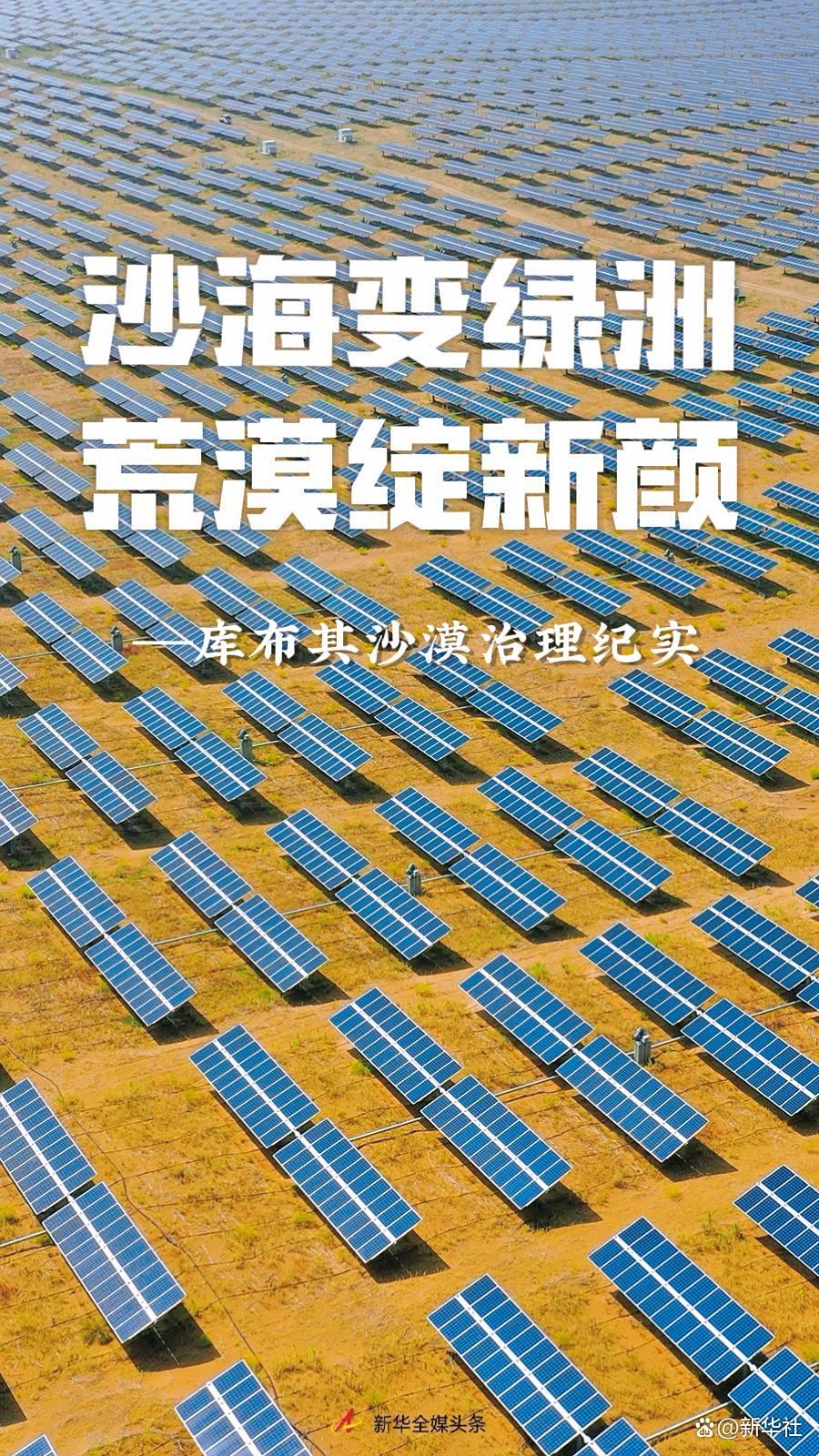
沙海变绿洲 荒漠绽新颜——库布其沙漠治理纪实
Xin Hua She· 2025-10-02 09:27
Core Viewpoint - The article highlights the significant achievements in desertification control in the Kubuqi Desert, showcasing China's successful practices in ecological restoration and sustainable development, contributing to both national and global environmental efforts [3][19][22]. Group 1: Desertification Control Achievements - The Kubuqi Desert has seen over 6,000 square kilometers transformed into green areas, with a notable reduction in sediment entering the Yellow River, marking a historic shift from "sand advancing and people retreating" to "green advancing and sand retreating" [3][12]. - The desert covers approximately 14,100 square kilometers, with a 420-kilometer protective forest and grass belt established to prevent desert encroachment towards the Yellow River [5][12]. - The ecological restoration efforts have led to a 40% governance rate of the Kubuqi Desert, with a significant reduction in soil erosion and sediment transport to the Yellow River, decreasing by approximately 300 million tons over the past decade [12][22]. Group 2: Innovative Approaches and Technologies - The integration of solar energy projects, referred to as the "photovoltaic wall," is being utilized alongside traditional desertification control methods, enhancing both ecological and economic benefits [5][13]. - Advanced machinery and technology, such as drones and robotic tree planters, have improved the efficiency of desertification control efforts by over five times, moving away from labor-intensive methods [25]. - The local governance model emphasizes a combination of road construction and ecological management, effectively segmenting the desert into manageable units for restoration [9][12]. Group 3: Economic and Social Impact - The ecological restoration initiatives have not only improved the environment but also stimulated local economies, providing employment opportunities for approximately 380,000 farmers and herders [13][19]. - The tourism sector has benefited from the ecological improvements, with over 2.2 million visitors to desert tourism sites in 2024, generating significant revenue [16][19]. - The local community's involvement in restoration projects has fostered a sense of ownership and economic empowerment, transforming the relationship between people and the desert [13][25]. Group 4: International Collaboration and Knowledge Sharing - The Kubuqi International Desert Forum has become a platform for sharing China's desertification control experiences with other countries facing similar challenges, promoting international cooperation [22][23]. - The forum has facilitated various bilateral and multilateral initiatives, including projects aimed at combating desertification in developing countries [22][23]. - China's commitment to fulfilling its obligations under international agreements on desertification prevention is evident, with ongoing support for technology and project implementation in other nations [23].