
环卫设备

Search documents
宇通重工股份有限公司2025年半年度报告摘要
Shang Hai Zheng Quan Bao· 2025-08-25 21:19
Core Viewpoint - The company has approved a profit distribution plan for the first half of 2025, proposing a cash dividend of 1.00 yuan per 10 shares, amounting to a total distribution of approximately 53.27 million yuan, which represents 44.88% of the net profit attributable to shareholders for the same period [3][19][18]. Company Overview - The company is focused on enhancing its operational quality by divesting from non-core businesses and concentrating on manufacturing sectors such as new energy sanitation equipment and mining equipment [5][6]. - As of the end of the reporting period, the company has undergone a change in its main business focus, now primarily engaging in sanitation equipment, mining equipment, and basic engineering machinery [6]. Financial Data - The company reported a total of 7,019.32 million yuan available for distribution as of June 30, 2025 [19]. - The total number of shares eligible for the dividend distribution is 532,734,346 shares after excluding restricted shares [19]. Important Events - The company has completed the transfer of 85% equity in its subsidiary, which will no longer be included in the consolidated financial statements, allowing for a more focused business strategy [6][5]. - The board of directors has approved the asset impairment provision totaling 26.39 million yuan for the first half of 2025, which will reduce the profit for the period by the same amount [25][27]. Profit Distribution Plan - The profit distribution plan was approved unanimously by the board, and it does not require further approval from the shareholders' meeting [20][21]. - The cash dividend will be distributed based on the total share capital as of the equity distribution registration date, with adjustments made if there are changes in the share capital before that date [18][19]. Asset Impairment - The company has recognized an asset impairment provision of 26.39 million yuan, which includes provisions for receivables and inventory [25][27]. - The impairment assessment was conducted in accordance with accounting standards and reflects the company's commitment to accurately represent its financial condition [25][26].

宇通重工: 2025年半年度报告摘要
Zheng Quan Zhi Xing· 2025-08-25 16:42
Group 1 - The company reported a total asset of approximately 4.24 billion yuan, a decrease of 9.73% compared to the previous year [4] - The net profit attributable to shareholders increased by 42.54% year-on-year, reaching approximately 118.70 million yuan [4] - The operating income for the period was approximately 1.66 billion yuan, reflecting a growth of 12.07% compared to the same period last year [4] Group 2 - The company plans to distribute a cash dividend of 1.00 yuan per 10 shares, which is inclusive of tax [2] - The company has undergone a significant change in its main business focus, shifting towards sanitation equipment, mining equipment, and basic engineering machinery after the transfer of shares in a subsidiary [9] - The company completed the transfer of 85% equity in a subsidiary to Chengfa Environment Co., Ltd. for a total consideration of approximately 476.97 million yuan [9]
西部证券:料无人环卫车具千亿市场空间 设备+运营双重受益
智通财经网· 2025-08-22 05:40
Group 1 - The total amount of contracts for unmanned sanitation projects in the first half of 2025 has reached 7 billion yuan, exceeding the total for the entire year of 2024, indicating strong market growth [1][3] - The market potential for unmanned sanitation vehicles in China is estimated to reach 100 billion yuan, driven by the transition from pilot projects to broader applications in urban areas [1][3] - The unmanned sanitation vehicle market is primarily focused on low-speed unmanned vehicles, addressing issues such as the aging workforce and rising labor costs in sanitation [1][3] Group 2 - The economic analysis shows that a single unmanned sanitation vehicle can replace 3 to 4 workers, leading to labor cost savings of approximately 120,000 to 160,000 yuan [2] - The cost of a single unmanned sanitation vehicle ranges from 200,000 to 300,000 yuan, with a lifespan of 4 to 5 years, making it economically viable under various scenarios [2] - Under different assumptions, the market space for unmanned sanitation vehicles could range from 1,164 billion to 2,910 billion yuan, depending on the replacement rate of sanitation workers [3] Group 3 - The core barrier to entry in the unmanned sanitation industry is the combination of equipment and operational capabilities, which enhances profit elasticity significantly [4][5] - The profit elasticity for unmanned sanitation projects can reach up to 172% based on different replacement rates of traditional labor [5] - The industry is expected to benefit from government policies aimed at improving cash flow and reducing accounts receivable turnover, which have been historically low [4]

无人车系列专题报告1:无人环卫车:千亿市场空间,设备+运营双重受益
Western Securities· 2025-08-22 05:24
Investment Rating - The industry rating is "Overweight" and has been maintained from the previous rating [6] Core Insights - The report highlights that the unmanned sanitation vehicle sector addresses the aging workforce and rising labor costs in the sanitation industry [4] - The total bidding amount for unmanned sanitation projects in the first half of 2025 has already exceeded the total for the entire year of 2024, indicating a market potential reaching hundreds of billions [5][34] - The report estimates that the market space for unmanned sanitation vehicles could reach up to 1 trillion yuan, with various scenarios predicting market sizes of 1164 billion, 1746 billion, and 2910 billion yuan based on different labor replacement ratios [10][39] Summary by Sections Market Overview - The unmanned sanitation vehicle is a key segment in the low-speed unmanned vehicle market, primarily focusing on cleaning public spaces using advanced sensors and algorithms [10] - In 2024, the sales scale of the low-speed unmanned driving industry in China is projected to be approximately 12.3 billion yuan, with the unmanned cleaning market holding the largest share [10] Economic Analysis - The report calculates significant cost savings from using unmanned sanitation vehicles, estimating a reduction of 25% to 66% in labor costs depending on the vehicle's cost and the number of workers replaced [30][32] Industry Trends - The report notes a rapid increase in the number of projects awarded in the unmanned sanitation sector, with 70 billion yuan in contracts awarded in the first half of 2025, surpassing the total for 2024 [34] - The technology reliability of unmanned sanitation equipment has been validated, with vehicles designed to operate safely and efficiently in various environments [34] Competitive Landscape - The industry is characterized by collaboration between technology companies and sanitation service providers, with a focus on integrating unmanned vehicles into operational scenarios to enhance profitability [46] - The report identifies key players in the market, including companies like Jinjun Environment, Yuhua Tian, and Fulongma, which are actively developing and deploying unmanned sanitation solutions [55][66][74] Investment Recommendations - The report suggests that as the unmanned sanitation sector transitions from the initial phase to mass production, companies in this field are expected to experience significant growth in both equipment sales and operational profitability [82]
小吨位环卫无人设备经济性渐近,订单呈散点放量趋势
2025-08-12 15:05
Summary of the Conference Call on the Sanitation Industry Industry Overview - The sanitation industry is facing challenges such as aging workforce and rising labor costs, making automation technology a pressing need for long-term development. The market size for sanitation equipment is expected to reach 200 billion yuan [1][5][15]. Key Insights and Arguments - In the first half of 2025, the number of projects applying for unmanned sanitation equipment exceeded 90, doubling from 2024, with an expected industry growth rate of 130% for the year, primarily driven by policy support [1][6]. - Unmanned technology significantly enhances corporate performance, with some companies experiencing performance elasticity exceeding 70%. Beneficiaries include companies like Fulongma, Jinjing Environment, Qiaoyin Co., and Yuhua Tian [1][7]. - Small-tonnage intelligent sanitation equipment (under 3 tons) is suitable for closed or semi-closed environments, capable of replacing 2-3 workers. Initial pricing at 300,000 yuan can achieve economic parity in 3-4 years, while a reduction to 200,000 yuan accelerates this to 2-3 years [1][13]. - Large-tonnage L4 unmanned sanitation vehicles (over 6 tons) are designed for open municipal roads, with initial costs around 1 million yuan. Economic viability is not apparent in the short term and requires a price drop to around 600,000 yuan to achieve economic parity in 2-3 years [1][13]. Market Potential - The current operational ratio of unmanned equipment is estimated at 20%, with the small equipment market space around 57.5 billion yuan and large equipment around 76.1 billion yuan, totaling over 100 billion yuan. In a neutral optimistic scenario, the market could reach 200-250 billion yuan [1][15]. - The sanitation unmanned equipment market is expected to approach 10 billion yuan by 2025, with major players including Fulongma, Jingyu, Qiaoyin, Yuhua Tian, Yufeng, and Yutong [2][15]. Current Application Status - By 2024, 82 projects were mandated to apply unmanned sanitation equipment, with over 90 projects in the first half of 2025, indicating a doubling growth rate. Key cities like Guangzhou and Shenzhen have policies requiring smart equipment in environmental service contracts [6][9]. Economic Impact on Companies - The introduction of small-tonnage unmanned equipment significantly impacts operational profitability. For instance, Fulongma shows a 177% elasticity in operational profit contribution, followed by Yuhua Tian at 85% and Qiaoyin at 72% [19]. Development Trends - The sanitation industry is undergoing a necessary upgrade from electrification to automation and unmanned technology. The aging workforce and rising labor costs necessitate this shift, with policies driving the adoption of unmanned orders [8][25]. - The market space is substantial, and the industry is at a critical juncture for adopting unmanned technology, with significant policy support from major cities [15][25]. Company Progress - Companies like Yinfeng Environment and Yutong Heavy Industry have made significant advancements in unmanned sanitation technology, with product launches and pilot applications in major cities [17][18]. Conclusion - The sanitation unmanned equipment market is poised for significant growth, driven by policy support and technological advancements. Companies that adapt to this trend are likely to benefit from enhanced operational efficiency and reduced costs, making it a crucial area for investment and development in the coming years [27].


上海净赟环卫设备有限公司成立 注册资本100万人民币
Sou Hu Cai Jing· 2025-08-11 21:13
Core Insights - Shanghai Jingyun Environmental Sanitation Equipment Co., Ltd. has been established with a registered capital of 1 million RMB, indicating a focus on environmental protection and sanitation equipment [1] Company Overview - The company is led by legal representative Xu Qingsong and operates in various sectors including sales of environmental protection equipment, new energy vehicles, and mechanical parts [1] - The business scope includes a wide range of products such as solar thermal power equipment, photovoltaic devices, and various metal and rubber products [1] Industry Implications - The establishment of this company reflects a growing trend in the market towards environmental protection and renewable energy solutions, aligning with global sustainability goals [1] - The diverse range of services offered, including technical services and urban management, suggests potential for significant market engagement and revenue generation [1]
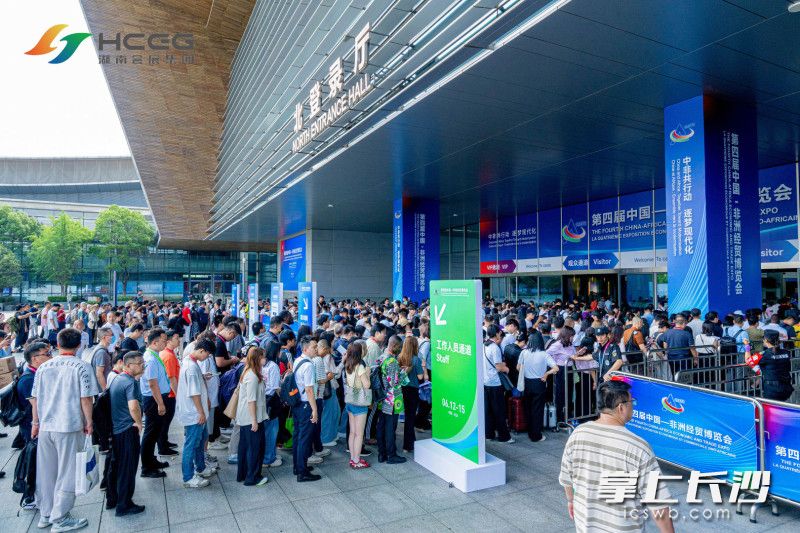
打卡热洽谈忙!中非经贸博览会人气爆棚
Chang Sha Wan Bao· 2025-06-14 09:56
Group 1 - The fourth China-Africa Economic and Trade Expo is currently ongoing, showcasing a variety of African products and Chinese advanced technologies, attracting significant public interest and participation [1][3][9] - Over 800 types of African products are displayed, including unique items such as Namibian chili sauce, Kenyan flowers, and South African red wine, appealing to local visitors [7][9] - The event has seen a 43.8% increase in signed projects compared to the previous edition, with 279 projects collected and an expected 175 cooperation projects worth $11.39 billion [11] Group 2 - African merchants are particularly interested in Chinese agricultural machinery and technology, which are tailored to meet the needs of African agriculture, enhancing efficiency and labor productivity [9][11] - Environmental protection technologies are also a focus, with companies like Yingfeng Environment showcasing equipment that meets the demands of the African market, leading to discussions on urban environmental improvement projects [11]

新装备减轻垃圾收运扰民
Jie Fang Ri Bao· 2025-06-09 01:53
Core Viewpoint - The article discusses the challenges and solutions related to noise pollution caused by garbage collection in Shanghai, highlighting the need for innovative technologies and practices to address these issues. Group 1: Noise Reduction Solutions - A 12-ton "shortened version" garbage truck has been developed, which is more efficient for urban operations due to its smaller turning radius of 6 meters compared to traditional trucks that require over 8 meters [2] - The new garbage truck is equipped with a battery from CATL, allowing for quiet operation and a cost-effective running expense of less than 1 yuan per kilometer, which is one-sixth of the cost of diesel trucks [2] - Noise issues during garbage collection arise from both the vehicle's operation and the loading/unloading processes, necessitating improvements in design to minimize mechanical noise [2][3] Group 2: Industry Consensus and Requirements - The sanitation equipment industry recognizes that to operate garbage trucks in Shanghai, they must meet requirements for new energy sources, operational efficiency, noise reduction, and prevention of leakage [3] - Companies are implementing measures such as installing anti-collision strips and improving hydraulic components to reduce noise during loading and unloading [3] Group 3: Cost and Adoption of New Energy Vehicles - The "14th Five-Year Plan" for Shanghai mandates that new or updated sanitation vehicles for waste collection and street cleaning must primarily be electric or fuel cell vehicles [4] - Currently, over 1,500 new energy sanitation vehicles are in operation, contributing to a reduction of 17,500 tons of CO2 emissions annually [4] - The adoption of new energy vehicles is hindered by high costs, as electric vehicles can cost more than double that of traditional diesel vehicles, despite some government incentives [5] Group 4: Infrastructure Challenges - Many sanitation companies lack fixed parking spaces for new energy vehicles, complicating the installation of charging stations [6] - A mobile charging vehicle has been introduced to address the charging difficulties, capable of charging electric vehicles quickly and efficiently [6] - The local government is actively working on plans to enhance parking and charging infrastructure to support the operational needs of new energy sanitation vehicles [6]
安徽省第二批氢能环卫车交付运营
势银能链· 2025-06-05 03:50
Core Viewpoint - The article highlights the successful delivery and operation of hydrogen-powered sanitation vehicles in Liu'an City, Anhui Province, showcasing advancements in hydrogen energy applications and their environmental benefits [3][5][9]. Group 1: Hydrogen Vehicle Delivery - The second batch of hydrogen sanitation vehicles was officially delivered for operation in Liu'an City, marking a significant step in the local hydrogen energy industry [3]. - The vehicles are developed in collaboration between Mingtian Hydrogen Energy and Fulongma Group, focusing on creating practical applications for hydrogen energy in sanitation [5]. Group 2: Vehicle Specifications and Performance - The delivered vehicles are 18-ton hydrogen-powered sanitation sweepers equipped with a self-developed 101kW high-performance fuel cell system, capable of quick starts in temperatures as low as -30°C and a single range exceeding 400 kilometers [7]. - The vehicles feature a three-mode collaborative operation for sweeping, washing, and suction, with a maximum cleaning capacity of 70,000 square meters per hour and a cleanliness rate of over 95% [7]. Group 3: Environmental Impact and Efficiency - Since the launch of the first hydrogen sanitation demonstration application in April 2023, the vehicles have accumulated over 40,000 kilometers of operation, resulting in a carbon reduction of over 100 tons, equivalent to planting 100 acres of forest [9]. - The energy conversion efficiency of these hydrogen vehicles reaches 60%, significantly outperforming traditional fuel and electric sanitation vehicles, especially in low-temperature conditions [9].

收评:沪指震荡微跌0.02% 新消费概念股逆势大涨
Xin Hua Cai Jing· 2025-05-28 07:36
Market Overview - The A-share market experienced fluctuations with the Shanghai Composite Index closing at 3339.93 points, down 0.02%, and total trading volume reaching 389.3 billion yuan [1] - The Shenzhen Component Index closed at 10003.27 points, down 0.26%, with a trading volume of 691.1 billion yuan, while the ChiNext Index ended at 1985.38 points, also down 0.26%, with a trading volume of 272.2 billion yuan [1] Sector Performance - Beverage manufacturing, controllable nuclear fusion, waste classification, and deep-sea technology sectors saw significant gains, while e-commerce, chemical raw materials, CRO, and paper-making sectors faced declines [1] - New consumption stocks surged, particularly in the beverage and IP economy sectors, with several stocks hitting the daily limit [2] Institutional Insights - Market analysts noted a frequent shift in market style, with positive domestic policy signals indicating long-term value recognition in the market [3] - Investment recommendations include focusing on high-growth sectors such as semiconductors, consumer electronics, artificial intelligence, and robotics [3] - The food and beverage industry is expected to perform well amid supportive policies and steady retail sales growth, with three main investment lines suggested: large-cap value reassessment, new consumption leaders, and companies benefiting from cost reductions and efficiency improvements [3] Company-Specific News - BYD addressed rumors regarding a dealer's financial troubles, clarifying that the issues stemmed from the dealer's aggressive expansion and leverage, not from BYD's policies [4] - The company is providing support to the dealer group to manage customer and employee-related issues [4] Market Forecast - The enterprise solid-state drive market in China is projected to reach $6.25 billion in 2024, reflecting a year-on-year growth of 187.9% [5] - By 2029, the market size is expected to grow to $9.1 billion, with Solidigm and Samsung holding the largest market shares [5] Industry Commentary - The chairman of Changan Automobile expressed concerns about risks in the automotive industry, emphasizing the need for better risk management and a return to healthy competition within two years [6][7]
