运动相机

Search documents
双周报 | 2026年第1-2周中国运动相机(含全景、可穿戴系列)线上零售市场品牌销量排行榜
Xin Lang Cai Jing· 2026-01-24 06:18
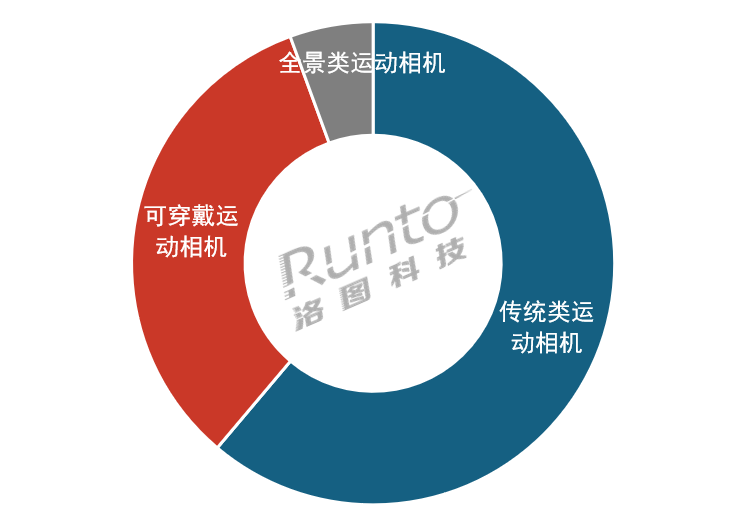
Core Insights - The outdoor adventure trend and diverse content creation scenarios have made action cameras essential for outdoor enthusiasts and content creators, with companies like RUNTO defining these cameras as devices that offer strong stabilization, high protection, and compact, wearable features [1] Product Form Factors - Action cameras are categorized into three main types: traditional action cameras, panoramic action cameras, and wearable action cameras. Traditional action cameras focus on outdoor sports with waterproof and anti-shake features, represented by DJI's Osmo Action series and Insta360's Ace Pro series. Panoramic cameras provide 360-degree shooting capabilities, while wearable cameras are designed for diverse wearing needs [2] - In the first two weeks of 2026, traditional action cameras accounted for 61.1% of sales, wearable action cameras for 33.3%, and panoramic action cameras for 5.6% [2] Brand Landscape - The action camera industry has high barriers to entry due to technology, brand, channel, cost, and intellectual property, resulting in a concentrated competitive landscape. The market below 300 yuan is dominated by entry-level products and white-label manufacturers, lacking the core experience of mainstream brands [5] - In the first two weeks of 2026, DJI and Insta360 together held 84.6% of the market share, with DJI accounting for 70.8% of sales revenue and Insta360 at 24.9% [6] - DJI led in all three product categories, with a 71.8% market share in traditional action cameras, 52.2% in wearable cameras, and 53.6% in panoramic cameras [6] Best-Selling Products - The top three products in the traditional action camera market were DJI's Osmo Action 4, 5, and 6 series. In the wearable action camera market, DJI's Osmo Nano was dominant, while Insta360's GO series held two spots. For panoramic cameras, DJI's Osmo 360 captured a significant market share [10] - Overall, the action camera market is still developing but is driven by AI integration, professional scene innovation, and personal creative expression, indicating a growing market potential [10] Market Tracking - To provide timely insights into market dynamics, RUNTO will regularly publish a bi-weekly report on the online retail market for action cameras, offering detailed analysis of competitive trends [11]

歌手与知名品牌合作推出联名款,销量火爆
Sou Hu Cai Jing· 2026-01-20 05:22
2025年,中国消费市场迎来新一轮"音乐+商业"的跨界狂欢。从新茶饮到智能硬件,从潮流服饰到动画IP,知名歌手与品牌的联 名合作正以惊人的市场号召力重塑商业格局。据不完全统计,仅2025年上半年,周杰伦、谢帝、蔡依林等歌手主导的联名项目 已创造超15亿元销售额,印证了音乐IP在年轻消费群体中的核心价值。 音乐IP赋能,联名款成"流量收割机" 2025年6月,说唱歌手谢帝主理的潮流品牌Couple Hunnid入驻得物App,首发200余款单品并推出联名系列。品牌通过"谢帝亲签 贴纸""99元盲盒"等互动玩法,首日即吸引超10万用户参与,其中限量盲盒8分钟售罄,带动得物平台潮流服饰类目单日GMV突 破2亿元。这一案例揭示,歌手个人影响力与品牌调性的深度契合,可快速激活圈层消费潜力。 歌手联名款成消费市场新引擎 音乐IP与商业品牌碰撞出亿级销售火花 在科技领域,歌手联名正推动产品功能与情感价值的双重升级。2025年7月,影石创新发布与摩托车手马克·马奎斯联名的Ace Pro2运动相机,针对骑行场景优化防抖算法,并植入马奎斯经典比赛音效作为开机提示音。该产品618期间总GMV同比增长 160%,其中骑行社群用户贡献 ...

2025年运动相机市场爆发:大疆领跑,消费热潮重塑行业格局
Xin Lang Cai Jing· 2026-01-08 01:30
Core Insights - The sports camera market is expected to experience significant growth in 2025, with consumer interest continuing to rise [2][3] - Sales of sports cameras on traditional e-commerce platforms increased by 100% year-on-year from January to October, indicating a shift from niche to mainstream consumer products [2][3] Market Dynamics - DJI holds over 50% market share, leading the sales rankings significantly, with its sales accounting for more than 60% of total revenue [2][3] - Other brands in the ranking include Innosilicon in second place, followed by Suying in third, Shandog in fourth, and GoPro in fifth [2][3] Usage Trends - The market is evolving as the use cases for sports cameras expand from extreme sports to everyday life recording and short video shooting [2][3] - Continuous improvements in portability and image quality are enhancing the purchasing willingness of ordinary consumers [2][3] Competitive Landscape - DJI's dominant position is supported by its long-term technological accumulation and a well-established ecosystem [2][3] - While brands like Innosilicon are gradually enhancing their competitiveness through product innovation, DJI's market leadership is expected to remain stable in the foreseeable future [2][3]
以数据见证专业:QYResearch行业数据引用案例精选(2025.12)
QYResearch· 2025-12-31 09:24
Group 1 - QYResearch is recognized for its authoritative industry analysis and customized reports, frequently cited by well-known domestic and international companies, securities firms, and media [1] - The global magnesium and magnesium alloy market is projected to reach $2.48 billion by 2030, with die-casting magnesium alloys accounting for over 77% of the market share [3] - The global rigging and webbing slings market is expected to reach $2.711 billion in sales by 2024, with a projected CAGR of 5.8% from 2025 to 2031, reaching $4.023 billion by 2031 [7] Group 2 - The global wireless lavalier microphone market is anticipated to reach $2.299 billion by 2030, with a CAGR of 6.94% from 2024 to 2030 [10] - The global laser cleaning machine market is expected to grow to $720 million by 2030, maintaining a CAGR of 12.2% [11] - The global desktop robot market is currently valued in the millions, with significant growth expected [12] Group 3 - The drone industry in China is projected to exceed 210 billion yuan by mid-2025, with a year-on-year growth of 39.5% [14] - The global insulin pen needle market is expected to see sales of 662 million, 753 million, and 1.175 billion units from 2022 to 2024, with market shares of 7.52%, 7.98%, and 11.78% respectively [15] - The global capacitive pen market is expected to have a market share of approximately 8.5% in 2024, ranking just behind Apple [17] Group 4 - The global maltitol market is projected to grow from $255 million in 2024 to $396 million by 2031, with a CAGR of 6.6% [22] - The global metal cutting tools market is expected to reach $43.3 billion by 2029, with China's market size reaching 53.8 billion yuan in 2023, a year-on-year growth of 5.12% [25] - The global zirconium oxychloride market is projected to reach $750 million by 2030 [26] Group 5 - The global 5G L-PAMiF module market is expected to grow from $1.633 billion in 2024 to $2.753 billion by 2031, with a CAGR of 7.3% [27] - The global hotel cleaning services market is expected to grow significantly, with small and medium enterprises facing pressure from rising costs [29] - The global laminated insulating film market is projected to grow from $471 million in 2023 to $685 million by 2029, with a CAGR of 6.5% [31] Group 6 - The global plant extract market is expected to grow from $42.245 billion in 2024 to $79.449 billion by 2031, with a CAGR of 9.24% [33] - The global household water purifier market is projected to reach $40.49 billion by 2031, with a CAGR of 6.4% [55] - The global blood products market is expected to reach $50.8 billion by 2030, with a CAGR of 7.6% from 2024 to 2030 [56]
两天卖出3000多万 供应商遭“排他”压力
Nan Fang Du Shi Bao· 2025-12-09 23:14
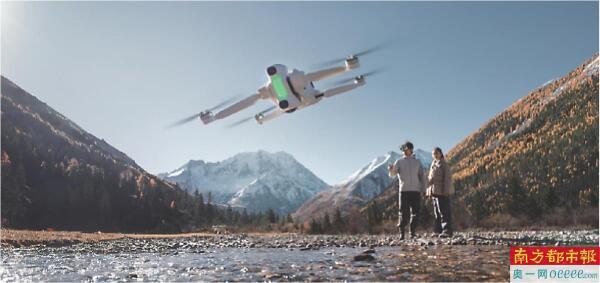
Core Viewpoint - The company Insta360's first panoramic drone, Yingshi A1, faced significant negative publicity shortly after its launch, leading to claims of poor sales performance, which the CEO Liu Jingkang refuted by providing sales data indicating strong initial performance in the Chinese market [2][3] Sales Performance - The Yingshi A1 achieved over 30 million yuan in sales within 48 hours of its release in China, showcasing its market potential against established competitors [3][4] - The company's average daily sales in the handheld imaging business exceeded 24 million yuan in the third quarter, indicating a strong growth trajectory for the new drone [3][4] Supply Chain Challenges - The company faced external pressures from suppliers, with seven optical lens module suppliers, eight structural component suppliers, and others experiencing "exclusion" pressures simultaneously [4] - The company has proactively developed a secondary supply chain to mitigate risks and has successfully restructured its supply chain under tight timelines, ensuring product availability [4] Competitive Landscape - The competition between DJI and Insta360 has intensified, with DJI quickly responding to the launch of the Yingshi A1, indicating a strong competitive awareness [5] - DJI's potential to leverage its supply chain and cost advantages for low-price competition could significantly impact Insta360's valuation and market position [5] - The ongoing competition reflects a shift in the Shenzhen hardware industry from a single dominant player to a multi-competitive landscape, with both companies expanding their product lines and exploring new market segments [5]
销量遇冷?影石CEO发内部信:遭舆论攻击
Nan Fang Du Shi Bao· 2025-12-09 07:19
Core Insights - The internal letter from Liu Jingkang, CEO of Insta360, addresses the negative publicity surrounding the launch of the company's first panoramic drone, the Yingling A1, and highlights its initial sales success despite claims of poor performance [3][4][5] Sales Performance - The Yingling A1 achieved over 30 million yuan in sales within 48 hours of its launch in China, indicating strong market potential [3][4] - The average daily sales for the company's handheld imaging business exceeded 24 million yuan in the first three quarters, showcasing the potential of the Yingling A1 to contribute to new growth [4][5] Competitive Landscape - The competition between DJI and Insta360 has intensified, particularly with the launch of the Yingling A1, as DJI has quickly organized research and development efforts in response [7][9] - DJI's established supply chain and cost advantages may pose a threat to Insta360's valuation if it engages in price competition in the panoramic drone market [7][9] Supply Chain Challenges - Insta360 faced external pressures from suppliers, with multiple key suppliers experiencing "exclusive" pressure around the time of the Yingling A1's launch [5][6] - The company has proactively developed a secondary supply chain to mitigate risks and maintain control over its supply chain structure [5][6] Industry Dynamics - The competition between DJI and Insta360 reflects a shift in the Shenzhen hardware industry from a "single leader" to a "multi-point competition" model, with both companies expanding their product lines and exploring new market segments [9][8] - The ongoing rivalry is expected to persist, with both companies likely to continue innovating and expanding their product offerings in the imaging and drone sectors [9][8]

“特色园区筑巢引凤,赋能细分产业崛起”深圳宝安护航企业逆袭!
2 1 Shi Ji Jing Ji Bao Dao· 2025-12-08 03:54
Core Insights - The article highlights the transformation of Shenzhen's Bao'an industrial parks from outdated facilities to modern industrial clusters, showcasing successful stories of park transformation, enterprise growth, and government-enterprise collaboration. Group 1: Transformation of New Qiao East Advanced Manufacturing Park - The New Qiao East Advanced Manufacturing Park represents a significant urban renewal project, transitioning from a "rust belt" to a "smart manufacturing hub" [1] - The area previously had low-rise factories and a total output value of approximately 9 billion, which was insufficient for new industrialization needs [1] - The project commenced in 2020 and utilized an innovative model of "government-led + state-owned enterprise implementation + community participation," completing the implementation phase in just 2 years, significantly shorter than similar projects [1] Group 2: Industrialization Beginnings - Bao'an's industrialization began with the establishment of the first "three supplies and one compensation" enterprise in 1978, marking the start of the industrialization 1.0 era [3] - Early industrial parks were characterized by single or low-rise factories, leading to issues such as land scarcity and pollution, but they laid the foundation for future upgrades and optimization [3] Group 3: Nurturing Niche Industries - Bao'an's specialized parks are fostering leading enterprises in niche sectors, such as the Fuyong e-Creative City, which focuses on cross-border e-commerce and has established a talent training base [4] - The Qianhai Kexing Science Park attracts digital entertainment companies with long-term rental discounts, contributing to the growth of the digital entertainment industry cluster [4] - Innovative industrial housing in Bao'an offers significant rental discounts, enabling high-quality enterprises to establish themselves in the region [4] Group 4: Support for Startups - Bao'an has established 13 "worry-free spaces" for startups, providing over 16,000 square meters of space and offering rent-free periods of 3 to 12 months for companies in AI and robotics [5] - These parks provide comprehensive lifecycle services, including one-on-one guidance for intellectual property protection and connections to investment and banking resources [5] - In 2023, Bao'an's "three ones" enterprise service mechanism addressed over 8,000 enterprise requests, achieving a completion rate of 99.4% and facilitating over 65 billion in financing for numerous startups [5]
影石发布无人机新品,与大疆全面开打!CEO刘靖康:最大的幸运和不幸都是赛道上有大疆
Sou Hu Cai Jing· 2025-12-04 13:57
Core Viewpoint - The launch of the Antigravity A1, the world's first 8K panoramic drone by Yingstone Innovation, signifies a competitive escalation between Yingstone and DJI in the panoramic camera and drone markets [1][3]. Group 1: Product Launch and Features - Yingstone Innovation held a launch event for its first product, the Antigravity A1, which is the world's first 8K panoramic drone [1]. - The Antigravity A1 is available in three configurations: standard version, standard endurance with three batteries, and long endurance with three batteries, with the standard package priced at 6,799 yuan [1]. - The drone weighs 249 grams, complying with simplified flight regulations in most regions, and has a standard battery life of approximately 24 minutes, extendable to about 39 minutes with a long endurance battery [1]. Group 2: Competitive Landscape - The competition between Yingstone and DJI has intensified this year, with both companies actively engaging in product line confrontations [3]. - In November, a dispute over an exclusive agreement led to the removal of a sign at a Yingstone authorized experience store, highlighting the rivalry in ground channels [3]. - DJI initiated a large-scale price reduction campaign in October, marking the first price drop for its Osmo Pocket 3 since its launch, prompting Yingstone to respond with a 100 yuan voucher for customers who purchased DJI products during a specific period [3]. Group 3: Pricing Strategies - Currently, DJI's first panoramic camera, the Osmo 360, is priced around 2,700 yuan, which is over 200 yuan cheaper than Yingstone's flagship panoramic camera, the Insta 360 X5 [4]. - In response to DJI's pricing strategy, Yingstone is countering with the launch of its 8K panoramic drone, while reports suggest DJI is planning to integrate the Osmo 360 with its drones to create a new panoramic drone product expected to be released by the end of the year [4]. Group 4: Company Perspectives - Yingstone's CEO, Liu Jingkang, acknowledges the competitive pressure from DJI, stating that while it poses challenges, it also drives innovation within the industry [5]. - Liu expressed that the decision to enter the drone market five years ago was made with the anticipation of stimulating competitors to enhance their panoramic camera offerings [5].
大疆入局 3D打印行业“硝烟”再起
Nan Fang Du Shi Bao· 2025-11-23 23:11
Core Viewpoint - DJI's investment in a 3D printing company, Shenzhen Smart派科技有限公司, is perceived as a strategic move that may threaten its former employee,拓竹科技, indicating a competitive shift in the 3D printing industry [2][3]. Company Overview -拓竹科技, founded in 2020, has rapidly become a leader in the global consumer 3D printing market within five years [2]. - The core team of拓竹科技 consists of former DJI employees, including founder陶冶, who previously managed DJI's Mavic product line [3]. Investment and Competition - DJI's investment in Smart派科技 is based on its belief in the growth potential of consumer-grade 3D printing technology [2]. - The competitive landscape is evolving, with DJI and影石Insta360 intensifying their rivalry in the hardware sector, particularly in the 3D printing and imaging device markets [5][6]. Industry Dynamics - The competition among DJI,影石, and拓竹科技 reflects a broader trend in Shenzhen's hardware industry, transitioning from a single dominant player to a multi-competitive environment [6]. - Future competition will likely focus on supply chain efficiency, global channel capabilities, brand building, and organizational management rather than just product specifications and pricing [6].

瑞幸「上岸」背后:IDG的「赌局」与新面孔
3 6 Ke· 2025-11-20 12:08
Core Insights - Luckin Coffee reported Q3 2025 total revenue of 15.3 billion RMB (2.14 billion USD), a year-on-year increase of 50.2%, and a net profit of 1.28 billion RMB, marking a turnaround from losses [3][4] - The company's stock price reached 40.00 USD per share, a staggering increase of 2497.4% from its 2020 price of 1.54 USD [3] - CEO Guo Jinyi announced efforts to return to the US main board listing, although no specific timeline was provided [3][4] Company Recovery - Luckin Coffee has transformed from a company that faced severe penalties and was nearly declared dead in 2020 to becoming China's largest coffee chain with over 29,000 stores [4][8] - The company has expanded internationally, opening stores in Singapore, the US, and Malaysia, with projected annual revenue exceeding 50 billion RMB by 2025 [4][8] Role of Major Investors - Dazhong Capital played a crucial role in Luckin's recovery, leading debt restructuring and governance changes after becoming the controlling shareholder in January 2022 [4][6] - IDG Capital joined Dazhong Capital's buyer group during a critical acquisition of shares from Luckin's original founders, acquiring over 383 million shares [4][6] Investment Strategy - IDG Capital's investment in Luckin was seen as a significant gamble, as the firm is typically viewed as conservative [5][9] - The decision to invest was based on thorough due diligence, revealing that Luckin's sales remained stable despite the scandal, indicating genuine market demand [7][8] Market Potential - IDG Capital estimated that Luckin could expand to at least 20,000 stores, with a potential for 30,000, highlighting the scalability of its business model [8][9] - The investment reflects IDG's shift towards recognizing the long-term potential of consumer brands in China, moving beyond traditional financial metrics [14][18] Evolution of Investment Approach - IDG Capital's investment history shows a transition from focusing on global brand localization to embracing innovative consumer products and long-term investments [16][17] - The firm is now pursuing a strategy that includes acquisitions, aiming to take a more active role in managing consumer brands globally [17][18]