
邮政业

Search documents
甘肃兰州:敦煌主题邮局吸引市民
Xin Lang Cai Jing· 2026-01-24 12:26
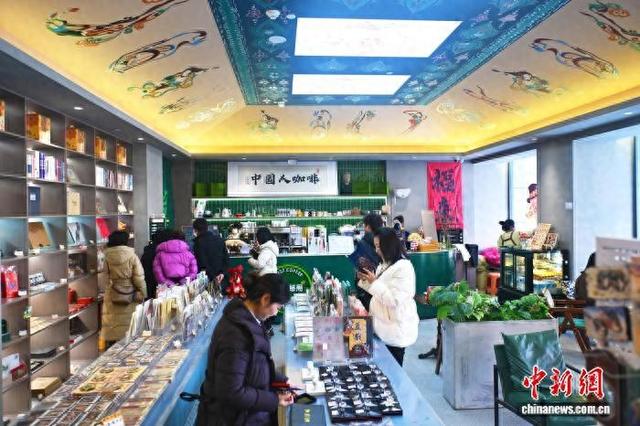
1月24日,在位于甘肃省兰州市一家敦煌主题邮局内,市民选购文创产品。敦煌主题邮局是以"邮文化 +敦煌壁画文化"为核心打造的特色邮政服务空间,集文化展示、文创销售、特色体验、咖啡轻食于一 体,通过将莫高窟壁画、飞天艺术等敦煌文化符号融入邮政服务,为游客和市民提供沉浸式的文化体 验。2026年,敦煌主题邮局还推出了一系列马文化元素的邮政类文创产品。中新社记者 李亚龙 摄 1月24日, 在位于甘肃省兰州市一家敦煌主题邮局内,市民选购文创产品。中新社记者 李亚龙 摄 1月24日,在位于甘肃省兰州市一家敦煌主题邮局内,市民挑选以莫高窟西魏第249窟《狩猎图》和莫高 窟西魏第285窟《五百强盗成佛》等局部图中马元素为灵感的马年邮票。中新社记者 李亚龙 摄 市民走进甘肃兰州一家敦煌主题邮局。中新社记者 李亚龙 摄 1月24日, 1月24日, 1月24日, 1月24日, 在位于甘肃省兰州市一家敦煌主题邮局内,市民享受邮政主题咖啡。中新社记者 李亚龙 摄 1月24日, 在位于甘肃省兰州市一家敦煌主题邮局内,工作人员协助市民收集敦煌主题纪念邮戳。中新社记者 李 亚龙 摄 在位于甘肃省兰州市一家敦煌主题邮局内,市民选购马年红包。中 ...

签售生肖邮票!邮政年货节有好“礼”
Xin Lang Cai Jing· 2026-01-17 10:33
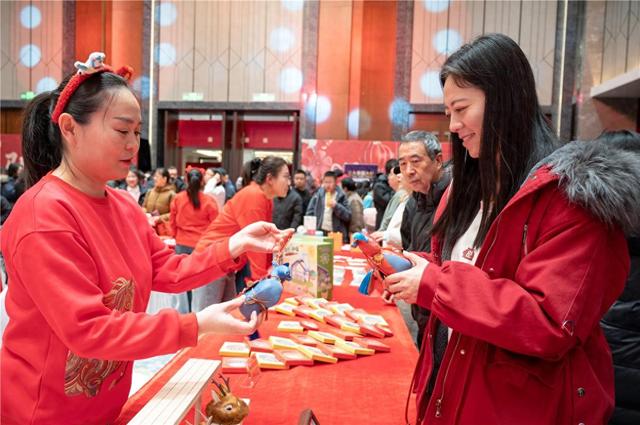
Group 1 - The event "Chiyue Hongtu Wanjun Zhenfu" organized by China Post Group's Hohhot branch featured a signing session with the designer of the special stamp for the Year of the Horse, attracting many citizens to purchase zodiac-themed stamp albums and various New Year goods [2] - The activity provided a centralized location for citizens to buy New Year gifts and appreciate the beauty of stamp albums, enhancing the cultural flavor of the Spring Festival through the combination of cultural creativity and traditional customs [2]
邮局变身“文创实验室” 北京南锣鼓巷潮流打卡地+1
Xin Lang Cai Jing· 2026-01-03 17:12
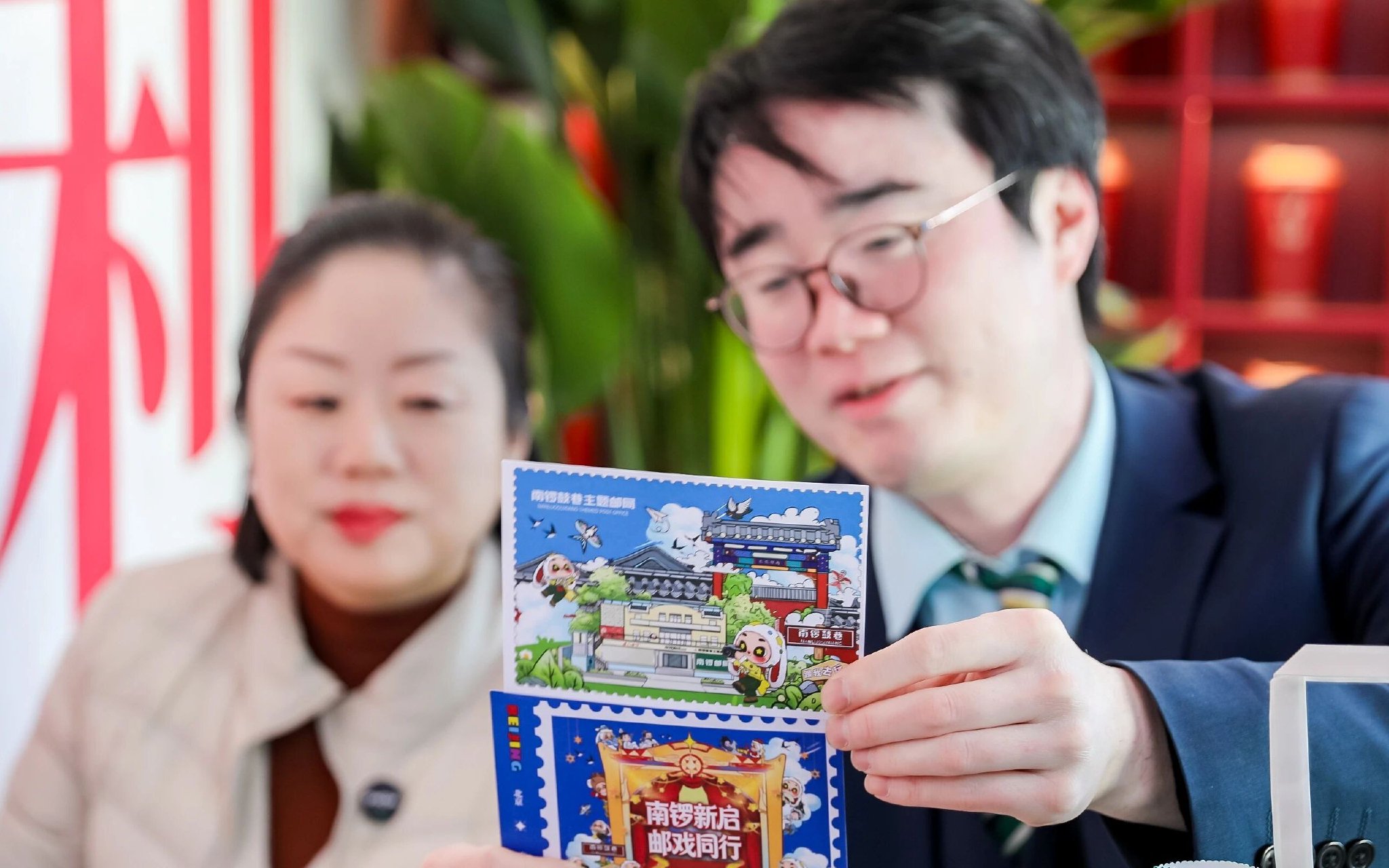
Core Insights - The Beijing Nanluoguxiang themed post office has officially opened, representing an upgrade from the previous "Nanluo Post Office" established in 2021, integrating postal services with local cultural elements [1][3] Group 1: Postal Services and Cultural Integration - The themed post office combines postal services with cultural experiences, breaking the traditional limitations of post office functions [3] - Visitors can engage in regular postal business while immersing themselves in a unique atmosphere that blends postal culture with local traditions [3] Group 2: Unique Offerings and Future Developments - The opening day featured the launch of an original IP character, "Victory Rabbit," enhancing the cultural space's appeal with a modern touch [3] - Future plans include collaboration with various cultural and tourism elements, such as Peking Space and the "Nanluo Beigu" cultural complex, to create a diverse space that injects new consumer vitality into the area [3] - The post office will also introduce unique dining options and themed cultural products, allowing visitors to experience authentic local flavors while enjoying postal culture [3]
邮政集团:芦苇任副总经理、党组成员,免去刘建军的副总经理、党组成员职务
Xin Lang Cai Jing· 2025-12-23 11:00
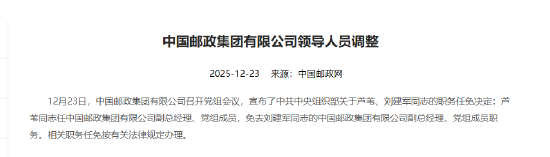
12月23日金融一线消息,邮政集团官网今日发布公告称,中国邮政集团有限公司召开党组会议,宣布了 中共中央组织部关于芦苇、刘建军同志的职务任免决定:芦苇同志任中国邮政集团有限公司副总经理、 党组成员,免去刘建军同志的中国邮政集团有限公司副总经理、党组成员职务。相关职务任免按有关法 律规定办理。 责任编辑:王馨茹 12月23日金融一线消息,邮政集团官网今日发布公告称,中国邮政集团有限公司召开党组会议,宣布了 中共中央组织部关于芦苇、刘建军同志的职务任免决定:芦苇同志任中国邮政集团有限公司副总经理、 党组成员,免去刘建军同志的中国邮政集团有限公司副总经理、党组成员职务。相关职务任免按有关法 律规定办理。 责任编辑:王馨茹 ...
培训调解员“指尖化解”纠纷
Xin Lang Cai Jing· 2025-12-21 21:43
Core Viewpoint - The Daxing'anling Intermediate People's Court is implementing a "Multi-Dispute Resolution Station" to enhance mediation skills and improve efficiency in resolving disputes through technology and collaboration with local entities [1] Group 1: Training and Techniques - A specialized training for mediators was conducted, focusing on mediation techniques and the application of the "Longfahe" mini-program [1] - The training included simulated scenarios such as border tourism and neighbor disputes to enhance communication skills among mediators [1] Group 2: Technological Integration - The "Multi-Dispute Resolution Station" utilizes "Longfahe" cloud court technology and is supported by dedicated guides to simplify processes and improve efficiency [1] - The initiative aims to reduce the need for citizens to travel for dispute resolution by enabling online mediation and judicial guidance [1] Group 3: Collaborative Efforts - The project is a collaboration between the Daxing'anling Intermediate Court, the Border Management Brigade, and the Postal Company, leveraging 39 postal outlets in border villages for pilot promotion [1] - Future plans include deepening cooperation among the three parties to optimize resource integration and information sharing for better dispute resolution services for border residents [1]
海南邮政推出微电影《一路上“邮”你》
Hai Nan Ri Bao· 2025-12-19 23:43
海南日报讯(海报集团全媒体记者 敖坤 通讯员 黄文燕)12月18日,海南自贸港正式启动全岛封关。 在这个特殊的日子,中国邮政集团有限公司海南省分公司(以下简称海南邮政)推出微电影《一路 上"邮"你》,用四个鲜活的场景展现了海南邮政服务国家战略、赋能海南发展的生动故事。 截至12月18日晚,中国邮政视频号、中国邮政微信公众号以及海南日报、法治时报、南海网等媒体 均发布了该片,网友们纷纷在后台留言"每一个脚印都深入这片海岛的每一个角落,每一抹绿色都出现 在海岛不同时代的关键节点……""封关之日,'邮'你真好"。 微电影分别以"解放战报""南繁电报""特区喜报""封关捷报"四个片段,展示了海南解放75年来海南 邮政(邮电)寄信、发电报、汇款、发行邮票、寄送免税品、录取通知书等多业态,展示了历代邮递员从 自行车、汽车、火车、轮船、飞机到今天无人车筚路蓝缕、风雨兼程的历程。 影片最后把时间拉回了2025年海南自贸港启动封关前夕,一群年轻人聚集在寓意海南自贸港封关的 打卡点前一起高喊"海南自贸港封关啦"。新发行的《海南自由贸易港》特种邮票与历史老邮票相映成 趣,凸显邮政"捷报传递,虽远必至"的使命。 据介绍,截至2025 ...
以“节”促“消” 山西300余款特色商品通过邮政年货节走向全国
Sou Hu Cai Jing· 2025-12-10 22:44
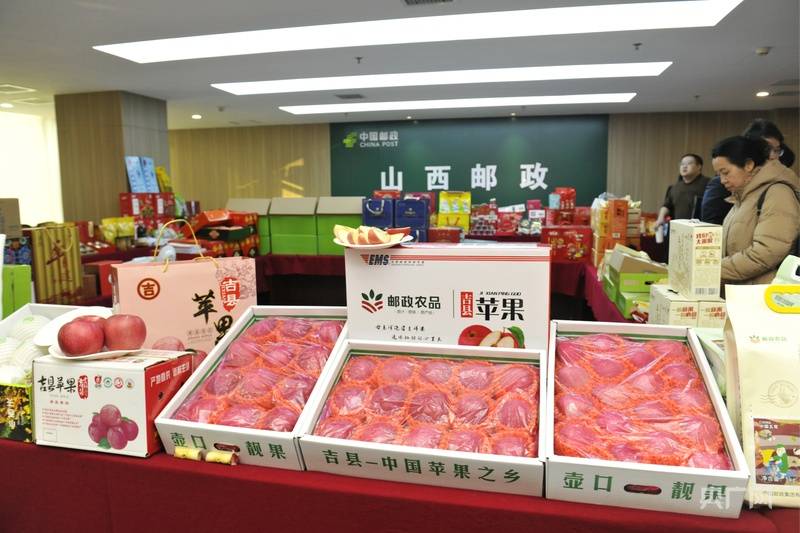
Group 1 - The 2026 "Postal New Year Goods Festival" marketing event has officially launched, featuring nearly 50 manufacturers showcasing various specialty products from Shanxi Province and beyond [1] - The event focuses on four major market demands: outlets, government-enterprise collaboration, stations, and small catering, offering over 300 high-quality products across six categories, including Jixian apples and Longzhi millet [2] - The theme of the festival is "New Year Flavor, Delivered Home," running until March 15, 2026, with both offline exhibitions and a diversified online sales model, including community group buying and live streaming [2] Group 2 - Shanxi Postal has collaborated with local governments to create 25 standardized postal agricultural product bases, achieving a transaction volume of 357 million yuan for agricultural products and 250 million yuan for industrial goods [4] - The company has developed a three-dimensional sales channel integrating "outlets + community," "outlets + stations," and "online + offline," facilitating the sale of nearly 300 Shanxi specialty agricultural products nationwide [4] - The initiative has significantly increased sales for local enterprises, benefiting around 23,000 local livestock farmers and contributing to rural revitalization efforts [4]
信用广州|电力数据看经济:广州“三驾马车”电力十足“拼经济”
Zhong Guo Jin Rong Xin Xi Wang· 2025-12-05 15:38
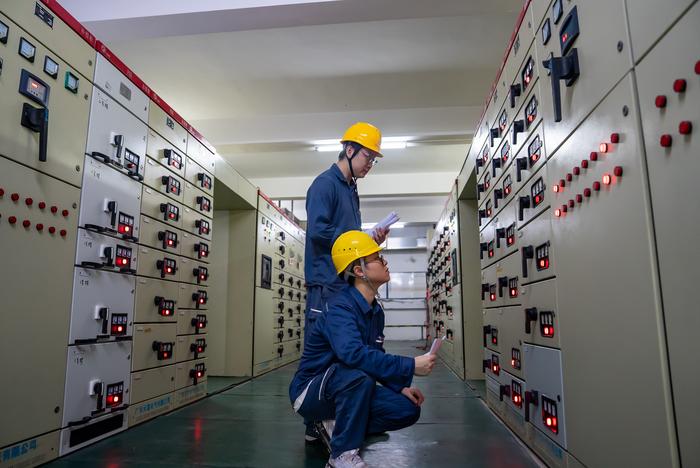
Economic Growth - Guangzhou's economy has shown resilience with a growth curve in 2023, highlighted by a 9.9% increase in investment in the automotive manufacturing sector and a 23.7% rise in the production of new energy vehicles in the first ten months [1][3] - The total value of foreign trade imports and exports exceeded 1 trillion yuan for the first time in the first ten months, marking a historical high for the same period [1][9] Electricity Consumption - Electricity consumption data indicates a dual trend of overall stable growth and structural surges, with new energy vehicle manufacturing electricity usage increasing by 101.26% year-on-year [1][2] - The postal industry and data centers also saw electricity consumption growth rates exceeding 40% [1] Investment and Infrastructure - Major projects like the Xiaopeng Zhida New Energy Base, with an investment exceeding 7 billion yuan and a power demand of 90,000 kVA, are driving growth in the new energy vehicle sector [2] - The TCL smart manufacturing project is expected to generate an annual output value exceeding 10 billion yuan, with power demand of 39,000 kVA [2] Industrial Investment - Industrial investment in Guangzhou grew by 7.3% in the first ten months, reflecting the city's commitment to prioritizing industry and manufacturing [3] - The new T3 terminal at Guangzhou Baiyun Airport commenced operations, with power supply planning completed six months ahead of schedule [3] Consumer Market - The retail sales of consumer goods in Guangzhou reached 909.61 billion yuan, with a year-on-year growth of 3.8% [7] - The Baihetan business district saw a 14.96% increase in electricity consumption, indicating strong consumer activity [6] Foreign Trade - Guangzhou's foreign trade import and export value reached 1.02 trillion yuan in the first ten months, a year-on-year increase of 12.1%, with exports growing by 20.5% [9] - The establishment of the Jitu Express logistics hub, the largest of its kind globally, supports the city's logistics and foreign trade growth [8] Power Supply Services - The Guangzhou Power Supply Bureau has implemented a "full lifecycle customized power supply service," enhancing the business environment and supporting both large enterprises and small businesses [11][12] - The innovative power supply services have been recognized as a national model for optimizing the business environment [11]
新华社消息丨前10个月我国邮政寄递业务量完成1772.5亿件
Xin Hua Wang· 2025-11-18 08:48
Group 1 - The article does not provide specific insights or data regarding any company or industry [1]
10月PMI点评:政策增量已显现,助力企稳目标完成
Orient Securities· 2025-11-02 08:58
Group 1: PMI Analysis - October manufacturing PMI declined to 49% from 49.8%, reaching the level of April 2025[6] - The production sector showed significant decline, with production and procurement PMI components experiencing large month-on-month drops[6] - Service sector PMI increased by 0.1 percentage points to 50.2%, driven by holiday effects, particularly in transportation and hospitality sectors[6] Group 2: External Demand and Policy Impact - New export orders PMI fell to 45.9%, a decrease of 1.9 percentage points, indicating persistent external demand pressure[6] - Despite a 10% reduction in tariffs on certain goods, the short-term improvement in foreign trade orders is expected to be limited due to prior over-expectation[6] - New government policies are beginning to show effects on domestic demand, with consumer goods PMI at 50.1%, indicating resilience compared to high-tech sectors[6] Group 3: Investment and Future Outlook - A total of 500 billion yuan in policy financial tools has been fully allocated, targeting sectors like digital economy and infrastructure[6] - Although construction PMI slightly decreased to 49.1%, new orders and business activity expectations PMI rose significantly, suggesting upcoming demand growth[6] - The overall economic stabilization is anticipated as external shocks are gradually absorbed and domestic demand expands[6]