防水材料

Search documents
防水行业专家交流
2026-01-28 03:01
Summary of Waterproof Industry Conference Call Industry Overview - The waterproof industry reached a price peak between 2019 and 2020, followed by a gradual decline, with current factory prices down approximately 5%-10% from the 2019 high [1][5] - A rebound attempt was made in mid-2025, but the actual effect was minimal, with only a few products seeing slight price increases [1][5] Key Companies and Price Changes - Companies like Keshun and Sankeshu recently issued price increase notices for two major categories of commonly sold commodities, which account for about 30%-40% of the entire waterproof industry [1][3] - The price increase is considered more of a trial than a definitive change, with expectations of limited sales volume until early March 2027 due to seasonal factors [3] Market Dynamics - The market share of leading companies has increased, with the top 10-20 companies now holding about 60% of the market, up from 50% [1][8] - Cash flow has tightened in the industry due to a downturn in real estate, leading to stricter credit terms for distributors [4][10] Product Categories and Pricing Strategies - The waterproof industry is divided into three main product categories: waterproof membranes, waterproof coatings, and auxiliary materials [2] - Recent price increases have primarily affected high polymer materials in waterproof membranes and traditional asphalt-based coatings [2] - High-end waterproof products like high polymer membranes and polyurethane coatings are easier to price up due to their stronger profitability compared to ordinary commodities like asphalt membranes and cement-based coatings [11][13] Sales and Distribution - The sales process typically involves manufacturers setting a transfer price for sales companies, which then mark up the price before selling to distributors or retail channels [9] - Distributors face significant financial pressure, leading to tighter credit policies for downstream clients [20] Future Outlook - A potential price increase for specific products is anticipated in March 2027, but mainstream products may face challenges in raising prices [11] - Growth opportunities include expanding business models, diversifying customer bases, and developing high-end products, while risks are primarily related to cash flow management [24] Repair Market Growth - The repair market share has significantly increased from 10%-20% in 2019-2020 to the current 30%-40% [4][22] Conclusion - The waterproof industry is currently navigating a challenging landscape with fluctuating prices, tightening cash flows, and evolving market dynamics. Companies are adapting by focusing on high-end products and diversifying their offerings to maintain competitiveness and profitability [19][21]

建材还能买什么
2026-01-26 02:49
Summary of Key Points from Conference Call Industry Overview - The construction materials industry is significantly impacted by fluctuations in the real estate market, with intensified competition in segments such as waterproofing, coatings, and glass. Leading companies are aggressively expanding, facing pressure on payment terms. Market concentration is increasing, with the top three waterproofing companies holding 60%-70% market share [1][2][5]. Core Insights and Arguments - **Waterproofing and Coatings**: The waterproofing sector is under pressure due to demand fluctuations closely tied to new construction and project initiation. The coatings sector faces challenges in the TOB (business-to-business) segment but shows strong performance in the TOC (business-to-consumer) segment, exemplified by companies like Sanke Tree achieving growth through strategic transformation [1][2][5]. - **Glass Industry**: The continuous production nature of the glass industry leads to cash flow losses during periods of low demand, resulting in capacity reductions. Current daily melting capacity is at 150,000 tons, putting significant survival pressure on many companies [1][2][5]. - **Cement Industry**: The cement sector may achieve supply-side adjustments through the reduction of clinker capacity, potentially increasing utilization rates. Optimistic estimates suggest a reduction from 2.1-2.2 billion tons to 1.6-1.7 billion tons over the next two to three years [3][5]. Emerging Opportunities - **Chemical Midstream Sector**: The midstream chemical sector benefits from increased domestic capital expenditure, the exit of overseas capacity, and carbon neutrality policies, indicating a clear upward trend. Despite significant prior gains, valuations remain reasonable, with core assets like fiberglass warranting attention [4][8]. - **International Expansion**: Companies like Huaxin are seeing significant growth from international operations, with overseas profits exceeding 50%, driven by demand in emerging markets and competitive advantages [6][9][10]. Specific Areas of Interest - **Waterproofing Materials**: The waterproofing sector is poised for growth, with rapid market share increases and expectations of price hikes due to rising asphalt costs and strong profit demands from leading companies [11]. - **North New Materials**: As a state-owned enterprise, North New Materials has a strong position in the branded building materials sector, with stable profits from gypsum board and active expansion in waterproofing and coatings through acquisitions [12][15][16]. - **Consumer Building Materials**: Companies with alpha characteristics such as Sanke Tree, North New Materials, and others are highlighted for their strong performance and long-term growth potential [13]. Market Dynamics - **Fiberglass Industry**: The fiberglass sector is characterized by a rigid cost structure, with production costs largely independent of oil prices. Demand is expected to grow steadily, with leading companies like China Jushi increasing their global market share [7][19][20]. - **Comparison with Chemical Industry**: The construction materials sector lacks the grand narratives seen in the chemical industry, making it challenging to assess company elasticity due to price volatility. However, branded building materials exhibit strong valuation elasticity [18]. Company-Specific Insights - **San Ke Tree and Hanco**: These leading companies in their respective segments are expected to achieve growth despite market pressures, with San Ke Tree leveraging new community store initiatives to drive profit growth [17]. - **Subote's Transition**: Subote is currently at a low point but is exploring transformation opportunities in high polymer materials, which may enhance its future prospects as cement demand stabilizes [21]. This summary encapsulates the key insights and developments within the construction materials and related sectors, highlighting both challenges and opportunities for investment.


科顺股份20260123
2026-01-26 02:49
Summary of Key Points from the Conference Call of Keshun Co., Ltd. Company Overview - **Company**: Keshun Co., Ltd. (科顺股份) - **Industry**: Waterproofing materials and construction materials Core Insights and Arguments - **Price Increase Strategy**: Keshun plans to raise prices of its phenolic waterproof products by 5%-10% to counteract a 5-6% increase in raw material costs, expecting a 2% increase in gross margin by 2026 [2][6] - **Revenue Growth Projections**: The company anticipates a 10% revenue growth in 2026, amounting to approximately 600 million yuan. The civil construction sector (C-end retail) is expected to grow by 30% (around 300 million yuan), while overseas business is projected to grow by 50% (around 200 million yuan) [2][12] - **Tile Adhesive Business**: Keshun's tile adhesive revenue is expected to reach nearly 500 million yuan in 2025, with a growth rate of 20%-30% anticipated for 2026. The company sees significant growth potential in the tile adhesive market over the next 3-5 years [2][17] - **Overseas Market Strategy**: The company plans to adopt a light asset operation model for its overseas business, establishing small factories in Malaysia, Central Asia, and the Middle East through joint ventures and leasing existing facilities [2][22] Financial Performance and Projections - **2025 Financials**: Keshun's overseas revenue is projected to be around 450 million yuan, with a gross margin of 32%-33% and a net profit margin of 7%-8% (excluding impairments) [2][24] - **Credit Impairment Management**: The company aims to limit credit impairment to within 100 million yuan in 2026, with a focus on preparing for potential bad debts in 2025 [4][28] - **Cash Flow Expectations**: Keshun expects positive operating cash flow in 2025, similar to the 300 million yuan range seen in 2024 [4][29] Market Dynamics and Competitive Landscape - **Market Demand for Tile Adhesives**: The tile adhesive market is expected to continue growing, with a market size of approximately 60-70 billion yuan. The industry is fragmented, with leading companies like Deko and Yuhong having sales of 2-4 billion yuan each [19][20] - **Price Competition**: There is a small price difference among leading brands, while significant differences exist between leading brands and smaller companies. Keshun plans to expand its market share through channel collaboration and acquisitions of local small manufacturers [20] Challenges and Risks - **Customer Acceptance of Price Increases**: Some customers, particularly in the public construction sector, may resist price increases due to reduced business volume and intense competition [8][9] - **Implementation of Price Increases**: The company has successfully implemented price increases for its roll products, with a gradual realization of price adjustments expected to improve margins over time [10][11] Future Growth and Investment Plans - **Investment in New Materials**: Keshun is exploring high-end new materials in sectors like semiconductors and robotics to diversify its business and enhance resilience against market cycles [4][30] - **Convertible Bond Strategy**: The company aims to complete the conversion of all convertible bonds by 2026, targeting a market capitalization of around 10 billion yuan and a share price of approximately 9 yuan [4][32] - **Long-term Revenue Goals**: Keshun aims to return to a revenue scale of 10 billion yuan within 3-5 years, contingent on industry stabilization and recovery [34] Conclusion Keshun Co., Ltd. is strategically positioning itself for growth through price adjustments, expansion into overseas markets, and diversification into new materials. The company is focused on improving its financial health while navigating challenges in customer acceptance and market competition.
研判2026!中国水泥基渗透结晶型防水材料行业政策汇总、发展现状、市场竞争及发展趋势分析:行业需求受到冲击,未来将拓宽应用场景以获取增量[图]
Chan Ye Xin Xi Wang· 2026-01-25 01:19
Core Viewpoint - The cement-based crystalline waterproofing materials have gained widespread application in China since the late 1980s, supported by national standards and policies, and are expected to see increasing acceptance due to their unique advantages in waterproofing performance and construction processes [1][7]. Industry Overview - Cement-based crystalline waterproofing materials are rigid waterproof materials made from silicate cement and quartz sand, which penetrate various active chemical substances to form insoluble crystals that block capillary pores in concrete, enhancing its density and waterproofing [3][4]. - The market size for cement-based crystalline waterproofing materials in China showed an upward trend from 2020 to 2021, but experienced a 4.8% decline in 2022 due to the ongoing adjustment in the real estate market. However, demand began to recover in 2023, with a projected market size of 9.66 billion yuan in 2024, reflecting a 3.8% year-on-year increase [1][7]. Industry Policies - Recent national policies, such as the "Implementation Plan for High-Quality Development of the Green Building Materials Industry" released in December 2023, emphasize the need for enhanced supervision and quality control in the waterproofing materials sector, which will help standardize the industry [5]. - The "2024-2025 Energy Saving and Carbon Reduction Action Plan" aims to regulate production capacity and output in the building materials industry, benefiting the supply of cement-based crystalline waterproofing materials [5]. Industry Chain - The upstream of the industry includes raw materials like silicate cement and quartz sand, while the midstream involves the production of waterproofing materials. The downstream applications span construction, roads, water conservancy projects, and industrial sectors [6]. Competitive Landscape - The industry is characterized by a "leading enterprises dominate, while small and medium-sized enterprises differentiate" structure, with major players leveraging their full-chain advantages, while smaller firms seek survival in niche markets [7][8]. Development Trends - The application scenarios for cement-based crystalline waterproofing materials are expanding beyond traditional residential buildings to include underground comprehensive pipe corridors, sponge city construction, and major engineering projects, driven by infrastructure development and urbanization [10]. - The industry is moving towards brand and standardization, with smaller firms lacking core technology and quality control being gradually eliminated, while leading companies capture more market share through customized solutions and lifecycle services [11]. - There is a shift towards green and low-carbon production methods in response to stricter environmental policies, with companies adopting clean production technologies to reduce carbon emissions and waste [12].



强Call建材顺周期-涨价与推演
2026-01-23 15:35
Summary of Conference Call on Building Materials Sector Industry Overview - The building materials sector has recently experienced price increases driven by multiple factors, including seasonal construction expectations, a narrowing decline in new construction area, and supportive real estate policies in cities like Beijing, leading to market anticipation for further relaxation of purchase restrictions [1][3]. Key Points and Arguments - **Price Increases**: The price hikes in the building materials sector are primarily driven by pre-Spring Festival expectations, macroeconomic changes, and real estate policy anticipations. For instance, new construction area in December decreased by 19% year-on-year, but the decline was 8 percentage points less than in November, indicating signs of market stabilization [3]. - **Strong Performance in Sub-sectors**: Waterproof materials and fiberglass have shown particularly strong performance. China Jushi has excelled in the fiberglass sector, while Oriental Yuhong, a leader in waterproof materials, reported positive revenue growth in Q3 [1][4]. - **Future Predictions**: It is anticipated that new construction area and housing prices may stabilize in the second half of 2026 or 2027, suggesting a focus on new construction-related sectors. The completion of local government debts before 2027 may limit the contribution of special bond funds to project growth [6][7]. - **Cost-Push Pricing**: Recent price increases in waterproof products are primarily cost-driven, with companies like Keshun implementing price hikes of 5% to 10%. Although these increases have limited impact on fundamentals during the off-season, they are aimed at maintaining higher price points post-Spring Festival [9]. - **Credit Risk Management**: The credit impairment risk in the consumer building materials sector is manageable, with adequate provisions for individual collective impairments. Companies like Vanke are gradually improving their debt extension plans, and the impact of supply chain debts on the building materials sector is limited [12]. Additional Important Insights - **Market Dynamics**: The waterproof industry has seen a reduction in scale, with market size decreasing from 3.5 billion square meters to around 2.5 billion square meters, and revenue dropping from 120 billion to 80-90 billion yuan. Leading companies have increased their market share due to faster supply reductions compared to demand [10]. - **Investment Opportunities**: The building materials sector, particularly in new construction chains, waterproof materials, and aluminum formwork, continues to attract attention. Infrastructure projects are expected to benefit from positive investment forecasts due to government support [6][21]. - **Consumer Building Materials**: The sector faces asset impairment risks related to a large number of properties held as collateral. However, if the decline in second-hand housing prices stabilizes, the impairment risks may significantly decrease [13]. - **Trends in Fiberglass and Glass Industries**: The fiberglass sector is expected to perform well due to stable downstream demand, particularly in the electronic cloth market. The glass industry may experience price increases driven by favorable real estate policies [19]. Conclusion The building materials sector is poised for potential growth, driven by macroeconomic stabilization and supportive policies. Key sub-sectors like waterproof materials and fiberglass are expected to continue performing well, while credit risks appear manageable. Investors should focus on new construction-related sectors and monitor the evolving market dynamics for opportunities.
近期防水行业涨价解读及后市展望
2026-01-23 15:35
Summary of Conference Call on Waterproof Industry Price Increase and Future Outlook Company and Industry Overview - The conference call primarily discusses the waterproof industry, focusing on 科顺公司 (Keshun Company) and its strategies in a competitive market environment [1][2]. Core Points and Arguments - **Price Increase Strategy**: Keshun Company has adopted a price increase strategy to enhance brand image and profit margins despite facing intense low-price competition in the Northeast market [1][2]. - **Market Response**: Other companies in the industry have varied responses to the price increase; some maintain or lower their prices, while Keshun aims to differentiate itself through quality and brand positioning [3][4]. - **Dealer Relations**: Dealers are generally resistant to price increases due to profit margin pressures, but long-term relationships and product quality are expected to facilitate acceptance over time [6][7]. - **Economic Impact**: The overall economic environment has worsened payment terms and collection cycles, affecting dealer profitability. However, dealers can still maintain some profit through high sales volume [8][9]. - **Market Outlook**: Keshun Company remains optimistic about future market opportunities despite a shrinking market size, believing that increasing market share can sustain profitability [10][11]. - **Pricing Mechanism**: Pricing adjustments with dealers depend on credit terms; shorter credit periods lead to lower prices, while longer terms result in higher prices [12][25]. - **Product Price Changes**: Waterproof coatings have seen significant price increases, while the increase in membrane products has been modest [13][14]. Additional Important Insights - **Seasonal Challenges**: The upcoming traditional off-season due to the Spring Festival poses challenges for implementing price increases, requiring time for adjustment [5]. - **Shift in Customer Base**: There has been a notable decrease in real estate clients, with a shift towards municipal and public construction projects, which have less favorable payment conditions [18][19]. - **Market Dynamics**: The competitive landscape is characterized by the exit of smaller brands, while larger brands continue to compete aggressively. Keshun aims to eliminate smaller competitors to avoid price wars [11][23][24]. - **Service Model**: Keshun Company emphasizes a comprehensive service model from project initiation to maintenance, planning to deepen this approach [16]. - **Sales Targets**: The sales targets for 2026 are expected to remain stable compared to 2025, reflecting a cautious approach in light of market uncertainties [21][22]. This summary encapsulates the key discussions and insights from the conference call, highlighting the strategic positioning of Keshun Company within the waterproof industry amidst current market challenges.
卖资产还债,东方雨虹自救
Xin Lang Cai Jing· 2026-01-23 13:09
Core Viewpoint - Oriental Yuhong is undergoing a significant asset disposal process to alleviate liquidity pressure and reduce debt levels during its transition period, with a total of 70 properties disposed of since late October 2025, resulting in an average asset disposal loss of 44.6% [1][5][17]. Asset Disposal - Oriental Yuhong has publicly announced the disposal of 70 properties with a cumulative transaction amount of 94 million yuan since late October 2025, averaging a loss of 44.6% on these disposals [1][5][17]. - The company sold 28.405 million shares of Jinke Service at a price of 6.67 HKD per share to Boyu Capital, totaling approximately 189 million HKD [2][15]. - The asset disposals include various properties such as residential, commercial, hotels, and office spaces, with significant losses reported on many transactions [5][18]. Financial Impact - The total cash generated from asset disposals amounts to 290 million yuan, with a net loss of 35.42 million yuan after accounting for the sales of stocks and other compensations [5][17]. - The properties disposed of in Beijing account for about half of the total number and transaction amount, indicating a concentrated effort in that market [5][17]. Debt and Restructuring - Oriental Yuhong has received a total of 3.26 billion yuan in debt compensation through various real estate assets, primarily from major real estate companies [19]. - The company has engaged in debt restructuring agreements to address triangular debt issues with partners, including Greenland Holdings and Deaiwei (China) Co., Ltd. [19][20]. Business Transformation - The company is shifting its business model by increasing the revenue share from retail channels while maintaining its engineering channel position, and expanding into overseas markets [3][14]. - Oriental Yuhong has initiated a strategic transformation focusing on diversifying its business beyond traditional waterproofing materials, including the development of a mortar powder business as a second growth curve [20][21]. Performance Metrics - For the first three quarters of 2025, Oriental Yuhong reported revenues of 20.6 billion yuan, a year-on-year decline of 5.1%, and a net profit of 790 million yuan, down 37.4% [22].

卖资产还债,东方雨虹自救
经济观察报· 2026-01-23 12:51
Core Viewpoint - The article discusses the asset disposal strategy of Dongfang Yuhong, highlighting the company's efforts to alleviate liquidity pressure and reduce debt levels during its transition period by selling various assets, including real estate and stocks [2][6][11]. Asset Disposal - Since the end of October 2025, Dongfang Yuhong has publicly announced the disposal of 70 properties, with a total transaction amount of 94 million yuan and an average asset disposal loss of 44.6% [6]. - The company has sold assets including residential, commercial, hotel, office properties, and parking spaces, with significant losses on many transactions, such as a 50% loss on two commercial properties sold for 23.13 million yuan [5][6]. - The total cash generated from asset disposals, including stock sales, amounts to 290 million yuan, resulting in a net loss of 35.42 million yuan [6]. Sources of Assets - The properties sold by Dongfang Yuhong primarily come from two sources: debt repayment properties and self-purchased properties. The latter includes assets acquired to maintain customer relationships and support inventory clearance [8]. - The company has received a total of 3.26 billion yuan in debt assets from various real estate companies, with over 75% being commercial properties [9]. Business Transformation - Dongfang Yuhong is undergoing a business transformation, increasing the revenue share from retail channels while maintaining its engineering channel position. The company is also expanding its overseas market presence in countries like the USA, Chile, and Malaysia [3][12]. - The company has initiated a strategic shift to diversify its operations, focusing on a second growth curve in mortar powder business and enhancing its digital capabilities across the supply chain [12][13]. Financial Performance - In 2025, Dongfang Yuhong reported a revenue of 20.6 billion yuan, a year-on-year decline of 5.1%, and a net profit of 790 million yuan, down 37.4% [13]. - The company's cash-to-maturity debt ratio stands at -46.6%, with a debt-to-asset ratio of 50.2%, indicating ongoing financial challenges [13].

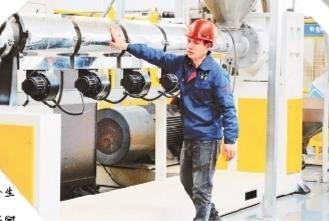
隆相新材料:防水卷材出口老挝
Xin Lang Cai Jing· 2026-01-22 22:14
Core Viewpoint - The company, Guizhou Longxiang New Materials Co., Ltd., is experiencing a surge in orders, particularly from overseas, indicating strong demand for its waterproof materials and positioning it well for growth in 2024 [2][3]. Group 1: Company Performance - The company has received over 30 orders since the beginning of January, with an expected production value of approximately 5 million yuan for the month [2]. - An overseas order for over 100,000 square meters has been secured, with more than 60,000 square meters already completed [2]. Group 2: Product and Technology - The company specializes in high polymer waterproof materials and geosynthetics, with a product line that includes HDPE, TPO, and PVC waterproof membranes, as well as composite geomembranes, geotextiles, and geogrids [2]. - A modern factory, with an investment of 200 million yuan, is set to be fully operational by the end of 2024, significantly increasing production capacity and introducing new technological advancements [3]. - The company produces the widest HDPE geomembrane in the southwestern provinces, measuring 12 meters, which enhances construction efficiency and safety in large-scale projects [3]. Group 3: Quality Assurance - The company emphasizes quality control, ensuring that every batch of products meets high standards for delivery, which is crucial for achieving its annual goals [3].
飞鹿股份(300665.SZ):公司防水防护材料暂未应用于卫星发射场工程防水
Ge Long Hui· 2026-01-22 01:04
Core Viewpoint - The company, Feilu Co., Ltd. (300665.SZ), has indicated that its waterproof protective materials have not yet been applied in satellite launch site waterproofing projects, focusing instead on other construction sectors [1] Group 1: Product Application - The company's waterproof protective materials are primarily used in rail construction and civil building waterproofing [1] - The company has expanded its product application areas to include water conservancy projects and municipal engineering, as well as other concrete waterproofing and seepage prevention fields [1] Group 2: Future Outlook - The company plans to continue strengthening technological innovation to maintain its leading technical advantage [1] - The goal is to provide customers with more high-reliability products across various application scenarios [1]