
中成药

Search documents
新天药业上半年净利润大降80% 销售费用占比居高不下
Jing Ji Guan Cha Wang· 2025-08-01 08:59
7月30日晚,新天药业(002873)(002873.SZ)发布2025年半年报,上半年公司实现营业收入3.58亿元, 同比下降18.88%;实现归属于上市公司股东的净利润约为576.61万元,同比下降80.99%。 总部位于贵阳的新天药业主营中成药业务,以妇科类、泌尿系统疾病类用药为主,还涵盖口腔类、乳腺 甲状腺类、抗感冒类、清热类、补血类、心血管疾病类、抗肿瘤类等领域疾病用药。据公开信息,公司 旗下和颜 坤泰胶囊、坤立舒 苦参凝胶、宁泌泰 宁泌泰胶囊、即瑞 夏枯草口服液等多个主打品种均为国 内独家品种和国家医保目录品种,凭借突出的临床疗效,已经实现单品过亿的市场规模。 5月27日晚,微博等社交媒体上出现落款为四川省卫健委的文件《关于对举报材料的进行核查的通知》 及附件,附件为举报信形式,列举了新天药业当地分公司的商业贿赂的对象,包括四川省内的绵阳、广 安、遂宁等地医院,网传举报信称,新天药业通过虚假病例收集、虚假科普项目向用药医生输送利益。 几天后,四川省卫生健康委调查组于5月31日通报称,上述调查情况举报信涉及医疗机构人员125人,其 中6人信息重复,1人信息不实,核实为118人,分布在36家医疗机构。 ...

葵花药业:收到葵花牌益生菌粉、小葵花牌益生菌粉注册申请受理通知书
Xin Lang Cai Jing· 2025-07-31 07:42
Core Viewpoint - The company has received acceptance notifications for the registration applications of its probiotic products, indicating progress in expanding its health product offerings [1] Group 1: Product Registration - The full subsidiary of the company, Harbin Kewang Pharmaceutical Co., Ltd., has received acceptance notifications from the National Market Supervision Administration for its probiotic powder products [1] - The acceptance number for Kewang Probiotic Powder is G20250119, with the application for registration as a new domestic health food aimed at enhancing immunity and regulating intestinal flora [1] - The acceptance number for Little Kewang Probiotic Powder is G20250114, with the application also focused on enhancing immunity [1]

桂林三金(002275) - 002275桂林三金投资者关系管理信息20250725
2025-07-28 08:56
Group 1: Company Strategy and Development - Biopharmaceuticals are a crucial part of the company's "one body, two wings" strategy, facing high investment and long R&D cycles, with the industry currently experiencing a downturn [1] - The company has seen significant growth in business development and customer resources in 2023, but still falls short of scale production requirements, impacting overall profitability [1] - The company is optimizing costs and expenses for its subsidiaries, focusing on projects with promising clinical data and development prospects, such as the BC006 monoclonal antibody injection project nearing completion of Phase I clinical trials [1] Group 2: Product Performance and Market Trends - The overall development trend for second and third-line products is positive, with specific products like the Gejie Dingchuan capsule expected to maintain growth rates similar to last year [2] - The sales of the Xuanyun Ning series surpassed 100 million yuan in 2021, with a goal of achieving double-digit growth this year [2] - Other products, including Shuyanquing spray and compound cold granules, are also expected to continue breaking through and maintaining high growth rates [2] Group 3: Regulatory and Sales Strategy - The national essential drug list adjustment is led by relevant government departments, and the company has not engaged in any application processes during this period [2] - The company maintains strict control over sales expenses, with a trend towards more targeted spending, particularly on second and third-line products [2] - Overall sales expenses are aligned with sales revenue, and significant changes in the sales expense ratio are not anticipated for the year [2]

最高价差超百倍,多个中成药再被点名 业内人士:管控升级,大量中药企业到院外市场寻找增长点
Mei Ri Jing Ji Xin Wen· 2025-07-25 15:04
Core Viewpoint - The issue of excessively high prices for traditional Chinese medicine (TCM) has not been resolved, as evidenced by recent government actions targeting price adjustments for numerous TCM products across various provinces [1][2][4]. Group 1: Price Governance Actions - The Guangxi Drug Procurement Service Platform announced a price adjustment for 169 high-priced TCMs, requiring companies to complete adjustments by July 30 [1]. - Multiple provinces, including Jilin, Henan, and Jiangsu, have initiated price governance for TCMs, with notable products like An Gong Niu Huang Wan and Ban Lan Gen Granules being included [2]. - Jilin Province identified 52 TCMs with significant price discrepancies, with price differences ranging from 10 to over 117 times the minimum daily cost [2][3]. Group 2: Price Discrepancies and Examples - The price of TCMs is significantly higher compared to chemical drugs, with some products showing price differences exceeding 100 times [2]. - For instance, the price of Yuan Hu Zhi Tong Pian from Chongqing Xieran Pharmaceutical Co. is 110 yuan, with a daily cost of 45.83 yuan, leading to a price difference of 117.51 times the minimum daily cost [2][3]. Group 3: Historical Context and Ongoing Issues - The problem of high TCM prices has been persistent, with a 2009 study indicating that out of 93 high-priced TCMs, only 6 had prices close to their theoretical retail prices [4]. - Factors contributing to high prices include an inadequate pricing mechanism, numerous distribution channels, and commercial bribery in the pharmaceutical sector [4]. Group 4: Regulatory Developments - The National Medical Insurance Administration has initiated ongoing price governance for TCMs, with 28 provinces improving their drug pricing rules [4][5]. - The governance focuses on "average daily treatment costs," with penalties for products exceeding set price thresholds [5]. Group 5: Market Adaptations and Future Strategies - TCM companies are adapting to regulatory changes by exploring new profit avenues outside traditional markets, such as health products and wellness items [8]. - Companies like Li Shizhen and Tong Ren Tang are launching health-oriented products, indicating a shift in focus towards future growth opportunities [8][9].

骨骼肌肉疾病中成药市场:口服用药存结构性机会,外用贴膏有望持续扩容
Ping An Securities· 2025-07-25 05:02
Investment Rating - The report maintains an "Outperform" rating for the biopharmaceutical industry [1] Core Insights - The market for traditional Chinese medicine (TCM) in musculoskeletal diseases is expected to grow significantly due to an aging population and increasing prevalence of related conditions [2][18] - The oral medication segment presents structural opportunities, while external patches are anticipated to continue expanding [3][32] Summary by Sections 1. Demand Growth in Musculoskeletal TCM Market - The aging population in China reached 202 million people aged 65 and above in 2023, leading to a rise in musculoskeletal disorders [2][18] - The penetration rate of musculoskeletal pain among the population aged 56 and above is 60.8%, while it is 42.2% among those aged 35 and below, indicating a younger demographic is increasingly affected [2][23] - The global pain management drug market is projected to reach $110.4 billion by 2030, with significant growth potential in China compared to markets in the US and Japan [2][28] 2. Structural Opportunities in Oral Medications - The oral TCM market is stable, with the top 10 products each generating sales below 1 billion yuan, indicating a lack of large-scale products [3][47] - Three innovative TCM products in the musculoskeletal field are expected to be approved and enter the national medical insurance directory from 2020 to 2024, which may lead to rapid market growth [3][53] - The basic drug policy aims to increase the usage of essential medicines, providing a competitive advantage for unique insurance products [3][69] 3. Expansion of External Patches - Compared to mature markets like Japan and South Korea, China's external patch market has significant room for growth, with external patches likely to gradually replace oral medications [3][30] - The concentration of external patches in public medical institutions and retail pharmacies is high, allowing leading companies to increase their market share [3][30] - Price increases are expected to continue driving growth in the external patch industry [3][32] 4. Investment Recommendations - Companies to watch include Fangsheng Pharmaceutical, Panlong Pharmaceutical, Lingrui Pharmaceutical, and Qizheng Tibetan Medicine, which have significant advantages in musculoskeletal TCM products [4]




上半年盈利同比增长超3倍,这家中成药鲁企是怎么做到的?
Da Zhong Ri Bao· 2025-07-22 10:20
Core Viewpoint - In the context of medical reform and rising raw material costs, Wuhua Pharmaceutical (002107.SZ) achieved impressive performance in the first half of the year, with a net profit growth exceeding three times year-on-year [1]. Financial Performance - In the first half of the year, Wuhua Pharmaceutical reported revenue of 425 million yuan, a year-on-year increase of 7.64%, and a net profit of 44.68 million yuan, reflecting a year-on-year growth of 303.16% [1]. - The company plans to distribute a cash dividend of 1.2 yuan (including tax) for every 10 shares to all shareholders [1]. Product Performance - The revenue from cardiovascular and cerebrovascular drugs reached 294.23 million yuan, marking an 11.53% year-on-year increase, significantly outpacing other major product lines [2]. - The company has established a strong product line in chronic disease medications, particularly in cardiovascular and orthopedic areas, which are expected to benefit from the aging population and the prevalence of chronic diseases [3]. Industry Context - The Chinese government has been emphasizing the development of traditional Chinese medicine, implementing policies to accelerate its revitalization [4]. - The transformation of the medical system is expected to increase operational costs and risks for smaller companies lacking compliance, while enhancing the competitive advantage of established companies with core products and robust compliance management [4]. Management and Strategy - The significant improvement in profitability is attributed to Wuhua Pharmaceutical's focus on management, marketing, and research and development [5]. - The company has implemented a strategy termed "one reduction and three increases" (reducing costs, increasing sales, increasing efficiency, and increasing cash flow) to enhance operational efficiency [5]. - Wuhua Pharmaceutical has optimized its organizational structure and human resource allocation to improve work efficiency [5]. Product Recognition - During the reporting period, the four major proprietary medical insurance products gained six new endorsements, totaling 93 recommendations from authoritative textbooks, clinical guidelines, and expert consensus, enhancing the recognition of the clinical, scientific, and market value of the company's products [6].



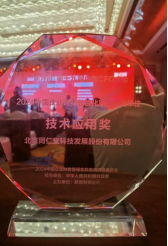
同仁堂科技公司:打造智能财务“慧眼” 斩获行业殊荣
Zhong Guo Zhi Liang Xin Wen Wang· 2025-07-22 09:14
Group 1 - The core viewpoint of the article highlights the successful implementation of an intelligent financial system by Tongrentang Technology Company, which integrates cost data and enhances risk management and fund control capabilities [1][3] - The company received the "Demonstration Unit of Financial Digital Transformation for Chinese Enterprises" award at the 19th China CFO Forum, showcasing its innovative attempts in financial capability transformation [3] - The intelligent financial project addresses challenges such as fragmented business operations and inefficient fund management, which previously hindered decision-making speed and resource allocation [3][4] Group 2 - The digital platform integrates various data including funds, taxes, budgets, and costs, enabling consolidated management and intelligent accounting across the entire system [4] - The system allows for precise cost tracking of production batches, reducing the time required for cost accounting from 4 hours to just 15 minutes, and features a cost visualization function for detailed cost breakdowns [4] - The financial system provides real-time monitoring of fund inflows and outflows, enhancing decision-making confidence during operational meetings [4][5] Group 3 - The unified accounting standards and real-time fund monitoring enable the headquarters to exercise strong control over the entire system, transforming financial data into a strategic resource for high-quality development [5] - The company has deployed nearly a hundred analytical models based on the system platform, covering various business units such as budget analysis, production-sales coordination, profit insights, and efficiency evaluation [5]

沃华医药上半年盈利同比增长超3倍 医疗强基工程带来政策机遇
Sou Hu Cai Jing· 2025-07-21 14:44
Core Insights - Wuhua Pharmaceutical reported a more than threefold increase in net profit for the first half of 2025, achieving a net profit of 44.68 million yuan, a year-on-year growth of 303.16% [1] - The company’s revenue reached 425 million yuan, reflecting a year-on-year increase of 7.64% [1] - Wuhua plans to distribute a cash dividend of 1.2 yuan per 10 shares to all shareholders [1] Company Performance - The company has focused on refined management and academic promotion, implementing a strategy to reduce costs and increase sales, efficiency, and cash flow [1] - Wuhua holds 46 national invention patents and has 162 drug approval numbers, with 15 exclusive products covering various medical fields [2] - The company’s four major exclusive medical insurance products have been recommended in 93 authoritative textbooks, clinical guidelines, and expert consensus documents [2] Industry Context - The national healthcare reform and the strong foundation project provide opportunities for Wuhua to expand its market presence in grassroots healthcare [1][2] - Since February 2025, the construction of tightly-knit county medical communities has been promoted in 2,188 counties, with Wuhua's heart medication entering nearly 300 county medical community directories [2] - In the second quarter of 2025 alone, Wuhua's heart medication was added to 41 new directories [2]
头发早白不用愁,六君生发胶囊从源头调理血虚
Sou Hu Wang· 2025-07-16 10:57
Core Viewpoint - The article emphasizes that early graying of hair in young individuals is often linked to "blood deficiency" rather than genetic factors, suggesting that addressing internal health can improve hair condition [2][3][4]. Group 1: Causes of Early Graying - The modern lifestyle, characterized by stress, poor diet, and lack of sleep, contributes to symptoms such as early graying, hair loss, and fatigue [3]. - Traditional Chinese medicine identifies these symptoms as indicative of "blood deficiency," necessitating a focus on nourishing the blood rather than superficial treatments [4]. Group 2: Product Introduction - Tianchangyuan has launched a specialized traditional Chinese medicine product, Liu Jun Sheng Fa Capsules, aimed at addressing the root causes of early graying by nourishing the blood and improving hair health [2][10]. - The product is formulated with six key herbal ingredients that work synergistically to enhance blood health and promote hair growth [5]. Group 3: Mechanism of Action - Liu Jun Sheng Fa Capsules focus on internal conditioning, improving microcirculation in hair follicles, enhancing nutrient supply, and regulating endocrine functions, particularly beneficial for women experiencing stress-related hair issues [7]. - The formulation includes ingredients like Angelica and He Shou Wu, known for their blood-nourishing properties, and Cystine, which supports hair structure [5][6]. Group 4: User Feedback - Clinical feedback indicates positive results, with users reporting a reduction in hair loss and improved hair quality, aligning with the traditional Chinese medicine approach of treating underlying health issues [8][9]. - Testimonials highlight gradual improvements in hair color and overall well-being, reinforcing the effectiveness of the product [9]. Group 5: Conclusion - The article concludes that early graying is not an insurmountable issue but a signal to address one's health, with Liu Jun Sheng Fa Capsules offering a reliable solution based on traditional Chinese medicine principles [10].
国泰海通证券-产业策略:2025下半年医药产业政策展望,保基本、强创新-250710
GUOTAI HAITONG SECURITIES· 2025-07-10 07:42
Investment Rating - The report does not explicitly state an investment rating for the industry Core Insights - The policy direction focuses on "ensuring basic needs and strengthening innovation," aiming to enhance accessibility and affordability of medical products and services while promoting innovation across the pharmaceutical industry [4][7] - The support for innovative drugs continues to increase, with measures to enhance their quality development and integration into insurance systems [12][13] - The report highlights the ongoing collection and procurement processes for various drug categories, including generic drugs, traditional Chinese medicine, and high-value consumables, indicating a trend towards optimization and expansion [21][24][31] Summary by Sections 1. Top-Level Design Direction - The central government has issued guidelines to enhance social security and improve public services, particularly in the healthcare sector, emphasizing the need for equitable access to medical resources [7][8] 2. Support for Innovative Drugs - The National Healthcare Security Administration (NHSA) and the National Health Commission have released measures to support the high-quality development of innovative drugs, including multi-channel payment systems and international promotion [12][13] - The introduction of a separate payment mechanism for long-term and high-cost drugs is being implemented in various provinces, enhancing accessibility for patients [14][16] 3. Generic Drugs - The report anticipates optimization of the rules for the 11th batch of drug procurement, which is expected to take place in 2025, focusing on quality and price adjustments [21][23] 4. Traditional Chinese Medicine - The procurement rules for traditional Chinese medicine are becoming clearer, with expectations for quality improvements and market expansion [24][26] 5. High-Value Consumables - The report notes that most high-value consumable procurement has been completed, with ongoing attention to key product renewals and the expansion of procurement coverage [31][32] 6. In Vitro Diagnostics (IVD) - The report discusses the dual approach of alliance procurement and service price governance, indicating a comprehensive strategy to enhance the IVD sector [35][38] 7. Industry Regulation - Regulatory measures are being strengthened to guide high-quality development in the healthcare sector, including ongoing efforts to combat corruption and ensure compliance among medical institutions and retail pharmacies [8][9] 8. Real-Time Medical Insurance Settlement - The NHSA plans to implement real-time settlement of basic medical insurance funds by the second half of 2025, which is expected to alleviate cash flow pressures for medical institutions [9][10]