养老服务

Search documents
2026北京两会|丰台:挖潜消费 锚定集群效应
Bei Jing Shang Bao· 2026-01-28 10:32
从京东MALL的"首店+消费"商业模式,到丽泽商务区的"商务+消费"全链条融合,再到园博园、卢沟桥、宛平城景区的"景区+消费"集群效应,这条由东向 西的促消费脉络,不仅勾勒出丰台区消费空间的新布局,更为打造多元融合消费场景提供了抓手。 乘着"丽泽×首都商务新区"成功跻身全市唯一新增培育型国际消费体验区的东风,以往被认为身处北京商业洼地的丰台,正持续发力撬动消费:新增8个商业 项目、改造12个传统项目,丽泽天街、京东MALL等地标相继落成,马家堡、方庄等商圈经"一圈一策"提质升级,长辛店、宛平城商业步行街及花街夜市、 丽泽"怪市"等新消费地标涌现,区域商业活力的变化有目共睹。 对此,市人大代表、国戏凤凰(北京)文化发展有限公司总经理王曦在接受北京商报记者采访时阐释了其核心运营逻辑。丰台文旅集团计划构建三大核心消 费场景矩阵:其一,"十五五"时期,推动"馆桥城园岛河"一体化发展,以红色文化为主题打造沉浸式剧场与特色研学,开发相关IP,塑造红旅融合的综合性 消费场景;其二,依托园博园生态绿色底蕴,结合规划中的酒店群与新型体育项目,打造康养疗愈与新潮运动相融合的消费场景;其三,活化长辛店老镇, 通过"记忆大国潮"项目 ...


应对人口老龄化,我国养老服务设施会有哪些新变化?
Xin Hua Wang· 2026-01-28 09:07
Core Viewpoint - The article discusses the urgent need for improved elderly care services in China, highlighting new policies aimed at reducing costs and enhancing the quality of elderly care facilities as the elderly population reaches 310 million by the end of 2024, accounting for 22% of the total population [1] Group 1: Policy Changes and Impacts - The new policies aim to lower land costs for elderly care facilities by promoting mixed-use development and flexible land supply methods, which will ease the financial burden on both non-profit and for-profit institutions [2] - Underutilized urban spaces are encouraged to be transformed into elderly care facilities, with simplified planning processes and a five-year grace period for land use changes, allowing for the activation of "sleeping" spaces [3] - New residential projects will be required to include elderly care facilities as part of their planning, ensuring that these services are integrated into community development from the outset [4] Group 2: Support for Rural Elderly Care - The policies specifically address the shortcomings in rural elderly care by encouraging collective economic organizations to participate in the construction and operation of care facilities, thus broadening the involvement of local communities [5] - Farmers are supported in utilizing idle rural properties for various forms of elderly care services, allowing them to benefit from the development of these services [5] Group 3: New Business Models and Financing - The emergence of new "elderly+" business models, such as wellness and nature-based care, is supported through targeted resource allocation and streamlined approval processes for land use [6][7] - The policies facilitate financing for for-profit elderly care institutions by allowing them to use clear property rights as collateral and streamlining the registration process for real estate [8] Group 4: Regulatory Measures - A comprehensive regulatory framework is established to prevent the misuse of land designated for elderly care, including strict monitoring and penalties for non-compliance [9] - The upgraded policies represent a shift from basic support to a focus on quality improvement and efficiency in elderly care services, aiming to create a sustainable and effective elderly care system in China [10]
经济政策一线微观察丨“银发经济”新浪潮:适老化设计如何催生“青春化”市场
Xin Hua Wang· 2026-01-28 07:24
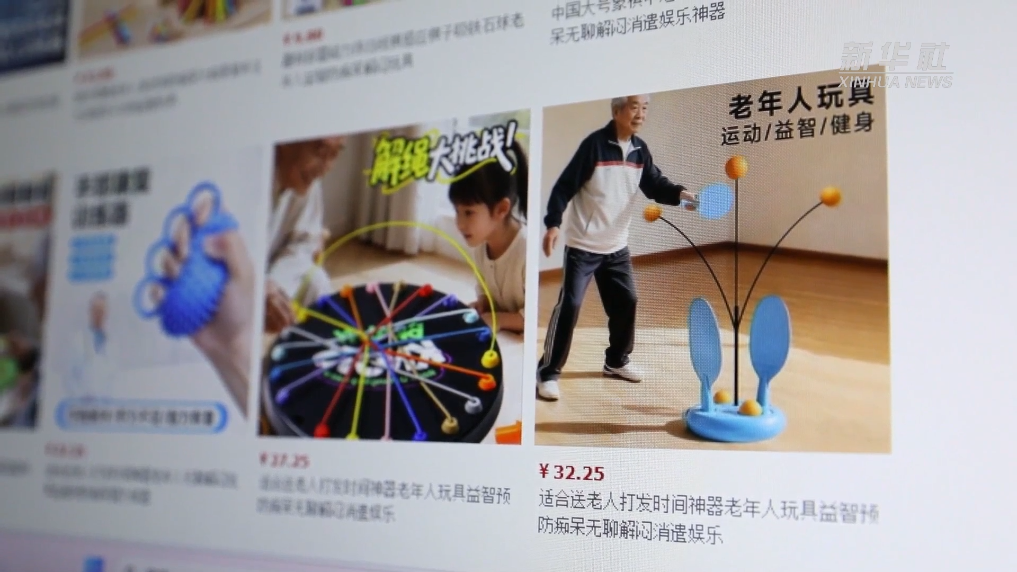
银发经济,一头连着经济发展,一头牵系民生福祉。截至2024年底,全国60岁及以上老年人口达3.1亿人,预计到2035年,这一群体数量将超 4亿人,银发经济规模有望突破30万亿元。 编导:王竹艾 这个庞大群体催生的,远不止于传统的养老与照护需求,更是一个向往活力、快乐与自我实现的"青春化"新市场。记者观察到,一场从"被 动养老"到"主动享老"的消费变革,正从供给侧悄然发生。 在浙江义乌的电商平台上,一批专为老年人设计的益智玩具,正成为新的增长点。适老玩具的兴起,正是老年人自身主动寻找快乐、对抗认 知衰退的体现,透露着银发消费正从"物质补给"转向"精神愉悦"。 在"中国木制玩具城"浙江云和,企业对"青春化"市场的理解十分深入。这里的木玩企业已研发200多款老年益智类产品。它们的功能不仅 是"锻炼",更是为了创造社交场景和竞技乐趣。 这些来自市场的微观创新,正与宏观层面的政策引导同频共振。2024年,国务院印发《关于促进服务消费高质量发展的意见》,明确提 出"大力发展银发经济,促进智慧健康养老产业发展"。"十五五"规划建议指出,"积极开发老年人力资源,发展银发经济"。2025年12月,民政部 等8部门联合印发《关于 ...
国家三部门:新建住宅项目必须配建养老服务设施
Yang Shi Xin Wen· 2026-01-28 06:57
Core Viewpoint - The joint measures by the Ministry of Natural Resources, Ministry of Civil Affairs, and National Health Commission aim to enhance the supply of inclusive elderly care services and support the reform and development of the elderly care sector [1] Group 1: Policy Initiatives - New urban and residential projects are required to include elderly care facilities according to planning standards [1] - Support for mixed-use land development and spatial composite utilization to reduce costs, allowing non-independent elderly care facilities to be built alongside other structures [1] - Non-profit elderly care institutions will have their land preserved and allocated legally, with exemptions from land transfer fees [1] Group 2: Land Use and Development - For profit-oriented elderly care land, flexible models such as long-term leasing and "rent first, transfer later" will be implemented, with land transfer fees payable over two years [1] - Encouragement for the renovation or addition of elderly care and integrated medical care facilities on small plots of land in urban areas, including old neighborhoods [1] - In rural areas, priority will be given to utilizing idle collective construction land for building elderly care facilities [1] Group 3: Resource Innovation and Management - Promotion of innovative resource combination supply models to meet the demand for new business formats like hot spring and forest health care [1] - Inclusion of elderly care facility land in natural resource management and national spatial planning for dynamic supervision, with strict regulations against unauthorized changes in land use [1]
兴业银行南京分行落地开年首笔养老产业贷款
Jiang Nan Shi Bao· 2026-01-28 06:31
"我们这个行业特殊性很强,传统的信贷模式往往'水土不服'。"集团负责人坦言,养老机构的主要资产 是租赁物业和运营资质,很难达到银行传统的抵押要求。 面对这一行业痛点,兴业银行南京分行迅速启动"养老产业专项服务机制",组建由养老服务专家构成的 专业团队,多次深入企业调研运营场景、财务数据和行业特性,创新性地构建"运营资质+入住率+政府 背书"三维信用评估体系,将民政部门等级评定、实际入住率、床位运营补贴等纳入核心评估指标,有 效替代传统固定资产抵押要求。 江南时报讯 新年伊始,万象更新。当南京还沉浸在跨年的喜悦中时,一笔特殊的金融"活水"已经悄然 注入养老产业这片蓝海。2026年1月1日,兴业银行南京分行成功向江苏某养老服务有限公司发放995万 元养老产业贷款,以开年首笔养老产业金融支持的实际行动,响应中央金融工作会议"大力发展养老金 融"的号召,为地方银发经济高质量发展注入坚实动力。 "轻资产、回收期长、抵押物不足"一直是制约养老行业发展的"三座大山"。作为江苏省内领先的综合性 养老服务集团,该机构拥有2000多张养老机构床位,服务居家长者超3万人,然而,即便是这样一家业 内翘楚,在扩大再生产时也面临着融资难 ...

学习规划建议每日问答丨如何理解发展医育、医养结合服务
Xin Hua Wang· 2026-01-28 04:26
Core Viewpoint - The article emphasizes the development of integrated medical education and elderly care services in response to China's demographic challenges, including declining birth rates and an aging population [1] Group 1: Development Strategies - The proposal suggests that medical institutions should leverage their technical advantages to form close business relationships with childcare and elderly care institutions, either through direct management or contractual agreements [1] - Regions such as Beijing, Hebei, Anhui, Hubei, and Zhejiang are already exploring tighter integration of medical education and elderly care services, showing positive social benefits and resource optimization [1] Group 2: Support Measures - It is essential to enhance inter-departmental collaboration among various government sectors, including health, education, and finance, to expand effective supply and meet basic service needs [2] - The article advocates for the establishment of a collaborative service network involving different healthcare institutions to share resources and improve service efficiency [2] Group 3: Management Mechanisms - A clear operational management mechanism should be established, with defined responsibilities and roles for different entities involved in integrated services [3] - The integration of medical education and elderly care services should be aligned with the construction of medical alliances to ensure seamless service delivery [3] Group 4: Safety and Regulation - A multi-departmental coordination mechanism is necessary to ensure regulatory compliance and service quality in integrated medical and elderly care institutions [3]
委员杨德育:让家门口养老成为品质之选
Xin Lang Cai Jing· 2026-01-28 04:16
"还有一位同事的父亲,因病半失能,曾经对养老机构十分抵触,但通过实地体验、逐步了解,也成了 养老院的'宣传员'。"杨德育讲道,这些转变,是养老服务逐渐深入人心的生动写照。 2024年末,全国60岁及以上人口已突破3亿,养老机构的整体入住率从45.4%稳步提升,部分优质机构 甚至"一床难求"。比如六盘水的一家养老企业,从最初的7人创业团队、服务7位老人,发展到如今拥有 员工120多人、入住老人近500人。 中新网贵州新闻1月28日电(记者 杨茜) 关于养老院,越来越多的老人从"谈院色变"转向"乐在其中"。 这些转变的背后是专业与关怀真正触达生活细节。贵州省政协委员、六盘水市医疗保障局局长杨德育28 日在贵州省政协十三届四次会议第二场"委员通道"上接受记者提问时如此表示。 杨德育分享了一个小故事:他认识六盘水市钟山区一位独居的王爷爷,起初坚决拒绝任何上门服务,直 到养老机构的工作人员一次次敲门,帮他整理房间、助浴送餐、陪他聊天。如今,王爷爷不仅主动参加 社区组织的书法班,还是班里的"积极分子"。 贵州省政协委员、六盘 水市医疗保障局局长杨德育回答记者提问。瞿宏伦 摄 "这背后,不仅是数字的增长,更是养老从'被动安 ...
自然资源部等三部门:创新供地方式,降低养老服务用地成本
Cai Jing Wang· 2026-01-28 02:35
Core Viewpoint - The recent notification from the Ministry of Natural Resources, Ministry of Civil Affairs, and National Health Commission aims to support the reform and development of elderly care services through innovative land supply methods and cost reduction for land use in this sector [1][2]. Group 1: Land Supply Innovations - The measures propose innovative land supply methods to lower the costs associated with land for elderly care services [1]. - Elderly care facilities, services for disabled and cognitively impaired elderly individuals, and major silver economy projects will be prioritized in annual land use plans [1]. - Non-profit elderly care institutions will have guaranteed land supply, potentially through allocation methods [1]. Group 2: Flexible Land Use Options - For profit-oriented elderly care facilities, flexible land supply methods such as long-term leasing, "rent first, then let," and flexible lease terms will be implemented [1]. - Land users can choose the type of land supply according to their needs, with land transfer fees payable within two years, where the first year's payment must be at least 50% of the total due [1]. Group 3: Pricing and Rental Standards - Local governments are encouraged to reasonably determine the minimum transfer price for operational elderly care facility land, ensuring it is not below the agreed minimum price [1]. - For social welfare land supplied through leasing, local governments will set minimum rental standards and durations, specifying rental adjustment cycles and payment methods in contracts [1]. Group 4: Market Fairness and Conditions - In ensuring market fairness, land for elderly care facilities (excluding those compatible with residential use) can be allocated with conditions related to institution type, operation mode, bed count, service quality, and safety requirements [2]. - Land for silver economy projects can also include industry access conditions to ensure alignment between land use and industry development [2].
三部门:新建住宅项目必须配建养老服务设施
中国基金报· 2026-01-28 01:41
Group 1 - The article discusses measures to reduce the cost of land for elderly care services and to activate existing space, as announced by the Ministry of Natural Resources, the Ministry of Civil Affairs, and the National Health Commission [2] - There is a push to expand inclusive elderly care service supply, requiring new urban and residential projects to include elderly care facilities according to planning standards [2] - The measures support mixed-use land development and allow for the construction of non-independent elderly care facilities alongside other buildings [2] Group 2 - Non-profit elderly care institutions will have their land preserved and allocated according to law, with exemptions from land transfer fees [2] - For profit-oriented elderly care land, flexible models such as long-term leasing and "rent first, transfer later" will be implemented, allowing land transfer fees to be paid over two years [2] - The article encourages the renovation or addition of elderly care and integrated medical facilities on small plots of land in urban areas, as well as adjustments to building density and height for non-profit elderly care facilities [2] Group 3 - In rural areas, priority will be given to utilizing idle collective construction land for building elderly care facilities [2] - The three departments will promote innovative resource supply models to meet the demand for new business formats like hot spring health care and forest health care [2] - Elderly care facility land will be included in the natural resource management and land space planning, with dynamic supervision to ensure land use changes are not made without legal procedures [2]

深耕普惠金融沃土 做小微金融领军者
Jin Rong Shi Bao· 2026-01-28 01:02
Core Viewpoint - The article emphasizes the importance of inclusive finance as a requirement for commercial banks to serve the real economy and contribute to high-quality social development, highlighting China Minsheng Bank's commitment to small and micro enterprises over the past 18 years [2][3]. Group 1: Development of Inclusive Finance - China Minsheng Bank has focused on small and micro finance since 2008, providing services to over 20 million small enterprises, establishing itself as a leader in this sector [2][3]. - The bank's innovative approach began post-2008 financial crisis, introducing the "Shangdai Tong" loan product in 2009, which addressed the financing needs of small enterprises [3]. - By 2011, the bank expanded its services from single credit offerings to comprehensive financial services, significantly increasing its business scale and service quality [3]. Group 2: Digital Transformation and Service Innovation - With the rapid development of information technology, the bank has shifted its small micro finance services from offline to a hybrid online-offline model, utilizing big data and mobile internet [4]. - In 2021, the bank initiated a transformation of its small micro finance model, enhancing service channels and integrating personal and corporate services [4]. - The bank has developed a digital platform, the Minsheng Small Micro App, which supports various online services for small enterprises, including financial management and loan applications [12]. Group 3: Case Studies of Support for Small Enterprises - The article shares a success story of a small retail enterprise that grew from a family business to a regional brand with the support of China Minsheng Bank, highlighting the bank's role as a reliable financial partner [6][7]. - The bank provided timely financing solutions, including a 3.19 million yuan loan to support the opening of new stores, demonstrating its responsiveness to client needs [7]. - Another example includes the bank's support for a new type of elderly care enterprise, providing a 10 million yuan credit facility to enhance service quality and meet the growing demand in the aging population sector [9][10]. Group 4: Comprehensive Financial Services and Risk Management - China Minsheng Bank has established a comprehensive service ecosystem for small enterprises, integrating financing, account management, and cash management into a single service model [13]. - The bank has implemented an intelligent risk management system to enhance credit assessment and approval efficiency for small enterprises [14]. - The bank's focus on serving key customer groups includes innovative financial products tailored for technology-driven and export-oriented small enterprises, enhancing their access to financing [15][16].