咨询服务

Search documents
以专业洞见为产业赋能 共享服务贸易发展机遇——专访毕马威中国候任主席邹俊
Xin Hua Cai Jing· 2025-09-11 15:45
Group 1 - The core viewpoint of the article emphasizes that the China International Service Trade Fair serves as a platform for innovation and entrepreneurship, showcasing new technologies and business models that align with international standards [1][4] - KPMG China has released multiple industry research reports at the fair, focusing on key areas of industrial transformation to provide forward-looking references for enterprises [2][3] - The report on artificial intelligence outlines a three-stage implementation path for businesses: empowerment, integration, and evolution, aimed at enhancing AI capabilities across various levels [2][3] Group 2 - The report on the low-altitude economy highlights the role of state-owned enterprises in leading the industry and suggests four strategies for enhancing core functions and competitiveness [2][3] - The greenfield investment report emphasizes its strategic value over cross-border mergers and acquisitions, noting a trend towards regional focus and strategic collaboration in investment layouts [3] - KPMG also addresses trends in ESG and green finance, as well as new consumer trends, indicating a comprehensive approach to industry concerns [3] Group 3 - KPMG's insights suggest that service trade has become a new engine for global economic growth, with high-quality service trade being essential for China's transition from a trading power to a trading stronghold [4][5] - Recent initiatives by China, such as reducing restrictions on foreign investment and expanding visa policies, are expected to create a favorable environment for service trade development [4] - The fair is positioned as a key platform for activating investment and consumption in service trade, allowing businesses to capture cutting-edge technology and service scenarios [4][5] Group 4 - The article highlights the significance of the fair in showcasing Beijing's service brand and its commitment to international cooperation and shared development opportunities [6] - KPMG aims to leverage its expertise in various sectors to contribute to high-quality industry development and expand its business through collaboration at the fair [6]
咨询业的末路时刻,“麦肯锡们”何以为生?
Sou Hu Cai Jing· 2025-09-11 14:21
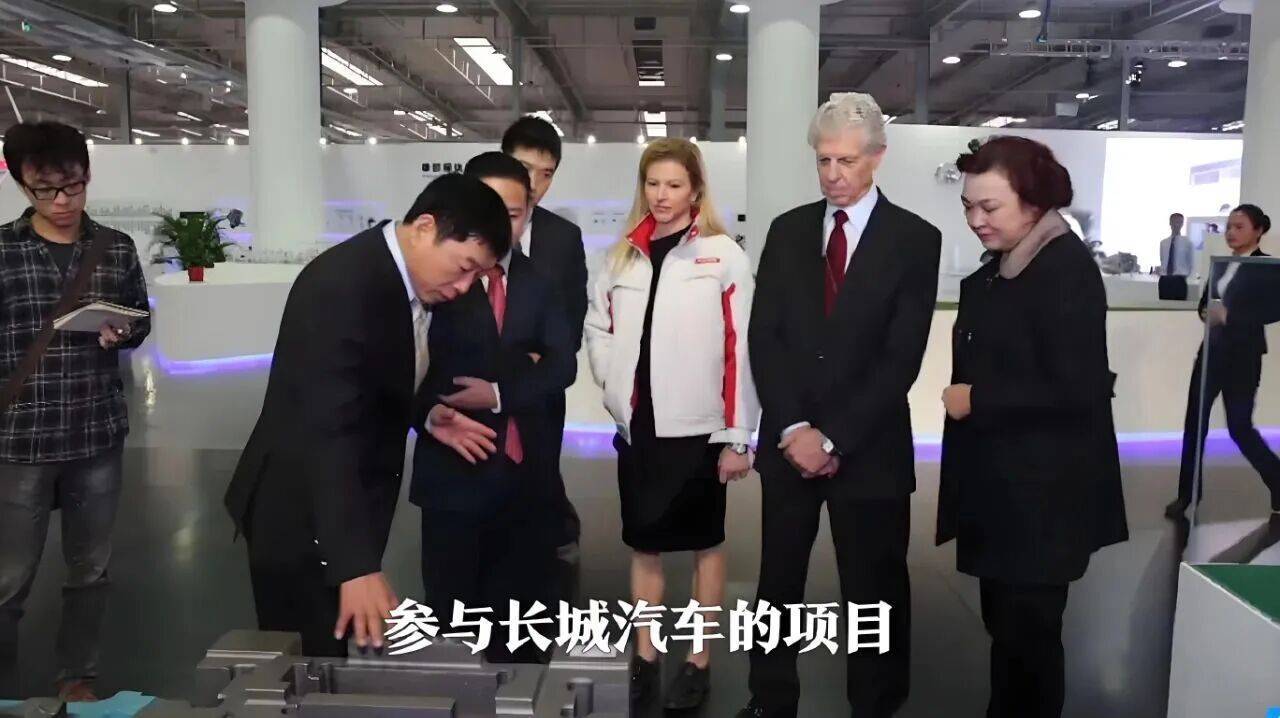
Group 1 - The article discusses the strategic consulting firm Ries Strategic Consulting and its pivotal role in guiding companies like Great Wall Motors and Jack Sewing Machine through critical decision-making processes [21][22][24] - Ries emphasizes the importance of focusing on fundamental issues that determine a company's survival and growth, rather than superficial or short-term solutions [23][25] - The success of Great Wall Motors in the SUV market is highlighted as a case study of effective positioning and trend analysis, leading to significant revenue growth [10][11][12] Group 2 - The article contrasts the approach of Ries with that of other consulting firms, noting that Ries maintains a commitment to solving core strategic problems rather than succumbing to client pressures for easy solutions [30][31][32] - The firm’s methodology includes extensive market research and consumer insights, which are crucial for developing effective strategies [46][47] - Ries has a track record of successful case studies across various industries, demonstrating its ability to adapt and provide valuable insights in changing market conditions [38][39][45]



《国资国企发展低空经济正当时》报告发布 毕马威中国详解低空经济与消费创新路径
Sou Hu Cai Jing· 2025-09-11 12:36
Core Insights - The 2025 China International Service Trade Fair (CIFTIS) is themed "Digital Intelligence Leading, Service Trade Renewing" and will take place in Beijing from September 10 to 14 [1] - KPMG China has released a report titled "State-owned Enterprises Development in Low-altitude Economy is Timely," outlining the core advantages and development strategies of state-owned enterprises (SOEs) in the low-altitude economy [1][5] Group 1: Consumption 50 Selection - KPMG China's "Consumption 50" series, initiated in 2021, has evolved to focus on eight dimensions, including brand value and social responsibility, user experience, and innovation capabilities [2][4] - The selection process emphasizes sustainable competitiveness and long-term operational strategies, particularly in the context of emerging trends like the "dual circulation" development pattern and green consumption [4] Group 2: Low-altitude Economy Development - The low-altitude economy is recognized as a strategic emerging industry, benefiting from favorable policies since its inclusion in national planning in 2021 [5][6] - KPMG's report analyzes over 170 listed companies in the low-altitude economy, indicating that SOEs exhibit greater resilience and strength in growth [8] - The report proposes four strategic recommendations for SOEs in the low-altitude economy, including forming differentiated development advantages and leading innovation in economic clusters [8][9]

2025服贸会|毕马威:ESG信息披露带来的潜在风险可从三方面建立防范机制
Bei Jing Shang Bao· 2025-09-11 12:06
Group 1 - The core viewpoint emphasizes the potential risks associated with ESG information disclosure, including reputation, compliance, and operational risks due to misinterpretation and misuse of sensitive data [1] - Companies are advised to establish a robust internal control system to integrate ESG data management into their risk management framework, ensuring data accuracy, completeness, and security to prevent "greenwashing" or data leaks [1] - Companies should adhere to principles of "caution, responsibility, and transparency" in their disclosures, providing clear policies, data, and actions, while outlining challenges and plans for unmet goals to avoid overcommitment [1] - Engaging independent third parties for verification of ESG reports is recommended as an effective method to enhance information credibility and protect corporate reputation from "greenwashing" allegations [1] Group 2 - To improve ESG ratings, companies should focus on key issues relevant to their industry and stakeholders, prioritizing resource allocation for effective management [2] - Companies are encouraged to set quantifiable goals with timelines and continuously disclose progress to demonstrate actual results to rating agencies and the market [2]
普华永道周星:未来中国一定会有越来越多的企业变成跨国公司
Feng Huang Wang Cai Jing· 2025-09-11 10:10
Core Insights - The 25th China International Investment and Trade Fair opened on September 8 in Xiamen, Fujian, attracting representatives from over 120 countries and regions, highlighting its significance as a national-level investment-themed exhibition [1][3] Investment Landscape - The fair serves as a crucial platform for attracting foreign investment while showcasing a profound shift in investment dynamics, with international capital showing increasing interest in the Chinese market [3] - Delegations from the UK, Middle East, Central Europe, and Latin America participated, indicating a positive outlook on China's market potential [3] - Chinese companies are also leveraging the fair to explore overseas opportunities, with PwC organizing teams from Hungary, Slovakia, Italy, and the UK to connect with Chinese enterprises [3][4] Investment Logic Transformation - There is a fundamental shift in investment logic, moving from "China as a market destination" to "China as a source of R&D," as many companies view China as a critical hub for global research and development [4][3] Challenges for Chinese Enterprises Going Global - Chinese enterprises face four main risks when expanding internationally: compliance risks, operational risks, cross-border coordination risks, and brand/public relations risks [5] - Compliance risks involve navigating local policies, safety requirements, and labor regulations, which are essential hurdles for companies venturing abroad [5] - Operational risks arise from significant differences in business logic across countries, necessitating adjustments in business models and product systems [5] - Cross-border coordination risks stem from cultural and institutional differences that can lead to various issues in operations between the home and investment countries [5] - Brand and public relations risks are critical, as the perception of a single company can reflect on the entire Chinese enterprise image in foreign markets [5] Strategies for Risk Mitigation - Private enterprises are adopting strategies to address these challenges by positioning "integrity" as a core value when going global, focusing on community integration and local development [5] - Upgrading cross-border management capabilities is essential, requiring a conscious restructuring of management frameworks, including equity structures and performance assessment systems [5] International Capital Trends - International capital is increasingly favoring AI, energy, and innovative pharmaceuticals, with AI leading investment trends across the entire value chain [6] - The energy sector is regaining attention, reflecting a global consensus on the importance of energy security and rising investment demand in this area [6] - Chinese innovative pharmaceuticals and business model innovation are emerging as new attractions for international capital, with many investors looking to acquire Chinese innovations for global commercialization [6] - The potential for investment in digitalization and the trend of Chinese companies integrating local capabilities for international management are also highlighted [6]

重新定义风险管理体系:风险领导力的临界点
埃森哲· 2025-09-11 08:43
重新定义风险管理体 系 风险领导力的临界点 金融风险合规 | 重新定义风险管理 作者 金融风险合规 | 重新定义风险管理 大卫·迈亚 劳拉·布雷 奥斯南·卡兰 高级副总裁,财务风险合规主 高级执行董事,财务风险合规 总经理,财务风险合规 总经理,财务风险合规 管 本肖恩 内容 01 风险领导力的转折点 02 变化的三个维度 风险领导力的临界点 银行业正面临着要求风险管理发生代际转变的各种压力的融合。 加剧的经济波动性、地缘政治不稳定、快速的技术颠覆和不断变 化的监管环境,都迫使风险领导者重新评估并彻底重塑他们的模 型——这不仅是为了跟上步伐,更是为了在不确定性中引领。 下一代风险管理需求日益加剧。风险已成为高管议程的首要事项, 体现在过去五年北美银行和资本市场机构在业绩电话会议中对金融 和非金融敞口的提及数量持续增加。 0 5 10 15 20 25 30 35 40 图1:2020-2025年盈利电话中的风险提及 标准化提及 趋势线(多项式拟合) 相关关键词 - 风险的规范化提及 注意:基于埃森哲公司收入排名世界前3,000名的G 3000列表中确定的美国和加拿大银行及资本市场机构的业绩电话会议。 (N=8 ...
毕马威中国:低空经济为消费市场带来更可预期的增长空间
Bei Ke Cai Jing· 2025-09-10 15:27
Group 1 - The core topic of the 2025 China International Service Trade Fair is how to unleash consumer momentum, with a focus on the emerging low-altitude economy as a significant growth opportunity for the consumer market [1][3] - The low-altitude economy is recognized as a strategic emerging industry, benefiting from unprecedented policy incentives and development opportunities, which are expected to drive explosive growth in this sector [1][2] - The rapid development of technology, including artificial intelligence, big data, and the Internet of Things, is reshaping consumer behavior and expectations, leading to a greater emphasis on consumer experience, brand values, and sustainability [1][3] Group 2 - KPMG's analysis of over 170 listed companies related to the low-altitude economy indicates that state-owned enterprises (SOEs) exhibit stronger growth resilience due to their larger scale and capabilities [2] - The report outlines four strategic recommendations for the development of the low-altitude industry by SOEs, including forming differentiated development advantages, playing a leading role in innovation, creating new application scenarios, and leveraging resource integration advantages [2] - SOEs are encouraged to enhance their innovation systems, focusing on high-quality technology supply, efficient results transformation, and building a high-level innovation ecosystem to strengthen their position in the industry chain [2]
德勤中国与香港大学携手成立AI实验室
Zheng Quan Shi Bao Wang· 2025-09-10 14:34
人民财讯9月10日电,9月10日,德勤中国与香港大学正式签署协议成立AI实验室。德勤中国首席执行 官刘明华表示,该实验室将提供AI的实际应用解决方案。作为AI实验室的首项研究成果,双方联合发 布《人工智能采用调查》结果。报告显示,AI应用仍处于试验或早期采用阶段,深度不足,但尽管前 景仍存在不确定性,仍有近三分之一的企业计划将AI投资预算增加逾25%。 ...
普华永道:企业出海需系统把握税务合规管理在内的五大核心环节
Zheng Quan Ri Bao Wang· 2025-09-10 11:45
普华永道发布观点称,企业出海需系统把握五大核心环节。一是研究与选址,应综合评估宏观环境、营商环境、物流、供 应链、成本、人力、政策及产业生态,关注财税优惠及外汇管制,科学预测风险与回报,确保决策可行;二是投融资规划,需 聚焦利润回流实际税率、境外税收抵免及架构重组,明确税收协定适用要求,统筹融资税务影响,保障合规高效;三是运营设 计,涵盖销售布局、关税与原产地分析、研发与无形资产安排、本地服务及常设机构风险管理,通过精细化运营平台和转让定 价提升资金安全与效率;四是落地实施,包括完成公司设立、ODI(境外直接投资)申请、关联交易定价、人员派遣与绩效激 励,履行财务、税务、数据、法律等方面的合规义务,并适时申请税收优惠;五是税务合规管理,应建立全球税务体系,制定 税制手册,依托专业合规申报和风控服务,保障全球税务合规。 本报讯 (记者张文湘 见习记者占健宇)9月8日至11日,第二十五届中国国际投资贸易洽谈会在厦门举行。会议期间,普 华永道举办了"出海热门国家投资环境洞察与税务筹划实务"专题分享会,旨在助力中国企业精准把握全球投资机遇,有效规避 税务风险,实现稳健海外扩张。 (编辑 郭之宸) ...
生源持续减少!机构:未来十年美国将有多达370所大学关闭或合并
Xin Lang Cai Jing· 2025-09-05 06:19
Core Insights - A prediction by Huron Consulting Group indicates that up to 370 private colleges in the U.S. may close or merge in the next decade due to a continuous decline in student enrollment [1] - The projected closures are more than three times the number of nonprofit private colleges that closed in the previous decade, highlighting a significant trend in the higher education sector [1] - The decline in student numbers is attributed to a drop in birth rates starting in 2007, which has not reversed, with an estimated 13% decrease in graduates by 2041 compared to 2025 [1] Group 1: Current Trends and Predictions - Huron Consulting Group's analysis suggests that the impending closures and mergers will affect approximately 600,000 students and involve around $18 billion in endowment funds [1] - The report indicates that 430 institutions with over 1.2 million students and $134 billion in endowment funds are facing moderate survival threats [2] - The number of private nonprofit colleges that closed from 2010 to 2020 was 114, compared to only 59 in the previous decade, indicating a worsening trend [2] Group 2: Institutional Responses and Recommendations - Institutions are advised to develop plans to address enrollment challenges, such as diversifying student demographics through graduate programs, professional courses, and part-time offerings [2] - The urgency of planning is emphasized, with a warning that institutions with only three years of operational funding have less than a 50% chance of survival if they do not act early [2] - A recent study by the Philadelphia Federal Reserve suggests that a 15% sudden drop in college student enrollment could lead to an additional 80 college closures [2]