直播电商

Search documents
新规来了!食品直播这些"红线"不能踩
Jing Ji Guan Cha Wang· 2026-01-17 06:00
Core Viewpoint - The new regulations on live-streaming e-commerce food safety aim to address high complaint rates and enhance consumer protection by prohibiting the sale of 13 categories of hazardous food products and implementing strict monitoring measures [2][5]. Group 1: Regulatory Framework - The new regulations will take effect on March 20, 2026, and focus on high-risk food products that threaten consumer health, including those with toxic substances, pathogens, and expired items [3][4]. - The regulations extend oversight to all participants in the live-streaming process, including platforms, hosts, and supply chains, ensuring comprehensive accountability [3][4]. Group 2: Prohibited Items - The 13 categories of banned food items include products made with non-food materials, those containing harmful additives, expired or spoiled foods, and unlabelled pre-packaged goods [3][4]. - Specific examples of prohibited items include industrial alcohol mixed beverages, foods with excessive pathogens or heavy metals, and products from unqualified sources [3][4]. Group 3: Monitoring and Compliance - The regulations require food producers to display licensing information and verify supplier qualifications, while non-food producers must implement strict product selection processes [4][5]. - Platforms are mandated to employ food safety personnel and establish mechanisms for real-time monitoring and rapid response to violations [4][5]. Group 4: Consumer Protection Measures - New rules prohibit misleading advertising practices, such as using filters to enhance the appearance of spoiled food or falsely claiming health benefits [4][5]. - Hosts must clearly disclose key information about food products, including allergens and target demographics, to prevent consumer misinformation [4][5]. Group 5: Industry Impact - The regulations present both challenges and opportunities for the live-streaming e-commerce sector, potentially leading to market exits for non-compliant businesses but fostering a higher quality market environment in the long run [6]. - Compliant businesses can enhance consumer trust through transparency and quality assurance, while platforms can improve user experience through better technology and review processes [6]. Group 6: Future Outlook - The implementation of these regulations marks a significant milestone in live-streaming e-commerce oversight, promoting a safer and more regulated market environment [6]. - The industry is expected to transition from unregulated growth to a more structured and legally compliant framework, benefiting overall consumer safety and industry reputation [6].


监管部门为食品直播划定“底线”和“红线”
Jing Ji Guan Cha Bao· 2026-01-17 03:15
(原标题:监管部门为食品直播划定"底线"和"红线") 近日,市场监管总局发布《直播电商经营者落实食品安全主体责任监督管理规定》,明确自2026年3月 20日起,直播间内禁止销售13类危害食品安全的商品,并细化10项直播行为禁令,为直播电商食品经营 和直播行为划定"底线"和"红线"。 随着直播带货食品投诉量占整体投诉四成以上,成为问题最集中的品类,监管层早已定性:直播电商食 品安全属"高风险领域",必须重点整治。此次新规出台直击行业痛点,回应消费者对食品安全的强烈关 切,标志着直播电商监管迈入精细化、系统化新阶段。 此次明确的13类禁售食品清单,聚焦高风险、高危害食品,包括:用非食品原料生产或添加有毒有害物 质的食品,如工业酒精勾兑酒、非法添加西布曲明的减肥产品;致病性微生物、重金属超标的食品,如 菌落总数超标的即食食品、镉含量超标的稻米;过期、腐败变质、霉变生虫的食品,如发霉坚果、变质 肉类;病死毒死或检疫不合格的畜禽水产制品,如私屠滥宰的猪肉、药物残留超标的鱼类;无标签的预 包装食品,如"三无"进口零食、散装称重后二次包装的糕点;国家明令禁止生产经营的食品,如河豚鱼 干、未经许可的野生动物制品等。这些食品直 ...
直播电商食品安全新规出台,构建全链条监管体系
Jing Ji Guan Cha Wang· 2026-01-17 02:19
Core Viewpoint - The newly released regulations by the State Administration for Market Regulation on live-streaming e-commerce will enhance food safety oversight, marking a significant shift towards a more systematic and detailed regulatory framework in the industry [2][4]. Group 1: Regulatory Changes - The regulations will officially take effect on March 20, 2026, and prohibit the sale of 13 categories of food that pose serious health risks to consumers [2]. - The regulations include a detailed list of 10 specific prohibitions on live-streaming behaviors, addressing issues such as false advertising and misleading consumers [3][4]. Group 2: Scope of Regulation - The new rules expand the regulatory scope to include all relevant parties, from platforms to hosts and supply chains, ensuring comprehensive oversight [3]. - Food production and operation companies must disclose license information when opening live-streaming channels and verify supplier qualifications [3]. Group 3: Consumer Protection Measures - The regulations aim to combat common issues in live-streaming e-commerce, such as "filter sales" and exaggerated claims, by prohibiting misleading practices [3]. - Hosts are required to prominently display key information about food products, such as allergens and suitable consumer groups, to prevent mispurchases [3]. Group 4: Industry Impact - The regulations signal a shift from passive to proactive management of food safety in live-streaming, with platforms bearing full responsibility for compliance [4]. - While some businesses may exit the market due to compliance challenges, the long-term effect will be a push towards higher product quality and service standards in the industry [4][6]. Group 5: Future Outlook - The implementation of these regulations is expected to accelerate the "survival of the fittest" in the live-streaming e-commerce sector, allowing businesses that prioritize food safety and consumer rights to thrive [6]. - The regulations are seen as a milestone in live-streaming e-commerce oversight, establishing a robust framework for consumer protection and industry integrity [6][7].

1月17日|财经简报 50万亿定期存款到期 直播电商新规出台
Sou Hu Cai Jing· 2026-01-17 02:12
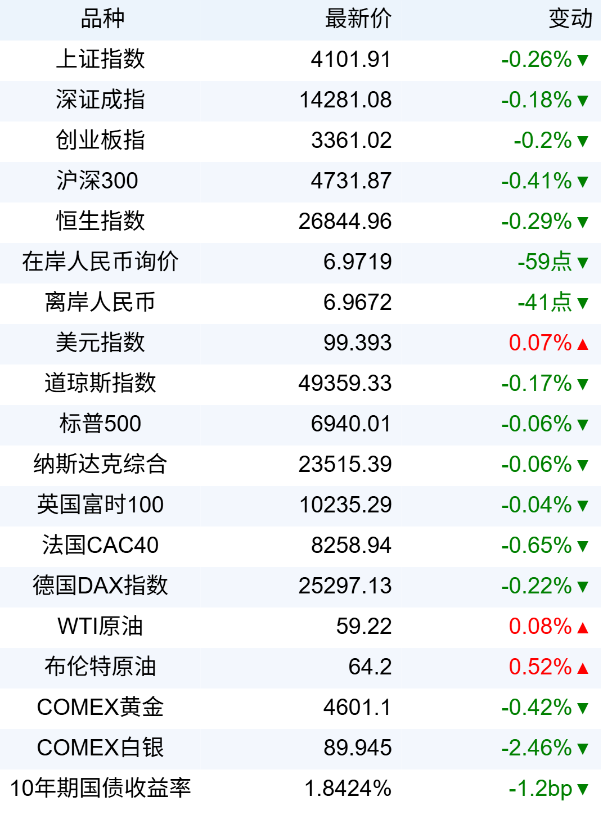
Market Performance - A-shares managed to stay above 4100 points, with the Shanghai Composite Index closing at 4101.91, down 0.26%, while the Shenzhen Component and ChiNext Index fell by 0.18% and 0.20% respectively, with a total market turnover of 3.06 trillion yuan [2] - The electric grid equipment sector showed strength, with power stocks rising; chip stocks surged, particularly in the memory chip segment; humanoid robot concepts were active, while AI application themes weakened across the board [2] - The Shanghai and Shenzhen stock exchanges conducted over 800 regulatory actions within a week to address abnormal trading and collectively raised the margin requirements for financing to prevent market volatility [2] Global Market Overview - U.S. stock indices experienced slight declines, with the Dow Jones down 0.17%, Nasdaq down 0.06%, and S&P 500 down 0.06%, although chip stocks performed well, with the Philadelphia Semiconductor Index rising by 1.1% and Micron Technology surging over 7%, pushing its market value above 400 billion dollars [3] - Commodity markets saw a nearly 3% drop in copper prices due to Nvidia's significant reduction in projected copper demand for data centers from 500,000 tons to 200 tons; spot gold fell by 0.7% but gained 2% over the week; WTI crude oil rose to 60 dollars before retreating [3] China Capital Market Policies - The China Securities Regulatory Commission (CSRC) plans to focus on risk prevention, strong regulation, and promoting high-quality development in 2026, advancing investment and financing reforms, combating illegal activities, enhancing the quality of listed companies, and promoting dual-directional opening [5] - The People's Bank of China and the State Administration of Foreign Exchange announced continued implementation of moderately loose monetary policy, utilizing various tools to enhance counter-cyclical adjustment and introducing eight measures to strengthen structural tool support [5] Major Funding Trends - In 2026, China will face a maturity wave of approximately 50 trillion yuan in time deposits, with most funds likely to remain within the banking system, shifting to slightly higher interest products, while a large-scale flow into the stock market is unlikely [7] - On a positive note, nine broad-based ETFs saw transaction volumes exceed 10 billion yuan, with the Huaxia CSI 300 ETF and the Huatai-PineBridge CSI 300 ETF achieving transaction volumes of 25.923 billion yuan and 22.705 billion yuan respectively, indicating a rapid adjustment of positions through ETFs [7] AI and Chip Industry Boom - Goldman Sachs believes TSMC has entered a multi-year growth cycle driven by AI, raising its target price to 2,600 New Taiwan dollars, with advanced packaging becoming a second growth engine, expected to exceed 10% of revenue by 2026 [10] - Shenghong Technology anticipates a 260.35%-295.00% increase in performance for 2025, driven by AI computing demand boosting its PCB business; Lianqi Technology expects a net profit growth of 52.29%-66.46% in 2025 due to a significant increase in interconnect chip shipments [10] - Nvidia's CEO Jensen Huang has proactively positioned the company to secure land near TSMC's Fab 18 facility, indicating strategic investments in the chip sector [11] Other Industry Dynamics - The State Administration for Market Regulation released new regulations for live-streaming e-commerce, specifying 13 categories of food that cannot be sold through live broadcasts [12] - IKEA China announced the closure of seven offline stores by February 2, with significant discounts attracting large crowds [12] - The United Nations projects a global economic growth rate of 2.7% for 2026, a decrease of 0.1 percentage points from 2025, with global trade growth expected to decline from 3.8% in 2025 to 2.2% in 2026 [12] - The IMF forecasts a 2.1% economic growth rate for the U.S. in 2026, with inflation expected to drop to 3.5% by the end of 2025 [13] - The State Council emphasized accelerating the cultivation of new growth points in service consumption and implementing paid leave systems, aiming to enhance long-term mechanisms for promoting consumption [14]

新规为直播电商经营者销售食品划“红线”
Yang Shi Xin Wen· 2026-01-17 01:37
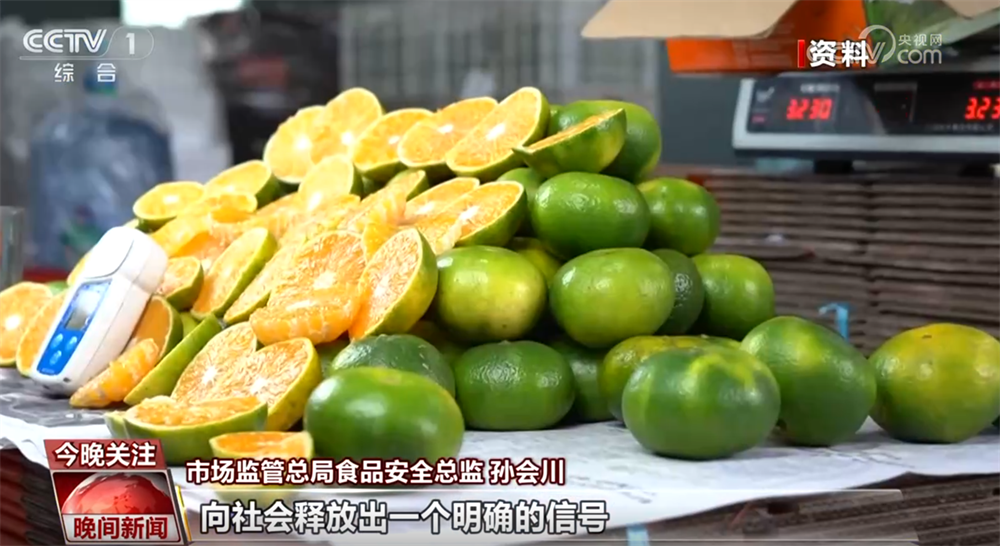
《规定》针对不同食品生产经营者自己开设直播间的"店播"和达人带货的"达播"模式,也区分了责 任。 市场监管总局食品安全总监 孙会川:做食品的,如果开直播间的话,必须具有相应的资质;假如 是纯带货的,那就必须要加强对选品把关。谁都不能糊弄消费者。 您有没有遇到过在直播间购买食品,收到后发现货不对版,甚至是假冒伪劣或者是过期食品,想要 投诉却被来回推诿的经历? 昨天(16日),记者从市场监管总局新闻发布会上了解到,《直播电商经营者落实食品安全主体责任 监督管理规定》(以下简称《规定》)将在今年3月20日起正式实施。 这部专门为直播电商经营者销售食品划红线、立规矩的新规有哪些重要举措? 《规定》的核心之一,是将直播电商活动的所有参与主体全面纳入监管框架,并根据其经营模式的 特点,清晰划分了各自的责任。 市场监管总局食品安全总监 孙会川:从直播平台到直播间,再到主播和MCN机构(直播营销人员服 务机构),都必须按照《规定》的要求,履行相应的食品安全主体责任。一旦出了食品安全问题,该是 谁的责任,谁就得负责,无论是谁都不要想能逃避责任。 平台作为直播电商活动的重要载体,是食品安全风险防控的关键环节。《规定》提出了一系列 ...
“谁都不能糊弄消费者!” 新规出台为直播电商卖食品划出“红线”
Yang Shi Wang· 2026-01-17 01:33
央视网消息:市场监管总局1月16日召开新闻发布会介绍,《直播电商经营者落实食品安全主体责任监督管理规定》将在今年3月20日正式 实施,新规将为直播电商经营者销售食品划出红线。 明确平台责任 直播间里的货和人都得管 《规定》明确,平台作为直播电商活动的重要载体,是食品安全风险防控的关键环节。《规定》提出了一系列创新性举措,对平台明确了 刚性的要求。 市场监管总局食品安全总监 孙会川:向社会释放出一个明确的信号,不管是直播间里的货,还是直播间里的人,平台都必须得管;具体 管什么、怎么管,平台必须按照要求的"规定动作"不打折扣做到位。不然,如果出了食品安全问题,平台就必须要负责到底。 "店播"需有资质 "达播"对选品把关 《规定》针对不同食品生产经营者自己开设直播间的"店播"和达人带货的"达播"模式,也区分了责任。 市场监管总局食品安全总监 孙会川:"做食品的"你如果开直播间,必须要具有相应的资质;假如你是"纯带货的",那你就必须要加强对 选品的把关。谁都不能糊弄消费者! 《规定》明确13类直播间禁售食品 《规定》明确13类直播间禁售食品,包括用非食品原料生产、添加有毒有害物质的食品;致病性微生物、重金属超标食品; ...
新华财经早报:1月17日
Xin Hua Cai Jing· 2026-01-17 00:57
Group 1 - Canada will grant China an annual quota of 49,000 electric vehicles, which will enjoy a 6.1% Most Favored Nation tariff rate, with the quota increasing at a certain rate each year [1] - The Ministry of Commerce of China expects both countries' industries to seize opportunities for mutual benefit and win-win cooperation [1] - The State Council of China is focusing on boosting consumption and supporting new service consumption growth points, aiming to enhance service quality and consumer willingness [1] Group 2 - The China Securities Regulatory Commission (CSRC) is strengthening market monitoring and regulation to prevent excessive speculation and market manipulation [1] - The CSRC is drafting a trial management method for derivative trading, emphasizing prudent regulation and maintaining reasonable leverage levels in the derivatives market [1] - The market supervision authority approved the acquisition of Dole Group by American Axle Manufacturing with additional restrictive conditions to ensure fair competition in the automotive parts sector [2] Group 3 - TCL Zhonghuan signed a cooperation framework agreement to invest in a new energy project [4] - Huatai Hotel's controlling shareholder is planning a merger and reorganization, which may lead to a change in actual control [4] - Cheng Tian Wei Ye plans to raise no more than 800 million yuan through a private placement for liquid cooling system projects [4]


明确了!这些食品,直播间里坚决不能卖
券商中国· 2026-01-16 23:38
百万用户都在看 上交所出手,暂停国晟科技部分投资者账户交易!浙江证监局也有动作 李湘,突发!多平台被禁止关注,1分钟广告报价达30万!名下14家公司已注销 热门资产,直线跳水!高盛,突然空袭! "降息大门关闭!"美联储,预期突变!美国重磅数据出炉! 局势升级!俄罗斯,大规模袭击!发射7枚巡航导弹!英国,重大宣布! 违法和不良信息举报电话:0755-83514034 邮箱:bwb@stcn.com 据介绍,针对消费者反映强烈的问题,为切实保障公众身体健康和生命安全,规定对禁止直播经营的食品作出 了细化规定, 其中包括用非食品原料生产、添加有毒有害物质的食品;致病性微生物、重金属超标食品;过 期、腐败变质、霉变生虫食品;病死毒死或检疫不合格的畜禽水产肉类及其制品;无标签预包装食品;国家明 令禁止生产经营的食品等。 规定将直播电商平台经营者、直播间运营者、直播营销人员、直播营销人员服务机构全部纳入监管范畴。从直 播平台到直播间,再到主播和MCN机构,都必须按照规定要求,履行相应的食品安全主体责任。 一旦出了问 题,该是谁的责任,谁就得负责,谁都别想逃避责任。 针对不同直播形式的特点,区分不同主体的责任。规定明确要求 ...

3月20日起 13类食品直播间不能卖
Xin Lang Cai Jing· 2026-01-16 18:01
转自:成都日报锦观 市场监管总局发布直播电商食品安全新规 3月20日起 13类食品直播间不能卖 主播们在直播间向网友介绍特色菜品(资料图片)。 新华社发 建立全链条审核机制 平台要对直播间运营者的主体资质、食品经营许可或备案信息进行核验登记,建立档案并且每六个月更新一次;对于首次开展食品直播的营销 人员,必须核验身份信息并组织食品安全培训 创新风险管控体系 平台必须结合食品类别、交易规模和风险状况,制定《食品安全风险管控清单》,将直播间运营者资质、禁售食品排查、直播行为规范等,作 为重点管控内容 强化违法处置力度 平台发现食品安全违法行为后,必须立即制止并且报告监管部门,同时根据违法情节,采取警示、限制流量、暂停直播、关闭账号、列入黑名 单等处置措施 随着直播电商食品销售规模不断扩大,食品成为电商直播带货的主打商品之一,为消费者拓展了选购食品的新渠道,同时也存在虚假宣传、假 冒伪劣、售卖过期食品等乱象,消费者退货维权难。 针对平台责任落实不到位、风险管控流于形式等突出问题,市场监管总局近日发布的《直播电商经营者落实食品安全主体责任监督管理规定》 提出了一系列创新性举措,对平台明确了刚性要求,明确13类直播间禁 ...

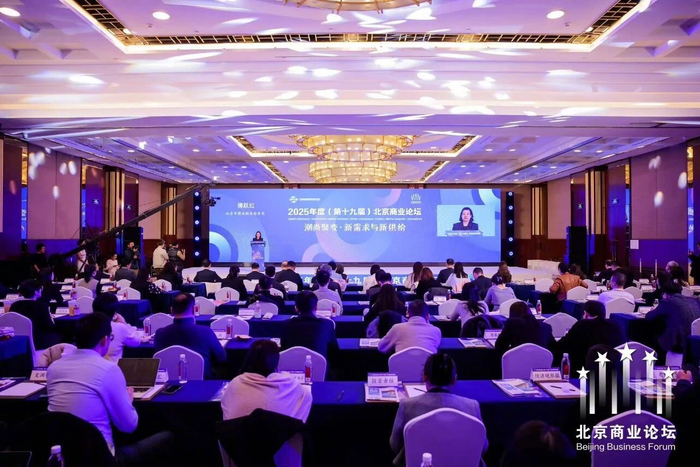
谁将成为下一个万亿级消费增长点?北京这场论坛重磅“剧透”
Bei Jing Shang Bao· 2026-01-16 15:21
Core Insights - The integration of traditional and fashionable elements is crucial for revitalizing consumption and fostering growth highlights in the current macroeconomic context [2][4][30] - The 2025 Beijing Commercial Forum focused on the theme "Fashion Fusion: New Demand and New Supply," bringing together representatives from various sectors to discuss fashion consumption and trends [2][4] Macro Overview - Fashion consumption is a key driver of urban vitality and consumption growth in Beijing, supported by a rich cultural foundation and innovative momentum [4] - Policies such as the "Beijing Fashion Consumption Expansion Action Plan" and the "Beijing Fashion Industry High-Quality Development Implementation Plan (2025-2027)" are being implemented to support the integration of fashion consumption and lifestyle [4] Expert Insights - The "14th Five-Year Plan" anticipates the emergence of numerous consumption growth points, particularly in quality enhancement, service expansion, green health, and digital innovation, with fashion consumption expected to become a trillion-level growth point [6] - Fashion consumption transcends clothing and accessories, driven by innovation and cultural resonance, representing a significant trend in consumer behavior [6] Strategic Cooperation - A strategic partnership was established between the Beijing Top Ten Commercial Brands Committee and Ningbo Bank Beijing Branch to explore financial services that meet the needs of the consumption sector [8][10] Case Studies - The HERE Dream Island Group aims to connect diverse cultures through trendy products, emphasizing the importance of original design and consumer interaction in physical stores [12] - The Dajixiang project has achieved a 98% occupancy rate and over 1 million visitors in seven months, showcasing the successful integration of culture and commerce [14] Market Trends - The pet industry in Beijing shows significant growth potential, with a current market penetration of approximately 12%, compared to over 50% in developed countries [20] - Yonghui Supermarket is undergoing a comprehensive transformation to enhance customer experience, achieving an 80% SKU turnover rate and introducing over 30 new convenience services [22] Cultural Integration - The revival of intangible cultural heritage, such as shadow puppetry, is being commercialized through innovative partnerships and digital engagement, reaching over 65 billion views on social media [24] Consumer Behavior - The rise of emotional consumption among younger demographics emphasizes the importance of emotional value and cultural connection in product design [16] - The concept of "trendiness" is becoming a critical factor in consumer engagement, with products that resonate emotionally and socially gaining popularity [28][30] Annual Survey - The "2025 Beijing Commercial Development Blue Book" highlights the dynamic interaction between new demand and supply, emphasizing the role of fashion consumption in shaping future commercial landscapes [30][33]