
新能源汽车废旧动力电池回收

Search documents
【商用车】2026年2月轻型商用车市场预测研究报告
乘联分会· 2026-03-10 08:44
Industry Insights - The Ministry of Industry and Information Technology, along with five other departments, has jointly issued interim measures for the recycling and comprehensive utilization of used power batteries from new energy vehicles, aiming to establish a standardized, safe, and efficient recycling system [3] - The Ministry of Industry and Information Technology has revised two vehicle access review requirements, effective from 2027, to address challenges posed by the electrification, intelligence, and connectivity of the automotive industry. This revision raises the technical and safety thresholds, potentially accelerating industry consolidation and directing resources towards leading companies with strong technological capabilities [5] Product Trend Analysis - Factors driving new energy light trucks include: 1. Policy incentives such as "trade-in" programs, local subsidies, and road rights advantages. For instance, a subsidy of 35,000 yuan per vehicle for scrapping old trucks is available, with policies extending until 2026. New energy urban cold chain delivery trucks also receive a subsidy of 35,000 yuan per vehicle [8] 2. Technological upgrades with the rise of pure electric platforms [8] Current Challenges - The industry is facing challenges that require traditional light truck companies to transform comprehensively across technology, products, services, and operations, evolving from manufacturing-oriented enterprises to technology and service-oriented enterprises [18] Industry Restructuring and Opportunities - The penetration rate of new energy light trucks is expected to continue increasing, potentially reaching 50% by 2030, with applications expanding into intercity, specialized, and county-level markets [19] Sales Forecast - The light commercial vehicle market is projected to maintain stability amid structural adjustments, with sales expected to reach approximately 2.933 million units in 2026, reflecting a slight increase of 1.0% year-on-year. Growth will primarily stem from the deepening of new energy transitions and expansion into overseas markets [23]

废旧电池回收新规出台 现存电池回收相关企业超20万家
Zhong Guo Neng Yuan Wang· 2026-01-26 11:40
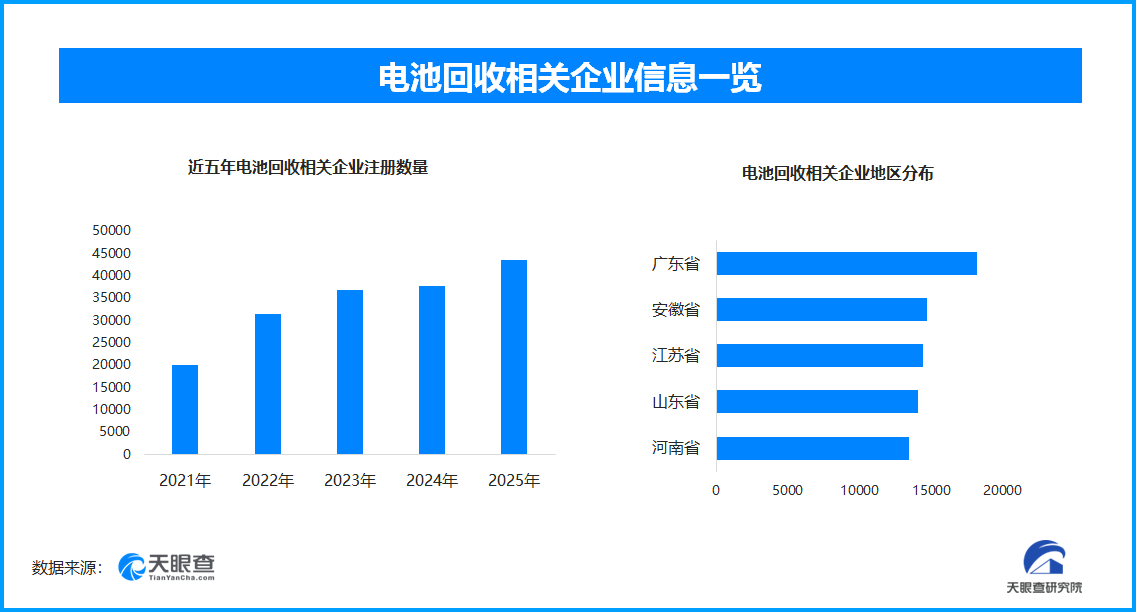
Core Viewpoint - The new regulations for the recycling and comprehensive utilization of used power batteries in the new energy vehicle sector signify a new phase of standardized management across the entire chain in China [1] Group 1: Regulatory Framework - The new regulations impose responsibilities on all parties involved, including battery manufacturers, vehicle companies, and recycling firms, with administrative penalties to enhance supervision [1] - Compliance records of these entities will directly affect their business qualifications and partnership opportunities, making it essential to verify their operational scope and check for any environmental penalties, safety incidents, or major legal disputes [1] Group 2: Industry Integration and Investment Opportunities - The regulations are expected to integrate multiple resources, promoting the transformation of the industry towards standardization, efficiency, and sustainability, thereby supporting the long-term development of the new energy vehicle sector [2] - Understanding the capital backgrounds and control relationships of key enterprises in the industry is crucial for investors and researchers, as it allows for a clearer view of the investment institutions, control levels, and associated networks behind these companies [2] Group 3: Market Trends - As of now, there are over 204,000 battery recycling-related enterprises in China, with more than 43,000 new registrations expected by 2025, indicating a consistent annual growth trend in the number of registered companies over the past five years [2] - The peak in the number of registered battery recycling enterprises is projected to occur in 2025 [2] Group 4: Regional Distribution - Guangdong, Anhui, and Jiangsu provinces lead in the number of battery recycling-related enterprises, with over 18,000, 14,000, and 14,000 companies respectively, followed by Shandong and Henan provinces [3]
观车 · 论势 || 动力电池报废新规开启产业新篇
Zhong Guo Qi Che Bao Wang· 2026-01-26 10:34
Core Viewpoint - The introduction of the "Interim Measures for the Recycling and Comprehensive Utilization of Waste Power Batteries for New Energy Vehicles" marks a significant regulatory shift aimed at establishing a comprehensive management framework for battery recycling, emphasizing lifecycle management and digital solutions to enhance the sustainability of the new energy vehicle industry [1][2]. Group 1: Regulatory Innovations - The "Vehicle-Battery Integrated Scrapping" system addresses industry pain points by mandating that scrapped vehicles must include their power batteries, preventing the illegal sale of batteries in black markets [1][2]. - The digital identity management system for power batteries introduces unique dynamic codes for each battery, enabling full-chain traceability and proactive regulatory measures, which can enhance consumer confidence and optimize resource allocation for companies [1][2]. - A comprehensive responsibility system and strict penalty mechanisms are established, holding all stakeholders accountable and imposing administrative penalties for non-compliance, with severe cases potentially leading to criminal liability [2][3]. Group 2: Challenges in Implementation - Market-level challenges include the need to address the knowledge gap and financial concerns of vehicle owners, particularly those in the ride-hailing and freight sectors, who may resist the new regulations due to perceived short-term financial losses [2][3]. - Small and medium-sized enterprises face significant compliance costs and technical adaptation challenges, which may lead to the elimination of potentially viable companies during industry consolidation [3][4]. - Regulatory challenges include regional disparities in enforcement capabilities and the need for improved data-sharing mechanisms among departments to effectively identify and address violations [3][5]. Group 3: Recommendations for Successful Implementation - The establishment of a market-based recycling pricing mechanism and incentives for compliant battery disposal can help balance interests and reduce the appeal of black market sales [4][5]. - Government support for small enterprises through subsidies, low-interest loans, and tax reductions can facilitate compliance and encourage collaboration among industry leaders to support smaller firms [4][5]. - Strengthening grassroots enforcement capabilities and enhancing inter-departmental collaboration are crucial for effective regulation, alongside the development of detailed technical standards for battery recycling and utilization [5].
腾讯反舞弊,90余人被解聘
2 1 Shi Ji Jing Ji Bao Dao· 2026-01-26 08:10
Group 1 - Tencent reported that over 90 individuals were dismissed for violating the company's "high-pressure line" policy, with more than 20 referred to law enforcement for criminal activities [1] - The report highlighted over 70 cases of serious violations including commercial bribery and embezzlement, leading to dismissals and legal actions against involved employees and external parties [1] - Tencent emphasized the importance of compliance with laws and regulations, particularly in light of the upcoming ESG disclosure requirements in 2026 [1] Group 2 - The ESG reporting season for A-share listed companies is approaching, with 471 companies required to disclose their 2025 ESG reports by April 30, 2026 [2] - A survey has been initiated to gather insights from multinational corporations, leading enterprises, listed companies, and financial institutions regarding their practices and challenges in ESG information disclosure [2] - The survey will last for three months starting from January 22, 2026, and aims to identify exemplary cases for inclusion in a research report [2] Group 3 - The third International Clean Energy Day is set for January 26, 2026, focusing on promoting clean energy transition in a fair and inclusive manner [4] - This global event aims to showcase innovations and developments in clean energy to accelerate the achievement of sustainable development goals [4] Group 4 - New regulations for the recycling and comprehensive utilization of used power batteries from electric vehicles will take effect on April 1, 2026, emphasizing a full lifecycle management approach [5][6] - The regulations include establishing a national information platform for battery traceability and implementing strict penalties for non-compliance [6] Group 5 - Xiaomi faced two fire incidents involving its vehicles on January 19, 2026, which raised significant public concern, although no injuries were reported [7] - The company stated that the battery status was normal prior to the incidents, and the fires were extinguished promptly by fire services [7] Group 6 - ST Dongshi's actual controller, Xu Xiong, was sentenced to six years and six months in prison for manipulating the securities market, with a fine of 170 million yuan imposed [7] - The ruling was confirmed by the Shanghai High People's Court, marking the case as a significant legal outcome in the securities sector [7] Group 7 - Zhejiang Securities faced regulatory scrutiny for inadequate compliance checks on investor transactions, resulting in a warning letter from the Zhejiang Securities Regulatory Bureau [7] - The firm was found to have issues with account management and compliance, leading to administrative measures against its management [7]




钴锂金属行业周报:上行趋势不改,价格加速走强
Orient Securities· 2026-01-25 00:45
Investment Rating - The industry investment rating is maintained as "Positive" for lithium and cobalt core targets, suggesting active positioning in these sectors [9][14]. Core Insights - Short-term, lithium prices are expected to fluctuate at high levels due to futures market sentiment, with potential for a temporary spike before the holiday season. However, downstream acceptance of high prices is limited, leading to a possible shift towards price stabilization [4][9]. - In the medium term, supply constraints and rising cost levels have been confirmed, maintaining an upward trend for lithium prices. Cobalt demand is weak, but tight raw material supply and smelting cost support keep cobalt salt prices relatively firm, limiting short-term price declines [4][9]. Summary by Sections 1. Cycle Assessment: Upward Trend in Lithium and Cobalt Prices - Lithium prices are experiencing strong upward momentum driven by futures market fluctuations, with the Wuxi 2605 contract rising 23.11% to 179,000 CNY/ton and the Guangzhou 2605 contract increasing 24.16% to 181,500 CNY/ton. Lithium concentrate prices rose to 2,214 USD/ton, up 234 USD from the previous week [9][14]. - Cobalt prices are supported by raw material costs, but demand from downstream sectors is weakening as the holiday approaches, leading to a market characterized by stable prices and low trading activity [9][14]. 2. Company and Industry Dynamics: Policy, Technology, and Performance Signals - The Ministry of Industry and Information Technology introduced regulations for the recycling and comprehensive utilization of used power batteries in electric vehicles. This aims to enhance the low-carbon competitiveness of battery products [18]. - Tianhua New Energy is planning to issue H shares and list on the Hong Kong Stock Exchange to enhance its international presence and capital strength [18]. - Yongxing Materials reported that its lithium extraction project has achieved full production capacity and key performance indicators [18]. 3. Core Data on New Energy Materials: Mixed Production Changes and Price Increases - In December, domestic lithium carbonate production increased by 4% month-on-month, while lithium hydroxide production rose by 2% [19][20]. - The import volume of lithium carbonate increased by 9% month-on-month, and the export volume of lithium hydroxide surged by 88% [35][37].
新能源车报废将实行“车电一体”制
Mei Ri Shang Bao· 2026-01-22 00:25
Core Viewpoint - The new regulations for the recycling and comprehensive utilization of used power batteries from new energy vehicles (NEVs) will take effect on April 1, 2026, addressing the urgent need for standardized recycling processes as the first batch of NEVs approaches retirement [1]. Group 1: Regulations on Non-Swap Battery Vehicles - For non-swap battery vehicles, the core requirement is that the power battery must be handed over together with the vehicle to a qualified recycling and dismantling organization upon retirement [2]. - By 2025, the total amount of retired power batteries in China is expected to reach 820,000 tons, and it is projected to exceed 1 million tons by 2030 [2]. - The new regulations include a "digital ID" for each battery, allowing for full lifecycle tracking from production to recycling, which aims to prevent illegal sales and ensure consumer protection [2]. Group 2: Clarifications for Battery Replacement and Recycling Channels - Vehicle owners are advised to keep records of battery replacements and recycling receipts to avoid complications during the vehicle retirement process [3]. - The regulations require battery manufacturers to establish recycling points in each province, while NEV manufacturers must cover recycling points down to the prefecture level, simplifying the recycling process for vehicle owners [3]. - Strict penalties are established for those who illegally repurpose used batteries for other applications, with fines ranging from 10,000 to 100,000 yuan for serious violations [3]. Group 3: Exemptions for Swap Battery Vehicles - Swap battery vehicles are exempt from the "vehicle-battery integration" requirement, recognizing the unique nature of the battery swap model [4]. - The decision to exempt swap vehicles is based on the growing prevalence of battery swap networks, such as those operated by NIO and CATL, which have established extensive infrastructure [4]. - The regulations will allow for different ownership models of batteries, whether purchased outright or rented, without requiring the battery to be returned with the vehicle upon retirement [4]. Group 4: Recycling Technology and Market Regulation - The recycling technology for used power batteries in China has matured, with some companies achieving recovery rates of 99.6% for nickel-cobalt-manganese and 96.5% for lithium [5]. - The implementation of the new regulations is expected to further reduce illegal recycling activities, leading to a more regulated and orderly recycling market [5]. - The overall lifecycle management system for NEVs will become more robust, enhancing environmental protection and public safety while improving the user experience for vehicle owners [6].

瑞达期货碳酸锂产业日报-20260119
Rui Da Qi Huo· 2026-01-19 09:00
1. Report Industry Investment Rating - Not provided in the content 2. Core View of the Report - The report suggests trading with a light position in a volatile market and controlling risks by paying attention to trading rhythm. The lithium carbonate market is in a stage of stable supply and cautious demand, with a slowdown in the inventory destocking rate. The option market sentiment is bearish, and the implied volatility has slightly decreased [2]. 3. Summary by Relevant Catalogs 3.1 Futures Market - The closing price of the main contract was 147,260 yuan/ton, up 1,060 yuan. The net position of the top 20 was -146,387 hands, down 8,847 hands. The position volume of the main contract was 411,331 hands, down 4,802 hands. The spread between near - and far - month contracts was -1,660 yuan/ton, down 11,320 yuan/ton. The Guangzhou Futures Exchange warehouse receipts were 27,698 hands/ton, up 240 hands [2]. 3.2 Spot Market - The average price of battery - grade lithium carbonate was 151,000 yuan/ton, down 7,000 yuan. The average price of industrial - grade lithium carbonate was 147,500 yuan/ton, down 7,000 yuan. The basis of the Li₂CO₃ main contract was 3,740 yuan/ton, down 8,060 yuan/ton [2]. 3.3 Upstream Situation - The average price of spodumene concentrate (6% CIF China) was 1,890 US dollars/ton, down 35 US dollars. The average price of lepidolite (2 - 2.5%) was 6,200 yuan/ton, down 200 yuan. The average price of amblygonite was 16,650 yuan/ton, down 500 yuan. The monthly production of lithium carbonate was 56,820 tons, up 2,840 tons. The monthly import volume of lithium carbonate was 22,055.19 tons, down 1,825.51 tons [2]. 3.4 Industry Situation - The monthly export volume of lithium carbonate was 759.24 tons, up 513.33 tons. The monthly operating rate of lithium carbonate enterprises was 49%, up 2%. The monthly production of power batteries was 201,700 MWh, up 25,400 MWh [2]. 3.5 Downstream and Application Situation - The prices of manganese - acid lithium, hexafluorophosphate lithium, cobalt - acid lithium, various types of ternary materials, and lithium iron phosphate remained unchanged. The monthly operating rate of ternary cathode materials was 50%, down 1%. The monthly operating rate of lithium iron phosphate cathode was 60%, down 3%. The monthly production of new energy vehicles was 1,718,000 vehicles, down 162,000 vehicles. The monthly sales volume was 1,710,000 vehicles, down 113,000 vehicles. The cumulative sales penetration rate of new energy vehicles was 47.94%, up 0.45%. The cumulative sales volume was 16,490,000 vehicles, up 3,624,000 vehicles. The monthly export volume was 300,000 vehicles, unchanged. The cumulative export volume was 2.615 million vehicles, up 1.331 million vehicles [2]. 3.6 Option Situation - The 20 - day average volatility of the underlying was 80.07%, down 1.16%. The 40 - day average volatility was 68.23%, down 0.08%. The total call position was 99,286 contracts, up 18,245 contracts. The total put position was 143,609 contracts, up 7,890 contracts. The put - call ratio of the total position was 144.64%, down 22.8278%. The implied volatility of at - the - money options was 0.65%, down 0.0127% [2]. 3.7 Industry News - The Ministry of Industry and Information Technology held a press conference to introduce the "Interim Measures for the Recycling and Comprehensive Utilization of Waste Power Batteries of New Energy Vehicles". In 2025, the comprehensive utilization volume of waste power batteries of new energy vehicles in China exceeded 400,000 tons, a year - on - year increase of 32.9%. From January to December, the cumulative export of power and energy - storage batteries in China reached 305.0 GWh, a cumulative year - on - year increase of 50.7%, accounting for 17.9% of the annual cumulative sales. In 2025, the structure of China's automobile export enterprises was significantly optimized. In 2025, the national industrial added value above the designated size increased by 5.9% year - on - year [2]. 3.8 Market Analysis - The main contract of lithium carbonate showed a weak and volatile trend, with a decline of 3.83% at the close. The position volume decreased month - on - month. The spot price was at a premium to the futures price, and the basis weakened compared with the previous day. On the fundamental side, smelters in the raw material end had sufficient raw material inventories, but their purchasing attitudes were cautious due to high ore prices. On the supply side, due to large market fluctuations, the upstream's shipping attitudes were divided, and upstream inventories had accumulated. On the demand side, downstream enterprises were sensitive to lithium prices, mainly purchasing on a just - in - time basis [2].
新华财经早报:1月17日
Xin Hua Cai Jing· 2026-01-17 00:57
Group 1 - Canada will grant China an annual quota of 49,000 electric vehicles, which will enjoy a 6.1% Most Favored Nation tariff rate, with the quota increasing at a certain rate each year [1] - The Ministry of Commerce of China expects both countries' industries to seize opportunities for mutual benefit and win-win cooperation [1] - The State Council of China is focusing on boosting consumption and supporting new service consumption growth points, aiming to enhance service quality and consumer willingness [1] Group 2 - The China Securities Regulatory Commission (CSRC) is strengthening market monitoring and regulation to prevent excessive speculation and market manipulation [1] - The CSRC is drafting a trial management method for derivative trading, emphasizing prudent regulation and maintaining reasonable leverage levels in the derivatives market [1] - The market supervision authority approved the acquisition of Dole Group by American Axle Manufacturing with additional restrictive conditions to ensure fair competition in the automotive parts sector [2] Group 3 - TCL Zhonghuan signed a cooperation framework agreement to invest in a new energy project [4] - Huatai Hotel's controlling shareholder is planning a merger and reorganization, which may lead to a change in actual control [4] - Cheng Tian Wei Ye plans to raise no more than 800 million yuan through a private placement for liquid cooling system projects [4]


长江有色:16日铝价续跌 今日铝市略显有价无市
Xin Lang Cai Jing· 2026-01-16 08:48
Group 1: Market Overview - LME aluminum prices showed a decline, with three-month contracts reported at $3124 per ton, down $46.5 per ton or 1.47% from the previous trading day [1] - Domestic futures for Shanghai aluminum main contract 2603 experienced a drop, closing at 23925 yuan per ton, down 540 yuan or 2.21% [1] - The trading volume for Shanghai aluminum main contract decreased by 106057 lots, with open interest down by 12932 lots [1] Group 2: Domestic Market Conditions - In the spot market, prices in the Yangtze River region ranged from 24000 to 24040 yuan per ton, down 170 yuan, with a slight change in discount levels [1] - Guangdong's spot prices were reported between 24025 and 24075 yuan per ton, down 180 yuan, with a minor increase in discount levels [1] - Shanghai region prices were between 23990 and 24030 yuan per ton, also down 170 yuan, maintaining similar discount levels [1] Group 3: Macro and Industry Insights - The macroeconomic environment shows increased risk aversion, with the US dollar index slightly retreating to around 99.33, supported by unexpected declines in initial jobless claims [2] - China's automotive industry has seen significant growth, with production and sales exceeding 30 million units for three consecutive years, and revenue surpassing 1 trillion yuan [2] - The Ministry of Industry and Information Technology released guidelines for the recycling and comprehensive utilization of used power batteries for new energy vehicles, effective from April 1, 2026 [2] Group 4: Supply and Demand Dynamics - Xinjiang's delivery profits have re-emerged, potentially adding pressure to the market, while the end of pandemic controls and the cancellation of export tax rebates may support export activities [3] - Domestic aluminum downstream processing rates have shown a slight increase of 0.25 percentage points to 60.5%, influenced by pre-holiday inventory demands [3] - The market experienced a mixed atmosphere, with initial attempts to maintain prices followed by a decline in trading activity as prices fell [3][4]

新能源汽车主如何处理废旧动力电池?
Qi Lu Wan Bao· 2026-01-16 08:39
Core Viewpoint - The Ministry of Industry and Information Technology introduced interim measures for the recycling and comprehensive utilization of used power batteries from new energy vehicles, emphasizing consumer responsibilities and safety in battery disposal [1] Group 1: Consumer Responsibilities - Consumers should understand the battery recycling guidelines provided by manufacturers when purchasing new energy vehicles and must provide necessary traceability information to manufacturers [1] - When scrapping vehicles, consumers are advised to hand over the scrapped vehicles and power batteries to licensed recycling companies to ensure compliance with regulations [1] - Consumers should avoid selling used batteries to unregulated recycling channels to prevent safety and environmental hazards [1] Group 2: Product Safety - Consumers are encouraged to purchase lithium batteries for electric bicycles or other lithium battery products that meet mandatory standards and have clear sourcing to ensure personal and property safety [1] - This measure aims to prevent the production and sale of substandard battery products using recycled batteries [1] Group 3: Active Participation - Consumers are urged to report any violations related to the recycling and dismantling of used power batteries or the use of such batteries in prohibited areas to local authorities for legal action [1]