时尚消费

Search documents
时尚产业撬动首都新消费
Bei Jing Shang Bao· 2026-01-26 14:12
Core Insights - The fashion consumption industry in Beijing is entering a new development stage driven by emotional consumption and the deep integration of culture and technology [1][4] - The younger generation's demand for personalized and emotional experiences is identified as a key driver for activating the fashion consumption market [4][5] - Policies aimed at expanding fashion consumption and promoting high-quality development in the fashion industry are set to be implemented by 2025 [1][5] Group 1: Fashion Consumption Trends - Emotional value is becoming a significant factor in consumer decision-making, with the concept of "heart price ratio" emerging among younger consumers [1][4] - The rise of new consumption models, such as trendy toys and performance economies, reflects a shift from traditional value-based consumption to experience-oriented spending [1][4] - The integration of fashion elements into various industries is essential for unlocking the consumption potential across different demographics [1][4][5] Group 2: Policy and Market Development - The implementation of the "Beijing Fashion Consumption Expansion Action Plan" and the "Beijing Fashion Industry High-Quality Development Implementation Plan (2025-2027)" aims to enrich the supply of fashion consumption [1][5] - There is a need for more tailored policies that effectively support businesses and enhance the consumer experience, particularly in areas like night services and refined offerings [5][11] - The establishment of a communication bridge between consumers and businesses is crucial for fostering a supportive policy environment [5][11] Group 3: Cultural Integration and IP Development - The future of Beijing's fashion industry is seen as reliant on cultural integration, with a focus on leveraging unique cultural assets to create meaningful connections with younger consumers [6][9] - The development of exclusive fashion IPs is essential for enhancing the emotional value of products and experiences, particularly in suburban tourism [7][9] - The integration of cultural, commercial, and tourism elements is vital for transforming short-distance travel into a comprehensive consumption experience [9][10] Group 4: Retail Innovation and Consumer Experience - Retail innovation is identified as a key strategy for unlocking consumption potential, with a focus on integrating fashion elements into retail environments [10][12] - The need for a diverse range of retail formats that cater to evolving consumer preferences is emphasized, particularly in the context of personalized and experiential shopping [10][11] - The promotion of smart retail solutions and the seamless integration of online and offline channels are critical for enhancing the consumer experience [11][12]

今年深圳福田区将实施高质量发展“十大行动”,涉及这些领域
Nan Fang Du Shi Bao· 2026-01-23 05:55
Core Viewpoint - The report from the Shenzhen Futian District government outlines significant achievements during the "14th Five-Year Plan" and sets ambitious goals for the "15th Five-Year Plan," focusing on high-quality development and modernization initiatives. Group 1: Achievements during the "14th Five-Year Plan" - The district's GDP crossed the thresholds of 5,000 billion and 6,000 billion yuan, marking two historic milestones [2] - The establishment of three new engines for growth: the Hong Kong-Shenzhen Innovation and Technology Cooperation Zone, the Xiangmi Lake New Financial Center, and the Central Park Vitality Circle [2] - The completion of 90 reform tasks, with 29 being national firsts, and total import and export volume surpassing 8,000 billion and 9,000 billion yuan [2] - Significant improvements in public services, including the construction of 68 new or expanded schools, adding 55,000 new educational slots [2] Group 2: Goals for the "15th Five-Year Plan" - The "15th Five-Year Plan" is seen as a critical phase for the district's second entrepreneurial leap, aiming for decisive progress in modernizing the urban area [3] - The plan emphasizes five key areas: development, governance, civilization, public welfare, and environmental quality [3] - The GDP target for 2030 is set at 8,300 billion yuan, with a focus on creating two trillion-yuan, eight hundred-billion-yuan, and four hundred-billion-yuan industrial clusters [3] Group 3: Key Actions for 2026 - The district will implement ten major actions to ensure a strong start to the "15th Five-Year Plan," focusing on various sectors including consumption, trade, and technology [5][6] - Specific actions include enhancing international trade, improving urban quality, and promoting financial empowerment for innovation [6] Group 4: Focus Areas for 2026 - The district aims to accelerate the development of an international metropolis core, leveraging the APEC conference to enhance urban infrastructure and services [8] - There will be a strong emphasis on innovation-driven growth, with plans to increase R&D investment and support for specialized enterprises [9] - Collaboration with Hong Kong will be strengthened to establish a world-class research hub, including new policies for cross-border cooperation [10] - The district will focus on improving public services, education, healthcare, and social welfare to enhance the quality of life for residents [13] - Environmental initiatives will aim for a harmonious coexistence with nature, targeting a reduction in PM2.5 levels to 15 micrograms per cubic meter [14]
时尚消费有望在“十五五”期间达到万亿级别
Bei Jing Shang Bao· 2026-01-19 15:29
Group 1 - The core viewpoint is that China is experiencing a structural expansion from goods consumption to service consumption, with service consumption growth consistently outpacing goods consumption, becoming the main engine for economic growth [2] - By 2025, over 20 million new consumer goods categories are expected to emerge in China, with a notable increase in fashion-related categories [2] - Fashion consumption is projected to become a trillion-yuan-level growth point during the 14th Five-Year Plan period, extending beyond clothing and accessories to encompass a broader range of lifestyle products and services [2] Group 2 - The fashion consumption scale in China is anticipated to exceed 2 trillion yuan, showing three major trends: from niche to mass appeal, from single categories to cross-border integration, and from goods consumption to lifestyle extension [2] - Cities like Beijing are becoming global innovation hubs for fashion consumption due to their ability to gather innovative resources, advanced communication systems, and international consumer demographics [3] - The development of a "first-release economy" is identified as a key strategy to promote fashion consumption, utilizing formats like first stores, first launches, and first exhibitions to introduce innovative products and experiences to the market [3]
谁将成为下一个万亿级消费增长点?北京这场论坛重磅“剧透”
Bei Jing Shang Bao· 2026-01-16 15:21
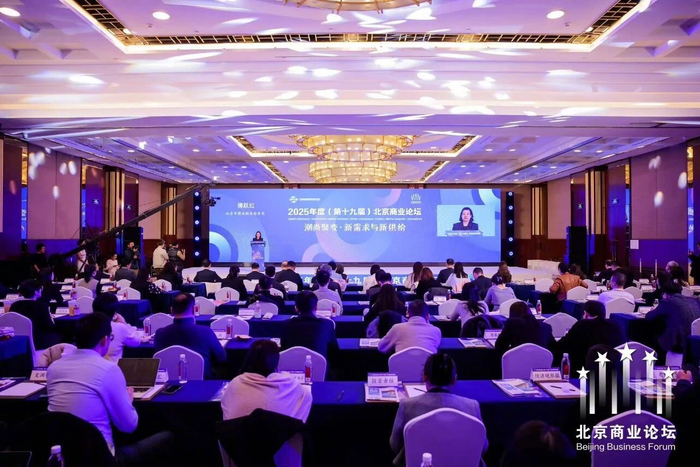
Core Insights - The integration of traditional and fashionable elements is crucial for revitalizing consumption and fostering growth highlights in the current macroeconomic context [2][4][30] - The 2025 Beijing Commercial Forum focused on the theme "Fashion Fusion: New Demand and New Supply," bringing together representatives from various sectors to discuss fashion consumption and trends [2][4] Macro Overview - Fashion consumption is a key driver of urban vitality and consumption growth in Beijing, supported by a rich cultural foundation and innovative momentum [4] - Policies such as the "Beijing Fashion Consumption Expansion Action Plan" and the "Beijing Fashion Industry High-Quality Development Implementation Plan (2025-2027)" are being implemented to support the integration of fashion consumption and lifestyle [4] Expert Insights - The "14th Five-Year Plan" anticipates the emergence of numerous consumption growth points, particularly in quality enhancement, service expansion, green health, and digital innovation, with fashion consumption expected to become a trillion-level growth point [6] - Fashion consumption transcends clothing and accessories, driven by innovation and cultural resonance, representing a significant trend in consumer behavior [6] Strategic Cooperation - A strategic partnership was established between the Beijing Top Ten Commercial Brands Committee and Ningbo Bank Beijing Branch to explore financial services that meet the needs of the consumption sector [8][10] Case Studies - The HERE Dream Island Group aims to connect diverse cultures through trendy products, emphasizing the importance of original design and consumer interaction in physical stores [12] - The Dajixiang project has achieved a 98% occupancy rate and over 1 million visitors in seven months, showcasing the successful integration of culture and commerce [14] Market Trends - The pet industry in Beijing shows significant growth potential, with a current market penetration of approximately 12%, compared to over 50% in developed countries [20] - Yonghui Supermarket is undergoing a comprehensive transformation to enhance customer experience, achieving an 80% SKU turnover rate and introducing over 30 new convenience services [22] Cultural Integration - The revival of intangible cultural heritage, such as shadow puppetry, is being commercialized through innovative partnerships and digital engagement, reaching over 65 billion views on social media [24] Consumer Behavior - The rise of emotional consumption among younger demographics emphasizes the importance of emotional value and cultural connection in product design [16] - The concept of "trendiness" is becoming a critical factor in consumer engagement, with products that resonate emotionally and socially gaining popularity [28][30] Annual Survey - The "2025 Beijing Commercial Development Blue Book" highlights the dynamic interaction between new demand and supply, emphasizing the role of fashion consumption in shaping future commercial landscapes [30][33]
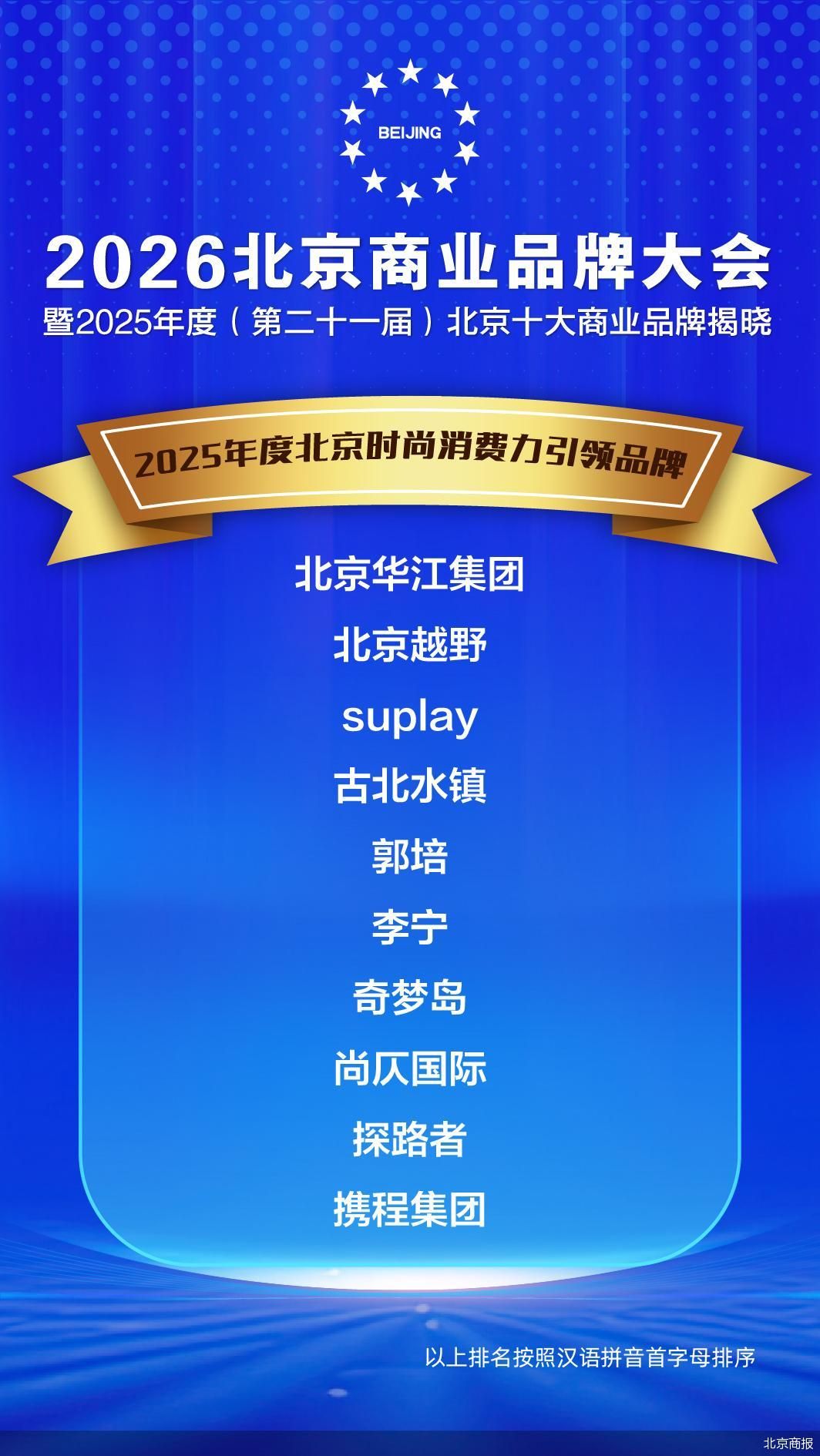
10家品牌荣膺“2025年度北京时尚消费力引领品牌”
Bei Jing Shang Bao· 2026-01-16 09:11
Group 1 - The 2026 Beijing Commercial Brand Conference and the announcement of the 2025 Top Ten Commercial Brands took place in Beijing, focusing on the theme "New Demand, New Supply" [1] - The event was guided by the Beijing Municipal Bureau of Commerce and organized by the Beijing Daily Media Group and the Beijing Commercial Association, highlighting the highest level of commercial brands in Beijing [1] - Ten brands were recognized as the "2025 Beijing Fashion Consumption Power Leading Brands," including Beijing Huajiang Group, Beijing Off-road, Suplay, and others, aimed at promoting fashion consumption trends in Beijing [1] Group 2 - The main list of the "2025 Top Ten Commercial Brands" represents brands with significant market influence and leadership in industry development [4] - Four permanent sub-lists were introduced: "Beijing Commercial Quality Service Brand," "Beijing Commercial Model Innovation Brand," "Beijing Commercial Craftsmanship Brand," and "Beijing Commercial New Star Brand" [4] - Three special annual sub-lists were introduced for the first time, recognizing outstanding cases in financial product innovation, cultural and commercial tourism integration, and fashion consumption leadership [4]
时尚消费驱动生活方式全面扩容
Bei Jing Shang Bao· 2026-01-15 12:14
Core Insights - Fashion consumption is becoming a significant driver of economic growth and urban vitality, characterized by a dialectical unity of "change and constancy" [1][2][3] - The current fashion consumption landscape has expanded beyond traditional categories like apparel and jewelry to include lifestyle products and services such as smart wearables, automobiles, home goods, entertainment, sports, and beauty [1][3][4] Industry Trends - Two major transformations in fashion consumption are emerging: 1. The integration of mixed-use formats, such as "retail + dining" and "retail + exhibitions," which deepens the connection between brands and consumers [1][4] 2. Rapid growth in health and self-care service consumption, with new store openings in major cities like Beijing, Shanghai, Guangzhou, and Shenzhen projected to increase by 25% to 55% by Q3 2025, significantly outpacing traditional retail and dining [1][4] Market Opportunities - The Chinese consumption market presents two structural opportunities: 1. Significant room for service consumption upgrade, with a 10-20 percentage point gap compared to developed economies in service expenditure [2][6] 2. Potential for increased spending by international tourists, with a 50% year-on-year growth in inbound visitors following the expansion of visa-free policies [6] Consumer Behavior - The definition of fashion consumption includes both changing trends and the enduring essence of leadership in consumer preferences, with a shift towards lifestyle-oriented consumption as income levels rise and consumer demographics evolve [3][5] - The establishment of flagship stores serves as a barometer for fashion consumption trends, with first-tier cities like Beijing and Shanghai accounting for 55% of new flagship stores in the first half of 2025 [5] City-Level Insights - Fashion consumption in China can be categorized into three tiers: 1. First tier: Beijing and Shanghai, which attract high-net-worth families and international tourists [5] 2. Second tier: Cities like Shenzhen, Chengdu, and Guangzhou, which are economic hubs with high consumer spending potential [5] 3. Third tier: Smaller cities where e-commerce and social media are driving fashion consumption among middle-income groups [5]

上城召开区委全会定调“十五五”新路径
Hang Zhou Ri Bao· 2026-01-06 02:48
Core Insights - The article emphasizes the strategic focus of Shangcheng District on "Two Strengths, Two Supplements, Two Stabilizations" as a pathway for economic development during the "14th Five-Year Plan" period [1] - The district aims to enhance advanced manufacturing and leverage artificial intelligence for industrial upgrades, marking a significant shift in its economic strategy [1] Group 1: Economic Performance and Goals - Over the past five years, Shangcheng has achieved a GDP exceeding 280 billion yuan and a resident population of over 1.7 million, solidifying its advantages in modern finance, high-end business, and fashion consumption [1] - The district's economic deployment reflects a clear strategy of strengthening existing advantages while addressing weaknesses in innovation and manufacturing [1] Group 2: Consumer and Fashion Industry Development - Shangcheng is focusing on developing three major commercial circles to establish itself as a leading digital fashion consumption district, with initiatives in various areas such as high-tech and cultural integration [2] - The transformation of the "Four Seasons Green Clothing Street" from a traditional wholesale market to a new consumption destination illustrates the district's commitment to evolving its fashion industry [2] Group 3: Advanced Manufacturing and AI Integration - Despite limited space for advanced manufacturing, Shangcheng is targeting the "133X" manufacturing sector, emphasizing artificial intelligence to develop high-density, high-value urban industrial service models [2] - The district is advancing AI as a key driver of economic integration, with initiatives including digital transformation for traditional businesses and collaboration with universities for research and development [3] Group 4: Urban Development and Governance - Shangcheng is addressing multiple challenges such as development dynamics, urban quality, cultural heritage, and governance efficiency, indicating a comprehensive approach to urban planning [4] - The district's strategy includes optimizing land and housing supply while fostering a resilient industrial ecosystem and enhancing the business environment [4] Group 5: Future Outlook - The deployment for the beginning of the year marks the start of Shangcheng's "14th Five-Year Plan" narrative, with a focus on leveraging its 122 square kilometers for sustainable growth [5]
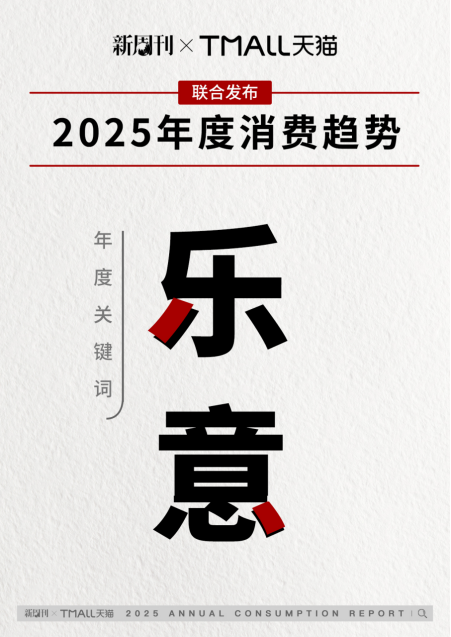
2025天猫年度消费趋势:专业玩家、穿出人设、一物封神…年轻人都在这样花钱
Jin Rong Jie Zi Xun· 2025-12-29 04:04
Core Insights - The article highlights the evolving consumer behavior of young and high-net-worth individuals in 2025, emphasizing their willingness to spend on emotional satisfaction and identity recognition while being frugal on everyday items [1] Group 1: Consumer Trends - Young consumers are categorized as "professional players," focusing on product efficacy and quality, with significant growth in skincare and hair care products [3][4] - The rise of "long-termism" in spending habits indicates a shift towards purchasing high-quality items that last longer, with a notable increase in consumers willing to spend over 2000 yuan on winter clothing [9][10] - Emotional spending, termed "emotional gold," reflects a trend where consumers invest in items that enhance their mood, leading to a dramatic increase in categories like EDC and plush toys [12][13] Group 2: Aesthetic and Identity - The concept of "wearing one's persona" suggests that consumers prioritize unique aesthetics over brand recognition, leading to a surge in demand for designer and niche luxury items [6][7] - The "Chinese flow" trend showcases a resurgence of traditional aesthetics, with significant growth in handcrafted gold jewelry and new Chinese-style clothing, indicating a cultural renaissance among young consumers [15][16] Group 3: Multifunctionality - The demand for "Swiss Army knife" products is on the rise, with consumers favoring multifunctional items that serve multiple purposes, such as smart furniture and pet products [18]
直击上海“男博会”:当男性消费遇上新质生产力
Sou Hu Cai Jing· 2025-12-26 09:12
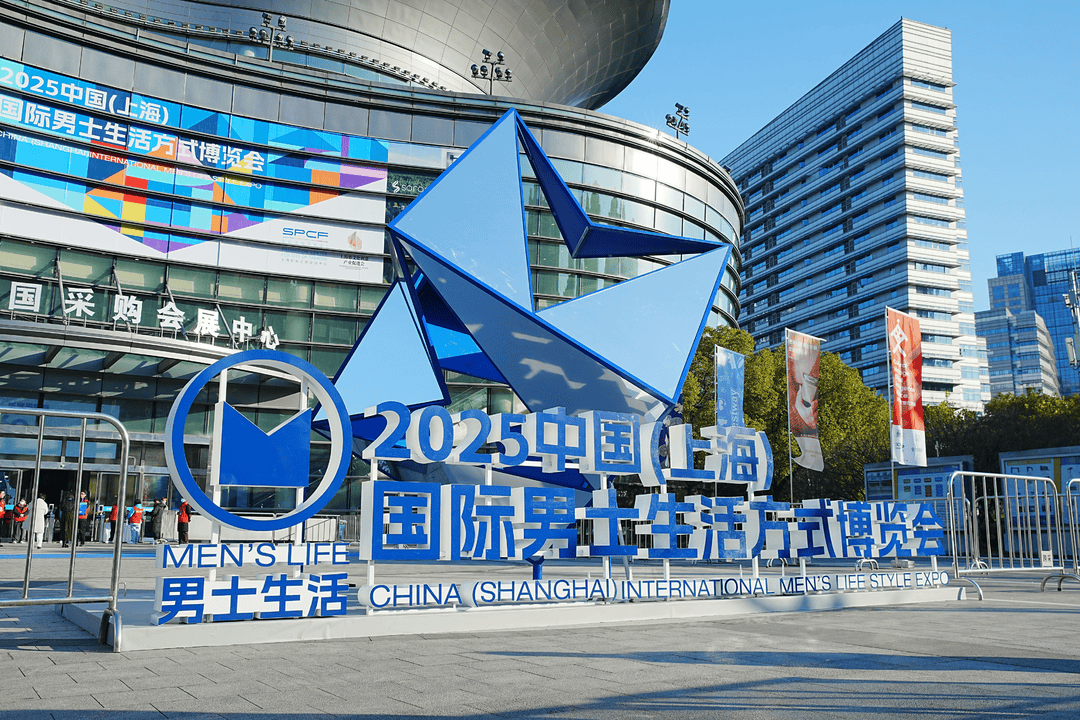
Core Insights - The article discusses the transformation of male consumer behavior driven by technology and sustainability, highlighting the emergence of new production capabilities in the industry [1][3][16] Group 1: Technological Innovation - The Shanghai Men's Lifestyle Expo showcases how technology, including biotechnology and artificial intelligence, is redefining traditional male consumer products [6][16] - High-end custom brand Qihao Technology has developed a "digital suit" customization system that utilizes 3D scanning and AI algorithms, significantly reducing the time required for bespoke tailoring to less than one-third of traditional methods [8] - The brand YOR's choice to debut in Los Angeles signifies a bold statement of cultural confidence and global ambition for Chinese brands [8] Group 2: Sustainability - The concept of "new quality productivity" encompasses not only efficiency and intelligence but also green and sustainable practices, which are becoming essential values in male consumption [9][11] - Italian luxury brand Frangini Zira demonstrates that sustainable materials, such as recycled cashmere and organic cotton, can embody high quality and appeal to contemporary male consumers' values [11] - The expo's innovative format aims to create an integrated industry platform that fosters innovation and competitiveness through ecological empowerment [12] Group 3: Future Trends - The evolution of male consumption is characterized by a comprehensive transformation across research, manufacturing, branding, and consumer experience, indicating a shift towards more personalized and value-driven products [14][16] - The integration of traditional wisdom with modern technology in brands like Peiyang Le is an example of how companies are addressing new male consumer needs through innovative solutions [14] - The awakening of male consumer consciousness is leading to a new stage of consumption that is more personalized, value-oriented, and globally integrated [16]
新增企业1441家、外资破1.5亿美元!闵行这里凭什么?
Sou Hu Cai Jing· 2025-12-18 13:36
Core Insights - The successful export of the world's first magnesium-based solid-state hydrogen storage device highlights the importance of tailored support from a dedicated team, ensuring new products reach global markets [2] - The establishment of a direct experience center by leading electric vehicle manufacturer CATL in Minhang is driven by high-quality resources and precise policy packages, showcasing a model of integrated service and industrial ecosystem development [2] Group 1: Service Innovation - The integration of 25 villages and companies into a town-level support team has transformed the service delivery model, providing comprehensive support from policy consultation to financing, thus reducing bureaucratic hurdles for businesses [4] - The creation of 10 "Long Business Spaces" in key parks aims to establish a "1-kilometer service circle," enhancing accessibility and efficiency for enterprises [5] Group 2: Ecosystem Development - The automotive industry serves as a benchmark, with the "Minhang District Automotive Design and Parts Manufacturing Cluster" recognized as a distinctive industrial cluster, currently hosting 86 companies across the entire supply chain [8] - The "Food Fashion Meilong" alliance connects over 30 companies in the food industry, facilitating product sharing and channel collaboration to enhance competitiveness [10] Group 3: Preemptive Service Models - The "Enterprise Companion Service Team" is established to provide tailored support from the initial stages of business setup, focusing on policy matching and comprehensive assistance rather than just rental negotiations [12] Group 4: Future Planning - The establishment of the "Low Altitude Economy Industrial Park" aims to create a comprehensive ecosystem for manned and unmanned aerial vehicles, with plans for multiple low-altitude flight routes in the Yangtze River Delta [14][16] Group 5: Results and Achievements - From January to November 2025, Minhang saw the establishment of 1,416 new domestic enterprises with a registered capital of 3.2 billion, alongside 25 foreign enterprises attracting 150 million in foreign investment, demonstrating the effectiveness of integrated service and cluster development [19] - The "Longshan Good Brand" incubation plan has yielded significant results, with various brands receiving recognition and awards, indicating a successful transformation of the business environment into a competitive regional advantage [19]