
蔬菜种植

Search documents
种好“菜园子”!河北蔬菜何以装满北京四成“菜篮子”
Ren Min Ri Bao· 2025-12-24 08:19
Core Insights - The article highlights the collaborative development of the agricultural sector in the Beijing-Tianjin-Hebei region, particularly focusing on the vegetable supply chain from Hebei to Beijing, with a projected market share of 42.5% for Hebei vegetables in Beijing's wholesale market by 2024 [1] Group 1: Industry Development - Hebei has been actively constructing a facility vegetable industry cluster around Beijing, with plans to establish nine key vegetable counties, each exceeding 200,000 acres [2] - The establishment of 183 vegetable bases covering 115,000 acres has been achieved, with an annual supply capacity exceeding 500,000 tons [2] - The integration of smart technology in vegetable production is being emphasized, with advancements in controlled environment agriculture leading to improved quality and yield [3][6] Group 2: Market Expansion - A cooperative in Hebei has signed supply agreements with major restaurant chains in Beijing, enhancing market reach and ensuring stable supply for the Beijing-Tianjin vegetable basket [2] - The average daily shipment of eggplants from a market in Beijing is over 60 tons, with total sales reaching approximately 25,000 tons and generating over 100 million yuan in revenue last year [4] Group 3: Research and Innovation - Hebei collaborates with research institutions to introduce and cultivate over 50 new vegetable varieties annually, catering to consumer preferences in Beijing [4] - The establishment of national vegetable improvement centers and the development of over 250 provincial vegetable standards are aimed at enhancing quality and safety in vegetable production [5] Group 4: Technological Advancements - The use of AI and smart farming technologies is being promoted, with innovations such as intelligent temperature control and automated planting systems being implemented in various regions [7] - The transition from traditional to smart agriculture is seen as a key driver for the development of the vegetable industry, with a focus on enhancing research and technology transfer [8]
河北蔬菜何以装满北京四成“菜篮子”
Xin Lang Cai Jing· 2025-12-23 23:14
Core Insights - Hebei province is significantly contributing to the vegetable supply in Beijing, with a projected market share of 42.5% in 2024 [1] - The development of the vegetable industry in Hebei is supported by government initiatives and collaborations with Beijing and Tianjin, focusing on infrastructure upgrades and market expansion [2][4] Group 1: Industry Development - Hebei has established a facility vegetable industry cluster around Beijing, with nine key counties each exceeding 200,000 acres dedicated to vegetable production [2] - The collaboration between Hebei and Beijing includes the establishment of 183 vegetable bases covering 115,000 acres, with an annual supply capacity exceeding 500,000 tons [2] - The introduction of high-standard seedling cultivation and smart supply chain systems is enhancing the efficiency and quality of vegetable production [2][3] Group 2: Innovation and Technology - The shift from traditional to smart agriculture is evident, with the use of AI and automated systems in vegetable cultivation, improving yield and quality [6] - Hebei is home to three national vegetable research centers and has developed over 250 provincial vegetable standards, focusing on quality improvement and digital evaluation systems [5] - Continuous innovation is being emphasized, with the aim to enhance the technological capabilities of vegetable production bases in Hebei [6][7] Group 3: Market Dynamics - The demand for high-quality vegetables in the Beijing market is being met through the introduction of over 50 new vegetable varieties annually, tailored to consumer preferences [4] - The collaboration between agricultural institutions in Hebei and Beijing is fostering the development of new vegetable varieties and enhancing market supply [4][5] - The establishment of direct supply bases and centers for direct procurement is facilitating a more efficient supply chain for vegetables [4]
河北蔬菜何以装满北京四成“菜篮子”(经济聚焦)
Ren Min Ri Bao· 2025-12-23 22:31
Core Viewpoint - The article highlights the collaborative development of the agricultural sector in the Beijing-Tianjin-Hebei region, particularly focusing on the enhancement of the vegetable industry in Hebei to meet the demand of the Beijing market, with a projected market share of 42.5% in 2024 [1]. Group 1: Industry Development - Hebei has been actively constructing a facility vegetable industry cluster around Beijing, aiming to upgrade the vegetable industry and ensure stable supply for the Beijing-Tianjin market [2]. - The establishment of nine key vegetable counties, each over 200,000 acres, is part of a broader strategy to enhance agricultural output and supply capabilities [2]. - The collaboration has led to the construction of 183 vegetable bases, covering 115,000 acres, with an annual supply capacity exceeding 500,000 tons [2]. Group 2: Technological Innovation - The shift from traditional to smart agriculture is evident, with the introduction of AI-driven models and smart farming equipment, enhancing production efficiency and quality [7]. - The establishment of national and provincial research centers has led to the development of over 250 vegetable standards and a digital evaluation system for quality metrics [5]. - The integration of technology in agriculture is seen as a key driver for the development of the vegetable industry, with ongoing efforts to improve smart farming practices [6][8]. Group 3: Market Dynamics - The demand for high-quality vegetables in the Beijing market is being met through controlled environment agriculture, which allows for better quality and supply management [3]. - The introduction of over 50 new vegetable varieties annually, tailored to consumer preferences, reflects the ongoing collaboration between Hebei and Beijing's research institutions [4]. - The cooperative efforts between agricultural producers and urban markets are fostering a sustainable supply chain, benefiting both farmers and consumers [4].
河北蔬菜何以装满北京四成“菜篮子” 升级设施、培育新品、智慧种植(经济聚焦)
Ren Min Ri Bao· 2025-12-23 22:26
Core Viewpoint - The coordinated agricultural development in the Beijing-Tianjin-Hebei region is enhancing the supply of vegetables to Beijing, with Hebei's vegetable market share in Beijing's wholesale market projected to reach 42.5% by 2024 [1] Group 1: Industry Development - Hebei is focusing on upgrading its vegetable industry by establishing nine key counties with over 200,000 acres dedicated to vegetable production [2] - The establishment of 183 vegetable bases covering 115,000 acres in collaboration with Beijing aims to supply over 500,000 tons of vegetables annually [2] - The integration of smart technology in vegetable production is being emphasized, with advancements in facilities and supply chain systems [2][6] Group 2: Market Supply and Demand - The controlled environment of facility production enhances yield, quality, and supply stability, meeting the demands of the Beijing-Tianjin market [3] - The introduction of over 50 new vegetable varieties annually, tailored to consumer preferences in Beijing, is being facilitated through collaboration between Hebei and Beijing research institutions [4] - The average daily shipment of eggplants from a market in Beijing is over 60 tons, indicating strong demand and successful supply chain integration [4] Group 3: Technological Innovation - The use of AI and smart farming technologies is transforming traditional agriculture into a more efficient and productive system [7] - The establishment of national vegetable improvement centers and the development of over 250 provincial vegetable standards are enhancing quality control and evaluation [5] - The focus on technological innovation is seen as a key driver for the development of the vegetable industry and the construction of vegetable bases [8]
保障千家万户“舌尖上的安全”
Xin Lang Cai Jing· 2025-12-23 20:11
Core Viewpoint - Chengdu is implementing measures to cultivate a number of "vegetable basket" stable production and supply bases to ensure food safety and supply for urban residents [1][2]. Group 1: Policy Implementation - The Chengdu Agricultural and Rural Bureau has issued the "Management Measures for the Cultivation and Management of Chengdu's 'Vegetable Basket' Stable Production and Supply Bases" [1]. - The measures aim to enhance urban operational safety and provide assurance for the daily lives of residents [1]. Group 2: Base Requirements - The "vegetable basket" stable production and supply bases must be agricultural production entities within the city, including agricultural enterprises, cooperatives, and family farms, meeting specific production scale and quality safety standards [1][2]. - Recognized bases can use the "Chengdu 'Vegetable Basket' Stable Production and Supply Base" logo for product promotion and will have access to training and financial support policies [1]. Group 3: Supply Assurance - Products from these bases will be prioritized for local market supply, especially during emergencies such as natural disasters or significant public events that disrupt supply [2]. - Specific application conditions and scale standards are set, such as a minimum planting area of 20 acres for vegetable bases and an annual output of over 500 pigs for pig production bases [2].
幸福生活有奔头
Xin Lang Cai Jing· 2025-12-23 20:11
Group 1 - The article highlights the significant improvements in the living conditions and economic activities of the residents in Bayinhexi Village, including the transition from traditional housing to modern apartments with better amenities [4][5][6] - The introduction of modern agricultural practices, such as the establishment of 46 modern greenhouses, has transformed the local economy, allowing villagers to cultivate various vegetables and mushrooms, thus enhancing their income [6][7] - The community has developed a collaborative agricultural model, integrating resources among neighboring villages to create a comprehensive vegetable and mushroom cultivation base, which promotes shared benefits and enhances market competitiveness [7][8] Group 2 - The article emphasizes the role of local government and community support in facilitating economic growth, including assistance for families in need and the establishment of a shared profit mechanism among villages [6][7] - Cultural activities, such as the upcoming New Year celebrations, are being organized to strengthen community ties and promote local traditions, contributing to the overall cultural vibrancy of the region [8]

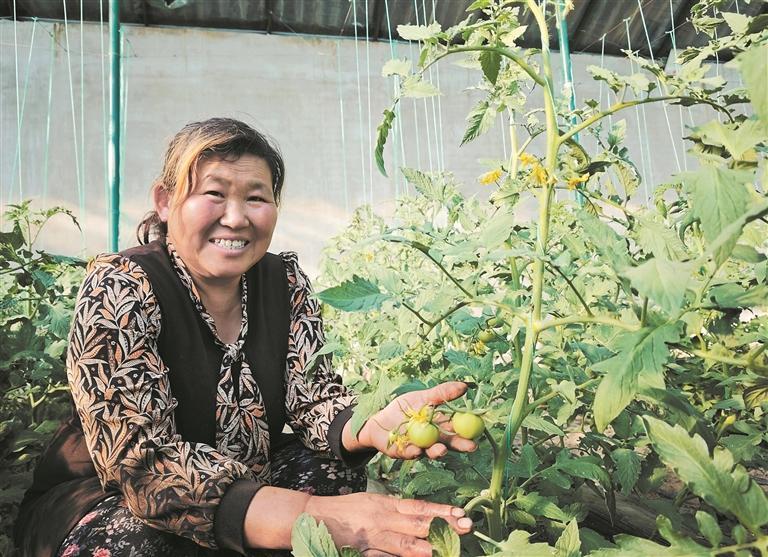
吉林梨树:发展棚膜经济 保障百姓“菜篮子”供应
Xin Hua She· 2025-12-23 08:19
户外冰天雪地,棚内春意盎然。近日,在吉林省四平市梨树县,一排排温室大棚整齐排列。走进棚内, 绿意扑面而来,打包叶、生菜、香葱等蔬菜陆续进入采摘期,新鲜蔬菜源源不断运往周边城市市场。 作为全国产粮大县,梨树县在筑牢粮食安全防线的同时,也把发展棚膜经济作为推动农业增效、农民增 收和保障城市供应的重要抓手,不断优化产业布局,加大政策扶持和技术服务力度,推动棚室设施向标 准化、规模化、集约化方向发展。 ...
高青农商银行:抓好金融赋能助力黄河滩区产业发展
Qi Lu Wan Bao· 2025-12-23 02:59
Group 1 - The core viewpoint of the articles highlights the role of financial support from local banks in promoting agricultural development and addressing community challenges in the Yellow River floodplain area [1][2] Group 2 - The Lu Xin Vegetable Planting Cooperative has expanded its seedling production scale with the help of a 1 million yuan loan from Gaoqing Rural Commercial Bank, aiming to produce over 20 million seedlings this year and generate an annual output value exceeding 20 million yuan [1] - The cooperative employs over 60 local workers and provides seedling services to surrounding farmers, facilitating cost savings and convenience for new growers [1] - Gaoqing Rural Commercial Bank is actively involved in the Yellow River floodplain relocation project, assisting in the resettlement of 5,275 people from 1,443 households across three towns, thereby fulfilling its social responsibility and promoting rural revitalization [2]
镇原县新集镇 产业有活力 振兴动能足
Xin Lang Cai Jing· 2025-12-22 09:04
Core Viewpoint - The article highlights the vibrant industrial development in Xinjizhen, emphasizing its role as a driving force for rural revitalization through a multi-faceted agricultural development model and the establishment of various industry clusters [5]. Group 1: Agricultural Development - Xinjizhen has adopted a "three-dimensional dual-cycle" agricultural development model, focusing on "leading facility vegetables, upgrading traditional breeding, and enhancing specialty planting" to create a diverse industrial development system [5]. - The town has implemented comprehensive land management over 4,722.75 acres and high-efficiency water-saving irrigation on 900 acres, ensuring a stable grain planting area of over 76,000 acres and an annual production of over 19,000 tons [6]. Group 2: Innovation and Investment - Xinjizhen has actively engaged in attracting investment, establishing partnerships with leading agricultural companies, and revitalizing 1,253 acres of idle land, resulting in the construction of 279 greenhouses and an annual seedling supply of 130 million [7]. - The establishment of a 10,000-ton fruit and vegetable processing plant and a digital chili factory aims to create a comprehensive model integrating seedling cultivation, planting, processing, and sales [7]. Group 3: Livestock Industry Growth - The town is promoting the grass and livestock industry by introducing companies to enhance breeding and marketing, leading to a significant increase in livestock numbers, with goat populations reaching over 2,800 and beef cattle increasing from 5,000 to 18,000 over five years [9]. - The implementation of a cooperative model has resulted in the cultivation of over 20,000 acres of specialty crops, contributing to the establishment of the "Xinjiz melon" brand, which has received national green food certification [9].

江苏绘就乡村振兴“三色”图
Xin Hua Ri Bao· 2025-12-22 06:32
Core Viewpoint - Jiangsu province is showcasing a vibrant picture of rural revitalization through the integration of agriculture, culture, tourism, and commerce, leading to economic growth and improved living standards for its residents [1][3]. Group 1: Industry "Gold" - The cross-industry integration of agriculture, culture, tourism, and commerce is driving development in Jiangsu, with over 14,000 leisure agricultural parks and scenic spots established [3]. - The flower and tree industry in Shuyang has transformed through digital economy initiatives, with live streaming sales often exceeding 2 million yuan in a single session, contributing to a 350 billion yuan annual sales industry [2]. - Jiangsu's agricultural processing sector achieved revenues of 1.2 trillion yuan in the first three quarters of the year, with 915 companies generating over 200 million yuan, marking a 3.6% increase in the number of such companies [3][4]. Group 2: Ecological "Green" - The transformation of polluted fish ponds into recreational water areas in Suqian has enhanced local aesthetics and environmental quality, with significant investments in infrastructure and landscaping [5][6]. - The development of Liang Tang Village in Xuzhou emphasizes ecological preservation and cultural heritage, integrating modern amenities like a colorful running track and unique accommodations [6][7]. - Jiangsu has recognized 2,280 villages as "beautiful and livable," with ongoing projects to enhance rural environments and promote sustainable living [7]. Group 3: Life "Red" - The average disposable income of farmers in Jiangsu has increased from 12,133 yuan in 2012 to 32,414 yuan in 2024, reflecting a significant rise in living standards [8]. - The "Linking Farmers" mechanism has been pivotal in ensuring stable income growth for farmers, with innovative models in silk production and crab farming enhancing earnings for local households [9]. - The establishment of entrepreneurial hubs and agricultural projects in villages has generated substantial income, with Dafu Village reporting an annual collective income of 352,000 yuan from various agricultural activities [8].