
畜禽

Search documents
韩俊:我国人均奶类消费量仅为世界平均的三分之一,建议消费者适当减油、增豆、加奶
财联社· 2026-03-09 05:00
Core Insights - The article emphasizes the need for dietary adjustments in China, suggesting a reduction in oil consumption and an increase in the intake of beans and dairy products due to current consumption patterns being significantly off from recommended levels [1] - It highlights the advancements in agricultural technology and the importance of domestic seed varieties, indicating that China has made significant progress in ensuring food security through local production [2] - The article discusses the integration of smart agricultural technologies, such as intelligent harvesting robots and AI-driven irrigation systems, which are enhancing agricultural productivity and modernization [3] Summary by Sections - **Dietary Consumption Patterns** - Current oil consumption exceeds recommended levels by 40% - Per capita dairy consumption is only one-third of the world average - Bean and soy product intake is below 60% of recommended levels [1] - **Agricultural Security and Seed Varieties** - China has achieved a high level of self-sufficiency in key agricultural products - The country has developed high-yield and resilient seed varieties - Future plans include accelerating the update and replacement of agricultural varieties [2] - **Technological Advancements in Agriculture** - Significant improvements in agricultural technology and equipment during the "14th Five-Year Plan" period - Agricultural technology contribution rate exceeds 64% - Mechanization rate for major crops reaches 76.7%, with full mechanization achieved for staple grains - Over 300,000 drones used in agriculture, covering 4.6 million hectares, the highest globally - Introduction of smart harvesting robots, smart irrigation robots, and AI laser weeding robots in agricultural practices [3]


新规落地带证上市更安心!从化全力保障春节农产品安全
Nan Fang Nong Cun Bao· 2026-02-28 02:01
Core Viewpoint - The article emphasizes the implementation of strict regulations in Conghua District, Guangzhou, to ensure the safety and quality of agricultural products during the peak consumption period of the Spring Festival, highlighting the introduction of a new certification system for agricultural products [2][18]. Group 1: Regulatory Actions - Conghua District has initiated a comprehensive quality safety supervision action for agricultural products ahead of the Spring Festival, focusing on rigorous standards and strict monitoring to safeguard consumer interests [3][4]. - The district's agricultural and rural departments have organized a "net-style" inspection to identify potential risks, particularly for ready-to-eat products like strawberries and cherry tomatoes, ensuring compliance with safety regulations [9][10]. Group 2: Quality Assurance Measures - As of mid-February 2026, Conghua has completed approximately 4,000 quality safety tests for agricultural products, achieving a sampling pass rate of 99.82%, with no quality safety incidents reported this year [12][13]. - The new regulation, effective from February 1, 2026, mandates that six categories of agricultural products will have a "certificate of compliance," which includes essential information such as product name, origin, and compliance commitments [19][24]. Group 3: Certification Process - The "certificate of compliance" will allow for full traceability, with producers required to commit to not using banned pesticides and ensuring that pesticide residues remain below safety thresholds [25][26]. - The certification process has been digitized, enabling farmers to obtain certificates conveniently through a government service app, enhancing efficiency in compliance [28][30]. Group 4: Stakeholder Responsibilities - Producers, including agricultural enterprises and cooperatives, must properly issue compliance certificates and maintain accurate production records [38][39]. - Buyers of agricultural products are required to verify compliance certificates and retain them for future sales, ensuring accountability in the supply chain [42][43]. - Consumers are encouraged to check for compliance certificates when purchasing agricultural products, as these indicate adherence to safety standards and regulatory oversight [45]. Group 5: Future Enforcement - Conghua District plans to intensify inspection and enforcement efforts against non-compliance with the new certification requirements, aiming to maintain high standards from production to market [46][47].


广东云牧农业科技有限公司成立,注册资本1000万人民币
Sou Hu Cai Jing· 2026-02-12 08:01
Group 1 - Guangdong Yunmu Agricultural Technology Co., Ltd. has been established with a registered capital of 10 million RMB [1] - The company is wholly owned by Guangdong Shengtong International Trade Co., Ltd. [1] - The legal representative of the company is Zhu Xiaojing [1] Group 2 - The business scope includes technology services, development, consulting, and transfer, as well as livestock acquisition and sales, fresh meat wholesale, and domestic trade agency [1] - The company is classified under the wholesale and retail industry, specifically in the wholesale sector [1] - The registered address is Room 203, No. 14, Ruilong Road, Dongcheng Street, Dongguan City, Guangdong Province [1]
深入开发农业多种功能
Xin Lang Cai Jing· 2026-02-11 01:13
Core Viewpoint - The recent opinion from the Central Committee and State Council emphasizes the need to develop multifunctional agriculture and explore the diverse values of agriculture to promote rural revitalization and achieve common prosperity [1] Group 1: Strengthening Agricultural Supply - There is a call to accelerate the construction of a diversified food supply system to provide high-quality, safe, and varied agricultural products [2] - Utilizing the region's resources, the focus will be on expanding from arable land to mountainous and coastal areas, developing specialty industries such as vegetables, fruits, and aquatic products [2] - The development of facility agriculture and factory production is encouraged to improve land productivity and risk resistance, aiming for year-round supply [2] Group 2: Quality and Brand Agriculture - The strategy includes enhancing agricultural quality and branding by focusing on regional agricultural characteristics and promoting coordinated development of processing stages [3] - The implementation of the "Three Products and One Standard" initiative aims to create a brand matrix for regional products, enhancing their market presence [3] - The exploration of ecological value in agriculture is highlighted, with an emphasis on developing agricultural tourism and eco-friendly practices [3] Group 3: Cultural and Technological Value - The expansion of agricultural cultural value through tourism and local products is encouraged, aiming to integrate agriculture with cultural experiences [4] - The support for technological agriculture is crucial, with a focus on new technologies and digital solutions to enhance productivity and efficiency in the agricultural sector [4] - The promotion of smart agriculture and digital logistics systems is essential for improving the agricultural supply chain and connecting producers with markets [4]
2月1日起,销售农产品必须“持证上岗”
Xin Lang Cai Jing· 2026-02-01 15:14
Core Viewpoint - From February 1, 2026, China will implement a new "identity card" for agricultural products, known as the Agricultural Product Quality Safety Commitment Certificate, which will provide comprehensive information about the product's journey from farm to table, including producer commitments and regulatory information [1] Group 1: Certificate Overview - The Agricultural Product Quality Safety Commitment Certificate is a proof issued by agricultural producers, cooperatives, and purchasing units based on quality control and testing results [1] - Producers must commit that their products do not contain banned pesticides, veterinary drugs, or other chemicals, and that residues of conventional pesticides and veterinary drugs do not exceed standards [1] - The new regulations require producers and cooperatives to issue certificates for each production batch and retain records for at least six months [1][3] Group 2: Certificate Details - The certificate includes basic information such as product name, quantity, origin, issuance date, commitment entity, and contact information, which need not be repeated on packaging if already labeled [2] - The issuance method is flexible, encouraging the use of digital formats like QR codes, which allow consumers to scan and access full product information [2] Group 3: Responsibilities and Penalties - Agricultural producers and cooperatives bear the primary responsibility for ensuring product quality and maintaining production records [3] - Purchasing units must collect certificates and report any discrepancies to agricultural authorities [3] - Failure to issue, collect, or retain certificates may result in penalties ranging from 100 to 1,000 yuan, and violations will be recorded in credit histories [4] Group 4: Legal Implications - The certificate represents a legal commitment, meaning producers cannot claim ignorance if products fail to meet standards, as they have publicly accepted legal responsibility [4] - The new system shifts the perception of product safety from being "assumed" to a proactive declaration of compliance, aligning with the principle of accountability in the Agricultural Product Quality Safety Law [4] Group 5: Market Impact - The certificate acts as a catalyst for quality improvement, rewarding compliant producers with market trust and better prices while increasing the risks for non-compliant producers [5]
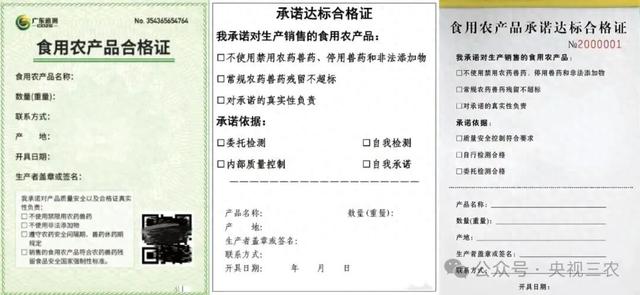
今起 农产品全面启用新版“身份证”
Xin Lang Cai Jing· 2026-01-31 18:30
Core Viewpoint - The new "identity card" for agricultural products, known as the Agricultural Product Quality Safety Commitment Certificate, will be fully implemented starting February 1, 2026, ensuring that all major agricultural products have a quality safety proof [6]. Group 1: Regulatory Framework - The new regulations encompass a wide range of agricultural products, including vegetables, fruits, tea leaves, livestock, poultry, eggs, and aquaculture products [3]. - Producers are required to commit that their products do not contain banned pesticides, veterinary drugs, or other compounds, and that residues of conventional pesticides and veterinary drugs do not exceed standards [4][7]. - Agricultural production enterprises and cooperatives must issue quality certificates for each production batch and retain records for at least six months, while farmers are encouraged to do the same [4][7]. Group 2: Compliance and Enforcement - Buyers must collect the quality certificate before purchasing products; failure to do so will result in the inability to acquire the products [4][7]. - Online sales of agricultural products must also include the quality certificate, with encouragement to display it prominently on sales pages [5][9]. - Non-compliance with the certificate issuance and retention will lead to penalties ranging from 100 to 1,000 yuan, and such violations will be recorded in credit histories, affecting future business operations [9]. Group 3: Information Transparency - The quality certificate will include essential information such as product name, quantity, origin, issuance date, and contact details, which can be displayed on packaging [7]. - The use of QR codes is encouraged for easy access to comprehensive product information, enhancing transparency from farm to table [6][7]. Group 4: Accountability and Market Impact - The new system shifts the responsibility of product safety from a default assumption to an active commitment by producers, aligning with the principle of "whoever produces is responsible; whoever sells is accountable" [11]. - The quality certificate serves as a legal guarantee of responsibility, increasing the costs and risks for non-compliant producers, thereby promoting higher standards and potentially leading to market elimination of poor-quality producers [11].
两会会客厅丨毕节市市长姚轶:全面系统盘点毕节比较优势 加快建设贯彻新发展理念示范区
Xin Lang Cai Jing· 2026-01-30 03:09
Core Viewpoint - The Guizhou provincial government emphasizes the need to implement a strategy that strengthens comparative advantages and accelerates the construction of a modern industrial system unique to Guizhou, particularly focusing on the development of the Bijie area as a demonstration zone for new development concepts [1]. Group 1: Comparative Advantages - Bijie has three notable comparative advantages: 1. Policy advantages due to strong support from the central government and local authorities, including the approval of the "High-Quality Development Plan for Bijie" and various supportive policies from 23 national ministries [2]. 2. Abundant mineral resources, with 55 types of mineral resources identified, including coal (318.4 billion tons, 39.5% of the province), phosphorus (15 billion tons, 28.2%), and iron (5.7 billion tons, 55.8%) [3]. 3. A young and sufficient labor force, with a total population of 9.57 million and an average age of 32.9 years, providing a stable workforce of over 2 million skilled laborers [6]. Group 2: Industrial Development Plans - The industrial strategy focuses on a "3+2+1" new industrial system: 1. Development of three major industrial clusters: new comprehensive energy, new energy batteries and materials, and resource deep processing [7]. 2. Growth of two key industries: textile and clothing, and food and medicine processing, leveraging local agricultural products [7]. 3. Upgrading traditional manufacturing through new technologies and processes [7]. Group 3: Service and Agricultural Sectors - The service sector aims to establish a "5+2+N" modern service industry system, focusing on five key support industries: modern logistics, finance, cultural tourism, real estate, and the hospitality industry, while also exploring new opportunities in low-altitude economy and data annotation [9]. - In agriculture, the focus is on ensuring food security while strengthening key industries such as Chinese yam, potatoes, and beef, and optimizing specialty industries like vegetables and medicinal herbs [9]. Group 4: Project and Infrastructure Development - The city has planned 34 major industrial projects with an investment scale exceeding 200 billion yuan, aiming to attract leading enterprises and enhance industrial coupling and resource allocation [10]. - Infrastructure projects include 138 industrial support facilities and 58 industrial roads totaling 771 kilometers, ensuring robust support for project implementation [10].

沈阳推动农产品带“证”上岗
Xin Lang Cai Jing· 2026-01-28 23:06
Core Viewpoint - The implementation of the "Agricultural Product Quality Safety Commitment Certificate Management Measures" is aimed at enhancing the quality and safety of agricultural products through a structured certification process, ensuring accountability and traceability in the supply chain [1][2]. Group 1: Implementation of the Management Measures - The Shenyang Agricultural and Rural Bureau held a meeting to discuss the rollout of the new management measures, which include 22 core provisions covering seven categories of edible agricultural products [1] - The measures will utilize an electronic certificate mini-program linked with provincial regulatory platforms to promote self-regulation among producers and operators [1] Group 2: Responsibilities and Processes - The meeting outlined the specific methods and legal responsibilities for different stakeholders, including production enterprises, cooperatives, and purchasers, in the process of issuing, receiving, and storing the quality certificates [1] - A demonstration of the electronic certificate issuance process was conducted, showcasing how stakeholders can quickly generate certificates and how regulatory personnel can verify them in real-time [1] Group 3: Emphasis on Training and Enforcement - The meeting emphasized the importance of training and awareness to normalize the practices of "certificate entry and certificate display" in sales [2] - It was highlighted that local regulatory service stations should be strengthened to provide convenient certificate issuance and testing services, while also enhancing enforcement against fraudulent practices [2] - The integration of the certificate system with agricultural standardization, quality certification, and brand development is crucial for improving product quality and increasing farmers' income [2]
本周弱冷空气影响,阴雨天气增多 加强柑橘贮存管理积极开展贩销
Xin Lang Cai Jing· 2026-01-26 16:55
Group 1 - The article discusses the expected increase in rainy weather in the region due to weak cold air, with significant precipitation forecasted from January 30 to January 31, and temperatures ranging from 2°C to 18°C [1] - Farmers are advised to take advantage of clear weather to fertilize oilseed rape, manage fields, and prevent diseases like downy mildew [1] - The article highlights the peak sales period for citrus fruits, urging farmers to manage storage effectively and check for rotten fruits, while also addressing recovery from frost damage [1] Group 2 - Recommendations for farmers include soil aeration and pruning of damaged branches in citrus orchards, along with pest and disease control measures [1] - The article emphasizes the importance of managing temperature and humidity in greenhouse facilities, especially with the anticipated increase in humidity due to rainy weather [1]
中原证券晨会聚焦-20260115
Zhongyuan Securities· 2026-01-15 00:46
Core Insights - The report highlights the strong performance of the semiconductor industry, with a 5.11% increase in December 2025, outperforming the broader market indices [15][16] - The automotive sector is projected to achieve record production and sales, exceeding 34 million units in 2025, maintaining its position as the world's largest market for 17 consecutive years [9][6] - The gaming industry is experiencing steady growth, with animation films leading box office revenues, indicating a robust demand for content in the entertainment sector [23][25] Domestic Market Performance - The Shanghai Composite Index closed at 4,126.09, down 0.31%, while the Shenzhen Component Index rose by 0.56% to 14,248.60, reflecting mixed performance across different indices [4] - The A-share market has shown signs of increased trading activity, with a total transaction amount of 36,991 billion, indicating a return of investor confidence [10][11] International Market Performance - The Dow Jones Industrial Average closed at 30,772.79, down 0.67%, while the Nikkei 225 rose by 0.62% to 26,643.39, showcasing varied performance across global markets [5] Industry Analysis - The semiconductor sector is expected to continue its upward trajectory, driven by strong demand for AI-related hardware and increasing capital expenditures from major tech companies [15][16] - The food and beverage sector has faced challenges, with a 4.05% decline in December 2025, particularly in traditional categories like liquor and meat products, while emerging categories like snacks and health products remain resilient [19][20] - The new materials sector has shown strong performance, with a 7.20% increase in December, indicating a growing demand for advanced materials in various industries [27][28] Investment Recommendations - The report suggests focusing on sectors with strong growth potential, such as semiconductor equipment, storage solutions, and AI-driven technologies, as these areas are expected to benefit from ongoing industry trends [17][31] - In the food and beverage sector, investment opportunities are recommended in soft drinks, health products, and baked goods, which have shown resilience despite overall market challenges [19][20] - The gaming and animation sectors are highlighted for their growth potential, with specific companies recommended for investment based on their strong market positions and innovative content offerings [23][25]