
电动汽车充电

Search documents
Orion Energy Systems (NasdaqCM:OESX) 2025 Conference Transcript
2025-09-16 16:02
Summary of Orion Energy Systems Conference Call Company Overview - **Company Name**: Orion Energy Systems (NasdaqCM: OESX) - **Market Capitalization**: Slightly higher than $26 million [2] - **Recent Share Price**: Approximately $7.40 [2] - **Trailing 12 Months Sales**: Around $80 million [3] Core Business Segments - **LED Lighting Systems**: Focus on energy-efficient solutions for commercial and industrial applications [2][3] - **EV Charging Infrastructure**: End-to-end solutions including site design, installation, and maintenance [4][5] - **Maintenance and Managed Services**: Recurring services for lighting and EV systems, including preventative and reactive maintenance [4][7] Key Highlights - **Project Completion**: Over 25,000 projects completed, primarily in the commercial and industrial retrofit sector [4] - **Recurring Revenue Opportunities**: Maintenance contracts and EV charging operations provide stable revenue streams [15][23] - **Customer Base**: Strong long-term relationships with blue-chip clients across various sectors, including government and healthcare [9][10] Competitive Advantages - **Manufacturing Flexibility**: U.S.-based manufacturing facility in Wisconsin with 266,000 square feet, compliant with Buy American Act [6][12] - **Quick Product Development**: Ability to bring products to market within four to six months [6] - **Technological Leadership**: Industry-leading energy efficiency and smart design capabilities [5][17] Recent Developments - **New Projects**: Awarded an $11 million electrical infrastructure project for exterior LED lighting and EV charging [11][16] - **Maintenance Revenue Growth**: Grew over 20% last quarter, with a focus on profitable recurring contracts [23] Market Dynamics - **EV Segment Outlook**: Conservative approach due to initial funding pullbacks but optimistic about future growth as funding stabilizes [16][18] - **Competitive Landscape**: Increased competition in the EV segment, with potential for market consolidation [17] Financial Performance - **Gross Margin Improvement**: Approaching 30%, with fluctuations due to revenue volumes and restructuring of maintenance contracts [13][21] - **Cost Management**: Ongoing efforts to reduce product costs to improve margins [22] Strategic Focus - **Expansion of Services**: Plans to grow lighting maintenance services and explore electrification opportunities with municipalities [12][18] - **Partnerships**: Collaborations with leading EV charging station manufacturers like ChargePoint and ABB [5][8] Conclusion Orion Energy Systems is positioned as a competitive player in the energy efficiency and EV charging markets, with a strong focus on recurring revenue and customer satisfaction. The company is leveraging its U.S.-based manufacturing and technological capabilities to drive growth and maintain compliance with government regulations.

俄加大电动汽车充电基建支持力度,两年内将补贴7111.7万美元
Shang Wu Bu Wang Zhan· 2025-09-12 16:33
Core Insights - The Russian government is increasing support for electric vehicle (EV) charging infrastructure, with a budget of approximately $7.1 million allocated for the installation of around 1,900 charging stations over the next two years [1] Group 1: Government Initiatives - The Russian Prime Minister Mishustin signed a financial allocation order for 2025-2027, committing nearly 57 billion rubles (about $7.1 million) to subsidize regional EV charging station operators [1] - The subsidies will cover 60% of the costs for equipment procurement and grid technology access [1] - Additional subsidies will be provided for investors installing fast charging stations with a power exceeding 149 kW [1] Group 2: Infrastructure Development Goals - The plan aims to establish 28,000 fast charging stations with a minimum power of 149 kW by 2030, capable of charging EVs to 80% in 20 to 30 minutes [1] - The distribution of funds will be executed based on the results of bids conducted by the Russian Ministry of Industry and Trade [1] Group 3: Current Market Status - As of 2022, the Far East region of Russia has the highest number of electric vehicles in the country, but the development of supporting charging infrastructure has lagged behind the growth in vehicle demand [1] - Six federal subjects in the Far East have already joined pilot projects for charging infrastructure [1]
久融控股附属拟出售江苏久融综合能源及其位于南京的13个电动汽车充电站
Zhi Tong Cai Jing· 2025-09-10 13:28
Core Viewpoint - Jiurong Holdings (02358) announced the conditional sale of 100% equity in Jiangsu Jiurong Integrated Energy and 13 electric vehicle charging stations in Nanjing for a cash consideration of RMB 6.87 million, providing an opportunity to realign its electric vehicle charging station portfolio [1] Group 1: Transaction Details - The buyer, Nanjing State Grid Electric Power Technology, will assume the repayment of approximately RMB 1.06 million in principal and RMB 0.018 million in accrued interest owed by the target company to the seller [1] - The total cash consideration for the transaction is RMB 6.87 million [1] Group 2: Strategic Rationale - The board believes that the sale represents a prudent and responsible measure to safeguard the overall interests of the group, as the existing sites and conditions of the target company do not meet operational needs and require additional capital investment [1] - Given the current market conditions and the company's situation, further financial support for the target company's development would impose an unnecessary financial burden on the group [1]
北京最大光伏充电停车楼建成投入使用
Xin Jing Bao· 2025-09-06 09:49
Core Insights - The Beijing Static Traffic Company has completed the construction of a photovoltaic supercharging station at the Dayun Village parking garage, featuring 86 charging spots, including 70 DC and 16 AC charging stations [1] - The charging station utilizes Huawei's liquid cooling supercharging technology with a 1000V high voltage platform, achieving a maximum power of 600 kW and a charging speed of "1 second per kilometer" [1] - The supercharging station is expected to serve 300,000 electric vehicles annually, with an estimated annual charging volume of 6 million kWh [1] - The facility includes a rest area with amenities such as drinking water, Wi-Fi, and restrooms, enhancing the comfort for vehicle owners [1] - A rooftop distributed photovoltaic power generation project has been installed, with a peak capacity of 340 kW and an annual generation of 350,000 kWh, providing green energy for the charging station [1] - This project is noted as the largest photovoltaic charging parking garage in Beijing, demonstrating significant economic and social benefits [1]
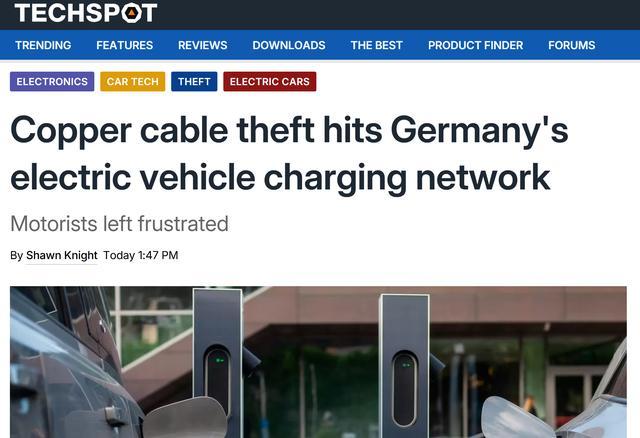
德国电动汽车充电电缆盗窃问题猖獗 单日70座充电站因盗瘫痪
Huan Qiu Wang Zi Xun· 2025-09-04 04:39
Core Insights - The electric vehicle charging sector in Germany is facing a severe issue with cable theft, significantly disrupting the normal operation of charging networks [1][4] - Daily, around 70 charging stations are rendered inoperative due to malicious cable cutting and theft, with predictions indicating that 2025 will be the peak year for such incidents [1][4] Industry Impact - The frequent thefts are straining repair personnel and cable suppliers, making it difficult to keep up with the pace of damage [1] - Each stolen cable, containing copper valued at approximately €40 (around 332.8 RMB), results in high repair costs for charging operators, with stations taking about two weeks to restore normal operations after theft [4] Company Responses - Companies like EnBW are enhancing video surveillance at charging stations to deter theft and improve monitoring capabilities [5] - Alpitronic is updating software to enable quick identification of cable theft incidents, allowing for timely follow-up actions [5] - Current measures are more reactive rather than preventive, highlighting the need for improved mechanisms to fundamentally address the theft issue [5]

纳思达子公司极海半导体与特来电签署战略合作协议
Zhi Tong Cai Jing· 2025-09-01 12:22
Core Viewpoint - Nasda (002180.SZ) announced a strategic cooperation agreement between its subsidiary Zhuhai Jihai Semiconductor Co., Ltd. and Telai Electric New Energy Co., Ltd. to promote green and low-carbon transformation in the transportation industry [1] Group 1: Strategic Cooperation - The partnership aims to leverage complementary advantages, resource sharing, and mutual development to enhance the strategic relationship between the two companies [1] - The collaboration focuses on joint research and development of high-performance, reliable domestic main control chips to address key bottlenecks in the intelligent upgrade of charging equipment and domestic substitution [1] Group 2: Industry Impact - The cooperation is expected to accelerate the construction of a green, intelligent, and efficient energy supply ecosystem, supporting China's green energy strategy and the dual carbon goals [1] - The agreement will help the company expand high value-added product sales channels, enhance research and development capabilities, and improve overall competitiveness, aligning with the company's long-term development strategy and shareholder interests [1]

纳思达: 关于控股子公司签订战略合作协议的公告
Zheng Quan Zhi Xing· 2025-09-01 12:19
Agreement Overview - The strategic cooperation agreement between Jihai Semiconductor and Telai Electric aims to deepen their partnership to promote green and low-carbon transformation in the transportation industry [1][2] - The agreement is a framework for future cooperation, with specific business details to be defined in subsequent agreements [2] Parties Involved - Telai Electric is a subsidiary of Qingdao Teruid Electric Co., Ltd., a leading company in the electric vehicle charging sector, established in 2014 [2] - Telai Electric is recognized as a top 100 unicorn in the new infrastructure industry and aims to become the largest charging network operator in China [2] Main Content of the Agreement - The cooperation will involve mutual recommendations of products during market promotion to enhance development for both companies [3] - Both parties will explore product innovation and technology development in the charging field, focusing on MCU and DSP devices [3] Cooperation Details - The agreement is valid for three years, with provisions for renewal through mutual agreement [3] - Both parties will engage in regular communication, share core data conditionally, and prioritize collaboration in new technology and product development [3] Industry Context - The electric vehicle market in China has surpassed 30 million units, but the charging infrastructure is still underdeveloped, with only 14.4 million charging stations as of May 2025, indicating significant market potential [5] - The Chinese government is promoting the localization of core components in charging infrastructure, which aligns with the strategic goals of both companies [5] Future Prospects - The collaboration is expected to enhance the development of high-performance, domestically produced control chips, addressing key challenges in the smart upgrade of charging equipment [5] - The digital power market is expanding rapidly, driven by increasing AI computing demands, which will require advanced power management solutions [6][7] - The partnership aims to respond to national policies promoting green energy and contribute to the realization of carbon neutrality goals in China [7]

全国有700多万个家庭当上了光伏“房东”
Yang Shi Xin Wen· 2025-08-27 01:04
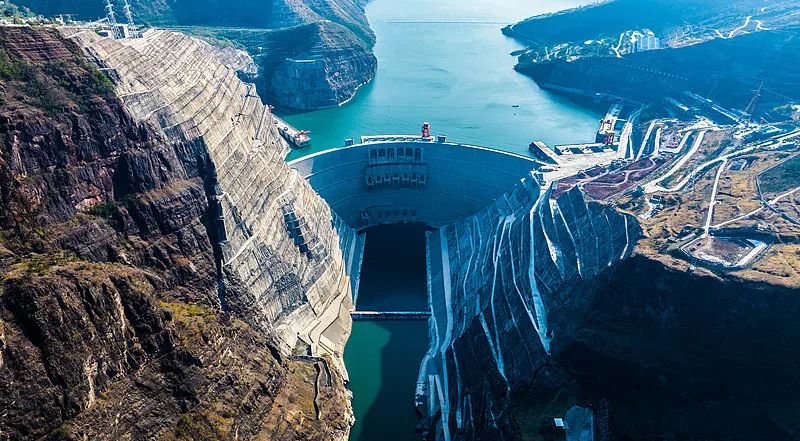
Energy Consumption - During the "14th Five-Year Plan" period, China's energy consumption increment has reached 1.5 times that of the five-year increment during the "13th Five-Year Plan," with an expected new electricity consumption exceeding the annual electricity consumption of the EU [5] - In July, electricity consumption surpassed 1 trillion kilowatt-hours, equivalent to Japan's total annual electricity consumption [5] - In the eastern region, 40% of energy consumption comes from major energy transmission projects such as "West-to-East Electricity Transmission" and "North-to-South Coal Transport" [5] Green and Low-Carbon Transition - China has built the world's largest electric vehicle charging network, with 2 charging piles for every 5 electric vehicles [5] - The proportion of renewable energy generation capacity has increased from 40% to approximately 60% [5] - One-third of the total electricity consumed in society is green electricity, with significant contributions to global low-carbon transition by reducing carbon emissions by approximately 4.1 billion tons through exported wind and solar products [5] Renewable Energy Development - Distributed photovoltaic systems have seen new installations exceeding 400 million kilowatts, with 16 million kilowatts added in household photovoltaic systems, making over 7 million families "photovoltaic landlords" [5] - China holds over 40% of global new energy patents, continuously breaking world records in photovoltaic conversion efficiency and offshore wind turbine capacity [5] - The scale of new energy storage has reached the world's largest, with rapid development of smart microgrids and virtual power plants [5] Technological Innovation - Major projects such as the Baihetan Hydropower Station and the third-generation nuclear power "Hualong One" have been completed, showcasing China's technological innovation capabilities [5] - Oil and gas development has successfully reached depths of over 10,000 meters and advanced into deep-sea areas [5] Market Dynamics - The number of registered entities in the electricity market has reached 970,000, five times that of 2020 [6] - The majority of photovoltaic equipment manufacturing companies are private enterprises, with over 60% of wind turbine manufacturing companies also being private [6] - As of the end of July, the number of charging infrastructure units reached 16.696 million, ten times that at the end of the "13th Five-Year Plan," leading the world in scale [6]
全球最大、发展最快!国家能源局最新发布
Shang Hai Zheng Quan Bao· 2025-08-26 07:33
Core Insights - During the "14th Five-Year Plan" period, China has achieved significant advancements in its energy sector, including the establishment of the world's largest electric vehicle charging network and the fastest-growing renewable energy system [1][2] - The energy consumption increase has been primarily supported by domestic resources, with over 90% of the growth being self-sustained [2] - The renewable energy generation capacity has seen a substantial rise, with the share of renewable energy in total electricity generation increasing from 40% to approximately 60% [3][4] Energy Supply and Demand - The energy consumption increment in the first four years of the "14th Five-Year Plan" reached 1.5 times that of the entire "13th Five-Year Plan" period, with projected new electricity consumption exceeding the annual consumption of the EU [2] - By 2024, China's total electricity generation is expected to surpass 10 trillion kilowatt-hours, accounting for one-third of global production [2] - The domestic energy production has been accelerated, ensuring that over 90% of the consumption increase is self-sustained [2] Renewable Energy Development - The share of renewable energy in total electricity generation has increased significantly, with wind and solar power installations reaching unprecedented levels [3][4] - Wind and solar power generation now accounts for nearly 25% of total electricity consumption, with annual growth rates of over 2 percentage points [4] - The total installed capacity of wind and solar power has grown from 530 million kilowatts in 2020 to 1.68 billion kilowatts by mid-2023, with an average annual growth rate of 28% [3][4] Investment Trends - Energy industrial investment has shown robust growth, with an average annual increase exceeding 16% during the "14th Five-Year Plan" [5][6] - The total investment in the energy sector has consistently surpassed 4 trillion, 5 trillion, and 6 trillion yuan, representing nearly 10% of total fixed asset investment [6] - Investment in new energy sectors, including new energy storage and hydrogen energy, is projected to reach approximately 200 billion yuan in 2024 [6] Technological Innovations - The scale of new energy storage has surged nearly 30 times over five years, positioning China as the global leader in this sector [8] - By mid-2023, the installed capacity of new energy storage reached approximately 95 million kilowatts [8] - The integration of artificial intelligence in the energy sector is enhancing operational efficiency and innovation, particularly in renewable energy generation and grid management [9]
信息量巨大!重磅发布会
Yang Shi Xin Wen Ke Hu Duan· 2025-08-26 06:02
Group 1 - The core achievement of the "14th Five-Year Plan" is the establishment of the world's largest and fastest-growing renewable energy system, with renewable energy generation capacity increasing from 40% to approximately 60% [2] - During this period, every third kilowatt-hour of electricity consumed in China is green electricity, with non-fossil energy consumption increasing by 1 percentage point annually, expected to exceed the 20% target set for the "14th Five-Year Plan" [2] - The export of wind and solar products has contributed to a reduction of approximately 4.1 billion tons of carbon emissions in other countries, significantly aiding global low-carbon transition efforts [2] Group 2 - China has built the world's largest electric vehicle charging network, with two charging stations for every five electric vehicles, and the number of charging facilities reaching 16.696 million, ten times that of the end of the "13th Five-Year Plan" [3] - Energy consumption growth during the "14th Five-Year Plan" has reached 1.5 times that of the previous five years, with energy infrastructure being optimized and enhanced [3] - The promotion of green vehicles and electricity through green certificate trading has become a common practice, with half of the world's new energy vehicles operating in China [3] Group 3 - China leads the world in new energy patents, holding over 40% of the global total, with continuous advancements in photovoltaic conversion efficiency and offshore wind power capacity [4] - The new energy storage capacity has surged to the world's largest scale, with installed capacity reaching approximately 95 million kilowatts, growing nearly 30 times in five years [7] Group 4 - The hydrogen production and consumption scale in China is expected to exceed 36 million tons by 2024, ranking first globally, with renewable energy hydrogen production capacity accounting for more than half of the global total [6][7] - Artificial intelligence is increasingly being integrated into the energy sector, enhancing various applications such as renewable energy generation and oil and gas resource discovery [7]