
粮食种植

Search documents
新粮上市期,东北玉米价格缘何上涨?
Xin Hua Cai Jing· 2025-11-19 07:09
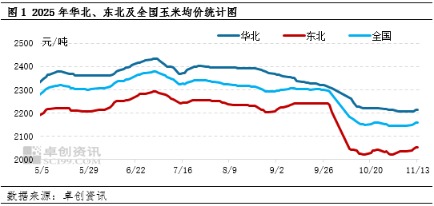
Core Viewpoint - The corn prices in Northeast China are experiencing a slow increase, with the growth rate surpassing that of North China and the national average, primarily due to farmers' reluctance to sell and a slow increase in market supply [1][2][9] Price Trends - As of November 15, the average daily price of corn in Northeast China rose from 2031 CNY/ton to 2051 CNY/ton, an increase of 20 CNY/ton or 0.98%, which is higher than the increases in North China (0.31%) and the national average (0.60%) [2][4] - The price increase is attributed to farmers' reluctance to sell and a slow increase in market supply [2][9] Supply and Demand Dynamics - The average grain selling progress among farmers in Northeast China was 18% as of November 13, which is 2 percentage points faster than the same period last year [4] - The selling pace varies by region, with Liaoning showing a faster pace due to earlier harvests and higher initial market prices, while Jilin and Heilongjiang are slower due to lower temperatures and favorable storage conditions [4][8] - The port of Jinzhou's corn collection volume has decreased significantly compared to last year, indicating a decline in selling willingness among farmers [4][5] Future Price Expectations - The demand from downstream sectors is expected to increase, with traders actively purchasing and building inventories, which will support market prices [8][9] - The overall market price is projected to rise by 40-60 CNY/ton until mid-December, with a potential slight price correction of around 20 CNY/ton in late December due to increased supply [9] Influencing Factors - The sentiment of farmers and traders regarding selling will likely persist, impacting supply levels [8][9] - The end of wheat planting in North China by the end of November may lead to an increase in farmers' willingness to sell, potentially affecting the demand for Northeast corn [8][9]

日媒:日本新米交易价格创历史新高
Zhong Guo Xin Wen Wang· 2025-11-18 11:46
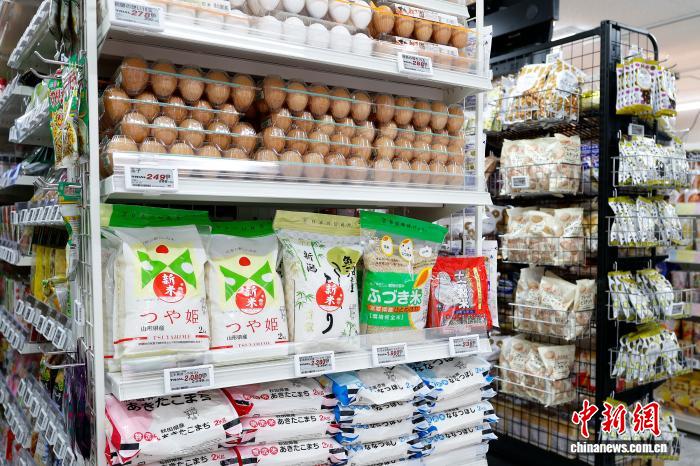
Group 1 - The core point of the article is that Japan's new rice trading price has reached a historical high, with the average price for all varieties of new rice at 37,058 yen per 60 kilograms, an increase of 163 yen from September [1] - The rise in rice prices is attributed to extreme high temperatures leading to poor harvests and a warning of increased earthquake risk in the eastern Pacific, which caused panic buying and a temporary rice shortage [2] - Although the new rice has been released, alleviating some of the rice shortage, prices remain high [2]
日本新米交易价格再创新高
Yang Shi Xin Wen· 2025-11-18 08:52
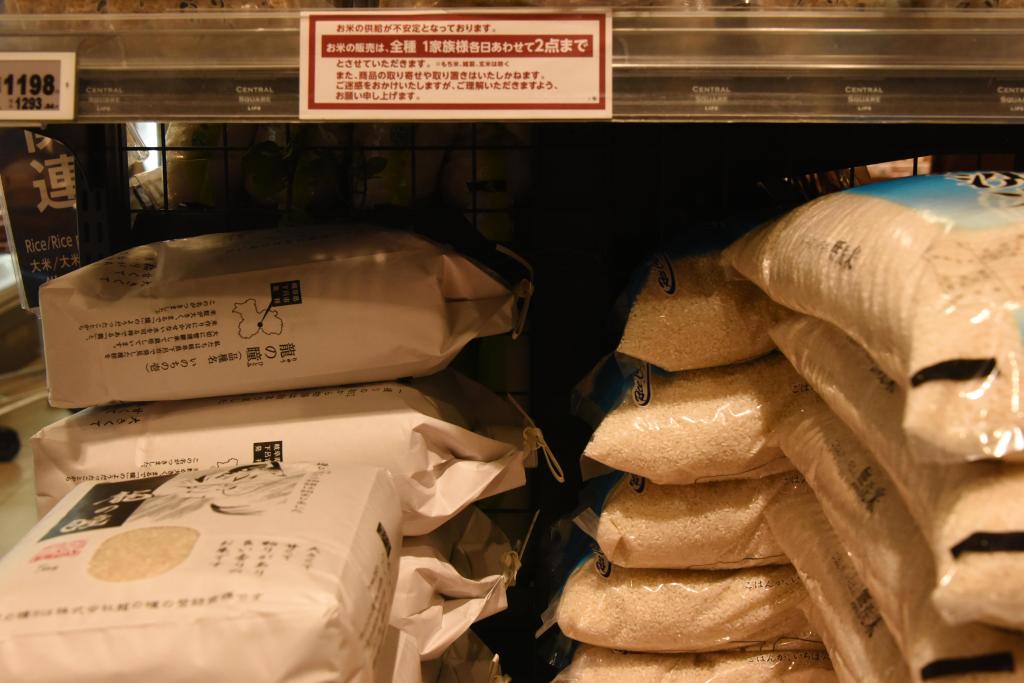
Core Points - The Japanese Ministry of Agriculture, Forestry and Fisheries announced that the average price for new rice transactions between shipping groups and wholesalers for the 2025 harvest is set at 37,058 yen per 60 kilograms of brown rice, marking an increase of 163 yen from September and reaching a historical high [1] - Starting from the summer of 2024, rice prices in Japan began to rise due to factors such as extreme high temperatures leading to poor rice harvests [1]
瞭望 | “大豆蛋白替代”新赛道
Xin Hua She· 2025-11-18 03:11
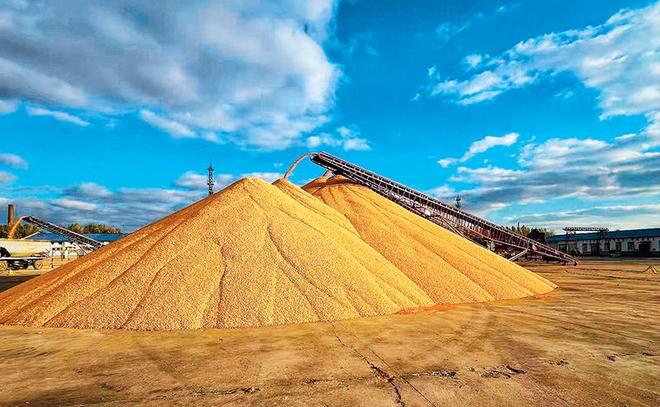
Core Viewpoint - High-protein corn is transitioning from genetic innovation and variety breeding to demonstration and promotion, establishing a complete industrial chain and making significant progress towards "soy protein substitution" [1] Summary by Sections Industry Development - High-protein corn is expected to enter its "industrial year" in 2025, with a focus on an order agriculture model that emphasizes specialized breeding, planting, harvesting, storage, and usage [1] - China imports over 100 million tons of grain annually, with more than 80% being soybeans, primarily to address feed protein sources [1][4] - Increasing the protein content of existing corn crops by 4 percentage points could reduce soybean imports by nearly 30 million tons annually, alleviating dependence on imports and enhancing food security [1][4] Research and Innovation - The research on high-protein corn has been prioritized in national agricultural R&D plans since the 14th Five-Year Plan, with significant projects initiated by the Chinese Academy of Agricultural Sciences [5] - New high-yield, high-protein corn varieties have been developed, such as Zhongdan 126 and Weiyu 115, with ongoing efforts to enhance protein content and adaptability [5][6] Market Implementation - In Jilin Province, over 12,000 acres of high-protein corn have been planted under an order agriculture model, with plans to expand to over 1 million acres in the next three years [7] - The establishment of a complete industrial chain for high-protein corn includes specialized planting, harvesting, and storage to maintain quality and protein content [8] Economic Impact - The successful commercialization of high-protein corn could significantly benefit grain-producing regions, potentially transforming the economic landscape for farmers by ensuring higher prices for quality produce [8] - The price premium for high-protein corn could exceed 100 yuan per ton compared to regular corn, enhancing income across the entire supply chain [8] Challenges and Solutions - The industry faces challenges such as limited variety options, the need for increased promotion, and the necessity to improve protein quality [9][11] - Recommendations include increasing R&D investment, establishing dedicated approval channels for high-protein corn varieties, and enhancing the quality of corn protein to meet nutritional standards [9][11]
夯实粮食安全根基
Jing Ji Ri Bao· 2025-11-16 22:11
Core Insights - During the "14th Five-Year Plan" period, China's grain production capacity has steadily increased, with significant progress in agricultural modernization [1][2] - China has built over 100 million acres of high-standard farmland, with a contribution rate of agricultural technology progress reaching 63.2% and a comprehensive mechanization rate of over 75% for crop farming [1] - The country aims to maintain grain production above 1.3 trillion jin, with projections to exceed 1.4 trillion jin in 2024, ensuring food security amidst global challenges [2] Group 1 - China's agricultural policies focus on maintaining the red line for arable land, constructing high-standard farmland, and initiating actions to enhance crop yields [1][2] - The country emphasizes a diversified food supply system and the integration of modern technology and equipment in agriculture to strengthen food security [1] - The agricultural sector is encouraged to improve production capacity, ecological sustainability, and income generation simultaneously [1] Group 2 - The global food supply chain remains vulnerable to geopolitical tensions and extreme weather, necessitating ongoing vigilance in food security [2] - Future strategies include enhancing high-standard farmland, promoting agricultural technology, and improving the intelligence of agricultural machinery [2] - The establishment of a comprehensive grain production, purchase, storage, and sales system is crucial for motivating farmers and promoting a culture of food conservation [2]
日本米价再创新高 民众感叹成“奢侈品”
Xin Hua Wang· 2025-11-15 03:41
Group 1 - The average price of a 5-kilogram bag of rice in Japan has reached 4,316 yen (approximately 198 RMB), marking a new record high and reflecting a significant increase for the second consecutive week [1][2] - The rise in rice prices is attributed to the high cost of newly harvested rice entering the market and a decrease in the supply of relatively cheaper government reserve rice [2] - Many Japanese citizens are expressing concerns over rice becoming a "luxury item," leading some to switch their staple food to pasta [2] Group 2 - Starting from summer 2024, rice prices in Japan are expected to continue rising due to factors such as extreme heat causing poor harvests [2] - In response to rising prices, the former government had previously released government reserve rice to stabilize the market, but the current administration opposes this approach and suggests issuing rice discount coupons to low-income groups [2] - Some cities have begun distributing rice discount coupons, although the costs associated with processing these coupons have raised questions about their effectiveness [2]
国家统计局:秋粮产量预计增加,全年粮食有望再获丰收
Zhong Guo Xin Wen Wang· 2025-11-14 06:05
Core Viewpoint - The current autumn grain production in China is expected to achieve a bumper harvest despite some regions facing natural disasters such as droughts and floods, with overall positive trends in planting area, yield, and production levels [1] Summary by Relevant Sections Planting Area - The planting area for autumn grain has slightly increased this year, continuing the trend of growth over the past several years. This is supported by the government's policies aimed at enhancing grain production and encouraging local farmers [1] Yield Levels - The yield levels for autumn grain are on the rise due to favorable meteorological conditions across most agricultural regions. Continuous efforts to improve the yield of major grain crops have contributed significantly to this increase [1] Production Volume - The overall production volume of autumn grain is expected to rise, particularly driven by an increase in corn planting area. Most regions are experiencing stable to increasing production, especially in Northeast China, Inner Mongolia, and Xinjiang, aided by favorable climate conditions and adjustments in planting structure [1]
秋粮购销活跃、秋冬种加紧推进 广袤田野“新”潮澎湃铺展好“丰”景
Yang Shi Wang· 2025-11-13 07:13
Group 1: Grain Acquisition and Market Activity - The National Grain and Material Reserve Bureau reports that over 100 million tons of autumn grain have been purchased nationwide, indicating an active market and smooth acquisition progress [1] - The autumn grain purchasing season began in early October and is now entering a concentrated phase, characterized by rapid acquisition, active market transactions, and favorable pricing for quality grains [1] - In Inner Mongolia, farmers are signing sales contracts directly with grain depots, reflecting a shift from selling to grain brokers and processing companies [1] Group 2: Minimum Purchase Price Implementation - Relevant authorities have initiated minimum purchase price execution plans for medium and late rice in Henan, Hunan, and Heilongjiang [2] - In Xinyang, Henan, the State Grain Reserve has started market price support purchases, addressing issues related to mixed quality of rice due to heavy rainfall during the harvest [2] - Nationwide, storage capacity for minimum purchase price rice exceeds 10 million tons, meeting farmers' selling needs [2] Group 3: Winter Wheat and Oilseed Planting - The winter wheat planting progress is nearing 70% despite delays caused by previous rainfall, with efforts underway to optimize planting strategies [3] - In the Yangtze River basin, winter oilseed rape planting is over 90% complete, with Jiangxi province investing over 240 million yuan to support expansion [7] - Shandong has distributed winter wheat planting tasks across specific plots and promoted cold-resistant and early-maturing varieties to mitigate late planting impacts [8] Group 4: Agricultural Innovations and Efficiency - In Meizhou, Guangdong, the introduction of drones for transporting harvested pomelos has significantly reduced labor costs and improved efficiency [13][15] - The modern agricultural industrial park in Meizhou processes up to 800,000 pounds of pomelos daily, utilizing automated sorting technology to enhance quality control [15] - In Jiangsu, the use of "shaking machines" for harvesting pecans has increased efficiency and benefited tree health, with prices for pecans rising to 20-25 yuan per pound [18][22]

(乡村行·看振兴)广西北海沃野“丰”景 满目金黄
Zhong Guo Xin Wen Wang· 2025-11-13 03:39
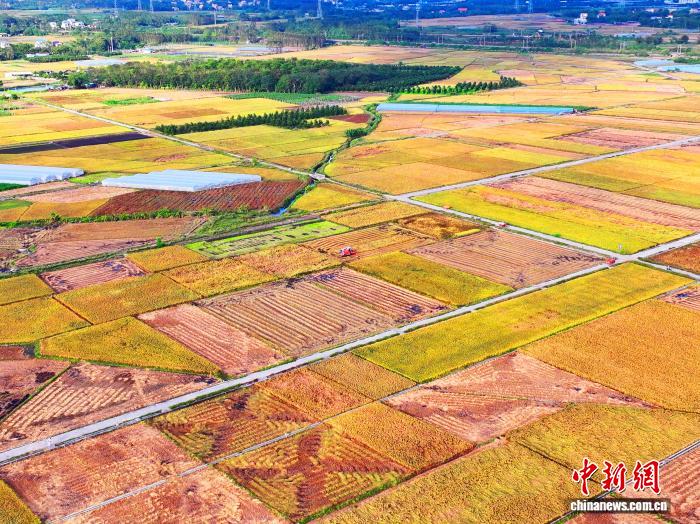
Core Viewpoint - The article highlights the successful rice harvest in Beihai, Guangxi, showcasing the positive impact of agricultural policies and modern farming techniques on grain production [1][2]. Group 1: Agricultural Policies - The local government has implemented strong agricultural support policies, including subsidies for rice production and soil fertility protection, which have effectively motivated farmers [2]. - In 2023, nearly 11,000 acres of land received soil fertility protection subsidies amounting to over 950,000 yuan, benefiting nearly 3,000 households [2]. Group 2: Farming Techniques - The introduction of advanced agricultural techniques such as reasonable planting density, water-saving irrigation, and integrated pest management has been a focus this year [5]. - Soil testing and formula fertilization were conducted on 10,000 acres, and pest control measures were applied over 5,000 acres, enhancing both the quantity and quality of grain production [5]. Group 3: Environmental Sustainability - The district promotes the reduction of chemical fertilizers and pesticides through training and has established a recycling mechanism for agricultural waste to minimize pollution [7]. - The comprehensive utilization rate of straw is targeted to remain above 87%, contributing to the steady improvement of soil quality [7].
生产体系稳健性持续增强
Jing Ji Ri Bao· 2025-11-11 02:31
Core Insights - In 2024, China's grain production has surpassed 1.4 trillion jin, indicating a stable increase in grain supply capacity and a solid production foundation [1] - The resilience of China's grain production system continues to strengthen, enhancing capacity structure and risk resistance, which supports food security and stable supply of key agricultural products [1] Group 1: Production System Enhancements - The construction of high-standard farmland has been steadily advanced, improving farming conditions significantly [1] - In the Huang-Huai-Hai Plain, irrigation area renovations and drainage system improvements have effectively reduced drought and flood risks [1] - In Northeast China, protective farming practices and efficient water-saving irrigation have been prioritized, achieving simultaneous improvements in soil quality and production capacity [1] Group 2: Structural Optimization and Technological Integration - The planting structure has been continuously optimized, with notable achievements in soybean-corn strip intercropping, water-saving wheat promotion, and dry farming development under policy guidance [1] - Digital and intelligent methods are being rapidly applied in farming, fertilization, and pest control, with some regions establishing "smart farmland" using satellite remote sensing and IoT systems for precise monitoring and scientific regulation [1] Group 3: Areas for Improvement - While the foundation of China's grain production system is solid, there is still room for improvement in regional coordination and system completeness [2] - Some areas exhibit uneven levels of high-standard farmland construction, and there are issues with aging facilities and insufficient information management in medium and small irrigation districts [2] - The application of digital agriculture is expanding, but data sharing, platform interconnectivity, and farmers' digital application capabilities need enhancement [2] Group 4: Infrastructure and Digital Empowerment - Strengthening infrastructure is essential for stable production, requiring modernization of irrigation facilities and digital monitoring systems for farmland [2] - A comprehensive digital management system for grain production should be established, promoting the regular application of remote sensing, IoT, and AI technologies in major production areas [2] Group 5: Climate Resilience Strategies - Building climate-resilient agriculture is a long-term strategy, necessitating the optimization of grain production layout and the promotion of resilient crops [3] - A robust mechanism for extreme weather risk warning and disaster emergency response should be developed to enhance disaster resistance and recovery capabilities [3] - A sustainable support system for food security should be established through improved fiscal support, insurance compensation, and policy incentives [3]