乳制品

Search documents
荷兰下令调查中企不到24小时,中国宣布反制欧盟
Sou Hu Cai Jing· 2026-02-12 13:55
Core Viewpoint - The Dutch court has initiated a formal investigation into Nexperia, a semiconductor company controlled by a Chinese firm, while maintaining existing temporary restrictions due to concerns over management behavior and potential technology transfer risks [1][3]. Group 1: Company Operations and Management - Nexperia, headquartered in Nijmegen, Netherlands, is a wholly-owned subsidiary of Wingtech and produces automotive chips for various global car manufacturers [1]. - The Dutch government previously intervened in Nexperia's operations due to fears of technology outflow and supply chain issues, leading to the suspension of the CEO and the management of shares by an independent administrator [3]. - The court's decision on February 11 confirmed the initiation of an investigation and the continuation of control restrictions over the company, while allowing European management to continue operations [3][6]. Group 2: Legal and Regulatory Context - The investigation was prompted by a ministerial order from the Dutch Ministry of Economic Affairs and Climate Policy, which froze the company's asset adjustments, intellectual property transfers, and personnel changes for one year starting from late September last year [3]. - The court's temporary measures have been criticized by Nexperia, which claims they are based on one-sided information, affecting the supply chain and prompting automotive manufacturers to adjust their procurement strategies [3][4]. Group 3: Impact on Supply Chain and Industry - The ongoing legal disputes have led to disruptions in the supply chain, with Japanese and German companies sourcing directly from China, and local factories in China operating independently using domestic materials [3][4]. - The investigation and subsequent restrictions have highlighted the vulnerabilities in global supply chains, with Nexperia's European operations adapting to the situation under the supervision of an administrator [6][8]. - The situation has also prompted the Chinese Ministry of Commerce to impose countervailing duties on EU dairy imports, further complicating trade relations and impacting the dairy industry [4][8].


中国官方部署各地强化婴幼儿配方乳粉质量安全管控
Zhong Guo Xin Wen Wang· 2026-02-12 13:35
Core Viewpoint - The Chinese government is taking significant measures to address the recent recall of Nestlé infant formula due to the detection of Bacillus cereus emetic toxin, ensuring product safety and quality control in the market [1] Group 1: Government Response - The State Council's Food Safety Office and the State Administration for Market Regulation are closely monitoring the situation and have urged Nestlé (China) Co., Ltd. to complete the recall of specific batches of products sold in mainland China [1] - As of now, there have been no confirmed cases of poisoning from the consumption of the affected infant formula in China [1] Group 2: Quality Control Measures - The State Administration for Market Regulation has instructed local authorities to enhance quality safety controls for infant formula, ensuring that all manufacturers conduct testing for Bacillus cereus emetic toxin [1] - Companies are required to implement strict raw material acceptance and product release checks to guarantee the safety and quality of infant formula products [1]
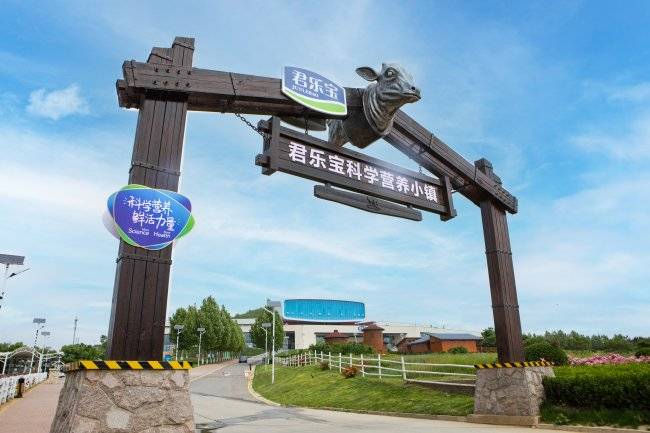
君乐宝正式启动港股上市进程,全产业链驱动盈利能力全面提升
Sou Hu Cai Jing· 2026-02-12 13:20
Core Viewpoint - Junlebao Dairy Group has submitted its listing application to the Hong Kong Stock Exchange, positioning itself as a leading national dairy enterprise with a diversified product range and integrated operations, ranking third among comprehensive dairy companies in China by retail sales in 2024 [1] Financial Performance - Junlebao's total revenue is projected to grow from RMB 17.5 billion in 2023 to RMB 19.8 billion in 2024, with RMB 15.1 billion achieved in the first nine months of 2025, indicating a sustained growth trend [1] - Adjusted net profit is expected to increase significantly from RMB 600 million in 2023 to RMB 1.16 billion in 2024, with net profit margin rising from 3.4% to 5.9%, further increasing to 6.2% in the first nine months of 2025 [1] Market Position and Product Innovation - The low-temperature liquid milk segment is the fastest-growing area in China's dairy market, with Junlebao achieving a 24.0% market share in the high-end fresh milk market in 2024, leading the sector [3] - The "Jianchun" brand has successfully created and expanded the zero-sugar yogurt category, maintaining its position as the top brand in China's low-temperature yogurt market, contributing significantly to revenue growth and overall profitability [3] Supply Chain and Production Capacity - Junlebao has established a complete industrial chain with 33 modern self-owned farms and 20 dairy production plants, housing 192,000 dairy cows, ranking third in the country [4] - The company achieved a milk source self-sufficiency rate of 66% in 2024, the highest among large comprehensive dairy enterprises in China, ensuring product quality and creating a competitive advantage [4] Research and Development - The establishment of the "Scientific Nutrition Research Institute" allows Junlebao to collaborate with top research institutions, focusing on innovative product development in areas such as breast milk component analysis and probiotic development [4] Market Expansion and Distribution - Junlebao has built a nationwide sales network covering all 31 provincial-level administrative regions and approximately 2,200 districts and counties, reaching about 77% of the total county-level administrative areas in China [4] - The company collaborates with over 5,500 distributors and has established direct supply partnerships with major retail chains, e-commerce platforms, and specialty stores, ensuring its products are available in around 400,000 low-temperature liquid milk retail terminals and 70,000 formula milk powder retail terminals [4][5] Future Outlook - The Chinese dairy market presents significant growth potential, providing ample opportunities for Junlebao [5] - Funds raised from the Hong Kong listing will be used for factory construction, capacity expansion, brand marketing, channel development, research innovation, and digital transformation, aiming to enhance market leadership and core competitiveness [5]
控股股东重整迈出关键一步,贝因美控制权成悬念
Xin Jing Bao· 2026-02-12 12:29
Core Viewpoint - Beiyinmei Co., Ltd. is undergoing a pre-restructuring process due to significant debt issues faced by its controlling shareholder, Xiaobei Damei Holdings, which may lead to a change in control of the company [1][4][12]. Group 1: Debt and Restructuring - Xiaobei Damei Holdings has debts amounting to at least 2.1 billion yuan, with a high proportion of its shares pledged [1][3]. - The pre-restructuring plan was approved by the creditors' meeting, with significant support from both secured and unsecured creditors [2][3]. - The company is actively seeking restructuring investors with industrial synergy and financial strength to stabilize operations and optimize asset and debt structures [3][12]. Group 2: Company Background and Control - Xiaobei Damei Holdings, previously known as Beiyinmei Group, was established in July 2003 and is primarily controlled by its founder, Xie Hong, who holds 83.33% of the shares [5][6]. - The core asset of Xiaobei Damei is its 12.28% stake in Beiyinmei, with 98.85% of these shares pledged or frozen [6][9]. - The restructuring success is uncertain and may lead to a change in control, impacting Beiyinmei's stability and investor confidence [4][12]. Group 3: Market Context - The infant formula market is currently in a phase of stock competition, which poses challenges for attracting industrial investors to Xiaobei Damei's core assets [12]. - Beiyinmei has experienced fluctuating revenues and profits, with recent financial reports indicating a slight decline in revenue but an increase in net profit [11].

今日财经要闻TOP10|2026年2月12日
Xin Lang Cai Jing· 2026-02-12 12:01
Group 1 - Xiaomi has announced the open-sourcing of its first-generation robot VLA model, Xiaomi-Robotics-0, which features 4.7 billion parameters and combines visual language understanding with high-performance real-time execution capabilities [1][9] Group 2 - The Nikkei 225 index in Japan has reached a new intraday historical high, surpassing 58,000 points, with a peak increase of 0.6% to 58,004.72 points [2][10] Group 3 - The Iranian Supreme Leader's advisor has stated that Iran is negotiating with the U.S. to determine the timing of the next round of talks, indicating a willingness from the U.S. side to reach an agreement [3][11] Group 4 - In France, three infants have died after consuming recalled infant formula, prompting an investigation. Approximately 50 reports have been received, with 14 cases leading to hospitalization due to suspected consumption of the contaminated product [4][12] Group 5 - The Chinese Ministry of Commerce has responded positively to the EU's approval of a tax exemption for a Chinese brand SUV, emphasizing the importance of dialogue and cooperation between Chinese electric vehicle manufacturers and the EU [5][12] Group 6 - The ChiNext index has seen a rise of over 1% in the morning session, with significant gains in sectors such as small metals and AI computing hardware. The total trading volume reached 1.34 trillion yuan, an increase of 30.5 billion yuan from the previous day [6][13] Group 7 - Lenovo's CEO has predicted that storage prices will continue to rise, potentially doubling, following a 40-50% increase in the previous quarter. This trend is affecting various hardware components, including memory and SSDs [8][16]
伊利自主研发的益生菌菌株获“宝宝食品准入证”
Nei Meng Gu Ri Bao· 2026-02-12 10:42
Core Insights - The National Health Commission of China announced that the probiotic strain YLGB-1496, developed by the National Dairy Technology Innovation Center in collaboration with Yili, has been included in the list of probiotics suitable for infant food, marking the first domestically developed strain for this purpose in China [1][3] Group 1: Industry Impact - The approval of YLGB-1496 represents a significant breakthrough for the domestic probiotic industry in China, reducing reliance on imported probiotics for infants [3] - YLGB-1496 is designed to efficiently utilize human milk oligosaccharides (HMO), which are crucial for the gut microbiota of breastfed infants, thus helping to establish a healthy early gut microecological system [3] Group 2: Research and Development - A series of rigorous clinical studies on infants have been conducted by Yili in collaboration with the National Dairy Technology Innovation Center and other authoritative institutions, leading to the granting of 15 Chinese invention patents related to this strain and its technology [3][4] Group 3: Commercialization - Jinqi Biotechnology, a platform under Yili with a national-level probiotic industrialization production demonstration line, is responsible for the industrialization and commercialization of YLGB-1496, supporting the upgrade of the health food industry towards high quality and diversification [4] - The strain has already been successfully applied in various products, including QQ Star's "Jianhu Mama," Jinhu Cheese Sticks, and Meiyitian Mixed Fruit and Vegetable Juice, with plans for broader application in infant formula and other core product lines [4]

商务部:2月13日起对原产于欧盟的进口相关乳制品征收反补贴税
证券时报· 2026-02-12 09:19
Core Viewpoint - The Ministry of Commerce announced the final ruling on the anti-subsidy investigation of imported dairy products from the EU, determining that these products are subsidized and have caused substantial harm to the domestic dairy industry in China, with a causal relationship established between the subsidies and the harm [1][8]. Group 1: Investigation Details - The investigation was initiated on August 21, 2024, based on applications from the domestic industry [8]. - The final ruling was published on February 12, 2026, with the decision to impose anti-subsidy duties on EU dairy products starting from February 13, 2026, for a duration of five years [1][8]. Group 2: Products Involved - The products under investigation include certain dairy products such as fresh cheese (including whey cheese), processed cheese, blue cheese, and other unspecified cheeses, as well as uncondensed and unsweetened milk and cream with a fat content exceeding 10% by weight [4][6]. - The specific tariff classifications for these products are listed under the Chinese import-export tariff codes: 04015000, 04061000, 04062000, 04063000, 04064000, and 04069000 [6]. Group 3: Anti-Subsidy Tax Rates - The anti-subsidy tax rates for EU companies have been set between 7.4% and 11.7% [1][8]. - The anti-subsidy tax will be calculated based on the customs-determined taxable price of the imported goods [6].
商务部:对原产于欧盟的进口相关乳制品征收反补贴税
券商中国· 2026-02-12 08:58
Core Viewpoint - The Ministry of Commerce of China has announced the final ruling on the anti-subsidy investigation of imported dairy products originating from the European Union, confirming the existence of subsidies and substantial damage to the domestic dairy industry [1][2]. Group 1: Investigation and Findings - The investigation was initiated on August 21, 2024, and concluded with a preliminary ruling on December 22, 2025, which identified subsidies and causal damage to the domestic dairy industry [1]. - The final ruling confirms that the imported dairy products from the EU are subsidized, causing substantial harm to the domestic industry, with a causal relationship established between the subsidies and the damage [1]. Group 2: Anti-Subsidy Measures - The Ministry of Commerce has proposed to the State Council Tariff Commission to impose anti-subsidy duties on the imported dairy products from the EU, effective from February 13, 2026 [2]. - The anti-subsidy tax will be calculated based on the customs-determined taxable price of the imported goods [8]. Group 3: Product Description - The scope of the investigation includes certain dairy products such as fresh cheese, processed cheese, and other specified dairy products with a fat content exceeding 10% [5][6]. - The relevant product categories are classified under specific tariff codes in the Chinese import-export tariff [6]. Group 4: Tax Collection and Duration - The anti-subsidy tax will be collected for a period of five years starting from February 13, 2026 [9]. - Importers will be required to pay the anti-subsidy tax upon importing the specified dairy products, with provisions for retrospective collection of temporary anti-subsidy tax guarantees provided during the investigation period [9][10]. Group 5: Legal Recourse - Stakeholders may apply for a review of the anti-subsidy tax during its implementation period, and there are provisions for administrative review or litigation against the final ruling and tax decisions [10][11].
商务部:自2026年2月13日起对原产于欧盟的进口相关乳制品征收反补贴税
Xin Hua Cai Jing· 2026-02-12 08:33
Core Viewpoint - The Ministry of Commerce of China has announced the final ruling on the anti-subsidy investigation of imported dairy products originating from the European Union, determining that these products are subsidized and have caused substantial harm to the domestic dairy industry [1]. Group 1: Investigation and Findings - The Ministry of Commerce initiated an anti-subsidy investigation on imported dairy products from the EU, as per the Anti-Subsidy Regulations of the People's Republic of China [1]. - The final ruling confirmed that the subsidization of these dairy products has resulted in significant damage to the domestic dairy industry, establishing a causal relationship between the subsidies and the harm [1]. Group 2: Regulatory Actions - Following the investigation, the Ministry of Commerce recommended the imposition of anti-subsidy duties on the imported dairy products to the State Council Tariff Commission [1]. - The State Council Tariff Commission has decided to impose anti-subsidy duties on these products starting from February 13, 2026 [1].
商务部:2月13日起对原产于欧盟的进口相关乳制品征收反补贴税
21世纪经济报道· 2026-02-12 08:12
Core Viewpoint - The Ministry of Commerce of China has announced the final ruling on the anti-subsidy investigation of imported dairy products from the EU, confirming the existence of subsidies and substantial damage to the domestic dairy industry, with a causal relationship established between the subsidies and the damage [1]. Group 1: Final Ruling - The final ruling states that imported dairy products from the EU are subsidized, causing substantial harm to China's domestic dairy industry, with a causal link between the subsidies and the harm identified [1]. Group 2: Anti-Subsidy Measures - The Ministry of Commerce will propose to the State Council Tariff Commission to impose anti-subsidy duties on imported dairy products from the EU starting from February 13, 2026 [2]. - The specific products under investigation include fresh cheese, processed cheese, and other dairy products with a fat content exceeding 10% [2]. Group 3: Collection of Anti-Subsidy Duties - From February 13, 2026, importers must pay the corresponding anti-subsidy duties based on the customs-determined taxable price of the imported goods [2]. - The calculation formula for the anti-subsidy tax is provided, indicating that it will be based on the customs-determined taxable price [2]. Group 4: Retroactive Collection of Anti-Subsidy Duties - Temporary anti-subsidy tax deposits provided by importers from December 23, 2025, to February 12, 2026, will be converted into anti-subsidy taxes based on the final ruling [4]. - There will be no retroactive collection of anti-subsidy duties for dairy products imported before the implementation of temporary measures [4]. Group 5: Duration and Review of Anti-Subsidy Duties - The anti-subsidy duties will be in effect for five years starting from February 13, 2026 [4]. - Stakeholders can apply for a review of the anti-subsidy duties during the collection period [4]. Group 6: Legal Recourse - Parties dissatisfied with the final ruling and the imposition of anti-subsidy duties can apply for administrative review or file a lawsuit in court [4].