
数字资产

Search documents
深度布局,香港写好“数字金融”大文章
Ren Min Ri Bao Hai Wai Ban· 2025-07-14 21:41
Core Viewpoint - The Hong Kong Special Administrative Region (HKSAR) government has released the "Hong Kong Digital Asset Development Policy Declaration 2.0," introducing the "LEAP" framework to enhance the legal and regulatory environment, expand tokenized product categories, promote application scenarios and cross-sector collaboration, and develop talent and partnerships, thereby advancing traditional finance into the digital asset era and solidifying Hong Kong's status as an international financial center [1][3]. Group 1: Policy Framework and Vision - The HKSAR government aims to create a balanced regulatory framework that manages risks while ensuring investor protection and industry development, establishing a trustworthy and sustainable digital asset ecosystem integrated with the real economy [1][2]. - The "LEAP" framework focuses on compliance regulation, asset tokenization, scenario expansion, and talent development, marking a transition from a testing ground for digital assets to a more institutionalized, scalable, and globalized approach [4][5]. Group 2: Economic Impact and Innovation - Digital assets are seen as a crucial component of financial technology, enabling more efficient and lower-cost financial transactions, thus enhancing financial inclusivity [2]. - The government plans to issue tokenized green bonds in 2023 and 2024, with ongoing preparations for a third batch, aiming to normalize the issuance of tokenized government bonds and broaden the tokenization of various assets, including precious metals and renewable energy [6][7]. Group 3: Industry Collaboration and Support - The Hong Kong Digital Port has launched a "Blockchain and Digital Asset Pilot Funding Scheme" to support startups in the relevant fields, providing up to 500,000 HKD for eligible pilot projects [7]. - The HKSAR government and the financial regulatory authorities are committed to creating a favorable market environment for the application of stablecoins across different scenarios, addressing long-standing issues in cross-border payments [2][4].
【香江观潮】 香港将构建可信与创新并重的数字资产生态圈
Zheng Quan Shi Bao· 2025-07-14 18:44
Core Viewpoint - The Hong Kong Special Administrative Region government has released the "Hong Kong Digital Asset Development Policy Declaration 2.0," marking a significant step in the systematic layout for the future development of digital assets, positioning them as a strategic tool for structural transformation in the local financial market [1] Regulatory Framework - The declaration emphasizes a prudent regulatory philosophy, establishing a multi-layered and segmented regulatory mechanism, with the Hong Kong Securities and Futures Commission as the main regulatory body [2] - A licensing system for digital asset trading service providers and custodians will be implemented, addressing legal barriers related to the tokenization of real-world assets [2] Product Innovation - The declaration proposes the normalization of tokenized government bond issuance and supports the development of tokenized ETF products, aiming to integrate tokenized assets into mainstream financial products [3] - It also highlights plans to advance tokenization experiments in non-financial physical assets such as precious metals and renewable energy, enhancing liquidity and cross-border trading attributes [3] Application Promotion and Talent Development - A dual strategy of "regulatory experimentation + market-driven" is emphasized, with a licensing mechanism for stablecoins set to be implemented on August 1 [4] - The declaration outlines a detailed plan for talent cultivation and international cooperation, aiming to establish Hong Kong as a global knowledge hub for digital assets [4] Terminology and Regulatory Recognition - The declaration distinguishes between "virtual assets" and "digital assets," reflecting a significant advancement in regulatory understanding and aligning with international financial center trends [5]
陈茂波:香港金融市场强劲表现吸引韩资
Jin Rong Jie· 2025-07-14 06:30
Group 1 - The strong performance of Hong Kong's financial market and the robust IPO activities have attracted the attention of the South Korean financial sector [1][2] - In the first five months of this year, the total securities trading volume of South Korean licensed institutions in Hong Kong exceeded HKD 1.5 trillion, which is 2.8 times that of the entire last year [2][3] - South Korean venture capital and private equity funds are increasingly interested in investing in Hong Kong and mainland markets due to the potential for innovation and commercialization in the Greater China region [2][4] Group 2 - The innovation in financial products in Hong Kong has gained recognition from the South Korean financial community, particularly a recently listed leveraged inverse product linked to a major South Korean company [3] - The upcoming stablecoin regulations in Hong Kong are of significant interest to South Korean industry and regulatory bodies [3][4] - There is a growing desire for mutual cooperation between South Korean and Hong Kong enterprises, especially in the context of rapid development in mainland technology companies [4][5] Group 3 - Hong Kong is positioned as a "super connector" and "super value creator" with its world-class universities and research capabilities, which can enhance collaboration in sectors like AI, biomedicine, smart cities, and green technology [5] - The promotion of financial market connectivity and innovation between Hong Kong and South Korea is seen as a way to attract more international investment [4][5] - Future initiatives will focus on enhancing multi-level interactions between Hong Kong and various economies in the region, including financial, technological, and cultural exchanges [5]
美股最新消息:纳指标普再创历史新高,XBIT平台重塑投资生态
Sou Hu Cai Jing· 2025-07-13 06:24
Group 1: Market Performance - The US stock market continues to show strong momentum, with major indices reaching new historical highs, including the Nasdaq and S&P 500 [1] - On July 11, the Nasdaq index rose by 0.09%, the S&P 500 increased by 0.27%, and the Dow Jones Industrial Average climbed by 0.43% [1] - Tesla rebounded strongly by 4.7%, while Netflix saw a decline of over 2% [1] Group 2: Digital Asset Sector - Digital asset-related stocks performed notably well, with Coinbase rising over 4% [1] - The XBIT.Exchange decentralized trading platform offers a revolutionary trading experience, allowing users to trade without providing personal information, aligning with the core principles of decentralized finance [1][3] - XBIT's asset self-management mechanism provides top-tier security, ensuring users independently hold their private keys and control their digital assets [3] Group 3: Regulatory Developments - A proposed tax law by Senator Cynthia Lummis aims to establish a $5,000 annual tax exemption for digital asset transactions and eliminate the current double taxation system [5] - This policy change signifies a shift towards a more open and pragmatic regulatory stance from the US government regarding the digital asset industry [5] - The evolving regulatory environment is expected to accelerate the compliance process for digital assets in the US [5] Group 4: Future Outlook - As regulatory frameworks improve and technology applications deepen, decentralized trading platforms are anticipated to play a more significant strategic role in the global financial landscape [6] - The current investment environment presents unprecedented opportunities for market participants, combining robust growth in traditional markets with the rapid adoption of blockchain technology [5][6]

外媒:技术生态是香港超越新加坡 成为“亚洲第一”的关键
Yang Guang Wang· 2025-07-12 07:33
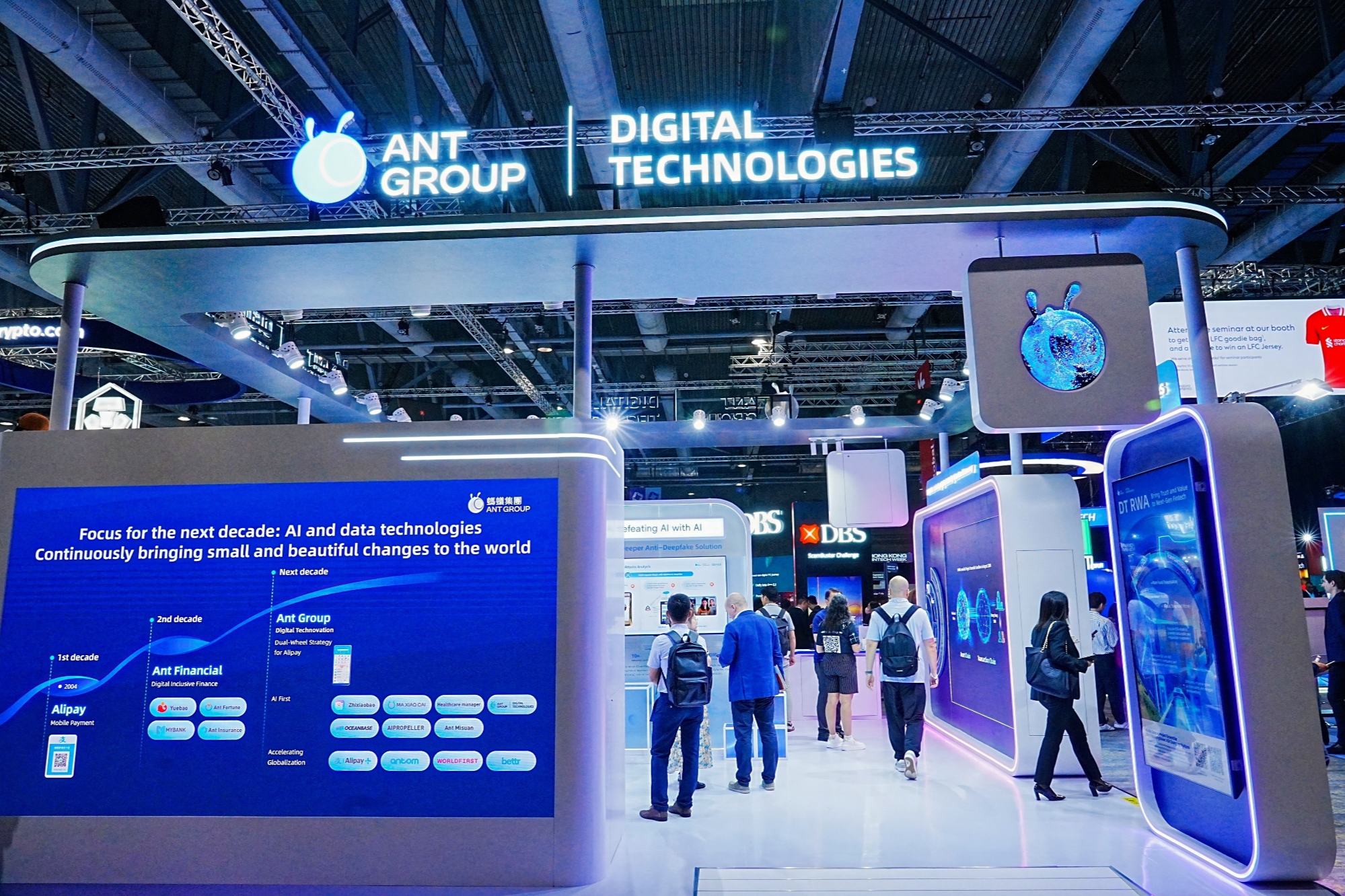
Core Insights - The article highlights Hong Kong's ambition to become a "global digital asset hub" amid the ongoing digital transformation of the global economy [1][5] - The launch of the "Hong Kong Digital Asset Development Policy Declaration 2.0" signifies a strategic upgrade from establishing a regulatory framework to enhancing the ecosystem and expanding applications [1][3] Group 1: Hong Kong's Financial Position - Hong Kong has surpassed Singapore with a score of 760, solidifying its position as the leading financial center in Asia, with a comprehensive score increase of 11 points [3] - The financial sector contributes nearly a quarter to Hong Kong's GDP, with around 270,000 financial professionals [3] - By mid-2025, Hong Kong's stock exchange is projected to lead global fundraising efforts with a scale of $14 billion [3] Group 2: Technological Development and Innovation - Hong Kong is focusing on building a secure, compliant, and efficient technological foundation to support digital asset innovation, including core technologies like blockchain infrastructure and privacy computing [4] - The city is attracting global resources and over 80 tech companies, along with more than 300 Web3 firms, to enhance its technological ecosystem [4] - Ant Group's Ant Financial has opened its core technologies to global developers, significantly lowering innovation barriers and fostering a thriving tech ecosystem in Hong Kong [4][5] Group 3: Future Outlook - The collaboration between Hong Kong and leading tech firms like Ant Group is expected to strengthen its status as an international financial center and propel it towards becoming a global center for digital asset innovation [5]
海南华铁战略入股XMeta 共拓RWA数字资产新生态
Zheng Quan Ri Bao Wang· 2025-07-10 13:15
Group 1 - Hainan Huatie has made a strategic investment in XMeta, acquiring a 5% stake, marking its entry into the digital asset sector and focusing on the digitization and circulation of real-world assets (RWA) [1][2] - XMeta is a leading digital asset trading platform with 2 million registered users and partnerships with over 1,000 digital asset issuance platforms, covering more than 30 million users and achieving a cumulative trading volume of several hundred million RMB [1][2] - The collaboration aims to deepen the layout of RWA, connecting traditional financial assets with the real economy, and exploring RWA financing and on-chain circulation services [2][3] Group 2 - Hainan Huatie has achieved significant results in the digitalization of physical assets, having completed the blockchain integration of nearly 26 billion RMB in aerial work platform assets, laying a solid foundation for RWA business [2] - The partnership will leverage Hainan Huatie's extensive on-chain physical asset scale and XMeta's liquidity network to create a closed-loop operation of "real assets - digital certificates - on-chain circulation" [2] - The collaboration also aims for international expansion, planning to establish compliant RWA overseas operations from Hong Kong, facilitating cross-border digital asset transactions and supporting the Belt and Road Initiative [2]

多家机构备战香港稳定币牌照,“重构国际货币体系”言之尚早
Di Yi Cai Jing· 2025-07-07 12:43
Core Viewpoint - The article discusses the ongoing competition for stablecoin licenses in Hong Kong, highlighting the limited availability of these licenses and the intense interest from major financial institutions and tech companies. It emphasizes that while stablecoins are expected to enhance cross-border payment efficiency, their actual impact may be overstated, as they fundamentally extend the functions of fiat currencies rather than disrupt the existing monetary system [1][6]. Group 1: Stablecoin License Competition - The stablecoin license in Hong Kong is scarce and highly sought after, with only a few licenses expected to be granted despite over 40 companies preparing applications [1][2]. - Major players in the market include JD.com, Standard Chartered, and Circle, while many smaller firms face challenges in qualifying for applications [2][3]. - The competition is primarily among China's largest financial institutions and internet companies, indicating a significant interest in stablecoin operations [2][3]. Group 2: Market Expectations and Realities - There is a growing expectation that stablecoins could reconstruct the global monetary system, but experts caution that this view is exaggerated [6]. - Stablecoins are anchored to sovereign currencies and serve as an extension of fiat currency functions, lacking the ability to disrupt the existing financial framework [6][7]. - Research indicates that the actual cost of cross-border payments using stablecoins may approach 1%, contrary to the low-cost narrative often promoted [6][7]. Group 3: Industry Dynamics and Challenges - Companies exploring stablecoin applications fall into two main categories: those involved in cross-border payments and those focused on issuing and circulating stablecoins [3][5]. - Traditional payment institutions face challenges in adapting to blockchain technology and require "chain abstraction" to lower the barriers for using stablecoin products [4][5]. - The stablecoin business demands interdisciplinary collaboration, necessitating knowledge in finance, technology, and crypto assets [5]. Group 4: Future of Stablecoins - The potential for offshore RMB stablecoins is being discussed, with a focus on leveraging Hong Kong as a testing ground for international financial systems [8]. - The development of a RMB stablecoin could enhance cross-border payment capabilities and support the internationalization of the RMB [8]. - A pragmatic approach is needed to balance the development of stablecoins with actual market demands and avoid overextending beyond current capabilities [8].
金融科技的未来引擎,蚂蚁国际用“区块链 + AI”重塑全球资金管理
Sou Hu Cai Jing· 2025-07-04 14:56
Core Insights - The digital asset sector has seen significant milestones since 2025, including the U.S. Senate passing the GENIUS Act and Hong Kong introducing regulations for stablecoins, indicating a growing institutional interest in digital assets [2] - The future of stablecoins and blockchain finance is driven not by speculative market activities but by a revolution in corporate treasury management, which is becoming a critical area for financial technology [3][17] - Ant International is positioning itself as a digital technology partner within regulatory frameworks, focusing on enhancing the resilience and inclusivity of financial systems rather than being a disruptor [17] Group 1: Market Developments - Major companies like SpaceX and Stripe are actively engaging with stablecoin payment platforms, highlighting the practical applications of stablecoins in global fund settlement [2] - Ant International is accelerating its investment in global treasury management, aiming to leverage AI, blockchain, and stablecoin innovations for large-scale applications [2][3] - The anticipated cost savings from tokenized cross-border payments could exceed $50 billion for enterprises by 2030, driven by the need for efficient treasury management solutions [7][12] Group 2: Challenges in Treasury Management - Companies face significant challenges in cross-border payments, including high transaction costs and delays due to complex processes and centralized infrastructures [3][4] - Inefficient foreign exchange management strategies can lead to additional costs of 1.5% to 3% for enterprises, particularly affecting small and medium-sized businesses in emerging markets [4] Group 3: Technological Innovations - Ant International's Whale platform is designed to facilitate real-time, secure fund management across different financial institutions, significantly reducing settlement times from days to seconds [13] - The integration of AI with blockchain technology is transforming corporate treasury operations, enabling data-driven decision-making and enhancing cash flow management [15][18] - The AI-driven foreign exchange demand forecasting model, named "Falcon," achieves over 90% accuracy in predicting cash flow and foreign exchange exposure, allowing companies to optimize their financial strategies [15] Group 4: Regulatory Engagement - Ant International is actively participating in regulatory innovation initiatives in Singapore and Hong Kong, positioning itself as a key player in the evolving digital asset landscape [16][17] - The collaboration with major banks and financial institutions to implement the Whale platform demonstrates the growing acceptance of blockchain technology in global financial services [17]
许正宇:香港完善数字资产监管 稳定币发牌制度助力行业腾飞
智通财经网· 2025-07-04 11:00
Core Viewpoint - Hong Kong is actively promoting the development of digital assets, establishing a regulatory framework that balances risk management and investor protection, aiming to position itself as a leading digital asset center in Asia [1][2][7] Regulatory Framework - The Hong Kong government has implemented a licensing system for stablecoin issuers, which will take effect next month, enhancing the regulatory environment for digital assets [1][2] - A comprehensive regulatory framework for digital asset service providers is being developed, covering trading platforms, stablecoin issuers, and custodians [3][4] Tokenization and Product Expansion - The government has issued tokenized green bonds and plans to regularize the issuance of tokenized government bonds, providing incentives for the tokenization of real-world assets [4] - The framework aims to expand the variety of tokenized products, including potential exemptions from stamp duty for tokenized ETFs [4] Use Cases and Collaboration - The stablecoin licensing system is expected to facilitate practical applications and address challenges faced by the real economy [5] - Hong Kong is leading discussions on the use of stablecoins as a cost-effective alternative in financial markets, with a focus on enhancing their stability and reliability [5] AI Integration - Hong Kong's financial institutions have the highest usage rate of generative AI (38%) among global markets, indicating a strong trend towards AI integration in financial services [6] - The "LEAP" framework includes a focus on talent and partnership development to foster AI expertise and collaboration between industry and academia [6][7] Support for Startups - The Digital Port has launched a pilot funding scheme for blockchain and digital asset startups, providing financial support to encourage innovative solutions that integrate with the real economy [7]
许正宇:8月1日起香港金管局将开始接受稳定币牌照申请 欢迎机构按实际业务需要申请
Zhi Tong Cai Jing· 2025-07-02 07:59
原文如下: 立法会五题:推动稳定币的发展 以下是今日(七月二日)在立法会会议上吴杰庄议员的提问和财经事务及库务局局长许正宇的答覆: 问题: 本年五月通过的《稳定币条例草案》旨在于香港设立法币稳定币发行人的发牌及监管制度。有意见认为 这是全球Web3发展的里程碑,也是香港成为国际Web3中心的重要一步。就此,政府可否告知本会: 7月2日,香港财经事务及库务局局长许正宇就立法会会议上吴杰庄议员的提问答覆表示,今年五月,立 法会通过了《稳定币条例草案》,为香港引入锚定法定货币的稳定币发行人发牌制度。条例进一步完善 香港数字资产活动的监管框架,以保障货币和金融稳定,并巩固提升香港国际金融中心的地位。《稳定 币条例》将于今年八月一日生效,届时香港金融管理局(金管局)将开始接受牌照申请。目前,金管局正 就落实条例的具体指引进行市场谘询,争取尽快订立指引。 (一)如何推动稳定币应用场景的拓展,包括推动稳定币发行机构与内地应用场景连结,以促进稳定币从 监管合规到商业生态落地; 香港的稳定币发行人发牌制度具灵活性和开放性,允许持牌发行人可选择不同法币币种,作为发行稳定 币的锚定法币。欢迎全球不同地方的机构按实际业务需要申请牌照 ...