
外卖服务

Search documents
48岁外卖员送餐完毕回家途中受伤,平台被判赔偿134.8万港元,法官:技术限制不能成为免责理由
Mei Ri Jing Ji Xin Wen· 2025-09-04 16:40
Core Points - A Hong Kong court ruled that Foodpanda must compensate a delivery rider 1.348 million HKD for injuries sustained during a typhoon while working [1][6][9] - The court found that Foodpanda bore 80% of the responsibility for the incident, as the company failed to adequately protect its workers during severe weather conditions [5][8][9] Group 1: Incident Details - The incident involved a 48-year-old South Asian delivery rider, Khan Farooq Ahmed, who was working during the issuance of a No. 8 typhoon signal [3][5] - The rider completed his last order 18 minutes after the typhoon signal was raised and was injured in a traffic accident caused by strong winds [5][9] Group 2: Compensation and Financial Impact - The rider's monthly income was approximately 28,000 HKD, but after the accident, he could only earn about 14,000 HKD due to his injuries [5][9] - The compensation awarded included pain and suffering, loss of income, and other damages, totaling 1.348 million HKD [6][9] Group 3: Company Responsibility - The court criticized Foodpanda for allowing riders to accept orders during dangerous weather conditions and for not shutting down their automated order system in a timely manner [8][9] - The judge noted that the company's operational model posed safety risks, as riders felt pressured to complete orders despite adverse weather [8][9]

48岁外卖员送餐完毕回家途中受伤 平台被判赔偿134.8万港元 法官:技术限制不能成为免责理由
Mei Ri Jing Ji Xin Wen· 2025-09-04 16:40
Core Viewpoint - A Hong Kong court ruled that Foodpanda must compensate a delivery rider 1.348 million HKD for injuries sustained during a typhoon, highlighting the company's responsibility for employee safety during extreme weather conditions [1][6][8] Group 1: Incident Details - The incident involved a 48-year-old South Asian delivery rider, Khan Farooq Ahmed, who was injured while working during a typhoon warning [4] - The rider was working under the 3rd typhoon signal and completed his last order shortly before the 8th signal was issued, leading to a traffic accident caused by strong winds [6][7] - The rider claimed a monthly income of 28,000 HKD, which dropped to 14,000 HKD post-accident due to reduced work capacity [6][8] Group 2: Court Ruling and Responsibilities - The court found Foodpanda liable for 80% of the accident, stating that the company failed to adequately protect its employees by not shutting down the order system during severe weather [7][8] - The judge noted that the company's argument that riders could refuse orders was inconsistent with the employment contract and common sense, especially during adverse weather [7][8] - The court acknowledged the rider's diligent work ethic and the pressure he faced to accept orders, which contributed to the accident [7][8] Group 3: Compensation Breakdown - The compensation awarded to the rider included 14 months of sick pay, future income loss, and emotional distress, totaling 1.348 million HKD [6][8] - The court also considered the rider's claim of exaggerated injuries but ultimately ruled in favor of the compensation based on the impact on his future employment prospects [8]
《上海市“放心外卖”食品安全白皮书》:近四分之一用户接受“外卖专营店”
Shang Hai Zheng Quan Bao· 2025-09-02 15:52
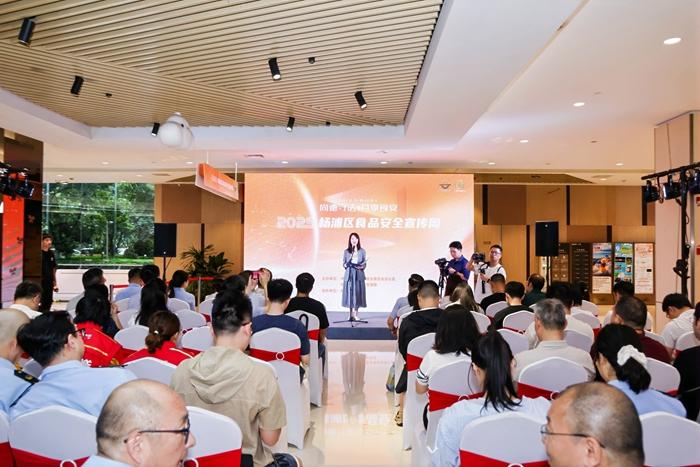
Core Viewpoint - The "Shanghai Food Safety White Paper" indicates that there is no inherent connection between "no dine-in" and "ghost kitchens," with nearly a quarter of surveyed users willing to accept "independent takeout specialty stores" [1] Group 1 - The white paper was jointly compiled by Shanghai University of Finance and Economics Digital Economy Research Institute and Meituan, under the guidance of the Shanghai Food Safety Work Association and Yangpu District Market Supervision Administration [1] - The launch event took place on September 2 during the 2025 Shanghai Yangpu District Food Safety Promotion Week [1]
《上海市“放心外卖”食品安全白皮书》发布 近四分之一用户接受“外卖专营店”
Shang Hai Zheng Quan Bao· 2025-09-02 12:22
Core Viewpoint - The "Safe Takeaway" food safety white paper was officially released, indicating that there is no inherent connection between "no dine-in" and "ghost kitchens," with nearly one-fourth of respondents willing to accept "independent takeaway specialty stores" [1] Group 1 - The white paper was jointly compiled by Shanghai University of Finance and Economics Digital Economy Research Institute and Meituan, under the guidance of Shanghai Food Safety Work Joint Association and Yangpu District Market Supervision Administration [1] - The launch event took place during the 2025 Shanghai Yangpu District Food Safety Promotion Week [1]
上海“放心外卖”白皮书发布:过半数受访者每周点餐超3次
Guan Cha Zhe Wang· 2025-09-02 12:17
Group 1 - The "Shanghai Food Safety White Paper" was released, indicating that "no dine-in" does not necessarily equate to "ghost kitchens," with nearly 25% of respondents willing to accept "independent delivery-only restaurants" [1] - The overall takeaway consumption in Shanghai shows a "high-frequency necessity" characteristic, with 54.58% of respondents ordering takeout more than three times a week and 66.49% ordering on weekends or holidays [1] - Consumer trust in food safety is primarily derived from safety standards, transparency, and brand endorsement, with 64.81% believing that "real-time kitchen live streaming and visualized operations" significantly enhance trust [1] Group 2 - The white paper highlights that the investment threshold and operating costs for delivery-only restaurants are low, catering to various consumer needs and serving as a beneficial supplement to traditional dining models [2] - "Ghost kitchens" are reported to constitute only about 5.78% of the overall delivery business, with strict qualification checks by delivery platforms reducing their prevalence [2] - The platform has initiated social supervision cooperation with delivery personnel, encouraging them to report food safety issues, with over 500,000 stores covered by safety inspections this year [3]

“明厨亮灶”最能提升用户信任度 上海“放心外卖”白皮书发布
Zhong Guo Xin Wen Wang· 2025-09-02 11:42
Core Insights - The "Shanghai Safe Takeaway" white paper was released, highlighting the importance of food safety in the takeaway industry and consumer trust [1][3] - The paper indicates that "no dine-in" does not necessarily correlate with "ghost kitchens," and nearly a quarter of respondents are open to "independent takeaway specialty stores" [1][7] Consumer Behavior Trends - Takeaway consumption in Shanghai shows a "high-frequency necessity," with 54.58% of respondents ordering more than three times a week, and 19.85% ordering daily [3] - 66.49% of respondents order takeaway on weekends or holidays [3] Trust Factors in Food Safety - Consumer trust in food safety is primarily derived from safety benchmarks, transparency, and brand endorsement [3] - 64.81% of consumers believe that "real-time kitchen live streaming and visualized operations" significantly enhance trust [5] - Other trust-enhancing factors include "no food safety negative reviews" (63.28%) and "using food safety seals" [3][5] Industry Developments - Since February, 117,000 merchants have activated "real-time kitchen live streaming" on Meituan, with expectations of over 200,000 by the end of 2025 [3][5] - Meituan plans to invest in 1,200 "Raccoon Canteens" across the country over the next three years, aiming for 100% transparency in food safety [5] Misconceptions Clarified - The white paper clarifies misconceptions about "ghost kitchens" and "no dine-in" establishments, stating that the latter has low investment and operational costs, catering to various consumer needs [7] - The actual proportion of ghost kitchens is minimal, with strict qualification checks for merchants on takeaway platforms [7] Food Safety Monitoring Initiatives - The overall food safety in Shanghai is reported to be stable, with a 99.4% compliance rate in food monitoring last year [8] - The initiative encourages a collaborative approach to food safety, involving government, businesses, and public supervision [8] - Meituan has implemented a "rider food safety supervisor" program, allowing delivery personnel to report food safety issues, with over 500,000 stores covered by safety inspections [8]
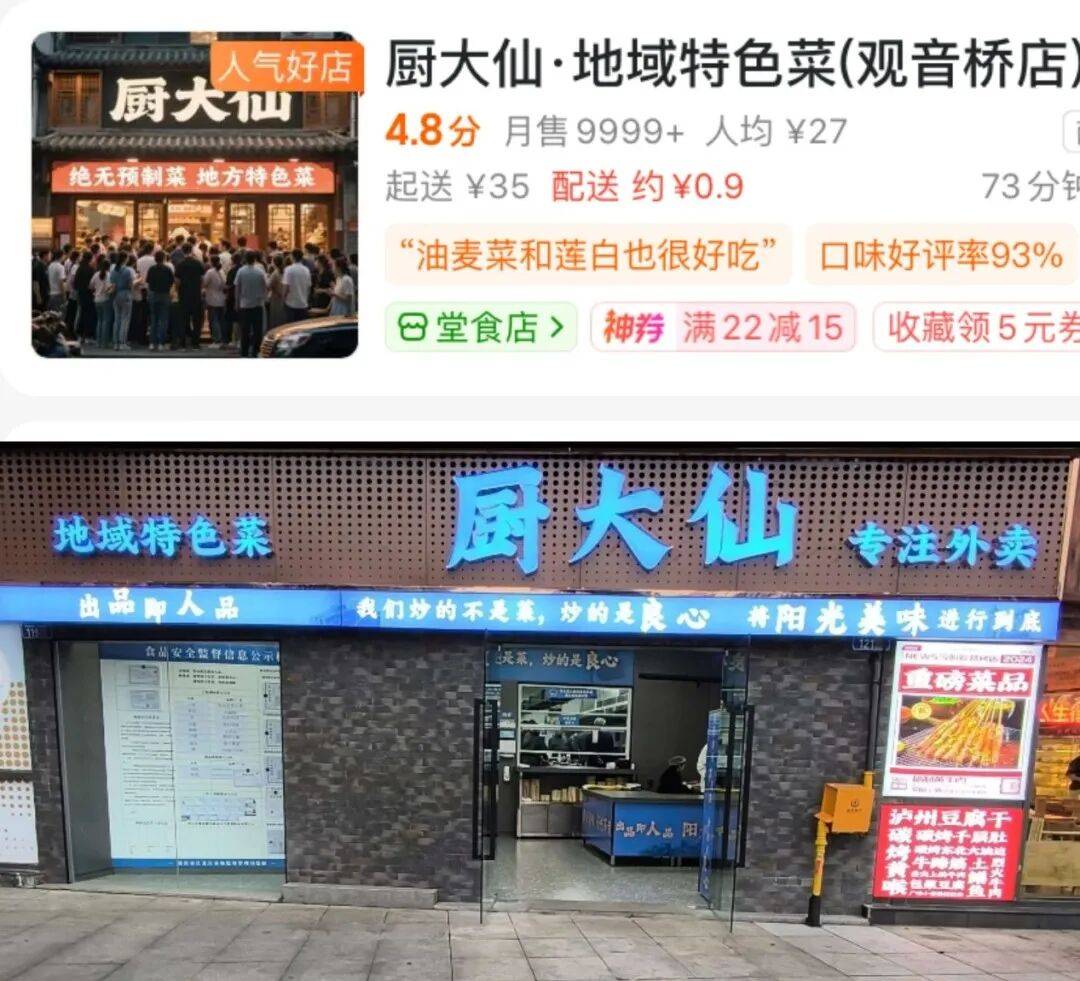
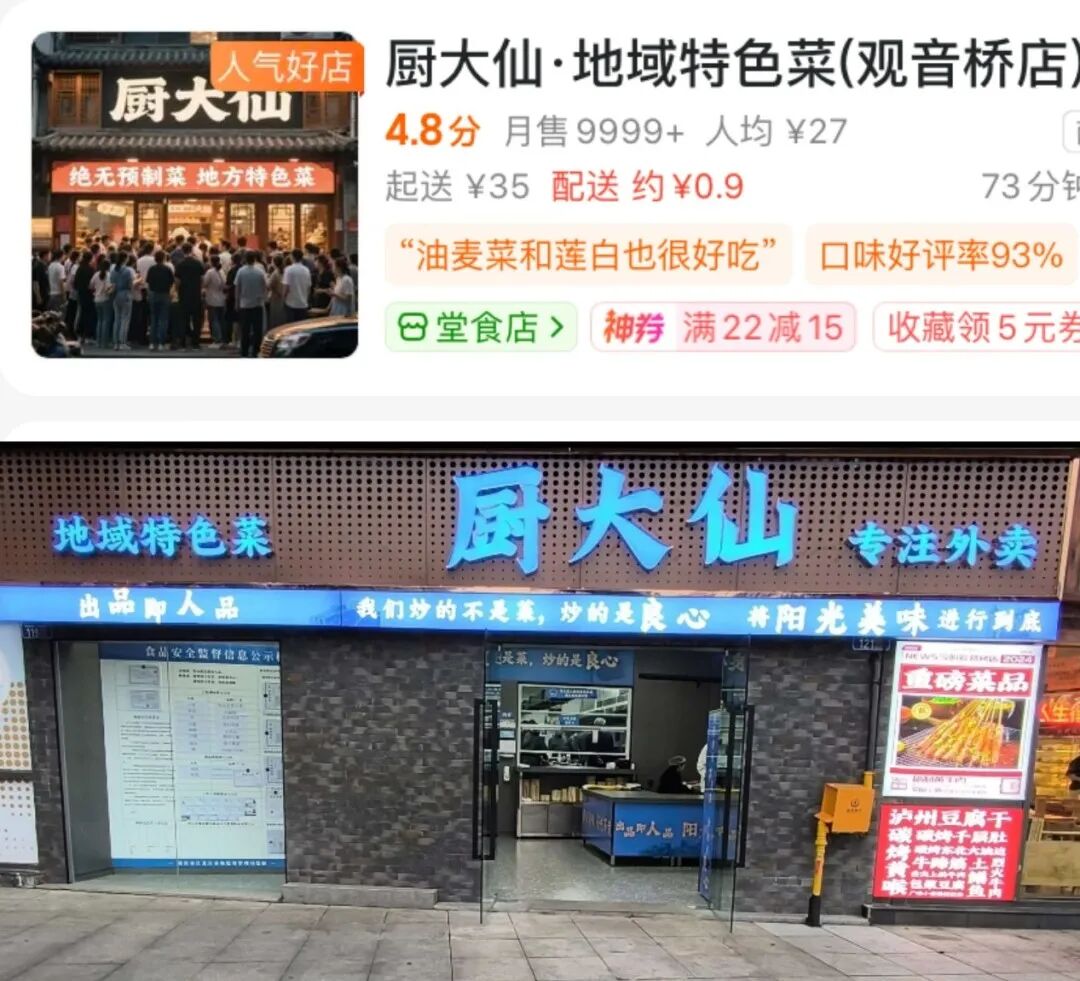
幽灵外卖店,凭借AI照片改头换面
Hu Xiu· 2025-09-01 10:46
Core Viewpoint - The rise of AI-generated storefront images has led to a proliferation of misleading online food delivery businesses, where actual storefronts do not match the appealing images presented online [2][4][10]. Group 1: Misleading Practices - Many food delivery businesses are using AI-generated images to create a false impression of being popular dine-in restaurants, attracting customers who are unaware of the deception [2][5][6]. - Consumers like Chen Ying have been misled by these AI images, believing they are ordering from well-established restaurants, only to discover that the actual locations are small takeout shops [5][6][10]. - Social media platforms have seen numerous complaints from users who have been deceived by these AI storefronts, highlighting a pattern of misleading practices among certain food delivery businesses [11][13]. Group 2: AI Image Production - The production of AI storefront images is becoming a widespread practice, with various AI tools available that can generate appealing images for businesses [20][22]. - A new industry is emerging around the creation and sale of these AI-generated images, with services available on e-commerce platforms for as little as 10 to 40 yuan [23][25]. - Some businesses are not only providing AI images but also offering additional services like "store operation" and "multiple store openings," indicating a growing trend in the food delivery sector [25][26]. Group 3: Regulatory Response - Major food delivery platforms are taking steps to combat the issue of misleading storefronts, with Meituan reporting a 41% increase in the number of violations addressed in 2024 compared to 2023 [26][27]. - Both Meituan and Ele.me have implemented stricter verification processes for merchants, including enhanced checks on business licenses and physical inspections of high-risk locations [26][27]. - Despite these efforts, the prevalence of AI-generated storefront images suggests that consumers need to remain vigilant when ordering food online [28].
幽灵外卖店,用AI门头照撑门面
3 6 Ke· 2025-09-01 09:21
Core Viewpoint - The rise of AI-generated storefront images in the food delivery industry has led to consumer deception, as many restaurants misrepresent themselves as dine-in establishments while operating as small takeout shops [1][5][18]. Group 1: Consumer Experience - Consumers, like Chen Ying, have been misled by attractive AI-generated images of restaurants, believing they are ordering from reputable dine-in locations [1][2]. - Many users on social media have reported similar experiences, discovering that the actual storefronts do not match the appealing online images [5][8]. Group 2: AI Image Usage - Numerous food delivery businesses are utilizing AI-generated storefront images to create a false impression of their establishments, often leading to consumer disappointment [10][12]. - The AI-generated images often depict spacious and busy restaurants, while the actual locations are small and primarily focused on takeout [6][10]. Group 3: Industry Response - Platforms like Meituan and Ele.me have been actively working to combat the issue of "ghost restaurants" by increasing the scrutiny of merchant qualifications and implementing stricter verification processes [18][19]. - Meituan reported handling 45,000 cases of merchant violations in 2024, a 41% increase from the previous year, while Ele.me has removed over 31,000 non-compliant merchants [18][19]. Group 4: Emerging Trends - A new industry trend has emerged where businesses offer services to create AI-generated storefront images, with prices ranging from 10 to 40 yuan, indicating a growing market for such deceptive practices [14][17]. - The proliferation of AI tools has facilitated the mass production of these misleading images, raising concerns about consumer trust in online food delivery services [12][14].
“护胃队”也是“护卫者”,新就业形态织密网格治理和社区服务网
Zhong Guo Xin Wen Wang· 2025-09-01 09:06
Core Viewpoint - Meituan has launched a "Rider Good Deeds Reward Program" to recognize and reward riders who demonstrate social responsibility and altruism, highlighting the company's commitment to social welfare and community engagement [1][2]. Group 1: Initiatives and Programs - The "Pioneer Rider" project was established in 2021, offering rewards in three tiers: 500, 1000, and 2000 yuan to encourage good deeds among riders [1]. - Additional support programs include the "Serious Illness Care Program" for riders' families, the "Riders Go to College" initiative in collaboration with the National Open University, and the "Kangaroo Baby Public Welfare Program" for the health and education of riders' underage children [1]. - As of July 2023, Meituan has awarded the "Pioneer Rider" title to 1,046 riders, with total rewards exceeding 1.4 million yuan [1]. Group 2: Social Impact of Riders - Riders are recognized as a new employment group with strong mobility and broad coverage, acting as "social supervisors" and contributing to urban governance [2]. - Numerous riders have emerged as role models by engaging in acts of bravery, helping others, and reporting public safety issues, thus showcasing their social responsibility [2]. Group 3: Notable Acts of Heroism - A rider named Xiao Chen prevented a telecom fraud by alerting the police after noticing suspicious behavior during a delivery, leading to the recovery of 160,000 yuan in cash [3]. - Riders Pang Jian and Cen Wenyu saved a young woman from attempting suicide by working together to bring her back to safety [4]. - Rider Meng Shixiang intervened to protect a 14-year-old girl from an attacker, earning recognition and rewards for his bravery [4]. - Rider Zhang Kun alerted authorities after discovering a distress signal written in blood, leading to the rescue of a woman trapped for over 30 hours [5][6]. - Rider Wang Jiahao participated in the rescue of an injured taxi driver after a serious traffic accident [6]. - Riders Zashi Badan, Zashi Dunjub, and Bai Yu volunteered for disaster relief efforts following an earthquake, demonstrating their commitment to community service [7][8]. Group 4: Community Safety and Governance - Riders have been proactive in identifying and reporting urban hazards, acting as grassroots "city managers" [9]. - A rider in Shenzhen reported a suspicious order involving dangerous materials, leading to police intervention and a reward for his vigilance [9][10]. - Various riders have engaged in community service during adverse weather conditions, such as clearing road hazards and assisting traffic management [10].
外卖大战让三巨头二季度少赚200亿 #外卖大战 #美团 #阿里 #京东
Xin Lang Cai Jing· 2025-08-31 07:25
Core Viewpoint - The fierce competition in the food delivery market has resulted in a combined loss of 20 billion for the three major players in the second quarter [1] Group 1: Market Impact - The intense rivalry among Meituan, Alibaba, and JD has significantly affected their profitability, leading to a substantial decrease in earnings [1] - The competitive landscape is characterized by aggressive pricing strategies and promotional offers aimed at capturing market share [1] Group 2: Financial Performance - The three companies collectively reported a loss of 20 billion in the second quarter due to the ongoing food delivery war [1] - This financial impact highlights the challenges faced by these companies in maintaining profitability amidst fierce competition [1]


