
明厨亮灶

Search documents
网络餐饮安全入选广州十大民生实事,南都曾暗访联合厨房乱象
Nan Fang Du Shi Bao· 2026-01-21 13:30
Core Viewpoint - The Guangzhou Municipal People's Congress has selected ten livelihood projects for 2023, focusing on enhancing safety regulations in the online food delivery sector and addressing issues in shared kitchens [1] Group 1: Livelihood Projects - The selected projects include comprehensive governance of electric bicycles, safety regulation of online food delivery, and improving fire safety facilities in old residential areas [1] - A specific emphasis is placed on strengthening food safety regulations for online food services and ensuring compliance among food service providers [1] Group 2: Food Safety Concerns - Investigations revealed significant food safety issues in multiple shared kitchens in Guangzhou, including improper food storage and lack of hygiene measures among staff [2] - Legal experts have raised concerns that the lax auditing of merchants by food delivery platforms may infringe on consumer rights [1][2] Group 3: Recommendations for Improvement - Xu Kefe, a member of the Guangzhou Political Consultative Conference, has proposed that "transparent kitchens" become a prerequisite for food business licenses to combat the issues in shared kitchens [2] - Recommendations include establishing a mandatory "no dine-in delivery store" labeling system and enhancing consumer reporting mechanisms to ensure accountability [2] - The introduction of AI technology for risk alerts in shared kitchens is suggested to monitor compliance with hygiene and safety standards [2]
味知香:本次组织架构调整旨在以更敏捷方式响应B端与C端渠道客户差异化需求
Cai Jing Wang· 2026-01-09 14:16
Core Viewpoint - The company is undergoing organizational restructuring to better respond to the differentiated needs of B-end and C-end channel customers, aiming for agility and innovation in service delivery [1] Group 1: Organizational Restructuring - The restructuring focuses on aligning the front office with business and product needs, establishing multiple sales and product business units to quickly capture and respond to channel demands [1] - The middle office will integrate supply chain capabilities to ensure precise alignment of resources with front office operations [1] - The back office will establish departments for financial services, strategic organization, and efficiency engineering, concentrating on service assurance [1] Group 2: Store Innovations - The company is optimizing and innovating its store formats in response to increasing consumer demand for convenience and changes in consumer habits [2] - Upgrades to existing stores will include O2O integration to enhance online and offline shopping experiences and increase foot traffic [2] - New store types, such as "ready-to-cook" stores, will be established in community and street locations, featuring transparent operations to build consumer trust and address concerns about quality and safety in convenient dining options [2]


大润发自有商品“明厨亮灶”,解锁大卖场“鲜”表达
Ge Long Hui· 2025-12-26 14:07
Core Insights - The article discusses the recent upgrade of RT-Mart's private labels "Runfa Workshop" and "HomeSmile," focusing on creating healthier and more enjoyable shopping experiences for consumers through innovative store designs and product offerings [1][2]. Group 1: Product Upgrades - The keywords for the product upgrade are fresh health and artisanal craftsmanship, with significant changes in the bakery products emphasizing the use of healthy ingredients and simplified recipes [2]. - The introduction of a "rice series" product line aims to cater to regional preferences and dietary considerations, differentiating it from the existing "noodle series" [2][14]. Group 2: Store Experience Innovations - The "bright kitchen" concept is a key innovation in enhancing the store experience, allowing consumers to see the food preparation process, which is particularly important for ready-to-eat items [6][8]. - RT-Mart has created tasting zones with a pricing strategy of "1 yuan + 2 yuan + 3 yuan" to encourage consumers to try new products at discounted prices [8][11]. Group 3: Market Positioning and Strategy - RT-Mart's strategy includes focusing on quality and freshness, optimizing product structure, and enhancing brand perception through a commitment to health and quality [12][22]. - The company has streamlined its product offerings from 560 SKUs to approximately 250, concentrating on high-potential categories like baked goods and ready-to-eat meals [14][27]. Group 4: Industry Context and Growth Potential - The global bakery retail market was valued at $385 billion in 2020, with China being the second-largest market at $34.1 billion (approximately 235.8 billion RMB) [14]. - The bakery sector is projected to grow at a compound annual growth rate (CAGR) of 11% from 2016 to 2020, with the market size expected to reach 307 billion RMB by 2023, indicating significant growth potential [17]. Group 5: Supplier Collaboration - RT-Mart collaborates closely with suppliers to create differentiated products, emphasizing a win-win relationship through effective communication and shared innovation [19][20]. - The company aims to establish a closed-loop value chain with suppliers to enhance customer value and product quality [19][20].

《高校研究报告:美团无堂食外卖商家仅占3%,已逐步接入明厨亮灶》
Di Yi Cai Jing· 2025-12-17 03:53
Core Insights - The report from Shanghai University of Finance and Economics highlights the structure and dynamics of the food delivery market in China, emphasizing the dominance of traditional dine-in restaurants in the takeaway segment [1][3] Group 1: Market Structure - The report categorizes food delivery merchants into four types: traditional dine-in merchants, merchants without dine-in options, pick-up merchants, and those that cannot be classified as either [1] - Among the sampled Meituan delivery merchants, 70% have traditional dine-in establishments, while only 3% are without dine-in options, indicating that most delivery orders come from restaurants with supervised kitchen environments [1] Group 2: Safety and Trust - The prevalence of ghost kitchens and fraudulent merchants is minimal, with the majority of non-dine-in merchants being reputable brands or specialized delivery stores, ensuring a high level of food safety [3] - The report identifies three main categories of pure takeaway stores, with "food" being the core category and a significant concentration of these stores in high-tier cities like Chengdu, Beijing, Guangzhou, Shanghai, and Suzhou [3] Group 3: Consumer Trends - As the quality consumption era emerges, food safety and trust have become critical competitive advantages for merchants, shifting consumer decision-making from convenience and price to trust and safety [3] - The adoption of "transparent kitchens" is highlighted as a key strategy to enhance user experience, with live kitchen broadcasts effectively addressing information asymmetry and building trust in food safety [3]


订单量增长超5% 美团拼好饭超41万商家参与明厨亮灶
Bei Jing Shang Bao· 2025-12-02 06:09
Core Insights - The "Million Bright Kitchen" initiative launched by Meituan in July has led to over 410,000 merchants upgrading to transparent kitchen practices, enhancing customer trust through openness and simplicity [1][2] - Merchants have reported that the cost of kitchen renovations and live streaming setups is minimal, around a thousand yuan, while resulting in significant increases in customer satisfaction and repeat purchases [1] Group 1: Initiative Overview - The "Million Bright Kitchen" plan aims to create a transparent and open standard among 200,000 small and medium-sized restaurant merchants, utilizing real-time updates through images and live videos of kitchen environments [2] - The initiative includes a lightweight "Food Safety Diary" feature, allowing even small merchants to easily document their kitchen conditions via mobile uploads [1] Group 2: Business Impact - Merchants participating in the "Bright Kitchen" initiative have experienced order volume increases of 5% to 8.6%, a 23% reduction in consumer complaints, and a 12% increase in repeat purchase rates for those who have implemented live streaming [2] - The average transaction value has also risen by 8% for merchants who adopted these transparent practices [2]
美团拼好饭超41万商家主动“晒”后厨,透明厨房成商家“新招牌”
Zheng Quan Shi Bao Wang· 2025-12-02 05:09
Core Insights - The article discusses the increasing trend of transparency in the food delivery industry, particularly through the "Million Bright Kitchen" initiative launched by Meituan's "Pin Good Meal" service, which aims to enhance customer trust by allowing restaurants to showcase their kitchens and food preparation processes [1][2][3] Group 1: Initiative Overview - The "Million Bright Kitchen" plan was launched in July, with over 410,000 merchants upgrading to transparent kitchen practices [1][3] - The initiative includes real-time updates of kitchen conditions through images and live broadcasts, aiming to alleviate customer concerns regarding food safety and hygiene [2][3] Group 2: Merchant Benefits - Merchants participating in the program have reported significant operational improvements, with single-store order volumes increasing by 5% to 8.6% and a 23% reduction in consumer complaints [3] - Merchants that implemented live streaming saw a maximum increase of 12% in repurchase rates and an 8% rise in average transaction value [3] Group 3: Technological Integration - The introduction of AI technology in the "Bright Kitchen" initiative allows for automatic photo enhancement and real-time monitoring of kitchen hygiene practices, ensuring food safety and quality [3] - The AI inspection feature helps identify compliance with hygiene standards, promoting a cycle of improvement among merchants [3] Group 4: Future Directions - The company plans to continue enhancing transparency and encouraging compliance among more small and medium-sized merchants while integrating well-known chain brands into the platform [3]
西贝开新店:近40道产品降价、排队109桌
Jing Ji Guan Cha Wang· 2025-11-24 01:54
Core Insights - The recent opening of a new West B restaurant in Nanjing has seen overwhelming customer turnout, indicating a potential recovery in consumer trust following previous controversies [1][2] - West B has implemented significant changes in food safety measures and product offerings, aiming to restore its brand image and customer confidence [3][4][9] Group 1: Store Openings and Customer Response - West B plans to open 8 new stores by the end of the year, with the Nanjing location experiencing long queues and high customer interest on its opening day [1] - The restaurant's opening day saw a peak of 109 tables waiting, with customers reporting a one-hour wait for lunch [1] Group 2: Food Safety Measures - West B underwent 78 inspections by regulatory authorities from September to early November, with no food safety violations reported [3] - The company is committed to enhancing food safety protocols, including the introduction of "sunshine kitchens" for transparent food preparation [3] Group 3: Product Adjustments - West B has shifted to preparing dishes on-site, with only a few staple items being centrally produced, thus increasing the workload for staff [4] - The company has made adjustments to its menu, including the preparation of chicken soup on-site and the use of organic ingredients [4] Group 4: Price Adjustments - West B has reduced prices on nearly 40 dishes, with some prices reverting to levels seen a decade ago, addressing consumer complaints about high costs [5][6] - Specific price reductions include the Mongolian beef steak from 149 yuan to 128 yuan and the grassland tender lamb chop from 119 yuan to 109 yuan [6][7] Group 5: Employee Compensation - Reports indicate that West B has increased employee compensation, with additional bonuses based on performance and skill levels [8] - Employees can earn between 1,500 to 2,000 yuan in bonuses monthly, alongside a base salary, reflecting a commitment to improving staff welfare [8] Group 6: Brand Recovery Strategy - West B's recent public relations efforts have been positively received, focusing on product adjustments, price reductions, and enhanced employee compensation [9] - The company is leveraging the crisis as an opportunity for brand rejuvenation, emphasizing the importance of addressing consumer feedback and concerns [9]
“西贝”预制菜风波之后,餐饮企业掀起“爆改”潮
3 6 Ke· 2025-11-05 09:32
Core Viewpoint - The "Xibei pre-made dish" controversy has created both challenges and opportunities for the restaurant industry, prompting many businesses to adapt by emphasizing "freshly made" dishes and transparency in food preparation [1][2]. Group 1: Industry Response to Pre-made Dishes - Many restaurant businesses are reluctant to label themselves as "pre-made dish" providers, yet consumer perception suggests that pre-made dishes may be a necessary choice for chain restaurants [2][8]. - The rising operational costs, including labor and rent, are pushing chain restaurants to consider pre-made dishes as a means to reduce costs and improve efficiency [2][8]. - A significant portion of the restaurant market relies on central kitchens and pre-made processing, allowing for simplified cooking processes in-store [2][8]. Group 2: Consumer Sentiment - Approximately 50% of surveyed consumers do not accept pre-made dishes, and over 60% oppose their presence in restaurants, indicating a strong consumer resistance [2][3]. - Consumers associate pre-made dishes with a lack of freshness and quality, leading to a perception of deception when restaurants market "freshly made" dishes that are actually pre-made [3][8]. Group 3: Transparency and Adaptation - In response to the controversy, many restaurants are focusing on "freshly made" offerings and adopting "open kitchens" to showcase food preparation processes, thereby enhancing consumer trust [3][4]. - Some small and medium-sized restaurant brands are prominently advertising their lack of pre-made dishes to attract customers [4][6]. - Notable chain restaurants, including Xibei, are also making significant changes, such as rebranding and altering their menus to emphasize fresh ingredients and cooking methods [6][7]. Group 4: Balancing Pre-made and Freshly Made - There is a clear distinction between consumer perceptions of pre-made dishes and the standards set for them, with many consumers associating pre-made dishes with negative attributes [8][9]. - Successful examples, such as Salia and Laoxiangji, demonstrate that transparency in food preparation can lead to consumer acceptance of pre-made dishes when they are clearly communicated [9][10]. - The current situation presents an opportunity for small and medium-sized restaurants to attract consumers seeking authentic and freshly made dishes while navigating the challenges faced by larger chains [9][10].

“西贝”预制菜风波之后 餐饮企业掀起“爆改”潮
Sou Hu Cai Jing· 2025-11-05 09:28
Core Insights - The "Xibei pre-made dish" controversy has created significant public pressure on Xibei and other restaurant businesses, but it also presents opportunities for transformation in the industry [1][2] - Many restaurant companies are shifting towards "made-to-order" and "transparent kitchen" models to regain consumer trust and improve their image [3][4] Industry Trends - Despite reluctance to adopt the "pre-made dish" label, many chain restaurants may find it necessary due to operational demands for standardized and efficient service [2][8] - Rising operational costs, including labor and rent, are pushing restaurants to consider pre-made dishes as a cost-saving measure [2][8] - A significant portion of the restaurant market is already utilizing central kitchens and pre-made processing, which simplifies the cooking process and reduces costs [2][8] Consumer Sentiment - Approximately 50% of surveyed consumers reject pre-made dishes, with over 60% opposing their presence in restaurants, indicating a strong consumer preference for freshly prepared meals [2][3] - Consumers associate pre-made dishes with a lack of freshness and quality, leading to a negative perception of restaurants that do not transparently disclose their food preparation methods [3][8] Response from Restaurants - In response to the controversy, many restaurants are emphasizing "made-to-order" and showcasing their cooking processes to enhance transparency and consumer trust [3][4] - Some smaller restaurant brands are prominently advertising their lack of pre-made dishes to attract customers, while larger chains like Xibei are also making significant branding changes to align with consumer expectations [6][7] Balancing Pre-made and Fresh - There is a notable disconnect between consumer perceptions of pre-made dishes and the actual standards of pre-made food in the industry, which can lead to misunderstandings [8][9] - Transparency in food preparation can help bridge the gap between consumer expectations and restaurant practices, allowing for a potential coexistence of pre-made and freshly prepared dishes [8][9]
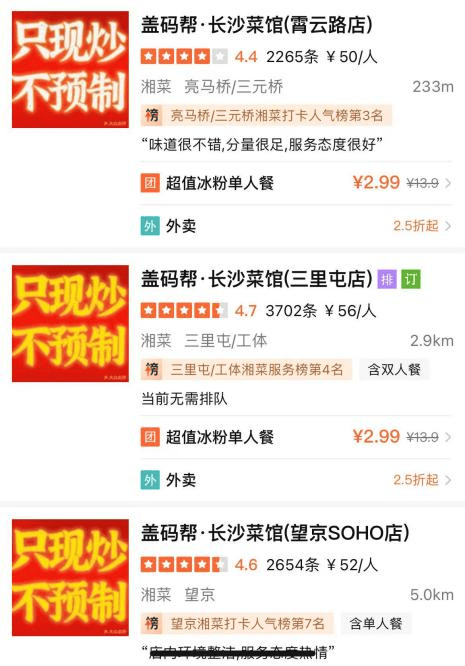
“无堂食”商家必须亮标识 “幽灵外卖”无处遁形
Yang Guang Wang· 2025-10-18 00:32
Core Viewpoint - The National Market Supervision Administration has released a draft regulation aimed at enhancing food safety responsibilities for third-party online food delivery platforms and their partnered restaurants, focusing on clearer labeling and stricter oversight measures. Group 1: Key Highlights of the Draft Regulation - The draft requires platforms to label restaurants that do not offer dine-in services with a "no dine-in" sign, which is expected to improve consumer confidence regarding food safety [1][2] - The regulation emphasizes the implementation of "Internet + Bright Kitchen" video monitoring, allowing consumers to view the cooking process in real-time, thereby increasing transparency and trust [2][3] - A "one certificate, one store" model is proposed to prevent the use of the same business license for multiple online stores, addressing the issue of "ghost restaurants" that lack physical locations [3][5] Group 2: Industry Reactions and Implications - Restaurant operators express that the new regulations will help eliminate unfair competition from non-compliant businesses, allowing compliant operators to compete based on quality and service [3][4] - Experts highlight that the draft addresses critical issues in food safety regulation, such as the need for better scrutiny of online food service providers and the challenges of cross-regional operations [4][5] - The draft is seen as a step towards more refined, standardized, and regulated food safety oversight in the online food delivery sector, with a focus on consumer rights and safety [4][5]