贸易
Search documents
高质量发展取得新的历史性成就——从“十四五”看中国答卷
Xin Hua She· 2025-10-20 15:49
Core Insights - The "14th Five-Year Plan" has achieved significant historical accomplishments, showcasing China's commitment to high-quality development and modernization [1][4][19] Economic Performance - China's GDP grew by 5.2% year-on-year in the first three quarters, demonstrating resilience against external pressures [2] - The total economic output is projected to reach approximately 140 trillion yuan by the end of the year, marking a significant increase during the "14th Five-Year Plan" period [5][10] - China's average economic growth rate during the first four years of the "14th Five-Year Plan" reached 5.5%, contributing around 30% to global economic growth [7] Technological Advancements - The successful procurement discussions for C919 aircraft by Asian Airlines and Cambodia's national airline highlight China's advancements in aviation technology [8] - The launch of the first domestically produced electromagnetic aircraft carrier and the operation of the world's first fourth-generation nuclear power plant underscore China's technological capabilities [9] Market Dynamics - The domestic market's contribution to economic growth is expected to average 86.8% from 2021 to 2024, with final consumption expenditure contributing 59.9%, an increase of 11.1 percentage points from the previous five-year period [10] - The reduction in energy consumption per unit of GDP by 11.6% over four years reflects a shift towards more sustainable economic practices [11] Reform and Opening Up - The reform of market access systems aims to eliminate hidden barriers and promote fair competition, with the negative list for market access reduced from 117 to 106 items [12][15] - China is committed to high-level opening up, removing restrictions on foreign investment in manufacturing and gradually expanding service sector openings [15] Social Development - The "14th Five-Year Plan" emphasizes improving people's livelihoods, with over 1.2 million new urban jobs created annually and a focus on reducing income disparities [18] - Key social indicators, such as preschool enrollment rates and life expectancy, have shown significant improvements, reflecting the government's commitment to enhancing the quality of life [18]
贸易板块10月20日涨1%,*ST沪科领涨,主力资金净流出580.26万元
Zheng Xing Xing Ye Ri Bao· 2025-10-20 08:27
Core Insights - The trade sector experienced a 1.0% increase on October 20, with *ST HuKe leading the gains [1] - The Shanghai Composite Index closed at 3863.89, up 0.63%, while the Shenzhen Component Index closed at 12813.21, up 0.98% [1] Trade Sector Performance - *ST HuKe closed at 3.87, with a rise of 4.31%, and a trading volume of 17,000 shares, amounting to 6.4754 million yuan [1] - Other notable performers included: - Shisuo 5Xiao at 10.74, up 2.58% [1] - XunRuiDe at 7.15, up 2.29% [1] - ZhongCheng at 12.05, up 2.21% [1] - Nanjing Shanglv at 10.54, up 2.13% [1] Capital Flow Analysis - The trade sector saw a net outflow of 580.26 million yuan from institutional investors, while retail investors contributed a net inflow of 4037.47 million yuan [2][3] - Specific stock capital flows included: - SuMeiDa with a net inflow of 577.92 million yuan from institutional investors [3] - Jiangsu Guotai with a net outflow of 532.64 million yuan from speculative funds [3] - *ST HuKe experienced a net outflow of 63.97 million yuan from speculative funds [3]
美国准备联合盟友力量,建立反制体系,可解西方稀土困局?
Sou Hu Cai Jing· 2025-10-20 03:41
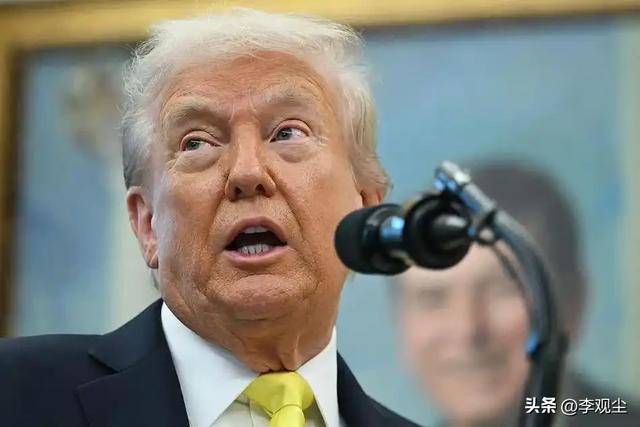
Core Viewpoint - The article discusses the fluctuating stance of the Trump administration towards China, highlighting the conflicting messages regarding tariffs and negotiations, and the implications for global economic relations [1][3][11]. Group 1: Trump's Changing Attitude - Trump's approach to China has been inconsistent, oscillating between threats of increased tariffs and a willingness to engage in dialogue [3][4]. - The initial hardline stance included plans for higher tariffs and a refusal to negotiate, but this was quickly reversed to a more conciliatory tone [3][6]. Group 2: Secretary Mnuchin's Strategy - Treasury Secretary Mnuchin suggested that high tariffs may not be fully implemented and emphasized the importance of international cooperation to address challenges posed by China [6][11]. - He acknowledged the U.S.'s historical neglect of strategic resources like rare earths, which has led to dependency on China [6][12]. Group 3: Allies' Diverging Interests - European allies, while publicly supporting pressure on China, often diverge from U.S. policies, particularly regarding rare earths and trade relations [6][7]. - India and Southeast Asian countries exhibit caution in aligning with U.S. policies, preferring a neutral stance due to complex relationships with China [9][11]. Group 4: U.S. Strategic Dilemma - The frequent changes in U.S. policy indicate underlying pressures faced by the Trump administration in the global economic landscape [11][12]. - Despite attempts to leverage tariffs, the U.S. struggles to unilaterally reshape the global economic order, as interconnected supply chains limit the effectiveness of such measures [11][12]. Group 5: Global Economic Competition - The trade conflict between the U.S. and China represents a broader global economic competition, with potential tensions among allies as they balance their own interests against U.S. demands [12]. - China's resilience and adaptability in the face of external pressures suggest that it will continue to assert its influence in the evolving global economic landscape [12].
IMF发布最新世界经济展望报告预计—— 全球经济增速温和放缓
Jing Ji Ri Bao· 2025-10-19 22:08
Core Insights - The International Monetary Fund (IMF) report indicates that while the global economy showed resilience in the first half of the year, it is now experiencing signs of moderate slowdown, which is expected to persist long-term [1][2] - The report highlights that the initial strong economic activity was driven by short-term factors, and as these dissipate, global economic data is showing weakness [1][3] Economic Performance - In the first half of the year, global economic activities were robust, with inflation levels in the US and Asian economies being well-controlled [1] - The global economic growth rate is projected to decline from 3.6% at the end of 2024 to 2.6% at the end of this year, with forecasts of 3.2% in 2025 and 3.1% in 2026 [1][2] Risks and Challenges - The report identifies ongoing downward risks to the global economy, including policy uncertainty, rising protectionism, and restrictive immigration policies, which could negatively impact consumption and investment [3] - The potential volatility in the artificial intelligence sector poses a risk to economic growth, with possible repercussions for technology stocks and overall financial market stability [3] Policy Recommendations - Policymakers are urged to establish clear and transparent trade policies to reduce uncertainty and support investment, while modernizing trade rules to adapt to the digital age [4] - The report emphasizes the importance of fiscal sustainability and suggests that countries should implement structural reforms to enhance resilience and growth prospects [4]
欧盟内爱尔兰就业者受美国关税影响最大
Shang Wu Bu Wang Zhan· 2025-10-19 17:18
Core Insights - The European Central Bank (ECB) indicates that tariff measures may continue to "weigh on business and consumer confidence" [1] - Irish workers are the most affected group within the EU by U.S. tariffs, with heightened concerns about potential unemployment risks [1] Group 1: Tariff Impact on Employment - In July, the U.S. agreed to impose a 15% tariff on all EU goods, finalized in August, significantly impacting Irish exports, particularly pharmaceuticals [1] - The ECB's analysis shows that since the announcement of the tariffs, the majority of EU workers have not increased their concerns about unemployment, with 85% reporting unchanged or reduced unemployment expectations [1] - Only 15% of workers expressed increased concerns about job loss, suggesting that most employers are not directly affected by declining U.S. consumer demand [1] Group 2: Sector-Specific Vulnerabilities - Workers in industries such as manufacturing, construction, and trade are more susceptible to the negative impacts of tariffs due to their reliance on exports to the U.S. [2] - Financial services and information and communication technology sectors also show heightened unemployment concerns among employees due to U.S. tariffs [2] - Ireland and the Netherlands have a higher proportion of jobs dependent on U.S. exports, with Ireland at 6.7%, more than double that of the Netherlands at 3.2% [1][2]
宏观周周谈:调整到位了吗?
2025-10-19 15:58
Summary of Conference Call Records Industry Overview - The macroeconomic environment is influenced by the Federal Reserve's interest rate cuts and the depreciation of the US dollar, leading to an expansion of global liquidity and a shift of funds from the US to other markets. The dollar index has decreased from 115 to below 100, indicating a reversal in capital flows and a narrative of "the East rising and the West declining" [1][2] Key Points and Arguments - **Market Drivers for 2025**: The primary driver for the market in 2025 is the weak dollar, which has led to an increase in non-US equity assets. The expansion of global liquidity, driven by the Fed's rate cuts and dollar depreciation since September 2024, has facilitated this shift [2][3] - **Hong Kong Stock Market Performance**: Over the past year, the Hong Kong stock market has experienced three significant pulse movements closely tied to the Fed's monetary policy and global liquidity changes. The first pulse occurred in September 2024, driven by favorable policy expectations, while the second and third pulses occurred in early 2025 and September 2025, respectively, following dollar fluctuations and Fed rate cuts [3][4] - **Impact of Fed's Monetary Policy**: The Fed's recent monetary policy has significantly impacted the market. In September 2025, the Fed revised down its non-farm employment data, providing a rationale for a 75 basis point rate cut. However, the guidance for future cuts was adjusted to 25 basis points per year, compressing expectations for future liquidity expansion [5][6] - **Investor Behavior and Market Stability**: Changes in investor behavior, particularly among state-owned and professional investors, have been observed. A significant decrease in the central bank's debt holdings indicates profit-taking and a potential shift in market dynamics, leading to an uneven market state that could increase future volatility [6][8] - **Investor Sentiment and Market Trends**: In 2025, investor sentiment has led to significant market movements. Many investors, having realized substantial gains, are opting to take profits or adjust their portfolios. This behavior has contributed to a rapid market decline, particularly in the dual innovation sector, as investors react to perceived risks and expectations of state intervention [8][10] - **Future Market Signals**: The current Kondratiev cycle's downturn is expected to persist until at least November 2026, with the overall bull market trend continuing. Observations of the relationship between the dollar index and the Hang Seng Technology Index are crucial for future bullish signals. A potential rise in the Hang Seng Technology Index is anticipated by December 2025 or January 2026 [9][10] Other Important Insights - **Social Financing Trends**: The current social financing growth has decreased by 230 billion, with a growth rate of 8.7%, reflecting a slight decline compared to previous periods. The high net financing of government bonds continues to impact overall income growth [12][13] - **Gold's Role in Market Adjustments**: Gold has acted as a safe haven during equity asset adjustments, with its price reflecting market risk sentiment. The recent stabilization in gold prices indicates an improvement in market risk sentiment, despite ongoing downward pressures [11] - **US-China Trade Relations**: Recent developments in US-China trade relations indicate a temporary easing of tensions, with both sides engaging in talks to manage short-term risks. However, significant barriers remain, and achieving breakthrough results is challenging due to a lack of mutual trust [20][22] - **Market Signals for Reassessment**: To reassess bullish positions, it is essential to monitor the Fed's signals for further easing and the dollar index's movements. A significant drop in the dollar index could lead to increased liquidity flowing into non-US markets, positively impacting Hong Kong, H-shares, and A-shares [10][19] This summary encapsulates the key insights and developments from the conference call, providing a comprehensive overview of the current market dynamics and future outlook.
不涨军费就加税,特朗普对西班牙放出狠话,这次怕是要动真格的了
Sou Hu Cai Jing· 2025-10-19 04:31
Core Viewpoint - Trump expresses dissatisfaction with Spain for not increasing military spending to 5%, threatening trade penalties such as tariffs [3][5][10] Group 1: Military Spending and NATO - Spain is the only NATO member not to meet the 5% military spending requirement, which Trump views as disrespectful to NATO [3][5] - Spain's current military spending is approximately 17.2 billion euros, or 1.3% of its GDP, which is significantly below the requested 5% [6] - The increase to 5% would require an additional expenditure of about 50 billion euros, which is unsustainable given Spain's total budget of less than 200 billion euros for 2024 [6] Group 2: Economic Relations and Trade - Spain's economy is heavily reliant on the U.S. for technology, raw materials, and markets, making it vulnerable to U.S. tariffs [5][7] - The total trade volume between Spain and the U.S. is relatively small, around 20 billion euros, which may lessen the impact of U.S. tariff threats [7] - Spain's refusal to comply with Trump's demands reflects a broader resistance among countries facing economic constraints [9] Group 3: Political Dynamics - Spain's firm stance against increasing military spending is notable, especially as most NATO countries have complied with Trump's demands [5][10] - The geopolitical context shows that Spain's security concerns are less directly tied to NATO's overall defense strategy against Russia [3][6] - Trump's strategy to increase military spending among NATO members is seen as a means to boost U.S. arms sales, but faces significant opposition due to global economic challenges [9]
中国打响对美关税反击战,印度嘴上说要加入,行动时却扯中方后腿
Sou Hu Cai Jing· 2025-10-19 01:54
Core Viewpoint - The article discusses India's reluctance to effectively retaliate against the U.S. in the ongoing trade war, highlighting its tendency to undermine China's efforts while failing to take decisive action against the U.S. [1][6][14] Group 1: India's Response to U.S. Tariffs - India has previously announced plans to impose retaliatory tariffs on U.S. goods but has not followed through, indicating a lack of resolve in confronting the U.S. [7] - The Indian government has expressed intentions to learn from China's approach to countering U.S. tariffs, yet has not taken significant steps to implement such measures [3][6]. - Despite initial enthusiasm, India's actions have resulted in higher tariffs on its own goods, with a reported 50% maximum tariff imposed, leading to stalled negotiations with the U.S. [9] Group 2: China's Position in the Trade War - China has actively engaged in countermeasures against the U.S., utilizing its leverage in rare earth exports and other sectors, which has put pressure on the U.S. [3][16]. - The article emphasizes that China's success in the trade war could benefit global markets, including India, if India chose to align with China rather than undermine it [16]. - China's recent actions, such as imposing anti-dumping duties on Indian solar panels, reflect its strategy to protect its interests while responding to India's provocations [9][14]. Group 3: Implications for India - India's attempts to impose anti-dumping duties on Chinese solar panels, with rates up to 30%, are seen as counterproductive and indicative of its narrow-minded approach [9][14]. - The article suggests that India's lack of support for China in the trade war could lead to negative consequences for its own economy, as it risks losing out on potential benefits from a successful Chinese counter-offensive against the U.S. [16]. - The ongoing tensions and India's actions may ultimately harm its relationship with both China and the U.S., as it navigates its position in the trade landscape [6][14].
印度将停止买俄油?特朗普称莫迪同意了,威胁对华征500%关税
Sou Hu Cai Jing· 2025-10-18 17:14
分析人士指出,特朗普此番动作实为"一石三鸟"之计。其一,在2026年中期选举前强化对俄强硬形象。最新民调显示,62%美国人支持扩大制 裁范围,这为特朗普提供了政治操作空间。其二,解决美国石油产业的实际困境。自2019年成为最大产油国后,美国石油出口持续增长,但近 期全球需求下滑导致库存积压,亟需印度这个全球第三大石油消费国接盘。其三,为后续对华极限施压做铺垫,形成"合纵连横"之势。 实际上,早在特朗普第一任期,美国就已经开启加征关税的行动,但此轮规模与幅度堪称空前。其战略意图至少包含三个层面:通过加征关 税,抬高进口商品价格保护本土产业,推动美国空心化的产业实现复兴;制造贸易动荡引发资本恐慌,促使各国投资将美国视为避风港,大量 涌入美国投资,以此缓解美国债务压力,稳固美元的国际地位;为关联资本和家族创造套利空间。这种政策组合拳既服务于产业复兴,又着眼 于金融博弈,更暗含利益输送,充分体现了特朗普式经济政策的复杂性。 近日,美国总统特朗普在白宫记者会上高调宣布,印度总理莫迪已同意"将停止购买俄罗斯石油",尽管需要时间过渡。随即他又话锋一转,宣 称中国也必须这么做。同日,美财政部长紧随其后对华加征500%关税的威 ...
加纳2025年外国投资增长382%
Shang Wu Bu Wang Zhan· 2025-10-18 15:55
Core Insights - Foreign direct investment (FDI) in Ghana has significantly rebounded, with inflows rising from $17.907 million in the first half of 2024 to $86.296 million by June 2025, marking a year-on-year increase of 382% [1] Investment Projects - In the first half of this year, a total of 76 new investment projects were registered across various sectors, including manufacturing, services, general trade, and agriculture [1] - The manufacturing sector accounted for the highest number of projects, with 32 registered, while general trade attracted the largest investment amount of $62.29 million, representing over 72% of total FDI during the same period [1] Source Countries - China remains the leading source of new projects in Ghana, contributing 22 projects, followed by India with 14 projects, Nigeria with 8, and the UAE and the UK with 4 each. The US registered 3 projects, with additional investors from Liberia, Mauritius, Singapore, and Turkey [1] Geographic Distribution - Most of the registered projects are concentrated in the Greater Accra Region and the Ashanti Region [1]