
皮革

Search documents
JBS N.V. (JBS): A Bull Case Theory
Yahoo Finance· 2026-02-28 15:54
Core Thesis - JBS N.V. is viewed positively due to its strong market position and growth potential in the protein sector, with shares trading at $16.18 and a trailing P/E of 15.53 and forward P/E of 3.87 [1][2] Company Overview - JBS S.A. operates as a global leader in protein production, with extensive operations across beef, pork, poultry, and diversified products, including plant-based proteins, leather, and biodiesel [3] - The company has over 250 facilities and operates in more than 180 countries, providing significant bargaining power and distribution advantages [3] Market Dynamics - There is strong secular demand for protein driven by population growth and rising incomes in emerging markets, which supports long-term growth [4] - Geographic expansion, particularly in Europe through acquisitions, is expected to enhance market share [4] Financial Performance - In Q3 2025, JBS reported net sales of approximately $22.6 billion, reflecting a ~13% increase, although profit and EBITDA declined due to tight U.S. beef supplies and rising input costs [5] - The company is pursuing around $2 billion in annual capital expenditures for facility modernization and higher-margin segments, supported by a dual NYSE listing for cheaper capital [5] Competitive Landscape - JBS's competitive strength is derived from its scale, integration, and diversification, but it faces moderate competition from rivals like Tyson Foods, Marfrig, and BRF, as well as changing consumer preferences towards alternative proteins [5] - The company’s leverage is approximately 2.4x, indicating a need for careful financial discipline amidst cyclical risks [5] Risks and Opportunities - Key risks include commodity cycles, disease outbreaks, ESG/legal pressures, and trade disruptions, which could significantly impact profitability [6] - Upside potential exists through European acquisitions, operational improvements, and growth in prepared foods or plant-based proteins, while downside risks are linked to cyclicality and regulatory pressures [6] - JBS's valuation appears attractive with a forward P/E of ~9.1 and a strong return on equity of ~23.7%, although earnings volatility necessitates caution [6]
服装市场暖意浓 浙江嘉兴“三件冬衣”迎消费“春运”
Zhong Guo Xin Wen Wang· 2026-02-13 03:57
Core Insights - The retail performance of clothing, particularly winter apparel, is exceeding expectations as the Chinese New Year approaches, with strong consumer purchasing power noted in various regions [1][2][3] Group 1: Retail Performance - Zhejiang Tongyou Central Mall reported that the clothing retail situation is better than anticipated, with busy shopping expected to continue until the 28th day of the lunar month [1] - The Puyuan wool sweater market has seen over 2 million visitors since the beginning of January 2026, with daily foot traffic averaging over 50,000 and holiday peaks exceeding 90,000 [1] - The sales peak at the clothing city reached 40 billion yuan, marking a 10% year-on-year increase, indicating a positive sales trend [3] Group 2: Consumer Behavior - Customers are actively purchasing winter clothing, with many buying in bulk, including tour groups from distant regions [1] - A Shanghai customer noted the convenience of one-stop shopping for winter clothing at the clothing city, where prices are significantly lower than in malls [2] Group 3: Product Trends - Popular styles in the winter apparel market include "puff" and "rib" down jackets, with a growing preference for "new Chinese" styles featuring eco-friendly materials and traditional designs [3] - The leather market is also adapting to consumer preferences, with a focus on lightweight and luxurious designs, appealing to younger consumers seeking high-quality fashion [4] Group 4: Market Dynamics - The leather city has experienced a significant increase in foot traffic, with over 20,000 visitors on multiple weekends and a year-on-year sales growth exceeding 25% [4] - The overall market atmosphere is vibrant, reflecting increased merchant confidence and consumer vitality, suggesting resilience and potential for future growth in the industry [4]
特朗普宣布下调对印度关税,2026年“印度行情”能否回归
2 1 Shi Ji Jing Ji Bao Dao· 2026-02-03 13:47
Group 1 - The Indian stock market, which faced the worst performance among emerging markets in 2025, is experiencing renewed optimism following a trade agreement with the U.S. that includes a reduction in tariffs on Indian goods [1][2] - The U.S. will lower the tariff rate on Indian goods from 25% to 18%, effective immediately, while India will stop purchasing Russian oil, which is expected to stabilize the Indian rupee and attract foreign investment back into the market [1][4] - Following the announcement, the Nifty 50 index rose by 2.55% and the Sensex index increased by 2.54%, marking the strongest single-day gains since May of the previous year [1] Group 2 - Despite the high tariffs imposed by the U.S., India's economy has shown resilience, with GDP growth projected at 7.4% for the fiscal year 2025-26, up from 6.5% in the previous year [2] - The Indian rupee appreciated by 1.5% against the dollar, reaching 90.1250, indicating a potential recovery after a year of depreciation [1][3] - The trade agreement is expected to have a positive structural impact on India's economy, enhancing its strategic importance to global investors and improving market sentiment [6] Group 3 - Various sectors related to exports, including automotive, pharmaceuticals, energy, and infrastructure, saw significant gains, with increases exceeding 2% [5] - Analysts predict that 2026 could be a recovery year for the Indian stock market, with firms like Goldman Sachs and HSBC upgrading their ratings on Indian stocks due to recent government reforms [6] - However, concerns remain regarding the attractiveness of Indian equities, as the market's valuation remains high compared to other emerging markets, with a premium of 55% to 60% [7][8]
牛弹琴:印度和欧盟的大喜事,美国砸场子了
Xin Lang Cai Jing· 2026-01-28 00:05
Core Points - India and the European Union (EU) have reached a historic free trade agreement, described as the "mother of all agreements," creating a free trade area with a population of 2 billion and covering 25% of global GDP and one-third of global trade [2][24][33] - The agreement is expected to significantly benefit both parties, with Indian Prime Minister Modi stating it will create numerous opportunities for 1.4 billion Indians and millions of EU citizens [2][24] Trade Agreement Details - Approximately 90% of tariffs on goods traded between the EU and India will be eliminated [5][27] - By 2032, EU exports to India are projected to double [7][31] - Tariffs on EU exports of automobiles to India will decrease from 110% to 10% [7][31] - Tariffs on EU exports of wine to India will be reduced from 150% to between 20% and 30% [7][31] - Indian exports of jewelry and textiles to the EU will see tariffs drop to 0% [7][31] - Tariffs on Indian exports of furniture, chemicals, leather, and metals to the EU will also be reduced to 0% [7][31] Geopolitical Context - The agreement is seen as a response to the unpredictable trade policies of the United States under former President Trump, who imposed high tariffs on India [6][29][33] - The partnership between India and the EU is viewed as a strategic alliance against US trade pressures, with both parties signaling a shift in global trade dynamics [33][34] - The deal has sparked criticism in Europe, with concerns about the potential influx of Indian workers and the challenges posed by India's business environment [41][42]


巨星农牧20260116
2026-01-19 02:29
Summary of the Conference Call for Juxing Agriculture and Animal Husbandry Company Overview - **Company**: Juxing Agriculture and Animal Husbandry - **Industry**: Livestock Farming Key Points and Arguments 2025 Performance and 2026 Outlook - In 2025, the company achieved a target of over 4 million market pigs and maintained a total cost below $6 per pig, with a specific cost of approximately $5.7 per pig in Q4 2025 [2][3][5] - The PSY (Pigs per Sow per Year) reached over 30, and the feed-to-meat ratio was controlled under 2.5, laying a solid foundation for competitive growth in 2026 [2][3][5] - For 2026, the company has not set a specific target for the number of pigs to be marketed but indicates a capacity to deliver over 6 million pigs annually based on 2025 performance [3][6] Cost Management and Efficiency Improvements - The company plans to maintain a total cost of around $6 per pig in 2026 through various measures, including promoting cost-reduction technologies, improving sow survival rates, and utilizing efficient genetics to enhance piglet growth [2][4][5] - The implementation of an ERP system and AI assistants is expected to improve frontline work efficiency [2][4] Production Capacity and Projects - The Dechang project is fully operational, with a PSY exceeding 30 and benchmark production lines surpassing 33 [2][8] - The Dechang project is expected to contribute approximately 700,000 pigs in 2026, supporting the company's integrated farming model [2][8] Feed and Market Price Predictions - The company anticipates stable to slightly increasing prices for feed raw materials in 2026 due to global uncertainties and tight domestic supply-demand balance [10] - A cautious outlook on pig prices is maintained, with expectations for a gradual upward trend in the second half of 2026 as supply and demand reach equilibrium [10] Leather Business Performance - The leather business, while reduced in significance, is projected to generate over 200 million yuan in revenue for 2025, reflecting a growth of over 60% year-on-year, with a target of over 300 million yuan for 2026 [11] Capital Expenditure Plans - The capital expenditure for 2026 is planned between 200 million to 300 million yuan, focusing on upgrading pig farms and technological iterations in feed production [12] Financial Health and Debt Management - The company's current debt-to-asset ratio is approximately 60%, considered reasonable, with plans to maintain this level through efficiency improvements and cost reductions [14] Investor Relations and Future Strategies - The company is actively engaging with investors regarding convertible bond issues, with ongoing discussions to reach a consensus on future decisions [15] - Plans to promote a close-knit supply and marketing model with farmers are in place, particularly in the Sichuan-Chongqing region and other strategic areas [16][17] Conclusion - Juxing Agriculture and Animal Husbandry is positioned for growth in 2026, focusing on cost control, production efficiency, and strategic investments while navigating market uncertainties and maintaining strong investor relations.

逛烟火市集,探冬衣产业,多元体验点亮嘉兴暖冬
Xin Lang Cai Jing· 2026-01-12 23:09
Core Viewpoint - The 2025 Jiaxing Winter Cultural and Tourism Consumption Season aims to enhance local tourism and consumption through a series of events centered around traditional food and winter clothing, promoting Jiaxing as a vibrant winter destination [8][9][12]. Group 1: Event Overview - The event features the theme "Come to Jiaxing for Winter Fun," integrating "intangible cultural heritage food" and "three winter clothing items" as its main focus, supported by a winter market and various activities to stimulate consumer enthusiasm [8][9]. - The event is organized by multiple local government bodies and supported by financial institutions, showcasing a collaborative effort to boost local tourism [8]. Group 2: Winter Market Highlights - The winter market, held at Jiaxing South Square, includes three main sections: intangible cultural heritage food, winter clothing, and creative cultural products, catering to winter consumer preferences [9][10]. - Local brands showcase traditional foods, such as non-heritage dumplings and various snacks, providing a one-stop experience for visitors to taste Jiaxing's local flavors [9][10]. Group 3: Interactive Activities - The market features an interactive voting activity for local foods, enhancing visitor engagement and promoting local culinary culture [10][11]. - Various creative DIY activities are available, allowing visitors to experience traditional crafts and engage with the local culture [11]. Group 4: Winter Clothing Focus - The event emphasizes the "three winter clothing items" (woolen sweaters, leather, and down jackets), leveraging Jiaxing's established clothing industry to attract consumers [13][14]. - Guided tours to local clothing production centers are organized, providing participants with firsthand experience of the clothing industry and promoting local products [13][14]. Group 5: Visitor Experience - The strategic location of the event at Jiaxing South Square enhances accessibility for visitors, particularly those traveling from nearby regions, promoting a convenient cultural tourism experience [12]. - Positive feedback from participants highlights the quality and affordability of Jiaxing's winter clothing, contributing to the city's reputation as a winter shopping destination [14].

看嘉兴“三件冬衣”如何引爆元旦市场
Xin Lang Cai Jing· 2026-01-03 23:23
Core Viewpoint - The retail market in Jiaxing has experienced a significant transformation during the New Year holiday, with a strong shift from B2B to B2C, indicating a deeper engagement with end consumers and a strategic move towards retail and brand positioning [2][6]. Group 1: Retail Market Dynamics - The New Year holiday saw over 400 stores participating in retail events, leading to a surge in consumer traffic, with some markets reporting over 100,000 visitors in a single day [1][5]. - Jiaxing is a major hub for winter clothing production, with 70% of global wool sweaters and 80% of down jackets produced in the region, highlighting its industrial dominance [2][6]. - Retail activities have become a valuable insight tool for merchants, allowing them to understand consumer preferences and adapt their offerings accordingly [4]. Group 2: Pricing and Quality Transparency - Competitive pricing is evident, with products like double-sided coats priced around 100 yuan and down jackets ranging from 300 to 500 yuan, showcasing the cost advantages of local production [3]. - A new quality grading and traceability system has been introduced, allowing consumers to access detailed product information, enhancing transparency and trust in the quality of winter clothing [3]. Group 3: Strategic Shifts in Industry - The shift towards retail is not just a short-term strategy for clearing inventory but is also aimed at enhancing market responsiveness and consumer engagement [4][5]. - The transformation of Jiaxing's industrial landscape is moving from being merely a manufacturing hub to becoming a consumer destination that integrates shopping and experiential elements [6]. - The success of the winter clothing sales reflects the interaction between China's robust supply chain and domestic demand, indicating resilience and adaptability in the face of economic challenges [6].
浙江冬衣热销中亚 “职教出海”架起跨境贸易桥梁
Xin Lang Cai Jing· 2026-01-02 06:07
Group 1 - The core viewpoint of the articles highlights the growing demand for winter clothing in Central Asia, driven by the strong performance of the winter apparel industry in Jiaxing, Zhejiang Province, which has established a global sales network [1][2] - Jiaxing's winter clothing industry, particularly in woolen sweaters, leather, and down jackets, is experiencing a surge in demand from Central Asia, creating new talent and employment opportunities [1][2] - The establishment of the China-Kyrgyzstan Cross-Border E-Commerce Industry-Education Alliance aims to cultivate a pool of skilled professionals familiar with industry characteristics and international trade rules, addressing the need for composite talents in cross-border e-commerce [2][3] Group 2 - Data from the General Administration of Customs of China indicates that trade between China and the five Central Asian countries has increased from 312.04 billion RMB in 2013 to 674.15 billion RMB in 2024, marking a growth of 116%, which is 2.3 percentage points higher than the average annual growth rate of China's overall trade during the same period [3] - The rise in economic and trade cooperation has stimulated the demand for vocational education exchanges, leading to the establishment of various vocational education alliances and initiatives aimed at enhancing collaboration between China and Central Asian countries [3][4] - The integration of traditional manufacturing with e-commerce platforms in Zhejiang's apparel industry serves as an inspiration for international students, emphasizing the importance of professional knowledge in fostering cross-border trade and cultural exchange [4]
美国高额关税影响下,印度主要出口行业“危机升级”
Huan Qiu Shi Bao· 2025-12-21 23:02
Core Viewpoint - The imposition of a 50% tariff by the United States has severely impacted India's major export sectors, particularly textiles, apparel, and leather, pushing many small and medium enterprises to the brink of bankruptcy and threatening hundreds of thousands of jobs [1][3]. Group 1: Impact on Industries - The textile industry in Tamil Nadu is facing a significant crisis due to the loss of orders, with confirmed losses amounting to 150 billion rupees (approximately 11.79 billion yuan), leading to a production cut of up to 30% [3]. - Tamil Nadu accounts for 28% of India's textile exports, providing employment for around 7.5 million workers, highlighting the critical role of this sector in the local economy [3]. - The crisis has resulted in layoffs and wage delays, with international buyers shifting orders to competitors like Vietnam, Bangladesh, and Cambodia, which have more favorable tariff conditions [3]. Group 2: Government Response and Trade Strategy - The Indian government is accelerating negotiations for free trade agreements with other countries to diversify export markets beyond the U.S., including recent visits to Jordan, Ethiopia, and Oman to strengthen bilateral cooperation [4]. - India has signed a comprehensive trade agreement with Oman to enhance bilateral trade in engineering products, textiles, and agricultural products [4]. - Ongoing negotiations with the European Union, New Zealand, and Chile aim to reduce trade barriers and expand export channels, reflecting a strategic shift to enhance resilience and stability in overall export growth amid rising global trade uncertainties [4].
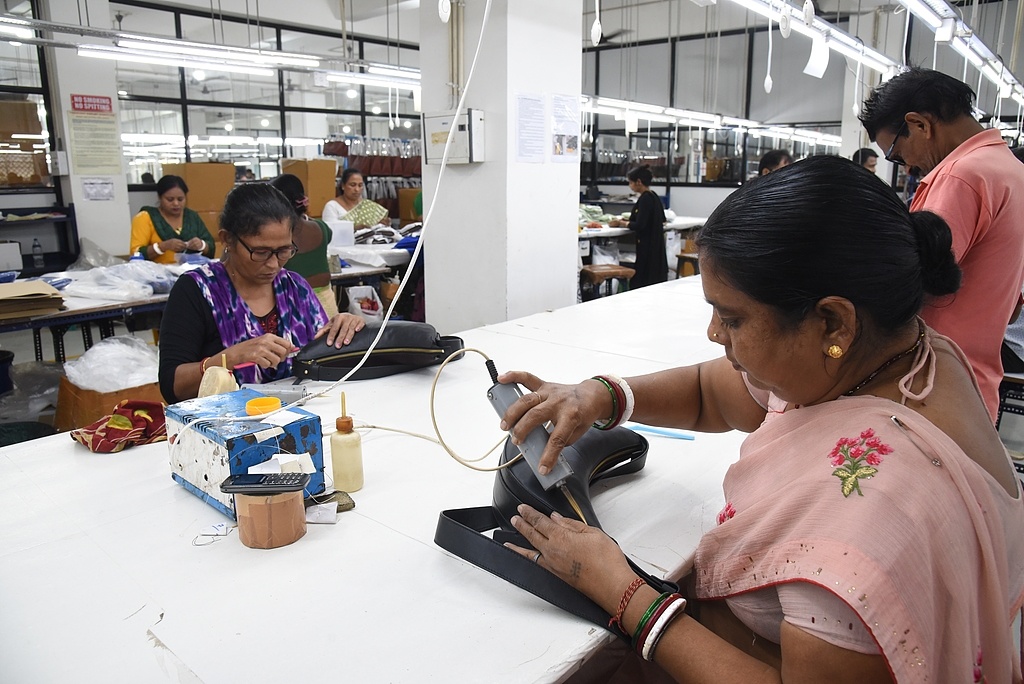
三门峡逸朝跨境电子商务有限责任公司成立 注册资本1万人民币
Sou Hu Cai Jing· 2025-12-18 05:31
Group 1 - The company Sanmenxia Yizhao Cross-Border E-Commerce Co., Ltd. has been established with a registered capital of 10,000 RMB [1] - The legal representative of the company is Ye Zhaohui [1] - The business scope includes internet sales (excluding items that require permits), manufacturing of adult products (excluding pharmaceuticals and medical devices), and sales of bags, leather products, daily miscellaneous goods, and daily necessities [1]