量子科技

Search documents
国盾量子董事长吕品去世,警方通报:已排除案件
Guan Cha Zhe Wang· 2025-12-18 15:04
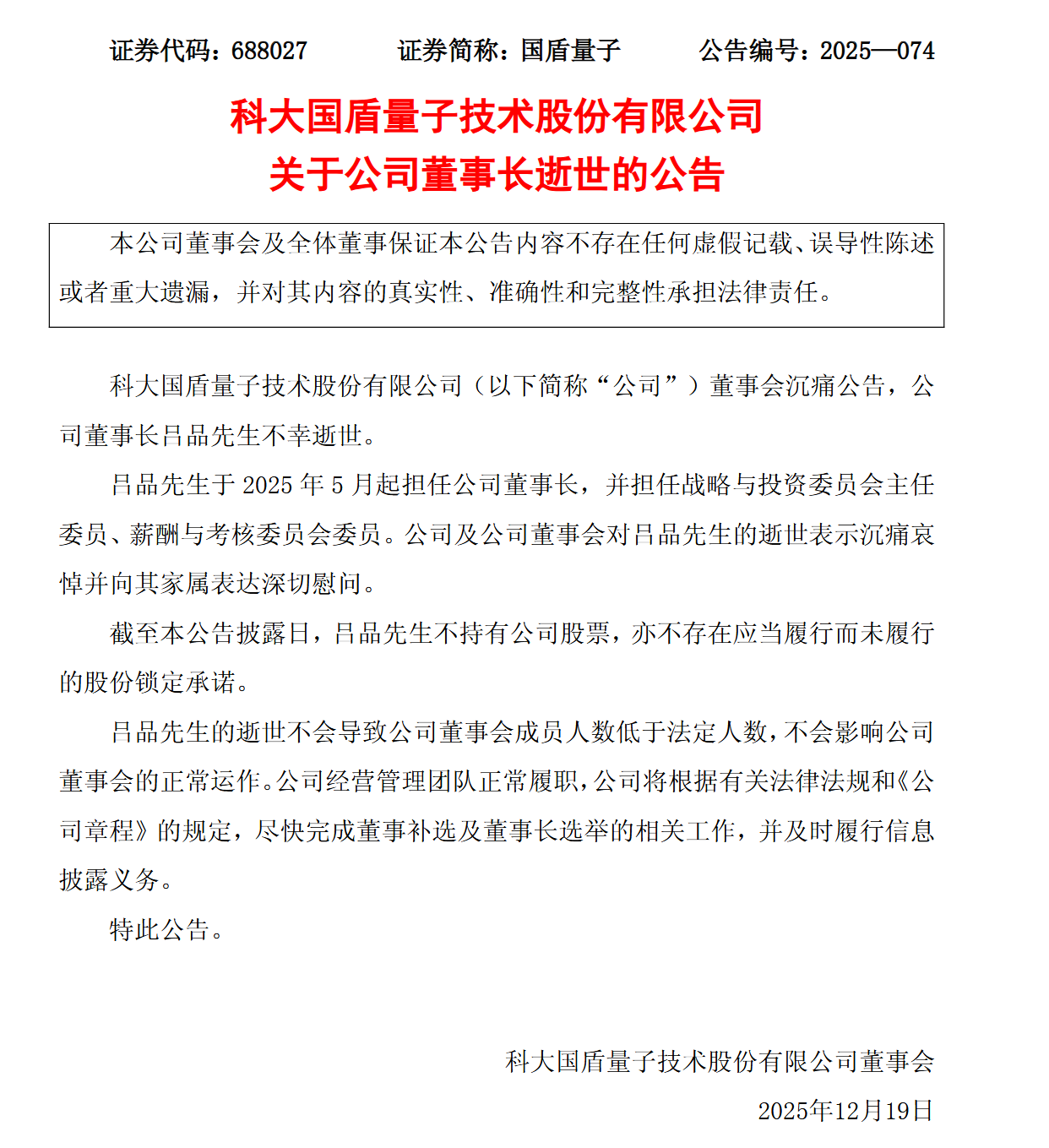
截至本公告披露日,吕品先生不持有公司股票,亦不存在应当履行而未履行的股份锁定承诺。 吕品先生的逝世不会导致公司董事会成员人数低于法定人数,不会影响公司董事会的正常运作。公司经营管理团队正常履职,公司将根据有关法律法规和 《公司章程》的规定,尽快完成董事补选及董事长选举的相关工作,并及时履行信息披露义务。 18日,国盾量子发布公告称,公司董事长吕品先生不幸逝世。 吕品先生于2025年5月起担任公司董事长,并担任战略与投资委员会主任委员、薪酬与考核委员会委员。公司及公司董事会对吕品先生的逝世表示沉痛哀悼 并向其家属表达深切慰问。 18日早些时候,合肥市公安局高新技术开发区分局发布警情通报: 2025年12月18日13时许,我局接报警称,吕某(男,46岁)在望江西路与孔雀台路交叉口某公司一办公室内失去意识。接警后,民警立即到场处置。经120 现场确认,吕某已无生命体征。经公安机关勘查调查,已排除案件。 警方提示:请广大网民不造谣、不传谣、不信谣,共同营造清朗网络空间。 新黄河大鱼财经从数个权威信源处获悉,上述通报中提到的吕某即为国盾量子董事长吕品。该媒体多次联系国盾量子公司董秘,截至发稿无回应。 Wind显示,吕品 ...


年仅46岁,国盾量子董事长不幸逝世,警方通报
Zhong Guo Ji Jin Bao· 2025-12-18 15:02
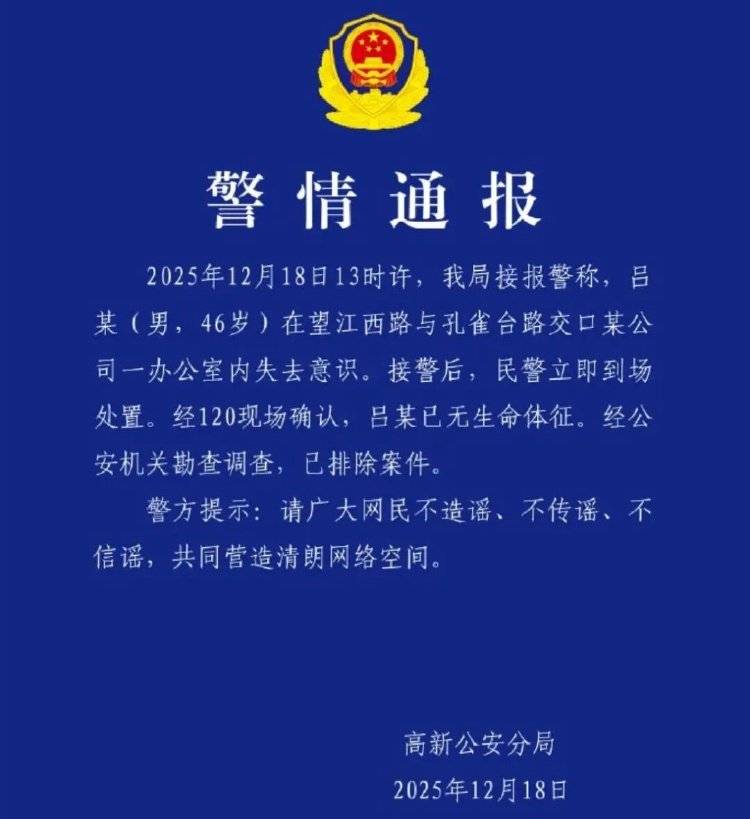
12月18日晚间,上市公司国盾量子公告,董事长逝世。 公告称,公司董事会沉痛公告,公司董事长吕品先生不幸逝世。吕品先生于2025年5月起担任公司董事长,并担任战略与投 资委员会主任委员、薪酬与考核委员会委员。公司及公司董事会对吕品先生的逝世表示沉痛哀悼并向其家属表达深切慰 问。 公开资料显示,国盾量子成立于2009年,是国家高新技术企业、国家"专精特新"小巨人企业、国家知识产权优势企业。公 司主要从事量子通信、量子计算、量子精密测量产品的研发、生产和销售,并提供相关技术服务。2020年,公司登陆上海 证券交易所科创板,成为A股首家也是目前唯一一家量子科技上市公司。 2025年12月18日13时许,我局接报警称,吕 某(男,46岁)在望江西路与孔雀台路交口某公 司一办公室内失去意识。接警后,民警立即到场 处置。经120现场确认,吕某已无生命体征。经公 安机关勘查调查,已排除案件。 警方提示:请广大网民不造谣、不传谣、不 信谣,共同营造清朗网络空间。 高新公安分局 2025年12月18日 63 @合肥高新公安 (文章来源:中国基金报) 据悉,吕品生于1979年7月,历任中国电信集团有限公司市场部副总经理,中国电信 ...
国盾量子董事长吕品去世,合肥警方:已排除案件
Sou Hu Cai Jing· 2025-12-18 15:01
每日经济新闻消息,12月18日晚间,《每日经济新闻》记者从多个渠道获悉,国盾量子董事长吕品已于当 日离世。 安徽合肥高新警方发布警方通报称,2025年12月18日13时许,我局接报警称,吕某(男,46岁)在望江西 路与孔雀台路交叉口某公司一办公室内失去意识。接警后,民警立即到场处置。经120现场确认,吕某已 无生命体征。经公安机关勘查调查,已排除案件。 吕品生于1979年7月,历任中国电信集团有限公司市场部副总经理,中国电信股份有限公司市场部副总经 理,中国电信股份有限公司安徽分公司副总经理、党委委员,中国电信集团有限公司安徽分公司副总经 理;现任中电信量子信息科技集团有限公司董事长、党委书记,中电信量子科技有限公司董事长。 吕品 图片来源:中国电信 当日晚,《每日经济新闻》记者来到中电信量子信息科技集团有限公司楼下,看到公司门口停着两辆警 车,期间有身着警服的人员进入。大楼2楼至5楼办公室均亮着灯,记者试图进入大楼了解事件详情,一楼 一位自称园区物业的工作人员拦住记者,称"楼上没有人,都下班了"。 中电信量子信息科技集团有限公司办公楼现场 图片来源:每经记者 张宝莲 (声明:文章内容和数据仅供参考,不构成投 ...
年仅46岁,国盾量子董事长不幸逝世,警方通报
中国基金报· 2025-12-18 15:00
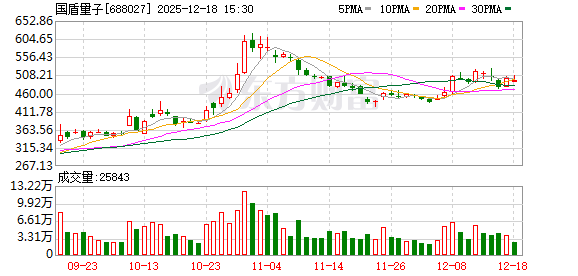
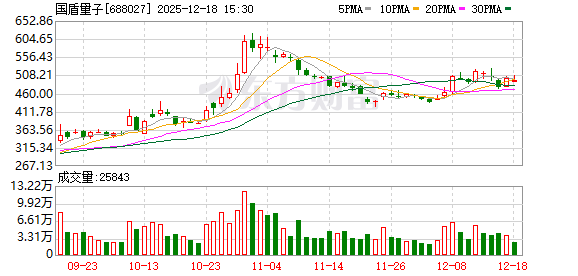
公告称,公司董事会沉痛公告,公司董事长吕品先生不幸逝世。吕品先生于2025年5月起担任公司董事长,并担任战略与投资委员会主任 委员、薪酬与考核委员会委员。公司及公司董事会对吕品先生的逝世表示沉痛哀悼并向其家属表达深切慰问。 中国基金报记者 泰勒 12月18日晚间,上市公司国盾量子公告,董事长逝世。 公开资料显示, 国盾量子 成立于2009年,是国家高新技术企业、国家"专精特新"小巨人企业、国家 知识产权 优势企业。公司主要从事量 子通信、量子计算、量子精密测量产品的研发、生产和销售,并提供相关技术服务。2020年,公司登陆上海证券交易所 科创板 ,成为A股 首家也是目前唯一一家量子科技上市公司。 | 最高: 509.00 | 今开:490.06 | 涨停: 600.07 | 成交量: 258.43万 | | --- | --- | --- | --- | | 最低:490.01 | 昨收:500.06 | 跌停: 400.05 | 成交额:12.87亿 | | 换手:3.22%。 | 盘后量:0 | 量比:0.59 | 总市值: 508.13亿 | | 振幅:3.80% | 盘后额:0.00 | 委比: -5 ...

“量子科技第一股”董事长突然去世,年仅46岁
Mei Ri Jing Ji Xin Wen· 2025-12-18 14:59
12月18日晚间,《每日经济新闻》记者从多个渠道获悉,国盾量子董事长吕品已于当日离世。 安徽合肥高新警方发布警方通报称,2025年12月18日13时许,我局接报警称,吕某(男,46岁)在望江西路与孔雀台路交叉口某公司一办公室内失去意 识。接警后,民警立即到场处置。经120现场确认,吕某已无生命体征。经公安机关勘查调查,已排除案件。 据悉,吕品生于1979年7月,历任中国电信集团有限公司市场部副总经理,中国电信股份有限公司市场部副总经理,中国电信股份有限公司安徽分公司副 总经理、党委委员,中国电信集团有限公司安徽分公司副总经理;现任中电信量子信息科技集团有限公司董事长、党委书记,中电信量子科技有限公司董 事长。 (声明:文章内容和数据仅供参考,不构成投资建议。投资者据此操作,风险自担。) 当日晚,《每日经济新闻》记者来到中电信量子信息科技集团有限公司楼下,看到公司门口停着两辆警车,期间有身着警服的人员进入。大楼2楼至5楼办 公室均亮着灯,记者试图进入大楼了解事件详情,一楼一位自称园区物业的工作人员拦住记者,称"楼上没有人,都下班了"。 吕品于2025年5月30日就任国盾量子董事长。当日召开的国盾量子第四届董事会 ...
“量子科技第一股”董事长突然去世,年仅46岁!警方通报:在办公室内失去意识,排除案件!公司市值508亿元,大股东是中国电信
Mei Ri Jing Ji Xin Wen· 2025-12-18 14:53
Core Viewpoint - The chairman of GuoDun Quantum, Lv Pin, has passed away on December 18, 2025, which may impact the company's leadership and future direction [2][4]. Company Overview - GuoDun Quantum Technology Co., Ltd. was established in 2009 and is a pioneer in the commercialization of quantum information technology in China, focusing on quantum communication, quantum computing, and quantum precision measurement [8]. - The company is controlled by China Telecom's wholly-owned subsidiary, China Telecom Quantum Group, and was listed on the STAR Market in 2020, becoming the "first stock in quantum technology" [8]. - As of December 18, 2025, GuoDun Quantum's stock price was reported at 494 yuan, reflecting an increase of over 65% for the year, with a total market capitalization of 50.813 billion yuan [8]. Leadership Background - Lv Pin, born in July 1979, held various positions within China Telecom before becoming the chairman of GuoDun Quantum on May 30, 2025 [6][8]. - His leadership was marked by significant contributions to the company's growth and its position in the quantum technology sector [8]. Intellectual Property and Standards - The company has surpassed 1,000 total intellectual property rights, holding the largest number of family patents in the field of quantum communication globally [8]. - GuoDun Quantum has led or participated in the development of over 100 domestic and international standards, positioning itself as a key player in the establishment of quantum technology standards [8].

我国加速布局未来产业抢占发展先机
Yang Shi Wang· 2025-12-18 12:32
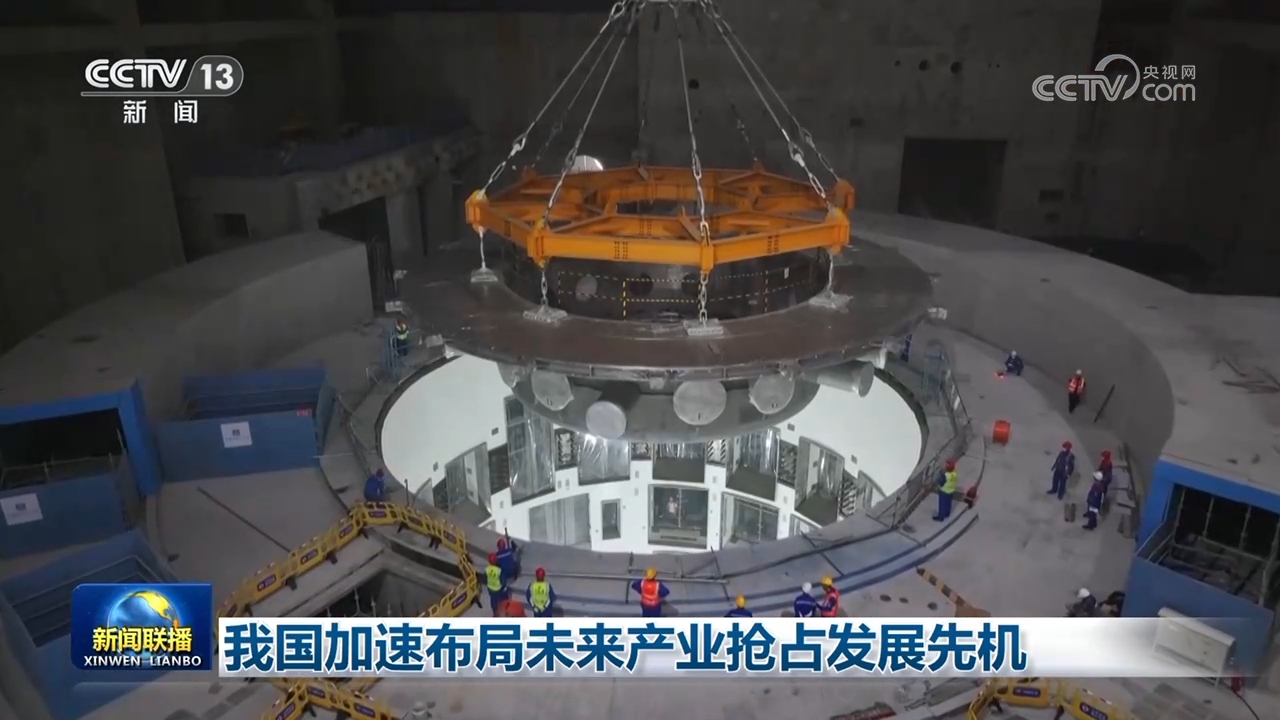
Core Insights - The "14th Five-Year Plan" emphasizes the strategic development of six future industries, including quantum technology, biomanufacturing, hydrogen energy, and nuclear fusion energy, with a focus on transitioning from laboratory research to real-world applications [1][3] Group 1: Industry Development - A compact fusion energy experimental device (BEST) has entered the assembly phase, aiming for commercial application of fusion energy during the "14th Five-Year Plan" [3] - Significant breakthroughs in core technologies have been achieved, with several quantum sensors developed and applied in precision equipment across various fields [5] - The "artificial ocean carbon cycle system" in Shenzhen has operated stably for over 500 hours in real seawater, achieving over 70% CO2 capture efficiency, converting seawater CO2 into green raw materials for plastic production [7] Group 2: Market Potential - The market for embodied intelligence is expected to exceed 5 billion yuan by 2025, while the brain-computer interface market is projected to surpass 3.8 billion yuan, and the biomanufacturing industry is anticipated to approach 1 trillion yuan in total scale [11] Group 3: Policy and Support - The government will continue to strengthen policy support, focusing on the core tracks of the six future industries, creating development clusters, and nurturing specialized and innovative enterprises to form new trillion-yuan industry tracks [12]
十五五,攻坚牛——2026年度策略
2025-12-17 15:50
Summary of Key Points from Conference Call Records Industry and Company Overview - The conference call discusses the Chinese economy and its growth prospects during the "Fifteen" period, aiming to surpass 70% of the US GDP by 2026, with industrial added value reaching 1.6 times that of the US, driven by R&D investment and industrial system construction [1][3][5]. Core Insights and Arguments - **Economic Growth and Challenges**: The US faces increasing debt and fiscal deficit challenges, with a potential long-term economic growth rate of only 1.2%. Concerns over US debt security are prompting foreign investors to reduce US debt holdings, while central banks are increasing gold purchases [1][3]. - **Investment Opportunities**: The next five years will focus on industrial upgrades, technological innovation, and consumption enhancement. High R&D investment and a complete industrial system provide a solid foundation to counter external technological blockades [1][5]. - **Export Performance**: China's export share is at a record high, with reliance on the US dropping below 10%. This diversification strategy enhances export resilience and leads to a continuous trade surplus, indicating improved competitiveness [1][9]. - **Consumer Spending**: To address weak consumption, China aims to increase the resident consumption rate, optimize "two new" policies, and strengthen stimulus measures to support domestic demand [1][11]. Additional Important Content - **Financial Market Reforms**: The 2025 financial market reforms aim to shift fund management from scale-oriented to benefit-oriented, with a tighter IPO schedule and low levels of share reduction expected to continue into 2026 [2][14][17]. - **Investment Focus for 2026**: Key investment opportunities include high-growth export chains, cyclical stocks, and sectors benefiting from a consumption rebound, with a focus on retail sales and CPI indicators to validate trends [2][18]. - **Emerging Industries**: Significant attention is directed towards emerging industries such as quantum technology, biomanufacturing, hydrogen energy, nuclear fusion, and brain-computer interfaces, which align with national strategic goals [1][10][19]. - **Domestic Economic Dynamics**: Enhancing domestic circulation's endogenous power and reliability through investment in both goods and human resources is crucial for sustainable economic growth [13]. This summary encapsulates the essential insights and projections from the conference call, highlighting the strategic focus areas for China's economic development and investment landscape.
量子科技2025:“深V反转”关键一跃,从“临界点”到“赛点”
Tai Mei Ti A P P· 2025-12-17 03:22
Core Insights - Quantum technology is transitioning from laboratory research to national strategic focus, with unprecedented policy support and capital influx, but faces challenges in technology pathways and commercial viability [2][4][6] Investment Landscape - Global quantum financing experienced a "V-shaped recovery," reaching approximately 34.9 billion yuan by Q3 2025, surpassing the total of the previous two years and setting a historical high [10][18] - The U.S. quantum companies received 4.045 billion USD in funding from Q1 to Q3 2025, while China's quantum companies only secured 79 million USD, highlighting a significant funding disparity of 51 times [18][19] Policy and Strategic Initiatives - The Chinese government has prioritized quantum technology in its 15th Five-Year Plan, marking its strategic importance in future industrial development [6][7] - A strategic fund of 51 billion yuan was established to support state-owned enterprises in the quantum sector, aiming to bridge gaps in the quantum industry chain [7] Technological Advancements - Quantum computing is seen as a potential disruptor in fields like drug discovery and financial modeling, while quantum communication offers theoretically secure information transmission [8][24] - China has built the world's largest quantum communication network, with significant advancements in quantum key distribution and secure communication applications [33][45] Market Dynamics - The market for quantum technology is characterized by a stark contrast between the U.S. and China, with U.S. companies receiving substantial government contracts and funding, while Chinese companies struggle to convert technological breakthroughs into commercial success [22][24] - The Chinese quantum industry is rich in innovative startups but lacks the large-scale strategic capital necessary for significant market impact [21][48] Future Outlook - By 2030, the competition in quantum technology will likely focus on the ability to transition from theoretical research to reliable products and robust application ecosystems [3][40] - The development of quantum computing hardware and the establishment of a comprehensive supply chain will be critical for both U.S. and Chinese companies to succeed in the global quantum race [49]


【公告全知道】商业航天+无人驾驶+芯片+量子科技+无人机!公司星体系列业务主要聚焦于商业卫星和航天防务领域
财联社· 2025-12-16 15:06
Group 1 - The article highlights the importance of major announcements in the stock market, including "suspensions and resumption of trading, shareholding changes, investment wins, acquisitions, performance reports, unlocks, and high transfers" to help investors identify investment hotspots and mitigate risks [1] - The company focuses on commercial satellites and aerospace defense, with its Star series business primarily targeting these sectors [1] - Another company is involved in satellite communication modules based on high-orbit satellites, integrating technologies such as 6G, digital currency, and humanoid robots [1] - A third company has made a significant procurement of servers worth 9 billion, aimed at providing cloud computing services to its clients, leveraging storage chips and data centers [1]