高等教育

Search documents
省卫健委与贵州理工学院 签订战略合作协议
Xin Lang Cai Jing· 2026-01-14 21:48
转自:贵州日报 近年来,贵州理工学院坚持"特色创校、质量立校、人才兴校、科技强校"的内涵式发展道路,按照"重 工厚理、强管兴文、交叉融合、突出特色"的学科建设思路,探索和构建"学科-专业-平台-团队-项 目-成果"一体化建设发展体系,培育了大批理工类优秀人才,为贵安新区乃至贵州省经济社会高质量 发展作出积极贡献。 下一步,双方将加快建立高效、顺畅的常态化合作机制,加强专业人才培养,共同服务"六大产业集 群"建设,即1个3000亿级的数智产业集群、1个2000亿级的优势矿产资源精深加工产业集群、3个1000亿 级的产业集群(先进装备制造产业集群、新能源新材料产业集群、特色轻工产业集群)。 (贵阳日报融媒体记者 梁俊鹏) (《省卫健委与贵州理工学院 签订战略合作协议》由贵阳日报为您提供,转载请注明来源,未经书面 授权许可,不得转载或镜像。) 本报讯 1月12日,贵州省卫生健康委员会与贵州理工学院签订战略合作协议。 协议明确,双方将围绕食品安全标准、健康医药、保健用品、营养健康、人才培养等卫生健康领域的高 质量发展需求,精准开展合作。 ...
京沪近百所高校携手实施新时代立德树人工程
Xin Lang Cai Jing· 2026-01-14 17:35
Core Viewpoint - The forum on high-quality implementation of the New Era Moral Education Project was held at Renmin University of China, emphasizing the importance of ideological and political education in universities and the collaboration between Beijing and Shanghai institutions [1] Group 1: Event Overview - The Beijing-Shanghai Higher Education Student Work Directors Forum and the seminar on the New Era Moral Education Project were recently held [1] - Leaders at the event awarded flags to the 2026 winter vacation Beijing-Shanghai university pioneer social practice team and launched the "Guardians of Chinese Culture" oral history collection initiative [1] Group 2: Policy and Implementation - The Beijing Municipal Education Commission highlighted the goal of enhancing ideological and political education, aiming to create a robust ideological leadership framework [1] - The initiative focuses on building a collaborative moral education system, expanding practical education classrooms, and enhancing online educational resources [1] Group 3: Collaborative Efforts - The "Guardians of Chinese Culture" initiative will involve university students and faculty engaging with grassroots cultural activities, compiling and publishing outstanding cultural achievements, and participating in international dialogues [1] - Eight universities from Beijing and Shanghai, including Peking University and Tsinghua University, shared their practices and experiences in various areas of moral education and student development [1]
南京航空航天大学:“清廉人生”通识课入脑入心
Xin Lang Cai Jing· 2026-01-14 14:28
"原来廉洁不是遥远的口号,而是藏在学术诚信、职业选择里的人生准则。"2022年,南京航空航天大学 大一学生贺鸣溪在上完最后一节"清廉人生"课后写下这样的感悟。如今,这些感悟正陪伴她在求学之路 上继续前进。 和贺鸣溪一样,在这门课上收获成长与顿悟的学生还有很多。南京航空航天大学始终将学生"遵规守 纪"养成教育放在特别重要位置,自2022年开课以来,"清廉人生"已从一门全新的通识课成为学生"一抢 而空"的"宝藏课"。 "老师,我们既不是官员,也不掌握权力,廉洁是不是离我们太遥远了?""清廉人生"开课之初,不少学 生提出这样的疑问。 "必须用一门课,帮助学生在价值观成型的关键期筑牢廉洁根基。"课程负责人,南京航空航天大学党委 副书记、纪委书记杭育新说。 "如何保证班干部清正廉洁""如何确保班级事务、入党入团、评优评奖公平公正""遇到不公正现象该如 何处理"……让学生感受到廉洁问题就在身边是团队开设这门课程的初衷。基于此,"清廉人生"没有 走"大而全"路线,而是将内核聚焦于"价值观塑造+行为养成"。课程团队通过问卷提前收集学生问题, 从学生关心的话题切入课堂,摆脱枯燥说教,"用身边事教育身边人",也让"廉洁就在身边, ...
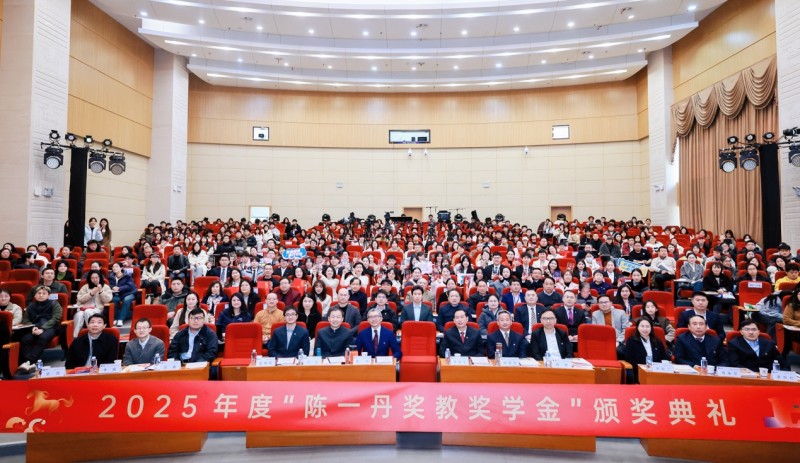
陈一丹奖教奖学金百万重奖激励师生,武汉学院两项特别机会为学子“搭桥”
Sou Hu Wang· 2026-01-14 10:51
Group 1 - The core event is the 16th "Chen Yidan Scholarship" award ceremony, where 20 students, 9 faculty members, and 3 teaching teams received awards, sharing a total prize of 1 million yuan, highlighting the effectiveness of educational reforms at Wuhan University [1][7] - Chen Yidan praised the development of Wuhan University, emphasizing its steady progress and encouraging students and faculty to become proactive creators in the AI era [2][3] - The university's president summarized the high-quality start of the "14th Five-Year Plan" and outlined key goals for 2026, including obtaining master's degree granting authority and being recognized as a "National Civilized Campus" [2] Group 2 - The "Chen Yidan Scholarship" was established in 2010 to reward outstanding faculty and students, with a consistent annual prize of 1 million yuan, reflecting the university's educational aspirations [7] - This year's award ceremony marked a record high in the number of teams receiving the Educational Contribution Award, with three teams recognized for their significant contributions [8] - The ACA research team from the Accounting School achieved a breakthrough by successfully applying AI technology to create a knowledge graph for their course, which has been certified as a national-level first-class course [8] Group 3 - Chen Yidan shared insights from his travels in Africa and America, encouraging students to maintain an open mindset and embrace uncertainty as a vital aspect of life [6] - He proposed two initiatives to inspire students: offering internship opportunities at the "Yidan Conference" and organizing an AI application competition for students to create their own AI products [6] - The "Yidan University Education Fund" launched a series of lectures titled "One Class," inviting prominent figures to discuss the intersection of wealth and life, emphasizing the importance of education in philanthropy [9][12]

成都东部新区:到2030年力争地区生产总值达到500亿元
Zhong Guo Fa Zhan Wang· 2026-01-14 08:15
Core Insights - Chengdu Eastern New Area is focusing on the "14th Five-Year Plan" achievements and is preparing for the "15th Five-Year Plan" to enhance economic development and urban construction [1][10] Group 1: Economic Development - The area has introduced 86 key industrial projects with a total investment of approximately 165 billion yuan, achieving significant growth in industrial output value [4] - The region's GDP has crossed two hundred billion yuan milestones over the past five years, indicating robust economic growth [6] - By 2030, the goal is to reach a GDP of 50 billion yuan, with industrial output accounting for 20% of GDP and retail sales reaching 3.64 billion yuan [10] Group 2: Infrastructure and Urbanization - The built-up area has expanded by 100%, and municipal road mileage has increased by 219%, reflecting substantial infrastructure development [9] - The area aims to enhance urbanization, targeting a permanent resident urbanization rate of 55% by 2030 [10] Group 3: Innovation and Talent Development - The establishment of 30 innovation platforms and a sustainable aviation fuel research center highlights the focus on technological innovation [6] - The number of high-tech enterprises has increased by 4.1 times, with 31,000 recognized industrial talents and over 1,400 R&D professionals gathered in the area [6] Group 4: Public Services and Quality of Life - The area plans to implement 71 livelihood projects with an investment of 1.104 billion yuan, focusing on public services and social security [13] - The introduction of quality educational institutions has added 26,000 new school places, enhancing educational resources [9]

产教融合赋能新质生产力实践路径
Xin Hua Ri Bao· 2026-01-14 03:06
□ 管淼 郁佳莉 陆文燕 高校作为人才培养的主阵地,要坚定不移地走好拔尖创新人才自主培养之路,有组织地培养造就更多创 新人才和创新团队,把人才优势转化为培育和发展新质生产力的有效动能。近年来,学院着力培养支撑 新质生产力发展的新型技术人才,具体措施包括:一是全面推行"项目化、情境化"教学。学院打破以课 堂为重点、以教师为中心的传统模式,将企业真实项目、典型案例和技术难题引入课堂。例如,教师将 思必驰公司的"场景识别难题"转化为阶段性教学任务,学生在课堂上完成需求分析、方案设计,在实验 室进行算法模拟与验证,最终形成的优化算法获企业部分采纳,团队毕业生均被企业优先录用。这一过 程完整展示了"教学做一体化"的项目实施流程。二是强化实践教学与科研创新深度融合。学院注重引导 学生在导师的带领下参与科研项目,锻炼其科研创新和实践操作能力。以电子信息工程专业学生团队为 例,在导师带领下,历经文献调研、原理验证、原型试制、性能测试等多轮科研循环,最终成功研制出 新型传感器并获得多项专利。这标志着学生的能力已从技术应用提升至原始创新阶段。充分提升了学生 的科研成就感和创新自信心。三是着力构建跨学科培养体系,以提升学生创新思维 ...
如何让AI既激发创新又不越界 复旦大学发布国内高校首个生成式AI教学指引与共创平台
Zhong Guo Qing Nian Bao· 2026-01-14 02:31
Core Insights - Fudan University has launched the AI3A education co-creation platform and released the "Guidelines for the Application of Generative Artificial Intelligence in Education" to integrate AI into teaching while fostering innovation and maintaining ethical boundaries [1][2][9] Group 1: AI Application Guidelines - The guidelines provide detailed action suggestions, ethical warnings, and tool recommendations for various educational scenarios, including classroom teaching and academic evaluation [2] - The focus is on how students use AI tools rather than just the correctness of results, emphasizing the importance of process documentation and responsible use [2][3] - The guidelines aim to ensure that AI assists in tasks like language polishing but does not replace core academic work such as research conception and data analysis [2][3] Group 2: AI3A Platform Features - The AI3A platform includes a teaching case library, practical learning platform, and a collection of global AI case studies, designed to support a progressive learning path [4][5] - The platform encourages collaboration across disciplines, allowing students and teachers to share and build upon each other's AI educational experiences [4][5] - It features over 100 exemplary practices in AI education developed by faculty and students, showcasing innovative course designs and applications [5][6] Group 3: Educational Transformation - The integration of AI into education is seen as a transformative opportunity rather than a challenge, with the potential to enhance educational quality [9] - The collaborative model between students and teachers is fostering interdisciplinary research and innovation, breaking down traditional academic silos [7][8] - The platform aims to help educators adapt to AI technologies, promoting a new ecosystem of education that combines AI with existing academic strengths [7][8]
多地大学校园建设未来学习中心 高等教育的“未来式”长什么样
Huan Qiu Wang· 2026-01-14 02:29
Core Insights - The article discusses the transformation of educational spaces and teaching methods through the establishment of future learning centers, emphasizing the integration of technology and the need for human-centered approaches in education [1][2][7]. Group 1: Future Learning Centers - The Ministry of Education and nine other departments have outlined plans to explore the construction of cloud schools, intelligent manufacturing spaces, and future learning centers by 2025, aiming to promote changes in learning methods [2][3]. - Several universities, including Beijing University of Posts and Telecommunications, East China Normal University, and Shandong University, are rapidly implementing future learning centers, leading to a transformation in learning environments and teaching methodologies [2][3][4]. Group 2: Changes in Teaching Methods - The new learning environments feature smart classrooms where students and AI can collaborate in real-time, enhancing the learning experience [3][4]. - East China Normal University has created a future learning development center to integrate resources across various departments, promoting collaborative learning and shared access to facilities [3][4]. Group 3: Challenges and Solutions - There are challenges in transitioning from merely establishing these centers to effectively utilizing them, including issues of usability and resource availability [5][6]. - Teachers need to adapt to new roles and redesign teaching processes, while educational evaluation systems must evolve to recognize skills developed in interdisciplinary projects [5][6]. Group 4: Educational Philosophy - The exploration of future learning centers aims to cultivate human-centric values in education, focusing on developing critical thinking and social emotional skills in the context of AI advancements [7][8]. - The shift from traditional teaching to personalized empowerment is evident, with institutions aiming to create collaborative ecosystems that foster interdisciplinary thinking [8][9]. Group 5: Practical Applications - Students at East China Normal University are actively engaging with resources to develop interactive AI agents, demonstrating the potential of future learning centers to enhance creativity and collaboration [9]. - Even universities without dedicated future learning centers are embedding elements of this approach into various educational contexts, indicating a broader cultural shift towards learner-centered education [9].
如何让AI既激发创新又不越界
Zhong Guo Qing Nian Bao· 2026-01-14 01:28
Core Insights - Fudan University has launched the AI3A education co-creation platform and released the "Guidelines for the Application of Generative Artificial Intelligence in Education" to integrate AI into teaching and foster innovation while maintaining ethical boundaries [1][2][9] Group 1: AI Application Guidelines - The guidelines provide detailed action suggestions, ethical warnings, and tool recommendations for various educational scenarios, including classroom teaching and academic evaluation [2] - The focus is on how students use AI tools rather than just the correctness of their results, emphasizing the importance of process documentation and responsible use [2][3] - The guidelines aim to ensure that AI assists in tasks like language polishing but does not replace core academic work such as research design and data analysis [2][3] Group 2: AI3A Platform Features - The AI3A platform includes a teaching case library, practical learning platform, and a collection of global AI case studies, designed to support a progressive learning path [4][5] - The platform encourages collaboration across disciplines, allowing students and faculty to share and build upon each other's AI educational experiences [4][5] - It features over 100 exemplary practices in AI education developed by faculty and students, showcasing innovative course designs and applications [5][6] Group 3: Educational Transformation - The integration of AI into education is seen as a transformative opportunity rather than a challenge, with the potential to enhance educational quality [9] - The collaborative model between students and faculty is fostering interdisciplinary research and innovation, breaking down traditional academic silos [7][8] - The platform aims to redefine teaching roles, emphasizing the synergy between teachers' experience, students' fresh perspectives, and AI's capabilities [8][9]
多地大学校园建设未来学习中心 高等教育的“未来式”长啥样
Ren Min Ri Bao· 2026-01-14 00:48
Core Viewpoint - The Ministry of Education and nine other departments have outlined plans to accelerate the digitalization of education by 2025, emphasizing the construction of future learning centers that reshape learning spaces and teaching methods, integrating technology while focusing on human growth [1][9]. Group 1: Development of Future Learning Centers - Future learning centers are being rapidly established in several universities, including Beijing University of Posts and Telecommunications, East China Normal University, and Shandong University, marking a significant shift in learning environments and teaching methodologies [2][3]. - The new learning spaces feature smart classrooms and specialized laboratories, allowing for collaborative interactions between students and AI, enhancing the learning experience [3][4]. Group 2: Changes in Teaching Methods - The transformation from traditional classrooms to future learning centers involves not only hardware upgrades but also a redefinition of teaching practices, where students can engage with AI experts during discussions and conduct experiments individually [3][5]. - Various universities are adopting different strategies, such as integrating resources across departments and encouraging student participation in the design of learning spaces [5][6]. Group 3: Challenges in Implementation - There are challenges in ensuring that the newly built learning centers are effectively utilized, with concerns about usability and the quality of educational resources available in virtual spaces [6][7]. - Teachers face the challenge of adapting to new roles and technologies, necessitating a redesign of teaching processes and evaluation systems to better reflect the demands of future education [7][9]. Group 4: Educational Expectations and Goals - The exploration of future learning centers aims to cultivate human subjectivity and values in education, emphasizing the importance of personal growth and social emotional skills in the age of AI [9][10]. - The focus is on creating a learning culture centered around students, promoting inquiry, collaboration, and sharing, which is seen as essential for fostering creativity and engagement in educational settings [10][11].