
光伏设备

Search documents
埃夫特或将连亏十年 拟收购光伏设备厂商破局 标的公司曾上市失败面临4亿元回购压力
Xin Lang Cai Jing· 2026-02-06 08:46
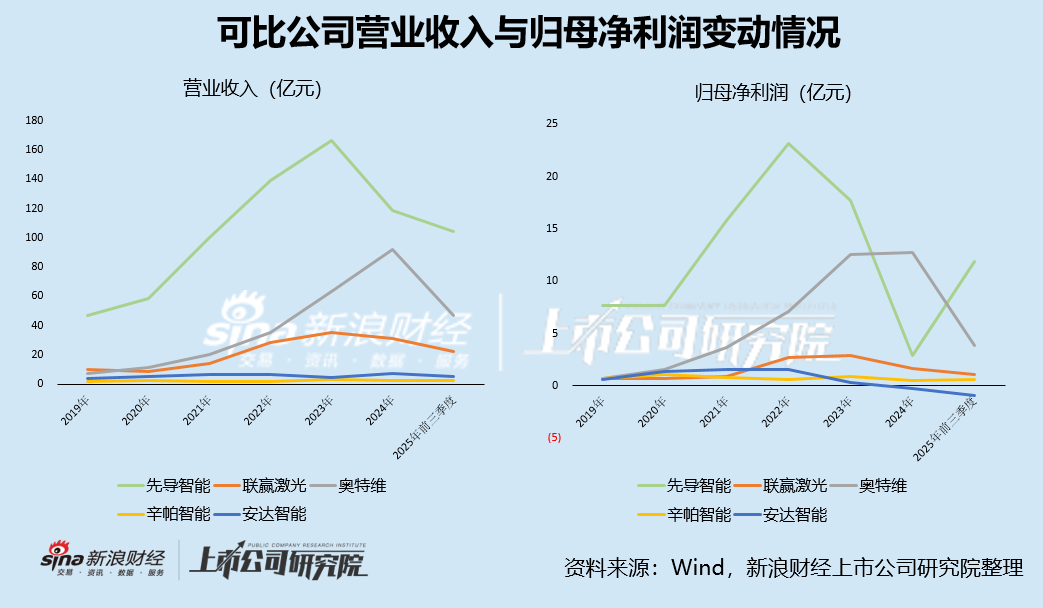
Core Viewpoint - Efort is planning to acquire Shanghai Shengpu Fluid Equipment Co., Ltd. through a combination of share issuance and cash payment, aiming to diversify its product offerings and enter the photovoltaic fluid control equipment sector [1][2]. Group 1: Efort's Financial Performance - Efort has been in continuous loss since 2016, with projected losses expected to reach between 4.5 billion to 5.5 billion yuan in 2025, marking a year-on-year increase of 186.34% to 249.97% [8]. - The company's revenue showed growth from 11.47 billion yuan in 2021 to 18.86 billion yuan in 2023, but is projected to decline by 27.21% to 13.73 billion yuan in 2024 [6]. - Efort's net profit for 2023 to the first three quarters of 2025 is reported as -0.47 billion yuan, -1.57 billion yuan, and -2.00 billion yuan, indicating an expanding loss [7]. Group 2: Shengpu's Business and IPO Attempt - Shengpu, established in 2007, focuses on precision fluid control equipment and attempted an IPO in 2022 but withdrew its application in 2024 due to industry challenges, including overcapacity and price wars in the photovoltaic sector [2][3]. - The company's revenue was reported at 1.77 billion yuan in 2020 and 2.64 billion yuan in 2021, with growth rates of 40.76% and 49.12% respectively, reflecting a favorable market environment at that time [2]. - Shengpu's previous financing rounds saw its pre-investment valuation increase from 5 billion yuan in July 2021 to 8.4 billion yuan in December 2021, a 68% rise in just five months [5]. Group 3: Industry Context and Challenges - The photovoltaic equipment sector has faced significant pressure in 2023, with four out of five comparable companies experiencing severe profit declines [3]. - The prices of key materials such as lithium carbonate and polysilicon have shown volatility, impacting the overall market dynamics and profitability within the industry [9][13]. - Efort's acquisition of Shengpu is seen as a strategic move to mitigate reliance on the automotive sector by integrating precision fluid equipment into its product portfolio, potentially enhancing its market position [6].


禾迈股份涨0.62%,成交额1.61亿元,近5日主力净流入3818.44万
Xin Lang Cai Jing· 2026-02-06 08:03
Core Viewpoint - The company, Hangzhou Hemai Electric Power Electronics Co., Ltd., is experiencing positive market movements due to its involvement in the photovoltaic and energy storage sectors, benefiting from the depreciation of the RMB and plans for share buybacks and increases in holdings by major shareholders [2][3]. Group 1: Company Overview - Hangzhou Hemai Electric Power Electronics Co., Ltd. specializes in the research, development, manufacturing, and sales of photovoltaic inverters, energy storage products, and electrical equipment [2][3]. - The company's main products include micro-inverters, monitoring devices, distributed photovoltaic power generation systems, modular inverters, and energy storage systems [2][3]. - The company has been recognized as a "specialized, refined, distinctive, and innovative" small giant enterprise, indicating its strong market position and technological capabilities [2]. Group 2: Financial Performance - As of the end of September, the company reported a revenue of 1.323 billion yuan for the first nine months of 2025, representing a year-on-year growth of 4.57% [8]. - The net profit attributable to the parent company was -59.1154 million yuan, a decrease of 124.07% year-on-year [8]. - The company has distributed a total of 1.306 billion yuan in dividends since its A-share listing, with 1.186 billion yuan distributed over the past three years [8]. Group 3: Market Activity - On February 6, the company's stock price increased by 0.62%, with a trading volume of 161 million yuan and a turnover rate of 1.19%, bringing the total market capitalization to 13.538 billion yuan [1]. - The company has a significant overseas revenue share of 64.25%, benefiting from the depreciation of the RMB [3]. - Hangzhou Kaikai Holdings Group plans to increase its stake in Hemai, with an investment of no less than 111.5 million yuan and up to 223 million yuan, supported by a special loan from China CITIC Bank [3].

晶科能源涨5.58%,成交额43.74亿元,人气排名26位!后市是否有机会?附走势预测
Xin Lang Cai Jing· 2026-02-06 07:56
Core Viewpoint - JinkoSolar has shown a significant increase in stock price and trading volume, indicating strong market interest and potential growth in the solar energy sector [1] Group 1: Company Performance - JinkoSolar's stock rose by 5.58% on February 6, with a trading volume of 4.374 billion yuan and a market capitalization of 83.343 billion yuan [1] - The company has a strong focus on N-type TOPCon technology, with successful mass production of high-efficiency batteries and ongoing research in new technologies [2] - JinkoSolar's production capacity for N-type TOPCon batteries is progressing well, with a total of 16GW capacity in Anhui and Zhejiang, and the efficiency of the mass production testing has reached 24.7% [2][3] Group 2: Financial Overview - For the period from January to September 2025, JinkoSolar reported a revenue of 47.986 billion yuan, a year-on-year decrease of 33.14%, and a net profit loss of 3.92 billion yuan, a significant decline of 422.67% [8] - The company has distributed a total of 3.355 billion yuan in dividends since its A-share listing, with 3.125 billion yuan in the last three years [8] Group 3: Shareholder and Market Dynamics - As of September 30, 2025, JinkoSolar had 77,300 shareholders, an increase of 4.14%, with an average of 129,456 circulating shares per shareholder, a decrease of 3.97% [8] - The major shareholders include Hong Kong Central Clearing Limited and various ETFs, with notable reductions in their holdings [8]

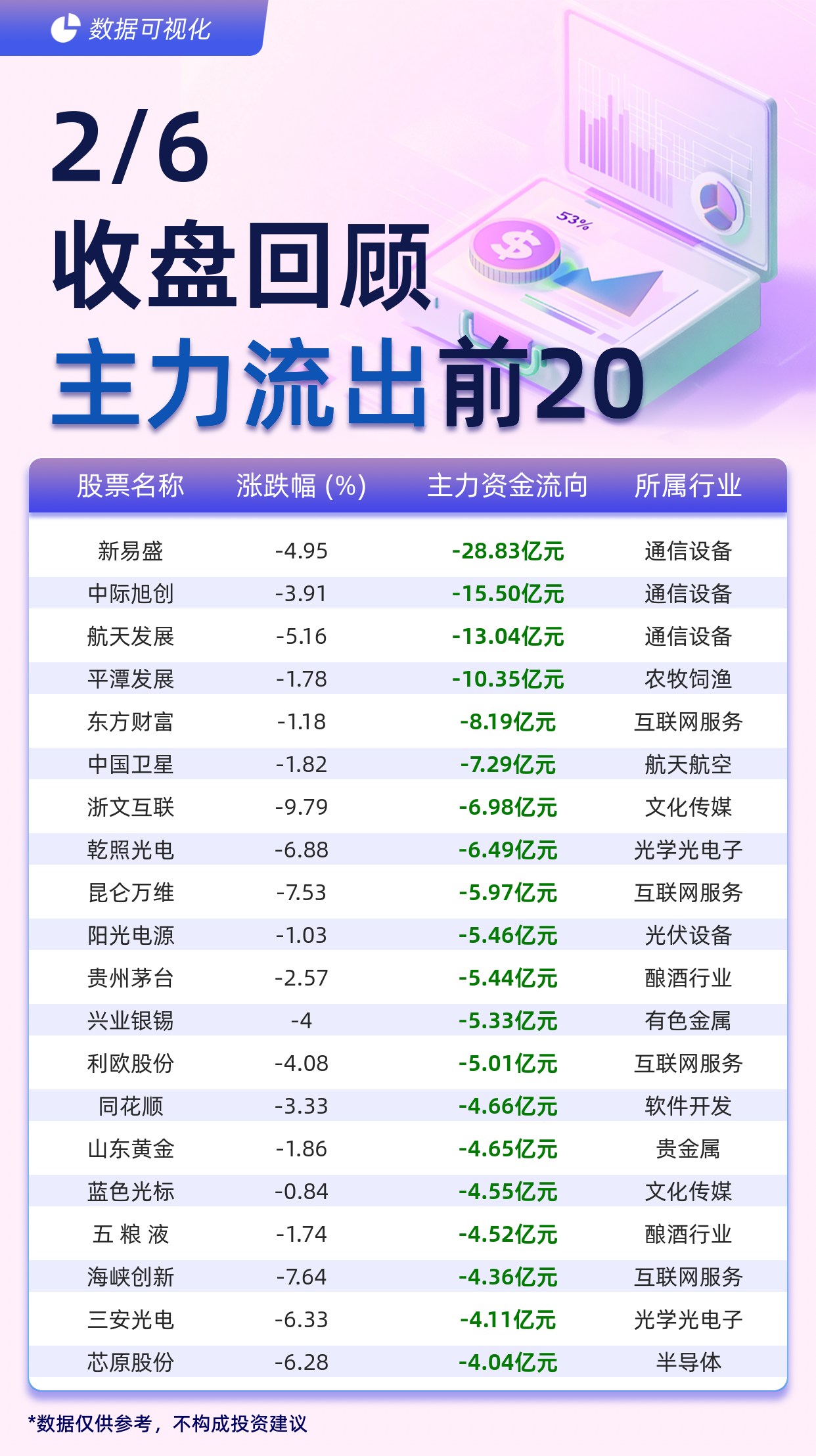
主力个股资金流出前20:新易盛流出28.83亿元、中际旭创流出15.50亿元
Jin Rong Jie· 2026-02-06 07:29
Group 1 - The main stocks with significant capital outflows include Xinyi Technology (-28.83 billion), Zhongji Xuchuang (-15.50 billion), and Aerospace Development (-13.04 billion) [1] - The sectors affected by the capital outflows primarily include communication equipment, internet services, and optical electronics [2][3] - The largest percentage decline in stock prices was observed in Zhejiang Wenlian, which fell by 9.79% [2] Group 2 - Other notable stocks with substantial capital outflows include Guizhou Moutai (-5.44 billion), Sunshine Power (-5.46 billion), and Sanan Optoelectronics (-4.11 billion) [1][3] - The overall trend indicates a negative sentiment in the market, particularly in the communication equipment and internet service sectors [2][3] - The data reflects a broader market trend of capital withdrawal, impacting various industries including agriculture, aerospace, and cultural media [1][2]


碳中和50ETF国泰(159861)盘中涨超2.5%,行业受益于政策支持和需求回暖双轮驱动
Sou Hu Cai Jing· 2026-02-06 07:25
Group 1 - The core viewpoint of the article highlights that the Carbon Neutrality 50 ETF (159861) has seen a rise of over 2.5% due to dual drivers of policy support and demand recovery in the industry [1] - According to招商证券, the electric equipment and photovoltaic equipment sectors are benefiting from policy support and demand recovery, with AI model iterations driving electricity demand and strong overseas grid upgrade needs [1] - The "14th Five-Year Plan" indicates that the State Grid plans to invest 4 trillion yuan to accelerate grid upgrades, which is expected to provide a solid foundation for electricity equipment demand [1] Group 2 - The Carbon Neutrality 50 ETF tracks the Environmental Protection 50 Index (930614), which selects 50 listed companies in the green economy sector from the Shanghai and Shenzhen markets, covering various sub-industries from pollution control to renewable energy [1] - The index focuses on selecting securities from companies with high growth potential and innovation capabilities in the relevant sectors [1]
收评:沪指午后回落收跌0.25%,化学化工、油气资源周期股表现坚挺
Xin Lang Cai Jing· 2026-02-06 07:13
Core Viewpoint - The A-share market experienced a collective decline, with major indices falling, while certain sectors such as oil and gas, chemicals, and photovoltaic equipment showed strength due to specific market drivers [1] Market Performance - The Shanghai Composite Index fell by 0.25%, the Shenzhen Component Index decreased by 0.33%, and the ChiNext Index dropped by 0.73% [1] - The North China 50 Index increased by 0.9% [1] - Total trading volume across the three markets was 21,635 billion yuan, a decrease of 308 billion yuan from the previous day [1] - Over 2,700 stocks in the three markets saw gains [1] Sector Performance - The oil and gas extraction and services, chemical industry, traditional Chinese medicine, photovoltaic equipment, power grid equipment, humanoid robots, and non-ferrous metals sectors had the highest gains [1] - Conversely, the liquor, tourism and hotel, retail, cultural media, military equipment, and airport and shipping sectors experienced the largest declines [1] Notable Stock Movements - The chemical sector was boosted by price increase news from international chemical giant BASF, leading to stocks like Jinniu Chemical and Shanshan Co. hitting the daily limit [1] - The photovoltaic equipment sector saw a surge in the afternoon, with GCL-Poly Energy hitting the daily limit; estimates suggest that deploying 100GW of computing power to space annually could create a 5 trillion yuan new market for the photovoltaic industry [1] - Oil and gas resource stocks also strengthened in the afternoon amid ongoing tensions in the Middle East, with Intercontinental Oil and Gas experiencing significant gains [1] - Other active sectors included traditional Chinese medicine, robotics, and PCB concept stocks [1] Declining Stocks - Consumer stocks such as liquor, retail, and tourism failed to maintain their previous day's gains, with stocks like Huangtai Liquor and Baida Group hitting the daily limit down, and Dalian Shengya and Three Gorges Tourism also declining [1]
碳中和50ETF国泰(159861)涨超2%,电网投资与电力需求驱动行业前景
Mei Ri Jing Ji Xin Wen· 2026-02-06 07:05
Core Insights - The Carbon Neutral 50 ETF (159861) rose over 2% on February 6, driven by investments in the power grid and increasing electricity demand [1] Industry Summary - The electric equipment and photovoltaic equipment sectors are benefiting from dual drivers of policy support and recovering demand, particularly in the new energy and mid-to-high-end manufacturing industries [1] - AI model iterations are driving electricity demand, while strong overseas demand for power grid upgrades is expected to sustain high growth in grid equipment [1] - In the photovoltaic equipment sector, policy initiatives are pushing prices up and clearing excess capacity, leading to a favorable domestic installation demand environment [1] - The demand for high computing power in AI models is significantly increasing electricity needs, creating a notable power gap and fostering new models for deploying high-computing satellites in low/mid-orbit [1] - The industry landscape is continuously optimizing under the backdrop of anti-involution, with capacity utilization rates concentrating on high-quality production [1] Company Summary - The Carbon Neutral 50 ETF tracks the Environmental 50 Index (930614), which selects the top 50 companies in the A-share market related to environmental protection, clean energy, pollution control, and energy conservation [1] - This index reflects the overall performance of high-quality securities in the environmental industry, showcasing strong industry representation and growth potential [1]
小盘股活跃,中证2000指数低开高走,关注中证2000ETF易方达(159532)等产品配置价值
Mei Ri Jing Ji Xin Wen· 2026-02-06 07:05
Group 1 - The small-cap growth stocks led the market on February 6, with sectors such as oil and gas, batteries, photovoltaic equipment, traditional Chinese medicine, and chemicals performing strongly [1] - As of 14:29, the CSI 2000 Index rose by 0.9%, with stocks like Tianzhong Precision Machinery, Zhili Fang, Jinniu Chemical, Galaxy Electronics, Te Yi Pharmaceutical, Hangdian Co., Changjiang Communication, and Zhejiang Chint Electric hitting the daily limit [1] - The CSI 2000 Index serves as a benchmark for small and micro-cap growth stocks in A-shares, consisting of 2000 stocks with smaller market capitalizations and good liquidity, covering 30 first-level industries [1] Group 2 - The index focuses on emerging sectors such as machinery, electronics, and computers, making it an important tool for identifying high-quality companies in niche markets within the broader market [1]
协鑫集成2026年2月6日涨停分析:光伏主业聚焦+资金效率提升+光伏行业热点
Xin Lang Cai Jing· 2026-02-06 06:28
Group 1 - The core viewpoint of the news is that GCL-Poly Energy Holdings Limited (协鑫集成) experienced a significant stock price increase, reaching a limit up of 10.1% on February 6, 2026, attributed to strategic focus on its core photovoltaic business and improved capital efficiency [1] - GCL-Poly has canceled underperforming joint ventures, such as Xuzhou Xinyao, to concentrate resources on its main photovoltaic operations, which enhances its core competitiveness in the solar energy sector [1] - The company has utilized idle fundraising to supplement working capital, expected to save 9 million yuan in financial costs annually, thus improving capital utilization efficiency and positively impacting performance [1] Group 2 - The photovoltaic industry is a key focus of national support as a clean energy sector, with long-term growth prospects despite current pressures; advancements in technology and cost reductions are anticipated to sustain market demand [1] - The stock performance of GCL-Poly is influenced by the overall activity in the photovoltaic equipment sector, which has seen several stocks perform well recently, benefiting from sector momentum [1] - Institutional and foreign investors have shown positive sentiment towards GCL-Poly, as indicated by net buying on February 4 and 5, 2026, contributing to the stock price increase [1]

协鑫集成3连板!协鑫集成13时52分再度涨停,背后逻辑揭晓
Jin Rong Jie· 2026-02-06 06:27
Group 1 - The core viewpoint of the article highlights that GCL-Poly Energy has experienced a continuous three-day trading limit increase, indicating strong market interest and performance in the stock [1] - GCL-Poly's stock reached a trading limit at 13:52 today, with a transaction volume of 7.281 billion yuan and a turnover rate of 29.43%, reflecting significant trading activity [1] - The photovoltaic equipment sector has been active recently, contributing to the stock's performance, with GCL-Poly focusing on ground-mounted photovoltaic systems and offering integrated solutions for energy storage [1] Group 2 - GCL-Poly's main products include high-efficiency photovoltaic cells, large-sized photovoltaic modules, and energy storage systems, which are essential for the company's business model [1] - The active performance of the related sector has positively influenced the company's stock, indicating a potential growth opportunity within the photovoltaic industry [1]