
消费金融

Search documents
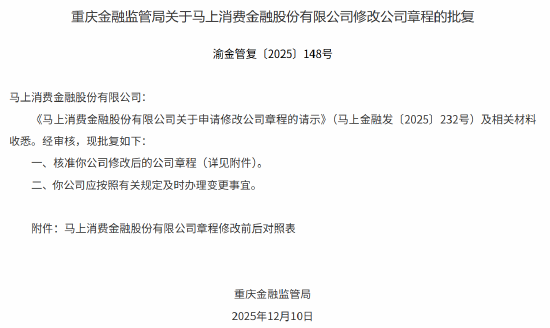
马上消金获批修改公司章程
Xin Lang Cai Jing· 2025-12-11 07:29
12月11日金融一线消息,重庆金融监管局发布批复,核准马上消费金融股份有限公司修改后的公司章 程。 责任编辑:李琳琳 12月11日金融一线消息,重庆金融监管局发布批复,核准马上消费金融股份有限公司修改后的公司章 程。 责任编辑:李琳琳 ...

孙磊:理性普惠三大核心支柱 -《消费金融小札》连载
Sou Hu Cai Jing· 2025-12-11 06:50
Group 1: Core Concepts of Rational Inclusive Finance - Financial accessibility, commercial sustainability, and socially acceptable risk pricing are the three core pillars of rational inclusive finance, and their dynamic balance is key to the high-quality development of consumer finance [1][2] - Financial accessibility is the premise of rational inclusivity, focusing on enabling financial resources to reach groups with genuine needs, particularly small and micro enterprises and low-income populations, through digital technology [1] - Commercial sustainability is essential for rational inclusivity, as profitability is necessary for the continuity of inclusive finance; financial institutions must leverage technological innovation to reduce costs and improve efficiency while meeting public needs [1] Group 2: Risk Pricing and Balance - Socially acceptable risk pricing is the critical link in rational inclusivity, needing to cover risk costs while aligning with public expectations and regulatory requirements; a scientific pricing mechanism should be based on precise risk assessment [2] - The balance among accessibility, sustainability, and pricing is fundamentally about the collaboration of multiple interests, ensuring that financial services are both broad and stable while fulfilling social responsibilities [2] - To resolve the pricing dilemma, financial institutions must innovate to reduce operational costs, while policy frameworks should create a collaborative mechanism that combines fiscal support with market operations [2]
招联铁粉圆梦日伴侣专场浪漫上演,普惠金融温暖陪伴爱情长跑
Jin Rong Jie· 2025-12-11 03:13
Core Viewpoint - The event "Iron Fans Dream Day" organized by Zhaolian Consumer Finance Co., Ltd. successfully combined emotional connection with innovative consumption scenarios, promoting inclusive finance and enhancing consumer experience [1][5]. Group 1: Event Highlights - The event featured a theme of "Time Travel and Romantic Journey," offering cultural experiences and emotional interactions, allowing participants to wear exquisite Republic of China costumes and engage in dance activities [3]. - Participants enjoyed a special tour at Shanghai Disneyland, creating memorable moments in a fairy-tale setting, reflecting Zhaolian's commitment to user care [3][6]. Group 2: User-Centric Initiatives - Zhaolian emphasizes that inclusive finance is not just about providing quality financial services but also about accompanying users in their growth and safeguarding family happiness [5]. - The company has organized various activities in 2023, such as events for new citizens and trustworthy users, fulfilling the expectations of hundreds of users and making financial services more human-centered [5][10]. Group 3: Collaborative Efforts - Zhaolian collaborated with China Unicom to enhance user experiences, offering unique activities like old photo printing and interactive fitness sessions, showcasing the synergy between the two companies [8]. - The partnership has previously launched a "0% interest installment purchase" program, benefiting over 100,000 consumers and demonstrating the potential for consumer spending [8]. Group 4: Future Plans - Zhaolian plans to continue the "Iron Fans Dream Day" and similar initiatives in cities like Shanghai and Guangzhou, aiming to integrate financial services with emotional needs and diverse consumption scenarios [10]. - The company will leverage its "finance + technology" advantage to innovate inclusive service models in various sectors, including culture, tourism, health, and home improvement [10].

从破冰到重构 解锁普惠金融新路径
Bei Jing Shang Bao· 2025-12-10 15:44
Core Insights - Inclusive finance is transitioning from "incremental expansion" to "quality improvement and efficiency enhancement," becoming a key topic in the financial sector to fulfill social responsibilities and stimulate market vitality [1] Group 1: Current Trends in Inclusive Finance - The Beijing Commercial Brand Conference focused on "Financial New Forces Innovating Consumption Power," highlighting the importance of financial institutions' practical experiences and digital empowerment in enhancing inclusive finance [3] - China's economy is at a critical stage of transformation, with financial needs from small and micro enterprises, individual businesses, rural areas, and vulnerable groups identified as both pain points and focal points for inclusive finance [3] - A multi-layered support system for inclusive finance has been established, including monetary policy tools, fiscal subsidies, and differentiated regulatory assessments, aimed at alleviating the "reluctance to consume" issue [3] Group 2: Challenges and Market Dynamics - As the inclusive finance market transitions from a "blue ocean" to a "red ocean," financial institutions face increased competition and challenges, particularly in customer acquisition and risk management [4] - The banking sector is experiencing pressure as it struggles with the difficulty of finding new clients, while the insurance industry faces challenges in accurately pricing inclusive health insurance products due to a lack of data [4] - The consumer finance sector is caught in a dilemma of "internal competition and risk coexistence," with some institutions lowering loan rates and relaxing risk control standards to capture market share, leading to issues like "multiple borrowing" and "over-lending" [4] Group 3: Future Directions and Innovations - The 2025 Beijing Financial Forum report on inclusive finance outlines the latest policy directions and showcases breakthroughs in product design and service models across various financial institutions [4] - The forum also addressed how to navigate the "red ocean" and foster a "new blue ocean" for consumption, emphasizing the role of advanced technologies like big data and artificial intelligence in empowering inclusive finance [6] - The next decade is expected to focus on the reconstruction of inclusive finance, moving towards deeper levels of "precision," "sustainability," and "ecological integration" [6]

征信 不只是“黑名单”
Bei Jing Shang Bao· 2025-12-10 12:00
2025年10月,人民银行释放重磅信号,2026年初,将研究实施支持个人修复信用的政策措施,为疫情以 来小额已还违约贷款"抹去"征信违约痕迹。业内认为,这一政策背后,既能解当下房地产调整、居民收 入波动下,个人信用瑕疵的民生痛点,也凸显出征信在普惠金融中的核心价值。过去,小微企业缺抵 押、新市民收入不稳,融资难成共性问题;如今,完善的征信体系不仅打破"信息孤岛",更让无数普惠 小微贷款精准落地,还能通过信用修复为困境群体开辟"回头路"。 避免"一刀切"高定价 众所周知,过去二十年,我国居民杠杆率持续攀升,资产配置曾高度集中于房地产。 但随着市场环境变化,就业压力增大、资产缩水等问题接踵而至,个人信用违约现象呈现结构性增长。 从中国普惠金融研究院和合作机构共同开展的一项调查结果可见,30—39岁群体成为债务压力核心人 群,其资产负债表受房产价格波动冲击最为明显;此外,新市民因收入稳定性不足,信用违约风险较 高,且违约后重新进入信用市场的门槛居高不下。 信用瑕疵的连锁效应,也在侵蚀家庭财富根基。一方面,失信记录导致贷款申请受阻、融资成本上升; 另一方面,居民对房地产的依赖度下降后,也面临资产流动性焦虑,在低利率环 ...

消费贷 不卷利率卷服务
Bei Jing Shang Bao· 2025-12-10 12:00
Core Insights - The consumer loan market in China has reached a balance of 21.29 trillion yuan by the end of Q3 2025, reflecting a year-on-year growth of 4.2% [3][4] - The era of aggressive expansion in consumer loans is over, with a shift towards compliance and quality improvement in the industry [1][7] - Banks and licensed consumer finance institutions are now focusing on sustainable growth within regulatory frameworks, emphasizing the need for a balanced approach to risk and expansion [8] Market Expansion - Consumer loans have been viewed as a buffer for banks amid slowing mortgage growth, with a notable increase in loan balances driven by government policies and financial institutions adjusting their business structures [3][4] - The total consumer loan balance for 41 A-share listed banks reached approximately 6.80 trillion yuan in the first half of 2025, marking a 5.37% increase from the previous year [4] - Major banks like China Construction Bank and Postal Savings Bank have significant consumer loan balances, indicating a competitive landscape among financial institutions [4] Customer Segmentation and Rate Differentiation - The consumer loan market is characterized by a "dislocated competition" where banks and licensed consumer finance institutions target different customer segments and pricing strategies [5][6] - Banks typically offer lower interest rates (3%-5%) due to their low-cost funding advantages, focusing on high-quality borrowers [5][6] - Licensed consumer finance institutions cater to underserved markets, often charging higher rates (4%-24%) to cover risk costs while providing flexible loan options [5][6] Regulatory Environment - The adjustment of consumer loan interest rates has been a long-term trend, with a recent regulatory push to maintain rates around 3% to prevent financial arbitrage [7] - New regulations effective from October 1, 2025, set a cap on comprehensive financing costs at 24%, aiming to guide consumer loan rates into a compliant downward trajectory [7] Sustainable Development Challenges - The industry faces three core challenges for sustainable development: asset quality management, deepening customer value, and fulfilling social responsibilities [8] - Financial institutions are encouraged to leverage technology for better consumer demand analysis and to reduce costs, thereby enhancing the precision of credit approvals [8] - Banks should focus on building ecosystem capabilities and improving organizational agility, while consumer finance institutions need to strengthen their technological capabilities and explore new growth models [8]

AI 走向规模化应用
Bei Jing Shang Bao· 2025-12-10 12:00
Core Insights - The core viewpoint of the articles emphasizes the transformative role of AI in enhancing inclusive finance, particularly for small and micro enterprises in China, with a significant increase in loan balances and a shift in focus from availability to quality of financial services [1][8]. Group 1: Growth of Inclusive Finance - The balance of inclusive loans for small and micro enterprises in China surged from 8.8 trillion yuan at the end of 2017 to over 33 trillion yuan by the end of 2024, achieving an average annual compound growth rate of 20.7% [1]. - By the third quarter of 2025, the balance of inclusive loans for small and micro enterprises reached 36.5 trillion yuan, a year-on-year increase of 12.1% [8]. - The balance of inclusive agricultural loans was 14.1 trillion yuan, with an increase of 1.2 trillion yuan since the beginning of the year [8]. Group 2: AI Integration in Financial Services - Since 2025, generative AI technologies have evolved from automation tools to business partners, leading to systematic and large-scale applications in the financial sector [3]. - AI applications in finance now encompass various functions, including credit approval, fraud detection, and investment research, significantly enhancing service efficiency [3][4]. - Financial institutions are developing AI-driven solutions, such as intelligent investment advisors and personalized engines, to improve asset allocation and service delivery [3][4]. Group 3: Challenges in AI Implementation - The core challenges in inclusive finance revolve around trust, cost, and compliance, with AI's reliance on alternative data for risk assessment posing trust issues due to the "black box" nature of algorithms [5][6]. - The high costs associated with AI implementation, including model training and data governance, can erode profits for financial institutions [5][6]. - Regulatory compliance remains a critical concern, as the rapid evolution of AI technology often outpaces existing regulatory frameworks, necessitating careful application by financial institutions [6]. Group 4: Future Trends and Innovations - Financial institutions are exploring collaborative solutions to address the challenges in inclusive finance, focusing on technology innovation and industry cooperation [7]. - AI technology is evolving towards lighter and more precise models to reduce costs and improve efficiency in inclusive finance applications [7]. - The gradual improvement of regulatory frameworks, including the implementation of regulatory sandboxes, is expected to support the large-scale application of AI while managing risks [7].

金融促消费,“大力出奇迹”
Bei Jing Shang Bao· 2025-12-10 11:53
Core Viewpoint - The article emphasizes the importance of stimulating and releasing consumer purchasing power through financial services to enhance domestic demand and drive economic growth [2][7]. Demand Side Challenges - The current consumer market faces multiple challenges on both the demand and supply sides, with many individuals exhibiting a reluctance to consume due to macroeconomic fluctuations and unstable income expectations [2]. - The mindset of "not willing to consume" is prevalent among consumers, indicating a need for financial services to support consumer confidence [2]. Supply Side Issues - There are gaps in financial services within the consumer sector that fail to adequately match market demand, necessitating increased financial support for consumer spending [2]. - Financial institutions, including banks and consumer finance companies, are encouraged to enhance resource allocation and develop targeted policies to support consumption [2]. Financial Services Role - Various financial entities are collaborating to enhance consumer financial services, including inclusive credit offerings and improved consumer experience in payment services [2]. - The article highlights the need for a coordinated policy mechanism where monetary policy provides liquidity and fiscal policy reduces consumer costs through subsidies [2]. Precision in Policy Implementation - The article stresses the importance of "precision" in financial policies to ensure that funds are effectively directed towards consumption rather than being diverted to savings or debt repayment [3][4]. - Targeted subsidies linked to specific consumption scenarios, such as appliance upgrades or electric vehicle purchases, can significantly improve the efficiency of financial policies [4]. Consumer Behavior Shift - Financial services should also guide consumer attitudes towards valuing quality and sustainability in consumption, moving beyond mere desire fulfillment [6]. - The article suggests that financial products like mortgages and consumer loans enable individuals to realize their consumption needs earlier, contributing to economic growth [6]. Strategic Focus - The strategy of financial consumption promotion should balance breadth and depth, shifting from merely increasing consumption volume to enhancing the quality and sustainability of consumption [6][7]. - This approach aligns with the broader goal of supporting high-quality economic development through effective financial services [7].
普惠十年记
Bei Jing Shang Bao· 2025-12-10 11:53
Core Insights - The development of inclusive finance in China has transitioned from "having" to "quality" over the past decade, with a focus on precision and sustainability [1][13] - The balance of inclusive finance has reached 36.5 trillion yuan, doubling since the end of the 13th Five-Year Plan, with a year-on-year growth of 12.1% [3][4] - The next decade will emphasize enhancing service quality and addressing challenges such as customer homogeneity and rising risk management costs [1][12] Group 1: Achievements in Inclusive Finance - Financial services have expanded to rural areas, achieving coverage in every village and town, with significant growth in loans to small and micro enterprises [3][5] - By the end of 2024, the balance of agricultural loans reached 51.36 trillion yuan, a year-on-year increase of 9.8%, surpassing general loan growth [3][4] - The average interest rate for newly issued inclusive loans dropped to 4.13%, a decrease of 33 basis points from the previous year [3][4] Group 2: Challenges and Market Dynamics - The inclusive finance sector is transitioning from a "blue ocean" to a "red ocean" market, facing increased competition and saturation [10][12] - Banks are struggling with the challenge of identifying new clients, particularly in rural areas where small businesses often lack collateral [10][12] - The insurance sector faces difficulties in accurately pricing inclusive health insurance products due to a lack of data on previously uncovered populations [11][12] Group 3: Future Directions - The focus for the next decade will be on creating a high-quality inclusive finance ecosystem that supports small and micro enterprises, agriculture, and social welfare [13][14] - A new coordination mechanism for supporting small and micro enterprises is being established to enhance the connection between banks and businesses [14][15] - The development of a multi-layered, differentiated organizational structure is essential for building a high-quality inclusive finance system [15][16]

哈银消金迎“新帅”:孙升学出任董事长
Sou Hu Cai Jing· 2025-12-10 06:52
Group 1 - Harbin Hain Consumer Finance Co., Ltd. has appointed a new chairman, Sun Shengxue, signaling a strategic restart for the company [1] - Sun Shengxue has extensive experience in the financial industry, having held key positions in various departments at Harbin Bank, which aligns with the company's needs for transformation in the consumer finance sector [1] - The previous chairman's self-operated strategy failed to sustain, leading to a shift towards a loan facilitation model, particularly focusing on off-balance-sheet business by the end of 2024 [2] Group 2 - Under the new leadership, there is potential for the resumption of self-operated business, supported by solid operating data, with revenue reaching 823 million yuan in the first half of 2025, a year-on-year increase of 19.26% [2] - The total assets of the company reached 25.418 billion yuan, with a loan balance of 23.671 billion yuan, reflecting growth of 4.30% and 4.89% respectively since the beginning of the year [2] - The company has been recognized as a high-tech enterprise and has established a research team of over 150 people, indicating a commitment to product development and innovation [2] Group 3 - Regulatory changes effective October 1, 2025, will impose restrictions on online loan interest rates exceeding 24%, pressuring companies that rely heavily on loan facilitation models [3] - Major institutions are increasing their self-operated business proportions in response to regulatory pressures, highlighting the importance of self-operated and shareholder collaborative channels [3] - Sun Shengxue's background in credit card operations, risk management, and mobile finance positions him well to meet the comprehensive requirements for customer acquisition, risk control, and technology in self-operated business [3]