
科研

Search documents
个税小课堂 | 一文了解科技成果转化个人所得税政策
蓝色柳林财税室· 2025-08-27 13:46
Core Viewpoint - The article discusses tax incentives for technology personnel in research institutions and higher education institutions, focusing on the conditions and methods for enjoying these tax benefits related to the transformation of scientific and technological achievements into equity rewards and deferred tax policies [10][15][25]. Group 1: Tax Incentives for Technology Personnel - Tax incentives are available for technology personnel in research institutions and higher education institutions who achieve significant contributions in transforming scientific and technological achievements [5][27]. - The tax benefits include the ability to defer personal income tax when converting scientific achievements into equity or investment shares, with specific conditions for eligibility [15][16][19]. Group 2: Conditions for Enjoying Tax Benefits - Eligible institutions include non-profit research and development institutions and higher education institutions that meet specific criteria, such as being registered and recognized by relevant authorities [25][26]. - Technology personnel must be formal employees of these institutions and have made significant contributions to the transformation of scientific achievements [5][27]. Group 3: Methods for Tax Benefit Application - Institutions and personnel must file a record with the tax authority within 15 days of receiving awards or converting achievements into equity [6][12]. - Required documentation includes evaluation reports, equity reward documents, and other proof materials to be retained for verification [8][12]. Group 4: Deferred Tax Policies - Since September 1, 2016, individuals investing technological achievements into domestic enterprises can choose to defer tax payments until the transfer of equity, allowing for tax calculation based on the difference between transfer income and the original value of the technological achievement [15][16][22]. - The deferred tax policy applies to various types of technological achievements, including patents and software copyrights [19][28].


上天→入地→下海!“大国重器”捷报频传 为经济发展再添“硬核”动力
Yang Shi Wang· 2025-08-27 03:21
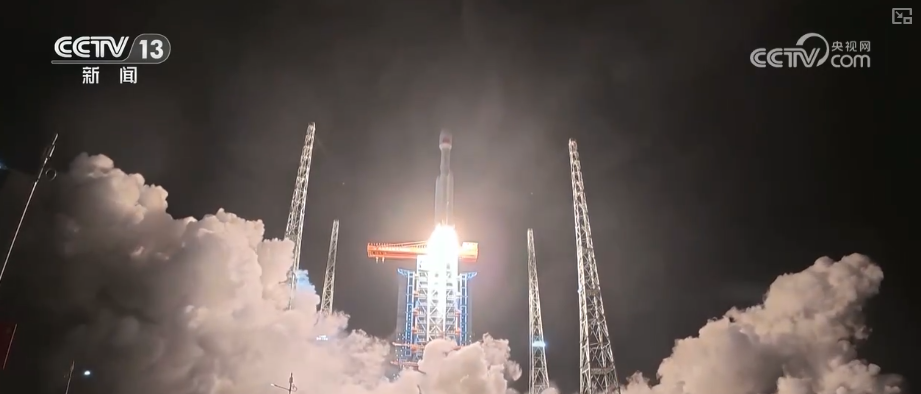
Group 1: Long March 8 Rocket Launch - The Long March 8 rocket successfully launched 10 low-orbit satellites for satellite internet on August 26, 2025, marking its third mission of the year [1][3] - The Long March 8 is an upgraded version designed for medium-sized liquid launch vehicles, capable of high-density launches and multiple concurrent missions [3][4] - The rocket implemented several technological innovations, including full-process automation and active drift control during takeoff, enhancing launch efficiency and flight stability [5][6] Group 2: Jiangmen Neutrino Experiment - The Jiangmen Neutrino Experiment, located 700 meters underground, officially began operations on August 26, 2025, after over ten years of preparation [7] - The core detector of the experiment is a 20,000-ton liquid scintillator detector, which has met or exceeded performance expectations during initial testing [9] - Neutrinos, fundamental particles of matter, are crucial for exploring the universe, and the experiment aims to capture these elusive particles using advanced technology [10][12] Group 3: Large Dredging Vessels - Two self-designed large dredging vessels, "Tongzhen" and "Junguang," were launched on August 26, 2025, after over three years of development [17][18] - Each vessel measures approximately 198 meters in length and has a maximum dredging depth of 120 meters, with a capacity of 35,000 cubic meters, equivalent to filling 18 standard swimming pools [20] - The vessels feature advanced systems for efficient dredging operations, including a powerful mud pump and an intelligent dredging control system, enhancing operational efficiency and environmental sustainability [22][24]
科技合作,共赢发展!上合组织国家多元化合作 为可持续发展提供强劲支撑
Yang Shi Wang· 2025-08-27 03:21
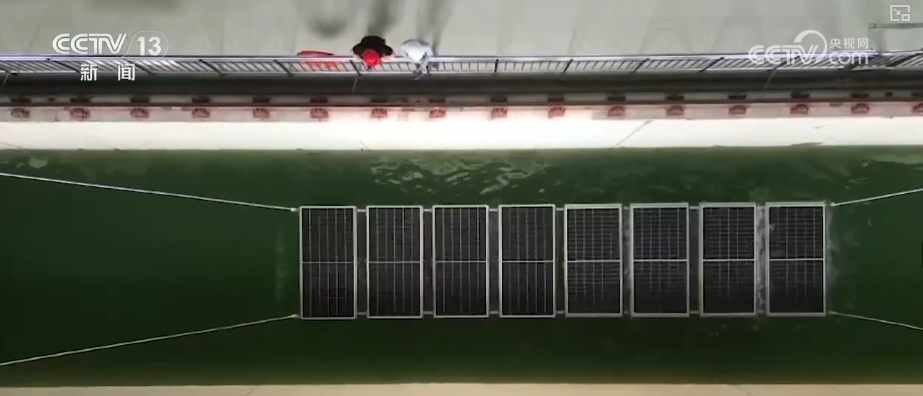
Group 1 - The Shanghai Cooperation Organization (SCO) has designated 2025 as the "Year of Sustainable Development," focusing on diversified cooperation among member states in the context of a new technological revolution [1] - SCO countries aim to enhance interaction in the field of technological innovation, promoting the development of the digital economy to provide strong support for sustainable development [1][6] - Various forums and events, including those on artificial intelligence and digital economy, are being held in Tianjin to facilitate industrial connections in sectors such as manufacturing, green energy, and digital economy [6] Group 2 - The chief scientist from the Tianjin Water Transport Engineering Research Institute highlighted the unique environmental challenges faced in the construction of a port in the UAE, emphasizing the need for safety and ecological friendliness [3] - Research is being conducted using a large-scale wave tank to study the stability of breakwaters under different sea conditions and water level combinations for a port in the UAE [4]
新技术可对废塑料进行无害化处理
Xin Hua She· 2025-08-24 04:55
Core Viewpoint - Researchers from the Russian National Kabardino-Balkar University are developing a new technology for the harmless treatment of polyethylene waste through complete combustion and neutralization of toxic gases, addressing the challenges of traditional waste management methods [1][2] Group 1: Research and Development - The team has reported progress in developing a method that involves grinding polyethylene waste into powder and mixing it with a eutectic mixture of lithium nitrate, sodium nitrate, and potassium nitrate, along with an alkali [1] - The mixture is heated to 220 degrees Celsius, causing the components to melt and the nitrate eutectic to decompose, releasing more reactive oxygen atoms that facilitate the complete combustion of polyethylene [1] Group 2: Environmental Impact - The process allows for the oxidation of polyethylene, with toxic gases such as carbon monoxide, nitrogen oxides, and sulfur oxides being neutralized in an alkaline molten substance, resulting in harmless salt compounds [1] - Air quality tests during the experiment showed no toxic gases exceeding permissible concentration standards, indicating a potential environmental benefit [1] Group 3: Future Applications - At a temperature of 450 degrees Celsius, the experiment produced flames up to 3 meters high, suggesting the release of significant energy [2] - The researchers believe that the molten mixture could potentially be developed into solid fuel for rocket engines and metallurgical processes in the future [2] - The next phase of research will involve more in-depth quantitative calculations using specialized equipment [2]
最新!全球顶尖科学家排名发布:施一公、曹雪涛、裴钢等上榜
仪器信息网· 2025-08-21 04:25
Core Viewpoint - iNature systematically summarizes the top 20 scholars in the life sciences field employed in Chinese institutions, covering eight subfields including molecular biology, neuroscience, biochemistry, genetics, immunology, medicine, microbiology, and plant science and agriculture [1][2]. Molecular Biology - A total of 6,162 researchers were analyzed in the molecular biology field, with a D-index threshold of 40 for consideration. The acceptance criteria for top researchers are based on D-index, contribution ratio in the specific field, and researchers' awards and achievements [3][4]. - Notable scholars include: - David J. Chen (Chinese University of Hong Kong) - D-index: 105 - Pan Tao (Jinan University) - D-index: 88 - Li Jiayang (Chinese Academy of Sciences) - D-index: 84 [4]. Neuroscience - An analysis was conducted on 30,084 researchers in the neuroscience field, with a D-index threshold of 30 for consideration. The acceptance criteria are similar to those in molecular biology [5][6]. - Notable scholars include: - Pu Muming (Chinese Academy of Sciences) - D-index: 125 - Nikos K. Logothetis (Chinese Academy of Sciences) - D-index: 123 - Helmut Ketternann (Chinese Academy of Sciences) - D-index: 116 [6]. Biochemistry - A total of 88,978 researchers were analyzed in the biochemistry field, with a D-index threshold of 40 for consideration [7]. - Notable scholars include: - Katsuhiko Mikoshiba (Shanghai University of Science and Technology) - D-index: 145 - Deng Chuxia (Macau University) - D-index: 145 - Pak C. Sham (Hong Kong University) - D-index: 132 [7]. Genetics - An analysis was conducted on 6,162 researchers in the genetics field, with a D-index threshold of 40 for consideration [8]. - Notable scholars include: - Zhu Jiankang (Southern University of Science and Technology) - D-index: 173 - Deng Xingwang (Peking University) - D-index: 134 - Yang Huanming (BGI) - D-index: 126 [8][9]. Immunology - A total of 11,980 researchers were analyzed in the immunology field, with a D-index threshold of 40 for consideration [10]. - Notable scholars include: - Guan Yi (Hong Kong University) - D-index: 132 - Gao Fu (Chinese Academy of Sciences) - D-index: 115 - Leo L. M. Poon (Hong Kong University) - D-index: 112 [10]. Medicine - An analysis was conducted on 70,665 researchers in the medicine field, with a D-index threshold of 70 for consideration [11]. - Notable scholars include: - Huang Tianyin (Tsinghua University) - D-index: 202 - Shen Zuyao (Hong Kong University) - D-index: 177 - Joseph Lau (Hong Kong University) - D-index: 163 [11]. Microbiology - A total of 44,555 researchers were analyzed in the microbiology field, with a D-index threshold of 40 for consideration [12]. - Notable scholars include: - Yuan Guoyong (Hong Kong University) - D-index: 164 - Kwok-Hung Chan (Hong Kong University) - D-index: 112 - Xiao Lihua (South China Agricultural University) - D-index: 110 [12][13]. Plant Science and Agriculture - An analysis was conducted on 10,707 researchers in the plant science and agriculture field, with a D-index threshold of 30 for consideration [14]. - Notable scholars include: - Zhu Yongguan (Chinese Academy of Sciences) - D-index: 135 - Zhang Fushuo (China Agricultural University) - D-index: 132 - Zhao Fangjie (Nanjing Agricultural University) - D-index: 126 [14].

【科技日报】科研人员发现千叶蓍抗神经炎症关键成分
Ke Ji Ri Bao· 2025-08-20 01:08
Core Insights - The research conducted by the Xinjiang Institute of Physics and Chemistry of the Chinese Academy of Sciences has identified the sesquiterpene components of the plant Achillea millefolium as having anti-neuroinflammatory activity, providing a solid foundation for developing natural lead compounds for treating neuroinflammatory diseases [1][2]. Group 1: Research Findings - The study published in the journal "Molecular Structure" highlights the medicinal value of Achillea millefolium, traditionally used in various countries for treating gastrointestinal diseases, liver and gallbladder diseases, hypertension, respiratory infections, fever, and rheumatic diseases, as well as promoting wound healing and alleviating skin inflammation [1]. - Researchers isolated 16 sesquiterpenes from the whole plant of Achillea millefolium collected in the Changji region of Xinjiang, with 12 of these being new compounds, successfully determining their planar structures and absolute configurations using high-resolution mass spectrometry and nuclear magnetic resonance spectroscopy [1]. Group 2: Active Compounds - In further studies, five compounds were found to effectively inhibit nitric oxide secretion in a lipopolysaccharide-induced microglial cell model, with one compound showing activity comparable to dexamethasone [2]. - The research concluded that sesquiterpenes, particularly guaiol-type sesquiterpene lactones, are key components responsible for the significant anti-neuroinflammatory activity of Achillea millefolium [2].

【科技日报】人类大脑“折叠”和“连线”秘密揭开
Ke Ji Ri Bao· 2025-08-19 00:43
人类思考、记忆和感受时,大脑里的白质纤维束像高速公路一样传递着信息,而大脑皮层的复杂褶 皱就像山脉和河谷,为信息传递提供了独特的支撑。记者18日从中国科学院自动化研究所获悉,来自该 所的科研人员成功揭示人类大脑皮层形态与白质纤维连接的内在关系。相关研究成果在线发表于《自 然-通讯》杂志。 "过去,学界惯于把大脑皮层的形状与白质纤维的连接分开研究,忽视了二者耦合所蕴含的全局机 制。"论文通讯作者、中国科学院自动化研究所研究员樊令仲说。 在这项研究中,科研人员利用高分辨率多模态磁共振成像技术,创造性地将皮层复杂的折叠形态分 解为不同"频率"的几何模式,并描绘了主要白质纤维束在皮层表面的连接点分布。结果发现,皮层的几 何模式可以非常准确地预测纤维束的连接分布,就像地形决定河流的走向。 "我们把这种可以精确测量的紧密配合关系称为'白质纤维—皮层几何耦合'(TGC)。这种关系不 仅非常稳定,还能像指纹一样区分不同个体。"樊令仲说,深入分析TGC发现,大脑结构的形成是"先 天"与"后天"共同作用的结果。 (原载于《科技日报》 2025-08-19 第01版) ...
科学家实现最强声子干涉效应
Ke Ji Ri Bao· 2025-08-14 01:11
Core Insights - A research team led by Rice University has achieved the strongest phonon interference effect to date in silicon carbide systems, known as "Fano resonance," with an intensity two orders of magnitude higher than previous studies [1] - This phonon-based technology is expected to advance molecular-level sensing technology and open new application pathways in energy harvesting, thermal management, and quantum computing [1] Group 1 - The interference phenomenon, akin to ripples in a pond, enhances or cancels out various waves such as light, sound, and atomic vibrations, providing power for high-precision sensors and potential applications in quantum computing [1] - The breakthrough relies on constructing a two-dimensional metallic interface on a silicon carbide substrate, embedding several layers of silver atoms between graphene and silicon carbide, significantly enhancing the interference effect of different vibration modes [1] Group 2 - The team utilized Raman spectroscopy to study phonon interference, revealing highly asymmetric line shapes in the spectra, with some cases showing complete "valleys," indicative of strong interference and unique anti-resonance patterns [2] - The interference sensitivity is high enough to detect single molecules without chemical labels, making the device simple and scalable, with potential applications in quantum sensing and next-generation molecular detection [2] - Low-temperature experiments confirmed that this effect is entirely due to phonon interactions rather than electronic effects, with this "pure phonon" quantum interference being rare and only occurring in specific two-dimensional metal/silicon carbide systems [2]
从太空看“十四五”丨这些创新高地,正在拔地而起
Xin Hua Wang· 2025-08-12 05:45
Core Insights - The "14th Five-Year Plan" emphasizes the construction of major scientific innovation platforms, including national science centers in Beijing, Shanghai, the Greater Bay Area, and Hefei, to enhance regional technological innovation [1]. Group 1: Beijing Huairou Science City - The Huairou Science City has evolved from initial planning to becoming one of the regions with the highest density of national major scientific infrastructure over nearly ten years [5]. - The High Energy Photon Source (HEPS) is a core facility in Huairou, expected to be one of the world's brightest fourth-generation synchrotron radiation sources upon completion [7]. Group 2: Shanghai Zhangjiang Science City - The Zhangjiang Science City has seen significant improvements in its industrial ecosystem surrounding the Artificial Intelligence Island from 2020 to 2025 [9]. - Originally covering 17 square kilometers, Zhangjiang Science City has expanded to 220 square kilometers, housing two national laboratories and over 100 incubators [11]. Group 3: Shenzhen Guangming Science City - The Guangming Science City, covering 99 square kilometers, is a key area for Shenzhen's comprehensive national science center, focusing on large scientific installations and technology innovation clusters [13]. - The Shenzhen Institute of Technology, located in Guangming, aims to conduct cutting-edge scientific research and cultivate top innovative talents [15]. Group 4: Hefei Future Science City - The Hefei Future Science City, with a planned area of approximately 19.2 square kilometers, focuses on quantum information, fusion energy, and deep space exploration, featuring significant scientific installations [17]. - Key facilities like the "Kua Fu" fusion reactor and BEST experimental device are part of the national major scientific infrastructure [19]. Group 5: Chengdu Western Science City - The Western Science City in Chengdu is a vital driver for technological innovation in the Chengdu-Chongqing economic circle, utilizing a collaborative "one city, multiple parks" model [21]. - Six major scientific installations are already established in the Western Science City, focusing on electronic information, biomedicine, and digital economy [23].

先进遥感系统绘制南极独特植被地图
Ke Ji Ri Bao· 2025-08-10 23:36
Core Insights - An advanced remote sensing system developed by a research team from Queensland University of Technology can accurately detect and map the growth of moss and lichen in Antarctica, providing critical support for Antarctic ecological research and global climate change monitoring [1] Group 1: Technology and Innovation - The remote sensing system innovatively combines drone hyperspectral cameras, GNSS-RTK technology, and high-resolution RGB drone images [1] - The team trained models using six spectral indices specific to polar plants, resulting in performance that significantly exceeds traditional metrics [1] - The best-performing AI model achieved an accuracy of approximately 99% during testing, ensuring reliable data processing for future work [1] Group 2: Application and Impact - The system allows for both regional overviews at higher flight altitudes and detailed captures at lower altitudes, enabling applications from local to valley-wide scales [1] - A lightweight system utilizing only eight key wavelengths can generate reliable maps, enhancing survey efficiency and cost-effectiveness [1] - This advancement provides new technology for monitoring Antarctic ecosystems, aiding in understanding the impact of climate change on these environments and promoting global ecological protection [1]